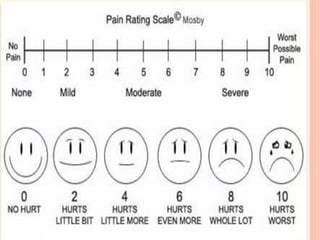
PAIN 
ANATOMY&PHYSIOLOGY 
Dr. M.ANEEQUE ALAM 
Anesthesia Resident 
Department of Anesthesiology 
Patel Hospital 
aneeque86@gmail.com
DEFINITION 
Pain is unpleasant sensory and 
emotional experience associated 
with actual or potential tissue 
damage, or described in terms of 
such damage. 
Ref: International Association for the Study of Pain(IASP) 
o Pain is SUBJECTIVE phenomena
NOCICEPTION 
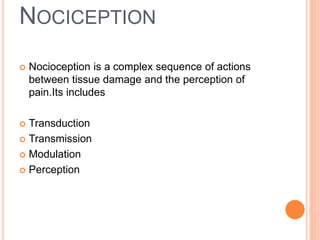
 Nocioception is a complex sequence of actions 
between tissue damage and the perception of 
pain.Its includes 
 Transduction 
 Transmission 
 Modulation 
 Perception
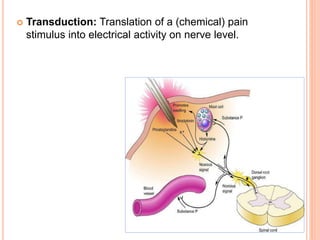
 Transduction: Translation of a (chemical) pain 
stimulus into electrical activity on nerve level.
 Transmission: Guidance of the pain – information 
through the nervous system, including: 
Ascending pathway 
 Primary afferent nerve-ends that go to the dorsal horn of 
the spinal cord. 
 ascending (inter-) neurons that project their information 
from the spinal cord to the brainstem and 
the hypothalamus/thalamus 
 The thalamic-cortical pathways
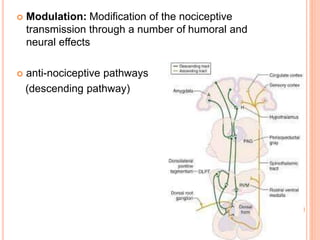
 Modulation: Modification of the nociceptive 
transmission through a number of humoral and 
neural effects 
 anti-nociceptive pathways 
(descending pathway)
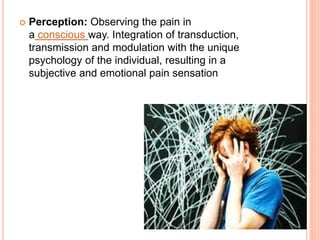
 Perception: Observing the pain in 
a conscious way. Integration of transduction, 
transmission and modulation with the unique 
psychology of the individual, resulting in a 
subjective and emotional pain sensation
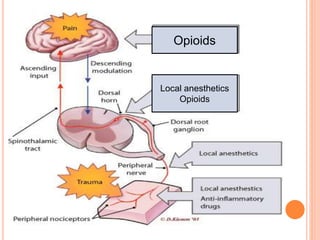
Opioids 
Local anesthetics 
Opioids
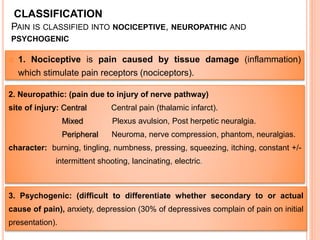
CLASSIFICATION 
PAIN IS CLASSIFIED INTO NOCICEPTIVE, NEUROPATHIC AND 
PSYCHOGENIC 
 1. Nociceptive is pain caused by tissue damage (inflammation) 
which stimulate pain receptors (nociceptors). 
2. Neuropathic: (pain due to injury of nerve pathway) 
site of injury: Central Central pain (thalamic infarct). 
Mixed Plexus avulsion, Post herpetic neuralgia. 
Peripheral Neuroma, nerve compression, phantom, neuralgias. 
character: burning, tingling, numbness, pressing, squeezing, itching, constant +/- 
intermittent shooting, lancinating, electric. 
3. Psychogenic: (difficult to differentiate whether secondary to or actual 
cause of pain), anxiety, depression (30% of depressives complain of pain on initial 
presentation).
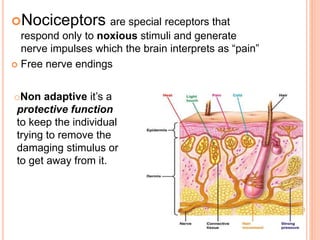
Nociceptors are special receptors that 
respond only to noxious stimuli and generate 
nerve impulses which the brain interprets as “pain” 
 Free nerve endings 
oNon adaptive it’s a 
protective function 
to keep the individual 
trying to remove the 
damaging stimulus or 
to get away from it.
PRIMARY AFFERENT FIBERS 
Aδ – fast 
C – slow
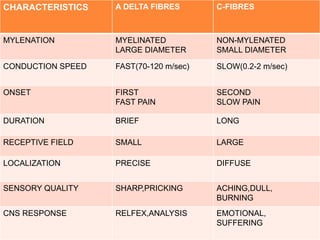
CHARACTERISTICS A DELTA FIBRES C-FIBRES 
MYLENATION MYELINATED 
LARGE DIAMETER 
NON-MYLENATED 
SMALL DIAMETER 
CONDUCTION SPEED FAST(70-120 m/sec) SLOW(0.2-2 m/sec) 
ONSET FIRST 
FAST PAIN 
SECOND 
SLOW PAIN 
DURATION BRIEF LONG 
RECEPTIVE FIELD SMALL LARGE 
LOCALIZATION PRECISE DIFFUSE 
SENSORY QUALITY SHARP,PRICKING ACHING,DULL, 
BURNING 
CNS RESPONSE RELFEX,ANALYSIS EMOTIONAL, 
SUFFERING
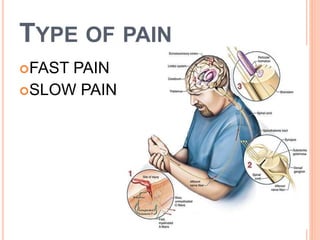
TYPE OF PAIN 
FAST PAIN 
SLOW PAIN
FAST PAIN SLOW PAIN 
onset: during application of the stimulus Shortly after application if tissue damage 
occurs 
Duration: short duration Longer duration 
Nature: pricking Burning 
Afferent: A-delta fibers C-fibers 
Neurotransmitter: glutamate Substance-P 
Significance: * determine site & severity. 
* Initiate withdrawal reflexes. 
Associated with arousal, autonomic & 
emotional reactions 
Localization: well-localized Poorly-localized
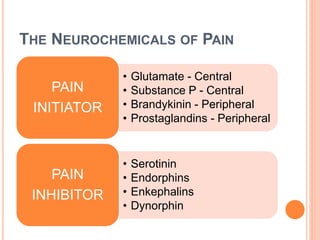
THE NEUROCHEMICALS OF PAIN 
• Glutamate - Central 
• Substance P - Central 
• Brandykinin - Peripheral 
• Prostaglandins - Peripheral 
PAIN 
INITIATOR 
• Serotinin 
• Endorphins 
• Enkephalins 
• Dynorphin 
PAIN 
INHIBITOR
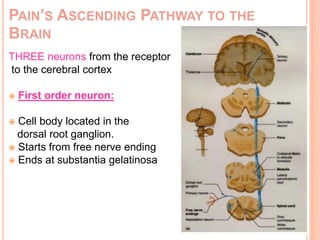
PAIN’S ASCENDING PATHWAY TO THE 
BRAIN 
THREE neurons from the receptor 
to the cerebral cortex 
 First order neuron: 
 Cell body located in the 
dorsal root ganglion. 
 Starts from free nerve ending 
 Ends at substantia gelatinosa
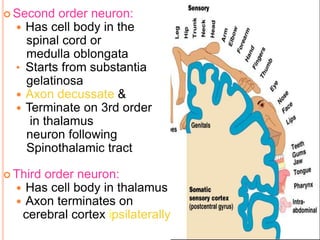
 Second order neuron: 
 Has cell body in the 
spinal cord or 
medulla oblongata 
• Starts from substantia 
gelatinosa 
 Axon decussate & 
 Terminate on 3rd order 
in thalamus 
neuron following 
Spinothalamic tract 
 Third order neuron: 
 Has cell body in thalamus 
 Axon terminates on 
cerebral cortex ipsilaterally
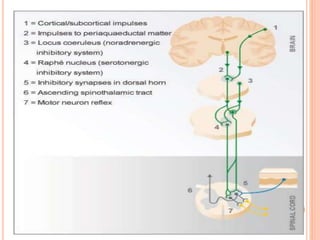
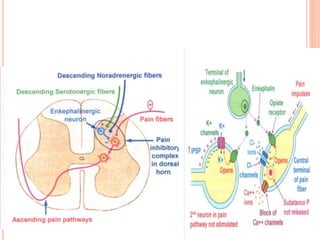
The Descending Pathway 
 pain afferents stimulates the neurons in 
periaqueductal gray (PAG) - gray matter 
surrounding the cerebral aqueduct in the 
midbrain results in activation of efferent anti-nociceptive 
pathways 
 from there the impulses are transmitted 
through the spinal cord to the dorsal horn 
 there thay inhibit or block transmission of 
nociceptive signals at the level of dorsal horn
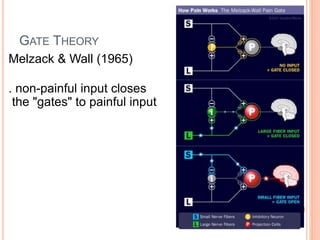
GATE THEORY 
Melzack & Wall (1965) 
. non-painful input closes 
the "gates" to painful input
APPLICATIONS OF GATE THEORY 
Stimulation of touch fibres for pain relief: 
 TENS (transcutaneous electrical nerve 
stimulation) 
 Acupuncture 
 Massage
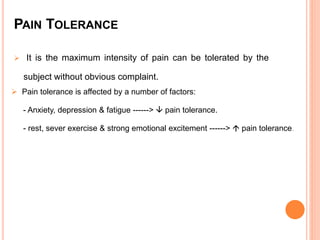
PAIN TOLERANCE 
 It is the maximum intensity of pain can be tolerated by the 
subject without obvious complaint. 
 Pain tolerance is affected by a number of factors: 
- Anxiety, depression & fatigue ------>  pain tolerance. 
- rest, sever exercise & strong emotional excitement ------>  pain tolerance.
Hyperalgesia 
Increased pain from a stimulus that 
normally provokes pain 
Allodynia 
Pain due to a stimulus that does not 
normally provoke pain.
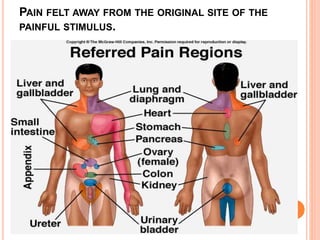
PAIN FELT AWAY FROM THE ORIGINAL SITE OF THE 
PAINFUL STIMULUS.
PHANTOM LIMB 
o sensations are described as 
perceptions that an individual experiences 
relating to a limb or an organ that is not 
physically part of the body 
o brain contains neuromatrix of the 
body image –neurosignature like a 
hologram
QUESTIONS?

Pain anatomy and physiology

  • 1.
    PAIN ANATOMY&PHYSIOLOGY Dr.M.ANEEQUE ALAM Anesthesia Resident Department of Anesthesiology Patel Hospital aneeque86@gmail.com
  • 2.
    DEFINITION Pain isunpleasant sensory and emotional experience associated with actual or potential tissue damage, or described in terms of such damage. Ref: International Association for the Study of Pain(IASP) o Pain is SUBJECTIVE phenomena
  • 3.
    NOCICEPTION  Nocioceptionis a complex sequence of actions between tissue damage and the perception of pain.Its includes  Transduction  Transmission  Modulation  Perception
  • 4.
     Transduction: Translationof a (chemical) pain stimulus into electrical activity on nerve level.
  • 5.
     Transmission: Guidanceof the pain – information through the nervous system, including: Ascending pathway  Primary afferent nerve-ends that go to the dorsal horn of the spinal cord.  ascending (inter-) neurons that project their information from the spinal cord to the brainstem and the hypothalamus/thalamus  The thalamic-cortical pathways
  • 6.
     Modulation: Modificationof the nociceptive transmission through a number of humoral and neural effects  anti-nociceptive pathways (descending pathway)
  • 7.
     Perception: Observingthe pain in a conscious way. Integration of transduction, transmission and modulation with the unique psychology of the individual, resulting in a subjective and emotional pain sensation
  • 8.
  • 9.
    CLASSIFICATION PAIN ISCLASSIFIED INTO NOCICEPTIVE, NEUROPATHIC AND PSYCHOGENIC  1. Nociceptive is pain caused by tissue damage (inflammation) which stimulate pain receptors (nociceptors). 2. Neuropathic: (pain due to injury of nerve pathway) site of injury: Central Central pain (thalamic infarct). Mixed Plexus avulsion, Post herpetic neuralgia. Peripheral Neuroma, nerve compression, phantom, neuralgias. character: burning, tingling, numbness, pressing, squeezing, itching, constant +/- intermittent shooting, lancinating, electric. 3. Psychogenic: (difficult to differentiate whether secondary to or actual cause of pain), anxiety, depression (30% of depressives complain of pain on initial presentation).
  • 10.
    Nociceptors are specialreceptors that respond only to noxious stimuli and generate nerve impulses which the brain interprets as “pain”  Free nerve endings oNon adaptive it’s a protective function to keep the individual trying to remove the damaging stimulus or to get away from it.
  • 11.
    PRIMARY AFFERENT FIBERS Aδ – fast C – slow
  • 12.
    CHARACTERISTICS A DELTAFIBRES C-FIBRES MYLENATION MYELINATED LARGE DIAMETER NON-MYLENATED SMALL DIAMETER CONDUCTION SPEED FAST(70-120 m/sec) SLOW(0.2-2 m/sec) ONSET FIRST FAST PAIN SECOND SLOW PAIN DURATION BRIEF LONG RECEPTIVE FIELD SMALL LARGE LOCALIZATION PRECISE DIFFUSE SENSORY QUALITY SHARP,PRICKING ACHING,DULL, BURNING CNS RESPONSE RELFEX,ANALYSIS EMOTIONAL, SUFFERING
  • 13.
    TYPE OF PAIN FAST PAIN SLOW PAIN
  • 14.
    FAST PAIN SLOWPAIN onset: during application of the stimulus Shortly after application if tissue damage occurs Duration: short duration Longer duration Nature: pricking Burning Afferent: A-delta fibers C-fibers Neurotransmitter: glutamate Substance-P Significance: * determine site & severity. * Initiate withdrawal reflexes. Associated with arousal, autonomic & emotional reactions Localization: well-localized Poorly-localized
  • 15.
    THE NEUROCHEMICALS OFPAIN • Glutamate - Central • Substance P - Central • Brandykinin - Peripheral • Prostaglandins - Peripheral PAIN INITIATOR • Serotinin • Endorphins • Enkephalins • Dynorphin PAIN INHIBITOR
  • 16.
    PAIN’S ASCENDING PATHWAYTO THE BRAIN THREE neurons from the receptor to the cerebral cortex  First order neuron:  Cell body located in the dorsal root ganglion.  Starts from free nerve ending  Ends at substantia gelatinosa
  • 17.
     Second orderneuron:  Has cell body in the spinal cord or medulla oblongata • Starts from substantia gelatinosa  Axon decussate &  Terminate on 3rd order in thalamus neuron following Spinothalamic tract  Third order neuron:  Has cell body in thalamus  Axon terminates on cerebral cortex ipsilaterally
  • 18.
    The Descending Pathway  pain afferents stimulates the neurons in periaqueductal gray (PAG) - gray matter surrounding the cerebral aqueduct in the midbrain results in activation of efferent anti-nociceptive pathways  from there the impulses are transmitted through the spinal cord to the dorsal horn  there thay inhibit or block transmission of nociceptive signals at the level of dorsal horn
  • 21.
    GATE THEORY Melzack& Wall (1965) . non-painful input closes the "gates" to painful input
  • 22.
    APPLICATIONS OF GATETHEORY Stimulation of touch fibres for pain relief:  TENS (transcutaneous electrical nerve stimulation)  Acupuncture  Massage
  • 24.
    PAIN TOLERANCE It is the maximum intensity of pain can be tolerated by the subject without obvious complaint.  Pain tolerance is affected by a number of factors: - Anxiety, depression & fatigue ------>  pain tolerance. - rest, sever exercise & strong emotional excitement ------>  pain tolerance.
  • 25.
    Hyperalgesia Increased painfrom a stimulus that normally provokes pain Allodynia Pain due to a stimulus that does not normally provoke pain.
  • 26.
    PAIN FELT AWAYFROM THE ORIGINAL SITE OF THE PAINFUL STIMULUS.
  • 27.
    PHANTOM LIMB osensations are described as perceptions that an individual experiences relating to a limb or an organ that is not physically part of the body o brain contains neuromatrix of the body image –neurosignature like a hologram
  • 28.