Dr. Upasana Gupta
IV induction drugs
drugs when given intravenously in an appropriate dose, cause a rapid loss of consciousness.
described as occurring within “one arm-brain circulation time”: the time taken for the drug
to travel from the site of injection (usually the arm) to the brain, where they have their
effect.
They are used:
• To induce anaesthesia prior to other drugs being given to maintain anaesthesia.
• As the sole drug for short procedures.
• To maintain anaesthesia for longer procedures by intravenous infusion.
• To provide sedation.
concept of intravenous anaesthesia -1932
when Wesse and Schrapff published their report into the use of hexobarbitone: the
first rapidly acting intravenous drug.
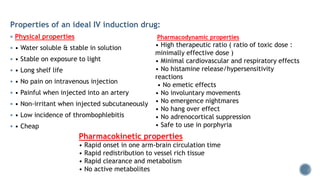
Properties of an ideal IV induction drug:
 Physical properties
 • Water soluble & stable in solution
 • Stable on exposure to light
 • Long shelf life
 • No pain on intravenous injection
 • Painful when injected into an artery
 • Non-irritant when injected subcutaneously
 • Low incidence of thrombophlebitis
 • Cheap
Pharmacodynamic properties
• High therapeutic ratio ( ratio of toxic dose :
minimally effective dose )
• Minimal cardiovascular and respiratory effects
• No histamine release/hypersensitivity
reactions
• No emetic effects
• No involuntary movements
• No emergence nightmares
• No hang over effect
• No adrenocortical suppression
• Safe to use in porphyria
Pharmacokinetic properties
• Rapid onset in one arm-brain circulation time
• Rapid redistribution to vessel rich tissue
• Rapid clearance and metabolism
• No active metabolites
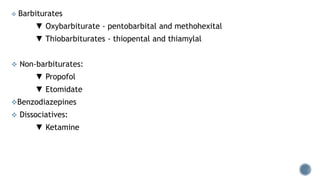
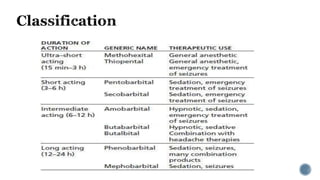
 Barbiturates
▼ Oxybarbiturate - pentobarbital and methohexital
▼ Thiobarbiturates - thiopental and thiamylal
 Non-barbiturates:
▼ Propofol
▼ Etomidate
Benzodiazepines
 Dissociatives:
▼ Ketamine
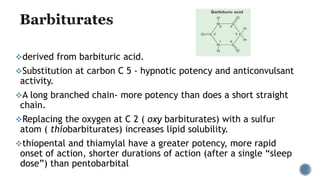
derived from barbituric acid.
Substitution at carbon C 5 - hypnotic potency and anticonvulsant
activity.
A long branched chain- more potency than does a short straight
chain.
Replacing the oxygen at C 2 ( oxy barbiturates) with a sulfur
atom ( thiobarbiturates) increases lipid solubility.
thiopental and thiamylal have a greater potency, more rapid
onset of action, shorter durations of action (after a single “sleep
dose”) than pentobarbital
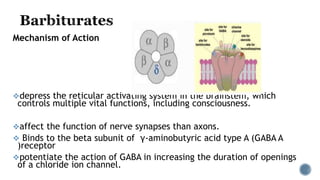
Mechanism of Action
depress the reticular activating system in the brainstem, which
controls multiple vital functions, including consciousness.
affect the function of nerve synapses than axons.
 Binds to the beta subunit of γ-aminobutyric acid type A (GABA A
)receptor
potentiate the action of GABA in increasing the duration of openings
of a chloride ion channel.
A. Absorption
rapid onset & rapid awakening after a single IV dose
due to rapid uptake & rapid redistribution out of the brain into inactive
tissues.
drug is sequestered in fat & skeletal muscle  reenters the circulation
prevents plasma concentration from dropping rapidly.
 metabolized hepatocytes and small extent, kidneys & CNS.
Metabolites ( hydroxythiopental & 5-carboxylic acid) –
inactive, more water soluble than parent compound facilitates renal
excretion.
 thiopental (small fraction) metabolized  active long-acting oxybarbiturate pentobarbital.
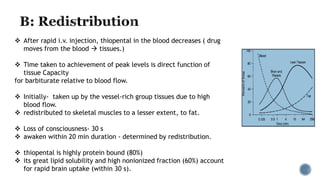
 After rapid i.v. injection, thiopental in the blood decreases ( drug
moves from the blood  tissues.)
 Time taken to achievement of peak levels is direct function of
tissue Capacity
for barbiturate relative to blood flow.
 Initially- taken up by the vessel-rich group tissues due to high
blood flow.
 redistributed to skeletal muscles to a lesser extent, to fat.
 Loss of consciousness- 30 s
 awaken within 20 min duration - determined by redistribution.
 thiopental is highly protein bound (80%)
 its great lipid solubility and high nonionized fraction (60%) account
for rapid brain uptake (within 30 s).
Barbiturates
pediatric patients- elimination t1/2 of thiopental shorter than in adults
due to more rapid hepatic clearance of thiopental by pediatric patients.
 recovery after large or repeated doses of thiopental- infants and children >
adults.
Elimination half-time is prolonged in pregnancy- due to inc. protein binding
of thiopental.
less lipid-soluble barbiturates have much longer distribution half-lives and
durations of action after a sleep dose.
Repetitive administration of barbiturates saturates the peripheral
compartments(eg, infusion of thiopental for “barbiturate coma” and brain
protection)
C. Biotransformation
biotransformed via hepatic oxidation to inactive water-soluble metabolites.
D. Excretion
Increased protein binding decreases barbiturate glomerular filtration,
whereas increased lipid solubility increases renal tubular reabsorption.
less protein-bound and less lipid-soluble agents (phenobarbital)- renal
excretion is limited to water-soluble end products of hepatic
biotransformation.
Methohexital is excreted in the feces.
Effects on Organ System
A. Cardiovascular
Depends on rate of administration, dose, volume status, baseline
autonomic tone, and preexisting cardiovascular disease.
Intravenous bolus induction doses of barbiturates  decrease in B.P.
& increase HR .
 Depression of the medullary vasomotor center  vasodilation of
peripheral capacitance vessels  increases peripheral pooling of
blood, mimicking a reduced blood volume.
Tachycardia following administration  due to a central vagolytic effect
and reflex responses to hypotension.
Cardiac output is maintained by an increased HR & increased myocardial
contractility from compensatory baroreceptor reflexes.
Conditions where the baroreceptor response is blunted or absent (eg,
hypovolemia, congestive heart failure, β-adrenergic blockade) cardiac
output and arterial bp fall due to uncompensated peripheral pooling of
blood & direct myocardial depression.
slow rate of injection and adequate preoperative hydration attenuates or
eliminates these changes.
 B. Respiratory
depress the medullary ventilatory center decreasing the
ventilatory response to hypercapnia & hypoxia.
Deep barbiturate sedation leads to upper airway obstruction;
apnea after an induction dose.
During awakening, tidal volume and respiratory rate are decreased
following barbiturate induction.
 incompletely depress airway reflex responses to laryngoscopy,
intubation & airway instrumentation  bronchospasm (in asthmatic
patients) or laryngospasm in lightly anesthetized patients.
C. Cerebral
 constrict the cerebral vasculature  decrease in cerebral blood flow, cerebral blood volume, ICP.
Intracranial pressure decreases more than arterial blood pressure cerebral perfusion pressure (CPP)
increases.
CPP = cerebral artery pressure - jugular venous pressure or intracranial pressure
decline in cerebral oxygen consumption (up to 50% of normal) than in cerebral blood flow.
degree of cns depression ranges from mild sedation to unconsciousness- depends on dose
administered.
do not impair the perception of pain, lower the pain threshold.
Small doses cause a state of excitement and disorientation.
do not produce muscle relaxation and some induce involuntary skeletal muscle contractions (eg,
methohexital).
small doses of thiopental (50–100 mg iv) rapidly (but temporarily) control most grand mal seizures.
acute tolerance & physiological dependence on the sedative effect of barbiturates develop quickly.
D. Renal
 reduce renal blood flow & glomerular filtration rate.
E. Hepatic
Hepatic blood flow is decreased.
binding of barbiturates to the cytochrome P-450 enzyme system interferes with
the biotransformation of drugs (e.g. tricyclic antidepressants).
promote amino-levulinic acid synthetase stimulates formation of porphyrin
may precipitate acute intermittent porphyria or variegate porphyria in
susceptible individuals.
F. Immunological
Anaphylactic or anaphylactoid allergic reactions - rare.
Sulfur-containing thiobarbiturates evoke mast cell histamine release in vitro.
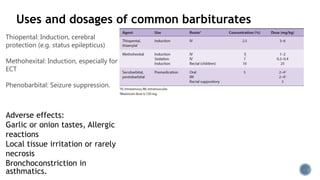
Uses and dosages of common barbiturates
Thiopental: Induction, cerebral
protection (e.g. status epilepticus)
Methohexital: Induction, especially for
ECT
Phenobarbital: Seizure suppression.
Adverse effects:
Garlic or onion tastes, Allergic
reactions
Local tissue irritation or rarely
necrosis
Bronchoconstriction in
asthmatics.
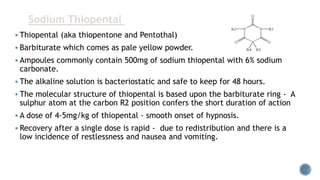
 Thiopental (aka thiopentone and Pentothal)
 Barbiturate which comes as pale yellow powder.
 Ampoules commonly contain 500mg of sodium thiopental with 6% sodium
carbonate.
 The alkaline solution is bacteriostatic and safe to keep for 48 hours.
 The molecular structure of thiopental is based upon the barbiturate ring - A
sulphur atom at the carbon R2 position confers the short duration of action
 A dose of 4-5mg/kg of thiopental - smooth onset of hypnosis.
 Recovery after a single dose is rapid - due to redistribution and there is a
low incidence of restlessness and nausea and vomiting.
Sodium Thiopental
Thiopental reduces cerebral blood flow, cerebral metabolic
rate and oxygen demand.
 It has potent anticonvulsant properties.
Following traumatic brain injury, infusion of thiopental to
produce a “barbiturate coma” lowers intracranial pressure
and may improve neurological outcome.
Thiopental may precipitate porphyria due to hepatic enzyme
induction in susceptible patients.
Midazolam (short acting)
Lorazepam and Temazepam (intermediate)
Diazepam (long acting)
Flumazenil (antidote, shorter half life than most of the
benzos
BENZODIAZEPINES
Mechanisms of Action
Benzodiazepines bind the same set of receptors in the CNS as
barbiturates but bind to a different site on the receptors.
binding to the GABA- A receptor- increases frequency of openings of
associated cl ion channel.
benzodiazepine-receptor binding facilitates binding of GABA to its
receptor.
 Flumazenil (an imidazobenzodiazepine) - specific benzodiazepine–
receptor antagonist.
 Competitive antagonist
 Short half-life. Rapid onset, 1-3 min, lasts 3-30 min.
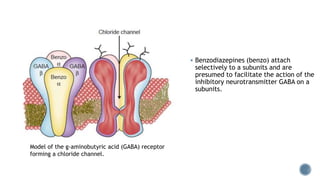
 Benzodiazepines (benzo) attach
selectively to a subunits and are
presumed to facilitate the action of the
inhibitory neurotransmitter GABA on a
subunits.
Model of the g-aminobutyric acid (GABA) receptor
forming a chloride channel.
Structure–Activity Relationships
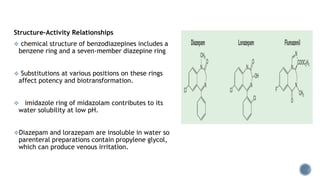
 chemical structure of benzodiazepines includes a
benzene ring and a seven-member diazepine ring
 Substitutions at various positions on these rings
affect potency and biotransformation.
 imidazole ring of midazolam contributes to its
water solubility at low pH.
Diazepam and lorazepam are insoluble in water so
parenteral preparations contain propylene glycol,
which can produce venous irritation.
 Pharmacokinetics
A. Absorption
 Diazepam and lorazepam - well absorbed from the git
peak plasma levels usually achieved in 1 and 2 h, respectively.
B. Distribution
relatively lipid soluble, readily penetrates the blood–brain barrier.
Although midazolam is water soluble at reduced pH, its imidazole ring closes at physiological
pH, increasing its lipid solubility.
Lorazepam- moderate lipid solubility- slower brain uptake and onset of action.
Redistribution - rapid.
 initial distribution half-life - 3–10 min
All three benzodiazepines are highly protein bound (90–98%).
C. Biotransformation
Uses liver for biotransformation into water-soluble glucuronidated
end products.
 Slow hepatic extraction & a large volume of distribution ( V d ) 
long elimination half-life for diazepam (30 h).
 lorazepam - low hepatic extraction ratio, its lower lipid solubility
limits its Vd
shorter elimination half-life (15 h).
 the clinical duration of lorazepam - prolonged due to increased
receptor affinity
Midazolam elimination half-life (2 h) is the shortest.
D. Excretion
 metabolites  urine.
Enterohepatic circulation  secondary peak in diazepam plasma
concentration 6–12 h following administration.
Kidney failure  prolonged sedation in patients receiving larger
doses of midazolam (accumulation of a conjugated metabolite α-
hydroxymidazolam).
 Midazolam
 Rapid onset <1min, peak 2-3 min
 Distribution half life 6-15 min
 Hepatically metabolized by CYP system including active metabolite 1-hydroxymidazolam
 Not an issue with normal renal function but in renal impairment can build up.
 Lorazepam
 Conjugated in liver (not by CYP) to inactive compounds
 so renal impairment doesn’t prolong action but liver failure can
 Infusion can cause propylene glycol toxicity
 Remimazolam
 New, cleared by non-specific tissue esterase
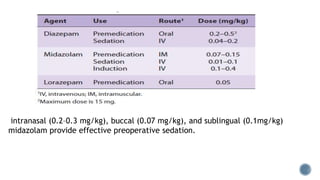
intranasal (0.2–0.3 mg/kg), buccal (0.07 mg/kg), and sublingual (0.1mg/kg)
midazolam provide effective preoperative sedation.
 Effects on Organ Systems
A. Cardiovascular
 minimal cardiovascular depressant effects even at general anesthetic
doses,
except when they are coadministered with opioids (these agents interact to
produce myocardial depression and arterial hypotension).
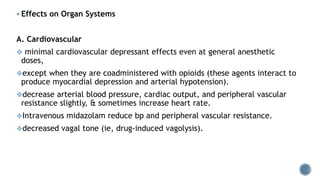
decrease arterial blood pressure, cardiac output, and peripheral vascular
resistance slightly, & sometimes increase heart rate.
Intravenous midazolam reduce bp and peripheral vascular resistance.
decreased vagal tone (ie, drug-induced vagolysis).
B. Respiratory
depress the ventilatory response to CO 2 .
significant if the drugs are administered intravenously or in
association with other respiratory depressants.
careful titration of drug to avoid overdosage & apnea bcz of
steep dose–response curve, slightly prolonged onset.
Ventilation - monitored in all patients receiving intravenous
benzodiazepine
Resuscitation equipment must be immediately available.
C. Cerebral
 reduce cerebral oxygen consumption, cerebral blood flow, and
icp
effective in preventing and controlling grand mal seizures.
Oral sedative doses - produce antegrade amnesia
(premedication)
mild muscle-relaxing property of these drugs is mediated at the
spinal cord level
at lower doses - antianxiety, amnestic, and sedative effects.
Induction with benzodiazepines is associated with a slower rate
of loss of consciousness and a longer recovery.
 no direct analgesic properties.
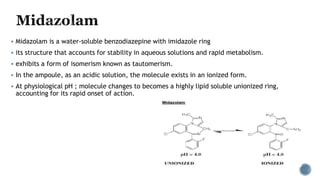
 Midazolam is a water-soluble benzodiazepine with imidazole ring
 its structure that accounts for stability in aqueous solutions and rapid metabolism.
 exhibits a form of isomerism known as tautomerism.
 In the ampoule, as an acidic solution, the molecule exists in an ionized form.
 At physiological pH ; molecule changes to becomes a highly lipid soluble unionized ring,
accounting for its rapid onset of action.
 MIDAZOLAM
does not cause pain on injection.
Like other benzodiazepines- acts at specific receptors closely allied to the
GABA-A receptor.
Activation of the benzodiazepine receptor increases chloride influx to
neuronal cells via the GABA-A receptor  neuronal hyperpolarisation 
clinical effects.
used for sedation at a dose range of 0.05-0.1mg/kg (IV) due to short
duration of action and amnesic properties.
In children - useful as premedication.
It can be used as a sole iv induction drug, at a dose of 0.3mg/kg, but its
duration of onset is slow, limiting its use.
 Duration of action ~ 30 min (longer than that of the other induction drugs)
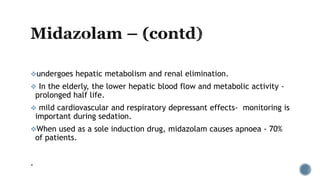
undergoes hepatic metabolism and renal elimination.
 In the elderly, the lower hepatic blood flow and metabolic activity -
prolonged half life.
 mild cardiovascular and respiratory depressant effects- monitoring is
important during sedation.
When used as a sole induction drug, midazolam causes apnoea - 70%
of patients.
.
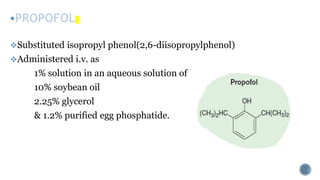
PROPOFOL
Substituted isopropyl phenol(2,6-diisopropylphenol)
Administered i.v. as
1% solution in an aqueous solution of
10% soybean oil
2.25% glycerol
& 1.2% purified egg phosphatide.
COMMERCIAL PREPARATIONS:
Requires a lipid vehicle for emulsification.
Uses soybean oil as oil phase & egg lecithin as emulsifying agent.
This formulations supports bacterial growth & causes raised plasma triglycerides, on
prolonged iv infusion.
low lipid emulsion- Ampofol, contains 5% soybean oil. 0.6% egg lecithin. ( associated with
higher incidence of pain on injection)
aquavan : non lipid formulation.
Absence of lipid emulsion- inc pain on injection, the release of formaldehyde byproduct
causes burning sensation in genital areas.
Another non lipid formulations uses cyclodextrins as solubilizing agent. still in clinical trial.
pain during injection - decreased by prior injection of lidocaine or by mixing lidocaine with
propofol prior to injection (2 mL of 1% lidocaine in 18 mL propofol)
Propofol formulations can support the growth of bacteria
sterile technique must be observed in preparation and handling.
Propofol should be administered within 6 h of opening the ampule.
Sepsis and death - contaminated propofol preparations.
Current formulations of propofol - 0.005% disodium edetate or 0.025% sodium metabisulfite
to retard the rate of growth of microorganisms
A. Absorption
available only for i.v. administration - induction of general anesthesia &
for moderate to deep sedation
B. Distribution
 rapid onset of action.
Awakening from a single bolus dose - rapid due to very short initial
distribution t1/2 (2–8 min).
good agent for outpatient anesthesia.
A smaller induction dose is recommended in elderly patients because of
their smaller V d .
C. Biotransformation
 clearance of propofol exceeds hepatic blood flow, implying the existence of extrahepatic
metabolism.
exceptionally high clearance rate contributes to rapid recovery after continuous infusions.
Conjugation in the liver results in inactive metabolites - eliminated by renal clearance.
pharmacokinetics of propofol – not affected by obesity, cirrhosis, or kidney failure.
Use of propofol infusion for long-term sedation of children who are critically ill or young adult
neurosurgical patients- associated with sporadic cases of lipemia, metabolic acidosis, and death-
propofol infusion syndrome.
D. Excretion
 metabolites of propofol - primarily excreted in the urine,
But chronic kidney failure does not affect clearance of the parent drug
 facilitation of inhibitory neurotransmission mediated by
GABA-a receptor binding.
It increases binding affinity of GABA for GABA-a receptor.
Activation of receptor increase in transmembrane
chloride conductance  hyperpolarisation of the nerve
membrane functional inhibition of postsynaptic nerve .
 Effects on Organ Systems
A. Cardiovascular
major cardiovascular effect of propofol : decrease in arterial bp due to a
drop in systemic vascular resistance (inhibition of sympathetic
vasoconstrictor activity), preload, and cardiac contractility.
Factors associated with propofol-induced hypotension include
large doses, rapid injection, and old age.
 impairs the normal arterial baroreflex response to hypotension.
Changes in heart rate and cardiac output - transient.
myocardial oxygen consumption and coronary blood flow - decreases
coronary sinus lactate production increases in some patients, indicating
mismatch between myocardial oxygen supply and demand.
B. Respiratory
profound respiratory depressant- usually causes apnea following
an induction dose.
Even when used for conscious sedation in subanesthetic doses-
inhibits hypoxic ventilatory drive & depresses normal response to
hypercarbia.
Propofol-induced depression of upper airway reflexes >>
thiopental allowing intubation, endoscopy, or laryngeal mask
placement in the absence of neuromuscular blockade.
 C. Cerebral
 Propofol decreases cerebral blood flow and intracranial pressure.
In patients with elevated icp  cause a critical reduction in CPP (<50 mm Hg) .
antipruritic properties.
antiemetic effects - Subhypnotic doses of propofol (10 to 15 mg IV) may be used in the
postanesthesia unit.
Induction is occasionally accompanied by excitatory phenomenon- muscle twitching,
spontaneous movement, opisthotonos, or hiccupping.
Anticonvulsant properties- used successfully to terminate status epilepticus.
Propofol in doses >1 mg/kg IV decreases seizure duration 35% to 45% in patients undergoing
ECT.
safely administered to epileptic patients.
decreases IOP.
Tolerance does not develop after long-term propofol infusions.
 Uses:
 Induction:
 1-2.5mg/kg based on lean body mass, adjusted for age, reduced with premed.
 Maintenance:
 50-150mcg/kg/min based on total body weight, adjusted to individual (older and sicker
 patients require much less)
 Sedation:
 25-75mcg/kg/min
 Anti-emetic
 10-20mg IV intermittently or infusion of 10mcg/kg/min
 Infusions>30mcg/kg/min usually cause amnesia
Advantages:
Does not prolong neuromuscular blockade but large doses may
provide good
intubating conditions without paralysis.
No adrenal suppression
Pleasant dreams
Anti-emetic even at low doses (10mcg/kg/min)
Also relieves pruritis from opiates and from cholestasis.
Adverse effects
Anaphylactoid reactions, especially in people with multiple
allergies
Pancreatitis-likely from hypertriglyceridemia-older, longer
duration, higher dose
Pain on injection-rare thrombophlebitis of vein
Propofol infusion syndrome
Usually doses >70mcg/kg/min for >48h
Acute bradycardia leading to asystole with metabolic
acidosis, rhabdo, hyperlipidemia, fatty liver, hyperkalemia
FOSPROPOFOL
Fospropofol - water-soluble prodrug
metabolized in vivo to propofol, phosphate, and formaldehyde.
It has been released in the United States and other countries
it produces more complete amnesia and better conscious sedation
for endoscopy than midazolam plus fentanyl.
slower onset and slower recovery than propofol.
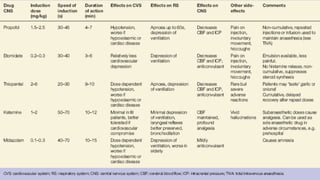

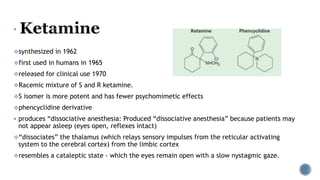
synthesized in 1962
first used in humans in 1965
released for clinical use 1970
Racemic mixture of S and R ketamine.
S isomer is more potent and has fewer psychomimetic effects
phencyclidine derivative
 produces “dissociative anesthesia: Produced “dissociative anesthesia” because patients may
not appear asleep (eyes open, reflexes intact)
“dissociates” the thalamus (which relays sensory impulses from the reticular activating
system to the cerebral cortex) from the limbic cortex
resembles a cataleptic state - which the eyes remain open with a slow nystagmic gaze.
 Mechanism of Action
mechanism of action of ketamine-induced analgesia and
dissociative anesthesia – unknown
known to interact with multiple CNS receptors
binds noncompetitively to the phencyclidine recognition site on
N-methyl-d-aspartate (NMDA) receptors.
 exerts effects at other sites including opioid receptors,
monoaminergic receptors, muscarinic receptors, & voltage-
sensitive sodium and L-type calcium channels and neuronal
nicotinic acetylcholine receptors.
ketamine has only weak actions at GABA-A receptors
 Pharmacokinetics
 A. Absorption
Can be administered orally, nasally, rectally, subcutaneously, and epidurally.
 Peak plasma levels - within 1 minute after IV administration & within 5 minutes after IM
injection.
B. Distribution
 not significantly bound to plasma proteins
leaves the blood rapidly to be distributed into tissues.
Initially- distributed to highly perfused tissues (brain,where the peak concentration may 4x
plasma.)
extreme lipid solubility- rapid transfer across the blood–brain barrier.
 ketamine-induced increase in cerebral blood flow facilitate delivery of drug - enhance rapid
achievement of high brain concentrations.
 Redistributed from the high perfused  less well-perfused tissues.
high hepatic clearance rate (1 L per minute) & large Vd (3 L/kg)  elimination half-time of 2 to 3
hrs.
C. Biotransformation in liver & Excreted through Renal
 Effects on Organ Systems
A. Cardiovascular
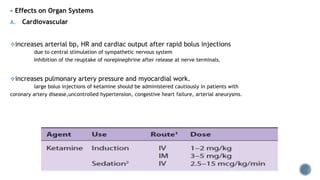
increases arterial bp, HR and cardiac output after rapid bolus injections
due to central stimulation of sympathetic nervous system
Inhibition of the reuptake of norepinephrine after release at nerve terminals.
increases pulmonary artery pressure and myocardial work.
large bolus injections of ketamine should be administered cautiously in patients with
coronary artery disease,uncontrolled hypertension, congestive heart failure, arterial aneurysms.
 KETAMINE
B. Respiratory
Ventilatory drive - minimally affected by induction doses.
rapid intravenous bolus administration or combinations of ketamine with
opioids - apnea.
Racemic ketamine - potent bronchodilator – good induction agent for
asthmatic patients
Upper airway reflexes remain intact, but partial airway obstruction may
occur
Patients with “full stomachs” - intubated during ketamine induction-
increased risk for aspiration pneumonia
increased salivation.
 C. Cerebral
increases cerebral oxygen consumption, cerebral blood flow, and
intracranial pressure.
use in patients with space-occupying intracranial lesions such
as occur with head trauma.
Myoclonic activity due to increased subcortical electrical activity.
Undesirable psychotomimetic side effects (eg, disturbing dreams
and delirium) during emergence and recovery-
less common in children and in patients premedicated with
benzodiazepines
Adverse effects:
Increased ICP and IOP
Increased myocardial O2 consumption
Repeated abuse can cause liver and renal toxicity
ETOMIDATE
contains carboxylated imidazole
structurally unrelated to other anesthetic agents.
imidazole ring provides water solubility in acidic solutions and lipid solubility at physiological
pH.
etomidate is dissolved in propylene glycol for injection.  causes pain on injection(lessened
by prior iv injection of lidocaine)
Mechanisms of Action
 depresses the reticular activating system & mimics the inhibitory effects of GABA.
 R(+) isomer—bind to a subunit of the GABA A receptor, increasing the receptor’s affinity for
GABA.
etomidate may have disinhibitory effects on areas which control extrapyramidal motor
activity.
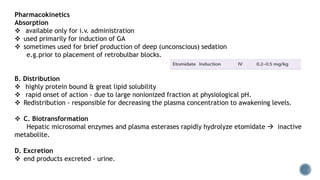
Pharmacokinetics
Absorption
 available only for i.v. administration
 used primarily for induction of GA
 sometimes used for brief production of deep (unconscious) sedation
e.g.prior to placement of retrobulbar blocks.
B. Distribution
 highly protein bound & great lipid solubility
 rapid onset of action - due to large nonionized fraction at physiological pH.
 Redistribution - responsible for decreasing the plasma concentration to awakening levels.
 C. Biotransformation
Hepatic microsomal enzymes and plasma esterases rapidly hydrolyze etomidate  inactive
metabolite.
D. Excretion
 end products excreted - urine.
 Effects on Organ Systems
 A. Cardiovascular
minimal effects on the cardiovascular system.
mild reduction in peripheral vascular resistance  slight decline in arterial blood pressure.
 Myocardial contractility and cardiac output are usually unchanged.
even in large doses, produces relatively light anesthesia for laryngoscopy,
marked increases in heart rate and blood pressure may be recorded when etomidate
provides the only anesthetic depth for intubation.
B. Respiratory
Ventilation is affected less with etomidate than with barbiturates or benzodiazepine.
 C. Cerebral
 decreases cerebral metabolic rate, cerebral blood flow, and intracranial
pressure.
etomidate increases the amplitude of somatosensory evoked potentials.
Postoperative nausea and vomiting - common
lacks analgesic properties.
 D. Endocrine
Transiently inhibit enzymes involved in cortisol and aldosterone synthesis.
 Long term infusion and adrenocortical suppression - increased mortality
rate in critically ill (particularly septic) patients.
Dextromethorphan
 D-isomer of the opioid agonist,levomethorphan- low-affinity NMDA
antagonist
activity at multiple other ligands including neuronal nicotinic receptors
equal in potency to codeine as an antitussive but lacks analgesic or
physical dependence properties.
rarely produces sedation or gastrointestinal disturbances.
psychoactive effects - abuse potential.
Signs and symptoms of intentional excessive intake of
dextromethorphan
systemic hypertension
Tachycardia, Somnolence, Agitation
slurred speech, Ataxia diaphoresis,
skeletal muscle rigidity, seizures, coma, and decreased core body temperature.
Hepatotoxicity- when dextromethorphan with acetaminophen
ingested in excessive amounts.
 Dexmedetomidine
 potent alpha2 adrenergic agonist
shorter acting than clonidine , much more selective for a2 vs. a1 receptors.
sedative effects- due to inhibition of alpha-2 receptors in pontine locus ceruleus
nucleus mediating sympathetic nervous system function, vigilance, memory, analgesia,
and arousal nucleus.
dextro isomer- active component of medetomidine.
Atipamezole - specific and selective investigational a2 receptor antagonist.
rapidly and effectively reverses the sedative and cardiovascular effects of IV
dexmedetomidine.
 produces sedation - decreasing sympathetic nervous system activity and the level of arousal.
result is a calm patient who can be easily aroused to full consciousness.
Amnesia is not assured.
Drugs that activate GABA receptors - clouding of consciousness and can cause paradoxical
agitation,tolerance and dependence.
 Pharmacokinetics
elimination half-time dexmedetomidine - 2 - 3 hrs (6 to 10 hours clonidine).
highly protein bound (.90%)
undergoes extensive hepatic metabolism.
excreted by kidneys.
weak inhibiting effects on cytochrome P450 enzyme systems
manifest as increased plasma concentrations of opioids as administered
during anaesthesia.
 Clinical Uses
pretreatment with dexmedetomidine attenuates hemodynamic responses to
tracheal intubation.
decreases plasma catecholamine concentrations during anesthesia
decreases perioperative requirements for inhaled anesthetics and opioids
 decreases MAC for volatile anesthetics
In patients isoflurane MAC was decreased 35% and 48% by plasma conc.
of 0.3 ng/mL & 0.6 ng/mL, respectively.
produces total IV anesthesia without associated depression of ventilation.
potential anesthetic technique for patients with a difficult upper
airway.
 Clinical Uses(contd.)
 Addition of 0.5 mg/kg dexmedetomidine to lidocaine in IV regional
anesthesia- postoperative analgesia.
an effective treatment for nonthermally induced shivering.
 Severe bradycardia may occur- administration of dexmedetomidine
 cardiac arrest has been reported in a patient receiving a
dexmedetomidine infusion
 as a supplement to general anaesthesia.
THANK YOU

Intravenous anaesthetic agents

  • 1.
  • 2.
    IV induction drugs drugswhen given intravenously in an appropriate dose, cause a rapid loss of consciousness. described as occurring within “one arm-brain circulation time”: the time taken for the drug to travel from the site of injection (usually the arm) to the brain, where they have their effect. They are used: • To induce anaesthesia prior to other drugs being given to maintain anaesthesia. • As the sole drug for short procedures. • To maintain anaesthesia for longer procedures by intravenous infusion. • To provide sedation. concept of intravenous anaesthesia -1932 when Wesse and Schrapff published their report into the use of hexobarbitone: the first rapidly acting intravenous drug.
  • 3.
    Properties of anideal IV induction drug:  Physical properties  • Water soluble & stable in solution  • Stable on exposure to light  • Long shelf life  • No pain on intravenous injection  • Painful when injected into an artery  • Non-irritant when injected subcutaneously  • Low incidence of thrombophlebitis  • Cheap Pharmacodynamic properties • High therapeutic ratio ( ratio of toxic dose : minimally effective dose ) • Minimal cardiovascular and respiratory effects • No histamine release/hypersensitivity reactions • No emetic effects • No involuntary movements • No emergence nightmares • No hang over effect • No adrenocortical suppression • Safe to use in porphyria Pharmacokinetic properties • Rapid onset in one arm-brain circulation time • Rapid redistribution to vessel rich tissue • Rapid clearance and metabolism • No active metabolites
  • 4.
     Barbiturates ▼ Oxybarbiturate- pentobarbital and methohexital ▼ Thiobarbiturates - thiopental and thiamylal  Non-barbiturates: ▼ Propofol ▼ Etomidate Benzodiazepines  Dissociatives: ▼ Ketamine
  • 5.
    derived from barbituricacid. Substitution at carbon C 5 - hypnotic potency and anticonvulsant activity. A long branched chain- more potency than does a short straight chain. Replacing the oxygen at C 2 ( oxy barbiturates) with a sulfur atom ( thiobarbiturates) increases lipid solubility. thiopental and thiamylal have a greater potency, more rapid onset of action, shorter durations of action (after a single “sleep dose”) than pentobarbital
  • 7.
    Mechanism of Action depressthe reticular activating system in the brainstem, which controls multiple vital functions, including consciousness. affect the function of nerve synapses than axons.  Binds to the beta subunit of γ-aminobutyric acid type A (GABA A )receptor potentiate the action of GABA in increasing the duration of openings of a chloride ion channel.
  • 8.
    A. Absorption rapid onset& rapid awakening after a single IV dose due to rapid uptake & rapid redistribution out of the brain into inactive tissues. drug is sequestered in fat & skeletal muscle  reenters the circulation prevents plasma concentration from dropping rapidly.  metabolized hepatocytes and small extent, kidneys & CNS. Metabolites ( hydroxythiopental & 5-carboxylic acid) – inactive, more water soluble than parent compound facilitates renal excretion.  thiopental (small fraction) metabolized  active long-acting oxybarbiturate pentobarbital.
  • 9.
     After rapidi.v. injection, thiopental in the blood decreases ( drug moves from the blood  tissues.)  Time taken to achievement of peak levels is direct function of tissue Capacity for barbiturate relative to blood flow.  Initially- taken up by the vessel-rich group tissues due to high blood flow.  redistributed to skeletal muscles to a lesser extent, to fat.  Loss of consciousness- 30 s  awaken within 20 min duration - determined by redistribution.  thiopental is highly protein bound (80%)  its great lipid solubility and high nonionized fraction (60%) account for rapid brain uptake (within 30 s).
  • 10.
    Barbiturates pediatric patients- eliminationt1/2 of thiopental shorter than in adults due to more rapid hepatic clearance of thiopental by pediatric patients.  recovery after large or repeated doses of thiopental- infants and children > adults. Elimination half-time is prolonged in pregnancy- due to inc. protein binding of thiopental. less lipid-soluble barbiturates have much longer distribution half-lives and durations of action after a sleep dose. Repetitive administration of barbiturates saturates the peripheral compartments(eg, infusion of thiopental for “barbiturate coma” and brain protection)
  • 11.
    C. Biotransformation biotransformed viahepatic oxidation to inactive water-soluble metabolites. D. Excretion Increased protein binding decreases barbiturate glomerular filtration, whereas increased lipid solubility increases renal tubular reabsorption. less protein-bound and less lipid-soluble agents (phenobarbital)- renal excretion is limited to water-soluble end products of hepatic biotransformation. Methohexital is excreted in the feces.
  • 12.
    Effects on OrganSystem A. Cardiovascular Depends on rate of administration, dose, volume status, baseline autonomic tone, and preexisting cardiovascular disease. Intravenous bolus induction doses of barbiturates  decrease in B.P. & increase HR .  Depression of the medullary vasomotor center  vasodilation of peripheral capacitance vessels  increases peripheral pooling of blood, mimicking a reduced blood volume.
  • 13.
    Tachycardia following administration due to a central vagolytic effect and reflex responses to hypotension. Cardiac output is maintained by an increased HR & increased myocardial contractility from compensatory baroreceptor reflexes. Conditions where the baroreceptor response is blunted or absent (eg, hypovolemia, congestive heart failure, β-adrenergic blockade) cardiac output and arterial bp fall due to uncompensated peripheral pooling of blood & direct myocardial depression. slow rate of injection and adequate preoperative hydration attenuates or eliminates these changes.
  • 14.
     B. Respiratory depressthe medullary ventilatory center decreasing the ventilatory response to hypercapnia & hypoxia. Deep barbiturate sedation leads to upper airway obstruction; apnea after an induction dose. During awakening, tidal volume and respiratory rate are decreased following barbiturate induction.  incompletely depress airway reflex responses to laryngoscopy, intubation & airway instrumentation  bronchospasm (in asthmatic patients) or laryngospasm in lightly anesthetized patients.
  • 15.
    C. Cerebral  constrictthe cerebral vasculature  decrease in cerebral blood flow, cerebral blood volume, ICP. Intracranial pressure decreases more than arterial blood pressure cerebral perfusion pressure (CPP) increases. CPP = cerebral artery pressure - jugular venous pressure or intracranial pressure decline in cerebral oxygen consumption (up to 50% of normal) than in cerebral blood flow. degree of cns depression ranges from mild sedation to unconsciousness- depends on dose administered. do not impair the perception of pain, lower the pain threshold. Small doses cause a state of excitement and disorientation. do not produce muscle relaxation and some induce involuntary skeletal muscle contractions (eg, methohexital). small doses of thiopental (50–100 mg iv) rapidly (but temporarily) control most grand mal seizures. acute tolerance & physiological dependence on the sedative effect of barbiturates develop quickly.
  • 16.
    D. Renal  reducerenal blood flow & glomerular filtration rate. E. Hepatic Hepatic blood flow is decreased. binding of barbiturates to the cytochrome P-450 enzyme system interferes with the biotransformation of drugs (e.g. tricyclic antidepressants). promote amino-levulinic acid synthetase stimulates formation of porphyrin may precipitate acute intermittent porphyria or variegate porphyria in susceptible individuals. F. Immunological Anaphylactic or anaphylactoid allergic reactions - rare. Sulfur-containing thiobarbiturates evoke mast cell histamine release in vitro.
  • 17.
    Uses and dosagesof common barbiturates Thiopental: Induction, cerebral protection (e.g. status epilepticus) Methohexital: Induction, especially for ECT Phenobarbital: Seizure suppression. Adverse effects: Garlic or onion tastes, Allergic reactions Local tissue irritation or rarely necrosis Bronchoconstriction in asthmatics.
  • 18.
     Thiopental (akathiopentone and Pentothal)  Barbiturate which comes as pale yellow powder.  Ampoules commonly contain 500mg of sodium thiopental with 6% sodium carbonate.  The alkaline solution is bacteriostatic and safe to keep for 48 hours.  The molecular structure of thiopental is based upon the barbiturate ring - A sulphur atom at the carbon R2 position confers the short duration of action  A dose of 4-5mg/kg of thiopental - smooth onset of hypnosis.  Recovery after a single dose is rapid - due to redistribution and there is a low incidence of restlessness and nausea and vomiting. Sodium Thiopental
  • 19.
    Thiopental reduces cerebralblood flow, cerebral metabolic rate and oxygen demand.  It has potent anticonvulsant properties. Following traumatic brain injury, infusion of thiopental to produce a “barbiturate coma” lowers intracranial pressure and may improve neurological outcome. Thiopental may precipitate porphyria due to hepatic enzyme induction in susceptible patients.
  • 20.
    Midazolam (short acting) Lorazepamand Temazepam (intermediate) Diazepam (long acting) Flumazenil (antidote, shorter half life than most of the benzos
  • 21.
    BENZODIAZEPINES Mechanisms of Action Benzodiazepinesbind the same set of receptors in the CNS as barbiturates but bind to a different site on the receptors. binding to the GABA- A receptor- increases frequency of openings of associated cl ion channel. benzodiazepine-receptor binding facilitates binding of GABA to its receptor.  Flumazenil (an imidazobenzodiazepine) - specific benzodiazepine– receptor antagonist.  Competitive antagonist  Short half-life. Rapid onset, 1-3 min, lasts 3-30 min.
  • 22.
     Benzodiazepines (benzo)attach selectively to a subunits and are presumed to facilitate the action of the inhibitory neurotransmitter GABA on a subunits. Model of the g-aminobutyric acid (GABA) receptor forming a chloride channel.
  • 23.
    Structure–Activity Relationships  chemicalstructure of benzodiazepines includes a benzene ring and a seven-member diazepine ring  Substitutions at various positions on these rings affect potency and biotransformation.  imidazole ring of midazolam contributes to its water solubility at low pH. Diazepam and lorazepam are insoluble in water so parenteral preparations contain propylene glycol, which can produce venous irritation.
  • 24.
     Pharmacokinetics A. Absorption Diazepam and lorazepam - well absorbed from the git peak plasma levels usually achieved in 1 and 2 h, respectively. B. Distribution relatively lipid soluble, readily penetrates the blood–brain barrier. Although midazolam is water soluble at reduced pH, its imidazole ring closes at physiological pH, increasing its lipid solubility. Lorazepam- moderate lipid solubility- slower brain uptake and onset of action. Redistribution - rapid.  initial distribution half-life - 3–10 min All three benzodiazepines are highly protein bound (90–98%).
  • 25.
    C. Biotransformation Uses liverfor biotransformation into water-soluble glucuronidated end products.  Slow hepatic extraction & a large volume of distribution ( V d )  long elimination half-life for diazepam (30 h).  lorazepam - low hepatic extraction ratio, its lower lipid solubility limits its Vd shorter elimination half-life (15 h).  the clinical duration of lorazepam - prolonged due to increased receptor affinity Midazolam elimination half-life (2 h) is the shortest.
  • 26.
    D. Excretion  metabolites urine. Enterohepatic circulation  secondary peak in diazepam plasma concentration 6–12 h following administration. Kidney failure  prolonged sedation in patients receiving larger doses of midazolam (accumulation of a conjugated metabolite α- hydroxymidazolam).
  • 27.
     Midazolam  Rapidonset <1min, peak 2-3 min  Distribution half life 6-15 min  Hepatically metabolized by CYP system including active metabolite 1-hydroxymidazolam  Not an issue with normal renal function but in renal impairment can build up.  Lorazepam  Conjugated in liver (not by CYP) to inactive compounds  so renal impairment doesn’t prolong action but liver failure can  Infusion can cause propylene glycol toxicity  Remimazolam  New, cleared by non-specific tissue esterase
  • 28.
    intranasal (0.2–0.3 mg/kg),buccal (0.07 mg/kg), and sublingual (0.1mg/kg) midazolam provide effective preoperative sedation.
  • 29.
     Effects onOrgan Systems A. Cardiovascular  minimal cardiovascular depressant effects even at general anesthetic doses, except when they are coadministered with opioids (these agents interact to produce myocardial depression and arterial hypotension). decrease arterial blood pressure, cardiac output, and peripheral vascular resistance slightly, & sometimes increase heart rate. Intravenous midazolam reduce bp and peripheral vascular resistance. decreased vagal tone (ie, drug-induced vagolysis).
  • 30.
    B. Respiratory depress theventilatory response to CO 2 . significant if the drugs are administered intravenously or in association with other respiratory depressants. careful titration of drug to avoid overdosage & apnea bcz of steep dose–response curve, slightly prolonged onset. Ventilation - monitored in all patients receiving intravenous benzodiazepine Resuscitation equipment must be immediately available.
  • 31.
    C. Cerebral  reducecerebral oxygen consumption, cerebral blood flow, and icp effective in preventing and controlling grand mal seizures. Oral sedative doses - produce antegrade amnesia (premedication) mild muscle-relaxing property of these drugs is mediated at the spinal cord level at lower doses - antianxiety, amnestic, and sedative effects. Induction with benzodiazepines is associated with a slower rate of loss of consciousness and a longer recovery.  no direct analgesic properties.
  • 32.
     Midazolam isa water-soluble benzodiazepine with imidazole ring  its structure that accounts for stability in aqueous solutions and rapid metabolism.  exhibits a form of isomerism known as tautomerism.  In the ampoule, as an acidic solution, the molecule exists in an ionized form.  At physiological pH ; molecule changes to becomes a highly lipid soluble unionized ring, accounting for its rapid onset of action.
  • 33.
     MIDAZOLAM does notcause pain on injection. Like other benzodiazepines- acts at specific receptors closely allied to the GABA-A receptor. Activation of the benzodiazepine receptor increases chloride influx to neuronal cells via the GABA-A receptor  neuronal hyperpolarisation  clinical effects. used for sedation at a dose range of 0.05-0.1mg/kg (IV) due to short duration of action and amnesic properties. In children - useful as premedication. It can be used as a sole iv induction drug, at a dose of 0.3mg/kg, but its duration of onset is slow, limiting its use.  Duration of action ~ 30 min (longer than that of the other induction drugs)
  • 34.
    undergoes hepatic metabolismand renal elimination.  In the elderly, the lower hepatic blood flow and metabolic activity - prolonged half life.  mild cardiovascular and respiratory depressant effects- monitoring is important during sedation. When used as a sole induction drug, midazolam causes apnoea - 70% of patients. .
  • 35.
    PROPOFOL Substituted isopropyl phenol(2,6-diisopropylphenol) Administeredi.v. as 1% solution in an aqueous solution of 10% soybean oil 2.25% glycerol & 1.2% purified egg phosphatide.
  • 36.
    COMMERCIAL PREPARATIONS: Requires alipid vehicle for emulsification. Uses soybean oil as oil phase & egg lecithin as emulsifying agent. This formulations supports bacterial growth & causes raised plasma triglycerides, on prolonged iv infusion. low lipid emulsion- Ampofol, contains 5% soybean oil. 0.6% egg lecithin. ( associated with higher incidence of pain on injection) aquavan : non lipid formulation. Absence of lipid emulsion- inc pain on injection, the release of formaldehyde byproduct causes burning sensation in genital areas. Another non lipid formulations uses cyclodextrins as solubilizing agent. still in clinical trial. pain during injection - decreased by prior injection of lidocaine or by mixing lidocaine with propofol prior to injection (2 mL of 1% lidocaine in 18 mL propofol)
  • 37.
    Propofol formulations cansupport the growth of bacteria sterile technique must be observed in preparation and handling. Propofol should be administered within 6 h of opening the ampule. Sepsis and death - contaminated propofol preparations. Current formulations of propofol - 0.005% disodium edetate or 0.025% sodium metabisulfite to retard the rate of growth of microorganisms
  • 38.
    A. Absorption available onlyfor i.v. administration - induction of general anesthesia & for moderate to deep sedation B. Distribution  rapid onset of action. Awakening from a single bolus dose - rapid due to very short initial distribution t1/2 (2–8 min). good agent for outpatient anesthesia. A smaller induction dose is recommended in elderly patients because of their smaller V d .
  • 39.
    C. Biotransformation  clearanceof propofol exceeds hepatic blood flow, implying the existence of extrahepatic metabolism. exceptionally high clearance rate contributes to rapid recovery after continuous infusions. Conjugation in the liver results in inactive metabolites - eliminated by renal clearance. pharmacokinetics of propofol – not affected by obesity, cirrhosis, or kidney failure. Use of propofol infusion for long-term sedation of children who are critically ill or young adult neurosurgical patients- associated with sporadic cases of lipemia, metabolic acidosis, and death- propofol infusion syndrome. D. Excretion  metabolites of propofol - primarily excreted in the urine, But chronic kidney failure does not affect clearance of the parent drug
  • 40.
     facilitation ofinhibitory neurotransmission mediated by GABA-a receptor binding. It increases binding affinity of GABA for GABA-a receptor. Activation of receptor increase in transmembrane chloride conductance  hyperpolarisation of the nerve membrane functional inhibition of postsynaptic nerve .
  • 41.
     Effects onOrgan Systems A. Cardiovascular major cardiovascular effect of propofol : decrease in arterial bp due to a drop in systemic vascular resistance (inhibition of sympathetic vasoconstrictor activity), preload, and cardiac contractility. Factors associated with propofol-induced hypotension include large doses, rapid injection, and old age.  impairs the normal arterial baroreflex response to hypotension. Changes in heart rate and cardiac output - transient. myocardial oxygen consumption and coronary blood flow - decreases coronary sinus lactate production increases in some patients, indicating mismatch between myocardial oxygen supply and demand.
  • 42.
    B. Respiratory profound respiratorydepressant- usually causes apnea following an induction dose. Even when used for conscious sedation in subanesthetic doses- inhibits hypoxic ventilatory drive & depresses normal response to hypercarbia. Propofol-induced depression of upper airway reflexes >> thiopental allowing intubation, endoscopy, or laryngeal mask placement in the absence of neuromuscular blockade.
  • 43.
     C. Cerebral Propofol decreases cerebral blood flow and intracranial pressure. In patients with elevated icp  cause a critical reduction in CPP (<50 mm Hg) . antipruritic properties. antiemetic effects - Subhypnotic doses of propofol (10 to 15 mg IV) may be used in the postanesthesia unit. Induction is occasionally accompanied by excitatory phenomenon- muscle twitching, spontaneous movement, opisthotonos, or hiccupping. Anticonvulsant properties- used successfully to terminate status epilepticus. Propofol in doses >1 mg/kg IV decreases seizure duration 35% to 45% in patients undergoing ECT. safely administered to epileptic patients. decreases IOP. Tolerance does not develop after long-term propofol infusions.
  • 44.
     Uses:  Induction: 1-2.5mg/kg based on lean body mass, adjusted for age, reduced with premed.  Maintenance:  50-150mcg/kg/min based on total body weight, adjusted to individual (older and sicker  patients require much less)  Sedation:  25-75mcg/kg/min  Anti-emetic  10-20mg IV intermittently or infusion of 10mcg/kg/min  Infusions>30mcg/kg/min usually cause amnesia
  • 45.
    Advantages: Does not prolongneuromuscular blockade but large doses may provide good intubating conditions without paralysis. No adrenal suppression Pleasant dreams Anti-emetic even at low doses (10mcg/kg/min) Also relieves pruritis from opiates and from cholestasis.
  • 46.
    Adverse effects Anaphylactoid reactions,especially in people with multiple allergies Pancreatitis-likely from hypertriglyceridemia-older, longer duration, higher dose Pain on injection-rare thrombophlebitis of vein Propofol infusion syndrome Usually doses >70mcg/kg/min for >48h Acute bradycardia leading to asystole with metabolic acidosis, rhabdo, hyperlipidemia, fatty liver, hyperkalemia
  • 47.
    FOSPROPOFOL Fospropofol - water-solubleprodrug metabolized in vivo to propofol, phosphate, and formaldehyde. It has been released in the United States and other countries it produces more complete amnesia and better conscious sedation for endoscopy than midazolam plus fentanyl. slower onset and slower recovery than propofol.
  • 48.
     synthesized in 1962 firstused in humans in 1965 released for clinical use 1970 Racemic mixture of S and R ketamine. S isomer is more potent and has fewer psychomimetic effects phencyclidine derivative  produces “dissociative anesthesia: Produced “dissociative anesthesia” because patients may not appear asleep (eyes open, reflexes intact) “dissociates” the thalamus (which relays sensory impulses from the reticular activating system to the cerebral cortex) from the limbic cortex resembles a cataleptic state - which the eyes remain open with a slow nystagmic gaze.
  • 49.
     Mechanism ofAction mechanism of action of ketamine-induced analgesia and dissociative anesthesia – unknown known to interact with multiple CNS receptors binds noncompetitively to the phencyclidine recognition site on N-methyl-d-aspartate (NMDA) receptors.  exerts effects at other sites including opioid receptors, monoaminergic receptors, muscarinic receptors, & voltage- sensitive sodium and L-type calcium channels and neuronal nicotinic acetylcholine receptors. ketamine has only weak actions at GABA-A receptors
  • 50.
     Pharmacokinetics  A.Absorption Can be administered orally, nasally, rectally, subcutaneously, and epidurally.  Peak plasma levels - within 1 minute after IV administration & within 5 minutes after IM injection. B. Distribution  not significantly bound to plasma proteins leaves the blood rapidly to be distributed into tissues. Initially- distributed to highly perfused tissues (brain,where the peak concentration may 4x plasma.) extreme lipid solubility- rapid transfer across the blood–brain barrier.  ketamine-induced increase in cerebral blood flow facilitate delivery of drug - enhance rapid achievement of high brain concentrations.  Redistributed from the high perfused  less well-perfused tissues. high hepatic clearance rate (1 L per minute) & large Vd (3 L/kg)  elimination half-time of 2 to 3 hrs. C. Biotransformation in liver & Excreted through Renal
  • 51.
     Effects onOrgan Systems A. Cardiovascular increases arterial bp, HR and cardiac output after rapid bolus injections due to central stimulation of sympathetic nervous system Inhibition of the reuptake of norepinephrine after release at nerve terminals. increases pulmonary artery pressure and myocardial work. large bolus injections of ketamine should be administered cautiously in patients with coronary artery disease,uncontrolled hypertension, congestive heart failure, arterial aneurysms.
  • 52.
     KETAMINE B. Respiratory Ventilatorydrive - minimally affected by induction doses. rapid intravenous bolus administration or combinations of ketamine with opioids - apnea. Racemic ketamine - potent bronchodilator – good induction agent for asthmatic patients Upper airway reflexes remain intact, but partial airway obstruction may occur Patients with “full stomachs” - intubated during ketamine induction- increased risk for aspiration pneumonia increased salivation.
  • 53.
     C. Cerebral increasescerebral oxygen consumption, cerebral blood flow, and intracranial pressure. use in patients with space-occupying intracranial lesions such as occur with head trauma. Myoclonic activity due to increased subcortical electrical activity. Undesirable psychotomimetic side effects (eg, disturbing dreams and delirium) during emergence and recovery- less common in children and in patients premedicated with benzodiazepines
  • 54.
    Adverse effects: Increased ICPand IOP Increased myocardial O2 consumption Repeated abuse can cause liver and renal toxicity
  • 55.
    ETOMIDATE contains carboxylated imidazole structurallyunrelated to other anesthetic agents. imidazole ring provides water solubility in acidic solutions and lipid solubility at physiological pH. etomidate is dissolved in propylene glycol for injection.  causes pain on injection(lessened by prior iv injection of lidocaine) Mechanisms of Action  depresses the reticular activating system & mimics the inhibitory effects of GABA.  R(+) isomer—bind to a subunit of the GABA A receptor, increasing the receptor’s affinity for GABA. etomidate may have disinhibitory effects on areas which control extrapyramidal motor activity.
  • 56.
    Pharmacokinetics Absorption  available onlyfor i.v. administration  used primarily for induction of GA  sometimes used for brief production of deep (unconscious) sedation e.g.prior to placement of retrobulbar blocks. B. Distribution  highly protein bound & great lipid solubility  rapid onset of action - due to large nonionized fraction at physiological pH.  Redistribution - responsible for decreasing the plasma concentration to awakening levels.  C. Biotransformation Hepatic microsomal enzymes and plasma esterases rapidly hydrolyze etomidate  inactive metabolite. D. Excretion  end products excreted - urine.
  • 57.
     Effects onOrgan Systems  A. Cardiovascular minimal effects on the cardiovascular system. mild reduction in peripheral vascular resistance  slight decline in arterial blood pressure.  Myocardial contractility and cardiac output are usually unchanged. even in large doses, produces relatively light anesthesia for laryngoscopy, marked increases in heart rate and blood pressure may be recorded when etomidate provides the only anesthetic depth for intubation. B. Respiratory Ventilation is affected less with etomidate than with barbiturates or benzodiazepine.
  • 58.
     C. Cerebral decreases cerebral metabolic rate, cerebral blood flow, and intracranial pressure. etomidate increases the amplitude of somatosensory evoked potentials. Postoperative nausea and vomiting - common lacks analgesic properties.  D. Endocrine Transiently inhibit enzymes involved in cortisol and aldosterone synthesis.  Long term infusion and adrenocortical suppression - increased mortality rate in critically ill (particularly septic) patients.
  • 59.
    Dextromethorphan  D-isomer ofthe opioid agonist,levomethorphan- low-affinity NMDA antagonist activity at multiple other ligands including neuronal nicotinic receptors equal in potency to codeine as an antitussive but lacks analgesic or physical dependence properties. rarely produces sedation or gastrointestinal disturbances. psychoactive effects - abuse potential. Signs and symptoms of intentional excessive intake of dextromethorphan systemic hypertension Tachycardia, Somnolence, Agitation slurred speech, Ataxia diaphoresis, skeletal muscle rigidity, seizures, coma, and decreased core body temperature. Hepatotoxicity- when dextromethorphan with acetaminophen ingested in excessive amounts.
  • 60.
     Dexmedetomidine  potentalpha2 adrenergic agonist shorter acting than clonidine , much more selective for a2 vs. a1 receptors. sedative effects- due to inhibition of alpha-2 receptors in pontine locus ceruleus nucleus mediating sympathetic nervous system function, vigilance, memory, analgesia, and arousal nucleus. dextro isomer- active component of medetomidine. Atipamezole - specific and selective investigational a2 receptor antagonist. rapidly and effectively reverses the sedative and cardiovascular effects of IV dexmedetomidine.  produces sedation - decreasing sympathetic nervous system activity and the level of arousal. result is a calm patient who can be easily aroused to full consciousness. Amnesia is not assured. Drugs that activate GABA receptors - clouding of consciousness and can cause paradoxical agitation,tolerance and dependence.
  • 61.
     Pharmacokinetics elimination half-timedexmedetomidine - 2 - 3 hrs (6 to 10 hours clonidine). highly protein bound (.90%) undergoes extensive hepatic metabolism. excreted by kidneys. weak inhibiting effects on cytochrome P450 enzyme systems manifest as increased plasma concentrations of opioids as administered during anaesthesia.
  • 62.
     Clinical Uses pretreatmentwith dexmedetomidine attenuates hemodynamic responses to tracheal intubation. decreases plasma catecholamine concentrations during anesthesia decreases perioperative requirements for inhaled anesthetics and opioids  decreases MAC for volatile anesthetics In patients isoflurane MAC was decreased 35% and 48% by plasma conc. of 0.3 ng/mL & 0.6 ng/mL, respectively. produces total IV anesthesia without associated depression of ventilation. potential anesthetic technique for patients with a difficult upper airway.
  • 63.
     Clinical Uses(contd.) Addition of 0.5 mg/kg dexmedetomidine to lidocaine in IV regional anesthesia- postoperative analgesia. an effective treatment for nonthermally induced shivering.  Severe bradycardia may occur- administration of dexmedetomidine  cardiac arrest has been reported in a patient receiving a dexmedetomidine infusion  as a supplement to general anaesthesia.
  • 65.