MUSCLE RELAXANTS Muscle relaxants are drugs that interrupt transmission of neural impulses at the neuromuscular junction
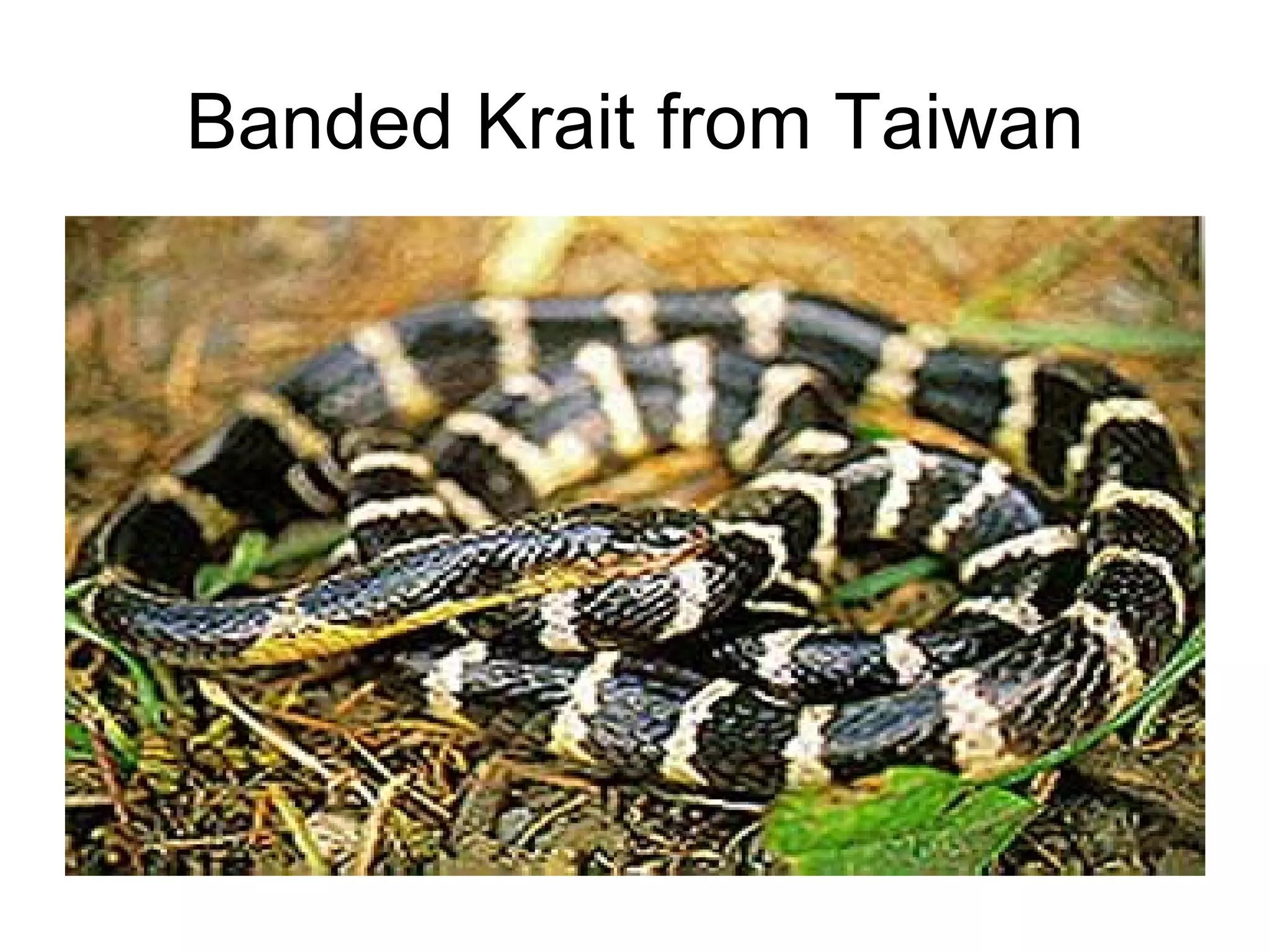
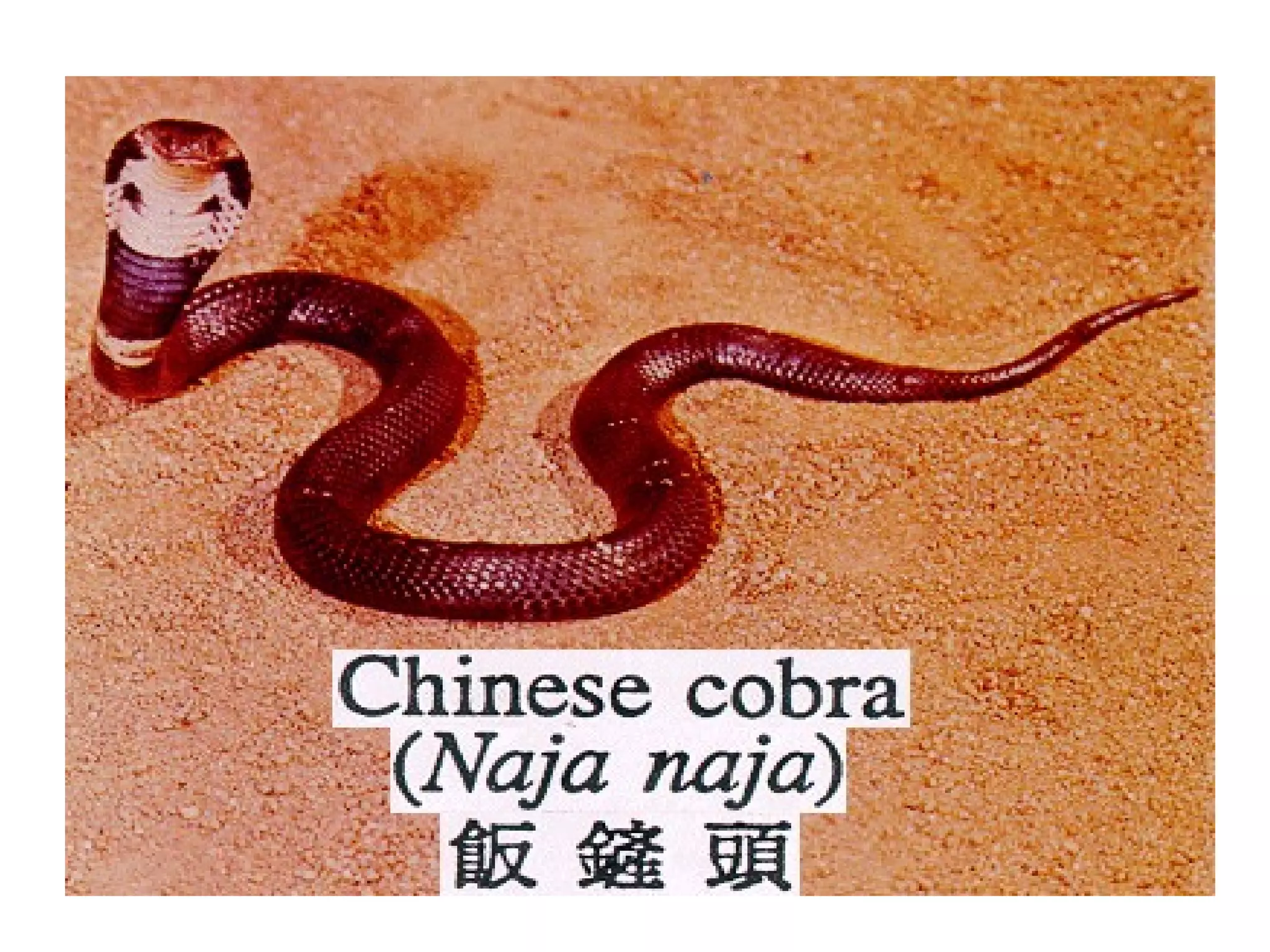
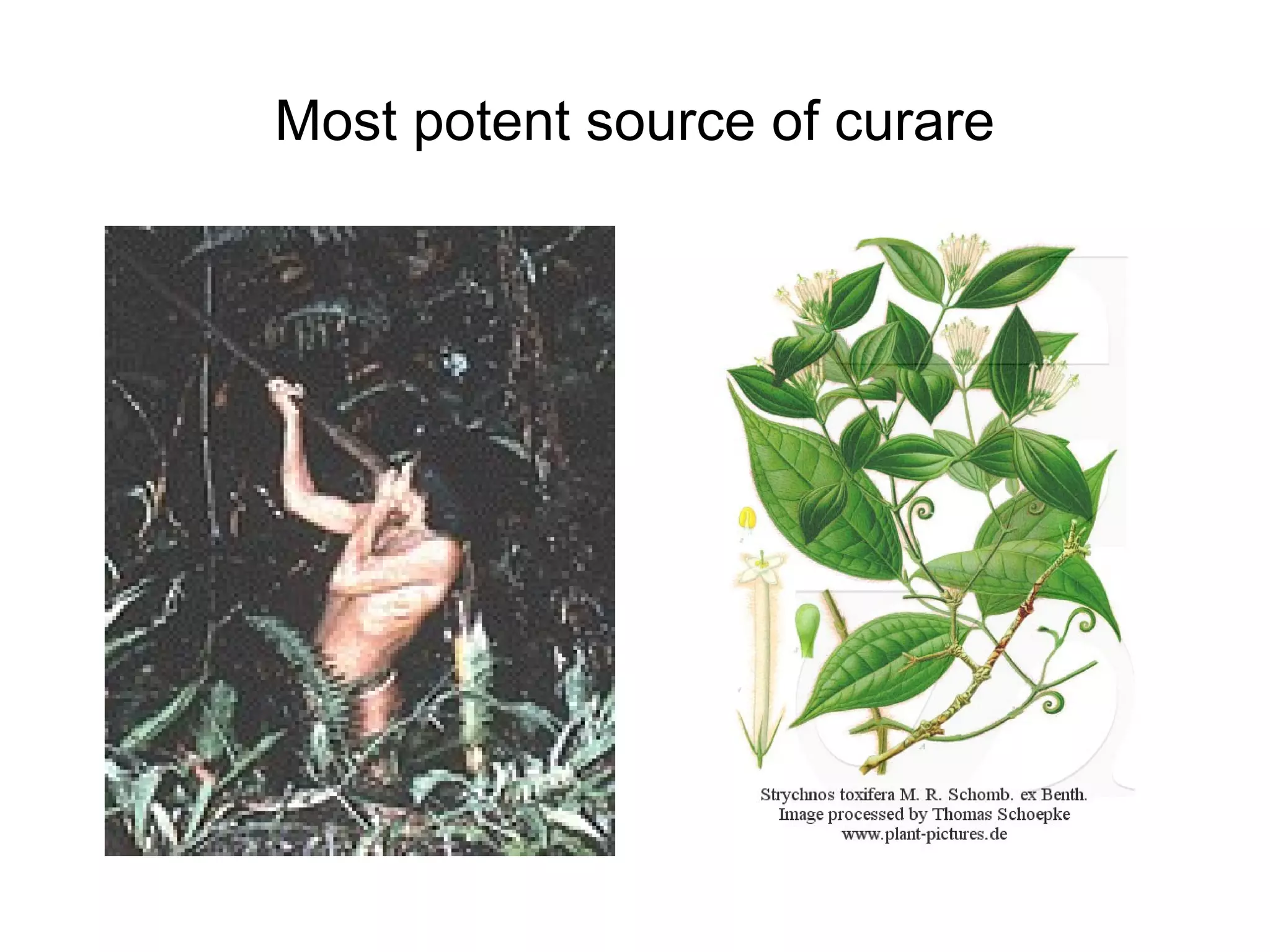
History Involved research using Banded Krait (bungarotoxins) and cobra as well as curare from South American plants
Banded Krait from Taiwan
 
Most potent source of curare
Clinical uses
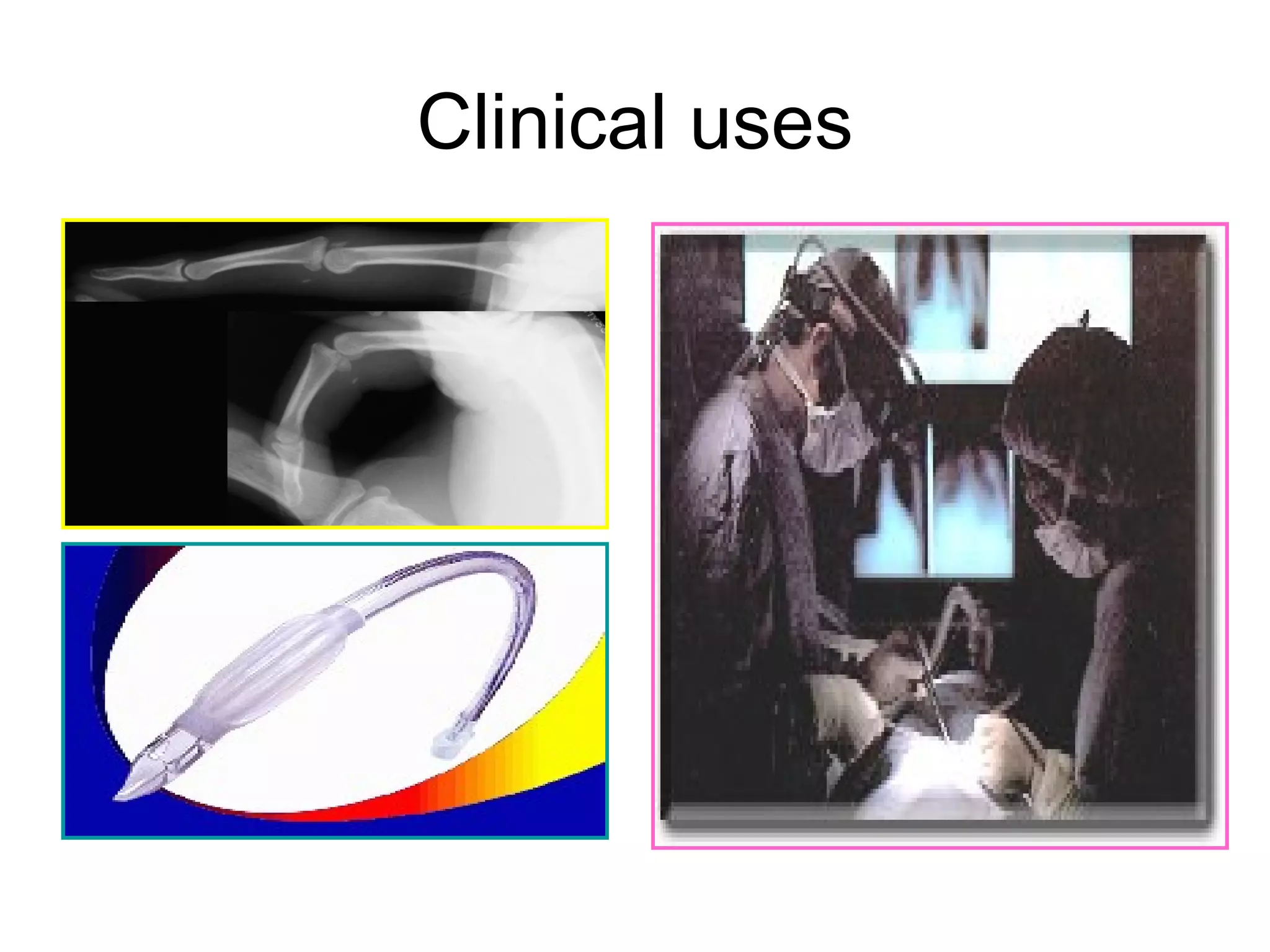
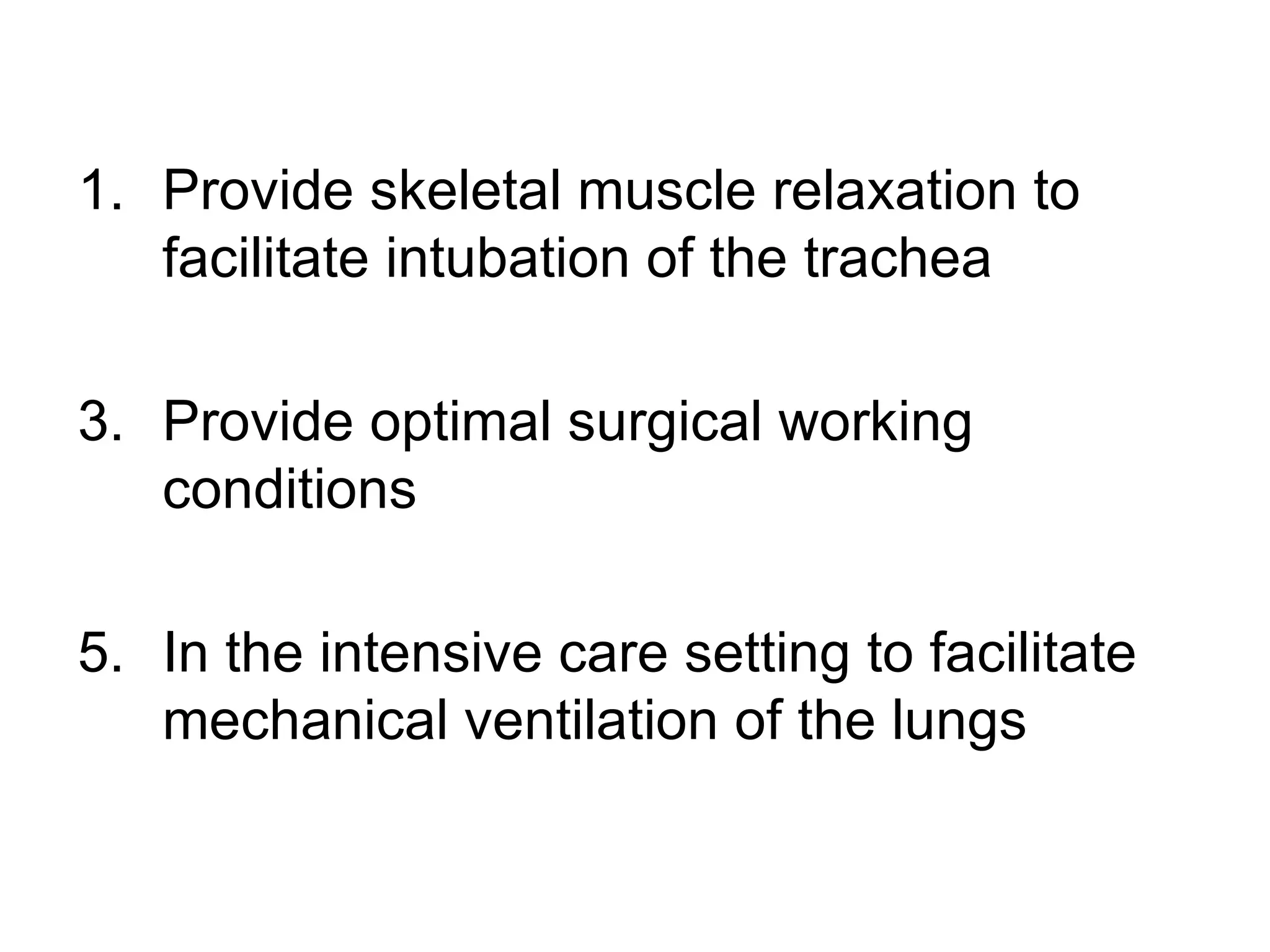
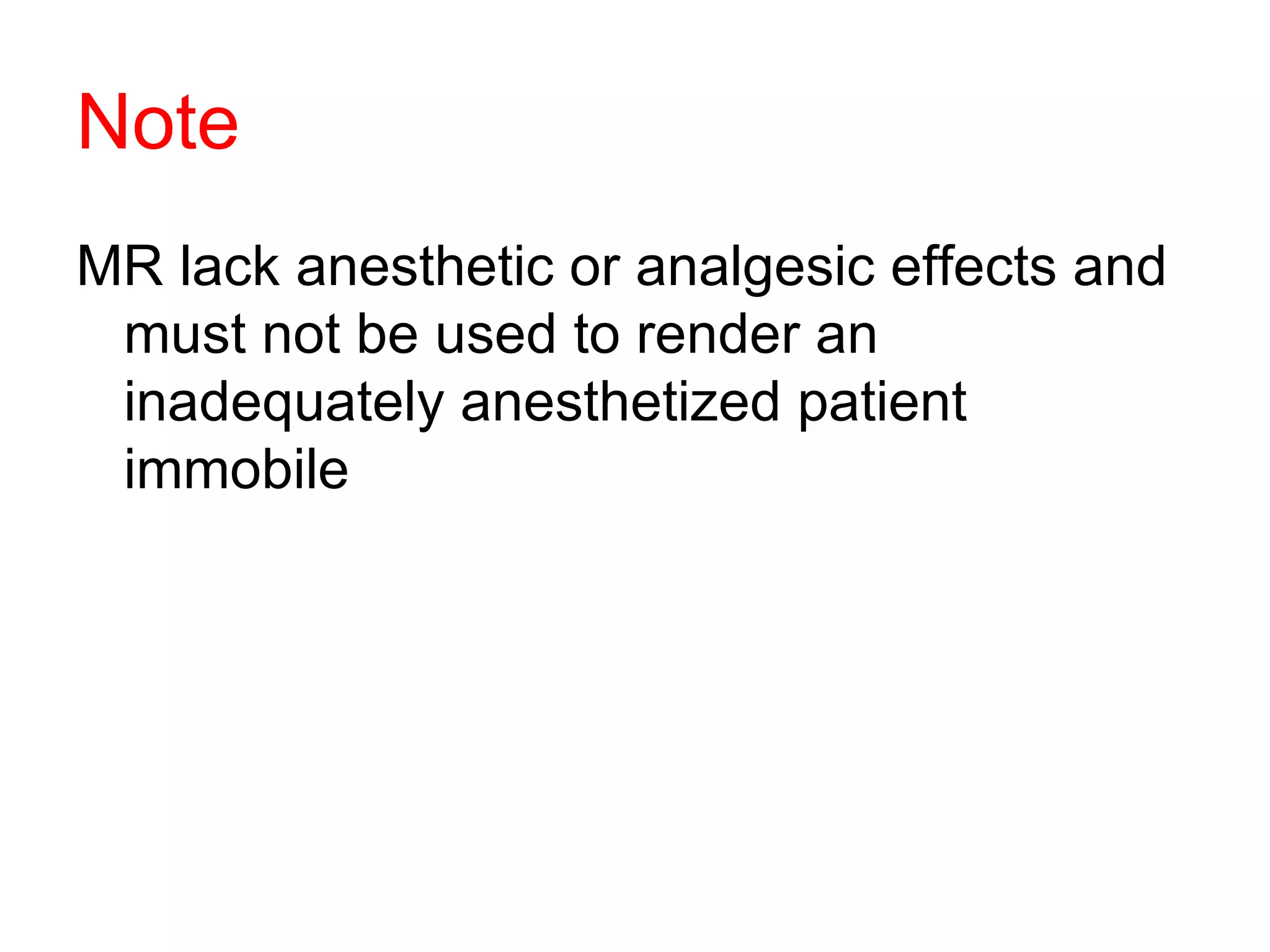
Provide skeletal muscle relaxation to facilitate intubation of the trachea Provide optimal surgical working conditions In the intensive care setting to facilitate mechanical ventilation of the lungs
Note MR lack anesthetic or analgesic effects and must not be used to render an inadequately anesthetized patient immobile
The choice of MR is influenced by: Its speed of onset Duration of action Rout of elimination Associated side effects
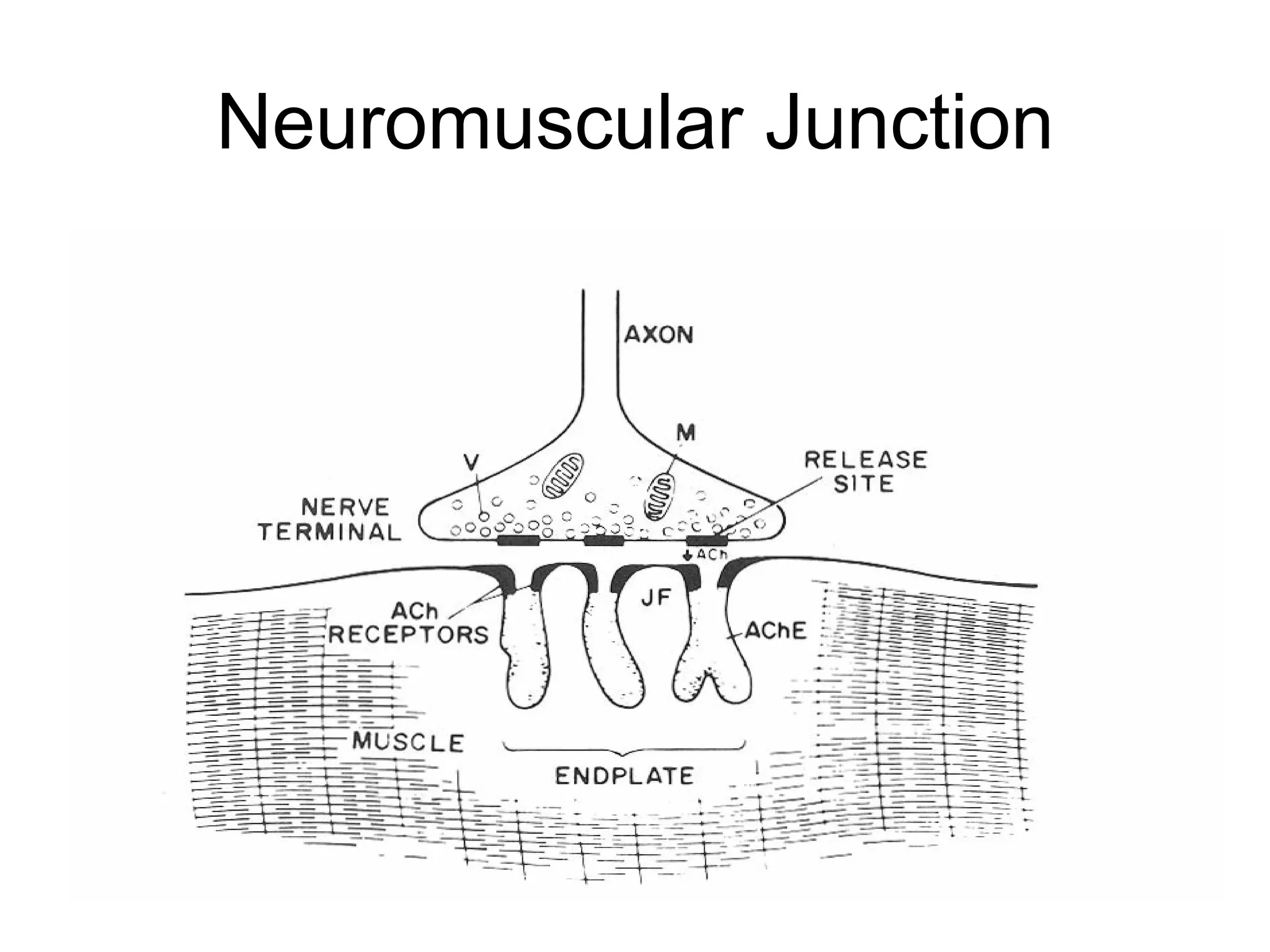
Neuromuscular junction Consist of a prejuctional motor nerve ending separated from the highly folded postjunctional membrane by synaptic cleft Neuromuscular transmission is initiated by arrival of an impulse at the motor nerve terminal with an associated influx of calcium and a resultant release of neurotransmitter acetylcholine
Ach binds to  nicotinic cholinergic receptors on postjunctional membrane, causing a change in membrane permeability to ions, principally K & Na ions Ach is rapidly hydrolyzed by enz. Acetylcholine esterase (true cholinesterase) Nicotinic cholinergic receptors 1.Prejunctional 2.Postjunctional 3.extrajunctional
Neuromuscular Junction
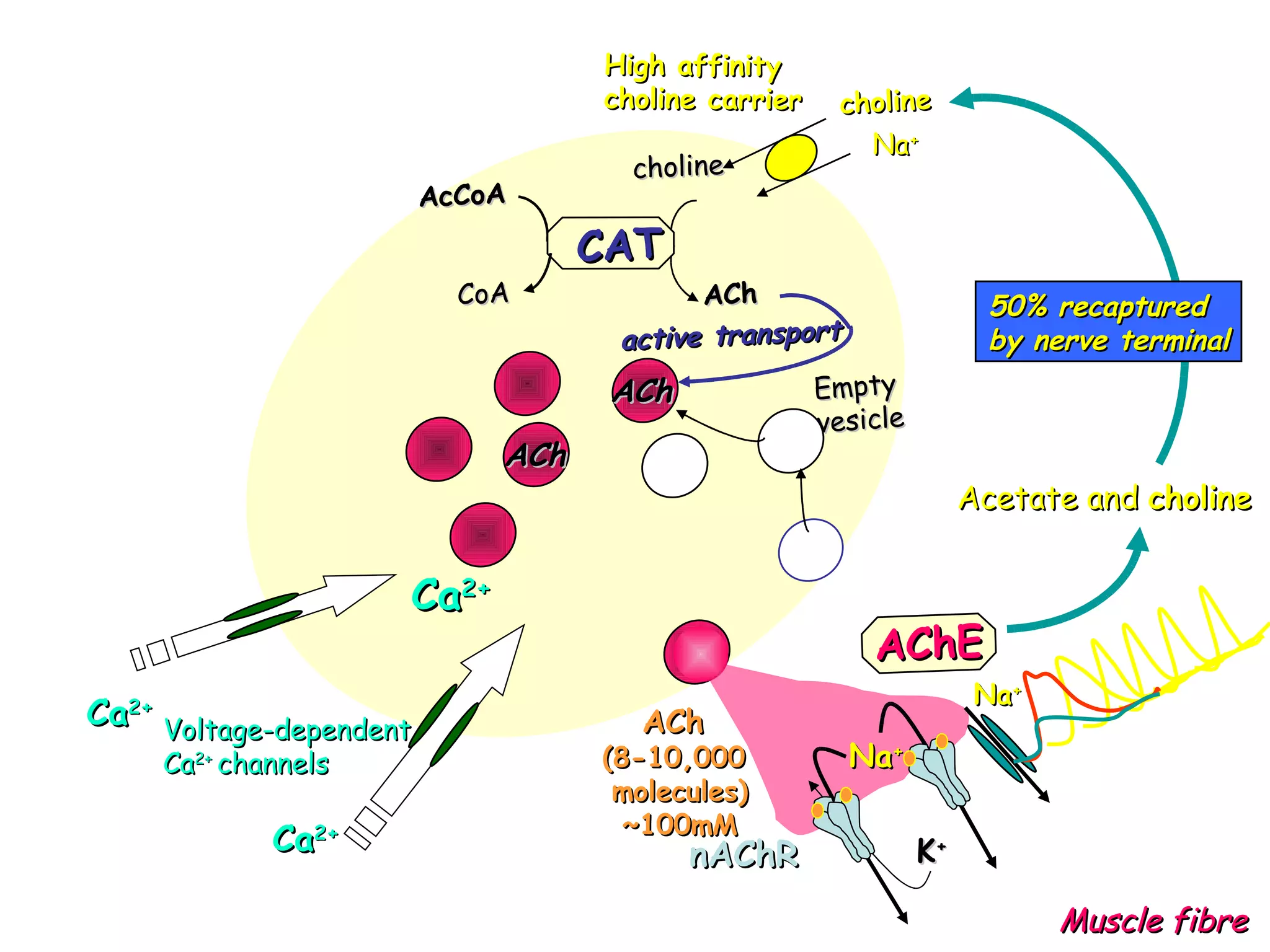
Acetate and  choline 50% recaptured  by nerve terminal Voltage-dependent Ca 2+  channels High affinity  choline carrier Empty  vesicle choline Na + Ca 2+ Ca 2+ Ca 2+ ACh ACh ACh Na + K + nAChR Na + Muscle fibre ACh  (8-10,000  molecules) ~100mM CAT AcCoA CoA choline ACh active transport AChE
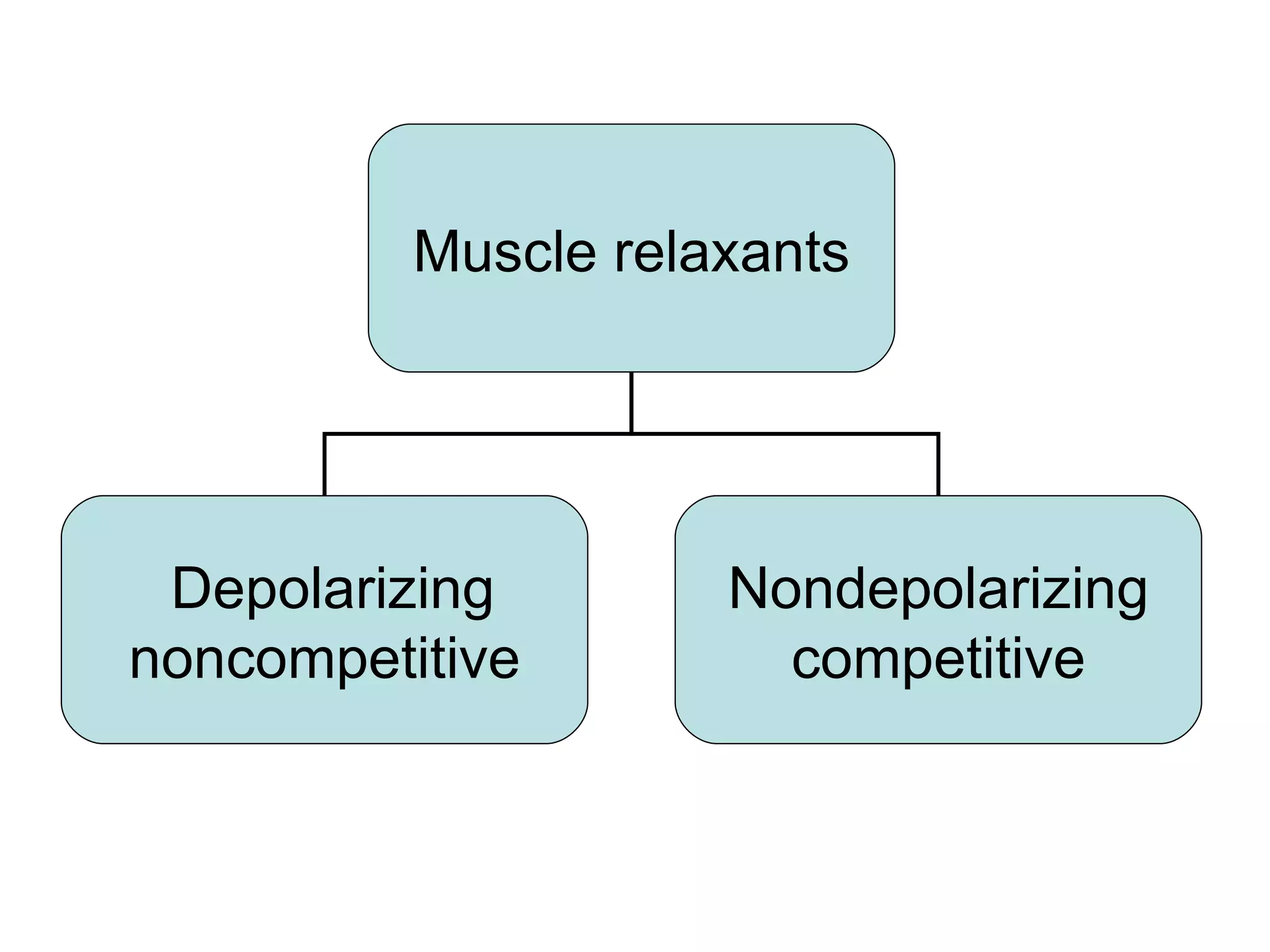
Muscle relaxants Depolarizing  noncompetitive Nondepolarizing competitive
Depolarizing (succinylcholine or Suxamethonium) Clinical use: - - - - - -
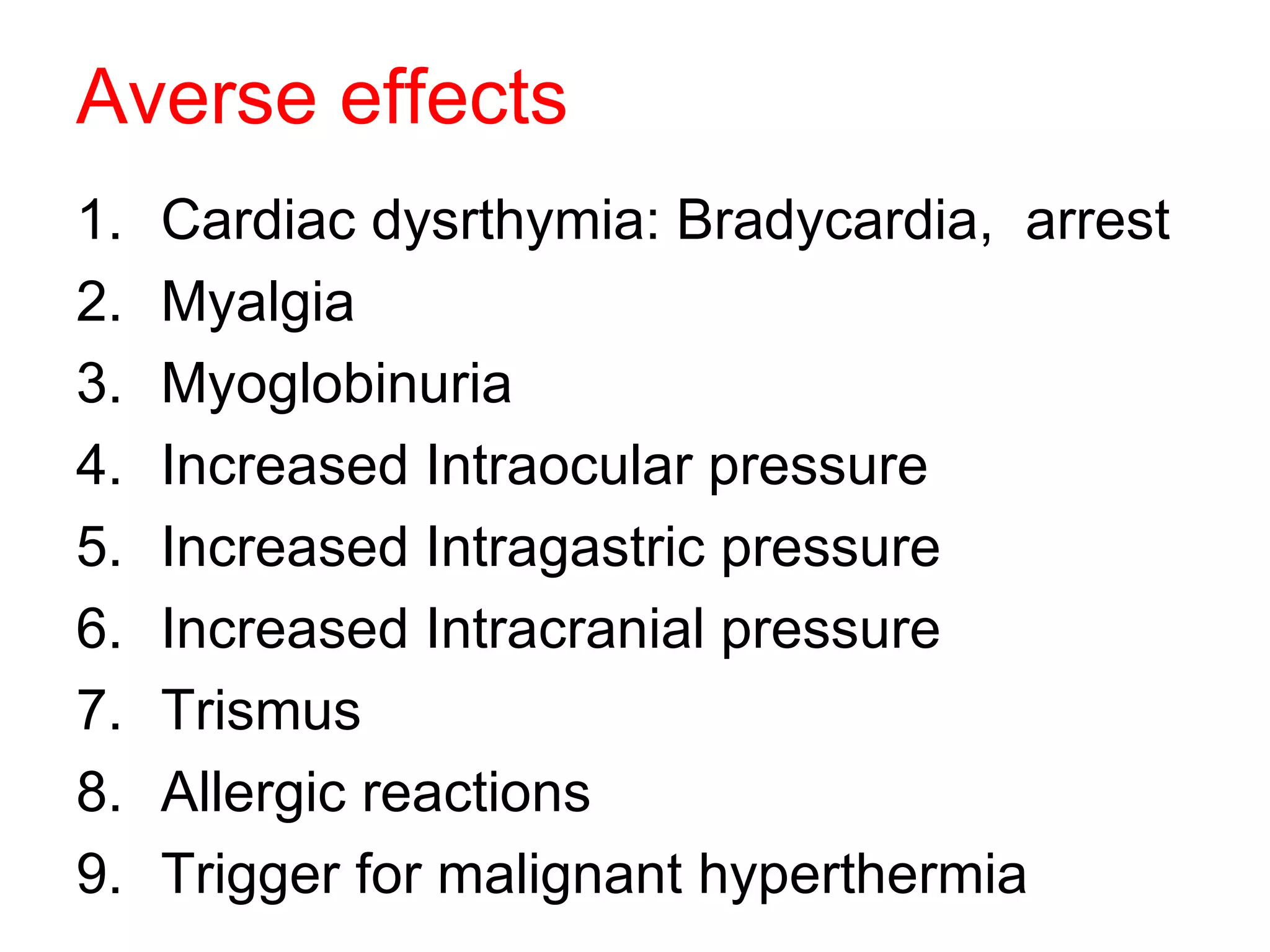
Averse effects Cardiac dysrthymia: Bradycardia,  arrest  Myalgia  Myoglobinuria Increased Intraocular pressure Increased Intragastric pressure Increased Intracranial pressure Trismus Allergic reactions Trigger for malignant hyperthermia
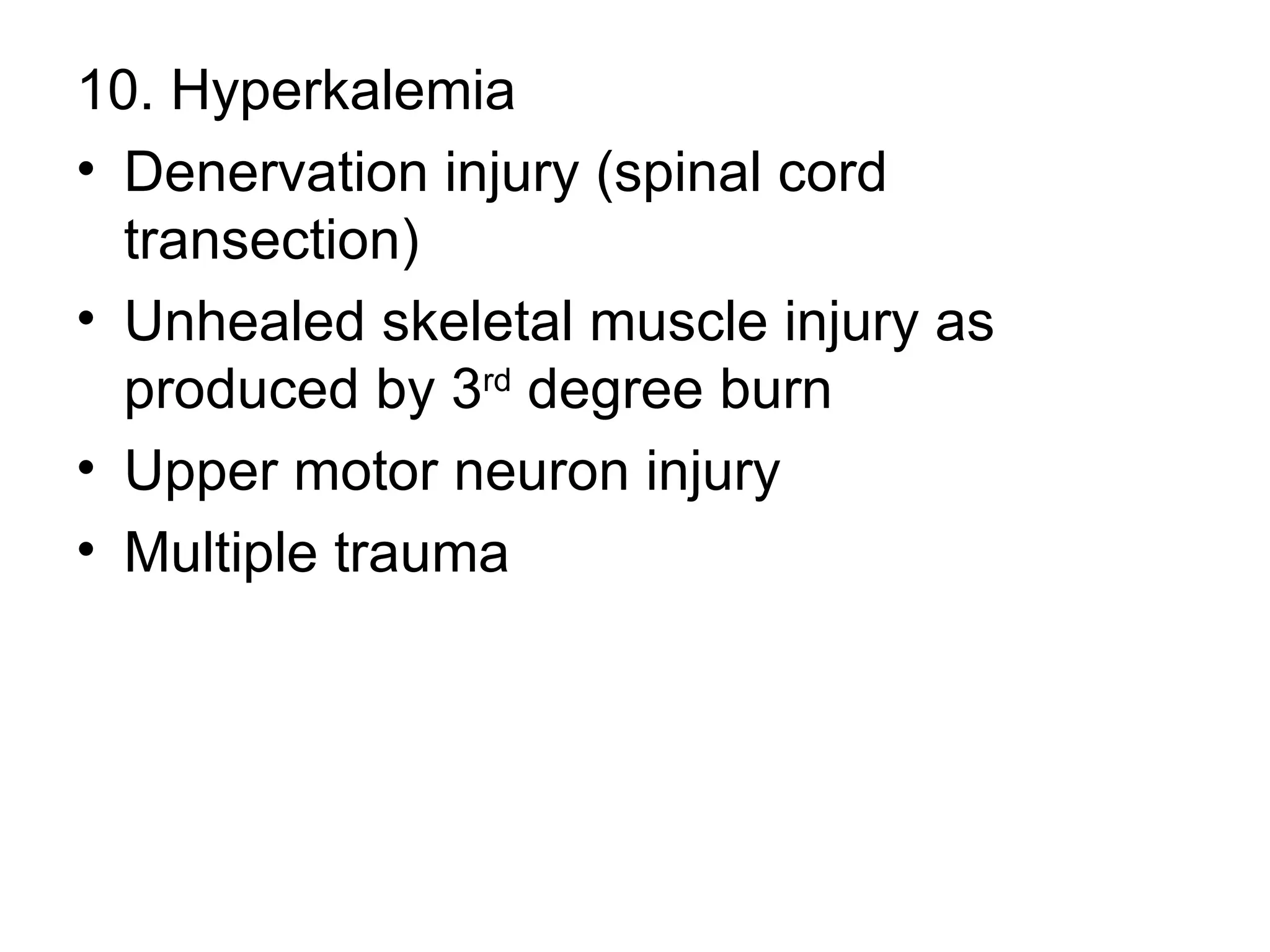
10. Hyperkalemia Denervation injury (spinal cord transection) Unhealed skeletal muscle injury as produced by 3 rd  degree burn Upper motor neuron injury Multiple trauma
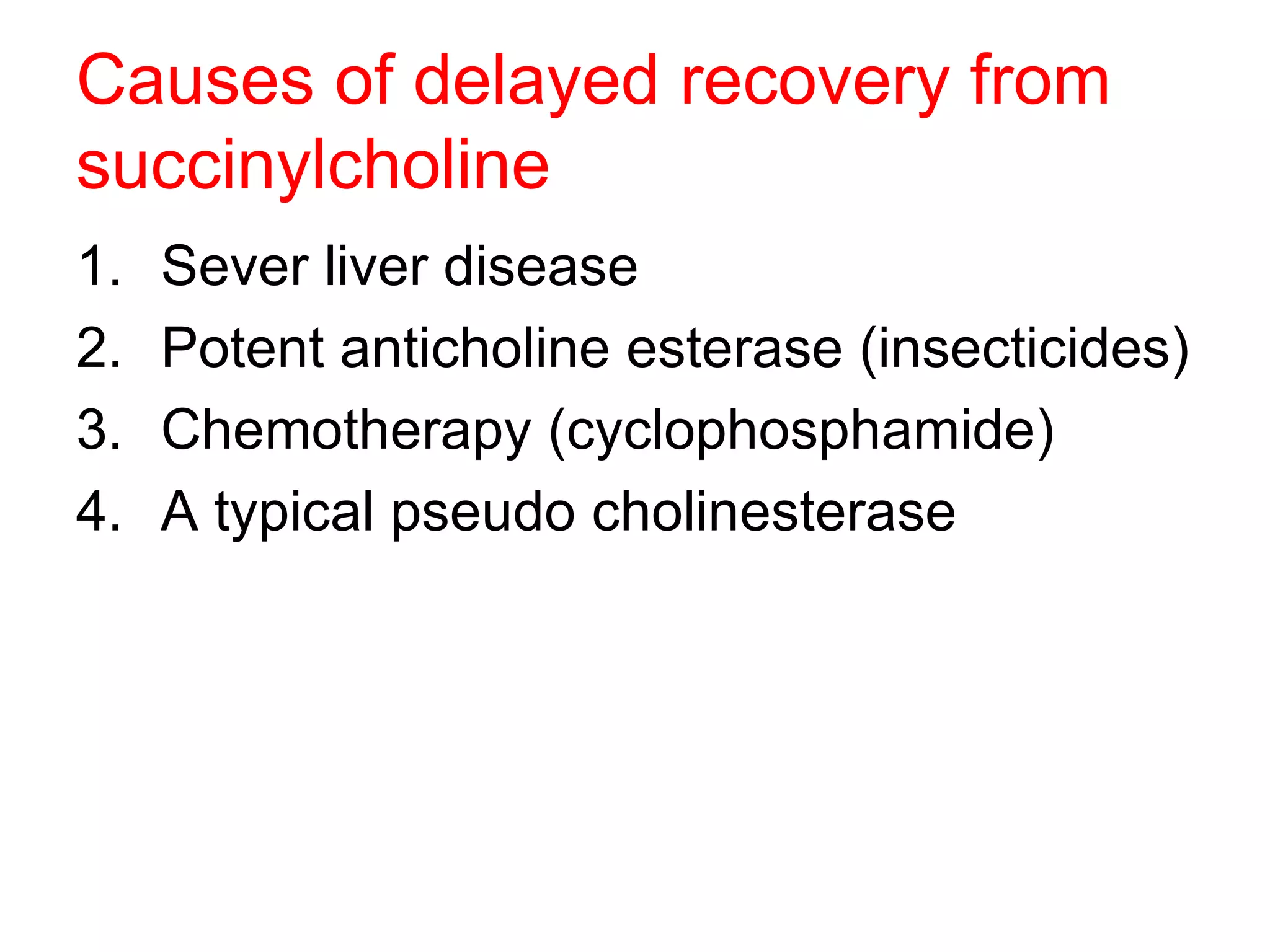
Causes of delayed recovery from succinylcholine Sever liver disease  Potent anticholine esterase (insecticides) Chemotherapy (cyclophosphamide) A typical pseudo cholinesterase
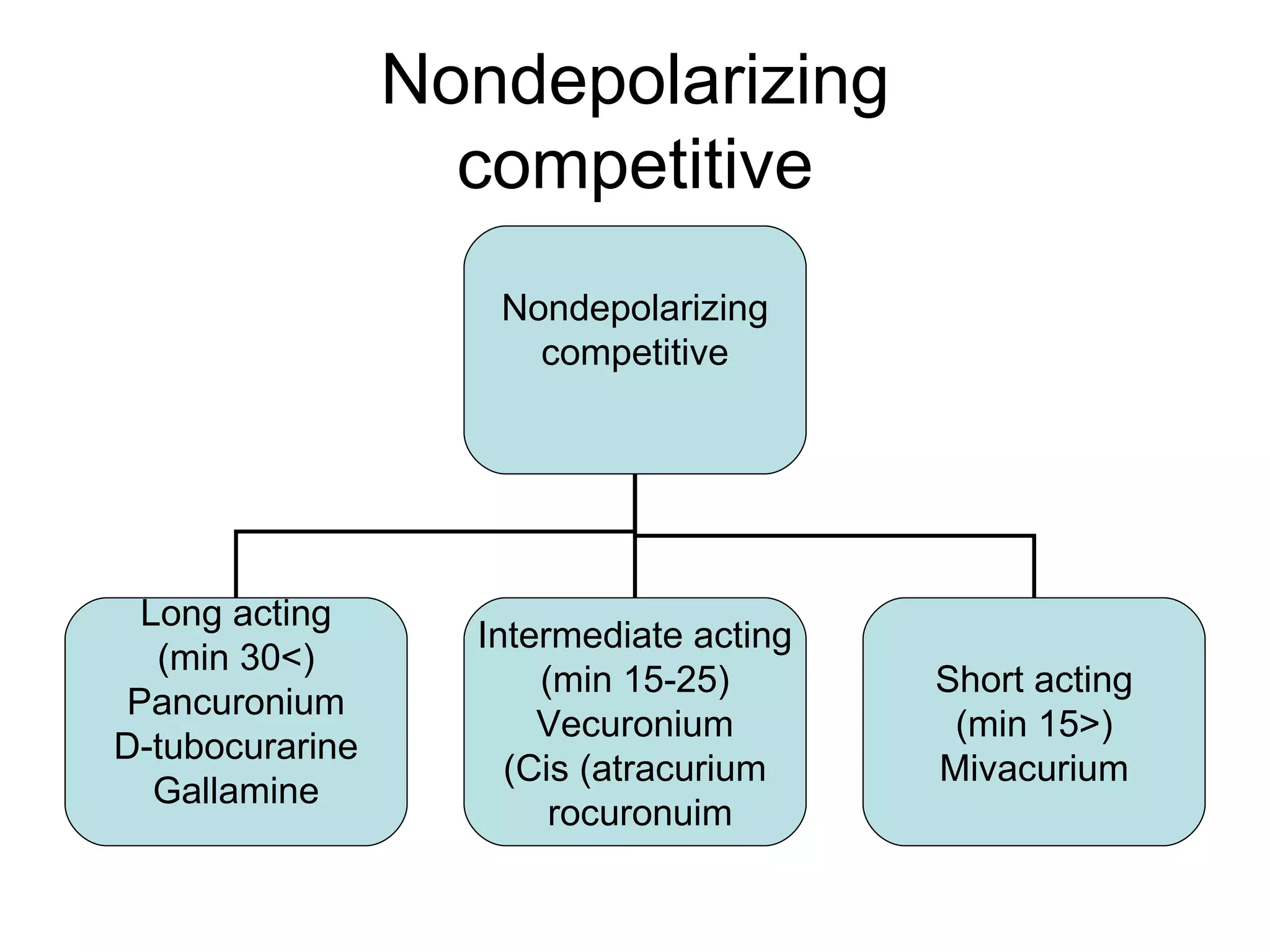
Nondepolarizing competitive Nondepolarizing competitive Long acting (>30 min) Pancuronium D-tubocurarine Gallamine Intermediate acting (15-25 min) Vecuronium Cis (atracurium) rocuronuim  Short acting (<15 min) Mivacurium
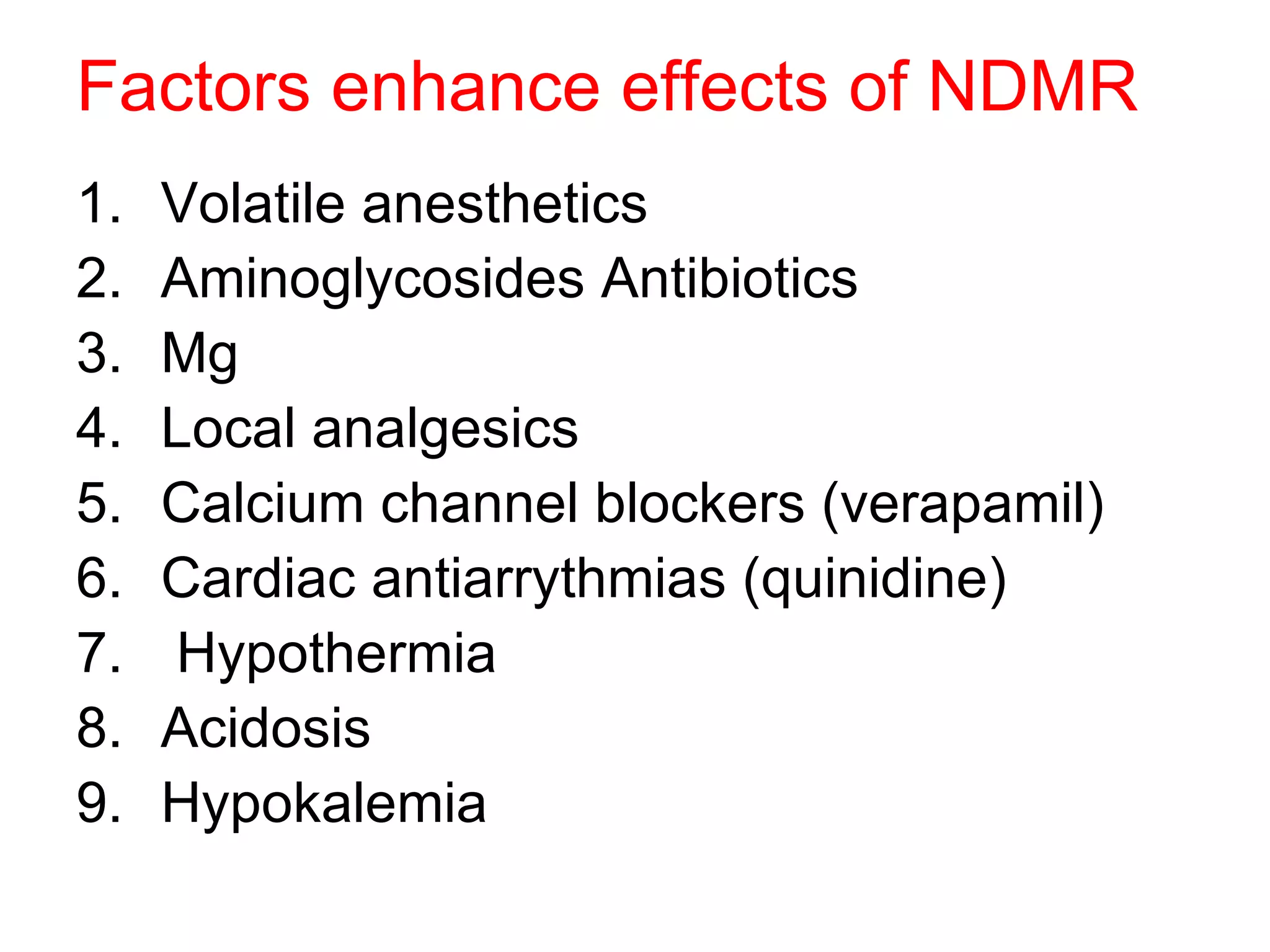
Factors enhance effects of NDMR Volatile anesthetics Aminoglycosides Antibiotics Mg Local analgesics Calcium channel blockers (verapamil) Cardiac antiarrythmias (quinidine)  Hypothermia Acidosis Hypokalemia
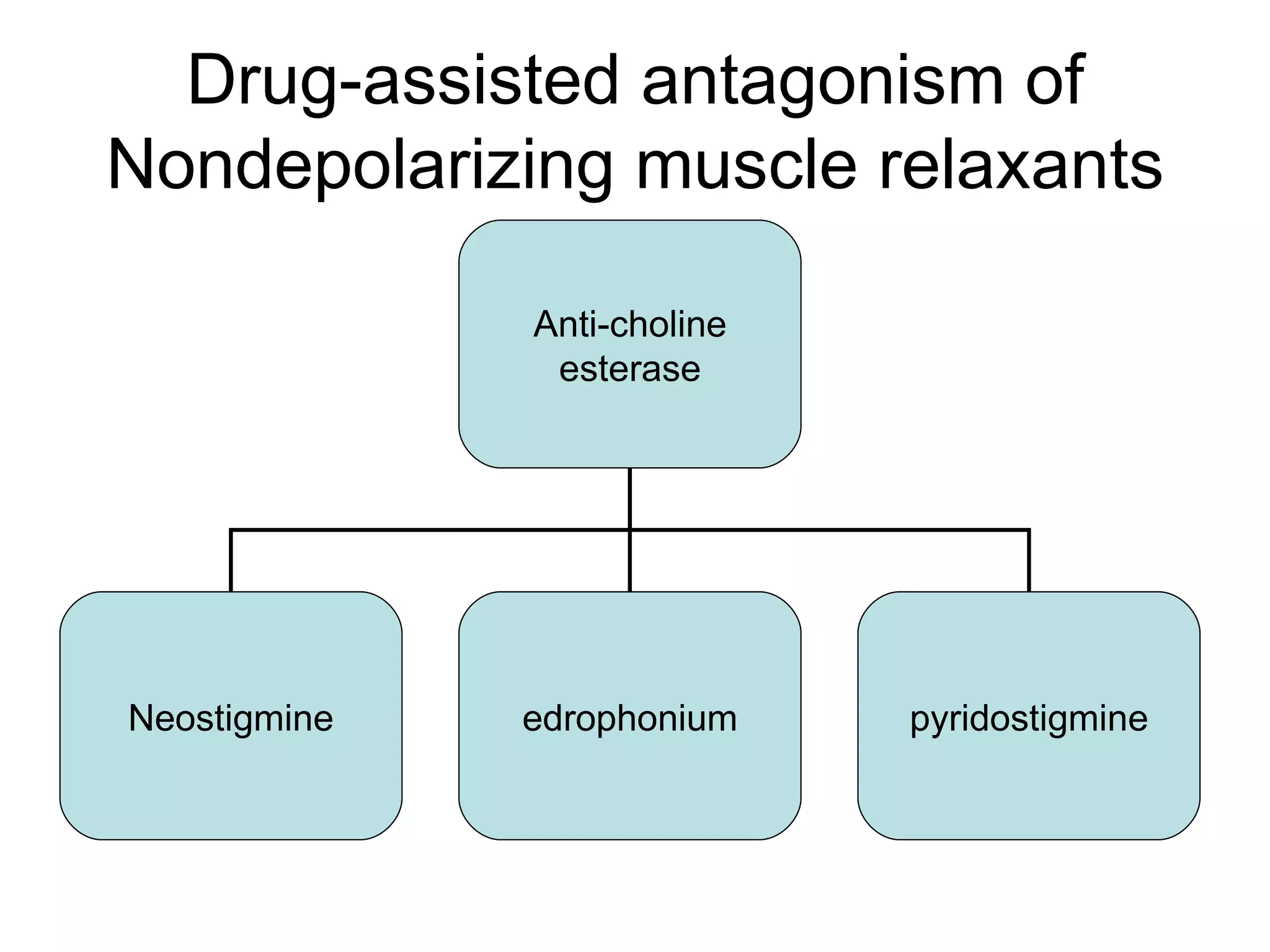
Drug-assisted antagonism of Nondepolarizing muscle relaxants Anti-choline esterase Neostigmine edrophonium pyridostigmine
Anticholinesterase Drug accelerates the already established pattern of spontaneous recovery at the neuromuscular junction by inhibiting the activity of acetylcholinesterase leading to accumulation of ach. At nicotinic (neuromuscular junction) and muscarinic sites
The competition between ach and a Nondepolarizing MR in favor of the neurotransmitter (Ach) and restores neuromuscular transmission Anticholinesterase does not cross blood brain barrier Peripheral muscarinic effects block by anticholinergic drugs like Atropine
Thank you

Anesthesia 5th year, 4th & 5th lectures (Dr. Aamir)

  • 1.
    MUSCLE RELAXANTS Musclerelaxants are drugs that interrupt transmission of neural impulses at the neuromuscular junction
  • 2.
    History Involved researchusing Banded Krait (bungarotoxins) and cobra as well as curare from South American plants
  • 3.
  • 4.
  • 5.
  • 6.
  • 7.
    Provide skeletal musclerelaxation to facilitate intubation of the trachea Provide optimal surgical working conditions In the intensive care setting to facilitate mechanical ventilation of the lungs
  • 8.
    Note MR lackanesthetic or analgesic effects and must not be used to render an inadequately anesthetized patient immobile
  • 9.
    The choice ofMR is influenced by: Its speed of onset Duration of action Rout of elimination Associated side effects
  • 10.
    Neuromuscular junction Consistof a prejuctional motor nerve ending separated from the highly folded postjunctional membrane by synaptic cleft Neuromuscular transmission is initiated by arrival of an impulse at the motor nerve terminal with an associated influx of calcium and a resultant release of neurotransmitter acetylcholine
  • 11.
    Ach binds to nicotinic cholinergic receptors on postjunctional membrane, causing a change in membrane permeability to ions, principally K & Na ions Ach is rapidly hydrolyzed by enz. Acetylcholine esterase (true cholinesterase) Nicotinic cholinergic receptors 1.Prejunctional 2.Postjunctional 3.extrajunctional
  • 12.
  • 13.
    Acetate and choline 50% recaptured by nerve terminal Voltage-dependent Ca 2+ channels High affinity choline carrier Empty vesicle choline Na + Ca 2+ Ca 2+ Ca 2+ ACh ACh ACh Na + K + nAChR Na + Muscle fibre ACh (8-10,000 molecules) ~100mM CAT AcCoA CoA choline ACh active transport AChE
  • 14.
    Muscle relaxants Depolarizing noncompetitive Nondepolarizing competitive
  • 15.
    Depolarizing (succinylcholine orSuxamethonium) Clinical use: - - - - - -
  • 16.
    Averse effects Cardiacdysrthymia: Bradycardia, arrest Myalgia Myoglobinuria Increased Intraocular pressure Increased Intragastric pressure Increased Intracranial pressure Trismus Allergic reactions Trigger for malignant hyperthermia
  • 17.
    10. Hyperkalemia Denervationinjury (spinal cord transection) Unhealed skeletal muscle injury as produced by 3 rd degree burn Upper motor neuron injury Multiple trauma
  • 18.
    Causes of delayedrecovery from succinylcholine Sever liver disease Potent anticholine esterase (insecticides) Chemotherapy (cyclophosphamide) A typical pseudo cholinesterase
  • 19.
    Nondepolarizing competitive Nondepolarizingcompetitive Long acting (>30 min) Pancuronium D-tubocurarine Gallamine Intermediate acting (15-25 min) Vecuronium Cis (atracurium) rocuronuim Short acting (<15 min) Mivacurium
  • 20.
    Factors enhance effectsof NDMR Volatile anesthetics Aminoglycosides Antibiotics Mg Local analgesics Calcium channel blockers (verapamil) Cardiac antiarrythmias (quinidine) Hypothermia Acidosis Hypokalemia
  • 21.
    Drug-assisted antagonism ofNondepolarizing muscle relaxants Anti-choline esterase Neostigmine edrophonium pyridostigmine
  • 22.
    Anticholinesterase Drug acceleratesthe already established pattern of spontaneous recovery at the neuromuscular junction by inhibiting the activity of acetylcholinesterase leading to accumulation of ach. At nicotinic (neuromuscular junction) and muscarinic sites
  • 23.
    The competition betweenach and a Nondepolarizing MR in favor of the neurotransmitter (Ach) and restores neuromuscular transmission Anticholinesterase does not cross blood brain barrier Peripheral muscarinic effects block by anticholinergic drugs like Atropine
  • 24.