Anemia in Surgery
Okon E. E. MD
Outline
 Introduction
 Composition of blood
 Anemia
 Classification
 Clinical Effects
 Surgical & General hematology
 Investigating Anemia
 Management
 Conclusion/Summary’
 References
Introduction
 Anemia is defined as a reduced level of circulating Hb
 Composition
 Total blood volume – 5.5 litres
 Divided into Plasma & cells
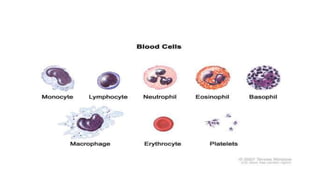
 Three main types of cells
 Erythrocytes
 Hematocrit
 Leukocytes
 Thrombocytes
Plasma
 A protein-rich solution
 Carries the blood cells
 Transports nutrients, metabolites, antibodies
and other molecules between organs.
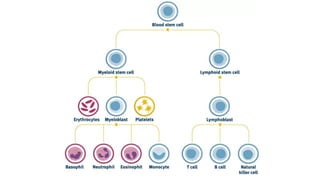
 All blood cells originate from pluripotentstem
cells in the bone marrow.
 Divide lymphoid stem cells and myeloid stem
cells
 Erythrocytes
 Transport oxygen via haemoglobin
 Biconcave disc shape
 Contain no nucleus or organelles
 Reticulocytes (immature erythrocytes) contain residual RNA
 Average lifespan is 120 days
 Broken down by macrophages within the spleen, liver
and bone marrow
 Synthesis stimulated by erythropoietin
Leucocytes
 Neutrophils
 Most abundant leucocyte (40–70%)
 Spend 14 days in the bone marrow but have
a half-life of only 7 hours in the
blood
 Lymphocytes
 Second most common leucocyte (20–50%)
 Important for specific immune response
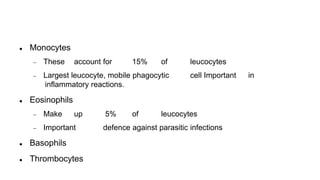
 Monocytes
 These account for 15% of leucocytes
 Largest leucocyte, mobile phagocytic cell Important in
inflammatory reactions.
 Eosinophils
 Make up 5% of leucocytes
 Important defence against parasitic infections
 Basophils
 Thrombocytes
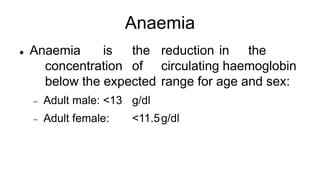
Anaemia
 Anaemia is the reduction in the
concentration of circulating haemoglobin
below the expected range for age and sex:
 Adult male: <13 g/dl
 Adult female: <11.5g/dl
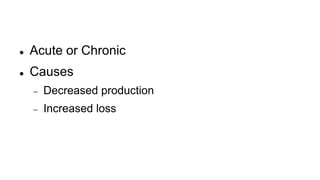
 Acute or Chronic
 Causes
 Decreased production
 Increased loss
Classification
 Size: Microcytic, Normocytic and Macrocytic
 Colour: Normochromic or Hypochromic
Microcytic Hypochromic Anemia
 Thalassaemia
 Iron deficiency
 Malabsorption
 Chronic blood loss, usually gastrointestinal
(GI) or genitourinary (GU) tract
 Decreased dietary intake
 Increased demand
Surgical context
 MC Anemia in surgical practice – IDA
 Colon Ca – right colon: fecal occult blood test
 Stomach
Normocytic normochromic
 Acute blood loss - Surgical context: trauma, massive GI bleed
 Anaemia of chronic disease – Surgical context: Malignant disease
 ACD & IDA may co-exist
 Endocrine disease
 Malignancy
 Haemolytic anaemia
 Erythrocyte abnormality:
 Spherocytosis
 Elliptocytosis •
 Glucose-6-phosphatase dehydrogenase (G6PD) deficiency
Normocytic normochromic
 Haemoglobin abnormality
 Sickle cell anaemia
 Extrinsic factors:
 Disseminated intravascular coagulation (DIC)
 Infections
 Chemical injury
 Sequestration
Macrocytic Anemia
 Megaloblastic (interference with DNA synthesiscausing morphological
abnormalities)
 Folate deficiency
 Vitamin B12 deficiency
 Pernicious anaemia •
 Gastrectomy
 Ileal resection
 Crohn’s disease
 Drugs
 Azathioprine
 Hydroxyurea
 Methotrexate
 Non-megaloblastic anaemia
 Liver disease
 Alcohol
 Pregnancy
 Hypothyroidism
 Increased reticulocyte number
Clinical effectsof anaemia
 A slowly falling haemoglobin level allow for tissue acclimatisation –
Palpitations, angina, ear buzzing
 Tachycardia
 Asthenia, Lethargy, fatigue
 Increased cardiacoutput
 Reticulocytosis
 Can anemia be beneficial? Increased blood flow across capillaries:
critical illness
Surgical haematology
 Changes in haematology as a response to major surgery
 Leucocytosis (usually due to increase in neutrophil count
relative to lymphocytes)
 Relative anaemia:
 Chronic illness
 Blood loss
 Impaired erythropoiesis
 Decreased serum iron
 Relative thrombocytosis
 Increased acute phase reactants includingerythrocyte
sedimentation rate (ESR) and C-reactive protein (CRP)
Investigating anaemia
 History
 Acute or chronic blood loss (e.g menorrhagia, per
rectal bleeding or change in bowel habit)
 Insufficient dietary intake of iron and folate (e.g elderly
people, poverty, anorexia, alcohol problems)
 Excessive utilisation of importantfactors (e.g pregnancy,
prematurity)
 Malignancy Chronic disorders(e.g malabsorption states affecting
the small bowel)
 Drugs (e.g phenytoin, antagonises folate)

Investigating Anaemia
 Reticulocyte count
 Hemolysis - serum bilirubin (unconjugated), urinary
urobilinogen, haptoglobin and haemosiderin
 Bone marrow biopsy
 TFTs
 E,U,Cr
 LFTS
Investigating anaemia
 Folate levels – Red cell folate levels > Serum folate
 Iron studies
 Vitamin C & iron
 Investigate for causes of blood loss
 Upper & Lower GI endoscopy
 IVU, Cystoscopy
Management
 Emergency Surgery
 Transfusion
 Elective surgery – Reversible causes should be corrected
 Mildly anemic – may tolerate GA and sedation
 Profound Anemia – Transfusion & Iron supplementation
 ACD does not respond to hematinics; requires blood
transfusion
 Blood transfusion requirements for the anemic patient
are very different from those of the patient with acute
blood loss.
 During transfusion – caution with circulatory overload
and CCF
 Red cell concerntrates should be <14 days as these
have near normal levels of 2,3DPG
 Vitamin B12 deficiency – replace
 Folate 5mg tab daily
Conclusion
 Blood – is composed of Plasma and cells
 All blood cells originate from a hematopoietic stem cell.
 Major surgery can result in hematologic changes
 Anemia is not a diagnosis – Must be classified, investigated and
treated appropraitely
 Anemia can be beneficial in critical illness
 Transfusion methods differ per patient and red cell concentrates <14
days are preferred
References
 Pastest essential revision notes for surgery
 Essential Surgical Practice by Sir Alfred
Cushieri

Anemia in Surgery.pptx

  • 1.
  • 2.
    Outline  Introduction  Compositionof blood  Anemia  Classification  Clinical Effects  Surgical & General hematology  Investigating Anemia  Management  Conclusion/Summary’  References
  • 3.
    Introduction  Anemia isdefined as a reduced level of circulating Hb  Composition  Total blood volume – 5.5 litres  Divided into Plasma & cells  Three main types of cells  Erythrocytes  Hematocrit  Leukocytes  Thrombocytes
  • 4.
    Plasma  A protein-richsolution  Carries the blood cells  Transports nutrients, metabolites, antibodies and other molecules between organs.
  • 5.
     All bloodcells originate from pluripotentstem cells in the bone marrow.  Divide lymphoid stem cells and myeloid stem cells
  • 7.
     Erythrocytes  Transportoxygen via haemoglobin  Biconcave disc shape  Contain no nucleus or organelles  Reticulocytes (immature erythrocytes) contain residual RNA  Average lifespan is 120 days  Broken down by macrophages within the spleen, liver and bone marrow  Synthesis stimulated by erythropoietin
  • 8.
    Leucocytes  Neutrophils  Mostabundant leucocyte (40–70%)  Spend 14 days in the bone marrow but have a half-life of only 7 hours in the blood  Lymphocytes  Second most common leucocyte (20–50%)  Important for specific immune response
  • 9.
     Monocytes  Theseaccount for 15% of leucocytes  Largest leucocyte, mobile phagocytic cell Important in inflammatory reactions.  Eosinophils  Make up 5% of leucocytes  Important defence against parasitic infections  Basophils  Thrombocytes
  • 11.
    Anaemia  Anaemia isthe reduction in the concentration of circulating haemoglobin below the expected range for age and sex:  Adult male: <13 g/dl  Adult female: <11.5g/dl
  • 12.
     Acute orChronic  Causes  Decreased production  Increased loss
  • 13.
    Classification  Size: Microcytic,Normocytic and Macrocytic  Colour: Normochromic or Hypochromic
  • 14.
    Microcytic Hypochromic Anemia Thalassaemia  Iron deficiency  Malabsorption  Chronic blood loss, usually gastrointestinal (GI) or genitourinary (GU) tract  Decreased dietary intake  Increased demand
  • 15.
    Surgical context  MCAnemia in surgical practice – IDA  Colon Ca – right colon: fecal occult blood test  Stomach
  • 16.
    Normocytic normochromic  Acuteblood loss - Surgical context: trauma, massive GI bleed  Anaemia of chronic disease – Surgical context: Malignant disease  ACD & IDA may co-exist  Endocrine disease  Malignancy  Haemolytic anaemia  Erythrocyte abnormality:  Spherocytosis  Elliptocytosis •  Glucose-6-phosphatase dehydrogenase (G6PD) deficiency
  • 17.
    Normocytic normochromic  Haemoglobinabnormality  Sickle cell anaemia  Extrinsic factors:  Disseminated intravascular coagulation (DIC)  Infections  Chemical injury  Sequestration
  • 18.
    Macrocytic Anemia  Megaloblastic(interference with DNA synthesiscausing morphological abnormalities)  Folate deficiency  Vitamin B12 deficiency  Pernicious anaemia •  Gastrectomy  Ileal resection  Crohn’s disease  Drugs  Azathioprine  Hydroxyurea  Methotrexate
  • 19.
     Non-megaloblastic anaemia Liver disease  Alcohol  Pregnancy  Hypothyroidism  Increased reticulocyte number
  • 20.
    Clinical effectsof anaemia A slowly falling haemoglobin level allow for tissue acclimatisation – Palpitations, angina, ear buzzing  Tachycardia  Asthenia, Lethargy, fatigue  Increased cardiacoutput  Reticulocytosis  Can anemia be beneficial? Increased blood flow across capillaries: critical illness
  • 21.
    Surgical haematology  Changesin haematology as a response to major surgery  Leucocytosis (usually due to increase in neutrophil count relative to lymphocytes)  Relative anaemia:  Chronic illness  Blood loss  Impaired erythropoiesis  Decreased serum iron  Relative thrombocytosis  Increased acute phase reactants includingerythrocyte sedimentation rate (ESR) and C-reactive protein (CRP)
  • 22.
    Investigating anaemia  History Acute or chronic blood loss (e.g menorrhagia, per rectal bleeding or change in bowel habit)  Insufficient dietary intake of iron and folate (e.g elderly people, poverty, anorexia, alcohol problems)  Excessive utilisation of importantfactors (e.g pregnancy, prematurity)  Malignancy Chronic disorders(e.g malabsorption states affecting the small bowel)  Drugs (e.g phenytoin, antagonises folate) 
  • 23.
    Investigating Anaemia  Reticulocytecount  Hemolysis - serum bilirubin (unconjugated), urinary urobilinogen, haptoglobin and haemosiderin  Bone marrow biopsy  TFTs  E,U,Cr  LFTS
  • 24.
    Investigating anaemia  Folatelevels – Red cell folate levels > Serum folate  Iron studies  Vitamin C & iron  Investigate for causes of blood loss  Upper & Lower GI endoscopy  IVU, Cystoscopy
  • 25.
    Management  Emergency Surgery Transfusion  Elective surgery – Reversible causes should be corrected  Mildly anemic – may tolerate GA and sedation  Profound Anemia – Transfusion & Iron supplementation  ACD does not respond to hematinics; requires blood transfusion
  • 26.
     Blood transfusionrequirements for the anemic patient are very different from those of the patient with acute blood loss.  During transfusion – caution with circulatory overload and CCF  Red cell concerntrates should be <14 days as these have near normal levels of 2,3DPG
  • 27.
     Vitamin B12deficiency – replace  Folate 5mg tab daily
  • 28.
    Conclusion  Blood –is composed of Plasma and cells  All blood cells originate from a hematopoietic stem cell.  Major surgery can result in hematologic changes  Anemia is not a diagnosis – Must be classified, investigated and treated appropraitely  Anemia can be beneficial in critical illness  Transfusion methods differ per patient and red cell concentrates <14 days are preferred
  • 29.
    References  Pastest essentialrevision notes for surgery  Essential Surgical Practice by Sir Alfred Cushieri