SALALE UNIVERSITY COLLEGE OF HEALTH SCIENCE POST
GRADUATE PROGRAM IN AHN.
SEMINAR PRESENTATION ON ANEMIA .
SUBMIT TO: MR. MELESE ( BSC,MSC)
SUBMIT BY: 1.MESFIN SHIFARA ID NO….185/15
2.AZAZHU ABATE NO …177/15
3.YORDANOSE LEMA….195/15
4.AMENSISA DEBESA…176/15
OCT 2023
FITCHE 1
Brain Tumors
11/4/2023
Presentation outline
Introduction
Epidemiology
pathophysiology
classification
Clinical Manifestation
Risk factor
Diagnosis
Management
Nursing Diagnosis
prevention
Reference
2
11/4/2023 Brain Tumors
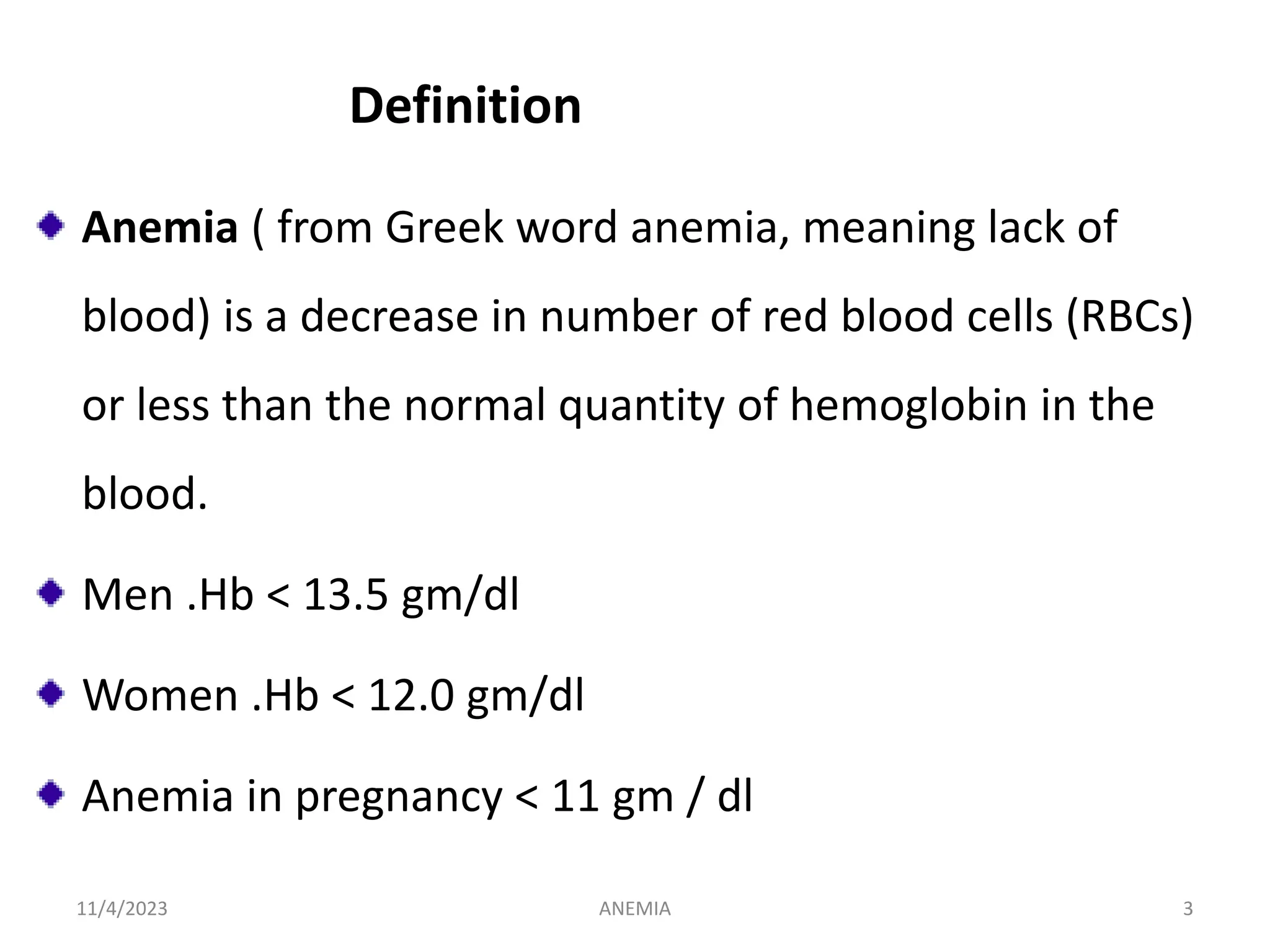
Definition
Anemia ( from Greek word anemia, meaning lack of
blood) is a decrease in number of red blood cells (RBCs)
or less than the normal quantity of hemoglobin in the
blood.
Men .Hb < 13.5 gm/dl
Women .Hb < 12.0 gm/dl
Anemia in pregnancy < 11 gm / dl
11/4/2023 ANEMIA 3
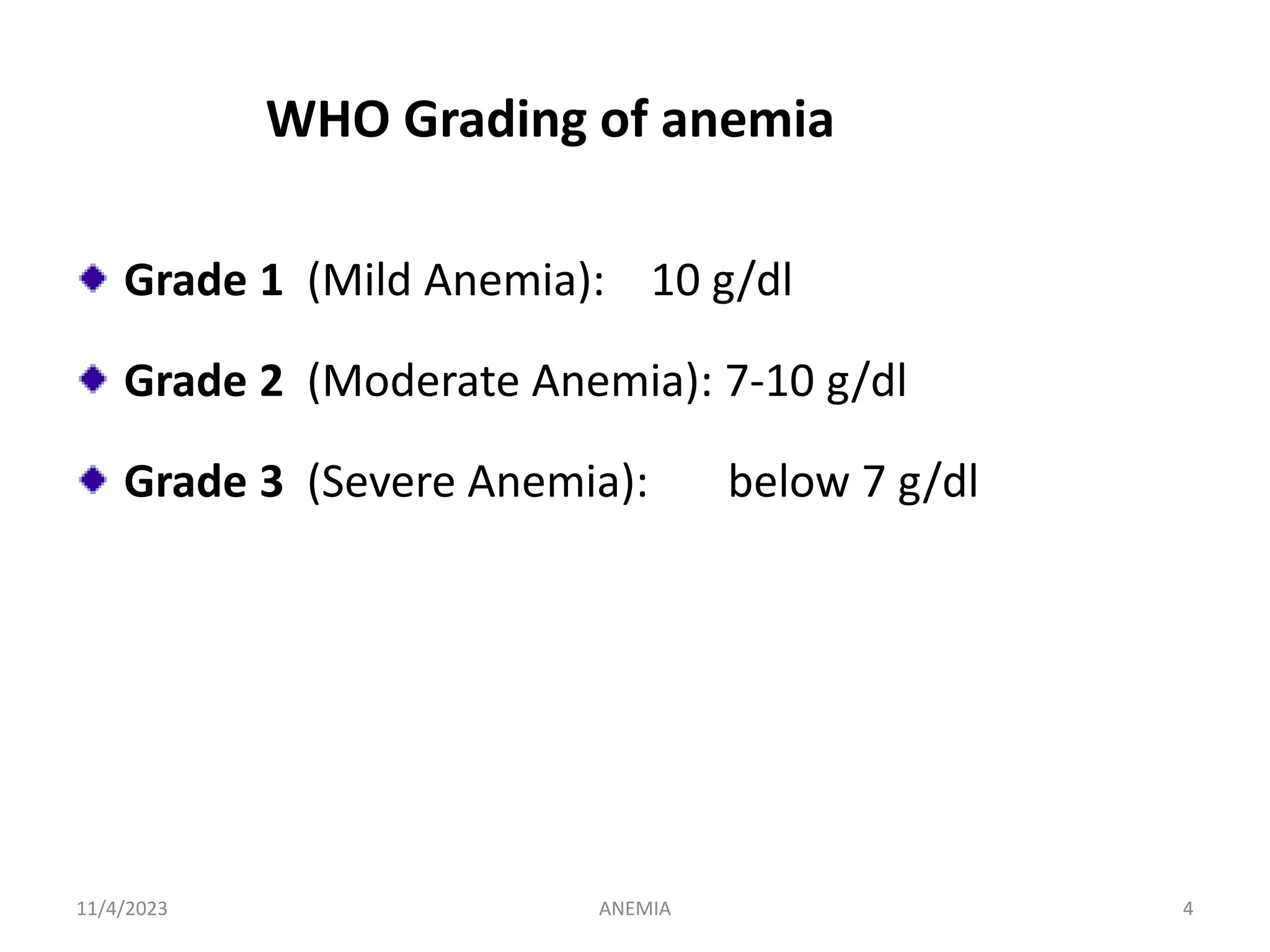
WHO Grading of anemia
Grade 1 (Mild Anemia): 10 g/dl
Grade 2 (Moderate Anemia): 7-10 g/dl
Grade 3 (Severe Anemia): below 7 g/dl
11/4/2023 ANEMIA 4
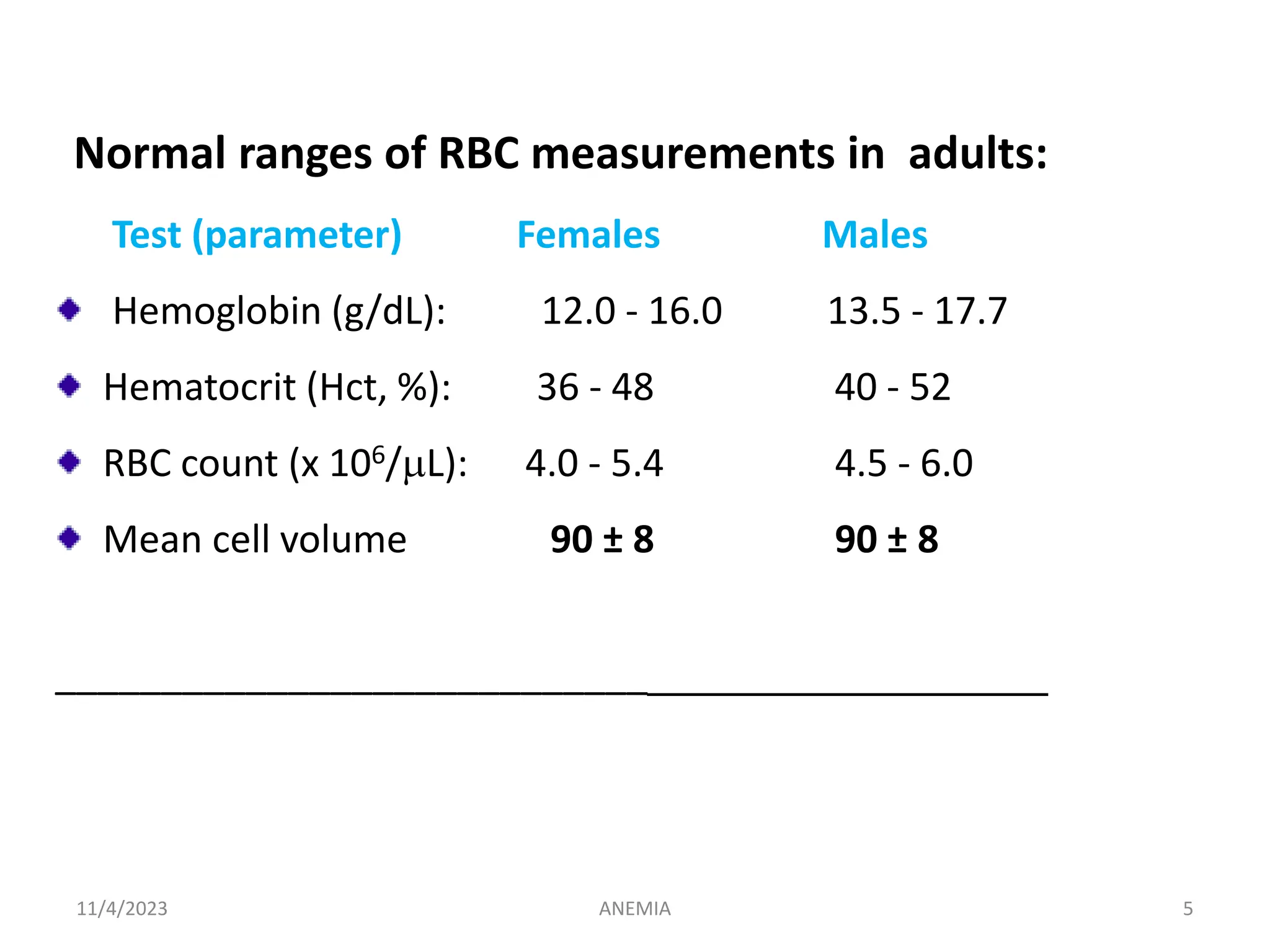
Normal ranges of RBC measurements in adults:
Test (parameter) Females Males
Hemoglobin (g/dL): 12.0 - 16.0 13.5 - 17.7
Hematocrit (Hct, %): 36 - 48 40 - 52
RBC count (x 106/L): 4.0 - 5.4 4.5 - 6.0
Mean cell volume 90 ± 8 90 ± 8
_____________________________________________
11/4/2023 ANEMIA 5
Epidemiology
One-fourth of the global population is estimated to be
anemic, with cases increasing rapidly for women,
expectant mothers, young girls, and children younger
than age 5.
In 2021, 1.92 billion people globally had anemia. This is
an increase of 420 million cases over three decades
11/4/2023 ANEMIA 6
11/4/2023 ANEMIA 7
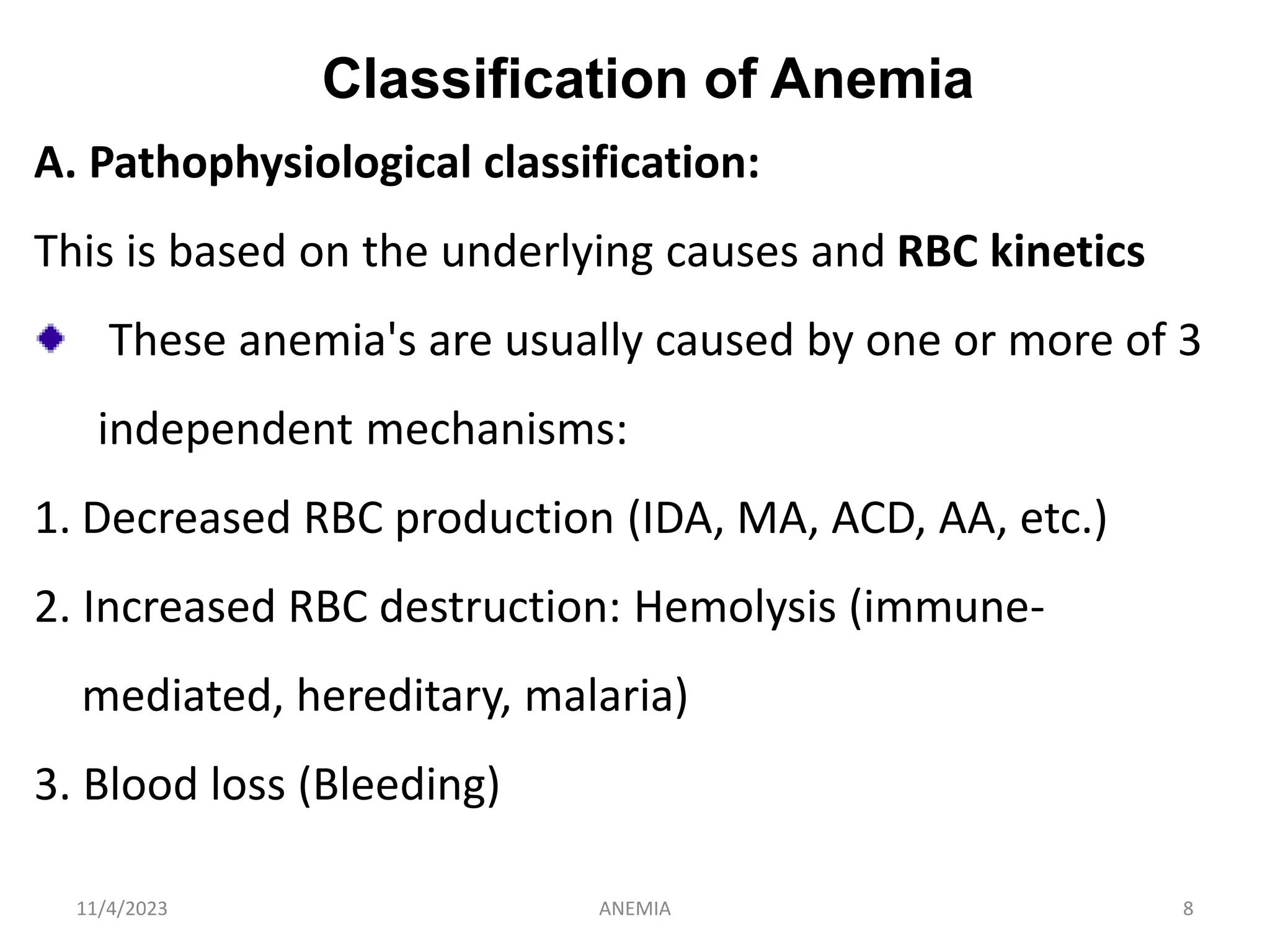
Classification of Anemia
A. Pathophysiological classification:
This is based on the underlying causes and RBC kinetics
These anemia's are usually caused by one or more of 3
independent mechanisms:
1. Decreased RBC production (IDA, MA, ACD, AA, etc.)
2. Increased RBC destruction: Hemolysis (immune-
mediated, hereditary, malaria)
3. Blood loss (Bleeding)
11/4/2023 ANEMIA 8
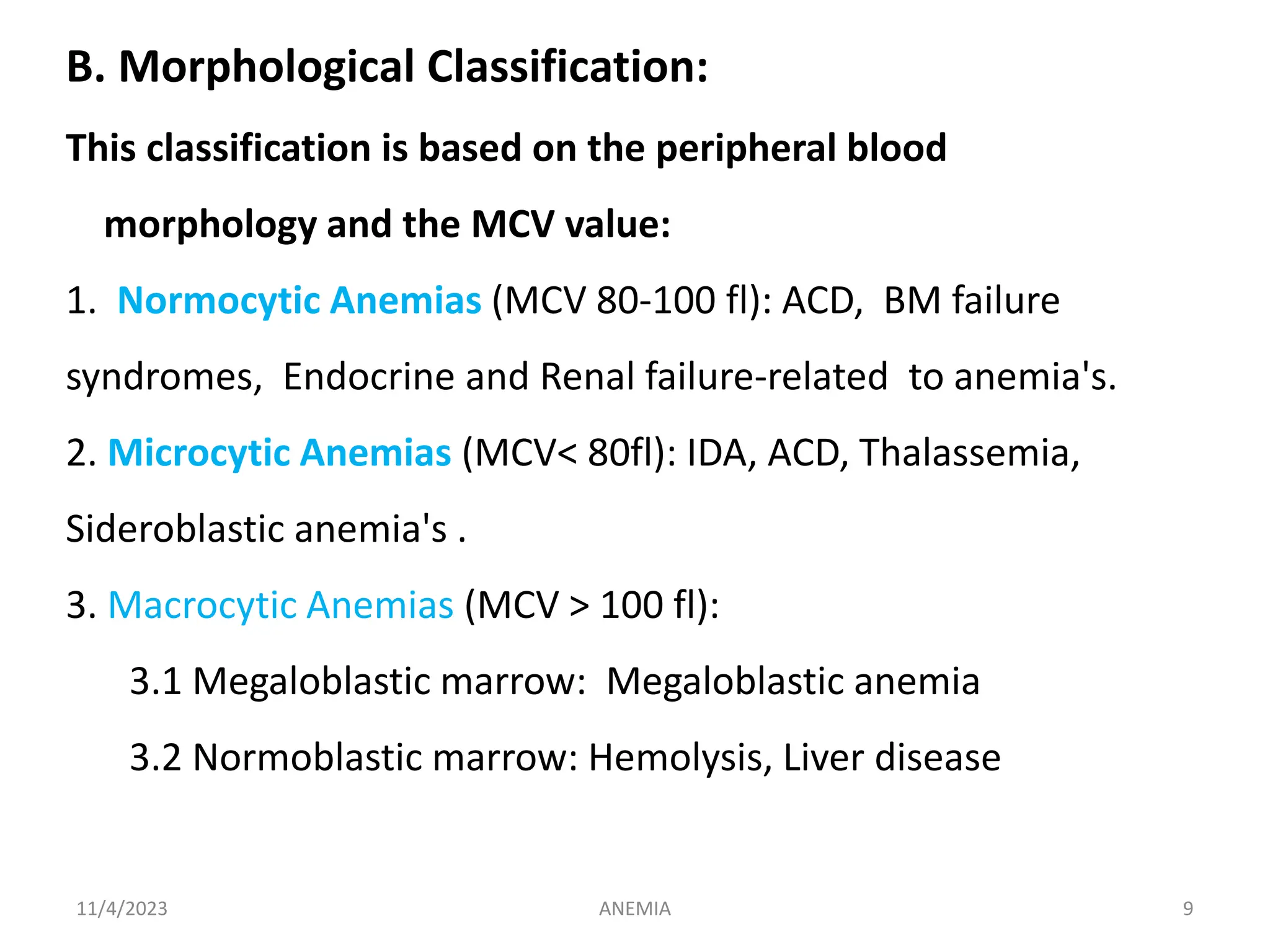
B. Morphological Classification:
This classification is based on the peripheral blood
morphology and the MCV value:
1. Normocytic Anemias (MCV 80-100 fl): ACD, BM failure
syndromes, Endocrine and Renal failure-related to anemia's.
2. Microcytic Anemias (MCV< 80fl): IDA, ACD, Thalassemia,
Sideroblastic anemia's .
3. Macrocytic Anemias (MCV > 100 fl):
3.1 Megaloblastic marrow: Megaloblastic anemia
3.2 Normoblastic marrow: Hemolysis, Liver disease
11/4/2023 ANEMIA 9
11/4/2023 ANEMIA 10
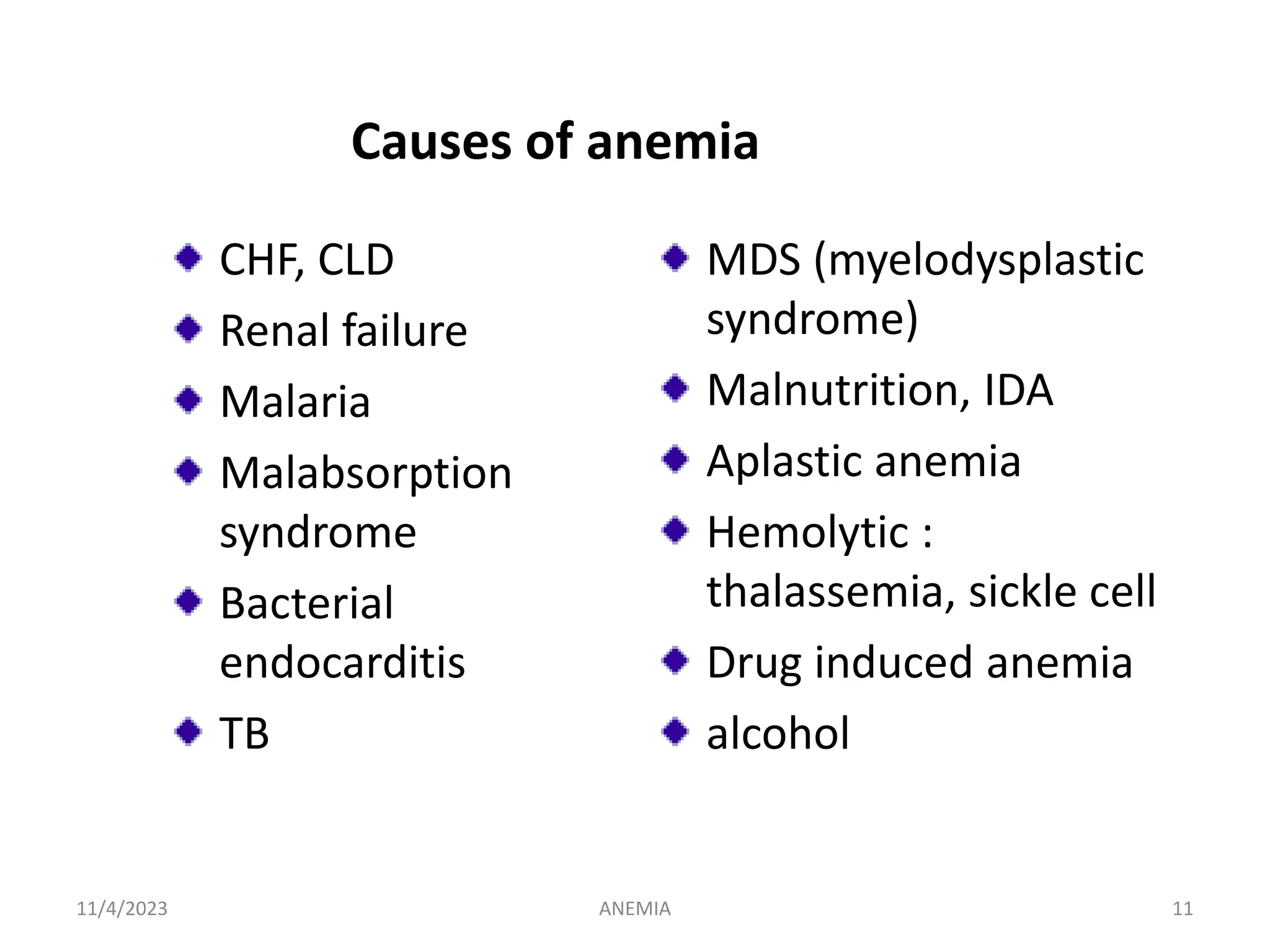
Causes of anemia
CHF, CLD
Renal failure
Malaria
Malabsorption
syndrome
Bacterial
endocarditis
TB
MDS (myelodysplastic
syndrome)
Malnutrition, IDA
Aplastic anemia
Hemolytic :
thalassemia, sickle cell
Drug induced anemia
alcohol
11/4/2023 ANEMIA 11
Clinical Evaluation of the Patient with Anemia
Integration of the History + Physical examination + Lab
A. History:
1. Duration of symptoms
2. Nutritional/dietary history
3. Blood loss, menstrual history, pregnancy
5. Regular blood donation?
6. Family history (hereditary hemolytic anemia's)
7. Underlying disease (comorbid conditions)
8. Exposure to drugs or toxins and travel history malaria
11/4/2023 ANEMIA 12
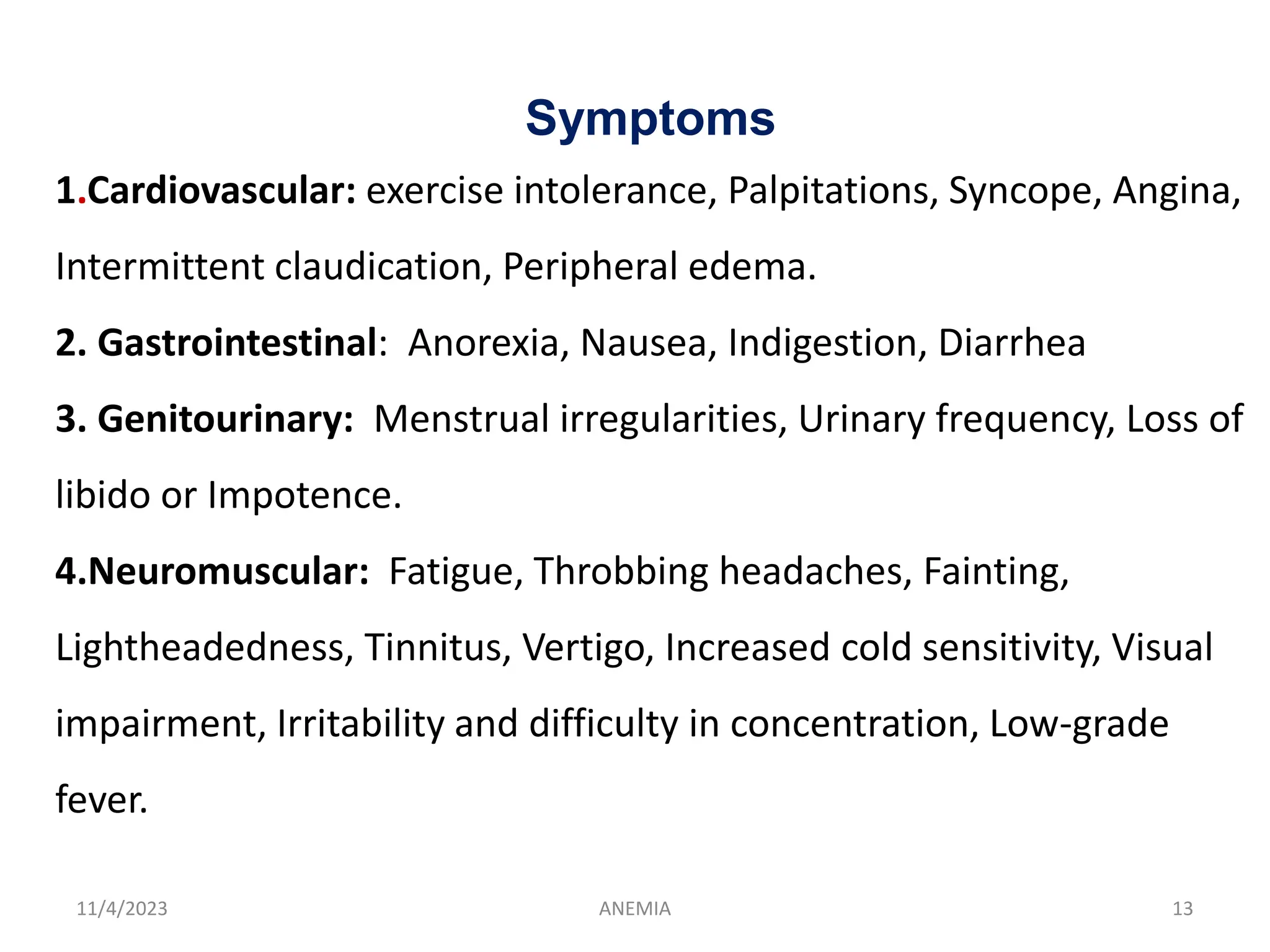
Symptoms
1.Cardiovascular: exercise intolerance, Palpitations, Syncope, Angina,
Intermittent claudication, Peripheral edema.
2. Gastrointestinal: Anorexia, Nausea, Indigestion, Diarrhea
3. Genitourinary: Menstrual irregularities, Urinary frequency, Loss of
libido or Impotence.
4.Neuromuscular: Fatigue, Throbbing headaches, Fainting,
Lightheadedness, Tinnitus, Vertigo, Increased cold sensitivity, Visual
impairment, Irritability and difficulty in concentration, Low-grade
fever.
11/4/2023 ANEMIA 13
B. Physical Examination:
1. G/A and nutritional status of the patient
2. V/s (Postural hypotension, Tachycardia, wide pulse pressure)
3. Examination of the Mucous Membranes and Skin for:
Pallor Bleeding sites
Icterus Abnormalities of fingernails
Angular stomatitis and Nail beds
Atrophy of the tongue * Palmar creases
Sore tongue Leg ulcers; hemolytic anemia
11/4/2023 ANEMIA 14
4. Cardiovascular examination:
Wide pulse pressure
Modest tachycardia
Systolic ejection murmur and Peripheral edema
5. Abdominal examination:  Hepatomegaly and Splenomegaly
6. Digital per-rectum and Pelvic examination
7. Lymphadenopathy, Bone tenderness...hematologic malignancy
8. Neurological examination: Gait, Reflexes, Vibration, and
Position sense
11/4/2023 ANEMIA 15
Lab tests for anemia
1.CBC
2.Stool hemoglobin test
3.Peripheral blood smear
4.Iron level
5.Transferrin level
6.Folate
7.Vitamin B12
8.Bilirubin
9.Reticulocyte count, RFT and LFT
11/4/2023 ANEMIA 16
Iron
Corticosteroid
Folate
Vit B12
Cobalamin
Pyridoxine
Erythropoietin
Blood Transfusion
Splenectomy
Bone Marrow Transplantation
Gene Therapy: sickle cell anemia
11/4/2023 ANEMIA 17
The treatment of anemia may range from the simple
administration of hematinics to bone marrow
transplantation and gene therapy:
Indications for Blood Transfusion Therapy:
There is no threshold of Hb or Hct value that mandates transfusion.
The decision to administer blood must be based on the symptoms
and functional status of the patient:
 The development of congestive heart failure
 The development of hypoxic symptoms or signs
 The consideration of surgical, obstetric and/or gynecological
procedures a patient with acute and ongoing bleeding may
require immediate blood transfusion.
11/4/2023 ANEMIA 18
Consider the Risks and Benefits of Blood Transfusion
carefully before its Administration.
Adhere to blood component transfusion therapy when
ever possible:
● Packed red blood cells
● Platelet concentrates
● Granulocytes concentrates
● Plasma derivatives (Fresh frozen plasma, Cryoprecipitate,
Albumin, Factor concentrates)
 Transfuse Whole Blood only when there is Significant
Volume loss due to Hemorrhage.
11/4/2023 ANEMIA 19
TYPES OF ANEMIA
1.Iron deficiency anemia
Is the most prevalent anemia in all age groups in the
world.
Inadequate supply of iron is the most common type of
anemia.
Iron deficiency anemia (IDA) develops when body iron
stores become inadequate for the needs of normal
erythropoiesis.
IDA is a sign of an underlying disease condition and is
not in itself a complete diagnosis.
11/4/2023 20
ANEMIA
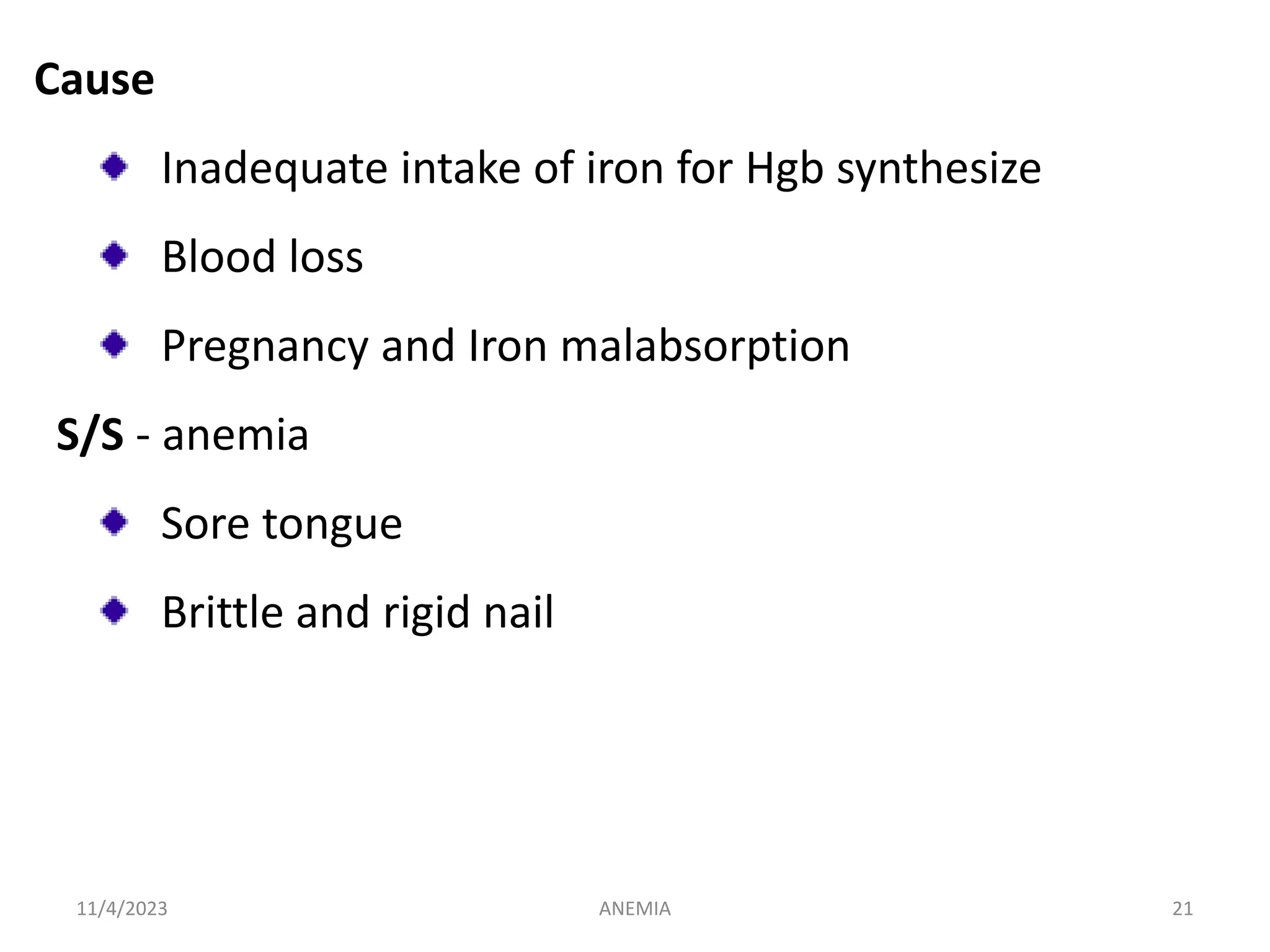
Cause
Inadequate intake of iron for Hgb synthesize
Blood loss
Pregnancy and Iron malabsorption
S/S - anemia
Sore tongue
Brittle and rigid nail
11/4/2023 ANEMIA 21
Investigation of the Patient with IDA:
A. Laboratory evaluation:
1. CBC, Reticulocyte count
2. RBC indices
3. Peripheral blood morphology
4. Iron studies
4.1 Serum iron (SI):
 Normal range: 50 – 150 μg/dL (9-27 μmol/L).
 < 30 µg/dL suggests IDA.
4.2 Total iron binding capacity (TIBC):
 Normal range: 250 – 370 μg/dL
 > 400 µg/dL suggests IDA.
11/4/2023 ANEMIA 22
Treatment of IDA:
1. Identify and treat or correct the underline cause first.
2. Administer effective oral iron replacement therapy (IRT) for a
sufficient period of time.
3.Increasing dietary iron intake (e.g. organ meat)
4. Oral iron replacement is the therapy of choice:
 Ferrous sulfate 325 mg (66 mg elemental iron) three times
daily is cost effective.
5. Follow-up:
 Reticulocyte response
11/4/2023 ANEMIA 23
2.Aplastic anemia (pancytopenia)
Describes a condition in which the bone marrow is
depressed resulting in a decrease in RBCs, WBCs, &
platelets
Is a very serious diseases resulting to death
11/4/2023 24
ANEMIA
Causes may include:
Excessive radiation
Toxicity to various drugs (e.g. CAF)
Chemicals (e.g. benzene)
Infections (e.g. hepatitis, HIV/AIDS)
11/4/2023 25
ANEMIA
26
INTERPRETING TEST RESULTS
Low Hgb and Low Hct.
Low RBC count.
Thrombocytopenia—low platelet count.
Leukopenia—low WBC.
Reticulocyte count low.
Positive fecal occult blood test.
Decreased cell counts in bone marrow biopsy as body
stops producing
11/4/2023 ANEMIA
HALLMARK SIGNS AND SYMPTOMS
27
Fatigue due to hypoxemia and weakness due to tissue hypoxia
Pallor due to lack of oxygen reaching superficial tissues
Infections due to low white blood cell production, causing
decreased ability to fight infection
Bruising (ecchymosis), hemorrhages due to decrease in
platelets, Bleeding from mucous membranes (GI tract, mouth,
nose, vagina)
11/4/2023 ANEMIA
Mgt
Administer hematopoietic growth factor to correct anemia
in patients with low erythropoietin levels
Packed RBC transfusions when anemia is symptomatic.
Platelet transfusion for severe bleeding.
Bone marrow transplant replaces functioning stem cells
Blood transfusion
11/4/2023 28
ANEMIA
3. Pernicious anemia
is also called megaloplastic anemia Is caused by a lack
of a gastric substance called intrinsic factor which is
produced in the stomach.
The body needs intrinsic factor to absorb Vit B12 from
blood in the small intestine.
Vit B12 is necessary for the body’s proper absorption &
use of iron & protection of nerve fibers
11/4/2023 29
ANEMIA
Causes of Cobalamin Deficiency MA
1. Inadequate dietary intake : vegans Animal products (meat
and dairy products).
2. Malabsorption (Main cause of Cbl deficiency MA)
3. Rare congenital disorders
4. Acquired
 Repeated and protracted exposure to nitrous oxide.
11/4/2023 ANEMIA 30
S/S
Smooth, sore red tongue & mild diarrhea
Mental changes – confusion
Neurological changes – paresthesia & trouble with
balance on walking
Sx progress to CHF if not treated.
11/4/2023 31
ANEMIA
Diagnosis of MA
1. CBC + RBC indices +Retic count + Biochemical studies
2. Peripheral Blood Smear:
The earliest morphologic sign: hypersegmented
neutrophils.
RBC morphologic abnormalities
3. Bone marrow: Hypercellular with a decreased
myeloid to erythroid ratio
11/4/2023 ANEMIA 32
Mgt
The patient must take Vit B12 by injection for life.
Vit B12 can’t be taken orally because the patient lacks
intrinsic factor necessary for absorption.
Additionally, patient may receive iron supplements,
and folic acids.
11/4/2023 ANEMIA 33
4.Hemolytic anemia
is caused by destruction of RBCs prior to their normal life
span (120 days)
Is caused by:
Certain drugs & toxins
Antibodies (e.g. blood transfusion rxn)
Malaria parasite
11/4/2023 34
ANEMIA
S/S
Manifestations of hypoxemia Sx relate to the impaired
transport of O2 & include: dyspnea & limited exercise
tolerance.
11/4/2023 35
ANEMIA
Laboratory Features:
1. Evidence of peripheral and BM response to
hemolysis:
Decreased Hb or Hct level, Increased MCV
Reticulocytosis
Examination of the peripheral blood smear:
 This is the single most useful and cheap laboratory test
for the initial evaluation of HA.
11/4/2023 ANEMIA 36
Mgt
Rx of this type of anemia relates to Dx & to the
causative factors.
Corticosteroids & splenectomy may also be of
benefit
11/4/2023 ANEMIA 37
5.Sickle cell anemia
Is a genetic disease in which the person’s RBCs become
crescent or sickle-shaped when exposed to decreased
oxygen.
Sickled cells can’t carry as much O2 as normal cells.
When sickled RBCs can enter the smaller blood vessels,
they become obstructing blood flow →sickle cell crisis
11/4/2023 38
ANEMIA
S/s of crisis include:
Unpredictable pain in the extremities and abdomen.
Jaundice, skin irritation & ulceration
Fever, dyspnea, cough, swelling of hands & feet,
and ↑infection.
Management…. Long term RBC transfusion
11/4/2023 39
ANEMIA
Summary
1. Anemia is a common clinical problem.
2. A correct etiologic diagnosis is essential before
treatment is initiated.
3. The treatment of anemia ranges from the
administration of hematinics to bone marrow
transplantation or gene therapy
4. If blood transfusion is indicated, adhere to blood
component transfusion therapy when ever possible!
11/4/2023 ANEMIA 40
Biographical data
Full name: Diribe Jima
Sex: F Age: 45yrs old MRN: 518603
Date of admission: 12/2/16 Address: Dagam
Source of information: patient
Reliability: Reliable information
C/C- Abdominal distention/
-Shortness of breath / 4wks duration
11/4/2023 ANEMIA 41
History of present illness (HPI)
This 45yrs old female patient admitted to this medical ward
with a diagnosis of sever anemia secondary to chronic liver
disease.
She was presented with gradually developed abdominal
distention, shortness of breathing, bilateral leg swelling for
four weeks duration.
The problem is associated with cough, dizziness, fatigability,
intermittent head ach, loss of appetite and low grade fever.
11/4/2023 ANEMIA 42
HPI…
The symptoms are aggravated when she tries to walk,
work and lessens at rest; Other wise
She has no history of chest pain and tightness
She has no history of vomiting, constipation or diarrhea
She has no history of flank pain, pain during urination
11/4/2023 ANEMIA 43
History of past illness
She has no past history of similar problem and Hospital
admission.
She has no history chronic medical illness Like DM, HTN…
Family history
She has no family member with similar conditions
She has no family history chronic medical illness
Like DM, HTN…
11/4/2023 ANEMIA 44
Social history
She is a married woman with three children's
She drinks alcohol like ‘’caticala 1 small glass in the night
every day for 3 yrs.
Se also use cultural drink “Farso” every day.
Physical examination
G/A: chronic sick looking
11/4/2023 ANEMIA 45
Vital signs
BP: 112/60 mmHg
PR: 128 beats/min
RR: 28 breaths/min
Temperature: 36.6
SPO2: 97% 0n INO2 (Cylinder)
11/4/2023 ANEMIA 46
HEENT
Eye: white paper pale conjunctiva
No jaundice on sclera and skin
Respiratory system:
Chest is symmetric
Accessory muscle use
Clubbing finger
No capillary refill
No stridor, friction sound on auscultation.
11/4/2023 ANEMIA 47
CVS: S1 and S2 well heard
No murmurs and gallops
GIT: Distended abdomen
Dull sound heard under percussion
Legs: Bilateral pitting edema
CNS: She is oriented to TPP
11/4/2023 ANEMIA 48
Assessment: severe anemia secondary to CLD (?)
Plan : CBC (Hgb=5), RBS (150),
Abdominal ultra sound,
Ascitic fluid analysis, chest x-ray
LFT, RFT, Electrolyte and CT- scan
Treatment
• Spirolactone 25mg po bid
• Lasix 40mg iv bid
• Two units OF whole blood
11/4/2023 ANEMIA 49
NURSING DIAGNOSES
Activity intolerance related to low hgb AEB weakness,
fatigue, and general malaise
Imbalanced nutrition less than body requirements,
related to inadequate intake of essential nutrients AEB
weight loss.
Deficient knowledge R/t disease process AEB patient
verbalization.
11/4/2023 ANEMIA 50
Nursing Interventions
Put on INO2
Transfused two units of whole blood
Administered prescribed medication
Advice nutritional diet
Patients with chronic anemia need to maintain some
physical activity and exercise to prevent the deconditioning
that results from inactivity.
Providing education and support
11/4/2023 ANEMIA 51
REFERENCE
1. Georgieff M. The importance of Iron deficiency on
fetal, neonatal infant developmental program
outcomes 2023; 162
2. Anemia: Practice essentials pathophysiology,
etiology… Nov 2021.
11/4/2023 ANEMIA 52
11/4/2023 ANEMIA 53

Anemia SEMINAR PPT.pptx

  • 1.
    SALALE UNIVERSITY COLLEGEOF HEALTH SCIENCE POST GRADUATE PROGRAM IN AHN. SEMINAR PRESENTATION ON ANEMIA . SUBMIT TO: MR. MELESE ( BSC,MSC) SUBMIT BY: 1.MESFIN SHIFARA ID NO….185/15 2.AZAZHU ABATE NO …177/15 3.YORDANOSE LEMA….195/15 4.AMENSISA DEBESA…176/15 OCT 2023 FITCHE 1 Brain Tumors 11/4/2023
  • 2.
    Presentation outline Introduction Epidemiology pathophysiology classification Clinical Manifestation Riskfactor Diagnosis Management Nursing Diagnosis prevention Reference 2 11/4/2023 Brain Tumors
  • 3.
    Definition Anemia ( fromGreek word anemia, meaning lack of blood) is a decrease in number of red blood cells (RBCs) or less than the normal quantity of hemoglobin in the blood. Men .Hb < 13.5 gm/dl Women .Hb < 12.0 gm/dl Anemia in pregnancy < 11 gm / dl 11/4/2023 ANEMIA 3
  • 4.
    WHO Grading ofanemia Grade 1 (Mild Anemia): 10 g/dl Grade 2 (Moderate Anemia): 7-10 g/dl Grade 3 (Severe Anemia): below 7 g/dl 11/4/2023 ANEMIA 4
  • 5.
    Normal ranges ofRBC measurements in adults: Test (parameter) Females Males Hemoglobin (g/dL): 12.0 - 16.0 13.5 - 17.7 Hematocrit (Hct, %): 36 - 48 40 - 52 RBC count (x 106/L): 4.0 - 5.4 4.5 - 6.0 Mean cell volume 90 ± 8 90 ± 8 _____________________________________________ 11/4/2023 ANEMIA 5
  • 6.
    Epidemiology One-fourth of theglobal population is estimated to be anemic, with cases increasing rapidly for women, expectant mothers, young girls, and children younger than age 5. In 2021, 1.92 billion people globally had anemia. This is an increase of 420 million cases over three decades 11/4/2023 ANEMIA 6
  • 7.
  • 8.
    Classification of Anemia A.Pathophysiological classification: This is based on the underlying causes and RBC kinetics These anemia's are usually caused by one or more of 3 independent mechanisms: 1. Decreased RBC production (IDA, MA, ACD, AA, etc.) 2. Increased RBC destruction: Hemolysis (immune- mediated, hereditary, malaria) 3. Blood loss (Bleeding) 11/4/2023 ANEMIA 8
  • 9.
    B. Morphological Classification: Thisclassification is based on the peripheral blood morphology and the MCV value: 1. Normocytic Anemias (MCV 80-100 fl): ACD, BM failure syndromes, Endocrine and Renal failure-related to anemia's. 2. Microcytic Anemias (MCV< 80fl): IDA, ACD, Thalassemia, Sideroblastic anemia's . 3. Macrocytic Anemias (MCV > 100 fl): 3.1 Megaloblastic marrow: Megaloblastic anemia 3.2 Normoblastic marrow: Hemolysis, Liver disease 11/4/2023 ANEMIA 9
  • 10.
  • 11.
    Causes of anemia CHF,CLD Renal failure Malaria Malabsorption syndrome Bacterial endocarditis TB MDS (myelodysplastic syndrome) Malnutrition, IDA Aplastic anemia Hemolytic : thalassemia, sickle cell Drug induced anemia alcohol 11/4/2023 ANEMIA 11
  • 12.
    Clinical Evaluation ofthe Patient with Anemia Integration of the History + Physical examination + Lab A. History: 1. Duration of symptoms 2. Nutritional/dietary history 3. Blood loss, menstrual history, pregnancy 5. Regular blood donation? 6. Family history (hereditary hemolytic anemia's) 7. Underlying disease (comorbid conditions) 8. Exposure to drugs or toxins and travel history malaria 11/4/2023 ANEMIA 12
  • 13.
    Symptoms 1.Cardiovascular: exercise intolerance,Palpitations, Syncope, Angina, Intermittent claudication, Peripheral edema. 2. Gastrointestinal: Anorexia, Nausea, Indigestion, Diarrhea 3. Genitourinary: Menstrual irregularities, Urinary frequency, Loss of libido or Impotence. 4.Neuromuscular: Fatigue, Throbbing headaches, Fainting, Lightheadedness, Tinnitus, Vertigo, Increased cold sensitivity, Visual impairment, Irritability and difficulty in concentration, Low-grade fever. 11/4/2023 ANEMIA 13
  • 14.
    B. Physical Examination: 1.G/A and nutritional status of the patient 2. V/s (Postural hypotension, Tachycardia, wide pulse pressure) 3. Examination of the Mucous Membranes and Skin for: Pallor Bleeding sites Icterus Abnormalities of fingernails Angular stomatitis and Nail beds Atrophy of the tongue * Palmar creases Sore tongue Leg ulcers; hemolytic anemia 11/4/2023 ANEMIA 14
  • 15.
    4. Cardiovascular examination: Widepulse pressure Modest tachycardia Systolic ejection murmur and Peripheral edema 5. Abdominal examination:  Hepatomegaly and Splenomegaly 6. Digital per-rectum and Pelvic examination 7. Lymphadenopathy, Bone tenderness...hematologic malignancy 8. Neurological examination: Gait, Reflexes, Vibration, and Position sense 11/4/2023 ANEMIA 15
  • 16.
    Lab tests foranemia 1.CBC 2.Stool hemoglobin test 3.Peripheral blood smear 4.Iron level 5.Transferrin level 6.Folate 7.Vitamin B12 8.Bilirubin 9.Reticulocyte count, RFT and LFT 11/4/2023 ANEMIA 16
  • 17.
    Iron Corticosteroid Folate Vit B12 Cobalamin Pyridoxine Erythropoietin Blood Transfusion Splenectomy BoneMarrow Transplantation Gene Therapy: sickle cell anemia 11/4/2023 ANEMIA 17 The treatment of anemia may range from the simple administration of hematinics to bone marrow transplantation and gene therapy:
  • 18.
    Indications for BloodTransfusion Therapy: There is no threshold of Hb or Hct value that mandates transfusion. The decision to administer blood must be based on the symptoms and functional status of the patient:  The development of congestive heart failure  The development of hypoxic symptoms or signs  The consideration of surgical, obstetric and/or gynecological procedures a patient with acute and ongoing bleeding may require immediate blood transfusion. 11/4/2023 ANEMIA 18
  • 19.
    Consider the Risksand Benefits of Blood Transfusion carefully before its Administration. Adhere to blood component transfusion therapy when ever possible: ● Packed red blood cells ● Platelet concentrates ● Granulocytes concentrates ● Plasma derivatives (Fresh frozen plasma, Cryoprecipitate, Albumin, Factor concentrates)  Transfuse Whole Blood only when there is Significant Volume loss due to Hemorrhage. 11/4/2023 ANEMIA 19
  • 20.
    TYPES OF ANEMIA 1.Irondeficiency anemia Is the most prevalent anemia in all age groups in the world. Inadequate supply of iron is the most common type of anemia. Iron deficiency anemia (IDA) develops when body iron stores become inadequate for the needs of normal erythropoiesis. IDA is a sign of an underlying disease condition and is not in itself a complete diagnosis. 11/4/2023 20 ANEMIA
  • 21.
    Cause Inadequate intake ofiron for Hgb synthesize Blood loss Pregnancy and Iron malabsorption S/S - anemia Sore tongue Brittle and rigid nail 11/4/2023 ANEMIA 21
  • 22.
    Investigation of thePatient with IDA: A. Laboratory evaluation: 1. CBC, Reticulocyte count 2. RBC indices 3. Peripheral blood morphology 4. Iron studies 4.1 Serum iron (SI):  Normal range: 50 – 150 μg/dL (9-27 μmol/L).  < 30 µg/dL suggests IDA. 4.2 Total iron binding capacity (TIBC):  Normal range: 250 – 370 μg/dL  > 400 µg/dL suggests IDA. 11/4/2023 ANEMIA 22
  • 23.
    Treatment of IDA: 1.Identify and treat or correct the underline cause first. 2. Administer effective oral iron replacement therapy (IRT) for a sufficient period of time. 3.Increasing dietary iron intake (e.g. organ meat) 4. Oral iron replacement is the therapy of choice:  Ferrous sulfate 325 mg (66 mg elemental iron) three times daily is cost effective. 5. Follow-up:  Reticulocyte response 11/4/2023 ANEMIA 23
  • 24.
    2.Aplastic anemia (pancytopenia) Describesa condition in which the bone marrow is depressed resulting in a decrease in RBCs, WBCs, & platelets Is a very serious diseases resulting to death 11/4/2023 24 ANEMIA
  • 25.
    Causes may include: Excessiveradiation Toxicity to various drugs (e.g. CAF) Chemicals (e.g. benzene) Infections (e.g. hepatitis, HIV/AIDS) 11/4/2023 25 ANEMIA
  • 26.
    26 INTERPRETING TEST RESULTS LowHgb and Low Hct. Low RBC count. Thrombocytopenia—low platelet count. Leukopenia—low WBC. Reticulocyte count low. Positive fecal occult blood test. Decreased cell counts in bone marrow biopsy as body stops producing 11/4/2023 ANEMIA
  • 27.
    HALLMARK SIGNS ANDSYMPTOMS 27 Fatigue due to hypoxemia and weakness due to tissue hypoxia Pallor due to lack of oxygen reaching superficial tissues Infections due to low white blood cell production, causing decreased ability to fight infection Bruising (ecchymosis), hemorrhages due to decrease in platelets, Bleeding from mucous membranes (GI tract, mouth, nose, vagina) 11/4/2023 ANEMIA
  • 28.
    Mgt Administer hematopoietic growthfactor to correct anemia in patients with low erythropoietin levels Packed RBC transfusions when anemia is symptomatic. Platelet transfusion for severe bleeding. Bone marrow transplant replaces functioning stem cells Blood transfusion 11/4/2023 28 ANEMIA
  • 29.
    3. Pernicious anemia isalso called megaloplastic anemia Is caused by a lack of a gastric substance called intrinsic factor which is produced in the stomach. The body needs intrinsic factor to absorb Vit B12 from blood in the small intestine. Vit B12 is necessary for the body’s proper absorption & use of iron & protection of nerve fibers 11/4/2023 29 ANEMIA
  • 30.
    Causes of CobalaminDeficiency MA 1. Inadequate dietary intake : vegans Animal products (meat and dairy products). 2. Malabsorption (Main cause of Cbl deficiency MA) 3. Rare congenital disorders 4. Acquired  Repeated and protracted exposure to nitrous oxide. 11/4/2023 ANEMIA 30
  • 31.
    S/S Smooth, sore redtongue & mild diarrhea Mental changes – confusion Neurological changes – paresthesia & trouble with balance on walking Sx progress to CHF if not treated. 11/4/2023 31 ANEMIA
  • 32.
    Diagnosis of MA 1.CBC + RBC indices +Retic count + Biochemical studies 2. Peripheral Blood Smear: The earliest morphologic sign: hypersegmented neutrophils. RBC morphologic abnormalities 3. Bone marrow: Hypercellular with a decreased myeloid to erythroid ratio 11/4/2023 ANEMIA 32
  • 33.
    Mgt The patient musttake Vit B12 by injection for life. Vit B12 can’t be taken orally because the patient lacks intrinsic factor necessary for absorption. Additionally, patient may receive iron supplements, and folic acids. 11/4/2023 ANEMIA 33
  • 34.
    4.Hemolytic anemia is causedby destruction of RBCs prior to their normal life span (120 days) Is caused by: Certain drugs & toxins Antibodies (e.g. blood transfusion rxn) Malaria parasite 11/4/2023 34 ANEMIA
  • 35.
    S/S Manifestations of hypoxemiaSx relate to the impaired transport of O2 & include: dyspnea & limited exercise tolerance. 11/4/2023 35 ANEMIA
  • 36.
    Laboratory Features: 1. Evidenceof peripheral and BM response to hemolysis: Decreased Hb or Hct level, Increased MCV Reticulocytosis Examination of the peripheral blood smear:  This is the single most useful and cheap laboratory test for the initial evaluation of HA. 11/4/2023 ANEMIA 36
  • 37.
    Mgt Rx of thistype of anemia relates to Dx & to the causative factors. Corticosteroids & splenectomy may also be of benefit 11/4/2023 ANEMIA 37
  • 38.
    5.Sickle cell anemia Isa genetic disease in which the person’s RBCs become crescent or sickle-shaped when exposed to decreased oxygen. Sickled cells can’t carry as much O2 as normal cells. When sickled RBCs can enter the smaller blood vessels, they become obstructing blood flow →sickle cell crisis 11/4/2023 38 ANEMIA
  • 39.
    S/s of crisisinclude: Unpredictable pain in the extremities and abdomen. Jaundice, skin irritation & ulceration Fever, dyspnea, cough, swelling of hands & feet, and ↑infection. Management…. Long term RBC transfusion 11/4/2023 39 ANEMIA
  • 40.
    Summary 1. Anemia isa common clinical problem. 2. A correct etiologic diagnosis is essential before treatment is initiated. 3. The treatment of anemia ranges from the administration of hematinics to bone marrow transplantation or gene therapy 4. If blood transfusion is indicated, adhere to blood component transfusion therapy when ever possible! 11/4/2023 ANEMIA 40
  • 41.
    Biographical data Full name:Diribe Jima Sex: F Age: 45yrs old MRN: 518603 Date of admission: 12/2/16 Address: Dagam Source of information: patient Reliability: Reliable information C/C- Abdominal distention/ -Shortness of breath / 4wks duration 11/4/2023 ANEMIA 41
  • 42.
    History of presentillness (HPI) This 45yrs old female patient admitted to this medical ward with a diagnosis of sever anemia secondary to chronic liver disease. She was presented with gradually developed abdominal distention, shortness of breathing, bilateral leg swelling for four weeks duration. The problem is associated with cough, dizziness, fatigability, intermittent head ach, loss of appetite and low grade fever. 11/4/2023 ANEMIA 42
  • 43.
    HPI… The symptoms areaggravated when she tries to walk, work and lessens at rest; Other wise She has no history of chest pain and tightness She has no history of vomiting, constipation or diarrhea She has no history of flank pain, pain during urination 11/4/2023 ANEMIA 43
  • 44.
    History of pastillness She has no past history of similar problem and Hospital admission. She has no history chronic medical illness Like DM, HTN… Family history She has no family member with similar conditions She has no family history chronic medical illness Like DM, HTN… 11/4/2023 ANEMIA 44
  • 45.
    Social history She isa married woman with three children's She drinks alcohol like ‘’caticala 1 small glass in the night every day for 3 yrs. Se also use cultural drink “Farso” every day. Physical examination G/A: chronic sick looking 11/4/2023 ANEMIA 45
  • 46.
    Vital signs BP: 112/60mmHg PR: 128 beats/min RR: 28 breaths/min Temperature: 36.6 SPO2: 97% 0n INO2 (Cylinder) 11/4/2023 ANEMIA 46
  • 47.
    HEENT Eye: white paperpale conjunctiva No jaundice on sclera and skin Respiratory system: Chest is symmetric Accessory muscle use Clubbing finger No capillary refill No stridor, friction sound on auscultation. 11/4/2023 ANEMIA 47
  • 48.
    CVS: S1 andS2 well heard No murmurs and gallops GIT: Distended abdomen Dull sound heard under percussion Legs: Bilateral pitting edema CNS: She is oriented to TPP 11/4/2023 ANEMIA 48
  • 49.
    Assessment: severe anemiasecondary to CLD (?) Plan : CBC (Hgb=5), RBS (150), Abdominal ultra sound, Ascitic fluid analysis, chest x-ray LFT, RFT, Electrolyte and CT- scan Treatment • Spirolactone 25mg po bid • Lasix 40mg iv bid • Two units OF whole blood 11/4/2023 ANEMIA 49
  • 50.
    NURSING DIAGNOSES Activity intolerancerelated to low hgb AEB weakness, fatigue, and general malaise Imbalanced nutrition less than body requirements, related to inadequate intake of essential nutrients AEB weight loss. Deficient knowledge R/t disease process AEB patient verbalization. 11/4/2023 ANEMIA 50
  • 51.
    Nursing Interventions Put onINO2 Transfused two units of whole blood Administered prescribed medication Advice nutritional diet Patients with chronic anemia need to maintain some physical activity and exercise to prevent the deconditioning that results from inactivity. Providing education and support 11/4/2023 ANEMIA 51
  • 52.
    REFERENCE 1. Georgieff M.The importance of Iron deficiency on fetal, neonatal infant developmental program outcomes 2023; 162 2. Anemia: Practice essentials pathophysiology, etiology… Nov 2021. 11/4/2023 ANEMIA 52
  • 53.

Editor's Notes

  • #9 Inherited hemolytic anemias (eg, hereditary spherocytosis, sickle cell disease, thalassemia major)
  • #15 - The sensitivity and specificity for pallor in the palms, nail beds, face, or conjunctivae as a predictor for anemia varies from 19 to 70 percent and 70 to 100 percent, respectively.
  • #23 - TIBC: more specific
  • #37 Peripheral smear: Spherocytes, Fragmented RBC (schistocytes, helmet cells) indicating the presence of microangiopathic hemolytic anemia , Acanthocytes (spur cells) in patients with liver disease , Blister or "bite" cells due to RBCs with inclusions, as in malaria, babesiosis, and Bartonella infectionsthe presence of oxidant-induced damage to the red cell and its membrane, Teardrop RBCs with circulating nucleated RBC and early white blood cell forms, indicating the presence of marrow involvement, as in primary myelofibrosis or tumor infiltration