Diagnostic Resources
Dr. E. Okon
Anatomic Pathology Tests and
Procedures
● Surgical pathology involves the diagnosis of lesions in pieces of
tissue removed from a patient.
● Gross (naked-eye) and microscopic examination
● Biopsy is the procedure for obtaining small specimens.
● Partial (incisional) biopsy specimens include only part of the lesion
and are done primarily for diagnosis.
●
Needle biopsy - the insertion of a needle into a solid organ and
aspiration of a core of tissue, is widely used for the diagnosis of
liver, kidney, and prostate disease.
●
Excisional biopsy specimens include the entirety of a small lesion
and are done for both diagnosis and treatment
● The removal of large specimens in the
operating room is called resection.
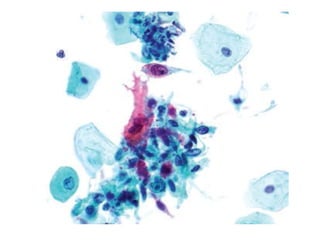
● Cytology specimens consist of cells sloughed or
scraped from body surfaces. These are
examined primarily to detect cancer cells.
● Fine-needle aspiration (FNA) is a technique that
uses a small-caliber needle to obtain material
for cytologic examination.
● An autopsy is the postmortem examination of a body.
● Organs of the neck, chest, abdomen, and cranium are
ordinarily examined and biochemical, microbiologic,
and immunologic tests can be performed if needed
● Forensic pathology is a subfield of pathology in which
accidental and criminal deaths are investigated.
Clinical Pathology Tests and
Procedures
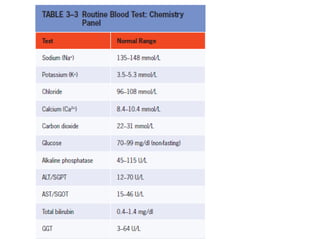
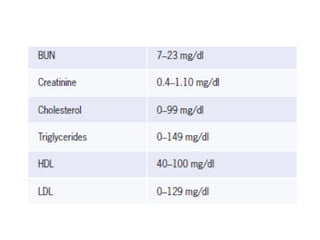
● Clinical pathology or laboratory medicine is the
branch of pathology that performs laboratory
tests on tissues and fluids.
● Chemistry, hematology, blood bank (transfusion
medicine), immunopathology, microbiology, and
cytogenetics.
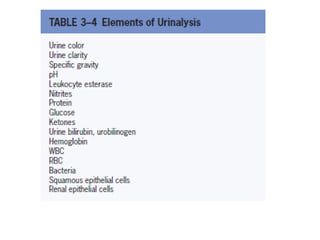
● Urinalysis is also performed in the chemistry
laboratory
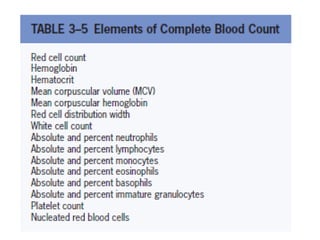
● A complete blood count (CBC) is the most
common hematologic test and consists of
measurement of hemoglobin, number of white
and red blood cells, and microscopic evaluation
for morphologic changes in blood cells.
Molecular Diagnosis and
Proteomics
● Entails sequencing DNA or RNA and coupling it with
a known nucleic acid sequence, called a “probe.” If
the probe sticks to the sample, it is uniquely
matched to the genetic material in the test sample.
● The sequencing of short stretches of a gene is done
by polymerase chain reaction (PCR). This involves
amplifying or increasing the numbers of a particular
gene or short sequence of nucleic acids to aid their
detection.
● Pharmacogenomics involves predicting a
particular patient’s response to particular drugs
on the basis of the person’s genetic makeup
Adaptation, Injury, Inflammation,
and Repair

IHD 3.5.pdf

  • 1.
  • 2.
    Anatomic Pathology Testsand Procedures ● Surgical pathology involves the diagnosis of lesions in pieces of tissue removed from a patient. ● Gross (naked-eye) and microscopic examination ● Biopsy is the procedure for obtaining small specimens. ● Partial (incisional) biopsy specimens include only part of the lesion and are done primarily for diagnosis. ● Needle biopsy - the insertion of a needle into a solid organ and aspiration of a core of tissue, is widely used for the diagnosis of liver, kidney, and prostate disease. ● Excisional biopsy specimens include the entirety of a small lesion and are done for both diagnosis and treatment
  • 3.
    ● The removalof large specimens in the operating room is called resection. ● Cytology specimens consist of cells sloughed or scraped from body surfaces. These are examined primarily to detect cancer cells. ● Fine-needle aspiration (FNA) is a technique that uses a small-caliber needle to obtain material for cytologic examination.
  • 4.
    ● An autopsyis the postmortem examination of a body. ● Organs of the neck, chest, abdomen, and cranium are ordinarily examined and biochemical, microbiologic, and immunologic tests can be performed if needed ● Forensic pathology is a subfield of pathology in which accidental and criminal deaths are investigated.
  • 6.
    Clinical Pathology Testsand Procedures ● Clinical pathology or laboratory medicine is the branch of pathology that performs laboratory tests on tissues and fluids. ● Chemistry, hematology, blood bank (transfusion medicine), immunopathology, microbiology, and cytogenetics. ● Urinalysis is also performed in the chemistry laboratory
  • 10.
    ● A completeblood count (CBC) is the most common hematologic test and consists of measurement of hemoglobin, number of white and red blood cells, and microscopic evaluation for morphologic changes in blood cells.
  • 12.
    Molecular Diagnosis and Proteomics ●Entails sequencing DNA or RNA and coupling it with a known nucleic acid sequence, called a “probe.” If the probe sticks to the sample, it is uniquely matched to the genetic material in the test sample. ● The sequencing of short stretches of a gene is done by polymerase chain reaction (PCR). This involves amplifying or increasing the numbers of a particular gene or short sequence of nucleic acids to aid their detection.
  • 13.
    ● Pharmacogenomics involvespredicting a particular patient’s response to particular drugs on the basis of the person’s genetic makeup
  • 14.