The Digestive System
Presented By:
Mrs. Nelson
Nutrition
 Nutrition is the study of how food affects
the function of living organisms.
 Food contains nutrients.
 Nutrients provide the energy and materials
organisms need.
 If organism’s cells are not provided with
nutrients, the cells will not function
properly.
 Poor diet = poor cells
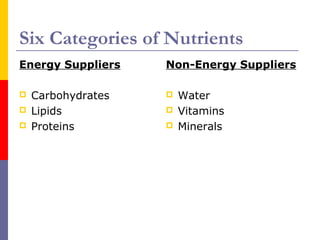
Six Categories of Nutrients
Energy Suppliers
 Carbohydrates
 Lipids
 Proteins
Non-Energy Suppliers
 Water
 Vitamins
 Minerals
Carbohydrates
 Glucose is main source of carbohydrates
for animals.
 Glucose is easily converted to ATP.
 Glucose is found in fruits, vegetables,
grains, and dairy foods.
 Many foods contain cellulose also known
as “fiber.” Important for helping push food
through the digestive tract.
 Energy from food is measured in
“calories.”
Lipids
 Provide twice as much energy as carbohydrates.
 Important for…
1) Making cell membranes
2) Hormone production
3) Myelin production
4) Protect organs and insulate body
 Take long time to digest.
 Too much fat in diet= excess energy = fat
deposits.
 Saturated fats (solid, contain single bonds)
contain LDL cholesterol and build up on arteries.
Proteins
 Proteins made of amino acids.
 20 different amino acids.
 Body can make 12/20 amino acids.
 The other eight must come from food are
called “essential amino acids.”
 Proteins are materials needed for…
1) growth and repair.
2) skin and muscles.
3) regulatory (enzymes- insulin) and transport
functions (hemoglobin– RBC).
Water
 Most important nutrient.
 Lubricates areas of body (blood, lymph,
plasma, etc.)
 Coolant for body.
 Solvent for digestion.
 Provides fluid environment for cells.
 Body needs intake 1L of water a day.
Minerals
 Inorganic (not made by living things).
 Plants absorb minerals.
 Animals eat plants to get minerals.
 Minerals are only needed in trace amounts
by the body.
 Iron (hemoglobin RBC)
 Calcium (bones and teeth)
 Sodium/Potassium (nerve and muscle
function)
 Magnesium/Zinc/Iodine
Vitamins
 Organic (made by living things).
 Help regulate body processes.
 Most obtained from food.
 Vitamin K- made by bacteria in digestive tract.
 Vitamin D- synthesized by skin cells when
exposed to sunlight.
 2 types vitamins…
1) Fat soluble- can be stored in fatty
tissues for future use (A, D, E, K)
2) Water soluble- dissolve in water and can
not be stored by body (C, B)
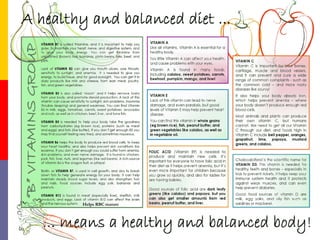
Importance of Various Vitamins
 A, C, D, E, K, Folic Acid, B12
Helps RBC mature
The Digestive System
 System is responsible for breaking down food
so that nutrients can be absorbed by the
bloodstream.
 The “alimentary canal” is the pathway which
food travels while it is digested.
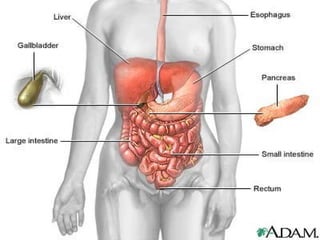
The Alimentary Canal
 Mouth
 Esophagus
 Stomach
 Small intestine
 Large intestine
 Rectum
* The liver, pancreas, and gallbladder are parts of
the digestive system but are not parts of the
alimentary canal.
The Mouth
 Chemical digestion –saliva contains
enzyme amylase that digests
carbohydrates (starches)
 Mechanical digestion- chewing
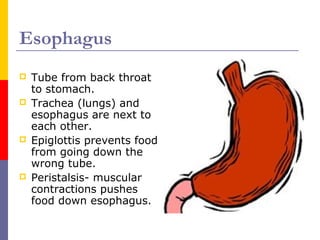
Esophagus
 Tube from back throat
to stomach.
 Trachea (lungs) and
esophagus are next to
each other.
 Epiglottis prevents food
from going down the
wrong tube.
 Peristalsis- muscular
contractions pushes
food down esophagus.
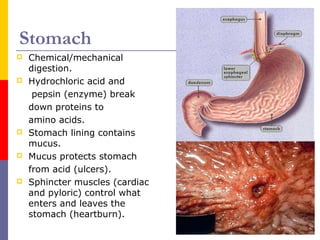
Stomach
 Chemical/mechanical
digestion.
 Hydrochloric acid and
pepsin (enzyme) break
down proteins to
amino acids.
 Stomach lining contains
mucus.
 Mucus protects stomach
from acid (ulcers).
 Sphincter muscles (cardiac
and pyloric) control what
enters and leaves the
stomach (heartburn).
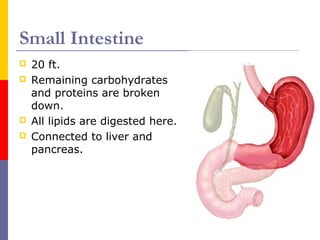
Small Intestine
 20 ft.
 Remaining carbohydrates
and proteins are broken
down.
 All lipids are digested here.
 Connected to liver and
pancreas.
Liver and Pancreas
LIVER JOBS
 Makes and secretes
bile (needed digest
lipids).
 Bile is stored in the
gall bladder.
 Detoxifies drugs and
alcohol.
PANCREAS JOBS
 Regulates blood
sugar.
 Secretes digestive
enzymes into small
intestine.
 Neutralizes stomach
acid as it enters the
small intestine
(bicarbonate).
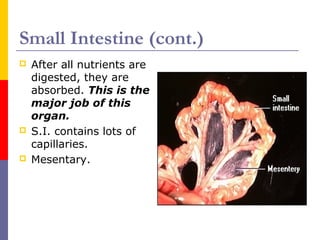
Small Intestine (cont.)
 After all nutrients are
digested, they are
absorbed. This is the
major job of this
organ.
 S.I. contains lots of
capillaries.
 Mesentary.
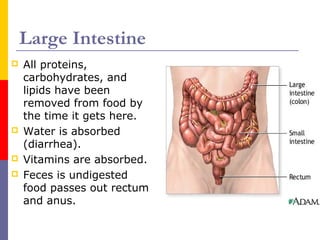
Large Intestine
 All proteins,
carbohydrates, and
lipids have been
removed from food by
the time it gets here.
 Water is absorbed
(diarrhea).
 Vitamins are absorbed.
 Feces is undigested
food passes out rectum
and anus.

Digestion.ppt2012

  • 1.
  • 2.
    Nutrition  Nutrition isthe study of how food affects the function of living organisms.  Food contains nutrients.  Nutrients provide the energy and materials organisms need.  If organism’s cells are not provided with nutrients, the cells will not function properly.  Poor diet = poor cells
  • 3.
    Six Categories ofNutrients Energy Suppliers  Carbohydrates  Lipids  Proteins Non-Energy Suppliers  Water  Vitamins  Minerals
  • 4.
    Carbohydrates  Glucose ismain source of carbohydrates for animals.  Glucose is easily converted to ATP.  Glucose is found in fruits, vegetables, grains, and dairy foods.  Many foods contain cellulose also known as “fiber.” Important for helping push food through the digestive tract.  Energy from food is measured in “calories.”
  • 5.
    Lipids  Provide twiceas much energy as carbohydrates.  Important for… 1) Making cell membranes 2) Hormone production 3) Myelin production 4) Protect organs and insulate body  Take long time to digest.  Too much fat in diet= excess energy = fat deposits.  Saturated fats (solid, contain single bonds) contain LDL cholesterol and build up on arteries.
  • 6.
    Proteins  Proteins madeof amino acids.  20 different amino acids.  Body can make 12/20 amino acids.  The other eight must come from food are called “essential amino acids.”  Proteins are materials needed for… 1) growth and repair. 2) skin and muscles. 3) regulatory (enzymes- insulin) and transport functions (hemoglobin– RBC).
  • 7.
    Water  Most importantnutrient.  Lubricates areas of body (blood, lymph, plasma, etc.)  Coolant for body.  Solvent for digestion.  Provides fluid environment for cells.  Body needs intake 1L of water a day.
  • 8.
    Minerals  Inorganic (notmade by living things).  Plants absorb minerals.  Animals eat plants to get minerals.  Minerals are only needed in trace amounts by the body.  Iron (hemoglobin RBC)  Calcium (bones and teeth)  Sodium/Potassium (nerve and muscle function)  Magnesium/Zinc/Iodine
  • 9.
    Vitamins  Organic (madeby living things).  Help regulate body processes.  Most obtained from food.  Vitamin K- made by bacteria in digestive tract.  Vitamin D- synthesized by skin cells when exposed to sunlight.  2 types vitamins… 1) Fat soluble- can be stored in fatty tissues for future use (A, D, E, K) 2) Water soluble- dissolve in water and can not be stored by body (C, B)
  • 10.
    Importance of VariousVitamins  A, C, D, E, K, Folic Acid, B12 Helps RBC mature
  • 11.
    The Digestive System System is responsible for breaking down food so that nutrients can be absorbed by the bloodstream.  The “alimentary canal” is the pathway which food travels while it is digested.
  • 12.
    The Alimentary Canal Mouth  Esophagus  Stomach  Small intestine  Large intestine  Rectum * The liver, pancreas, and gallbladder are parts of the digestive system but are not parts of the alimentary canal.
  • 14.
    The Mouth  Chemicaldigestion –saliva contains enzyme amylase that digests carbohydrates (starches)  Mechanical digestion- chewing
  • 15.
    Esophagus  Tube fromback throat to stomach.  Trachea (lungs) and esophagus are next to each other.  Epiglottis prevents food from going down the wrong tube.  Peristalsis- muscular contractions pushes food down esophagus.
  • 16.
    Stomach  Chemical/mechanical digestion.  Hydrochloricacid and pepsin (enzyme) break down proteins to amino acids.  Stomach lining contains mucus.  Mucus protects stomach from acid (ulcers).  Sphincter muscles (cardiac and pyloric) control what enters and leaves the stomach (heartburn).
  • 17.
    Small Intestine  20ft.  Remaining carbohydrates and proteins are broken down.  All lipids are digested here.  Connected to liver and pancreas.
  • 18.
    Liver and Pancreas LIVERJOBS  Makes and secretes bile (needed digest lipids).  Bile is stored in the gall bladder.  Detoxifies drugs and alcohol. PANCREAS JOBS  Regulates blood sugar.  Secretes digestive enzymes into small intestine.  Neutralizes stomach acid as it enters the small intestine (bicarbonate).
  • 19.
    Small Intestine (cont.) After all nutrients are digested, they are absorbed. This is the major job of this organ.  S.I. contains lots of capillaries.  Mesentary.
  • 20.
    Large Intestine  Allproteins, carbohydrates, and lipids have been removed from food by the time it gets here.  Water is absorbed (diarrhea).  Vitamins are absorbed.  Feces is undigested food passes out rectum and anus.