Lab Exercise 1
Exercise 1: Organs,
Systems, and Organization
of the body
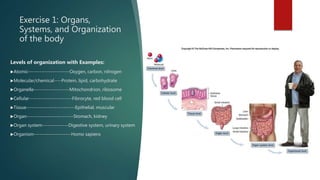
Levels of organization with Examples:
Atomic----------------------Oxygen, carbon, nitrogen
Molecular/chemical----Protein, lipid, carbohydrate
Organelle-------------------Mitochondrion, ribosome
Cellular-----------------------Fibrocyte, red blood cell
Tissue--------------------------Epithelial, muscular
Organ-------------------------Stomach, kidney
Organ system--------------Digestive system, urinary system
Organism--------------------Homo sapiens
Systemic Anatomy vs Regional
Anatomy
 Systemic Anatomy
 Study of organ systems
 Skeletal system
 Nervous system
 Regional Anatomy
 Study of areas of the body
 Head and Neck
 Abdomen
11 Systems to
Remember
 Reproductive
 Urinary
 Nervous
 Muscular
 Respiratory
 Skeletal
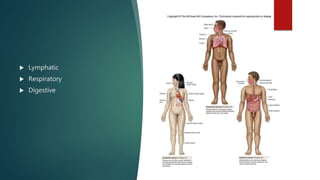
 Lymphatic
 Integumentary
 Digestive
 Endocrine
 Cardiovascular
 Integumentary
 Skeletal
 Muscular
 Lymphatic
 Respiratory
 Digestive
 Nervous
 Endocrine
 Cardiovascular
 Urinary
 Female and Male Reproductive
Anatomic Position
 Refers to the position of the human body
 Anatomic Position:
 Head is erect
 Eyes open
 Arms straight and by the sides
 Palms facing forward
 Knees straight
 Feet together and flat on the ground
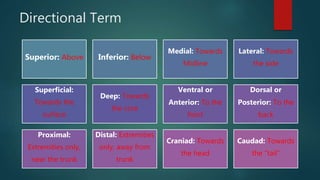
Directional Term
Superior: Above Inferior: Below
Medial: Towards
Midline
Lateral: Towards
the side
Superficial:
Towards the
surface
Deep: Towards
the core
Ventral or
Anterior: To the
front
Dorsal or
Posterior: To the
back
Proximal:
Extremities only,
near the trunk
Distal: Extremities
only, away from
trunk
Craniad: Towards
the head
Caudad: Towards
the “tail”
Planes of
Sectioning X5
Transverse plane or Horizontal plane
• Divides the body into superior or inferior parts
• Cross section
Frontal plane or Coronal plane
• Divides the body into anterior and posterior portions
• Back from front
Sagittal plane
• Divides the body into left and right portions
Midsagittal or Median
• Divides the body equally into left and right halves
Parasagittal plane
• Divides the body unequally into left and right halves
Body cavities X9
BrainCranial cavity
Spinal cordVertebral canal
Heart and Lungs
Pleural cavities, pericardial cavity, and mediastinum
Thoracic cavity
Specific cavities for lungsPleural cavities
HeartPericardial cavity
Between the pleural cavities
Heart, esophagus, and vessels
Mediastinum
Below the diaphragm
Subdivided into abdominal and pelvic cavity
Abdominopelvic
cavity
Stomach, SI, most of LI, and various digestive organs (liver and pancreas)Abdominal cavity
Terminal part of LI and some reproductive organs (uterus and ovaries)Pelvic cavity
Peritoneum
vs Visceral
 Peritoneum
 Body wall
 Cavity lining
 Visceral
 Areas closer to the
internal organs
 Organ lining
 Example: Heart
Regions of
the Body
 Arm
 Region between
shoulder and elbow
 Forearm
 Distal to the elbow
 Leg
 Region between knee
and ankle
 Thigh
 Knee to the hip
Abdominal
Quadrants X4
 Right upper quadrant
 Left upper quadrant
 Right lower quadrant
 Left lower quadrant
Abdominal
Regions X9
 Right hypochondriac
 Left hypochondriac
 Epigastric
 Right lumbar (Lateral
abdominal)
 Left lumbar (Lateral
abdominal)
 Umbilical
 Hypogastric
 Right iliac (inguinal)
 Left iliac (inguinal)

Anatomy Lab exercise 1

  • 1.
  • 2.
    Exercise 1: Organs, Systems,and Organization of the body Levels of organization with Examples: Atomic----------------------Oxygen, carbon, nitrogen Molecular/chemical----Protein, lipid, carbohydrate Organelle-------------------Mitochondrion, ribosome Cellular-----------------------Fibrocyte, red blood cell Tissue--------------------------Epithelial, muscular Organ-------------------------Stomach, kidney Organ system--------------Digestive system, urinary system Organism--------------------Homo sapiens
  • 3.
    Systemic Anatomy vsRegional Anatomy  Systemic Anatomy  Study of organ systems  Skeletal system  Nervous system  Regional Anatomy  Study of areas of the body  Head and Neck  Abdomen
  • 4.
    11 Systems to Remember Reproductive  Urinary  Nervous  Muscular  Respiratory  Skeletal  Lymphatic  Integumentary  Digestive  Endocrine  Cardiovascular
  • 5.
  • 6.
  • 7.
  • 8.
     Urinary  Femaleand Male Reproductive
  • 9.
    Anatomic Position  Refersto the position of the human body  Anatomic Position:  Head is erect  Eyes open  Arms straight and by the sides  Palms facing forward  Knees straight  Feet together and flat on the ground
  • 10.
    Directional Term Superior: AboveInferior: Below Medial: Towards Midline Lateral: Towards the side Superficial: Towards the surface Deep: Towards the core Ventral or Anterior: To the front Dorsal or Posterior: To the back Proximal: Extremities only, near the trunk Distal: Extremities only, away from trunk Craniad: Towards the head Caudad: Towards the “tail”
  • 12.
    Planes of Sectioning X5 Transverseplane or Horizontal plane • Divides the body into superior or inferior parts • Cross section Frontal plane or Coronal plane • Divides the body into anterior and posterior portions • Back from front Sagittal plane • Divides the body into left and right portions Midsagittal or Median • Divides the body equally into left and right halves Parasagittal plane • Divides the body unequally into left and right halves
  • 14.
    Body cavities X9 BrainCranialcavity Spinal cordVertebral canal Heart and Lungs Pleural cavities, pericardial cavity, and mediastinum Thoracic cavity Specific cavities for lungsPleural cavities HeartPericardial cavity Between the pleural cavities Heart, esophagus, and vessels Mediastinum Below the diaphragm Subdivided into abdominal and pelvic cavity Abdominopelvic cavity Stomach, SI, most of LI, and various digestive organs (liver and pancreas)Abdominal cavity Terminal part of LI and some reproductive organs (uterus and ovaries)Pelvic cavity
  • 16.
    Peritoneum vs Visceral  Peritoneum Body wall  Cavity lining  Visceral  Areas closer to the internal organs  Organ lining  Example: Heart
  • 18.
    Regions of the Body Arm  Region between shoulder and elbow  Forearm  Distal to the elbow  Leg  Region between knee and ankle  Thigh  Knee to the hip
  • 19.
    Abdominal Quadrants X4  Rightupper quadrant  Left upper quadrant  Right lower quadrant  Left lower quadrant
  • 20.
    Abdominal Regions X9  Righthypochondriac  Left hypochondriac  Epigastric  Right lumbar (Lateral abdominal)  Left lumbar (Lateral abdominal)  Umbilical  Hypogastric  Right iliac (inguinal)  Left iliac (inguinal)