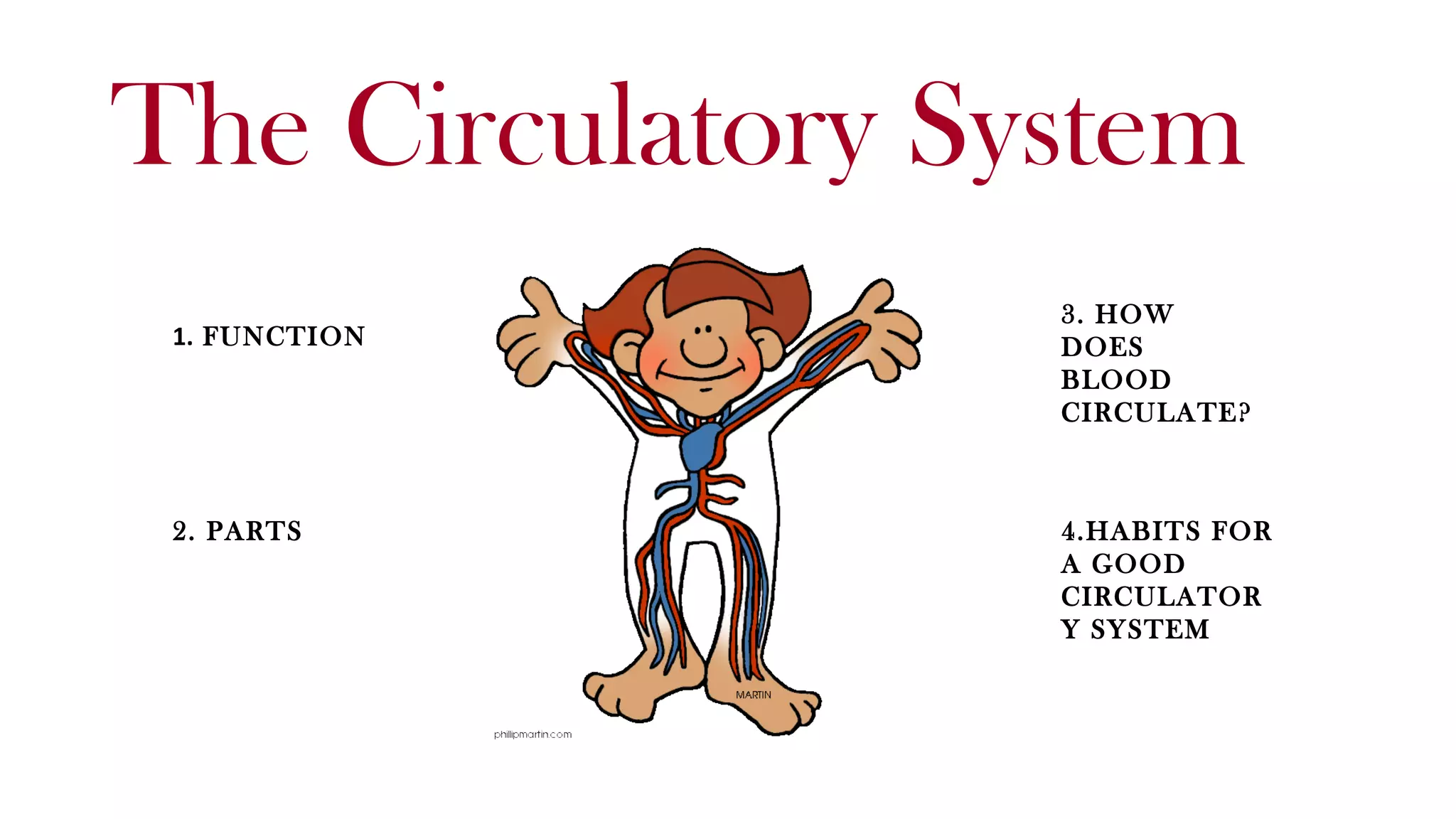
The Circulatory System
1. FUNCTION
2. PARTS
3. HOW
DOES
BLOOD
CIRCULATE?
4.HABITS FOR
A GOOD
CIRCULATOR
Y SYSTEM
1. FUNCTION:
The circulatory system plays an
important role in the nutrition
process.
Heart pumps blood to all the body
cells through the circulatory system.
The circulatory system takes oxygen
and nutrients to all the tissues of the
body.
It also picks up waste products like
carbon dioxide. Then it takes them
to the organs that eliminate them.
https://www.youtube.com/
watch?
v=9_q6o_7CT_U&index=4&li
st=PLthXMEoHzjIStKvQ_vhOj
k1zGpaSBgcYn
READY FOR
A VIDEO??
2. PARTS OF THE CIRCULATORY
SYSTEM:
2.1 THE HEART 2.2 BLOOD VESSELS 2.3 BLOOD
The heart is a hollow, muscular
organ, about the size of your fist.
The function of the heart is
simple. It keeps blood circulating
throughout the body.
A more than 100,000 Km long
system through which blood is
distributed to the body.
Fluid that delivers oxygen,
hormones, and nutrients to the
cells and carries away the wastes
that the cells produce.
2.1.2 PARTS OF THE HEART: 2.1.3 HOW DOES
HEART WORK?
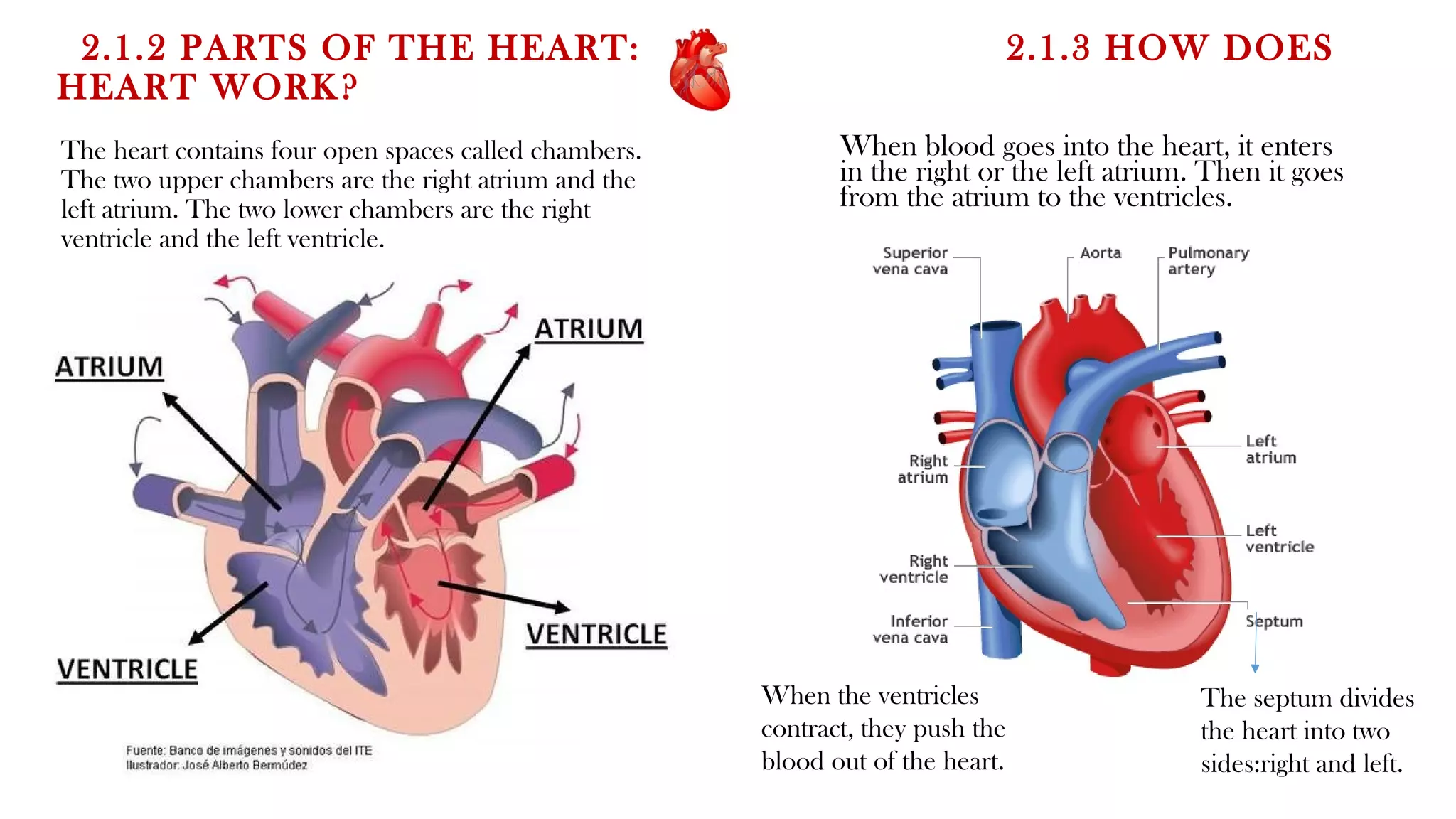
The heart contains four open spaces called chambers.
The two upper chambers are the right atrium and the
left atrium. The two lower chambers are the right
ventricle and the left ventricle.
When blood goes into the heart, it enters
in the right or the left atrium. Then it goes
from the atrium to the ventricles.
The septum divides
the heart into two
sides:right and left.
When the ventricles
contract, they push the
blood out of the heart.
Look how the heart works
https://www.youtube.com/watch?v=huzs3Q4-CGc
2.2 BLOOD
VESSELS ARTERIES: Largest
blood vessels, which carry
blood away from the
heart.
CAPILLARIES: Smallest
blood vessels, which link
arteries and veins.
VEINS: Blood vessels
that carry blood back to
the heart.
2.3 BLOOD. TYPES OF BLOOD
CELLS
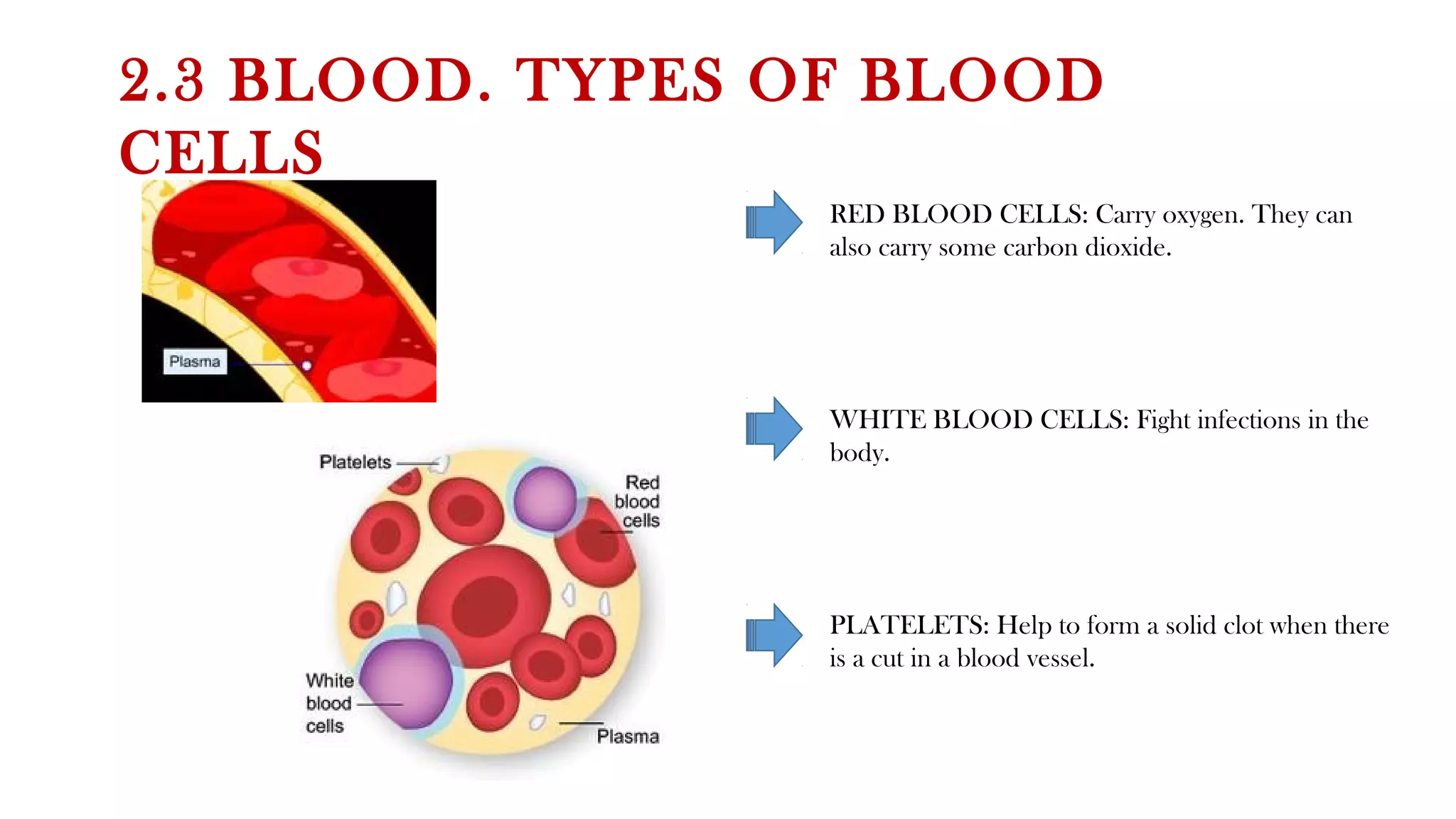
RED BLOOD CELLS: Carry oxygen. They can
also carry some carbon dioxide.
WHITE BLOOD CELLS: Fight infections in the
body.
PLATELETS: Help to form a solid clot when there
is a cut in a blood vessel.
3. HOW DOES BLOOD
CIRCULATE?• The heart and the blood vessels form a closed system. Blood is always circulating through this
system.
• Blood flows in two different circuits:
- PULMONARY CIRCULATION:
Blood flows from the heart to the lungs. In the
lungs, the blood releases carbon dioxide and
picks up oxygen. Then the blood flows back to
the heart. This oxygenated blood is a bright red
colour.
- GENERAL or SYSTEMIC
CIRCULATION:
Oxygenated blood flows from the heart to the rest
of the body. The oxygen goes into the tissues of
the body and the blood picks up carbon dioxide.
Then the blood flows back to the heart. This
deoxygenated blood is a dark red colour.
http://www.cengage.com/biology/discipline_content/animations/blood_circulation.htm
l
1. De-oxygenated blood
enters the right atrium and
passes into the right
ventricle. The right
ventricle pumps the blood
out of the heart through
the pulmonary arteries to
the lungs.
2. The blood picks up
oxygen and releases
carbon dioxide.
The oxygenated blood
returns to the heart
through the pulmonary
veins.
3. The oxygenated blood goes into the
left atrium and then into the left
ventricle. The left ventricle pumps the
blood through the aorta to the rest of
the organs in the body.
4. In the organs, the blood picks up
carbon dioxide and releases oxygen.
The superior vena cava and the
inferior vena cava carry
deoxygenated blood to the heart.
Pulmonary circulation Systemic circulation
READY FOR A VIDEO??
https://www.youtube.com/watch?v=-s5iCoCaofc
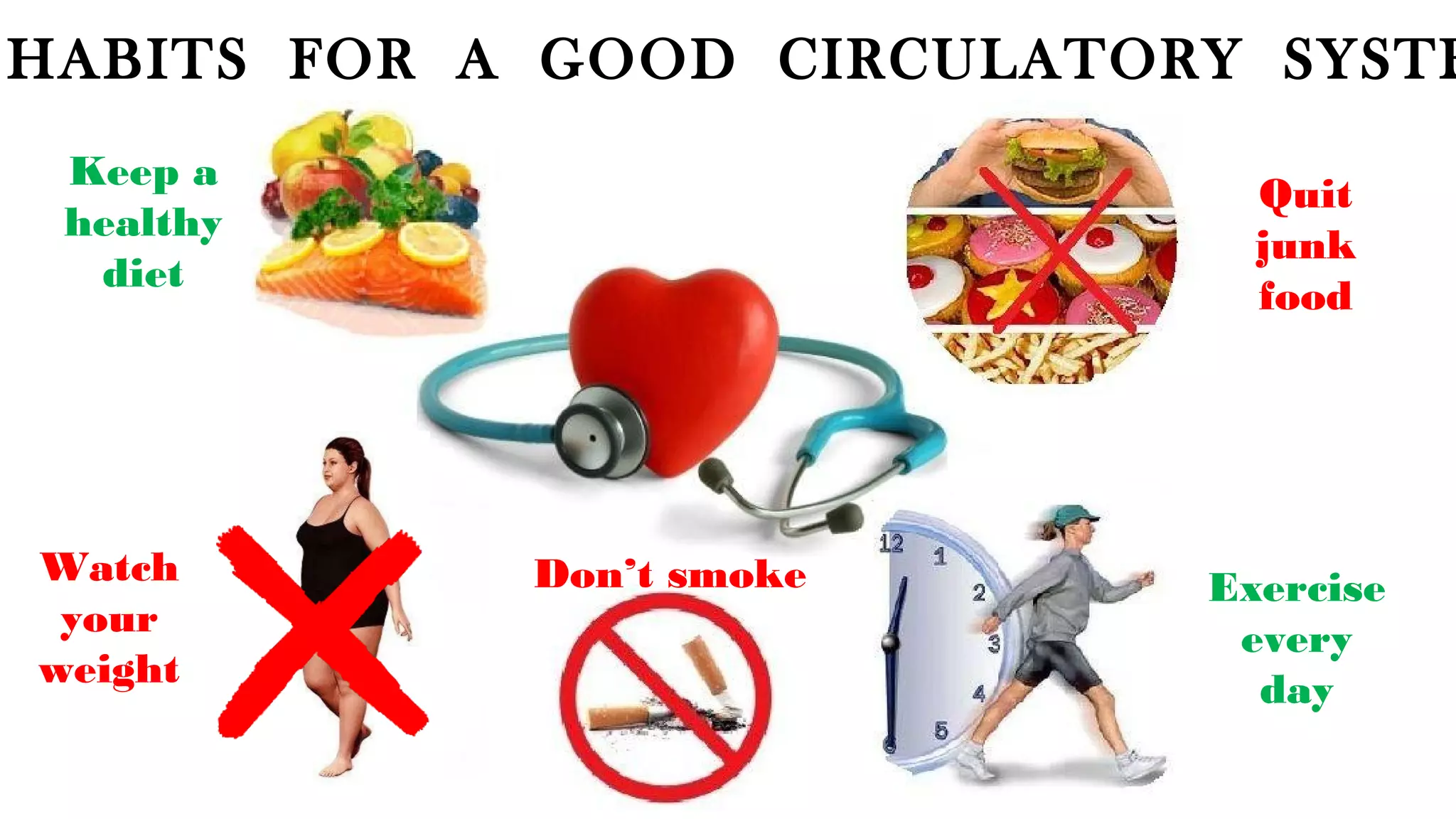
HABITS FOR A GOOD CIRCULATORY SYSTE
Keep a
healthy
diet
Quit
junk
food
Watch
your
weight
Exercise
every
day
Don’t smoke

The circulatory system

  • 1.
    The Circulatory System 1.FUNCTION 2. PARTS 3. HOW DOES BLOOD CIRCULATE? 4.HABITS FOR A GOOD CIRCULATOR Y SYSTEM
  • 2.
    1. FUNCTION: The circulatorysystem plays an important role in the nutrition process. Heart pumps blood to all the body cells through the circulatory system. The circulatory system takes oxygen and nutrients to all the tissues of the body. It also picks up waste products like carbon dioxide. Then it takes them to the organs that eliminate them. https://www.youtube.com/ watch? v=9_q6o_7CT_U&index=4&li st=PLthXMEoHzjIStKvQ_vhOj k1zGpaSBgcYn READY FOR A VIDEO??
  • 3.
    2. PARTS OFTHE CIRCULATORY SYSTEM: 2.1 THE HEART 2.2 BLOOD VESSELS 2.3 BLOOD The heart is a hollow, muscular organ, about the size of your fist. The function of the heart is simple. It keeps blood circulating throughout the body. A more than 100,000 Km long system through which blood is distributed to the body. Fluid that delivers oxygen, hormones, and nutrients to the cells and carries away the wastes that the cells produce.
  • 4.
    2.1.2 PARTS OFTHE HEART: 2.1.3 HOW DOES HEART WORK? The heart contains four open spaces called chambers. The two upper chambers are the right atrium and the left atrium. The two lower chambers are the right ventricle and the left ventricle. When blood goes into the heart, it enters in the right or the left atrium. Then it goes from the atrium to the ventricles. The septum divides the heart into two sides:right and left. When the ventricles contract, they push the blood out of the heart.
  • 5.
    Look how theheart works https://www.youtube.com/watch?v=huzs3Q4-CGc
  • 6.
    2.2 BLOOD VESSELS ARTERIES:Largest blood vessels, which carry blood away from the heart. CAPILLARIES: Smallest blood vessels, which link arteries and veins. VEINS: Blood vessels that carry blood back to the heart.
  • 7.
    2.3 BLOOD. TYPESOF BLOOD CELLS RED BLOOD CELLS: Carry oxygen. They can also carry some carbon dioxide. WHITE BLOOD CELLS: Fight infections in the body. PLATELETS: Help to form a solid clot when there is a cut in a blood vessel.
  • 8.
    3. HOW DOESBLOOD CIRCULATE?• The heart and the blood vessels form a closed system. Blood is always circulating through this system. • Blood flows in two different circuits: - PULMONARY CIRCULATION: Blood flows from the heart to the lungs. In the lungs, the blood releases carbon dioxide and picks up oxygen. Then the blood flows back to the heart. This oxygenated blood is a bright red colour. - GENERAL or SYSTEMIC CIRCULATION: Oxygenated blood flows from the heart to the rest of the body. The oxygen goes into the tissues of the body and the blood picks up carbon dioxide. Then the blood flows back to the heart. This deoxygenated blood is a dark red colour.
  • 9.
    http://www.cengage.com/biology/discipline_content/animations/blood_circulation.htm l 1. De-oxygenated blood entersthe right atrium and passes into the right ventricle. The right ventricle pumps the blood out of the heart through the pulmonary arteries to the lungs. 2. The blood picks up oxygen and releases carbon dioxide. The oxygenated blood returns to the heart through the pulmonary veins. 3. The oxygenated blood goes into the left atrium and then into the left ventricle. The left ventricle pumps the blood through the aorta to the rest of the organs in the body. 4. In the organs, the blood picks up carbon dioxide and releases oxygen. The superior vena cava and the inferior vena cava carry deoxygenated blood to the heart. Pulmonary circulation Systemic circulation
  • 10.
    READY FOR AVIDEO?? https://www.youtube.com/watch?v=-s5iCoCaofc
  • 11.
    HABITS FOR AGOOD CIRCULATORY SYSTE Keep a healthy diet Quit junk food Watch your weight Exercise every day Don’t smoke