Lab Exercise 19
THE ENDOCRINE SYSTEM
Introduction to Endocrine
 Endocrine glands
 Produce chemical messengers called hormones
 Picked up by blood capillaries and travel throughout the body
 Ductless secretions
 Exocrine glands- secrete material in ducts or tubules (sweat & salivary glands) or on
surface (ovaries). Do not use the cardiovascular sxs.
 Target Areas
 Areas that are receptive to hormones, organs or tissues
 Stomach, heart, & kidneys produce hormones, thus have endocrine functions
 Hormone Functions
 Growth, change in development, metabolism, sexual development, regulation of
the sexual cycle, & homeostasis
Hypothalamus
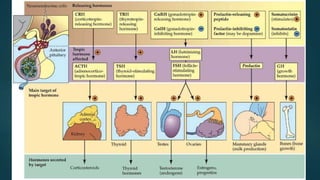
 Has a major role in controlling endocrine functions
 Secretes both releasing & inhibitory hormones that stimulate hormone
secretions from their target areas or prevent the release of hormones from
theses areas.
 Gonadotropic-releasing hormones (GnRH)
 Stimulate the pituitary to release:
 Follicle-stimulating hormone
 Thyrotropic-releasing hormone (TRH)
 Stimulates the pituitary to release thyroid-stimulating hormones (TSH)
Pineal Gland
 Developed from the diencephalon of the brain
 Resembles a pine nut
 Melatonin
 Hormone secreted by the pineal gland
 Inhibitory hormone
 Regulates circadian rhythms (Daily body rhythms)
 Depressing effect in some people
 “Hormone of darkness” produced during times of low light & inhibited in bright
light
Pituitary Gland
 Divided into 2 divisions
 Anterior pituitary
 Originate from the roof of the oral cavity
 Histology: Cuboidal epithelial cells
 Produce several hormones
 Posterior pituitary
 Originates from the base of the brain
 Composed of nervous tissue
 Hormones are secreted by the hypothalamus
Histology: Anterior Pituitary Gland
Slide 45
Posterior
Anterio
Zip Files: Lab 18: Anterior Pituitary gland
Posterior Pituitary Gland
 Antidiuretic hormone (ADH)
 Stimulates reabsorption & retention of water by the kidneys
 Also known as a Vasopressin
 Arterioles constrict which causes the elevation of BP
 Oxytocin
 Stimulates contraction of the cells of the mammary glands to release milk and
causes uterine contractions
 Send impulses to the hypothalamus  stimulates the posterior pituitary gland to
release oxytocin which will cause milk to release
Thyroid
 2 lateral lobes with a medial isthmus connecting them. Found near the thyroid
cartilage of the larynx.
 Secrete 3 hormones:
 Two: T3
 One: T4
 Basal metabolic rates
 The number of calories required to keep your body functioning at rest
 Stored in the colloid
 Calcitonin
 Another hormone
 Deposition of calcium in bone  decrease osteoclast activity
 Produced in the parafollicular or C cells
Histology: Thyroid
 Follicle cells that surrounds the Colloid
 Storage region for thyroid hormones
 Composed of thyroglobulin where the thyroid hormones are formed
 Parafollicular cells
 Found in the spaces between the follicles
Parathyroid Glands
 Posterior portion of the thyroid & are 2 pairs of organs
 Chief Cells
 Secrete parathyroid hormones (PTH)
 Opposite of the calcitonin
 Increase calcium levels in the blood
 Increasing calcium uptake in the intestines, increasing kidney reabsorption of calcium,
and releasing calcium from the bones
Histology: Parathyroid Glands
Thymus
 Active in young people and plays an important part in immunocompetency
 It become smaller as we age and develops more fibrous and fatty tissue
 Thymosin
 Hormone thymus secretes
 Causes the maturation of the T cells
 Originates from bone marrow  thymus  lymph nodes & spleen to carry out
functions
 Maturation is to provide ”cell immunity” against antigens
Histology: Thymus
Pancreas
 Mixed gland
 Exocrine function
 Digestive in nature
 Pancreatic juice secreted through the pancreatic ducts contains both buffers & digestive
enzymes
 Endocrine function
 Consist of the secretion of the 2 hormones
1. Insulin
 Regulates BG levels
2. Glucagon
 Regulates BG levels
 Delta Cells
 Which secrete somatostatin
 Which inhibits digestive secretions
Glucagon & Insulin
 Glucagon
 Produced in specialized cells Alpha cells
 In clusters called Islets of Langerhans
 Also produce insulin  lowers BG levels
 Insulin
 Produced in beta cells
 Stimulates the conversion of glucose to glycogen
Histology: Pancreas
Adrenal Glands
 Ad= Next to; Renal= Kidney. Located superior to the kidneys
 Composed of:
 Cortex
 Outer
 Medulla
 Inner
 Corticosteroid hormones
 Secreted from the adrenal cortex
 Controlled by ACTH
 Important in water & ion balance in the body; carbohydrate, protein, fat metabolism,
as well as stress management
 Epinephrine & Norepinephrine
 Stimulate the adrenal glands by the sympathetic nervous division causes release of
these hormones from the gland
Adrenal Cortex
 3 regions
 Zona Glomerulosa
 Outermost
 Consist of clusters of cells that secrete Mineralocorticoids
 Zona Fasciculata
 Inside zona glomerulosa closer to the medulla
 Parallel bundles of cell that secrete Glucocorticoids
 Zona Reticularis
 Deepest layer
 Branched patterns of cells that produce both Glucocorticoids & Sex Hormones
Histology: Adrenal Gland
Gonads
 Produce sex hormones  Endocrine glands
 Receptive to follicle-stimulating hormones (FSH) from the Anterior Pituitary
 Produce & Maturation of the sex cells
 Oocytes
 Testes
 Produce Testosterone
 Facial hair & body hair production, expansion of the larynx, and increased muscle &
bone mass
Histology: Testes
 Seminiferous tubules & interstitial cells
Ovaries
 Produce Estrogen & progesterone
 Enlarged breast, development of additional subcutaneous adipose layer, &
higher voice
 Influence the development of endometrium, causes maturation of the Oocytes
and regulate MC
 Endocrine:
 Produce hormones
 Pregnancy the placenta has a major role in the secretion of estrogen &
progesterone
 Exocrine
 Oocytes (eggs) production
Histology: Ovary
Know for the Exam
 Histology slides

Anatomy Lab exercise 19

  • 1.
    Lab Exercise 19 THEENDOCRINE SYSTEM
  • 2.
    Introduction to Endocrine Endocrine glands  Produce chemical messengers called hormones  Picked up by blood capillaries and travel throughout the body  Ductless secretions  Exocrine glands- secrete material in ducts or tubules (sweat & salivary glands) or on surface (ovaries). Do not use the cardiovascular sxs.  Target Areas  Areas that are receptive to hormones, organs or tissues  Stomach, heart, & kidneys produce hormones, thus have endocrine functions  Hormone Functions  Growth, change in development, metabolism, sexual development, regulation of the sexual cycle, & homeostasis
  • 4.
    Hypothalamus  Has amajor role in controlling endocrine functions  Secretes both releasing & inhibitory hormones that stimulate hormone secretions from their target areas or prevent the release of hormones from theses areas.  Gonadotropic-releasing hormones (GnRH)  Stimulate the pituitary to release:  Follicle-stimulating hormone  Thyrotropic-releasing hormone (TRH)  Stimulates the pituitary to release thyroid-stimulating hormones (TSH)
  • 5.
    Pineal Gland  Developedfrom the diencephalon of the brain  Resembles a pine nut  Melatonin  Hormone secreted by the pineal gland  Inhibitory hormone  Regulates circadian rhythms (Daily body rhythms)  Depressing effect in some people  “Hormone of darkness” produced during times of low light & inhibited in bright light
  • 6.
    Pituitary Gland  Dividedinto 2 divisions  Anterior pituitary  Originate from the roof of the oral cavity  Histology: Cuboidal epithelial cells  Produce several hormones  Posterior pituitary  Originates from the base of the brain  Composed of nervous tissue  Hormones are secreted by the hypothalamus
  • 8.
    Histology: Anterior PituitaryGland Slide 45 Posterior Anterio Zip Files: Lab 18: Anterior Pituitary gland
  • 9.
    Posterior Pituitary Gland Antidiuretic hormone (ADH)  Stimulates reabsorption & retention of water by the kidneys  Also known as a Vasopressin  Arterioles constrict which causes the elevation of BP  Oxytocin  Stimulates contraction of the cells of the mammary glands to release milk and causes uterine contractions  Send impulses to the hypothalamus  stimulates the posterior pituitary gland to release oxytocin which will cause milk to release
  • 10.
    Thyroid  2 laterallobes with a medial isthmus connecting them. Found near the thyroid cartilage of the larynx.  Secrete 3 hormones:  Two: T3  One: T4  Basal metabolic rates  The number of calories required to keep your body functioning at rest  Stored in the colloid  Calcitonin  Another hormone  Deposition of calcium in bone  decrease osteoclast activity  Produced in the parafollicular or C cells
  • 11.
    Histology: Thyroid  Folliclecells that surrounds the Colloid  Storage region for thyroid hormones  Composed of thyroglobulin where the thyroid hormones are formed  Parafollicular cells  Found in the spaces between the follicles
  • 12.
    Parathyroid Glands  Posteriorportion of the thyroid & are 2 pairs of organs  Chief Cells  Secrete parathyroid hormones (PTH)  Opposite of the calcitonin  Increase calcium levels in the blood  Increasing calcium uptake in the intestines, increasing kidney reabsorption of calcium, and releasing calcium from the bones
  • 13.
  • 14.
    Thymus  Active inyoung people and plays an important part in immunocompetency  It become smaller as we age and develops more fibrous and fatty tissue  Thymosin  Hormone thymus secretes  Causes the maturation of the T cells  Originates from bone marrow  thymus  lymph nodes & spleen to carry out functions  Maturation is to provide ”cell immunity” against antigens
  • 15.
  • 16.
    Pancreas  Mixed gland Exocrine function  Digestive in nature  Pancreatic juice secreted through the pancreatic ducts contains both buffers & digestive enzymes  Endocrine function  Consist of the secretion of the 2 hormones 1. Insulin  Regulates BG levels 2. Glucagon  Regulates BG levels  Delta Cells  Which secrete somatostatin  Which inhibits digestive secretions
  • 17.
    Glucagon & Insulin Glucagon  Produced in specialized cells Alpha cells  In clusters called Islets of Langerhans  Also produce insulin  lowers BG levels  Insulin  Produced in beta cells  Stimulates the conversion of glucose to glycogen
  • 18.
  • 19.
    Adrenal Glands  Ad=Next to; Renal= Kidney. Located superior to the kidneys  Composed of:  Cortex  Outer  Medulla  Inner  Corticosteroid hormones  Secreted from the adrenal cortex  Controlled by ACTH  Important in water & ion balance in the body; carbohydrate, protein, fat metabolism, as well as stress management  Epinephrine & Norepinephrine  Stimulate the adrenal glands by the sympathetic nervous division causes release of these hormones from the gland
  • 20.
    Adrenal Cortex  3regions  Zona Glomerulosa  Outermost  Consist of clusters of cells that secrete Mineralocorticoids  Zona Fasciculata  Inside zona glomerulosa closer to the medulla  Parallel bundles of cell that secrete Glucocorticoids  Zona Reticularis  Deepest layer  Branched patterns of cells that produce both Glucocorticoids & Sex Hormones
  • 21.
  • 22.
    Gonads  Produce sexhormones  Endocrine glands  Receptive to follicle-stimulating hormones (FSH) from the Anterior Pituitary  Produce & Maturation of the sex cells  Oocytes  Testes  Produce Testosterone  Facial hair & body hair production, expansion of the larynx, and increased muscle & bone mass
  • 23.
    Histology: Testes  Seminiferoustubules & interstitial cells
  • 24.
    Ovaries  Produce Estrogen& progesterone  Enlarged breast, development of additional subcutaneous adipose layer, & higher voice  Influence the development of endometrium, causes maturation of the Oocytes and regulate MC  Endocrine:  Produce hormones  Pregnancy the placenta has a major role in the secretion of estrogen & progesterone  Exocrine  Oocytes (eggs) production
  • 25.
  • 26.
    Know for theExam  Histology slides