Liver Anatomy
Dr. Rahul Jain
M.S. General Surgery
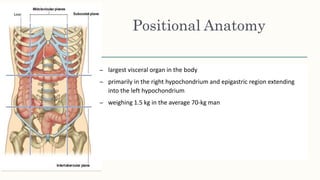
Positional Anatomy
– largest visceral organ in the body
– primarily in the right hypochondrium and epigastric region extending
into the left hypochondrium
– weighing 1.5 kg in the average 70-kg man
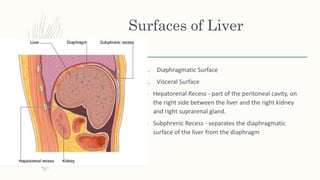
Surfaces of Liver
1. Diaphragmatic Surface
2. Visceral Surface
– Hepatorenal Recess - part of the peritoneal cavity, on
the right side between the liver and the right kidney
and right suprarenal gland.
– Subphrenic Recess - separates the diaphragmatic
surface of the liver from the diaphragm
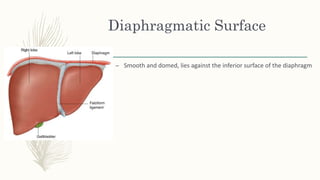
Diaphragmatic Surface
– Smooth and domed, lies against the inferior surface of the diaphragm
Visceral Surface
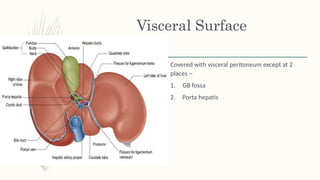
Covered with visceral peritoneum except at 2
places –
1. GB fossa
2. Porta hepatis
Visceral Surface (contd.)
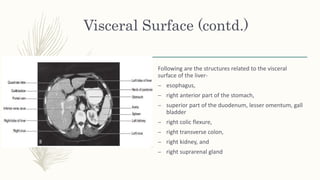
Following are the structures related to the visceral
surface of the liver-
– esophagus,
– right anterior part of the stomach,
– superior part of the duodenum, lesser omentum, gall
bladder
– right colic flexure,
– right transverse colon,
– right kidney, and
– right suprarenal gland
Bare Area of Liver
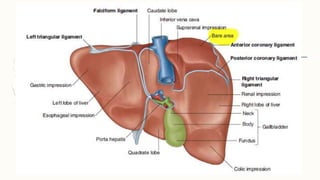
Part of liver on diaphragmatic surface where there is no peritoneal covering
between liver and diaphragm
Boundaries –
 Anteriorly : Anterior coronary ligament
 Posteriorly : Posterior coronary ligament
SEGMENTAL ANATOMY OF LIVER
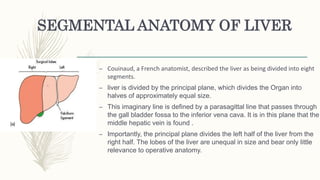
– Couinaud, a French anatomist, described the liver as being divided into eight
segments.
– liver is divided by the principal plane, which divides the Organ into
halves of approximately equal size.
– This imaginary line is defined by a parasagittal line that passes through
the gall bladder fossa to the inferior vena cava. It is in this plane that the
middle hepatic vein is found .
– Importantly, the principal plane divides the left half of the liver from the
right half. The lobes of the liver are unequal in size and bear only little
relevance to operative anatomy.
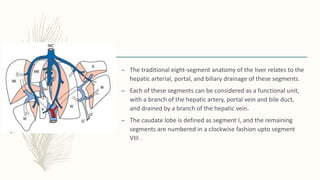
– The traditional eight-segment anatomy of the liver relates to the
hepatic arterial, portal, and biliary drainage of these segments.
– Each of these segments can be considered as a functional unit,
with a branch of the hepatic artery, portal vein and bile duct,
and drained by a branch of the hepatic vein.
– The caudate lobe is defined as segment I, and the remaining
segments are numbered in a clockwise fashion upto segment
VIII .
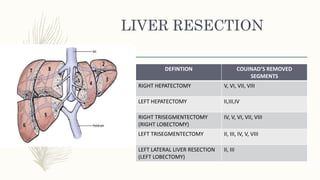
LIVER RESECTION
DEFINTION COUINAD’S REMOVED
SEGMENTS
RIGHT HEPATECTOMY V, VI, VII, VIII
LEFT HEPATECTOMY II,III,IV
RIGHT TRISEGMENTECTOMY
(RIGHT LOBECTOMY)
IV, V, VI, VII, VIII
LEFT TRISEGMENTECTOMY II, III, IV, V, VIII
LEFT LATERAL LIVER RESECTION
(LEFT LOBECTOMY)
II, III
THANK YOU

Liver anatomy

  • 1.
    Liver Anatomy Dr. RahulJain M.S. General Surgery
  • 2.
    Positional Anatomy – largestvisceral organ in the body – primarily in the right hypochondrium and epigastric region extending into the left hypochondrium – weighing 1.5 kg in the average 70-kg man
  • 3.
    Surfaces of Liver 1.Diaphragmatic Surface 2. Visceral Surface – Hepatorenal Recess - part of the peritoneal cavity, on the right side between the liver and the right kidney and right suprarenal gland. – Subphrenic Recess - separates the diaphragmatic surface of the liver from the diaphragm
  • 4.
    Diaphragmatic Surface – Smoothand domed, lies against the inferior surface of the diaphragm
  • 5.
    Visceral Surface Covered withvisceral peritoneum except at 2 places – 1. GB fossa 2. Porta hepatis
  • 6.
    Visceral Surface (contd.) Followingare the structures related to the visceral surface of the liver- – esophagus, – right anterior part of the stomach, – superior part of the duodenum, lesser omentum, gall bladder – right colic flexure, – right transverse colon, – right kidney, and – right suprarenal gland
  • 7.
    Bare Area ofLiver Part of liver on diaphragmatic surface where there is no peritoneal covering between liver and diaphragm Boundaries –  Anteriorly : Anterior coronary ligament  Posteriorly : Posterior coronary ligament
  • 9.
    SEGMENTAL ANATOMY OFLIVER – Couinaud, a French anatomist, described the liver as being divided into eight segments. – liver is divided by the principal plane, which divides the Organ into halves of approximately equal size. – This imaginary line is defined by a parasagittal line that passes through the gall bladder fossa to the inferior vena cava. It is in this plane that the middle hepatic vein is found . – Importantly, the principal plane divides the left half of the liver from the right half. The lobes of the liver are unequal in size and bear only little relevance to operative anatomy.
  • 10.
    – The traditionaleight-segment anatomy of the liver relates to the hepatic arterial, portal, and biliary drainage of these segments. – Each of these segments can be considered as a functional unit, with a branch of the hepatic artery, portal vein and bile duct, and drained by a branch of the hepatic vein. – The caudate lobe is defined as segment I, and the remaining segments are numbered in a clockwise fashion upto segment VIII .
  • 11.
    LIVER RESECTION DEFINTION COUINAD’SREMOVED SEGMENTS RIGHT HEPATECTOMY V, VI, VII, VIII LEFT HEPATECTOMY II,III,IV RIGHT TRISEGMENTECTOMY (RIGHT LOBECTOMY) IV, V, VI, VII, VIII LEFT TRISEGMENTECTOMY II, III, IV, V, VIII LEFT LATERAL LIVER RESECTION (LEFT LOBECTOMY) II, III
  • 12.