UNIVERSITY OF AGRICULTURAL SCIENCES,
BENGALURU.
COLLEGE OF AGRICULTURE, HASSAN.
 COURSE : COMMERCIAL COMPOST PRODUCTION
CMA 406 (0+5)
Submitted to: Submitted by:
Dr. Bhyrappanavar, Professor and Head Vivek. S
Dr. Jayaramaiah. R . Associate Professor ALH5089
Dr. Pramod. G, Asst. Professor IV Bsc (Ag)
Dr. Naveenkumar. B. T, Asst. Professor COA, Hassan.
Dept. Of Agronomy, COA Hassan.
ANAEROBIC COMPOSTING TECHNIQUES
COMPOSTING
• The process of decomposing the organic waste is called
composting.
• The decomposed material is called compost.
• It is essentially a microbiological decomposition of organic
residues collected from rural area or urban area.
• Composting can be carried out under both aerobic and
anaerobic condition.
Anaerobic composting
• In this decomposition occurs in the absence of oxygen or
under the limited supply of oxygen.
• Anaerobic microorganisms dominate.
• They produce the intermediate compounds like methane,
organic acids, hydrogen sulphide and other substances.
• These substances have strong odour and some are phytotoxic.
• It is a low temperature process.
Anaerobic Microbiology
• The anaerobic microbiology mainly involves three group of
microorganisms.
• They are –
 Methanobacterium
 Methanococcus
 Methanospirillum
• In microbiology they are of different types such as Cocci,
Bacilli, Spirilli and sarcina.
Anaerobic Composting techniques
 Bangalore Method:
• This method of composting was developed at IISc, Bangalore
by Acharya in 1939.
• Composting substrate are not turned.
• This method is suitable in areas with scanty rainfall.
• Time involved in production of finished compost is much
longer.
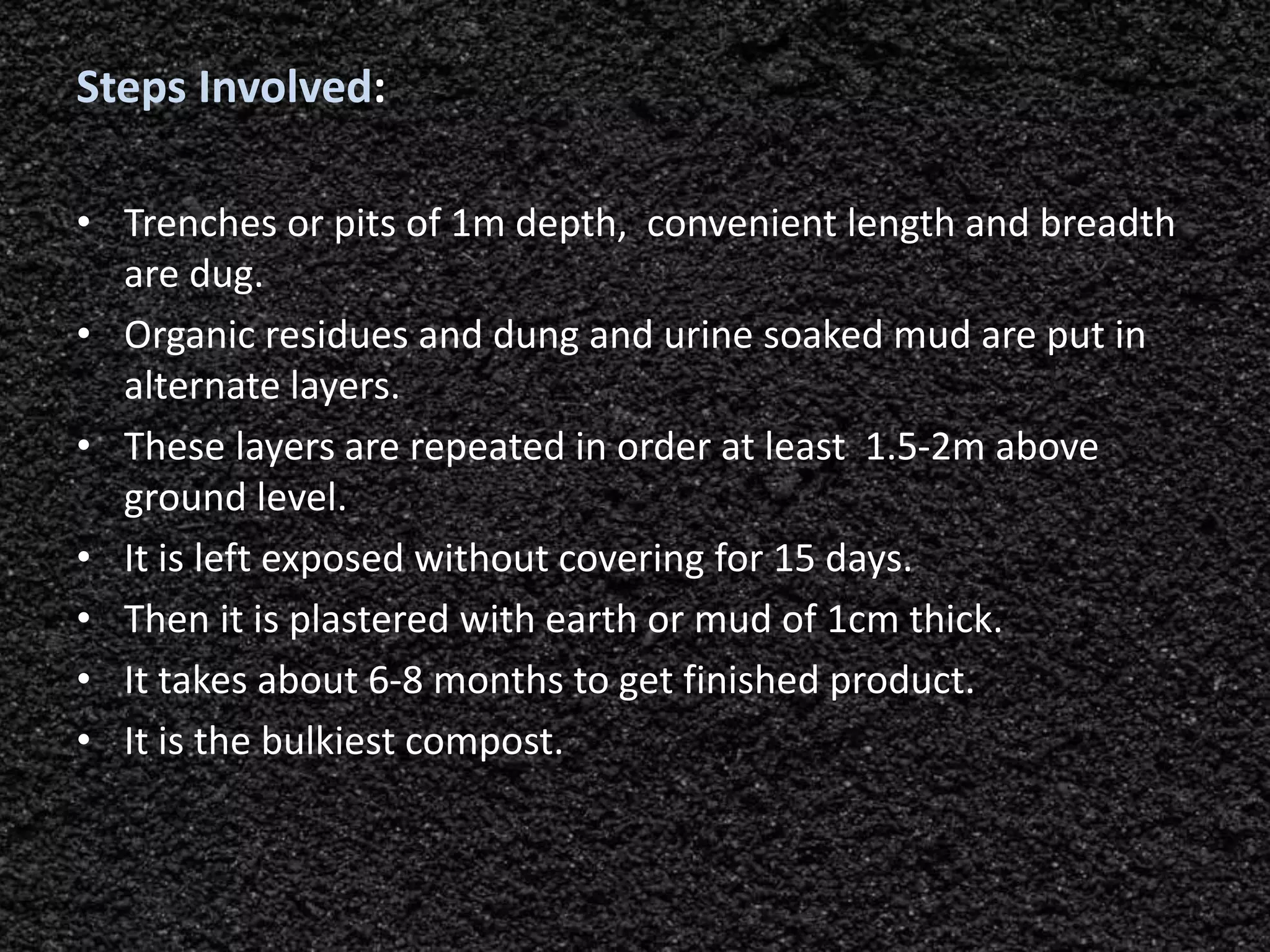
Steps Involved:
• Trenches or pits of 1m depth, convenient length and breadth
are dug.
• Organic residues and dung and urine soaked mud are put in
alternate layers.
• These layers are repeated in order at least 1.5-2m above
ground level.
• It is left exposed without covering for 15 days.
• Then it is plastered with earth or mud of 1cm thick.
• It takes about 6-8 months to get finished product.
• It is the bulkiest compost.
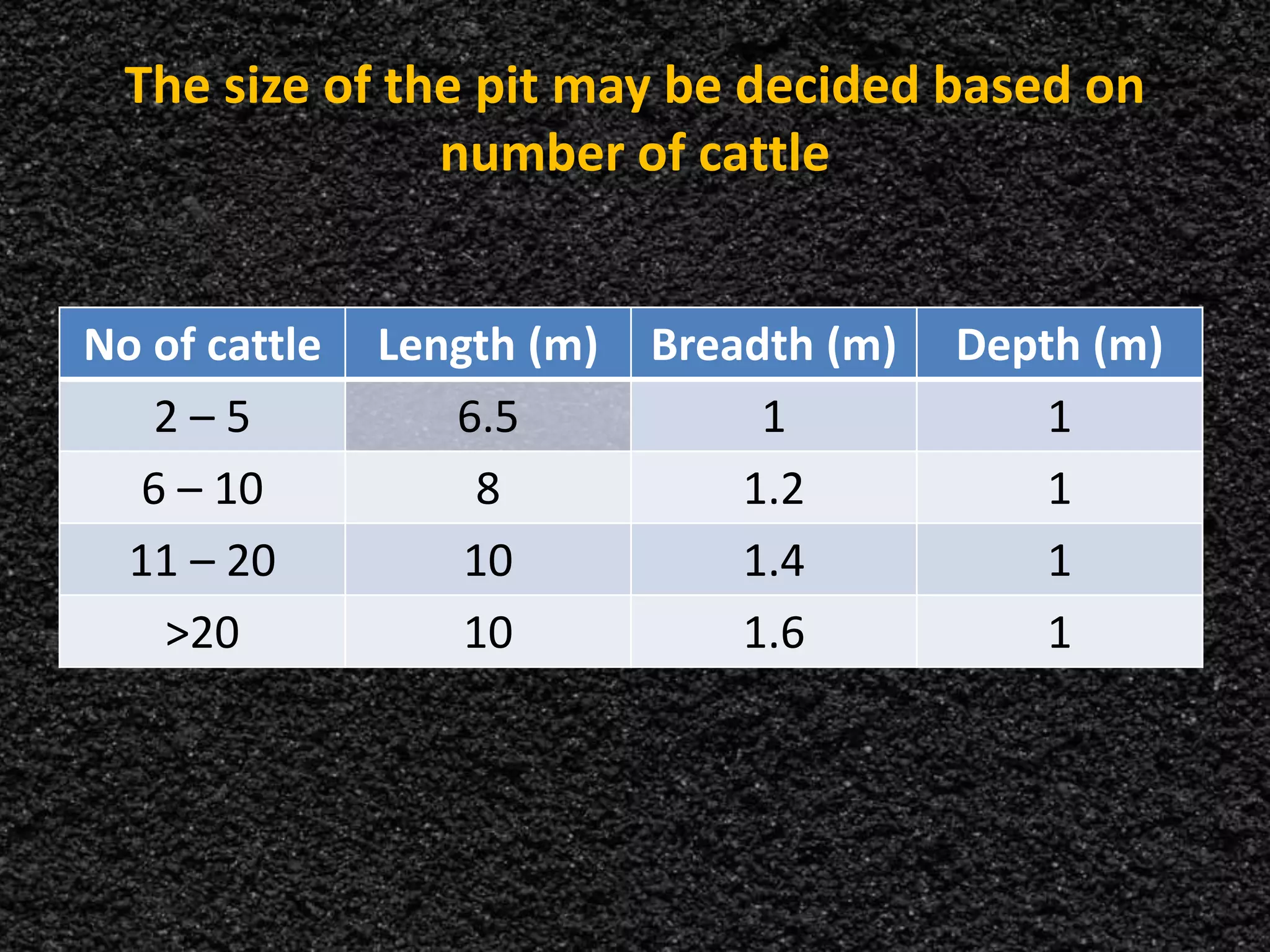
The size of the pit may be decided based on
number of cattle
No of cattle Length (m) Breadth (m) Depth (m)
2 – 5 6.5 1 1
6 – 10 8 1.2 1
11 – 20 10 1.4 1
>20 10 1.6 1
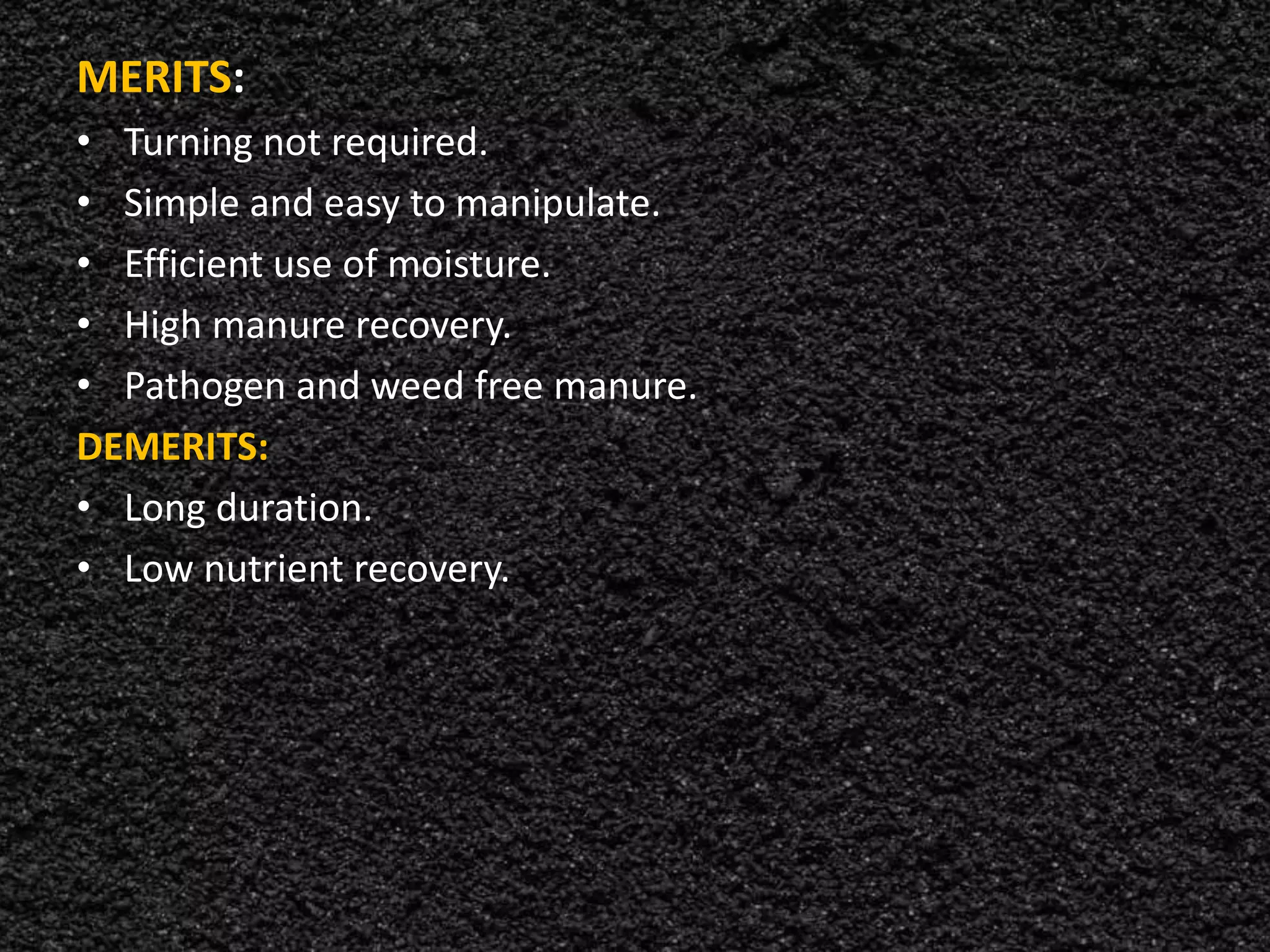
MERITS:
• Turning not required.
• Simple and easy to manipulate.
• Efficient use of moisture.
• High manure recovery.
• Pathogen and weed free manure.
DEMERITS:
• Long duration.
• Low nutrient recovery.
 Coimbatore method:
• Dig the pit of 1.2m width, 0.9m depth and 5 -7m length in a
shady place.
• Farm waste are spread on bottom of the pit.
• Apply the cow dung slurry and 1 kg of powdered bone meal
uniformly over it.
• Fill the trench in the same way until material rises 50 cm
above the ground level.
• Sprinkle the water at regular intervals.
• The material is taken out of the pit after 2 months.
• Water is sprinkled and thoroughly mixed.
• Then it is heaped under the shade and left undisturbed.
• Occasionally sprinkle the water over it.
• The compost will be ready in 6 – 7 months.
• Rate of decomposition is faster as the turnings are given.
• Nutrient content is high.
• Here anaerobic decomposition is followed by aerobic
fermentation.
 Chinese pit method:
• Here composting is carried out in corner of the field in circular
or rectangular pits.
• The pits are filled layer by layer each layer being 15cm thick.
• First layer is of Green manure.
• Second later is of Straw.
• Third layer is of Animal dung.
• These layers are alternated until pit is full.
• Then it is plastered with the mud.
• The water layer of 4cm depth is maintained on suface.
• This creates anaerobic condition.
• First turning is given 1 month after filling and Superphosphate
is added.
• Second turning is given after second month.
• Third turning is given 2-3 weeks after second turning.
• The material is allowed to decompose for three months.
• It produces about 8 tonnes of compost per pit.
CONCLUSION
• Composting helps in the bioremediation of wastes.
• It provides inputs for Sustainable agriculture.
• Anaerobic composting helps in eliminating the weed seeds
and pathogens.
• The nutritive value is less compared to synthetic fertilizers.
• Compared to Aerobic decomposition the energy and CO2
released in Anaerobic decomposition is less.
COMPOST IS LIKE INFORMATION...
IT DOES NO GOOD UNLESS YOU SPREAD IT
REFERENCES
• TNAU Agri portal
• Composting techniques –
THANK YOU

Anaerobic composting

  • 1.
    UNIVERSITY OF AGRICULTURALSCIENCES, BENGALURU. COLLEGE OF AGRICULTURE, HASSAN.  COURSE : COMMERCIAL COMPOST PRODUCTION CMA 406 (0+5) Submitted to: Submitted by: Dr. Bhyrappanavar, Professor and Head Vivek. S Dr. Jayaramaiah. R . Associate Professor ALH5089 Dr. Pramod. G, Asst. Professor IV Bsc (Ag) Dr. Naveenkumar. B. T, Asst. Professor COA, Hassan. Dept. Of Agronomy, COA Hassan.
  • 2.
  • 3.
    COMPOSTING • The processof decomposing the organic waste is called composting. • The decomposed material is called compost. • It is essentially a microbiological decomposition of organic residues collected from rural area or urban area. • Composting can be carried out under both aerobic and anaerobic condition.
  • 4.
    Anaerobic composting • Inthis decomposition occurs in the absence of oxygen or under the limited supply of oxygen. • Anaerobic microorganisms dominate. • They produce the intermediate compounds like methane, organic acids, hydrogen sulphide and other substances. • These substances have strong odour and some are phytotoxic. • It is a low temperature process.
  • 5.
    Anaerobic Microbiology • Theanaerobic microbiology mainly involves three group of microorganisms. • They are –  Methanobacterium  Methanococcus  Methanospirillum • In microbiology they are of different types such as Cocci, Bacilli, Spirilli and sarcina.
  • 6.
    Anaerobic Composting techniques Bangalore Method: • This method of composting was developed at IISc, Bangalore by Acharya in 1939. • Composting substrate are not turned. • This method is suitable in areas with scanty rainfall. • Time involved in production of finished compost is much longer.
  • 7.
    Steps Involved: • Trenchesor pits of 1m depth, convenient length and breadth are dug. • Organic residues and dung and urine soaked mud are put in alternate layers. • These layers are repeated in order at least 1.5-2m above ground level. • It is left exposed without covering for 15 days. • Then it is plastered with earth or mud of 1cm thick. • It takes about 6-8 months to get finished product. • It is the bulkiest compost.
  • 8.
    The size ofthe pit may be decided based on number of cattle No of cattle Length (m) Breadth (m) Depth (m) 2 – 5 6.5 1 1 6 – 10 8 1.2 1 11 – 20 10 1.4 1 >20 10 1.6 1
  • 9.
    MERITS: • Turning notrequired. • Simple and easy to manipulate. • Efficient use of moisture. • High manure recovery. • Pathogen and weed free manure. DEMERITS: • Long duration. • Low nutrient recovery.
  • 11.
     Coimbatore method: •Dig the pit of 1.2m width, 0.9m depth and 5 -7m length in a shady place. • Farm waste are spread on bottom of the pit. • Apply the cow dung slurry and 1 kg of powdered bone meal uniformly over it. • Fill the trench in the same way until material rises 50 cm above the ground level. • Sprinkle the water at regular intervals. • The material is taken out of the pit after 2 months. • Water is sprinkled and thoroughly mixed.
  • 12.
    • Then itis heaped under the shade and left undisturbed. • Occasionally sprinkle the water over it. • The compost will be ready in 6 – 7 months. • Rate of decomposition is faster as the turnings are given. • Nutrient content is high. • Here anaerobic decomposition is followed by aerobic fermentation.
  • 13.
     Chinese pitmethod: • Here composting is carried out in corner of the field in circular or rectangular pits. • The pits are filled layer by layer each layer being 15cm thick. • First layer is of Green manure. • Second later is of Straw. • Third layer is of Animal dung. • These layers are alternated until pit is full. • Then it is plastered with the mud.
  • 14.
    • The waterlayer of 4cm depth is maintained on suface. • This creates anaerobic condition. • First turning is given 1 month after filling and Superphosphate is added. • Second turning is given after second month. • Third turning is given 2-3 weeks after second turning. • The material is allowed to decompose for three months. • It produces about 8 tonnes of compost per pit.
  • 15.
    CONCLUSION • Composting helpsin the bioremediation of wastes. • It provides inputs for Sustainable agriculture. • Anaerobic composting helps in eliminating the weed seeds and pathogens. • The nutritive value is less compared to synthetic fertilizers. • Compared to Aerobic decomposition the energy and CO2 released in Anaerobic decomposition is less.
  • 16.
    COMPOST IS LIKEINFORMATION... IT DOES NO GOOD UNLESS YOU SPREAD IT
  • 17.
    REFERENCES • TNAU Agriportal • Composting techniques – THANK YOU