Topic: Pest Risk Analysis (PRA)
Submitted to:
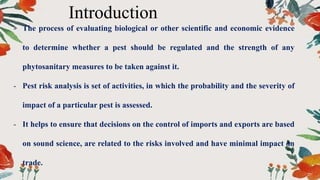
- The process of evaluating biological or other scientific and economic evidence
to determine whether a pest should be regulated and the strength of any
phytosanitary measures to be taken against it.
- Pest risk analysis is set of activities, in which the probability and the severity of
impact of a particular pest is assessed.
- It helps to ensure that decisions on the control of imports and exports are based
on sound science, are related to the risks involved and have minimal impact on
trade.
Introduction
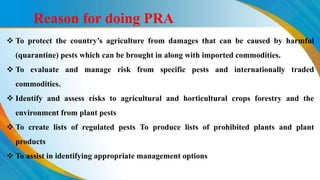
 To protect the country’s agriculture from damages that can be caused by harmful
(quarantine) pests which can be brought in along with imported commodities.
 To evaluate and manage risk from specific pests and internationally traded
commodities.
 Identify and assess risks to agricultural and horticultural crops forestry and the
environment from plant pests
 To create lists of regulated pests To produce lists of prohibited plants and plant
products
 To assist in identifying appropriate management options
Reason for doing PRA
PRA Process Three stages:
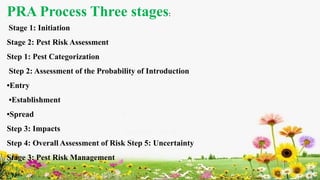
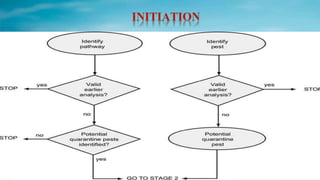
Stage 1: Initiation
Stage 2: Pest Risk Assessment
Step 1: Pest Categorization
Step 2: Assessment of the Probability of Introduction
•Entry
•Establishment
•Spread
Step 3: Impacts
Step 4: Overall Assessment of Risk Step 5: Uncertainty
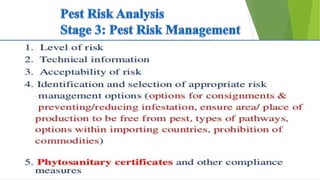
Stage 3: Pest Risk Management
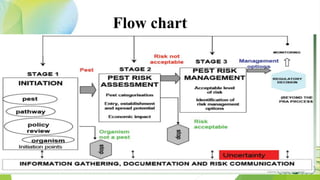
Flow chart
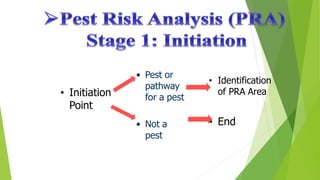
• Initiation
Point
• Pest or
pathway
for a pest
• Not a
pest
• Identification
of PRA Area
• End
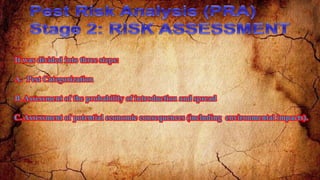
It was divided into three steps:
A. Pest Categorization
B. Assessment of the probability of introduction and spread
C. Assessment of potential economic consequences (including environmental impacts).
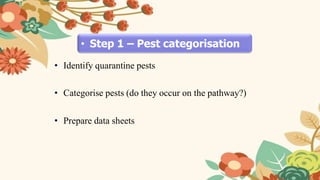
• Step 1 – Pest categorisation
• Identify quarantine pests
• Categorise pests (do they occur on the pathway?)
• Prepare data sheets
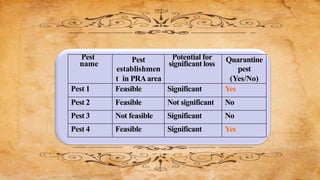
Pest
name
Pest
establishmen
t in PRAarea
Potential for
significant loss
Quarantine
pest
(Yes/No)
Pest 1 Feasible Significant Yes
Pest 2 Feasible Not significant No
Pest 3 Not feasible Significant No
Pest 4 Feasible Significant Yes
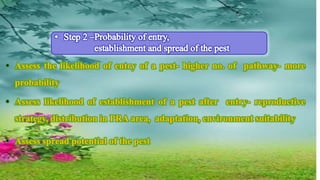
• Assess the likelihood of entry of a pest- higher no. of pathway- more
probability
• Assess likelihood of establishment of a pest after entry- reproductive
strategy, distribution in PRA area, adaptation, environment suitability
• Assess spread potential of the pest
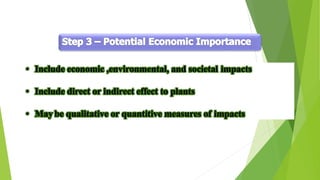
• Include economic ,environmental, and societal impacts
• Include direct or indirect effect to plants
• May be qualitative or quantitive measures of impacts
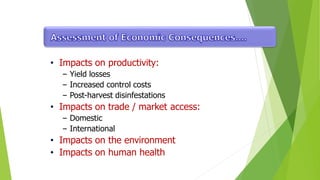
• Impacts on productivity:
– Yield losses
– Increased control costs
– Post-harvest disinfestations
• Impacts on trade / market access:
– Domestic
– International
• Impacts on the environment
• Impacts on human health
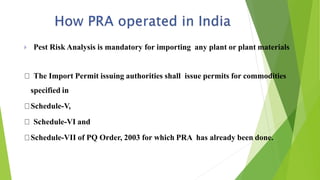
 Pest Risk Analysis is mandatory for importing any plant or plant materials
The Import Permit issuing authorities shall issue permits for commodities
specified in
Schedule-V,
Schedule-VI and
Schedule-VII of PQ Order, 2003 for which PRA has already been done.
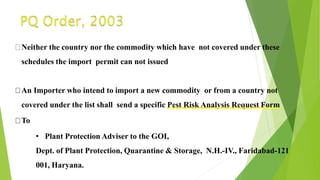
Neither the country nor the commodity which have not covered under these
schedules the import permit can not issued
An Importer who intend to import a new commodity or from a country not
covered under the list shall send a specific Pest Risk Analysis Request Form
To
• Plant Protection Adviser to the GOI,
Dept. of Plant Protection, Quarantine & Storage, N.H.-IV., Faridabad-121
001, Haryana.
THANK YOU

Pest risk analysis

  • 1.
    Topic: Pest RiskAnalysis (PRA) Submitted to:
  • 2.
    - The processof evaluating biological or other scientific and economic evidence to determine whether a pest should be regulated and the strength of any phytosanitary measures to be taken against it. - Pest risk analysis is set of activities, in which the probability and the severity of impact of a particular pest is assessed. - It helps to ensure that decisions on the control of imports and exports are based on sound science, are related to the risks involved and have minimal impact on trade. Introduction
  • 3.
     To protectthe country’s agriculture from damages that can be caused by harmful (quarantine) pests which can be brought in along with imported commodities.  To evaluate and manage risk from specific pests and internationally traded commodities.  Identify and assess risks to agricultural and horticultural crops forestry and the environment from plant pests  To create lists of regulated pests To produce lists of prohibited plants and plant products  To assist in identifying appropriate management options Reason for doing PRA
  • 4.
    PRA Process Threestages: Stage 1: Initiation Stage 2: Pest Risk Assessment Step 1: Pest Categorization Step 2: Assessment of the Probability of Introduction •Entry •Establishment •Spread Step 3: Impacts Step 4: Overall Assessment of Risk Step 5: Uncertainty Stage 3: Pest Risk Management
  • 5.
  • 6.
    • Initiation Point • Pestor pathway for a pest • Not a pest • Identification of PRA Area • End
  • 8.
    It was dividedinto three steps: A. Pest Categorization B. Assessment of the probability of introduction and spread C. Assessment of potential economic consequences (including environmental impacts).
  • 9.
    • Step 1– Pest categorisation • Identify quarantine pests • Categorise pests (do they occur on the pathway?) • Prepare data sheets
  • 10.
    Pest name Pest establishmen t in PRAarea Potentialfor significant loss Quarantine pest (Yes/No) Pest 1 Feasible Significant Yes Pest 2 Feasible Not significant No Pest 3 Not feasible Significant No Pest 4 Feasible Significant Yes
  • 11.
    • Assess thelikelihood of entry of a pest- higher no. of pathway- more probability • Assess likelihood of establishment of a pest after entry- reproductive strategy, distribution in PRA area, adaptation, environment suitability • Assess spread potential of the pest
  • 12.
    • Include economic,environmental, and societal impacts • Include direct or indirect effect to plants • May be qualitative or quantitive measures of impacts
  • 13.
    • Impacts onproductivity: – Yield losses – Increased control costs – Post-harvest disinfestations • Impacts on trade / market access: – Domestic – International • Impacts on the environment • Impacts on human health
  • 15.
     Pest RiskAnalysis is mandatory for importing any plant or plant materials The Import Permit issuing authorities shall issue permits for commodities specified in Schedule-V, Schedule-VI and Schedule-VII of PQ Order, 2003 for which PRA has already been done.
  • 16.
    Neither the countrynor the commodity which have not covered under these schedules the import permit can not issued An Importer who intend to import a new commodity or from a country not covered under the list shall send a specific Pest Risk Analysis Request Form To • Plant Protection Adviser to the GOI, Dept. of Plant Protection, Quarantine & Storage, N.H.-IV., Faridabad-121 001, Haryana.
  • 17.