Unit IV
Processing of Wastes
Objectives of waste processing – Physical Processing
techniques and Equipment; Resource recovery from solid
waste composting and biomethanation; Thermal processing
options – case studies under Indian conditions.
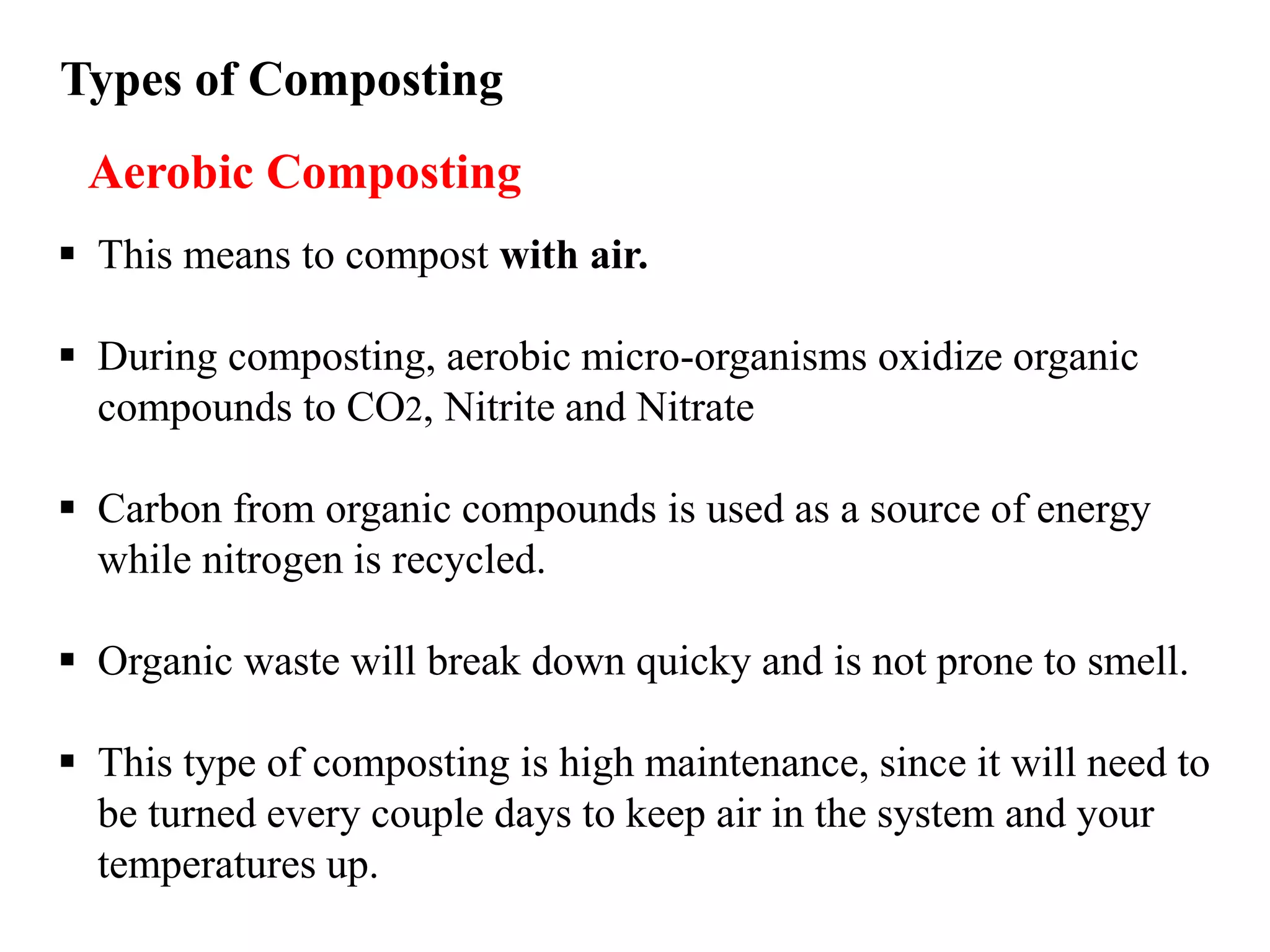
Types of Composting
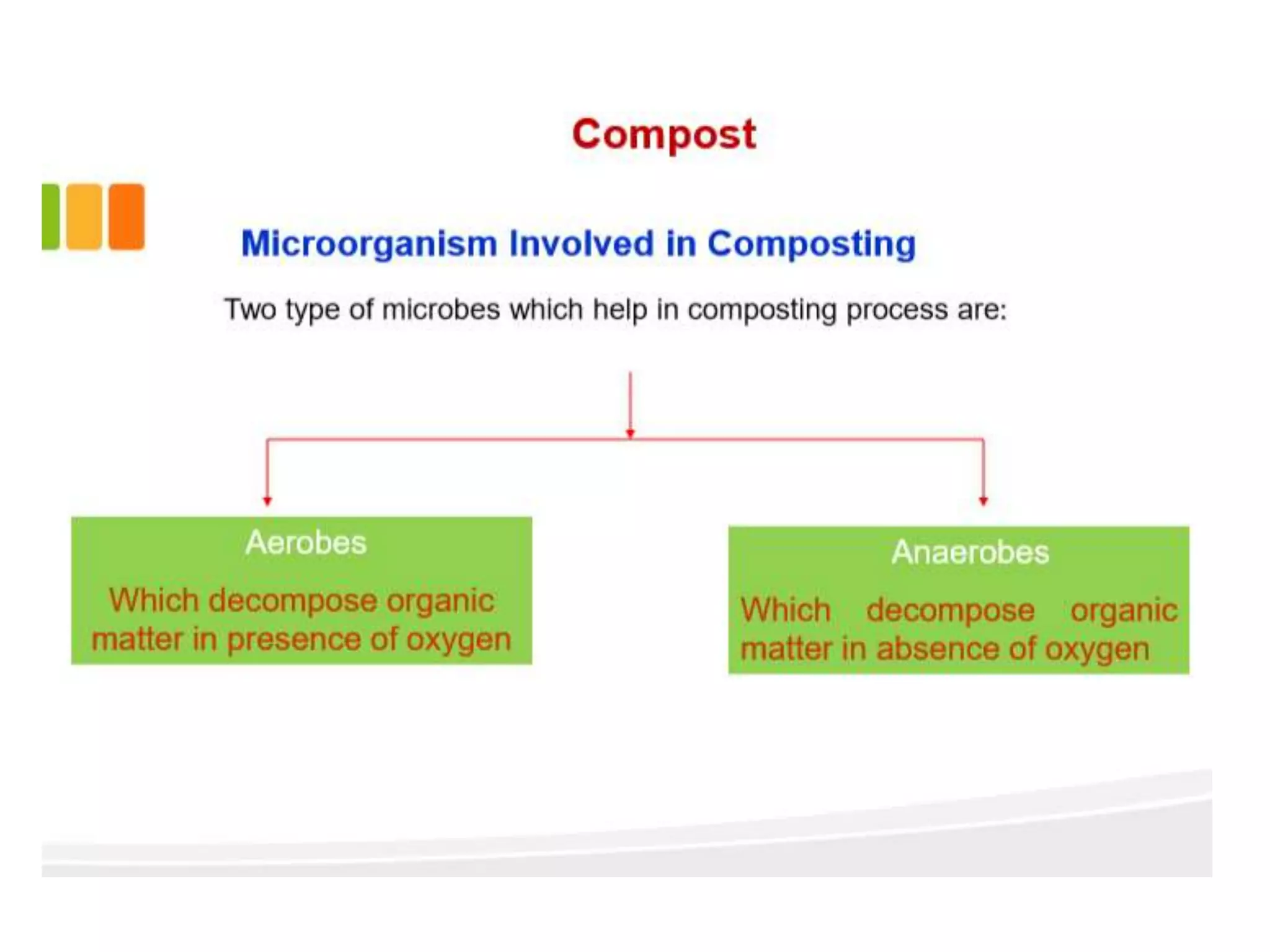
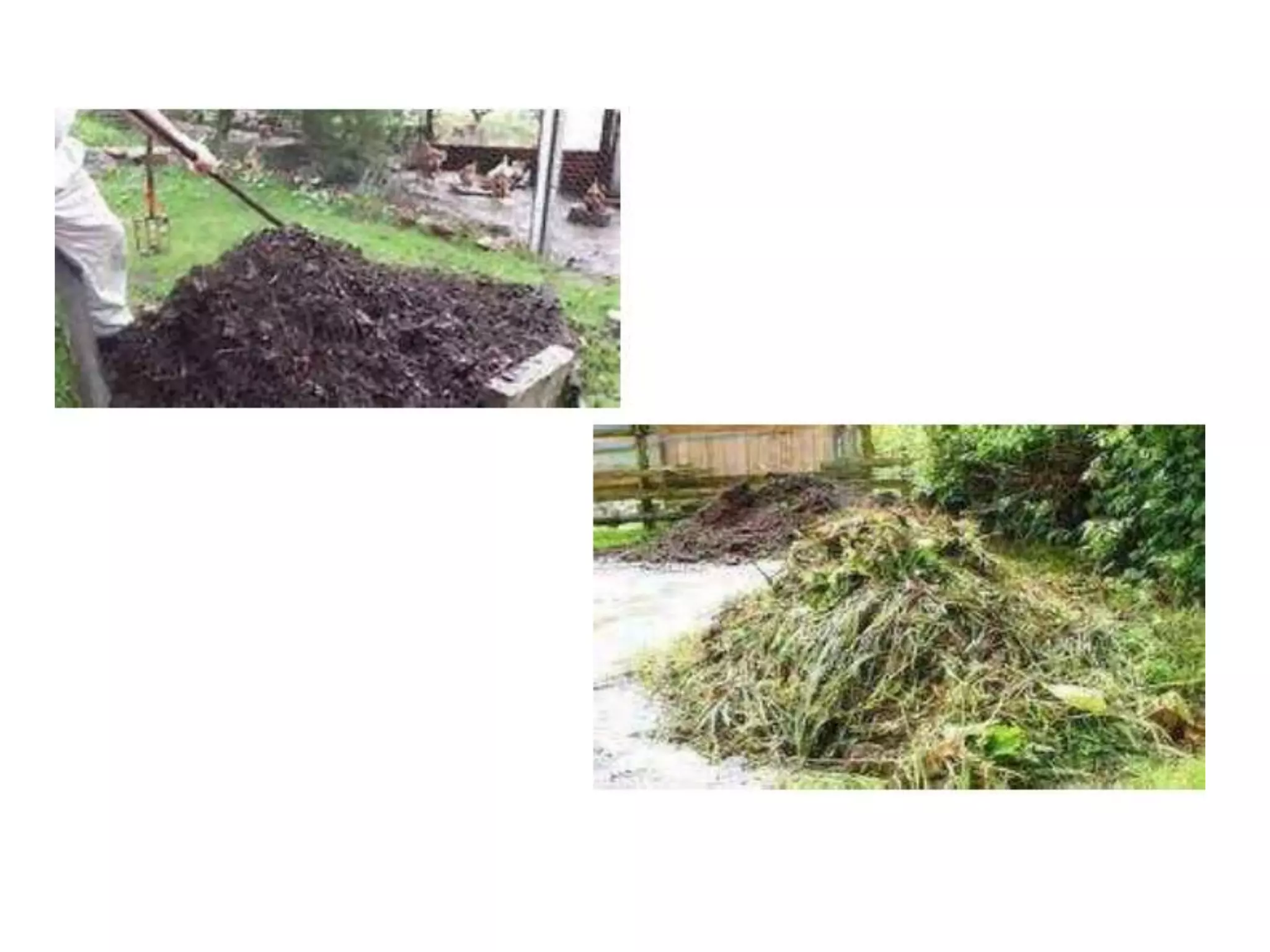
 This means to compost with air.
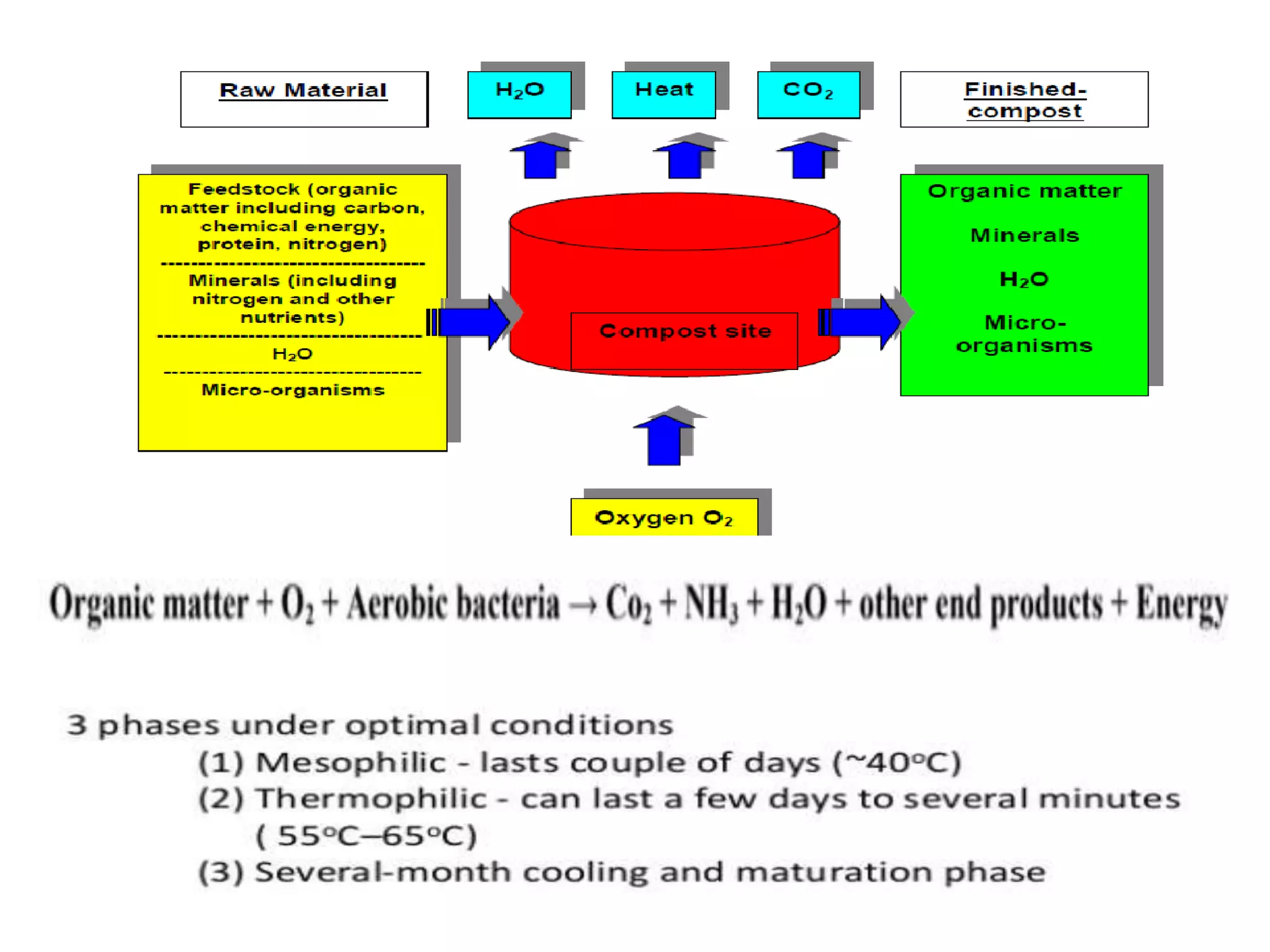
 During composting, aerobic micro-organisms oxidize organic
compounds to CO2, Nitrite and Nitrate
 Carbon from organic compounds is used as a source of energy
while nitrogen is recycled.
 Organic waste will break down quicky and is not prone to smell.
 This type of composting is high maintenance, since it will need to
be turned every couple days to keep air in the system and your
temperatures up.
Aerobic Composting
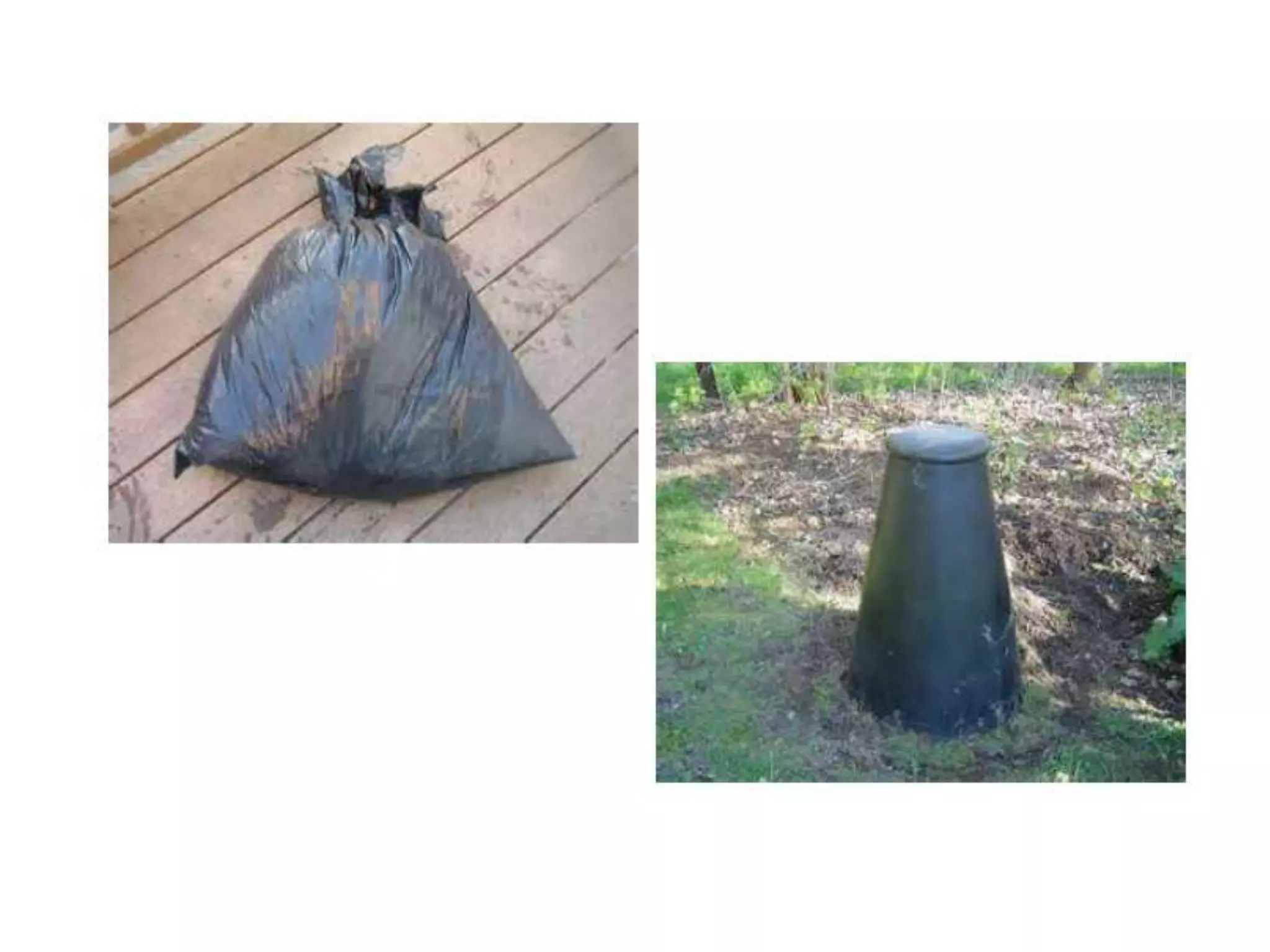
 This is composting without air.
 During composting, the anaerobic micro-organisms, while
metabolizing the nutrients, breakdown the organic compounds
through a process of reduction.
 A very small amount of energy is released during the process and
the temperature of composting mass does not rise much.
 Compost may take years to break down and create the awful smell
most people associate with composting.
 The gases evolved are mainly Methane & Carbon dioxide.
 Anaerobic composting is low maintenance since you simply throw
it in a pile and wait a couple years
Anaerobic Composting
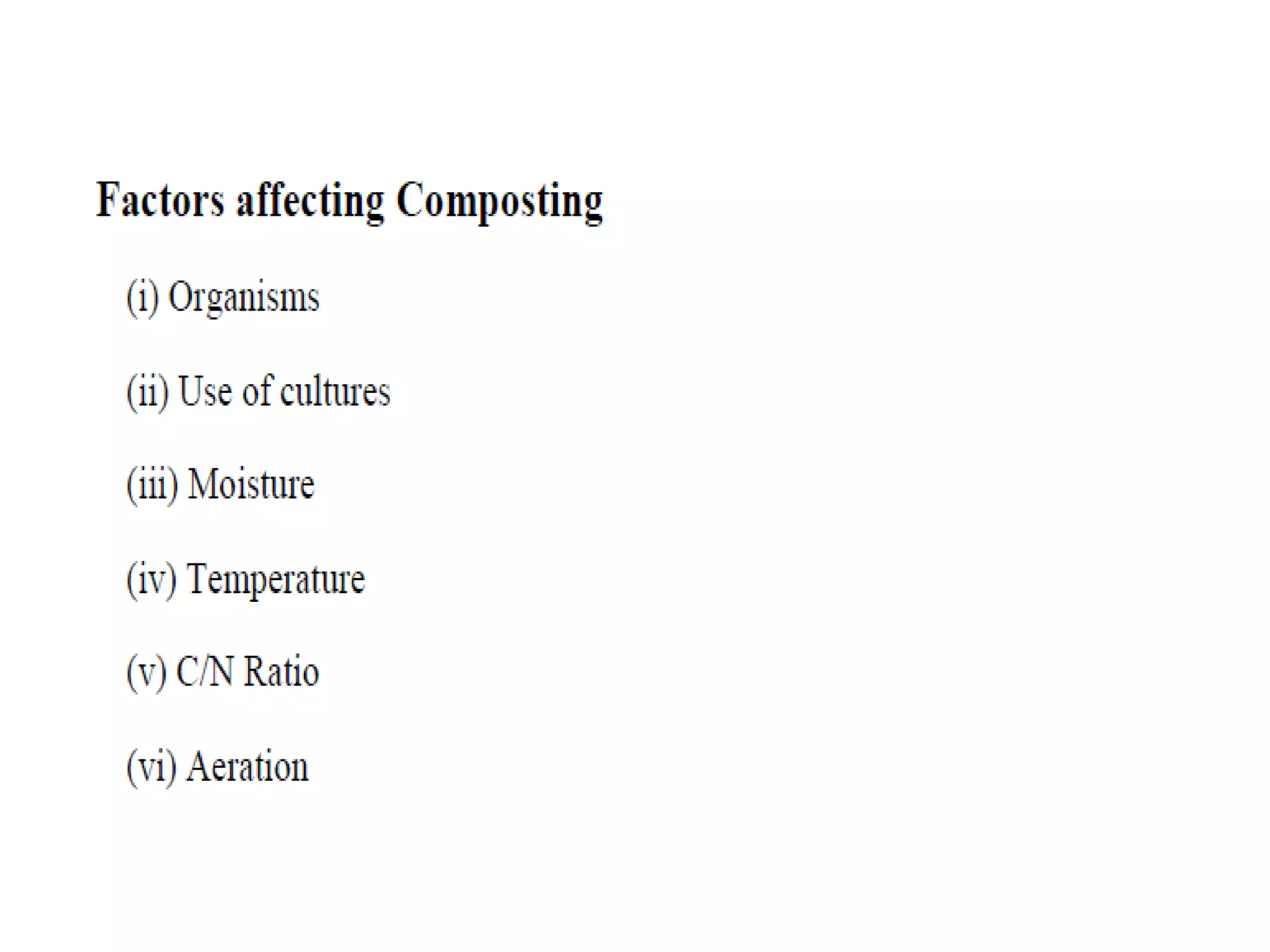
Organisms:
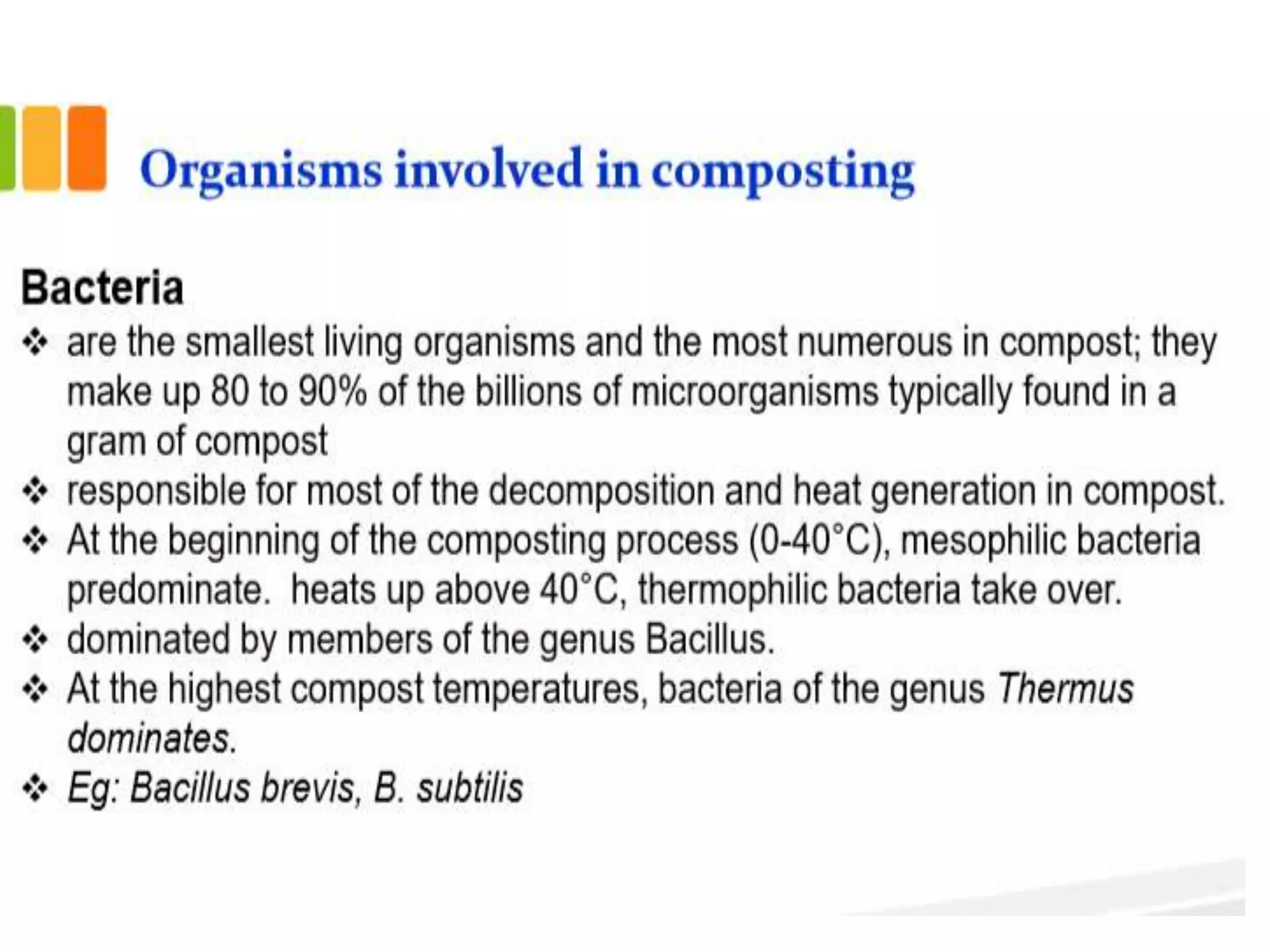
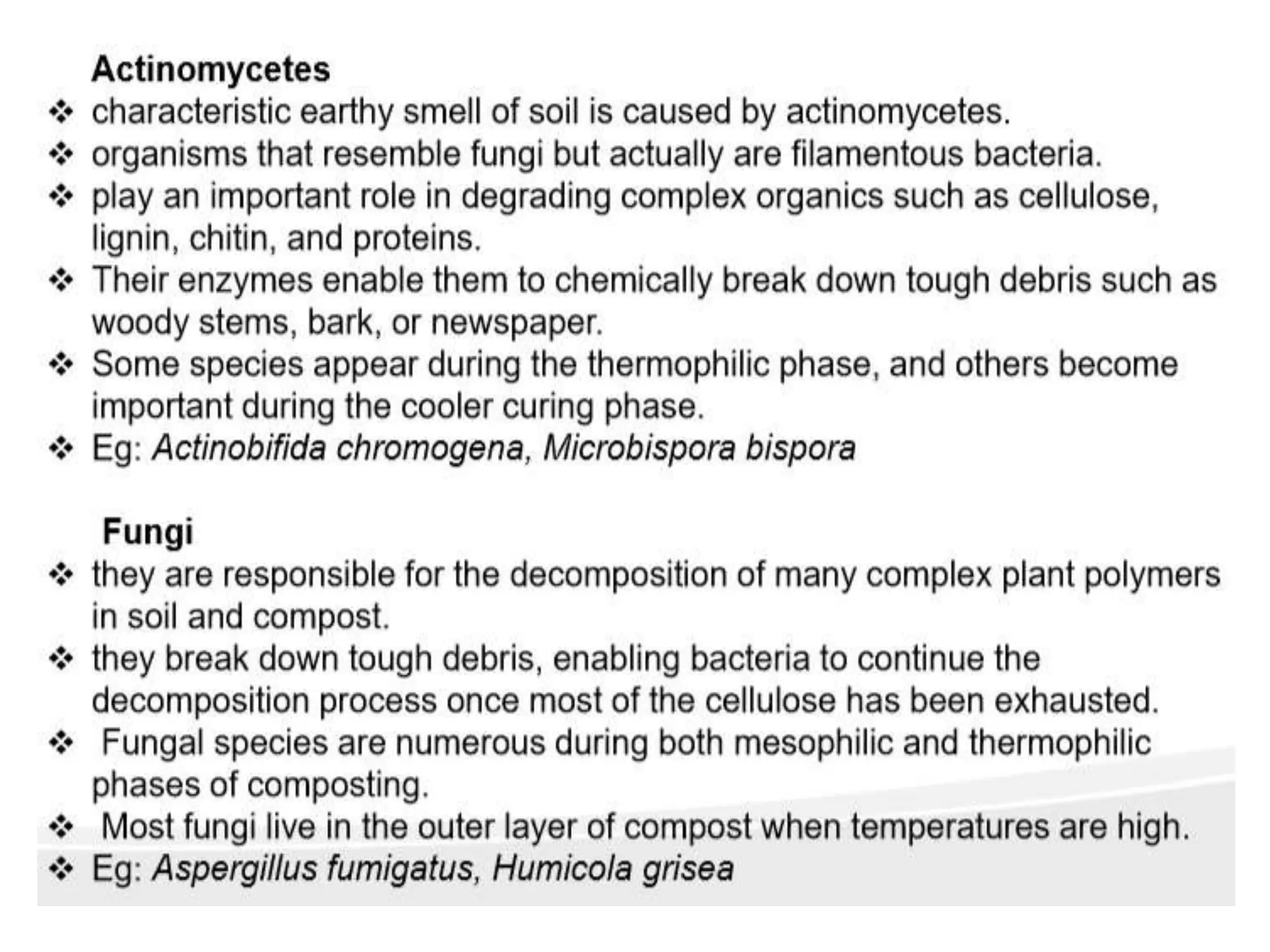
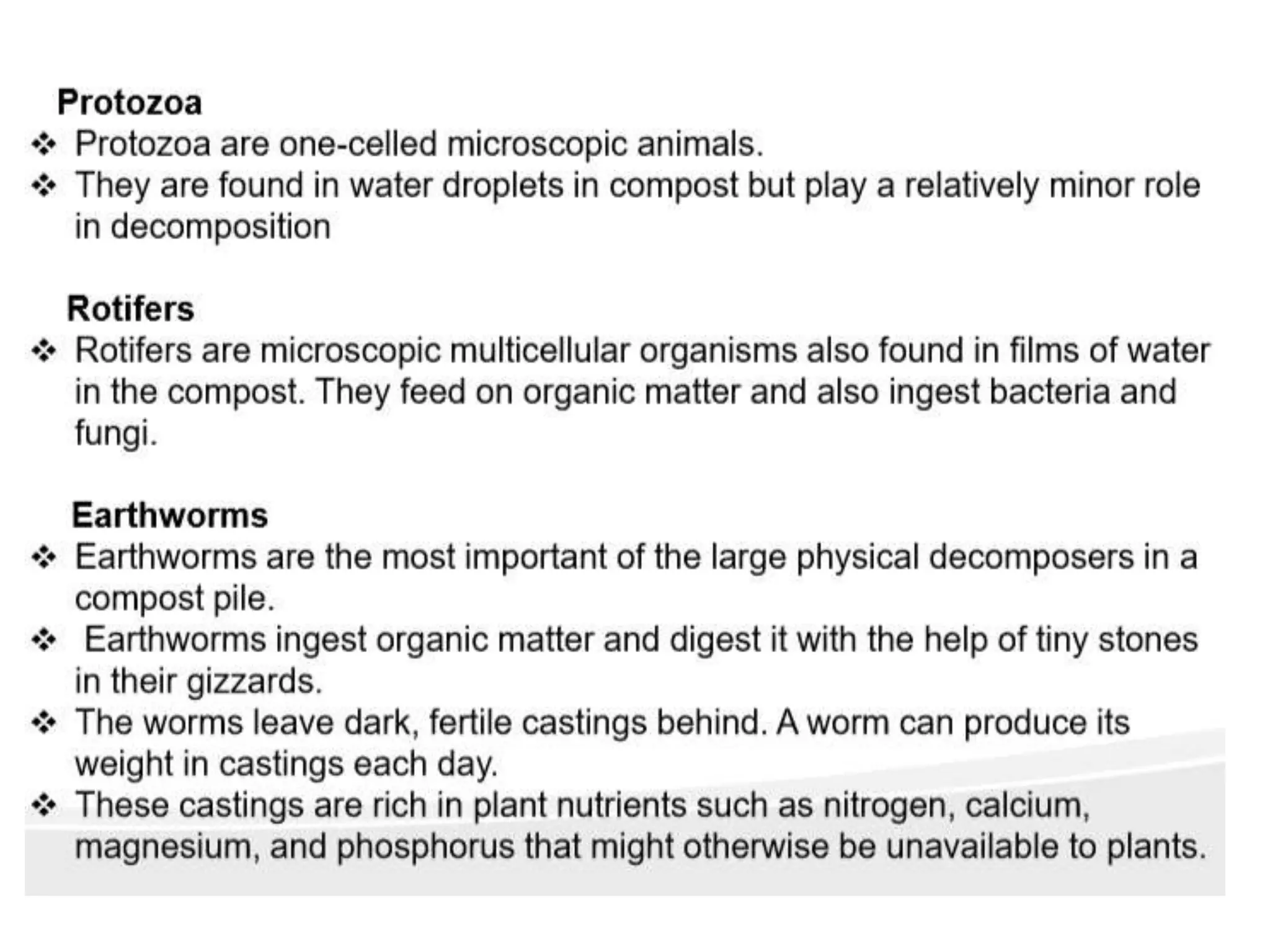
 Aerobic composting is a dynamic system where in bacteria,
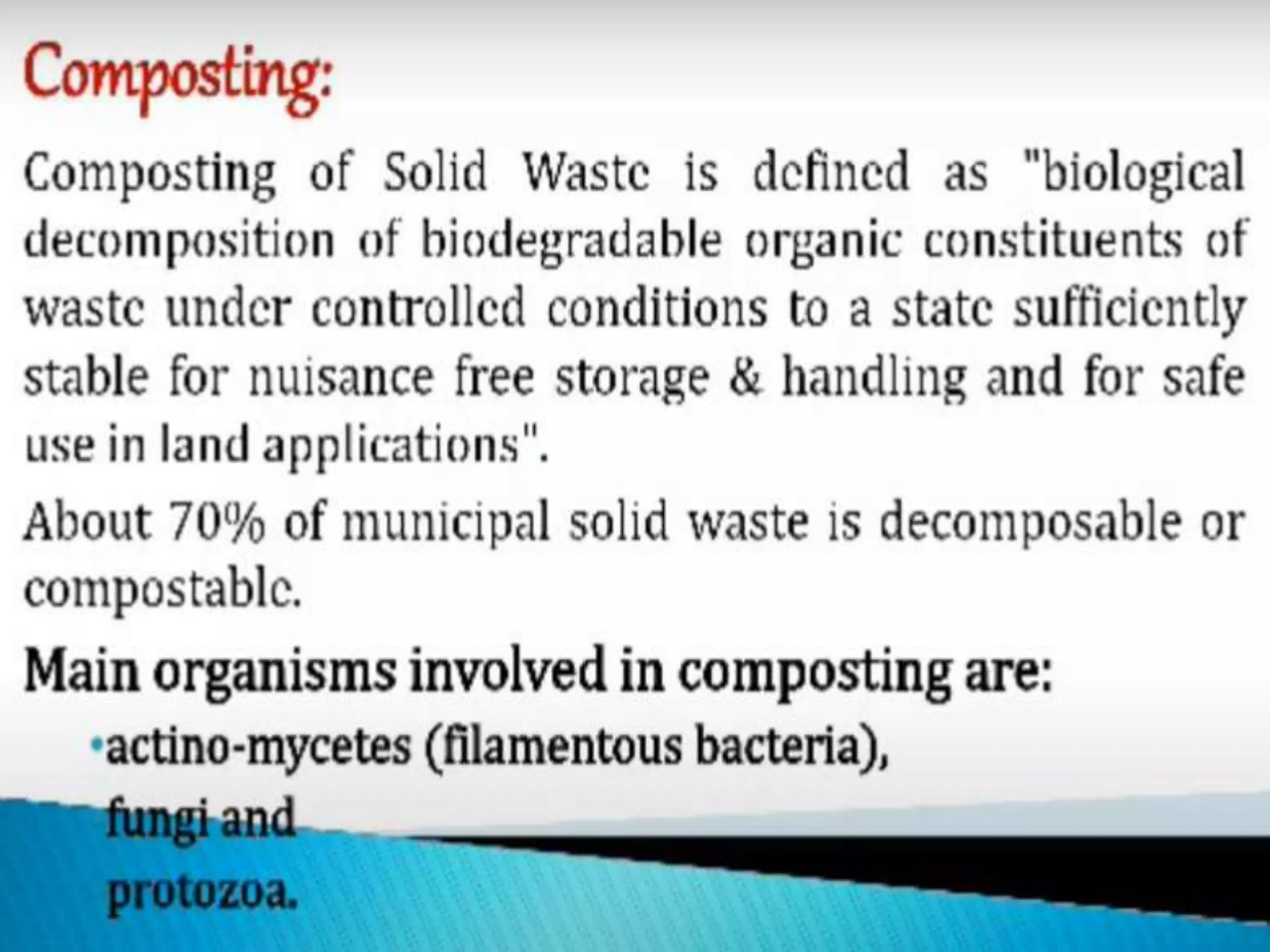
actinomycetes, fungi and other biological forms are actively involved.
 The relative preponderance of one species over another depends upon the
constantly changing food supply, temperature and substrate conditions.
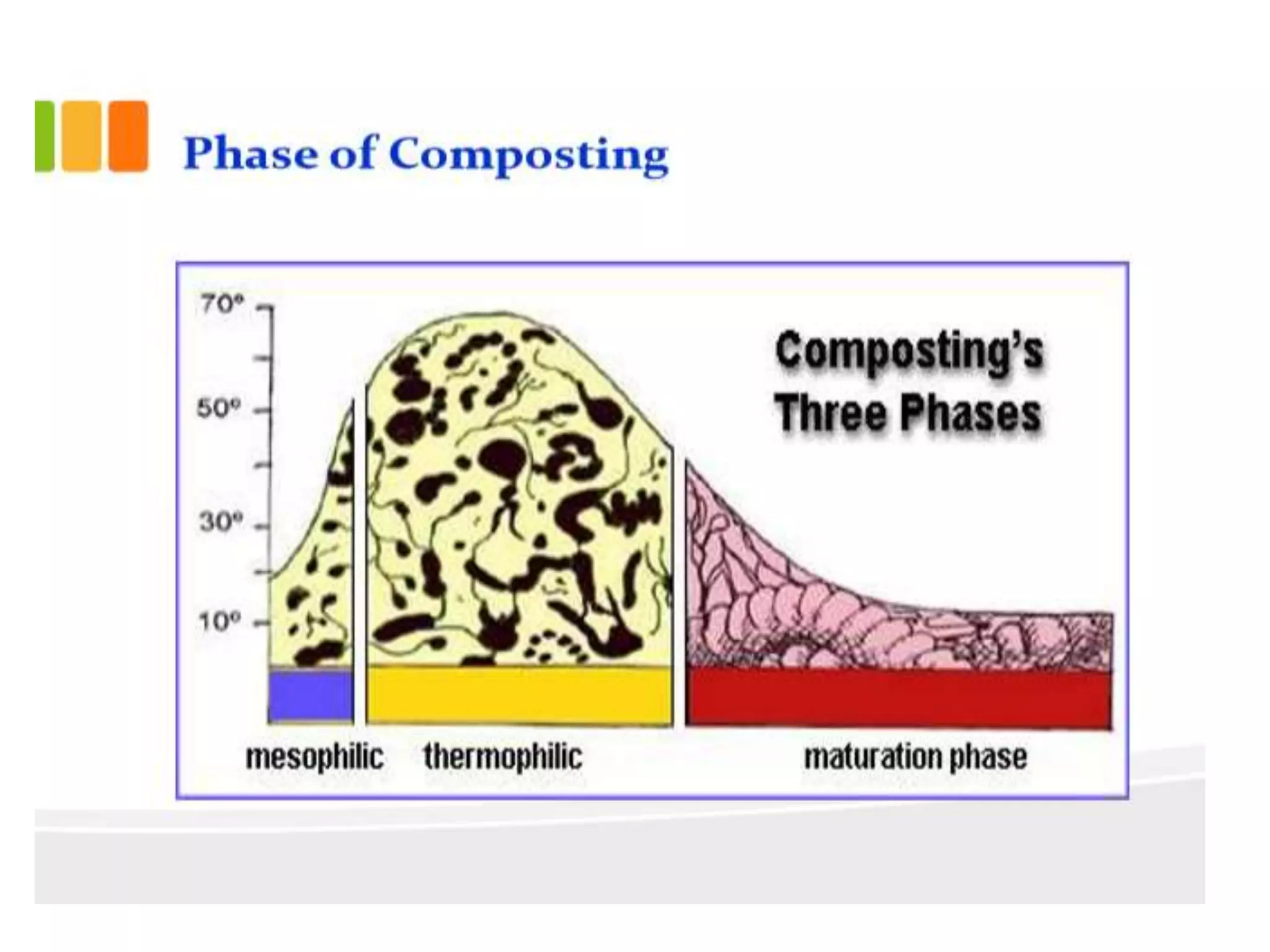
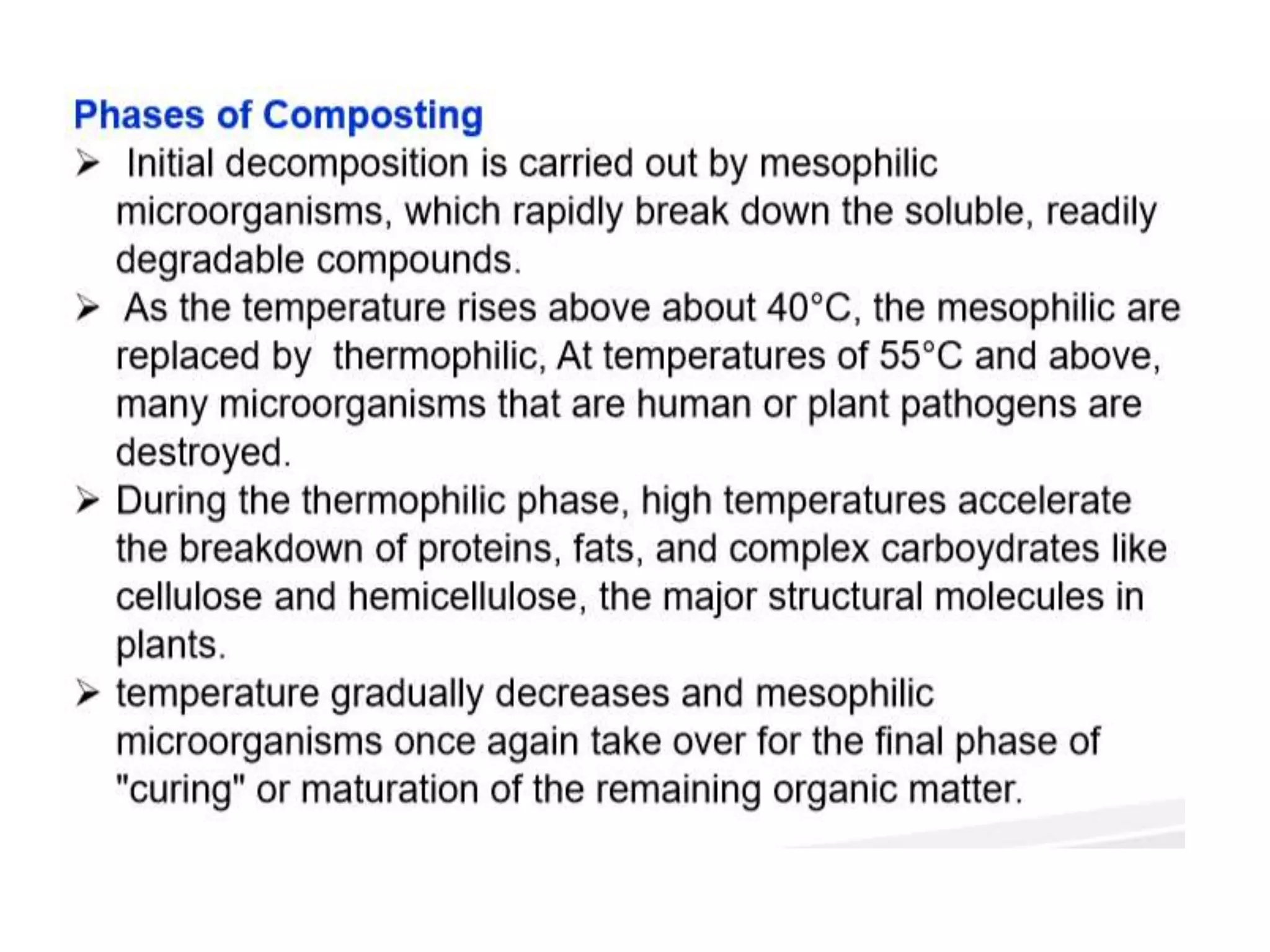
 When the temperature drops, actinomycetes & fungi are confined to 5 to
15 cm outer surface layer.
 Thermophilic actinomycetes and fungi are known to grow well in the
range of 45 to 60 degree C
Use of Cultures:
 During the development of composting process, various innovators came
forward with inoculum, enzymes claimed to hasten the composting
process.
 Investigations carried out by various workers have shown that they are
not necessary.
 Under proper environment conditions, the indigenous bacteria adopted to
MSW rapidly multiply as compared to the added cultures.
 However, such inoculum will be required during composting of industrial
and agricultural solid waste which do not have the large mix of indigenous
bacterial population.
Moisture:
 The moisture tends to occupy the free air space between the particles.
Hence, when the moisture content is very high, anaerobic condition set
in.
 The composting mass should have a certain minimum moisture content
in it for the organisms to survive.
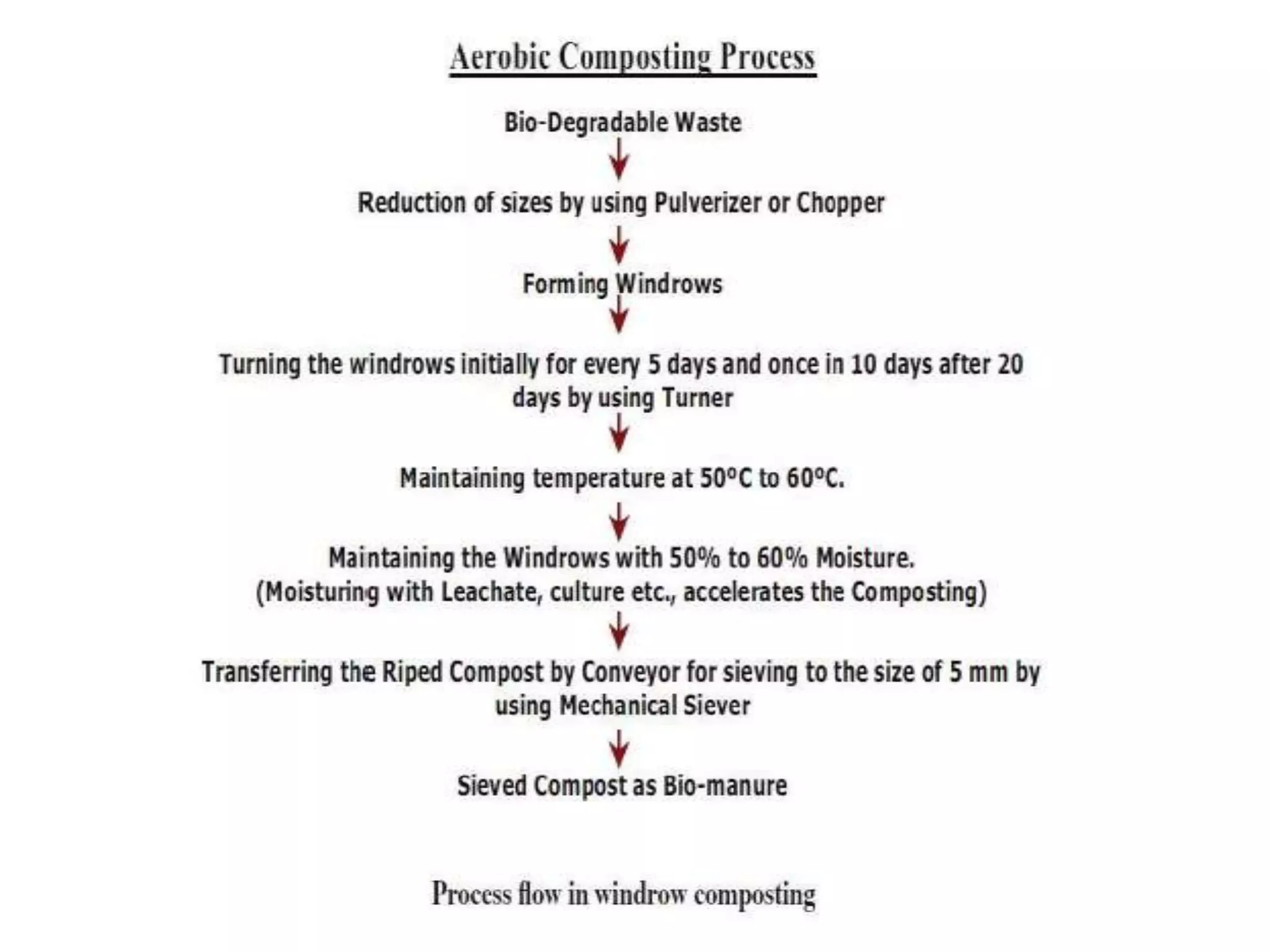
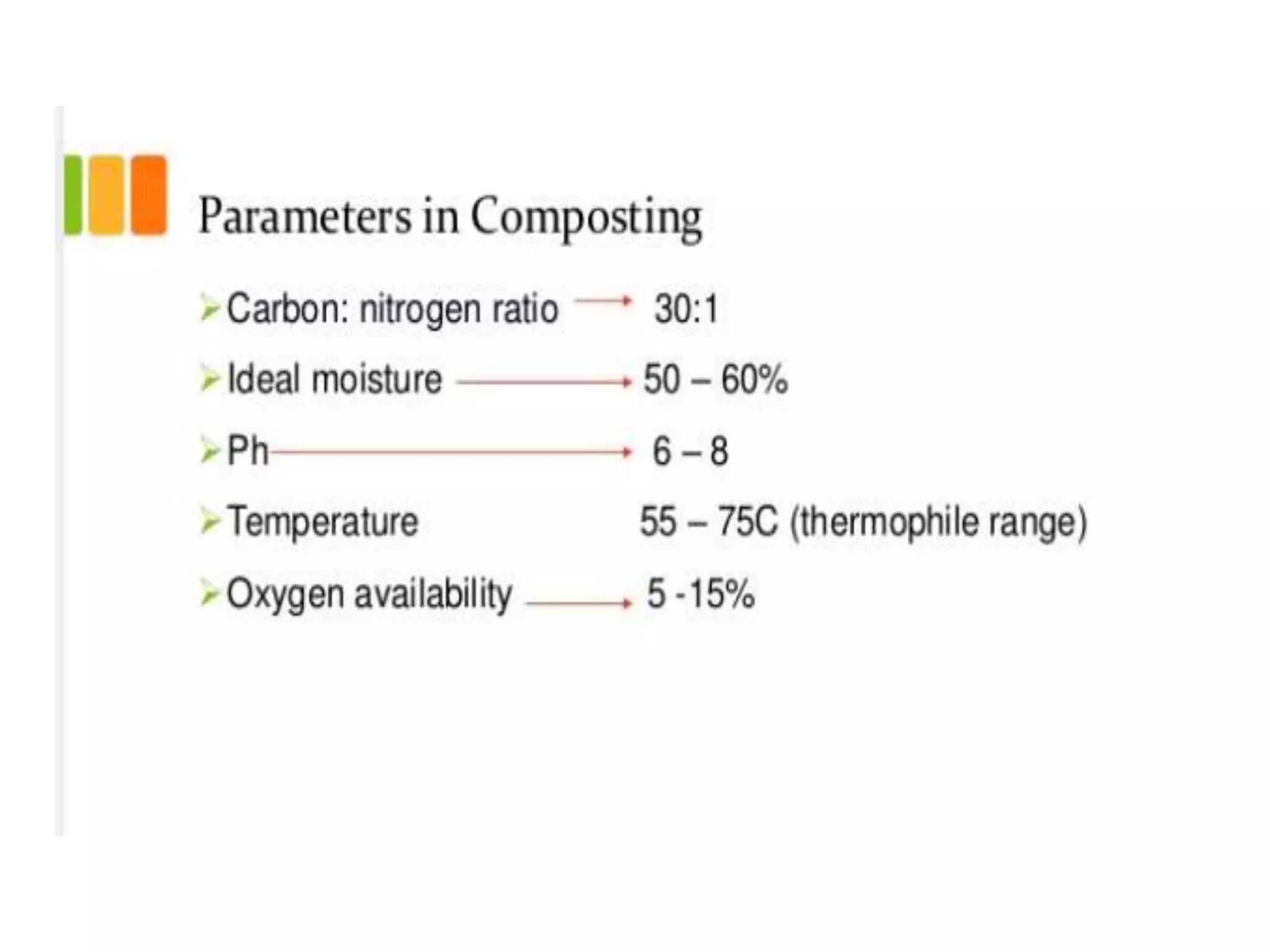
 The optimum moisture content is known to be between 50 to 60%.
 Higher moisture content may be required while composting straw and
strong fibrous material which is often the fibre and fills the large pore
spaces.
Temperature:
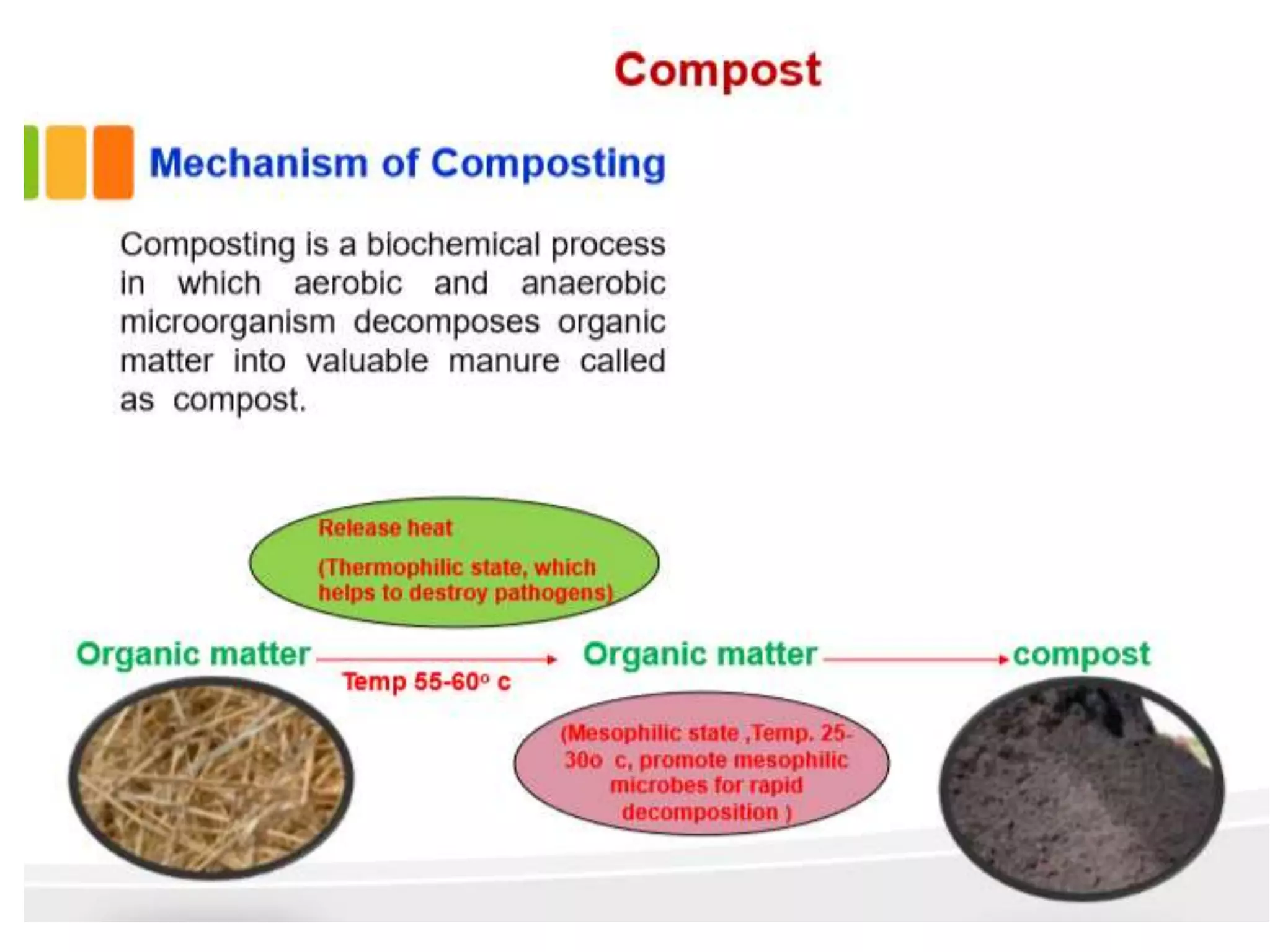
 The aerobic decomposition of a gram mole of glucose releases 484 to 674
kilo calories energy under controlled conditions, while only 26 kcal are
released when it is decomposed anaerobically.
 Under properly controlled conditions, temperatures are known to rise beyond
70 degree C in aerobic condition.
 This increased temperature results in increased rate of biological activity and
hence result in faster stabilization of materials.
 The temperature range of 50 to 60 degree C is optimum for nitrification and
cellulose degradation.
 Thus, if the process is so controlled that the temperature is kept between 50
to 60 degree C for 5 to 7 days, destruction of pathogens and parasites can be
ensured.
Carbon to Nitrogen Ratio:
 The organisms involved in stabilization of organic matter utilizes about
30 parts of carbon for each part of nitrogen and hence an C/N ratio of 30
is most favorable.
 It has reported that optimum value to range between 26 – 31 depending
upon other environmental conditions.
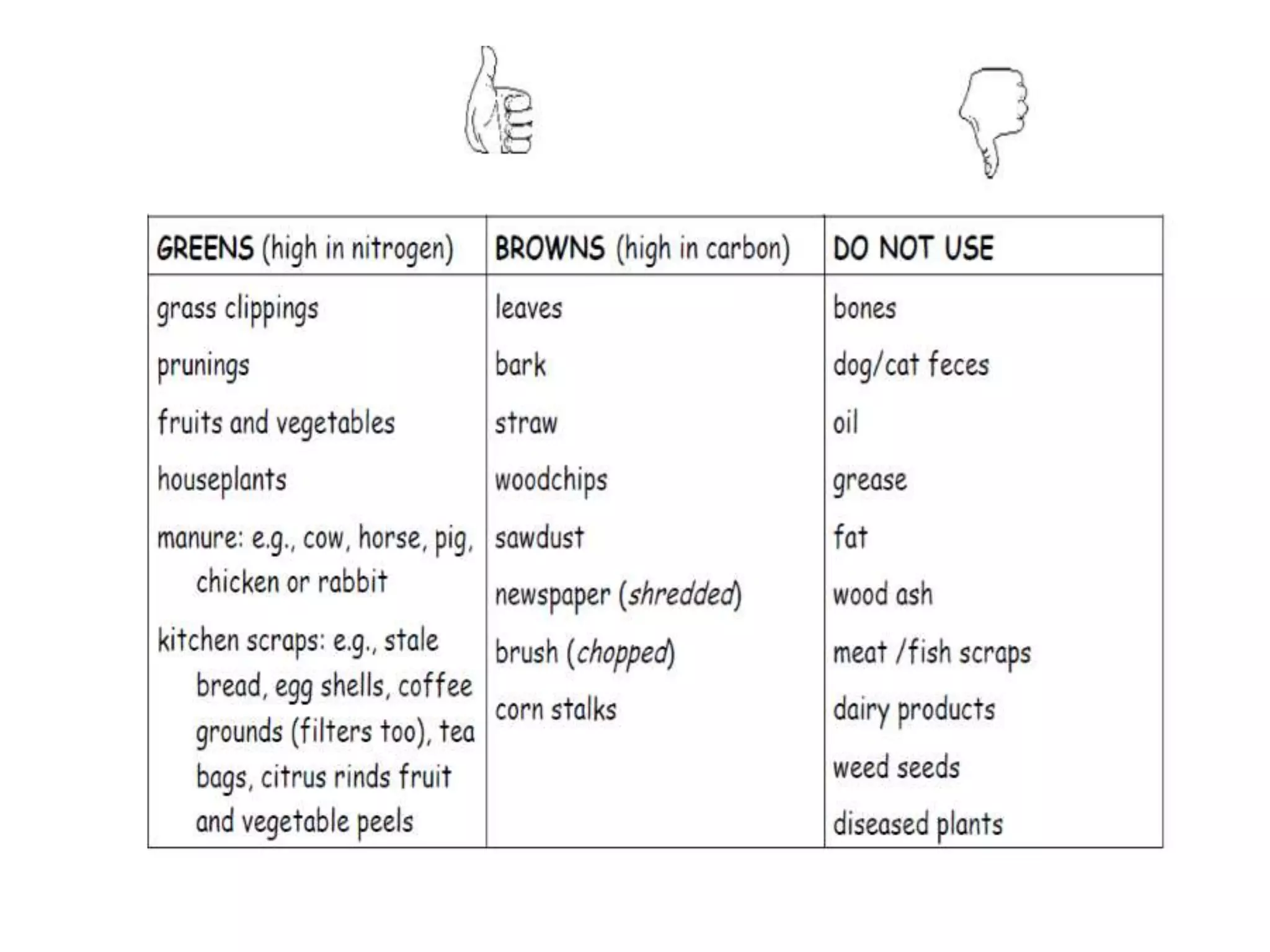
 Whenever the C/N ratio is less than the optimum, carbon source such as
straw, sawdust, paper are added while if the ratio is too high, the sewage
sludge, slaughter house waste, blood are added as a source of nitrogen.
Aeration:
 It is necessary to ensure that oxygen is supplied throughout the mass and
aerobic activity is maintained.
 During the decomposition, the oxygen gets depleted and has to be
continuously replenished.
 This can be achieved either by turning of windrows (or) by supplying
compressed air.
 In case of artificial supplying, the quantity of air supply is normally
maintained at 1 – 2 cu m / day / kg of volatile solid.
 It have shown that the optimum turning interval which will reduce the cost and
simultaneously maintain aerobic conditions in 5 days.
Composting and its methods

Composting and its methods

  • 1.
    Unit IV Processing ofWastes Objectives of waste processing – Physical Processing techniques and Equipment; Resource recovery from solid waste composting and biomethanation; Thermal processing options – case studies under Indian conditions.
  • 20.
    Types of Composting This means to compost with air.  During composting, aerobic micro-organisms oxidize organic compounds to CO2, Nitrite and Nitrate  Carbon from organic compounds is used as a source of energy while nitrogen is recycled.  Organic waste will break down quicky and is not prone to smell.  This type of composting is high maintenance, since it will need to be turned every couple days to keep air in the system and your temperatures up. Aerobic Composting
  • 22.
     This iscomposting without air.  During composting, the anaerobic micro-organisms, while metabolizing the nutrients, breakdown the organic compounds through a process of reduction.  A very small amount of energy is released during the process and the temperature of composting mass does not rise much.  Compost may take years to break down and create the awful smell most people associate with composting.  The gases evolved are mainly Methane & Carbon dioxide.  Anaerobic composting is low maintenance since you simply throw it in a pile and wait a couple years Anaerobic Composting
  • 49.
    Organisms:  Aerobic compostingis a dynamic system where in bacteria, actinomycetes, fungi and other biological forms are actively involved.  The relative preponderance of one species over another depends upon the constantly changing food supply, temperature and substrate conditions.  When the temperature drops, actinomycetes & fungi are confined to 5 to 15 cm outer surface layer.  Thermophilic actinomycetes and fungi are known to grow well in the range of 45 to 60 degree C
  • 50.
    Use of Cultures: During the development of composting process, various innovators came forward with inoculum, enzymes claimed to hasten the composting process.  Investigations carried out by various workers have shown that they are not necessary.  Under proper environment conditions, the indigenous bacteria adopted to MSW rapidly multiply as compared to the added cultures.  However, such inoculum will be required during composting of industrial and agricultural solid waste which do not have the large mix of indigenous bacterial population.
  • 51.
    Moisture:  The moisturetends to occupy the free air space between the particles. Hence, when the moisture content is very high, anaerobic condition set in.  The composting mass should have a certain minimum moisture content in it for the organisms to survive.  The optimum moisture content is known to be between 50 to 60%.  Higher moisture content may be required while composting straw and strong fibrous material which is often the fibre and fills the large pore spaces.
  • 52.
    Temperature:  The aerobicdecomposition of a gram mole of glucose releases 484 to 674 kilo calories energy under controlled conditions, while only 26 kcal are released when it is decomposed anaerobically.  Under properly controlled conditions, temperatures are known to rise beyond 70 degree C in aerobic condition.  This increased temperature results in increased rate of biological activity and hence result in faster stabilization of materials.  The temperature range of 50 to 60 degree C is optimum for nitrification and cellulose degradation.  Thus, if the process is so controlled that the temperature is kept between 50 to 60 degree C for 5 to 7 days, destruction of pathogens and parasites can be ensured.
  • 53.
    Carbon to NitrogenRatio:  The organisms involved in stabilization of organic matter utilizes about 30 parts of carbon for each part of nitrogen and hence an C/N ratio of 30 is most favorable.  It has reported that optimum value to range between 26 – 31 depending upon other environmental conditions.  Whenever the C/N ratio is less than the optimum, carbon source such as straw, sawdust, paper are added while if the ratio is too high, the sewage sludge, slaughter house waste, blood are added as a source of nitrogen.
  • 54.
    Aeration:  It isnecessary to ensure that oxygen is supplied throughout the mass and aerobic activity is maintained.  During the decomposition, the oxygen gets depleted and has to be continuously replenished.  This can be achieved either by turning of windrows (or) by supplying compressed air.  In case of artificial supplying, the quantity of air supply is normally maintained at 1 – 2 cu m / day / kg of volatile solid.  It have shown that the optimum turning interval which will reduce the cost and simultaneously maintain aerobic conditions in 5 days.