Composting 101Composting 101
Cultivate 2016
Greenville, SC
by
Dan Abend
What Is Compost?
Anything that was once living will decompose.
Composting is nature's process of recycling
organic material into a rich soil amendment.
Soil
What is it?
● organic material
● minerals
● water & air
● organisms
What does it do?
● medium for plant growth
● water storage, supply, purification
● modifier of the Earth's atmosphere
● habitat for organisms
Soil is alive!
Why Compost?
Why don't things compost well in the landfill?
● reduce chemical fertilizers
● reduce pesticides
● reduce erosion
● reduce waste
About 30% of what South Carolinians throw away is yard debris & food waste.
● increase aeration
● increase water retention
● suppress plant disease
● suppress pests
● maintain neutral pH
● help plants absorb nutrients
How Does Composting Work?
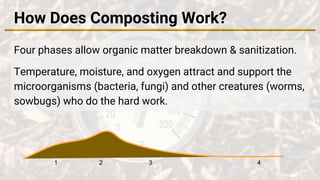
Four phases allow organic matter breakdown & sanitization.
Temperature, moisture, and oxygen attract and support the
microorganisms (bacteria, fungi) and other creatures (worms,
sowbugs) who do the hard work.
1 2 3 4
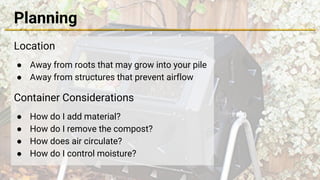
Planning
Location
● Away from roots that may grow into your pile
● Away from structures that prevent airflow
Container Considerations
● How do I add material?
● How do I remove the compost?
● How does air circulate?
● How do I control moisture?
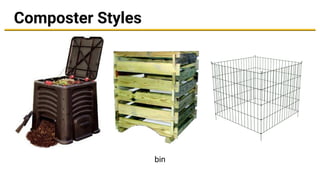
Composter Styles
bin
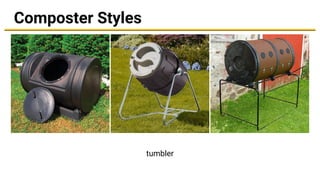
Composter Styles
tumbler
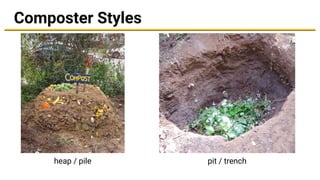
Composter Styles
heap / pile pit / trench
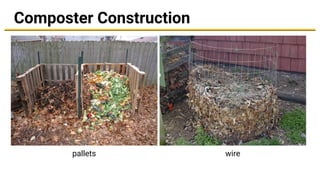
Composter Construction
pallets wire
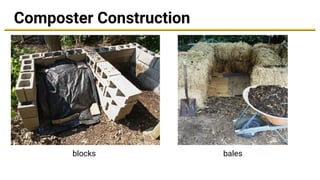
Composter Construction
blocks bales
Composter Construction
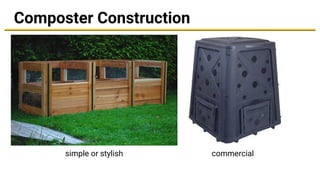
simple or stylish commercial
Composting Ingredients
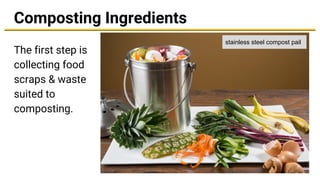
The first step is
collecting food
scraps & waste
suited to
composting.
stainless steel compost pail
Composting Ingredients
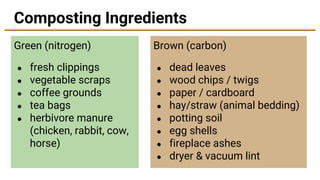
Green (nitrogen)
● fresh clippings
● vegetable scraps
● coffee grounds
● tea bags
● herbivore manure
(chicken, rabbit, cow,
horse)
Brown (carbon)
● dead leaves
● wood chips / twigs
● paper / cardboard
● hay/straw (animal bedding)
● potting soil
● egg shells
● fireplace ashes
● dryer & vacuum lint
Composting Ingredients
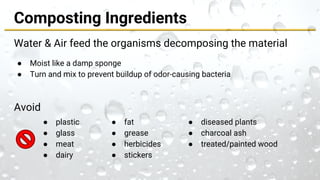
Water & Air feed the organisms decomposing the material
● Moist like a damp sponge
● Turn and mix to prevent buildup of odor-causing bacteria
Avoid
● plastic
● glass
● meat
● dairy
● diseased plants
● charcoal ash
● treated/painted wood
● fat
● grease
● herbicides
● stickers
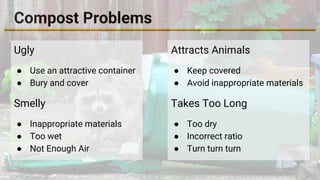
Compost Problems
Ugly
● Use an attractive container
● Bury and cover
Smelly
● Inappropriate materials
● Too wet
● Not Enough Air
Attracts Animals
● Keep covered
● Avoid inappropriate materials
Takes Too Long
● Too dry
● Incorrect ratio
● Turn turn turn
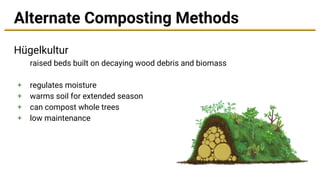
Alternate Composting Methods
Hügelkultur
raised beds built on decaying wood debris and biomass
+ regulates moisture
+ warms soil for extended season
+ can compost whole trees
+ low maintenance
Alternate Composting Methods
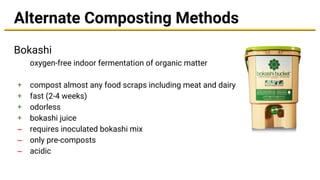
Bokashi
oxygen-free indoor fermentation of organic matter
+ compost almost any food scraps including meat and dairy
+ fast (2-4 weeks)
+ odorless
+ bokashi juice
– requires inoculated bokashi mix
– only pre-composts
– acidic
Alternate Composting Methods
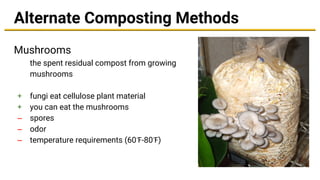
Mushrooms
the spent residual compost from growing
mushrooms
+ fungi eat cellulose plant material
+ you can eat the mushrooms
– spores
– odor
– temperature requirements (60℉-80℉)
Alternate Composting Methods
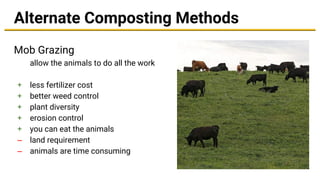
Mob Grazing
allow the animals to do all the work
+ less fertilizer cost
+ better weed control
+ plant diversity
+ erosion control
+ you can eat the animals
– land requirement
– animals are time consuming
Alternate Composting Methods
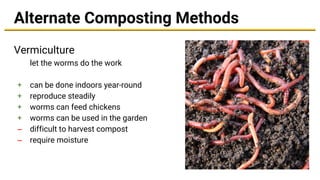
Vermiculture
let the worms do the work
+ can be done indoors year-round
+ reproduce steadily
+ worms can feed chickens
+ worms can be used in the garden
– difficult to harvest compost
– require moisture
Alternate Composting Methods
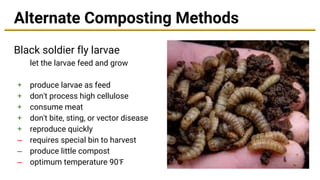
Black soldier fly larvae
let the larvae feed and grow
+ produce larvae as feed
+ don't process high cellulose
+ consume meat
+ don't bite, sting, or vector disease
+ reproduce quickly
– requires special bin to harvest
– produce little compost
– optimum temperature 90℉
Alternate Composting Methods
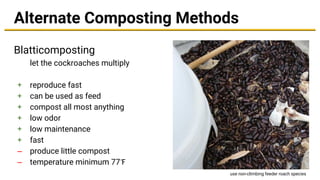
Blatticomposting
let the cockroaches multiply
+ reproduce fast
+ can be used as feed
+ compost all most anything
+ low odor
+ low maintenance
+ fast
– produce little compost
– temperature minimum 77℉
use non-climbing feeder roach species

Composting 101 - Cultivate 2016

  • 1.
    Composting 101Composting 101 Cultivate2016 Greenville, SC by Dan Abend
  • 2.
    What Is Compost? Anythingthat was once living will decompose. Composting is nature's process of recycling organic material into a rich soil amendment.
  • 3.
    Soil What is it? ●organic material ● minerals ● water & air ● organisms What does it do? ● medium for plant growth ● water storage, supply, purification ● modifier of the Earth's atmosphere ● habitat for organisms Soil is alive!
  • 4.
    Why Compost? Why don'tthings compost well in the landfill? ● reduce chemical fertilizers ● reduce pesticides ● reduce erosion ● reduce waste About 30% of what South Carolinians throw away is yard debris & food waste. ● increase aeration ● increase water retention ● suppress plant disease ● suppress pests ● maintain neutral pH ● help plants absorb nutrients
  • 5.
    How Does CompostingWork? Four phases allow organic matter breakdown & sanitization. Temperature, moisture, and oxygen attract and support the microorganisms (bacteria, fungi) and other creatures (worms, sowbugs) who do the hard work. 1 2 3 4
  • 6.
    Planning Location ● Away fromroots that may grow into your pile ● Away from structures that prevent airflow Container Considerations ● How do I add material? ● How do I remove the compost? ● How does air circulate? ● How do I control moisture?
  • 7.
  • 8.
  • 9.
    Composter Styles heap /pile pit / trench
  • 10.
  • 11.
  • 12.
  • 13.
    Composting Ingredients The firststep is collecting food scraps & waste suited to composting. stainless steel compost pail
  • 14.
    Composting Ingredients Green (nitrogen) ●fresh clippings ● vegetable scraps ● coffee grounds ● tea bags ● herbivore manure (chicken, rabbit, cow, horse) Brown (carbon) ● dead leaves ● wood chips / twigs ● paper / cardboard ● hay/straw (animal bedding) ● potting soil ● egg shells ● fireplace ashes ● dryer & vacuum lint
  • 15.
    Composting Ingredients Water &Air feed the organisms decomposing the material ● Moist like a damp sponge ● Turn and mix to prevent buildup of odor-causing bacteria Avoid ● plastic ● glass ● meat ● dairy ● diseased plants ● charcoal ash ● treated/painted wood ● fat ● grease ● herbicides ● stickers
  • 16.
    Compost Problems Ugly ● Usean attractive container ● Bury and cover Smelly ● Inappropriate materials ● Too wet ● Not Enough Air Attracts Animals ● Keep covered ● Avoid inappropriate materials Takes Too Long ● Too dry ● Incorrect ratio ● Turn turn turn
  • 17.
    Alternate Composting Methods Hügelkultur raisedbeds built on decaying wood debris and biomass + regulates moisture + warms soil for extended season + can compost whole trees + low maintenance
  • 18.
    Alternate Composting Methods Bokashi oxygen-freeindoor fermentation of organic matter + compost almost any food scraps including meat and dairy + fast (2-4 weeks) + odorless + bokashi juice – requires inoculated bokashi mix – only pre-composts – acidic
  • 19.
    Alternate Composting Methods Mushrooms thespent residual compost from growing mushrooms + fungi eat cellulose plant material + you can eat the mushrooms – spores – odor – temperature requirements (60℉-80℉)
  • 20.
    Alternate Composting Methods MobGrazing allow the animals to do all the work + less fertilizer cost + better weed control + plant diversity + erosion control + you can eat the animals – land requirement – animals are time consuming
  • 21.
    Alternate Composting Methods Vermiculture letthe worms do the work + can be done indoors year-round + reproduce steadily + worms can feed chickens + worms can be used in the garden – difficult to harvest compost – require moisture
  • 22.
    Alternate Composting Methods Blacksoldier fly larvae let the larvae feed and grow + produce larvae as feed + don't process high cellulose + consume meat + don't bite, sting, or vector disease + reproduce quickly – requires special bin to harvest – produce little compost – optimum temperature 90℉
  • 23.
    Alternate Composting Methods Blatticomposting letthe cockroaches multiply + reproduce fast + can be used as feed + compost all most anything + low odor + low maintenance + fast – produce little compost – temperature minimum 77℉ use non-climbing feeder roach species