Anhydrous Ammonia (NH3)
    as a Refrigerant

             An Overview
Introduction:

 What is Ammonia?
 Why is it used as a refrigerant?
 What are some of it’s properties?
 How does it compare to other refrigerants?
 Is it safe?
Anhydrous Ammonia (NH3):
    Also known as R-717

    It is a single component refrigerant.

    One part nitrogen, three parts hydrogen.

    Anhydrous means void of water content.
Environmentally Friendly:

   Does not deplete the ozone.

   Does not contribute to climate change.

   Leaks are easily detectable.
Properties:
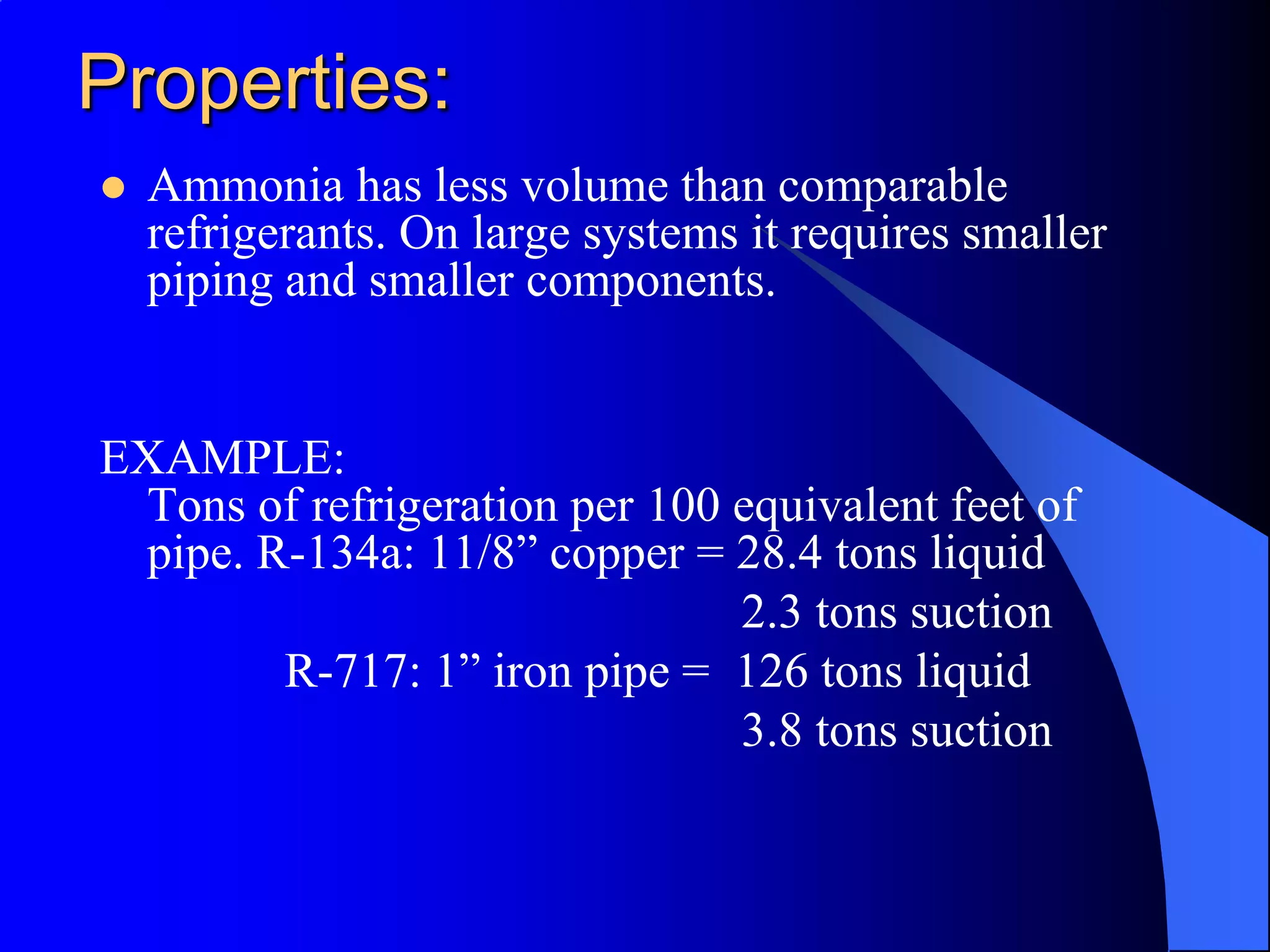
   Ammonia has less volume than comparable
    refrigerants. On large systems it requires smaller
    piping and smaller components.


EXAMPLE:
 Tons of refrigeration per 100 equivalent feet of
 pipe. R-134a: 11/8” copper = 28.4 tons liquid
                               2.3 tons suction
        R-717: 1” iron pipe = 126 tons liquid
                               3.8 tons suction
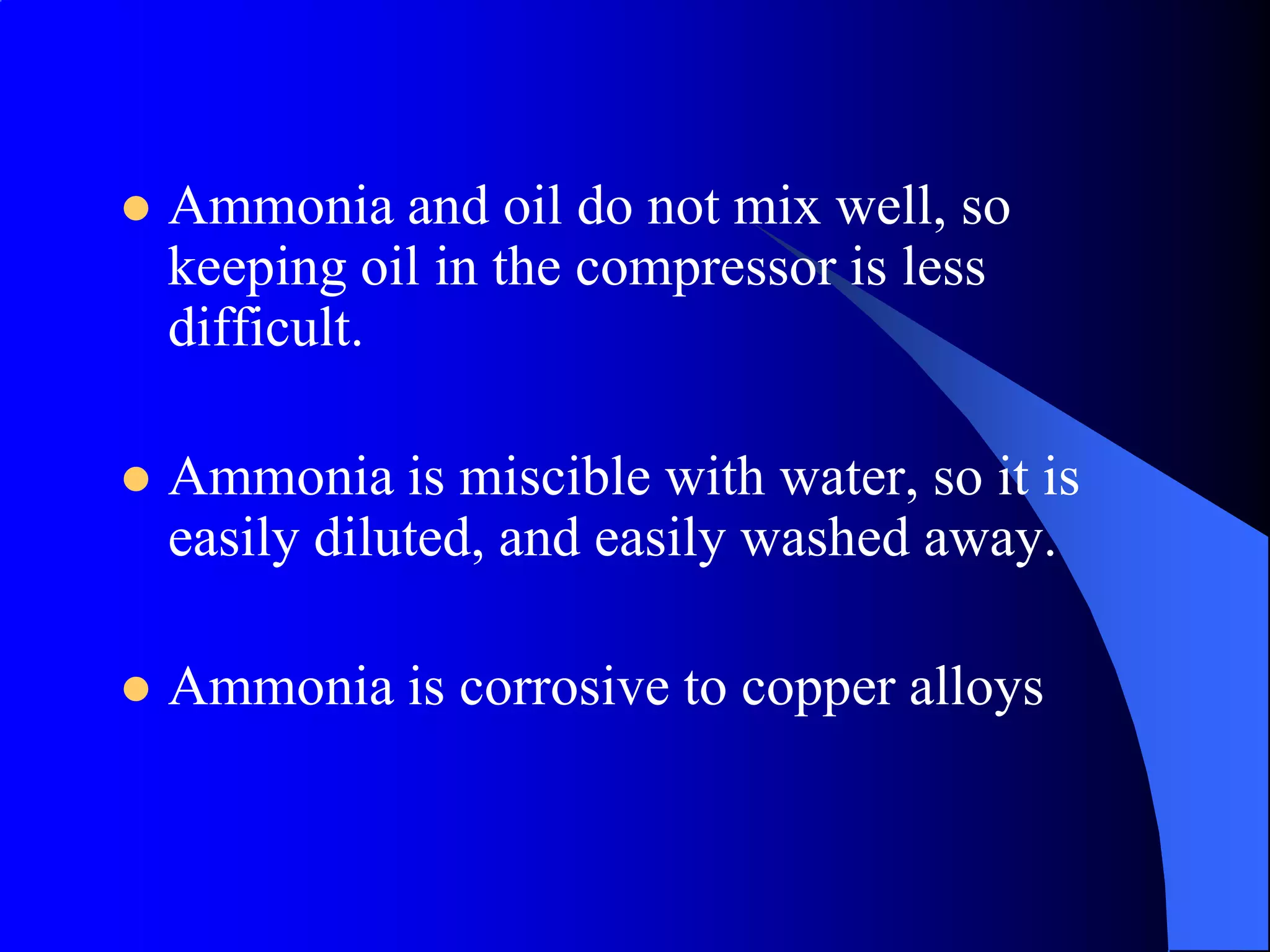
   Ammonia and oil do not mix well, so
    keeping oil in the compressor is less
    difficult.

   Ammonia is miscible with water, so it is
    easily diluted, and easily washed away.

   Ammonia is corrosive to copper alloys
How Does it Compare?
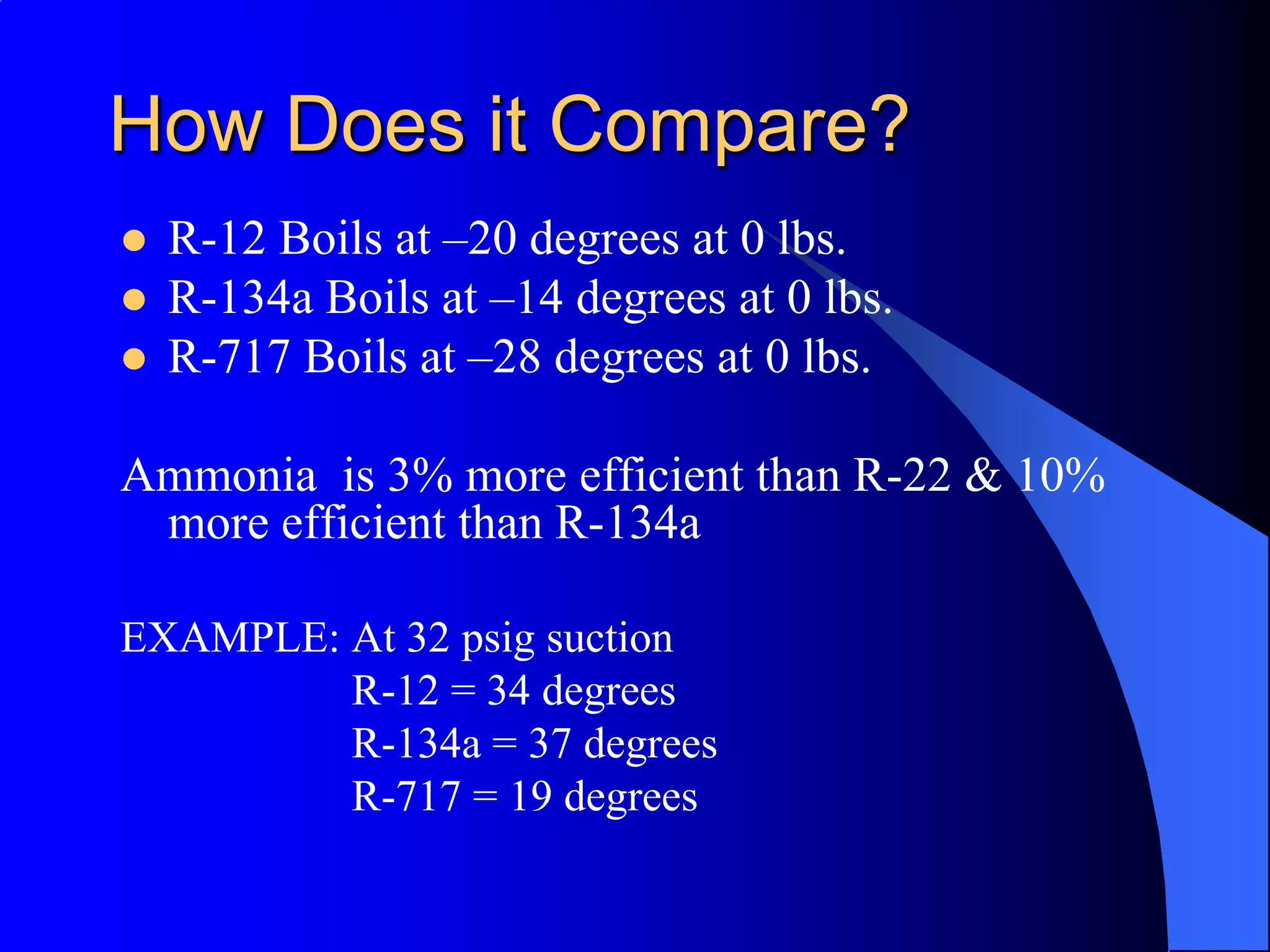
   R-12 Boils at –20 degrees at 0 lbs.
   R-134a Boils at –14 degrees at 0 lbs.
   R-717 Boils at –28 degrees at 0 lbs.

Ammonia is 3% more efficient than R-22 & 10%
 more efficient than R-134a

EXAMPLE: At 32 psig suction
         R-12 = 34 degrees
         R-134a = 37 degrees
         R-717 = 19 degrees
Safety:
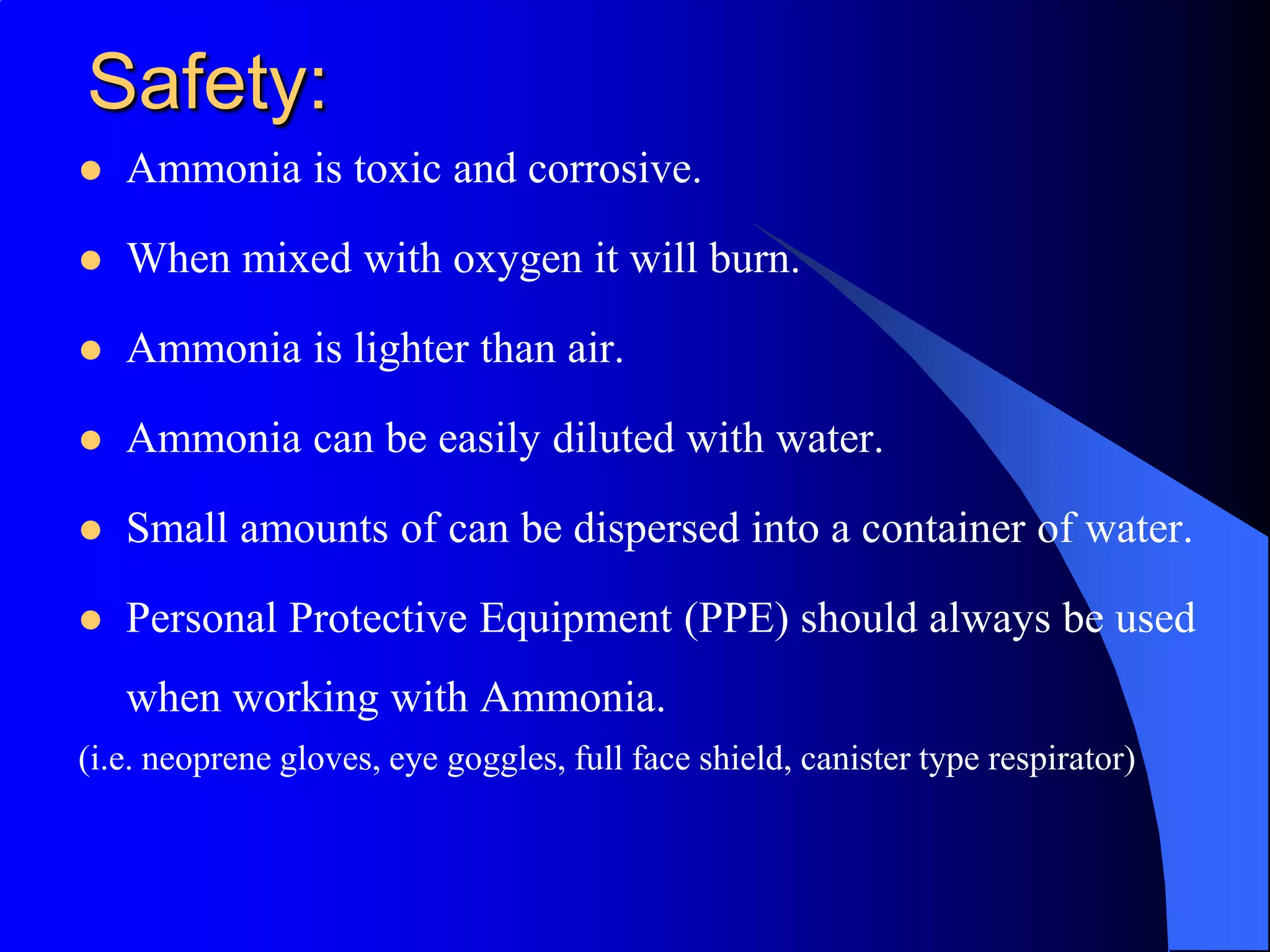
   Ammonia is toxic and corrosive.

   When mixed with oxygen it will burn.

   Ammonia is lighter than air.

   Ammonia can be easily diluted with water.

   Small amounts of can be dispersed into a container of water.

   Personal Protective Equipment (PPE) should always be used
    when working with Ammonia.
(i.e. neoprene gloves, eye goggles, full face shield, canister type respirator)
   Equipment rooms must be well ventilated.

   Egress should be well marked and unobstructed.

   Make others aware that you are working on the
    equipment.

   Equipment rooms must have a detection & alarm
    system.

   Systems under 10,000 lbs. on site fall under the state
    and the EPA

   Systems over 10,000 lbs. fall under Home Land
    Security. Every pound must be tracked and
    accounted for.
   The average odor threshold is 5 ppm.

   100-200 ppm: Eyes irritated.

   500 ppm & below: No permanent eye damage.

   300 ppm: Immediate throat irritation.

   1700 ppm: Coughing

   2400 ppm: Threat to life after 30 minutes exposure.

   5000 ppm: Vapor – Full body chemical suit required.

   5000 ppm: Liquid – Second degree burns and blisters.
Check out some pictures of an ammonia
          refrigeration system!
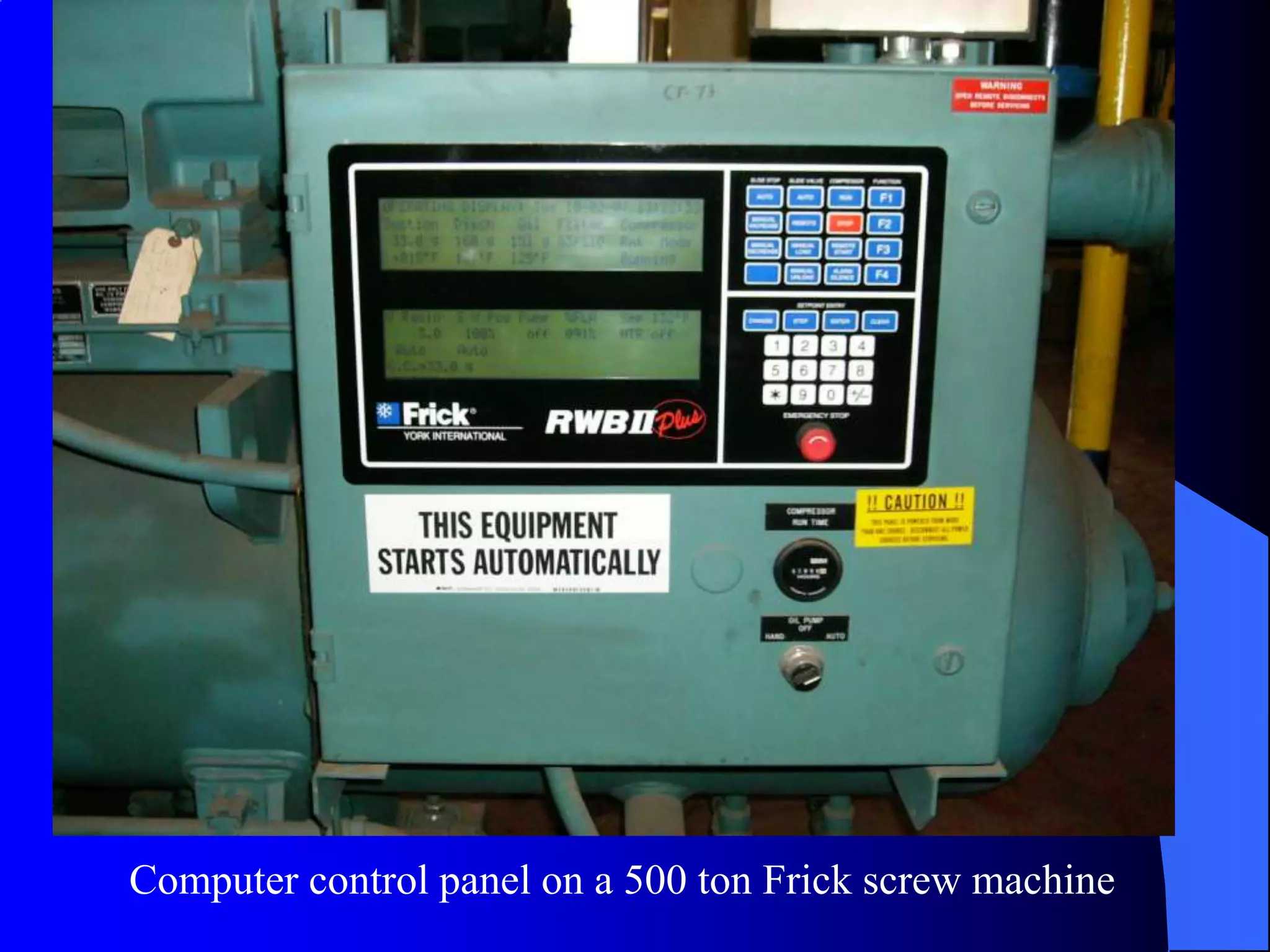
Computer control panel on a 500 ton Frick screw machine
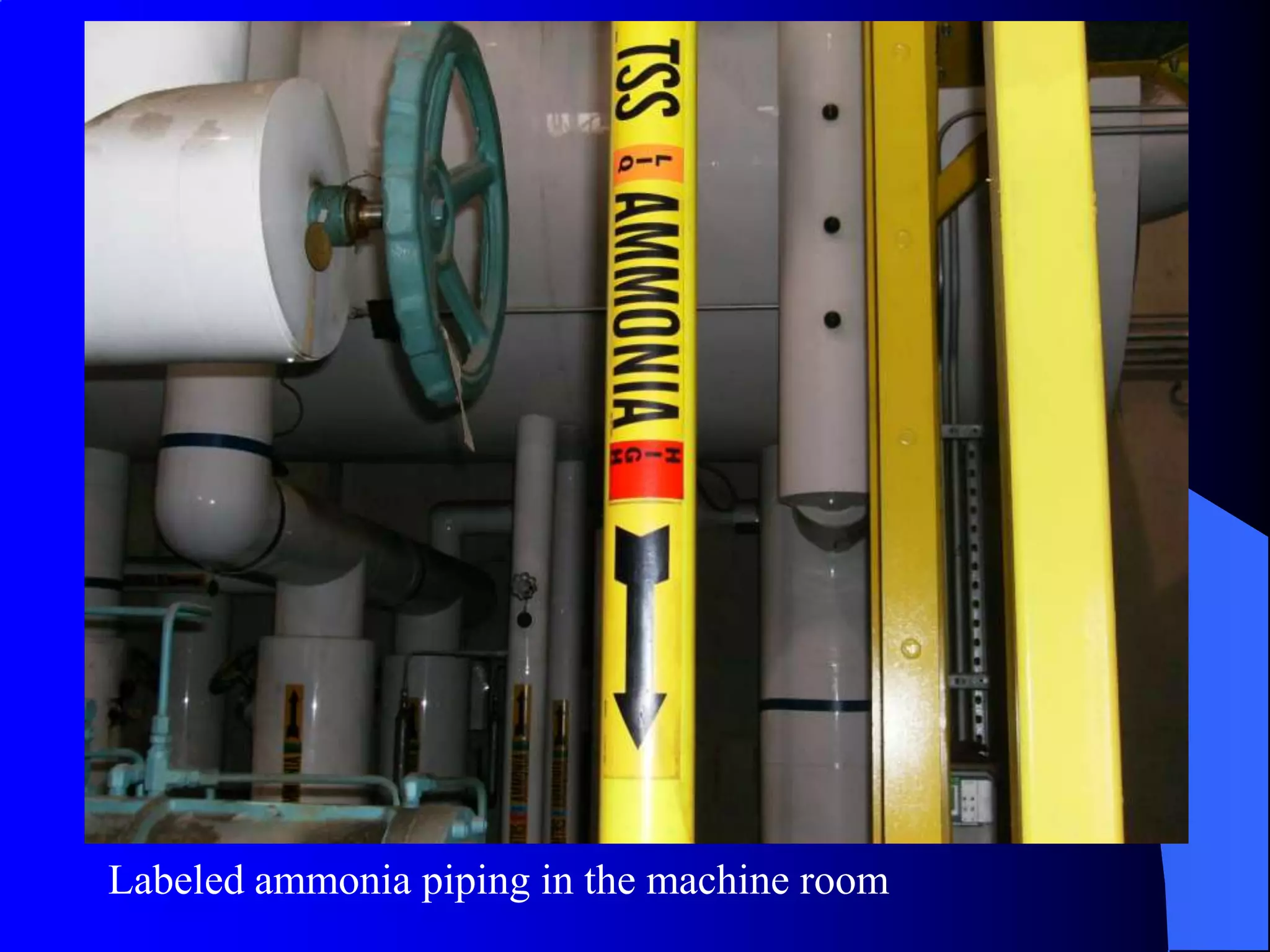
Labeled ammonia piping in the machine room
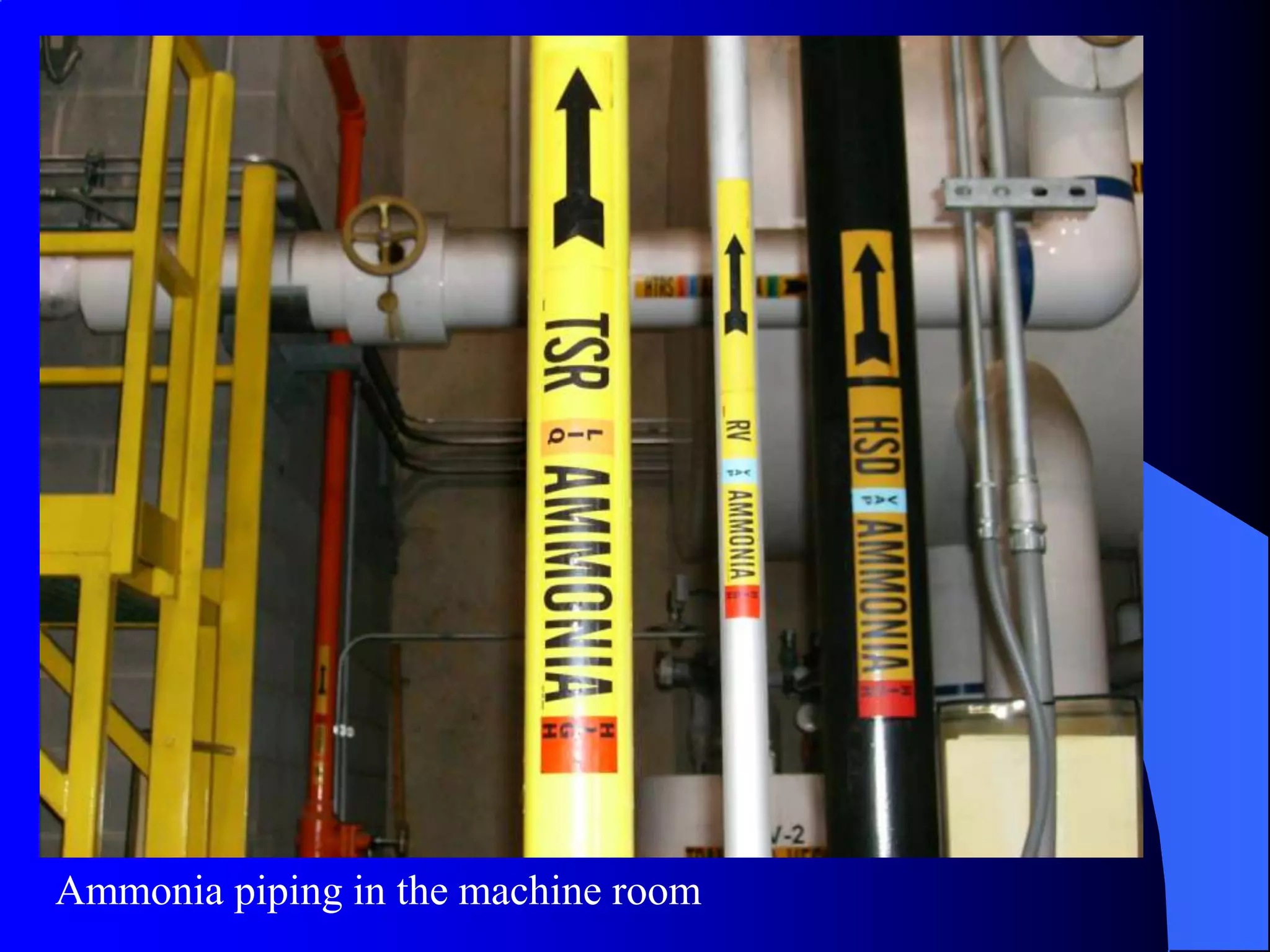
Ammonia piping in the machine room
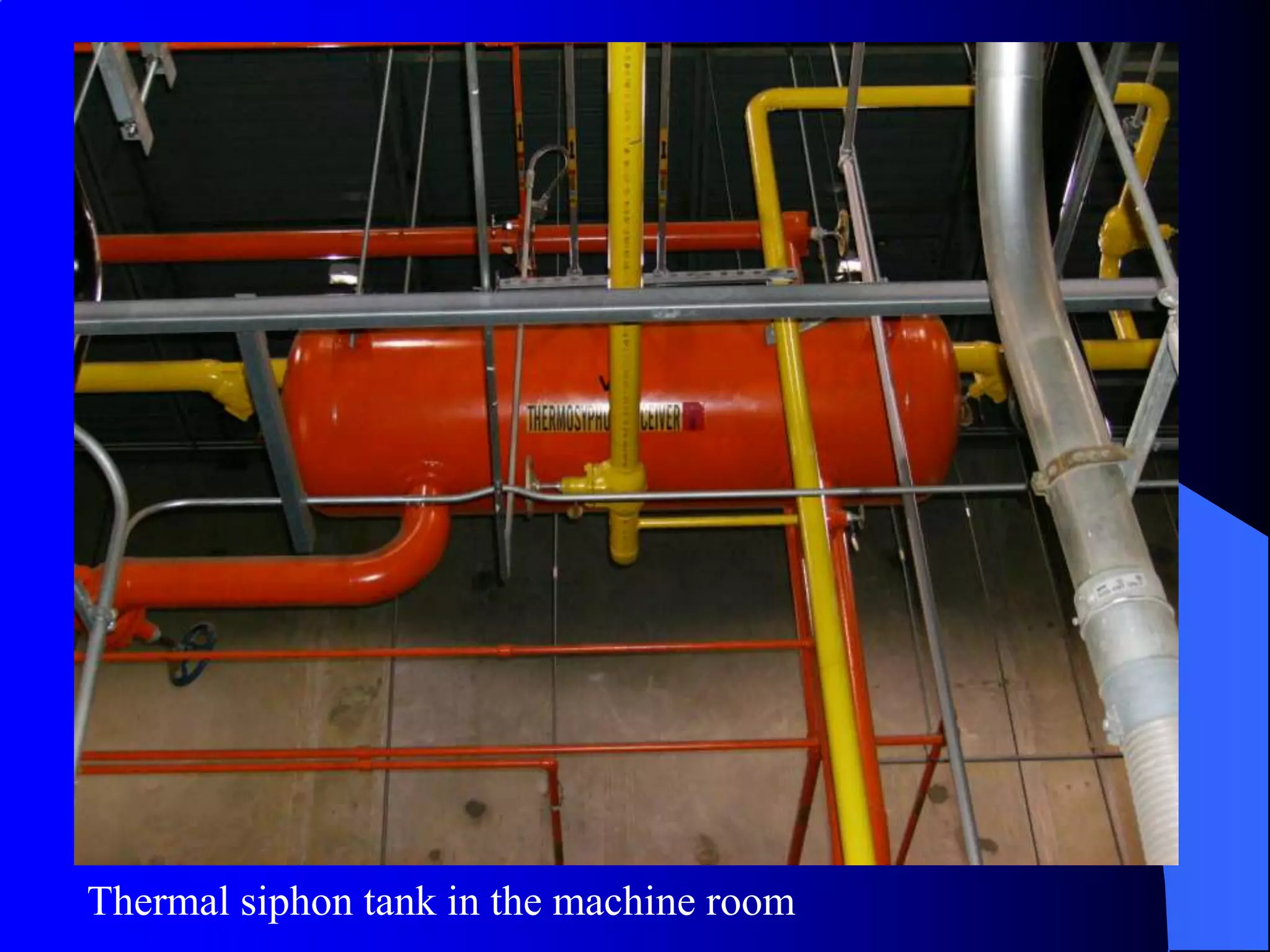
Thermal siphon tank in the machine room
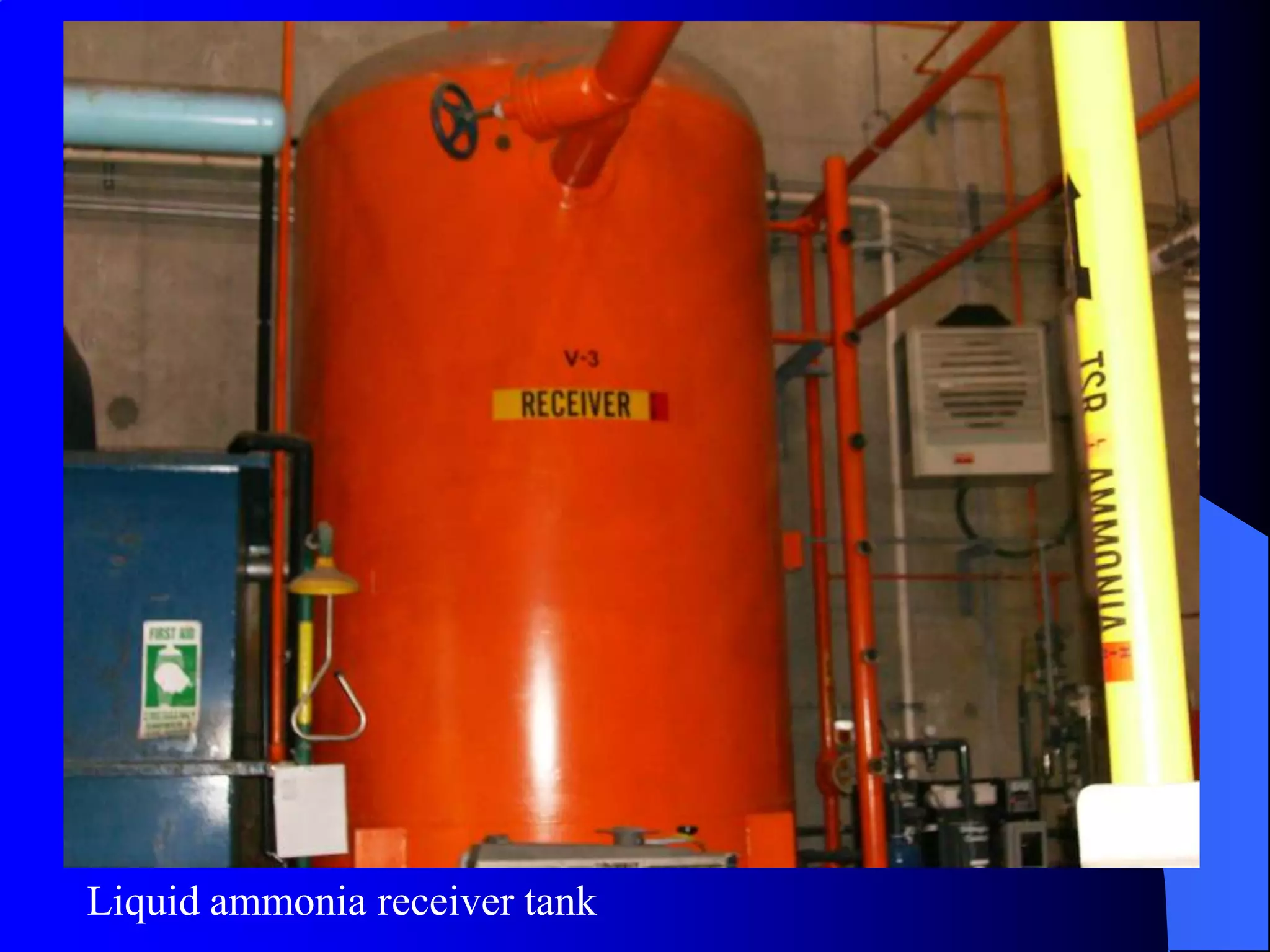
Liquid ammonia receiver tank
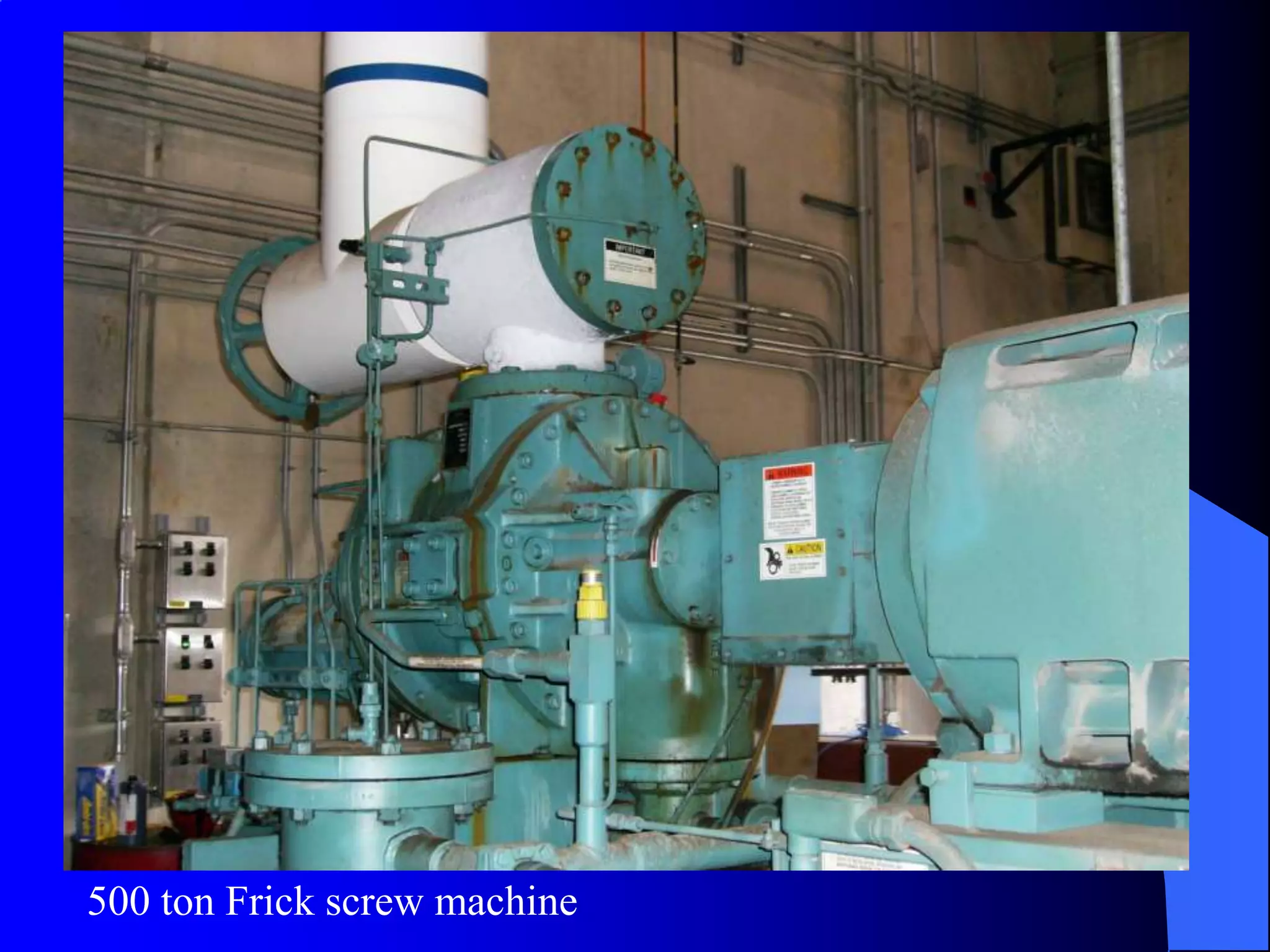
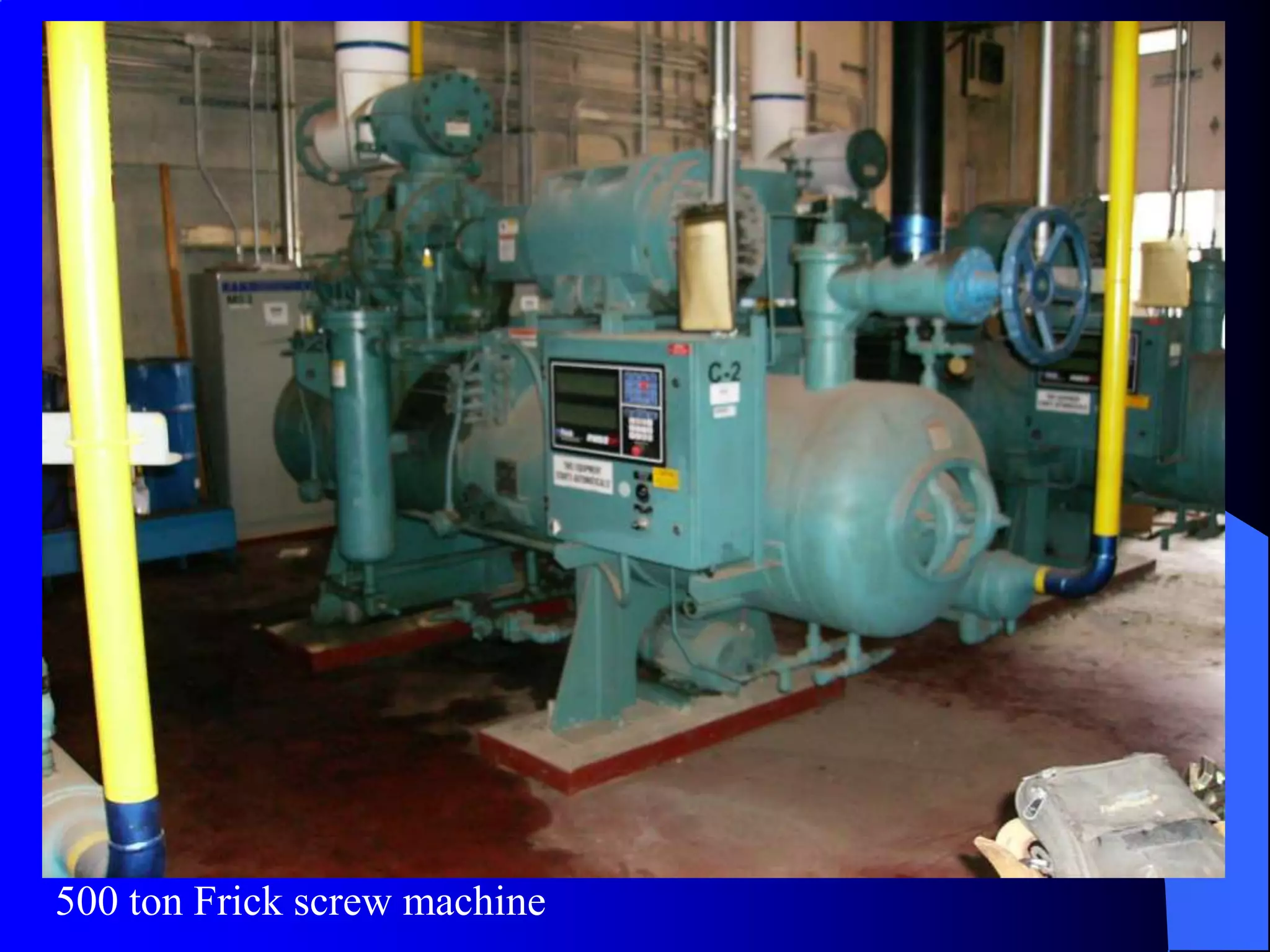
500 ton Frick screw machine
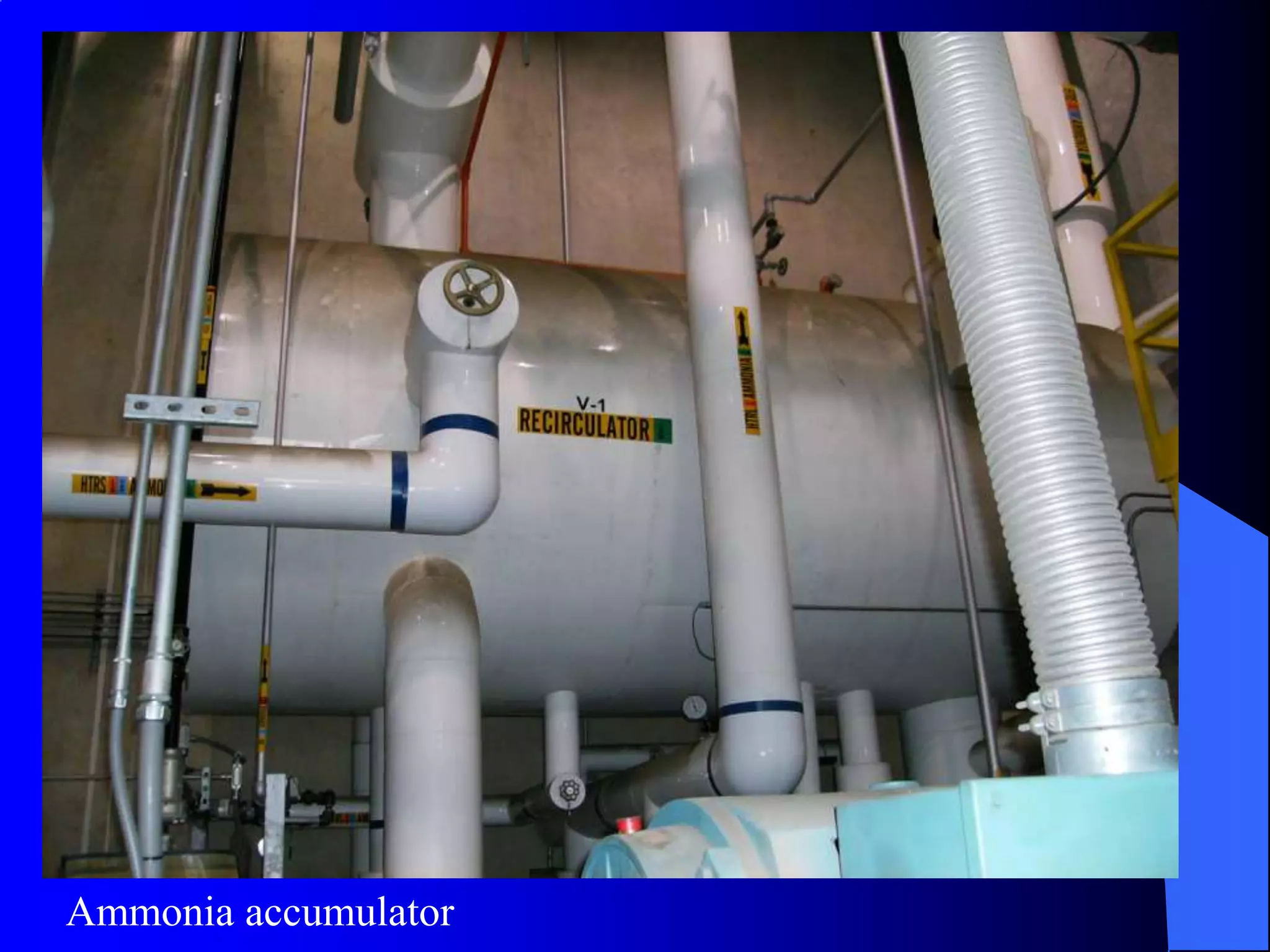
Ammonia accumulator
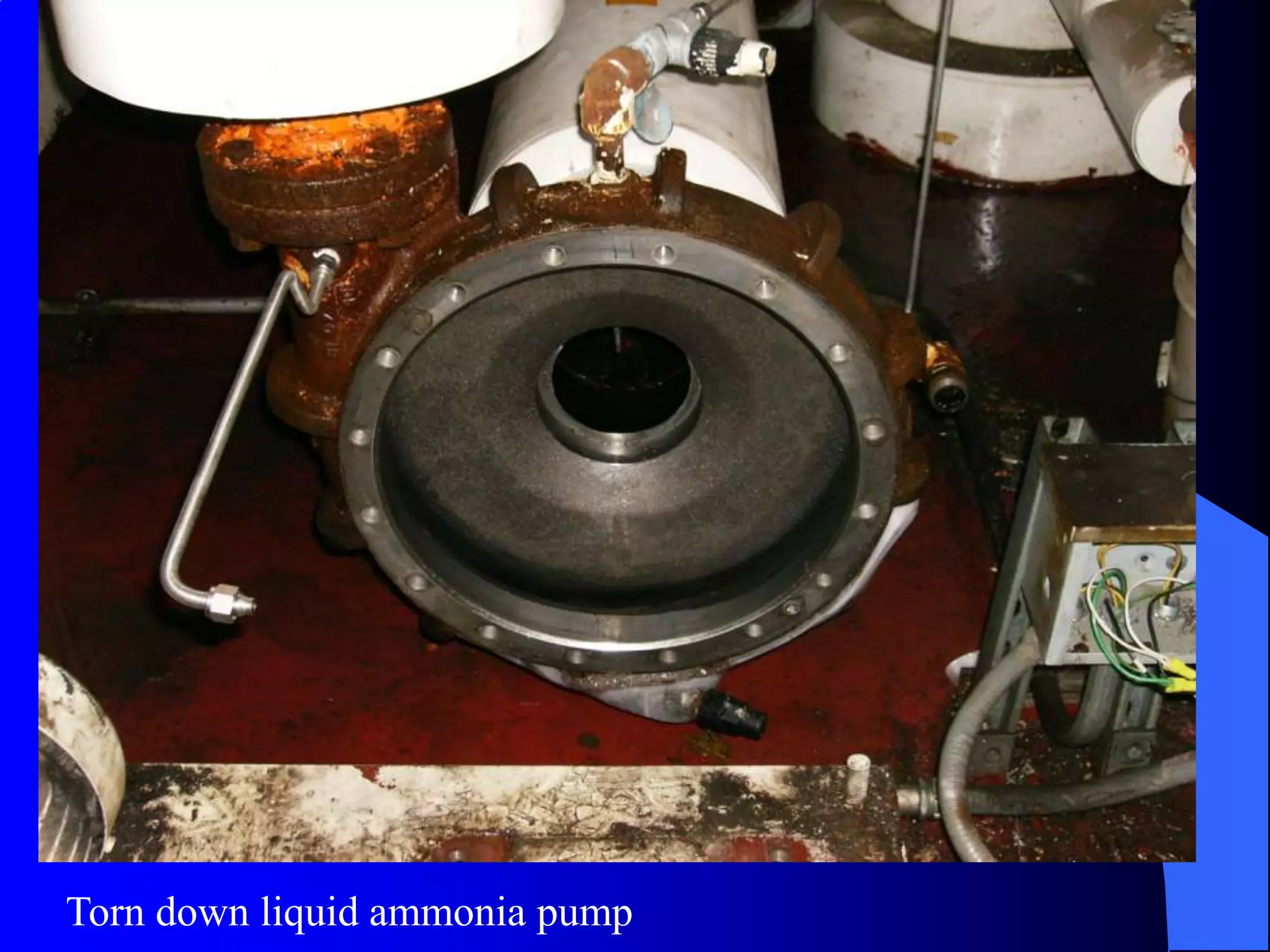
Torn down liquid ammonia pump
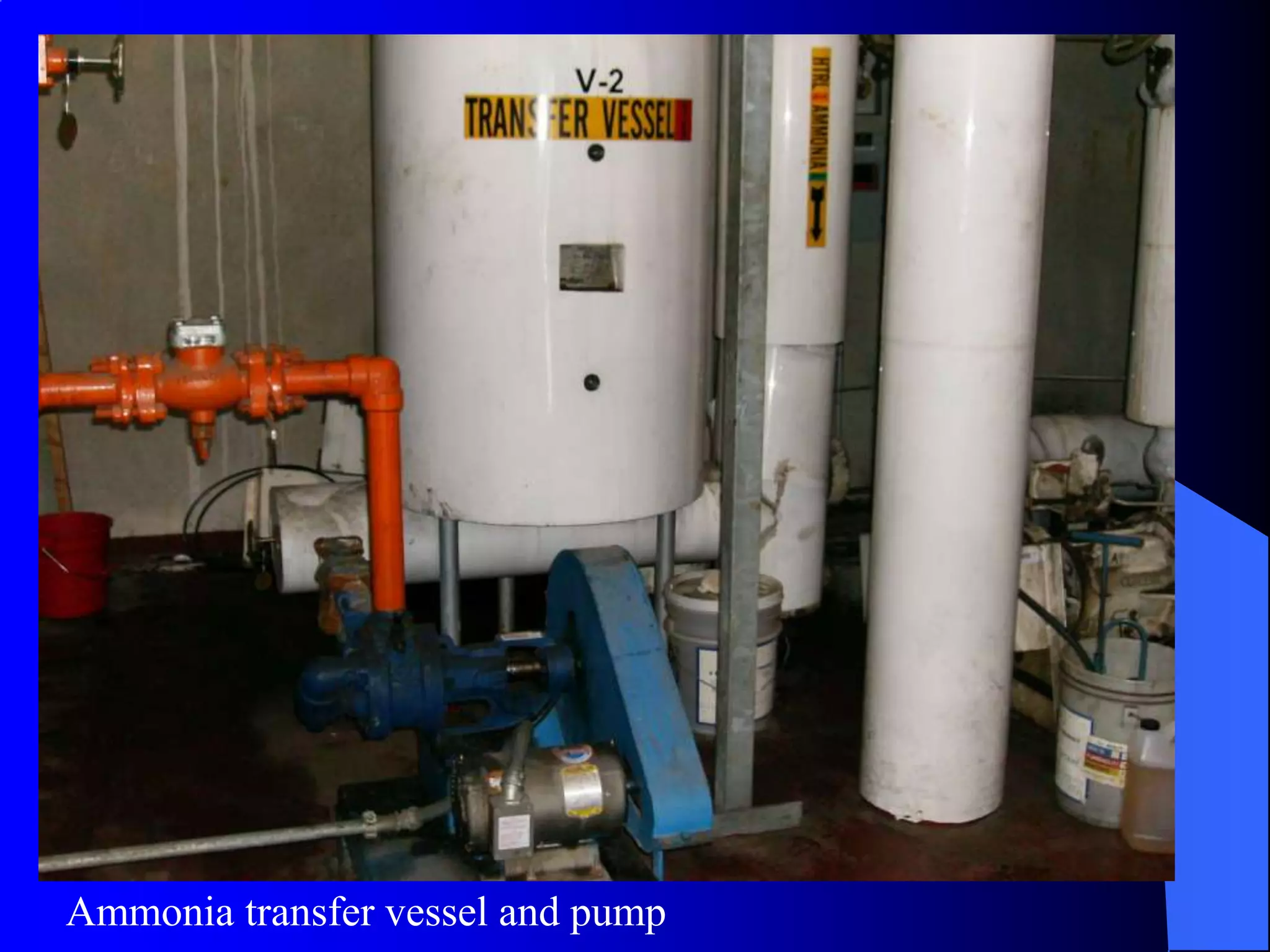
Ammonia transfer vessel and pump
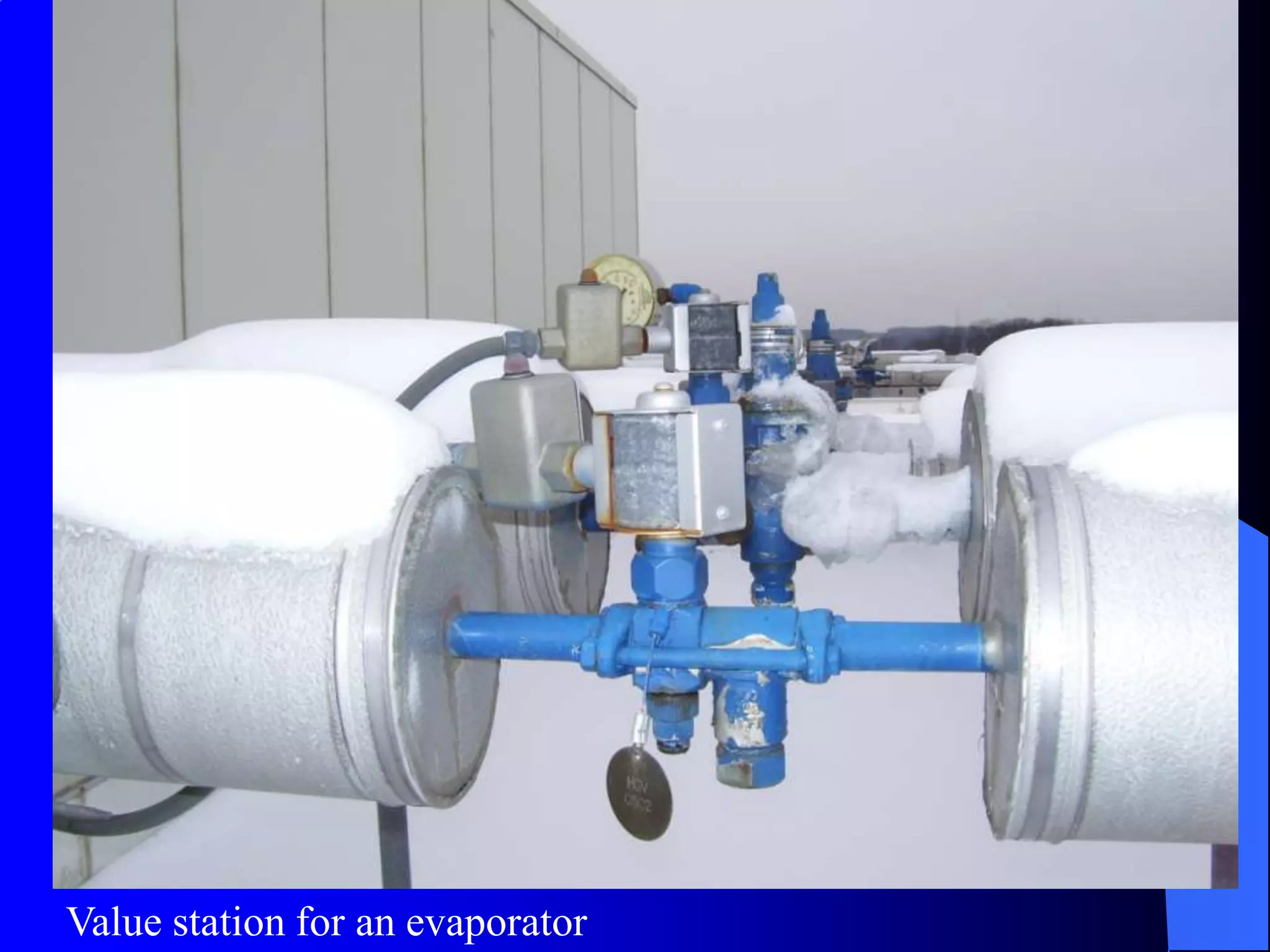
Value station for an evaporator
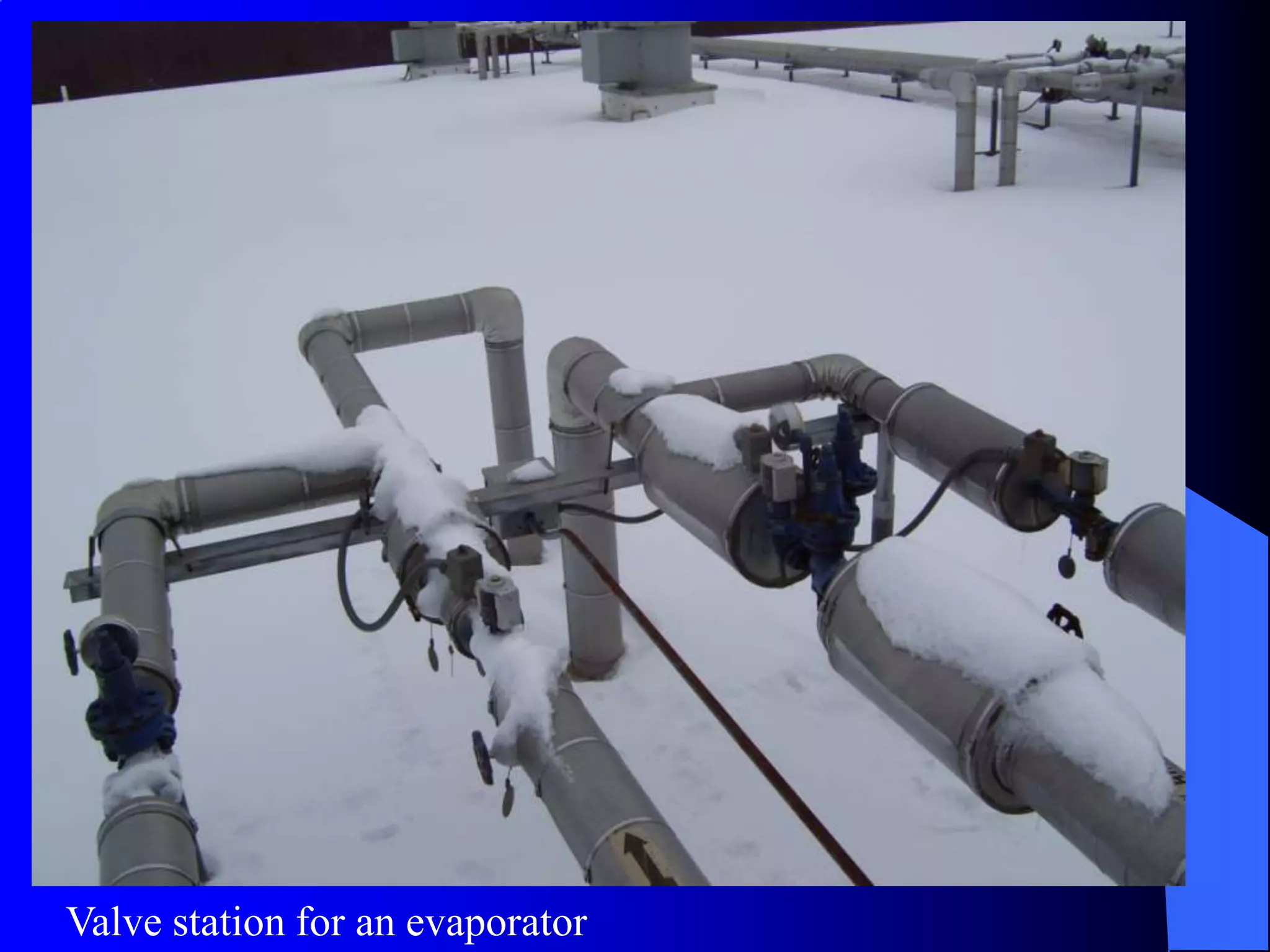
Valve station for an evaporator
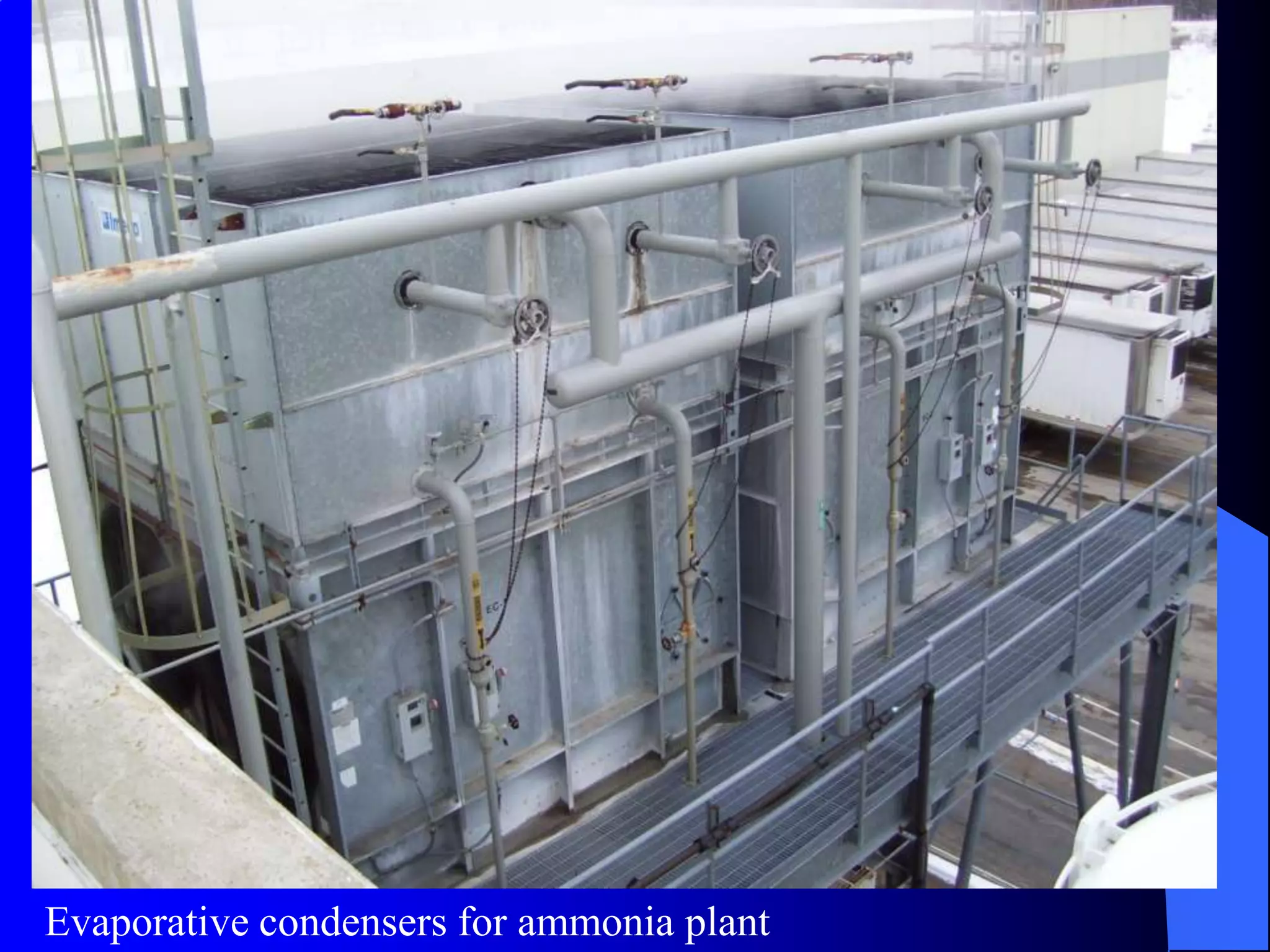
Evaporative condensers for ammonia plant
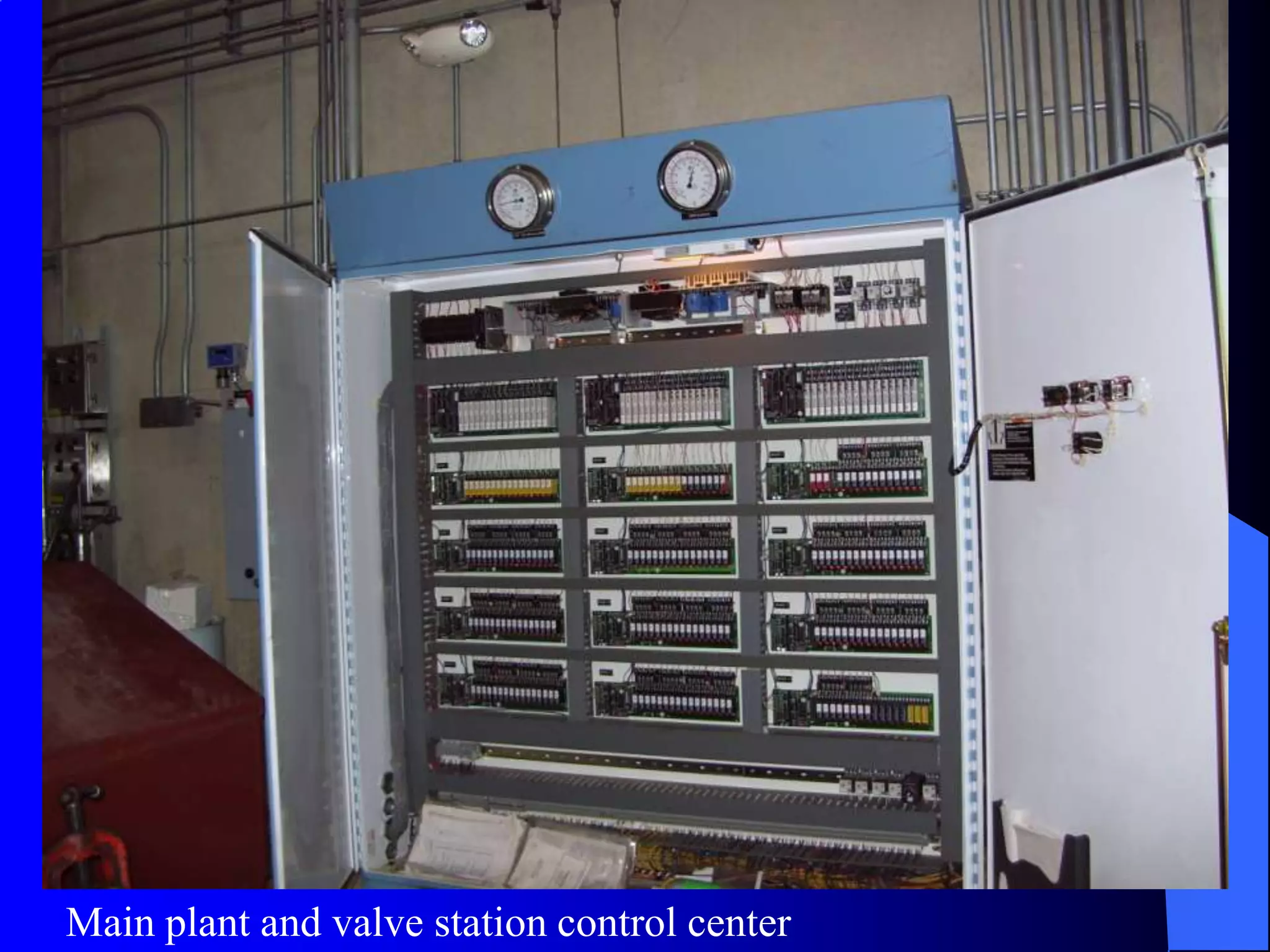
Main plant and valve station control center
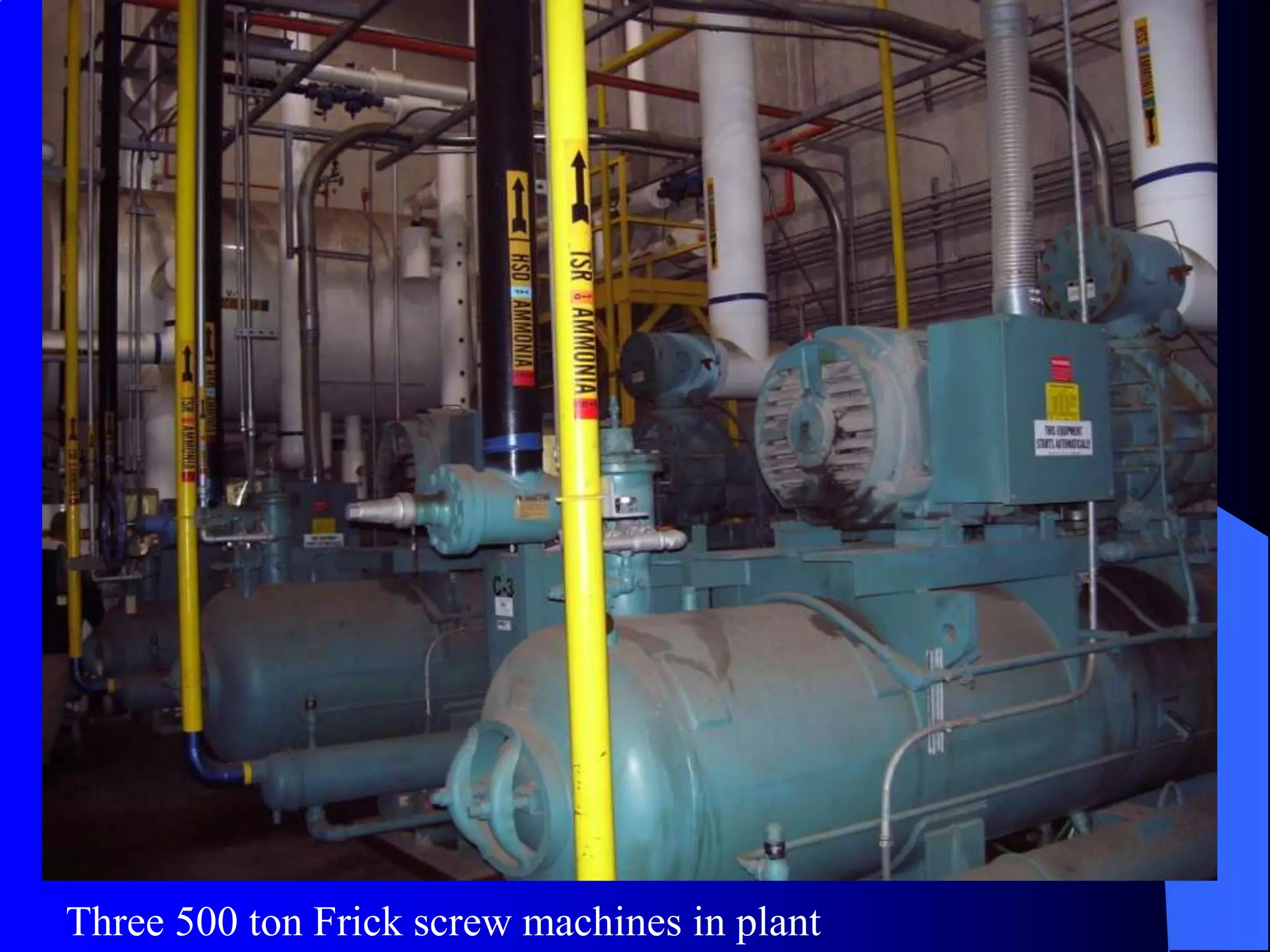
Three 500 ton Frick screw machines in plant
The End

Industrial Ammonia Refrigeration Systems

  • 1.
    Anhydrous Ammonia (NH3) as a Refrigerant An Overview
  • 2.
    Introduction:  What isAmmonia?  Why is it used as a refrigerant?  What are some of it’s properties?  How does it compare to other refrigerants?  Is it safe?
  • 3.
    Anhydrous Ammonia (NH3):  Also known as R-717  It is a single component refrigerant.  One part nitrogen, three parts hydrogen.  Anhydrous means void of water content.
  • 4.
    Environmentally Friendly:  Does not deplete the ozone.  Does not contribute to climate change.  Leaks are easily detectable.
  • 5.
    Properties:  Ammonia has less volume than comparable refrigerants. On large systems it requires smaller piping and smaller components. EXAMPLE: Tons of refrigeration per 100 equivalent feet of pipe. R-134a: 11/8” copper = 28.4 tons liquid 2.3 tons suction R-717: 1” iron pipe = 126 tons liquid 3.8 tons suction
  • 6.
    Ammonia and oil do not mix well, so keeping oil in the compressor is less difficult.  Ammonia is miscible with water, so it is easily diluted, and easily washed away.  Ammonia is corrosive to copper alloys
  • 7.
    How Does itCompare?  R-12 Boils at –20 degrees at 0 lbs.  R-134a Boils at –14 degrees at 0 lbs.  R-717 Boils at –28 degrees at 0 lbs. Ammonia is 3% more efficient than R-22 & 10% more efficient than R-134a EXAMPLE: At 32 psig suction R-12 = 34 degrees R-134a = 37 degrees R-717 = 19 degrees
  • 8.
    Safety:  Ammonia is toxic and corrosive.  When mixed with oxygen it will burn.  Ammonia is lighter than air.  Ammonia can be easily diluted with water.  Small amounts of can be dispersed into a container of water.  Personal Protective Equipment (PPE) should always be used when working with Ammonia. (i.e. neoprene gloves, eye goggles, full face shield, canister type respirator)
  • 9.
    Equipment rooms must be well ventilated.  Egress should be well marked and unobstructed.  Make others aware that you are working on the equipment.  Equipment rooms must have a detection & alarm system.  Systems under 10,000 lbs. on site fall under the state and the EPA  Systems over 10,000 lbs. fall under Home Land Security. Every pound must be tracked and accounted for.
  • 10.
    The average odor threshold is 5 ppm.  100-200 ppm: Eyes irritated.  500 ppm & below: No permanent eye damage.  300 ppm: Immediate throat irritation.  1700 ppm: Coughing  2400 ppm: Threat to life after 30 minutes exposure.  5000 ppm: Vapor – Full body chemical suit required.  5000 ppm: Liquid – Second degree burns and blisters.
  • 11.
    Check out somepictures of an ammonia refrigeration system!
  • 12.
    Computer control panelon a 500 ton Frick screw machine
  • 13.
    Labeled ammonia pipingin the machine room
  • 14.
    Ammonia piping inthe machine room
  • 15.
    Thermal siphon tankin the machine room
  • 16.
  • 17.
    500 ton Frickscrew machine
  • 18.
    500 ton Frickscrew machine
  • 19.
  • 20.
    Torn down liquidammonia pump
  • 21.
  • 22.
    Value station foran evaporator
  • 23.
    Valve station foran evaporator
  • 24.
  • 25.
    Main plant andvalve station control center
  • 26.
    Three 500 tonFrick screw machines in plant
  • 27.