Arbuscular Mycorrhizal
Fungi (AMF)
 A biofertilizer is a chemical that contains living
microorganisms that colonize the rhizosphere or
the interior of the plant when applied to seeds,
plant surfaces, or soil, and encourage growth by
increasing the supply or availability of primary
nutrients to the host plant
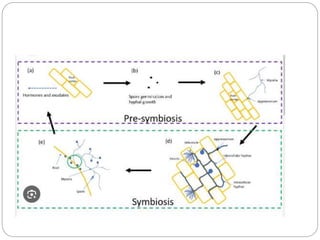
 Arbuscular Mycorrhizal Fungi (AMF) constitute a
group of root obligate biotrophs that exchange
mutual benefits with about 80% of plants. They
are considered natural biofertilizers, since they
provide the host with water, nutrients, and
pathogen protection, in exchange for
photosynthetic products.
Mycorrhizae
 A mycorrhiza is a mutually beneficial symbiotic relationship
between a fungus and a plant.
 The term refers to the fungus' role in the plant's
rhizosphere or root system.
 Mycorrhizae may be a fungus that forms a symbiotic
relationship with the roots of upper plants.
 Phosphate is absorbed by the fungus and passed on to the
plant.
 It also increases plant tolerance to salinity and drought and
offers resistance to root-borne pathogens.
 They function as biofertilizers in this way. Arbuscular
Mycorrhizal Fungi (AMF) is a sort of root-bound biotrophs
that help roughly 80% of plants by exchanging mutual
advantages.
 Because they provide the host with water, nutrients, and
pathogen protection reciprocally for photosynthetic
products, they're termed natural biofertilizers.
Benefits
 It is a beneficial fungus that forms a symbiotic
relationship with plant roots, increasing
phosphorus, other nutrients, and water absorption
from the soil, hence supporting plant growth and
development and increasing output.
 It's a mycorrhiza-based biofertilizer that contains
mycorrhiza fungal spores.
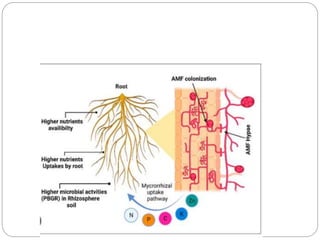
 Mycorrhizal fungi may absorb, store, and
transport significant amounts of phosphate in
their hyphae, which they then release into plant
root tissues.
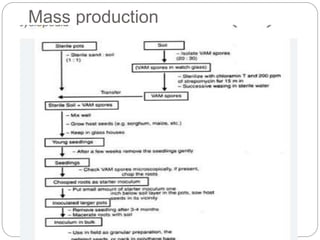
Mass production

AMF.pptx

  • 1.
  • 2.
     A biofertilizeris a chemical that contains living microorganisms that colonize the rhizosphere or the interior of the plant when applied to seeds, plant surfaces, or soil, and encourage growth by increasing the supply or availability of primary nutrients to the host plant
  • 3.
     Arbuscular MycorrhizalFungi (AMF) constitute a group of root obligate biotrophs that exchange mutual benefits with about 80% of plants. They are considered natural biofertilizers, since they provide the host with water, nutrients, and pathogen protection, in exchange for photosynthetic products.
  • 4.
    Mycorrhizae  A mycorrhizais a mutually beneficial symbiotic relationship between a fungus and a plant.  The term refers to the fungus' role in the plant's rhizosphere or root system.  Mycorrhizae may be a fungus that forms a symbiotic relationship with the roots of upper plants.  Phosphate is absorbed by the fungus and passed on to the plant.  It also increases plant tolerance to salinity and drought and offers resistance to root-borne pathogens.  They function as biofertilizers in this way. Arbuscular Mycorrhizal Fungi (AMF) is a sort of root-bound biotrophs that help roughly 80% of plants by exchanging mutual advantages.  Because they provide the host with water, nutrients, and pathogen protection reciprocally for photosynthetic products, they're termed natural biofertilizers.
  • 5.
    Benefits  It isa beneficial fungus that forms a symbiotic relationship with plant roots, increasing phosphorus, other nutrients, and water absorption from the soil, hence supporting plant growth and development and increasing output.  It's a mycorrhiza-based biofertilizer that contains mycorrhiza fungal spores.  Mycorrhizal fungi may absorb, store, and transport significant amounts of phosphate in their hyphae, which they then release into plant root tissues.
  • 8.