


Definition
• These are the fungi which form ectomycorrhizal
association with plants and Ectomycorrhizal
associations (abbreviated as ECM, or EM) are
mutualistic associations between higher fungi
and Gymnosperms or Angiosperms. ECM
associations consist of a soil mycelium system,
linking mycorrhizal roots and storage or
reproductive structures. Ectomycorrhizal roots
(formerly known as ectotrophic or sheathing
mycorrhizas) are characterized by the presence of
a mantle and Hartig net.
Structural Diversity
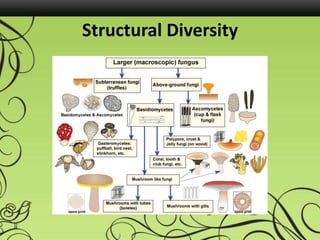
• Many ECM fungi have mushroom-like fruit
bodies with gills, tubes, teeth, etc. arising
from soil, but there are also many saprophytes
in most of these categories.
• The majority of subterranean fungi (called
truffles or truffle-like) are considered to be
ECM associates, but some probably are not.
Structural Diversity
• Fungi fruiting on wood are usually not
mycorrhizal, with the exception of some crust
fungi.
• Root system
• Soil hyphae
• Root contact & hyphal proliferation
• Mycorrhizal roots
• Harting net
• Reproduction
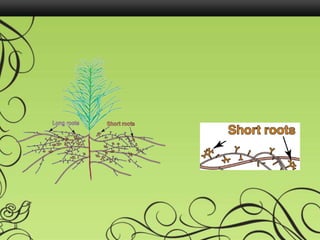
• Most ECM roots have a modified lateral root
branching pattern. This pattern, which is
called heterorhizy, consists of short
mycorrhizal lateral roots (called short roots)
supported by a network of long roots.
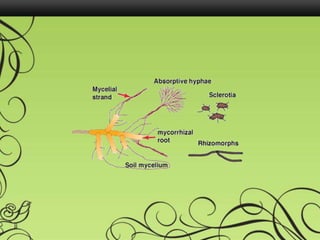
• Mycorrhizal fungi produce a hyphal network in
soil consisting of individual strands of hyphae
and/or relatively undifferentiated bundles of
hyphae called mycelial strands, or
rhizomorphs with specialized conducting
hyphae.
• Sclerotia, which are larger, resistant storage
structures, may also be produced.
• Soil hyphae function by acquiring nutrients re-
allocating resources for fungus reproduction
or mycorrhizal exchange and by functioning as
propagules for survival and spread of the
fungus.
Root Contact and Hyphal Proliferation
• Hyphae contact, recognise and adhere to root
epidermal cells near the apex of young,
actively growing, high-order, lateral root.
These laterals are called short roots because
they normally have restricted growth
Mycorrhizal roots
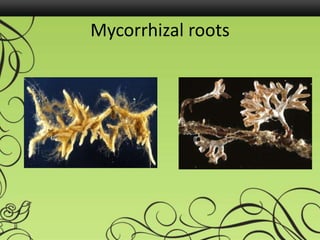
• After ECM associations are established,
mycorrhizal short roots often continue to
grow by elongation and branching.
• Conifer roots with ECM have dichotomous
branching patterns, while angiosperms have
sympodial branching.
Mycorrhizal roots
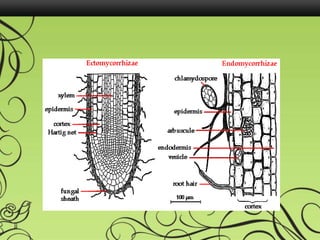
The Hartig Net
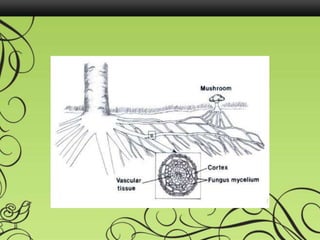
• Hyphae penetrate between host cells and
branch to form a labyrinthine structure called
the Hartig net.
• Host responses may include polyphenol
production in cells and the deposition of
secondary metabolites in walls .
The Hartig Net
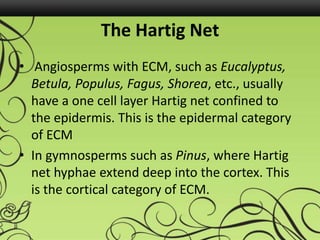
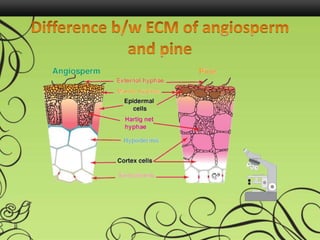
• Angiosperms with ECM, such as Eucalyptus,
Betula, Populus, Fagus, Shorea, etc., usually
have a one cell layer Hartig net confined to
the epidermis. This is the epidermal category
of ECM
• In gymnosperms such as Pinus, where Hartig
net hyphae extend deep into the cortex. This
is the cortical category of ECM.
Reproduction
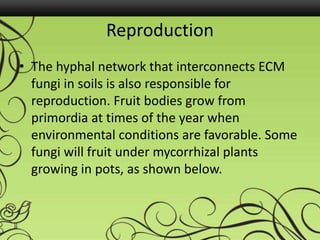
• The hyphal network that interconnects ECM
fungi in soils is also responsible for
reproduction. Fruit bodies grow from
primordia at times of the year when
environmental conditions are favorable. Some
fungi will fruit under mycorrhizal plants
growing in pots, as shown below.
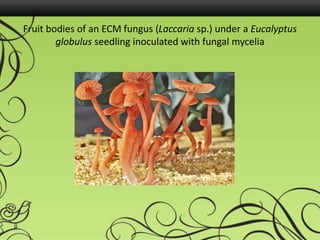
Fruit bodies of an ECM fungus (Laccaria sp.) under a Eucalyptus
globulus seedling inoculated with fungal mycelia
Anatomical terms of ECM fungi
• Mantle
• Hartig net
• Heterorhizy
• Short roots
• Long roots
• Dichotomous branching
• Pinnate branching
• Soil hyphae
Anatomical terms of ECM fungi
• Mycelial strands
• Rhizomorphs
• Fruit bodies
• Sclerotia
Host plants
• Dominant in coniferous forests
• Cold boreal or alpine regions,
• Broad-leaved forests in temperate or
Mediterranean regions,
• Some in tropical or subtropical savanna or
rain forests habitats
• Ectomycorrhizal associations can improve the
phosphate status of plants in soils that are
phosphate deficient.
• Enhance nitrogen nutrition of plants where
nitrogen is deficient.
• Ectomycorrhizal fungi helps plants avoid
disease and survive periods of drought.
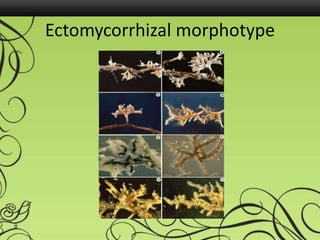
• The size, color, texture and branching patterns
of ECM roots vary with different host-fungus
combinations, which are called morphotypes.
Ectomycorrhizal morphotype
ECM fungi of Pakistan
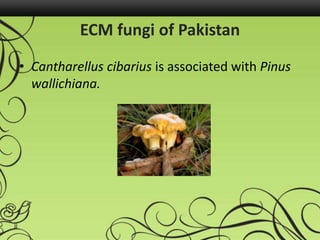
• Cantharellus cibarius is associated with Pinus
wallichiana.
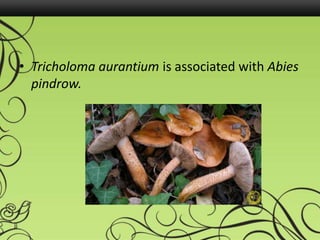
• Tricholoma aurantium is associated with Abies
pindrow.
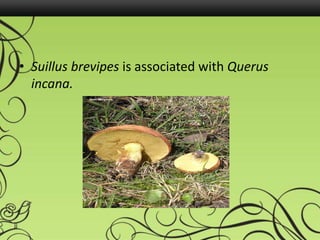
• Suillus brevipes is associated with Querus
incana.
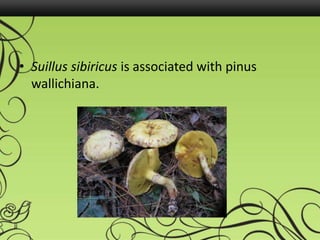
• Suillus sibiricus is associated with pinus
wallichiana.
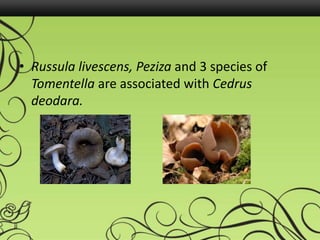
• Russula livescens, Peziza and 3 species of
Tomentella are associated with Cedrus
deodara.
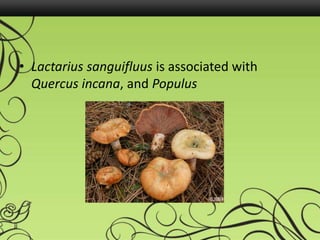
• Lactarius sanguifluus is associated with
Quercus incana, and Populus
Ectomycorrhizal fungi

Ectomycorrhizal fungi

  • 2.
    Definition • These arethe fungi which form ectomycorrhizal association with plants and Ectomycorrhizal associations (abbreviated as ECM, or EM) are mutualistic associations between higher fungi and Gymnosperms or Angiosperms. ECM associations consist of a soil mycelium system, linking mycorrhizal roots and storage or reproductive structures. Ectomycorrhizal roots (formerly known as ectotrophic or sheathing mycorrhizas) are characterized by the presence of a mantle and Hartig net.
  • 4.
  • 5.
    Structural Diversity • ManyECM fungi have mushroom-like fruit bodies with gills, tubes, teeth, etc. arising from soil, but there are also many saprophytes in most of these categories. • The majority of subterranean fungi (called truffles or truffle-like) are considered to be ECM associates, but some probably are not.
  • 6.
    Structural Diversity • Fungifruiting on wood are usually not mycorrhizal, with the exception of some crust fungi.
  • 7.
    • Root system •Soil hyphae • Root contact & hyphal proliferation • Mycorrhizal roots • Harting net • Reproduction
  • 9.
    • Most ECMroots have a modified lateral root branching pattern. This pattern, which is called heterorhizy, consists of short mycorrhizal lateral roots (called short roots) supported by a network of long roots.
  • 11.
    • Mycorrhizal fungiproduce a hyphal network in soil consisting of individual strands of hyphae and/or relatively undifferentiated bundles of hyphae called mycelial strands, or rhizomorphs with specialized conducting hyphae. • Sclerotia, which are larger, resistant storage structures, may also be produced.
  • 12.
    • Soil hyphaefunction by acquiring nutrients re- allocating resources for fungus reproduction or mycorrhizal exchange and by functioning as propagules for survival and spread of the fungus.
  • 14.
    Root Contact andHyphal Proliferation • Hyphae contact, recognise and adhere to root epidermal cells near the apex of young, actively growing, high-order, lateral root. These laterals are called short roots because they normally have restricted growth
  • 15.
    Mycorrhizal roots • AfterECM associations are established, mycorrhizal short roots often continue to grow by elongation and branching. • Conifer roots with ECM have dichotomous branching patterns, while angiosperms have sympodial branching.
  • 16.
  • 17.
    The Hartig Net •Hyphae penetrate between host cells and branch to form a labyrinthine structure called the Hartig net. • Host responses may include polyphenol production in cells and the deposition of secondary metabolites in walls .
  • 18.
    The Hartig Net •Angiosperms with ECM, such as Eucalyptus, Betula, Populus, Fagus, Shorea, etc., usually have a one cell layer Hartig net confined to the epidermis. This is the epidermal category of ECM • In gymnosperms such as Pinus, where Hartig net hyphae extend deep into the cortex. This is the cortical category of ECM.
  • 20.
    Reproduction • The hyphalnetwork that interconnects ECM fungi in soils is also responsible for reproduction. Fruit bodies grow from primordia at times of the year when environmental conditions are favorable. Some fungi will fruit under mycorrhizal plants growing in pots, as shown below.
  • 21.
    Fruit bodies ofan ECM fungus (Laccaria sp.) under a Eucalyptus globulus seedling inoculated with fungal mycelia
  • 22.
    Anatomical terms ofECM fungi • Mantle • Hartig net • Heterorhizy • Short roots • Long roots • Dichotomous branching • Pinnate branching • Soil hyphae
  • 23.
    Anatomical terms ofECM fungi • Mycelial strands • Rhizomorphs • Fruit bodies • Sclerotia
  • 24.
    Host plants • Dominantin coniferous forests • Cold boreal or alpine regions, • Broad-leaved forests in temperate or Mediterranean regions, • Some in tropical or subtropical savanna or rain forests habitats
  • 25.
    • Ectomycorrhizal associationscan improve the phosphate status of plants in soils that are phosphate deficient. • Enhance nitrogen nutrition of plants where nitrogen is deficient. • Ectomycorrhizal fungi helps plants avoid disease and survive periods of drought.
  • 26.
    • The size,color, texture and branching patterns of ECM roots vary with different host-fungus combinations, which are called morphotypes.
  • 27.
  • 28.
    ECM fungi ofPakistan • Cantharellus cibarius is associated with Pinus wallichiana.
  • 29.
    • Tricholoma aurantiumis associated with Abies pindrow.
  • 30.
    • Suillus brevipesis associated with Querus incana.
  • 31.
    • Suillus sibiricusis associated with pinus wallichiana.
  • 32.
    • Russula livescens,Peziza and 3 species of Tomentella are associated with Cedrus deodara.
  • 33.
    • Lactarius sanguifluusis associated with Quercus incana, and Populus