WWI Chapter 12.4
Americans on the Home Front
• Notes (#32)==Answer the 3 Qs on the top of p. 432
• What steps did the government take to finance the war &
manage the economy?
• How did the government enforce loyalty to the war
effort?
• How did the war change the lives of Americans on the
home front?
• *Lists or bullet points are fine*
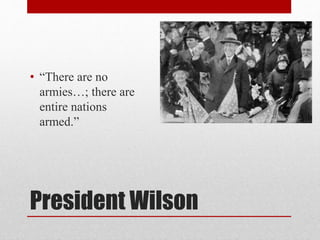
President Wilson
• “There are no
armies…; there are
entire nations
armed.”
Financing the War
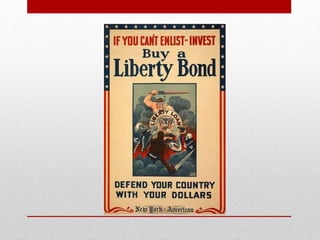
• Liberty Bonds
• Redeemed for original value + interest
• Boy and Girl Scouts sold them to public
• “Every Scout to Save a Soldier”
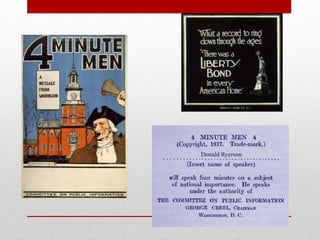
• 75,000 “Four-Minute Men”
• Artists and actors also helped sell bonds
• Paid for ¼ of U.S. war costs; $20 billion+
• “Buy Bonds Till It Hurts”
• “The Soldier Gives—You Must Lend”
Managing the Economy
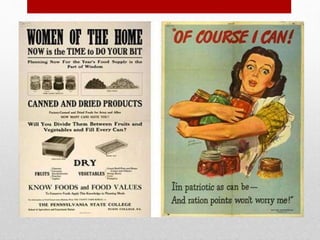
• Industry switched from commercial to war goods
• “Dollar-a-year” men
• Business men moved to Washington, DC to head up new gov’t
agencies
• War Industries Board – Bernard Baruch
• Handed out raw materials, told what and how much to
produce, and how much to sell them for (fixed prices)
Managing the Economy
• National War Labor Board, led by Taft (former President)
• Unions gain some rights
• Un-patriotic to protest/strike/miss work
• Samuel Gompers promised to limit strikes/labor unrest
Managing the War
• Lever Food and Fuel Control Act – August, 1917
• President manages production and distribution of food and
fuels necessary for war effort
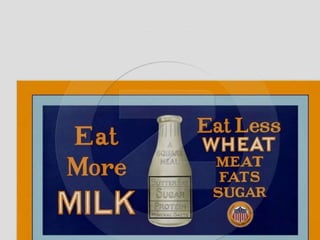
• Increased farm output, price controls on food, and rationing
– Herbert Hoover (future President)
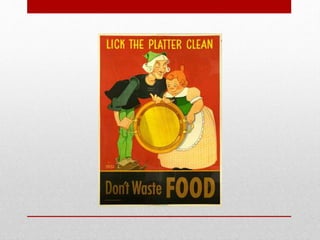
• “Food will win the war”
• “Gospel of the Clean Plate,” see quote on p. 434
• Daylight Savings Time – more sunlight during the day for
work and less fuel used
• Increased production during summer/fall
• Still have this today, should we?
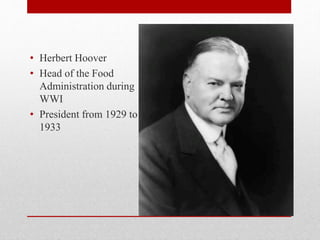
• Herbert Hoover
• Head of the Food
Administration during
WWI
• President from 1929 to
1933
Enforcing Loyalty
• Government censorship on press and banning of
publications from mail
• Committee on Public Information
• George Creel (former muckraker)
• Rally support for war
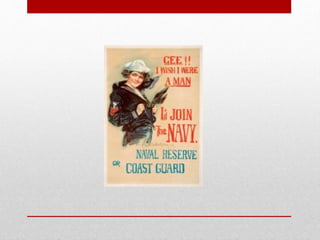
• Films, pamphlets, posters
Enforcing Loyalty
• Fear of spies/espionage
• Might undermine the war efforts
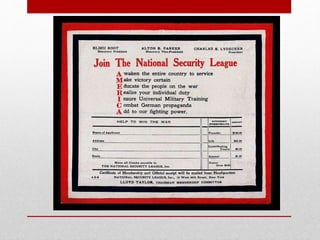
• National Security League preached “100% Americanism”
• Non-profit, non-partisan group
• Nativists
• Fear of Foreigners
• Literacy tests for immigrants
• German hate
• “Salisbury steak” & “police dogs”
• Espionage and Sedition Acts (1917 & 1918)
• Broke 1st amendment rights
• Over 1000 convictions, including Eugene Debs
Enforcing Loyalty
• Gov’t esp. cracked down on “radicals”
• Socialists, communists, anarchists
• The IWW or “Wobblies”
• Early stages of the “Red Scare”
• * more on this later*
Changing People’s Lives
• After the War
• Stalled flow of immigrants from Europe
• Business needed workers – African Americans & Mexican
Americans & Women
• 400K women in industrial work during WWI
• African American “Great Migration” to North during war
• 500K moved from South (mostly rural) to North (mostly urban)
• Notes (#23)==Answer the 3 Qs on the top of p. 432
• What steps did the government take to finance the war &
manage the economy?
• How did the government enforce loyalty to the war
effort?
• How did the war change the lives of Americans on the
home front?
• *Lists or bullet points are fine*

Americans on the Home Front

  • 1.
    WWI Chapter 12.4 Americanson the Home Front
  • 2.
    • Notes (#32)==Answerthe 3 Qs on the top of p. 432 • What steps did the government take to finance the war & manage the economy? • How did the government enforce loyalty to the war effort? • How did the war change the lives of Americans on the home front? • *Lists or bullet points are fine*
  • 3.
    President Wilson • “Thereare no armies…; there are entire nations armed.”
  • 4.
    Financing the War •Liberty Bonds • Redeemed for original value + interest • Boy and Girl Scouts sold them to public • “Every Scout to Save a Soldier” • 75,000 “Four-Minute Men” • Artists and actors also helped sell bonds • Paid for ¼ of U.S. war costs; $20 billion+ • “Buy Bonds Till It Hurts” • “The Soldier Gives—You Must Lend”
  • 7.
    Managing the Economy •Industry switched from commercial to war goods • “Dollar-a-year” men • Business men moved to Washington, DC to head up new gov’t agencies • War Industries Board – Bernard Baruch • Handed out raw materials, told what and how much to produce, and how much to sell them for (fixed prices)
  • 8.
    Managing the Economy •National War Labor Board, led by Taft (former President) • Unions gain some rights • Un-patriotic to protest/strike/miss work • Samuel Gompers promised to limit strikes/labor unrest
  • 9.
    Managing the War •Lever Food and Fuel Control Act – August, 1917 • President manages production and distribution of food and fuels necessary for war effort • Increased farm output, price controls on food, and rationing – Herbert Hoover (future President) • “Food will win the war” • “Gospel of the Clean Plate,” see quote on p. 434 • Daylight Savings Time – more sunlight during the day for work and less fuel used • Increased production during summer/fall • Still have this today, should we?
  • 10.
    • Herbert Hoover •Head of the Food Administration during WWI • President from 1929 to 1933
  • 14.
    Enforcing Loyalty • Governmentcensorship on press and banning of publications from mail • Committee on Public Information • George Creel (former muckraker) • Rally support for war • Films, pamphlets, posters
  • 16.
    Enforcing Loyalty • Fearof spies/espionage • Might undermine the war efforts • National Security League preached “100% Americanism” • Non-profit, non-partisan group • Nativists • Fear of Foreigners • Literacy tests for immigrants • German hate • “Salisbury steak” & “police dogs” • Espionage and Sedition Acts (1917 & 1918) • Broke 1st amendment rights • Over 1000 convictions, including Eugene Debs
  • 17.
    Enforcing Loyalty • Gov’tesp. cracked down on “radicals” • Socialists, communists, anarchists • The IWW or “Wobblies” • Early stages of the “Red Scare” • * more on this later*
  • 19.
    Changing People’s Lives •After the War • Stalled flow of immigrants from Europe • Business needed workers – African Americans & Mexican Americans & Women • 400K women in industrial work during WWI • African American “Great Migration” to North during war • 500K moved from South (mostly rural) to North (mostly urban)
  • 20.
    • Notes (#23)==Answerthe 3 Qs on the top of p. 432 • What steps did the government take to finance the war & manage the economy? • How did the government enforce loyalty to the war effort? • How did the war change the lives of Americans on the home front? • *Lists or bullet points are fine*