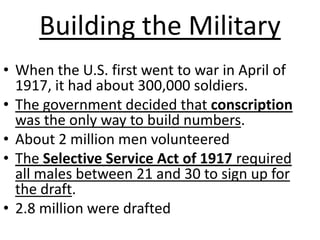
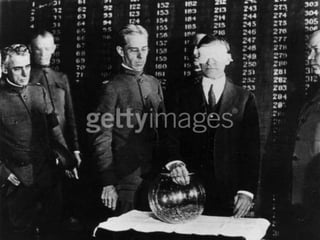
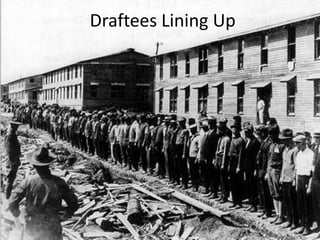
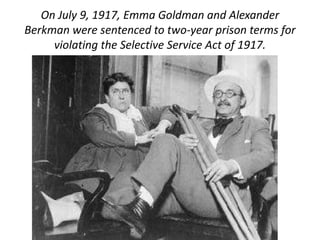
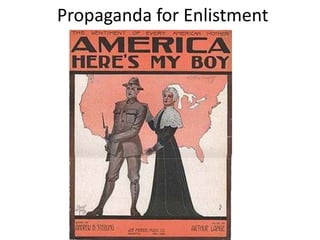
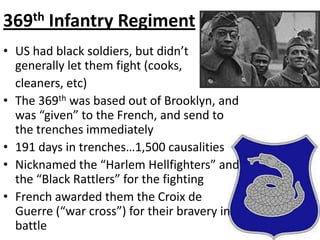
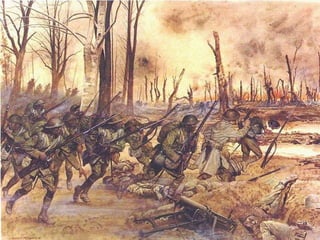
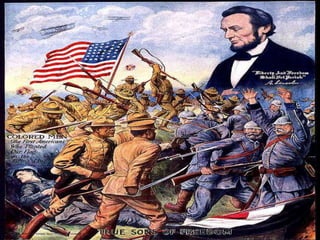
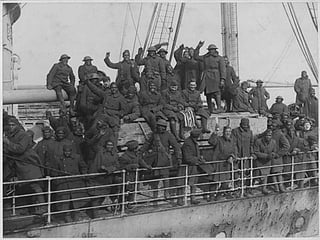
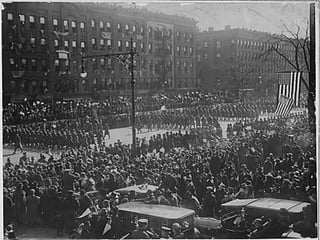
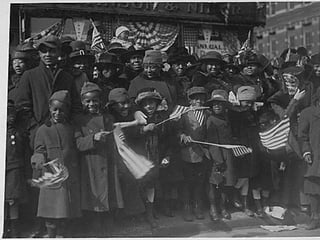
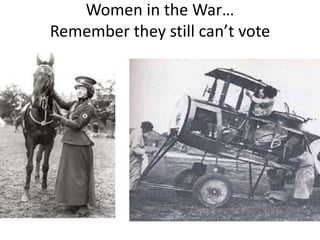
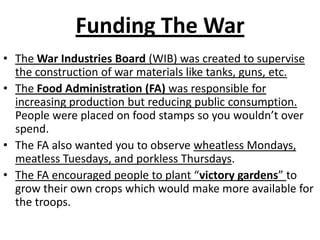
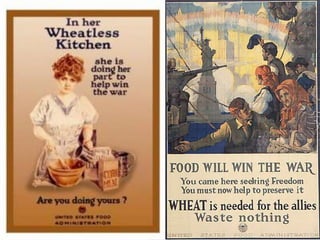
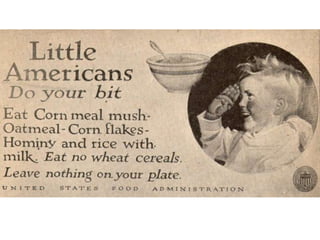
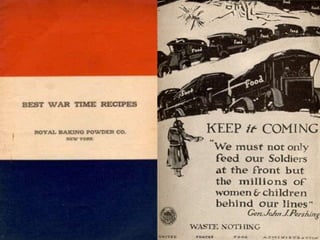
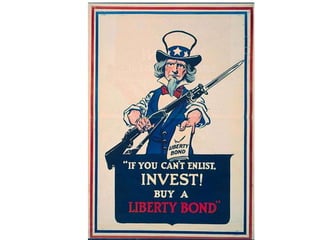
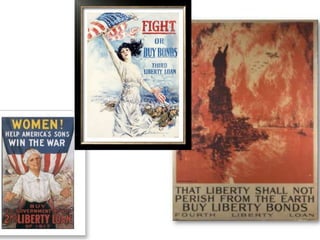
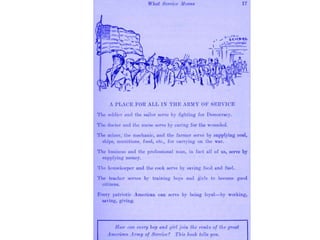
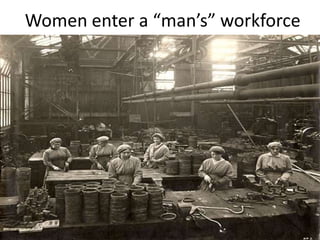
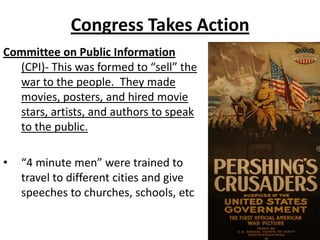
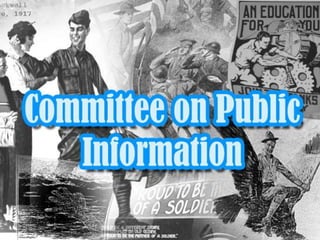
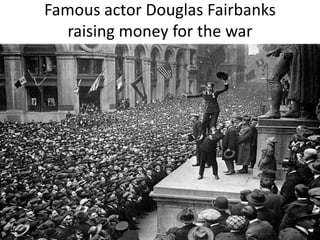
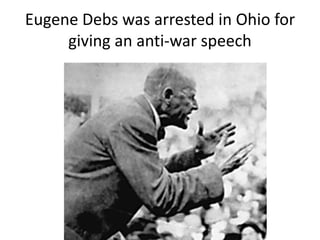
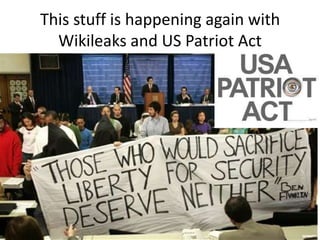
Wilson created organizations to mobilize the U.S. economy and workforce for World War I after the country's long period of isolationism. The military drafted over 2 million men and over 400,000 African Americans and 11,000 women served. The government imposed programs like the food administration, fuel administration, and daylight savings time to fund the war and conserve resources for troops. It also passed legislation like the Espionage and Sedition Acts that restricted civil liberties by criminalizing interference with the draft and criticism of the war.