Introduction:
 Gynecomastia is a condition that causes
breast tissue to swell in boys and men.
 This causes breasts that are larger than normal.
Gynecomastia is a common condition that is usually
not serious.
 But it may cause some men and boys to feel
embarrassed.
 Sometimes, gynecomastia can cause pain in the
breasts.
Definition:
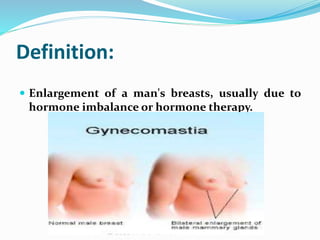
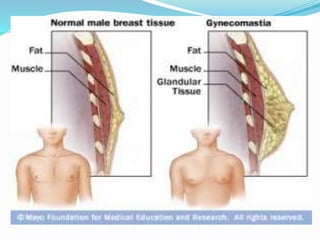
 Enlargement of a man's breasts, usually due to
hormone imbalance or hormone therapy.
Risk Factor:
 Adolescence
 Older age
 Use of anabolic steroids or androgens to enhance
athletic performance
 Certain health conditions, including liver and kidney
disease, thyroid disease, hormonally active tumors,
and Klinefelter syndrome.
Etiology:
All men have both male and female hormones.
 Gynecomastia is usually caused by uneven levels of male and
female hormones.
 This imbalance may happen when boys go through puberty.
 It may also happen in babies and men over 50 years old.
 Substance abuse can also cause gynecomastia. Substances that
can cause the condition include
 Alcohol.
 Amphetamines.
 Heroin.
 Marijuana.
Cont….
Some health problems also can cause gynecomastia. These
problems include:
 Certain testicular disorders.
 Cirrhosis, or liver failure.
 Hyperthyroidism.
 Kidney failure.
 Testicular cancer
Gynecomastia can sometimes be caused by certain
medications. These medications include:
 AIDS medications.
 Anti-anxiety medications and antidepressants.
 Certain cancer treatments, including chemotherapy.
 Some antibiotics.
Cont….
Other medications that can cause gynecomastia include:
 Certain heart medications.
 Certain steroids.
 Ulcer medications.
 A poor diet also can cause gynecomastia in some men.
Pathophysiology:
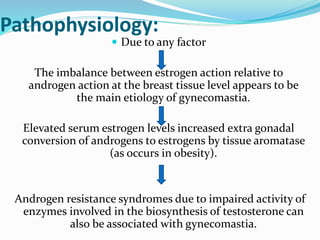
 Due to any factor
The imbalance between estrogen action relative to
androgen action at the breast tissue level appears to be
the main etiology of gynecomastia.
Elevated serum estrogen levels increased extra gonadal
conversion of androgens to estrogens by tissue aromatase
(as occurs in obesity).
Androgen resistance syndromes due to impaired activity of
enzymes involved in the biosynthesis of testosterone can
also be associated with gynecomastia.
Clinical Manifestation:
 Enlargement of the male breasts.
 Nipple and may have a rubbery or firm feel.
 The enlargement may be greater on one side even if
both sides are involved.
 Tenderness and sensitivity may be present.
 Retraction of the nipple.
 Nipple discharge.
 Enlargement of the underarm (axillary) lymph nodes.
Evaluation:
 History Collection
 Physical Examination
Initial tests to determine the cause of your gynecomastia
may include:
 Blood tests
 Mammograms
You may need further testing depending on your initial test
results, including:
 Computerized tomography (CT) scans
 Magnetic resonance imaging (MRI) scans
 Testicular ultrasounds
 Tissue biopsies
Cont….
Conditions that cause similar symptoms:
Doctor will want to be sure your breast swelling is actually
gynecomastia and not another condition.
Other conditions that can cause similar symptoms include-
 Fatty breast tissue. Some men and boys have chest fat
that resembles gynecomastia. This is called false
gynecomastia (pseudogynecomastia), and it isn't the same
as gynecomastia.
 Breast cancer. This is uncommon in men, but can occur.
Enlargement of one breast or the presence of a firm nodule
raises the concern for male breast cancer.
 A breast abscess (mastitis). This is an infection of the
breast tissue.
Treatment:
 Antiestrogens have been increasingly used in recent years to
decrease the stimulatory effect of estrogens on the male breast.
 Tamoxifen and Raloxifene, which block the estrogen receptor, and
aromatase inhibitors such as Anastrozole have all been used with
varying degrees of success in the treatment of gynecomastia.
 Anastrozole was successfully used to reduce the estrogen excess
and breast enlargement in a patient with.
Surgery:
If you still have significant bother some breast
enlargement despite initial treatment or observation, the
doctor may advise surgery. Two gynecomastia surgery
options are:
 Liposuction. This surgery removes breast fat, but not
the breast gland tissue itself.
 Mastectomy. This type of surgery removes the breast
gland tissue. The surgery is often done endoscopically,
meaning only small incisions are used. This less invasive
type of surgery involves less recovery time.
Complication:
 Gynecomastia has few physical complications, but it
can cause psychological or emotional problems caused
by appearance.
Prevention:
There are a few factors you can control that may reduce
the risk of gynecomastia:
 Don't use illegal drugs. Examples include steroids
and androgens, amphetamines, heroin, and
marijuana.
 Avoid alcohol. Don't drink alcohol, or drink in
moderation.
 Review your medications. If you're taking
medication known to cause gynecomastia, ask your
doctor if there are other choices.

Gynecomastia

  • 2.
    Introduction:  Gynecomastia isa condition that causes breast tissue to swell in boys and men.  This causes breasts that are larger than normal. Gynecomastia is a common condition that is usually not serious.  But it may cause some men and boys to feel embarrassed.  Sometimes, gynecomastia can cause pain in the breasts.
  • 3.
    Definition:  Enlargement ofa man's breasts, usually due to hormone imbalance or hormone therapy.
  • 5.
    Risk Factor:  Adolescence Older age  Use of anabolic steroids or androgens to enhance athletic performance  Certain health conditions, including liver and kidney disease, thyroid disease, hormonally active tumors, and Klinefelter syndrome.
  • 6.
    Etiology: All men haveboth male and female hormones.  Gynecomastia is usually caused by uneven levels of male and female hormones.  This imbalance may happen when boys go through puberty.  It may also happen in babies and men over 50 years old.  Substance abuse can also cause gynecomastia. Substances that can cause the condition include  Alcohol.  Amphetamines.  Heroin.  Marijuana.
  • 7.
    Cont…. Some health problemsalso can cause gynecomastia. These problems include:  Certain testicular disorders.  Cirrhosis, or liver failure.  Hyperthyroidism.  Kidney failure.  Testicular cancer Gynecomastia can sometimes be caused by certain medications. These medications include:  AIDS medications.  Anti-anxiety medications and antidepressants.  Certain cancer treatments, including chemotherapy.  Some antibiotics.
  • 8.
    Cont…. Other medications thatcan cause gynecomastia include:  Certain heart medications.  Certain steroids.  Ulcer medications.  A poor diet also can cause gynecomastia in some men.
  • 9.
    Pathophysiology:  Due toany factor The imbalance between estrogen action relative to androgen action at the breast tissue level appears to be the main etiology of gynecomastia. Elevated serum estrogen levels increased extra gonadal conversion of androgens to estrogens by tissue aromatase (as occurs in obesity). Androgen resistance syndromes due to impaired activity of enzymes involved in the biosynthesis of testosterone can also be associated with gynecomastia.
  • 10.
    Clinical Manifestation:  Enlargementof the male breasts.  Nipple and may have a rubbery or firm feel.  The enlargement may be greater on one side even if both sides are involved.  Tenderness and sensitivity may be present.  Retraction of the nipple.  Nipple discharge.  Enlargement of the underarm (axillary) lymph nodes.
  • 11.
    Evaluation:  History Collection Physical Examination Initial tests to determine the cause of your gynecomastia may include:  Blood tests  Mammograms You may need further testing depending on your initial test results, including:  Computerized tomography (CT) scans  Magnetic resonance imaging (MRI) scans  Testicular ultrasounds  Tissue biopsies
  • 12.
    Cont…. Conditions that causesimilar symptoms: Doctor will want to be sure your breast swelling is actually gynecomastia and not another condition. Other conditions that can cause similar symptoms include-  Fatty breast tissue. Some men and boys have chest fat that resembles gynecomastia. This is called false gynecomastia (pseudogynecomastia), and it isn't the same as gynecomastia.  Breast cancer. This is uncommon in men, but can occur. Enlargement of one breast or the presence of a firm nodule raises the concern for male breast cancer.  A breast abscess (mastitis). This is an infection of the breast tissue.
  • 13.
    Treatment:  Antiestrogens havebeen increasingly used in recent years to decrease the stimulatory effect of estrogens on the male breast.  Tamoxifen and Raloxifene, which block the estrogen receptor, and aromatase inhibitors such as Anastrozole have all been used with varying degrees of success in the treatment of gynecomastia.  Anastrozole was successfully used to reduce the estrogen excess and breast enlargement in a patient with.
  • 14.
    Surgery: If you stillhave significant bother some breast enlargement despite initial treatment or observation, the doctor may advise surgery. Two gynecomastia surgery options are:  Liposuction. This surgery removes breast fat, but not the breast gland tissue itself.  Mastectomy. This type of surgery removes the breast gland tissue. The surgery is often done endoscopically, meaning only small incisions are used. This less invasive type of surgery involves less recovery time.
  • 15.
    Complication:  Gynecomastia hasfew physical complications, but it can cause psychological or emotional problems caused by appearance.
  • 16.
    Prevention: There are afew factors you can control that may reduce the risk of gynecomastia:  Don't use illegal drugs. Examples include steroids and androgens, amphetamines, heroin, and marijuana.  Avoid alcohol. Don't drink alcohol, or drink in moderation.  Review your medications. If you're taking medication known to cause gynecomastia, ask your doctor if there are other choices.