ALOPECIA
Definition:
• Alopecia is defined as the loss of hair from
areas where hair normally grows
• Partial or complete baldness or loss of hair.
Hair loss, also known as alopecia or baldness,
refers to a loss of hair from part of the head or
body. Typically at least the head is involved. The
severity of hair loss can vary from a small area
to the entire body. Inflammation or scarring is
not usually present. Hair loss in some people
causes psychological distress.
Forms of Alopecia:
There are different types of alopecia. the
main types of hair loss are:
• Alopecia Areata (AA)
• Alopecia Totalis (AT)
• Alopecia Universalis (AU)
• Alopecia Barbae
• Androgenetic Alopecia (AGA)
• Scarring Alopecias
1. Alopecia Areata (AA):
• Alopecia areata is an autoimmune condition
which causes patchy hair loss. It can result in a
single bald patch or extensive patchy hair loss.
• Alopecia areata, also known as spot baldness, is a
condition in which hair is lost from some or all
areas of the body. Often it results in a few bald
spots on the scalp, each about the size of a coin.
Alopecia Areata (AA)
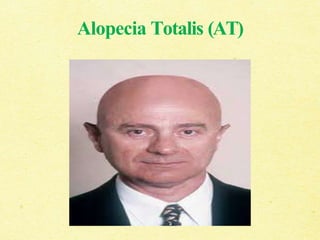
2.Alopecia Totalis (AT)
• Alopecia totalis is a more advanced form of
alopecia areata which results in total loss of all
hair on the scalp.
Alopecia Totalis (AT)
3.Alopecia Universalis (AU)
• Alopecia universalis is the most advanced form of
alopecia areata which results in total loss of all hair on
the body, including eyelashes and eyebrows, chest
hair, armpit hair, and pubic hair.
Alopecia Universalis (AU)
4.Alopecia Barbae
• Alopecia barbae is alopecia areata that is localised
to the beard area. It can be a single bald patch or
more extensive hair loss across the whole of the
beard area.
Alopecia Barbae
5. Androgenetic Alopecia (AGA)
• Also known as male pattern baldness or female pattern baldness.
• It is a thinning of the hair to an almost transparent state, in both
men or women.
• It is hereditary
• In both men and women: it's linked to having an excess of male
hormones (androgens) around the hair follicles, which can block
hair growth.
• Women: are more likely to develop androgenic alopecia
after menopause, do to variation in female hormones.
male pattern baldness
female pattern baldness
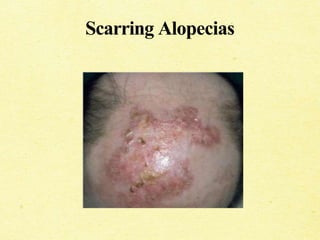
6. ScarringAlopecia :
• Scarring alopecias refers to a group of rare
disorders which cause permanent hair loss.
• Caused by any inflammatory processes which
causes permanent damage to hair follicles.(burns,
bacterial infections, autoimmune diseases )
Scarring Alopecias
Causes of alopecia:
• Exposure to allergens, irritants, toxins, burns,
injuries, and infections.
• Certain medications (especially anabolic steroids
like testosterone)
• Chronic kidney failure
• Radiation and chemotherapy .
• Malnutrition
clinical features of alopecia
 Thinning of hair
 High forehead
 Complete loss of hair at the hairline
 Small round patches of hair
DIAGNOSIS
1. History collection
2. Physical examination
3. Blood test : to rule out any systematic
diseases and androgens level checked.
1.Finasteride:
• Finasterides is widely used for the treatment of
androgen dependent hair disorders such as androgenic
alopecia.
• it will stimulate new regrowth of hair.
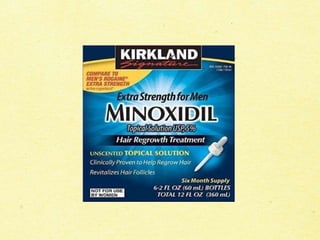
2.Minoxidil:
• Minoxidil is available as a lotion , rub on your
scalp every day.
• used to treat male pattern baldness.
• these drugs are vasodilators and stimulate vertex
hair growth and stimulate epithelium of the hair
follicle.
3. Corticosteroid injections:
• Acts by suppressing the immune system.
• This is useful in alopecia Areata because the
condition is thought to be caused by the
immune system damaging the hair follicles.
4.Massage:
Therapeutic massage increases the circulation(
helping bring more blood to the scalp) and reduces
the stress.
5.Ultraviolet ligh treatment:
UV increases the rate of cell division
encouraging hair growth and it kills bacteria.
6. Wigs:
1.Synthetic wigs: Synthetic wigs are created from
man-made fibers using specialized technology to give
the over all appearance and feel of real hair.
2. Real hair wigs : Human hair wigs are made out
of real human hair so they look and feel real, but
they also have to be re-styled after washing just
like real hair.
7.Hair transplantation:
A surgical procedure in which hair follicles are
transplanted from one part of the head to
another part where the hair is thinning or
receding.
Nursing management
Advice the patient to wear wings
Psychology support
 Encourage to eat a well balanced diet,especially
rich in protein and iron to promote hair growth.
 Counselling
THANK YOU
Alopecia

Alopecia

  • 1.
  • 2.
    Definition: • Alopecia isdefined as the loss of hair from areas where hair normally grows • Partial or complete baldness or loss of hair.
  • 3.
    Hair loss, alsoknown as alopecia or baldness, refers to a loss of hair from part of the head or body. Typically at least the head is involved. The severity of hair loss can vary from a small area to the entire body. Inflammation or scarring is not usually present. Hair loss in some people causes psychological distress.
  • 4.
    Forms of Alopecia: Thereare different types of alopecia. the main types of hair loss are: • Alopecia Areata (AA) • Alopecia Totalis (AT) • Alopecia Universalis (AU) • Alopecia Barbae • Androgenetic Alopecia (AGA) • Scarring Alopecias
  • 5.
    1. Alopecia Areata(AA): • Alopecia areata is an autoimmune condition which causes patchy hair loss. It can result in a single bald patch or extensive patchy hair loss. • Alopecia areata, also known as spot baldness, is a condition in which hair is lost from some or all areas of the body. Often it results in a few bald spots on the scalp, each about the size of a coin.
  • 6.
  • 7.
    2.Alopecia Totalis (AT) •Alopecia totalis is a more advanced form of alopecia areata which results in total loss of all hair on the scalp.
  • 8.
  • 9.
    3.Alopecia Universalis (AU) •Alopecia universalis is the most advanced form of alopecia areata which results in total loss of all hair on the body, including eyelashes and eyebrows, chest hair, armpit hair, and pubic hair.
  • 10.
  • 11.
    4.Alopecia Barbae • Alopeciabarbae is alopecia areata that is localised to the beard area. It can be a single bald patch or more extensive hair loss across the whole of the beard area.
  • 12.
  • 13.
    5. Androgenetic Alopecia(AGA) • Also known as male pattern baldness or female pattern baldness. • It is a thinning of the hair to an almost transparent state, in both men or women. • It is hereditary • In both men and women: it's linked to having an excess of male hormones (androgens) around the hair follicles, which can block hair growth. • Women: are more likely to develop androgenic alopecia after menopause, do to variation in female hormones.
  • 14.
  • 15.
  • 16.
    6. ScarringAlopecia : •Scarring alopecias refers to a group of rare disorders which cause permanent hair loss. • Caused by any inflammatory processes which causes permanent damage to hair follicles.(burns, bacterial infections, autoimmune diseases )
  • 17.
  • 18.
    Causes of alopecia: •Exposure to allergens, irritants, toxins, burns, injuries, and infections. • Certain medications (especially anabolic steroids like testosterone) • Chronic kidney failure • Radiation and chemotherapy . • Malnutrition
  • 19.
    clinical features ofalopecia  Thinning of hair  High forehead  Complete loss of hair at the hairline  Small round patches of hair
  • 20.
    DIAGNOSIS 1. History collection 2.Physical examination 3. Blood test : to rule out any systematic diseases and androgens level checked.
  • 21.
    1.Finasteride: • Finasterides iswidely used for the treatment of androgen dependent hair disorders such as androgenic alopecia. • it will stimulate new regrowth of hair.
  • 23.
    2.Minoxidil: • Minoxidil isavailable as a lotion , rub on your scalp every day. • used to treat male pattern baldness. • these drugs are vasodilators and stimulate vertex hair growth and stimulate epithelium of the hair follicle.
  • 25.
    3. Corticosteroid injections: •Acts by suppressing the immune system. • This is useful in alopecia Areata because the condition is thought to be caused by the immune system damaging the hair follicles.
  • 26.
    4.Massage: Therapeutic massage increasesthe circulation( helping bring more blood to the scalp) and reduces the stress. 5.Ultraviolet ligh treatment: UV increases the rate of cell division encouraging hair growth and it kills bacteria.
  • 27.
    6. Wigs: 1.Synthetic wigs:Synthetic wigs are created from man-made fibers using specialized technology to give the over all appearance and feel of real hair. 2. Real hair wigs : Human hair wigs are made out of real human hair so they look and feel real, but they also have to be re-styled after washing just like real hair.
  • 28.
    7.Hair transplantation: A surgicalprocedure in which hair follicles are transplanted from one part of the head to another part where the hair is thinning or receding.
  • 29.
    Nursing management Advice thepatient to wear wings Psychology support  Encourage to eat a well balanced diet,especially rich in protein and iron to promote hair growth.  Counselling
  • 30.