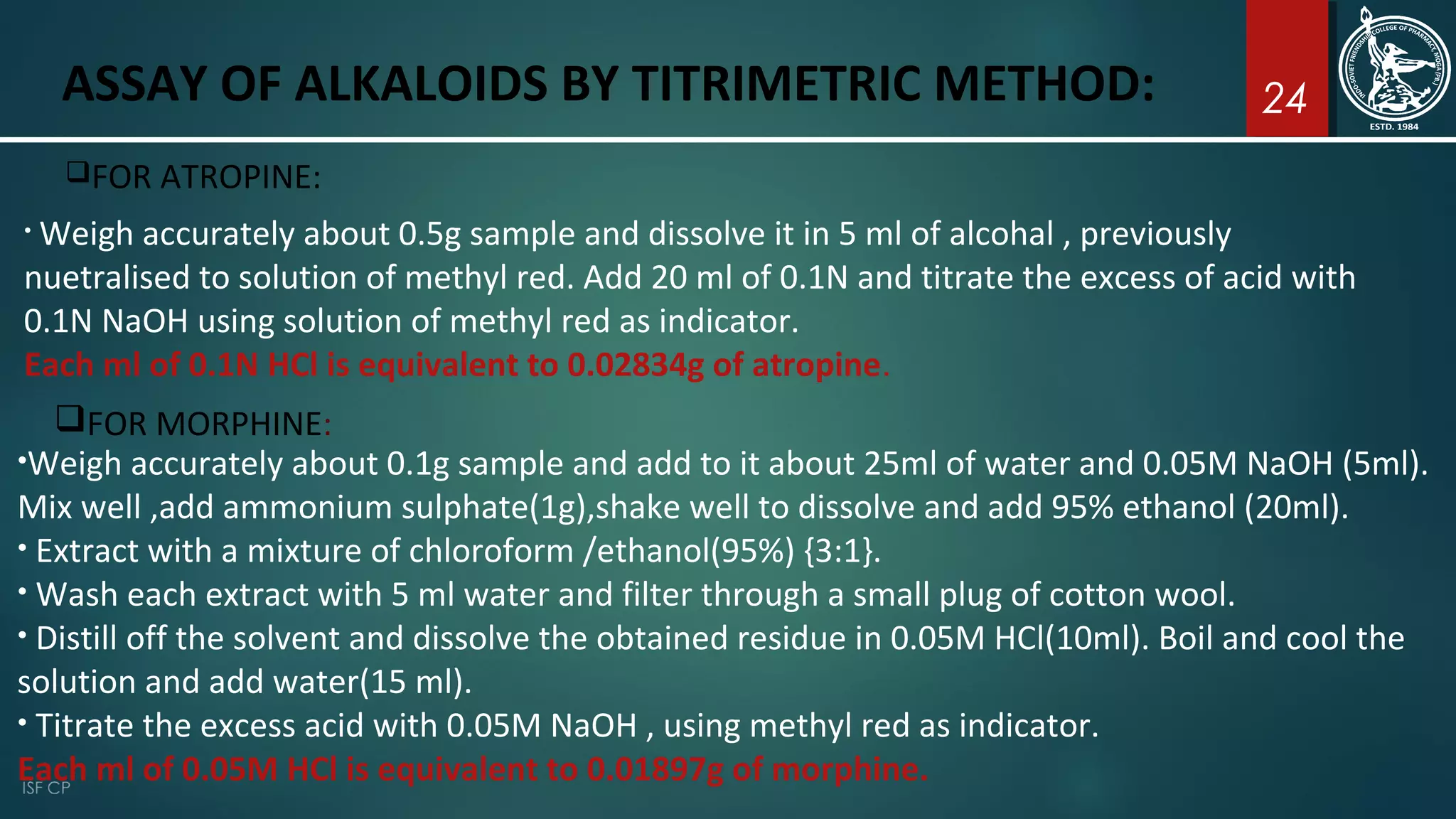
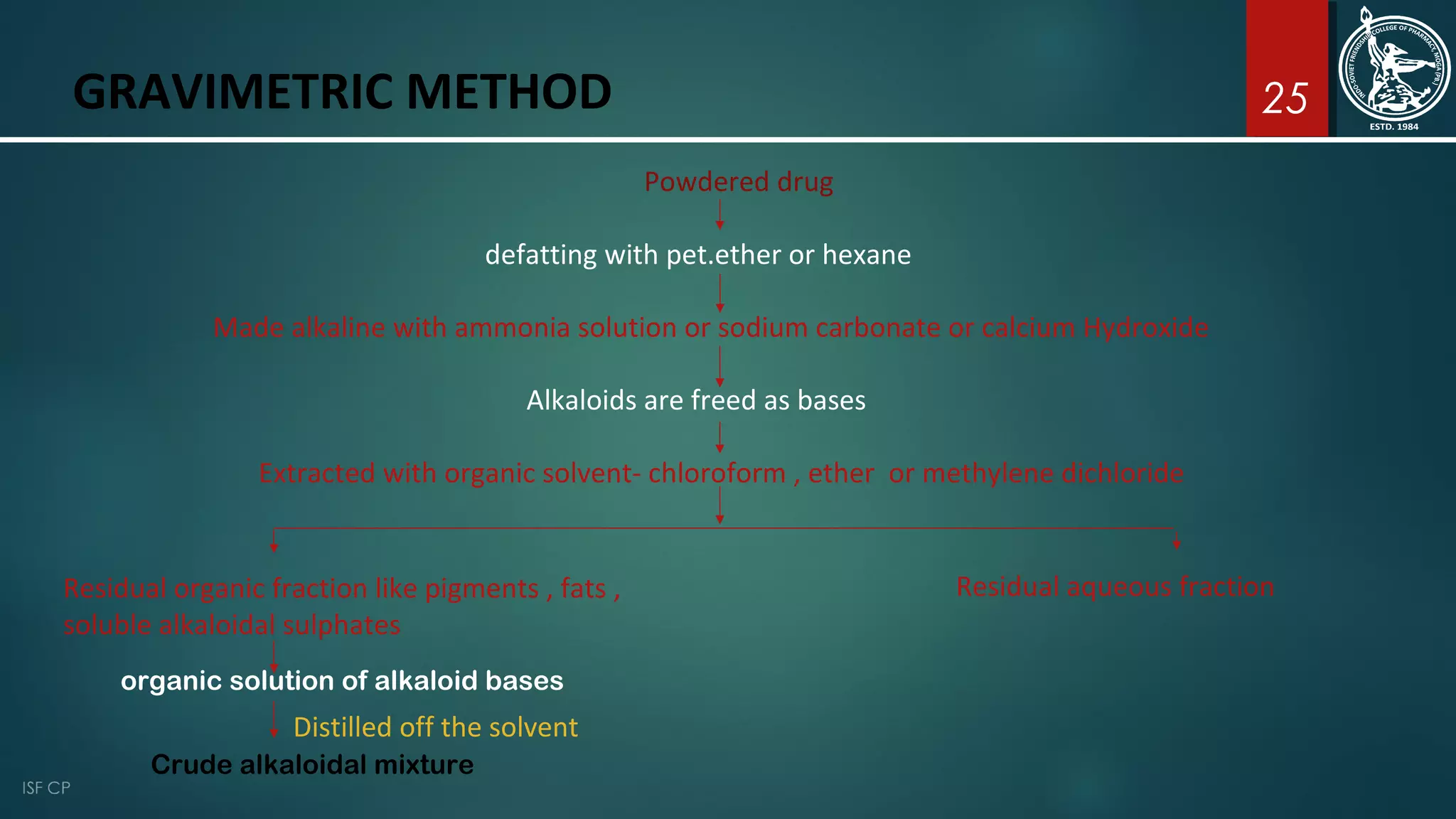
ALKALOIDS AND ITS ASSAY METHODS
SEEMA BRAR
ASSISTANT PROFESSOR
DEPT. OF PHARMACOGNOSY
ISF COLLEGE OF PHARMACY
MOBILE: 8437394397
WEBSITE: - WWW.ISFCP.ORG
ISF College of Pharmacy, Moga
Ghal Kalan,nGT Road, Moga- 142001, Punjab, INDIA
Internal Quality Assurance Cell - (IQAC)
Email ID: Seemabrar001@gmail.com
DEFINITION OF ALKALOIDS
 These are the organic products of natural or synthetic origin which are basic in
nature & contain one or more than one nitrogen atoms, normally of heterocyclic nature &
possess specific physiological actions on human or animal body, when used in small quantites.
 The term is derived from the word ‘alkali-like’ & hence they resemble some of characters
of naturally occuring amines.
 The term is derived from the word ‘alkali-like’ & hence they resemble some of
characters of naturally occuring amines.
2
3Deviation from Definition
Basicity: Some alkaloids are not basic e.g. Colchicine, Piperine, Quaternary
alkaloids.
Nitrogen: The nitrogen in some alkaloids is not in a heterocyclic ring e.g.
Ephedrine, Colchicine, Mescaline.
Plant Origin: Some alkaloids are derived from Bacteria, Fungi, Insects, Frogs,
Animals.
4
 Alkaloids are worldwide present in many families, ranging from primitive mosses to highly
complex graminae.
 Rare in lower plants.
 Dicots are more rich in alkaloids than Monocots.
 Families rich in Alkaloids: Apocynaceae, Rubiaceae, Solanaceae and Papaveraceae.
 Families free from Alkaloids: Rosaceae, Labiatae
Distribution and occurrence:
5Forms of Alkaloids:
 Free bases Salts with Organic acids e.g. Oxalic, acetic acids
 Salts with inorganic acids e.g. HCl, H2SO4.
 Salts with special acids: e.g. Meconic acid in Opium , Quinic acid in
Cinchona
 Glycosidal form e.g. Solanine in Solanum.
 N-oxide form
6ROLE OF ALKALOIDS IN PLANTS
 They are reserve substances with an ability to supply nitrogen.
 They might be the defensive mechanisms for plants growing in dry regions to protect
from grazing animals, herbivores & insects.
 They might have a possible role as growth regulatory factors in the plants.
 These are end products of detoxification mechanisms in plants.
 These are present in conjugation with the plant acids such as meconic acid hence
acting as carriers within the plants for transportation of such acids.
7TYPES OF ALKALOIDS
8
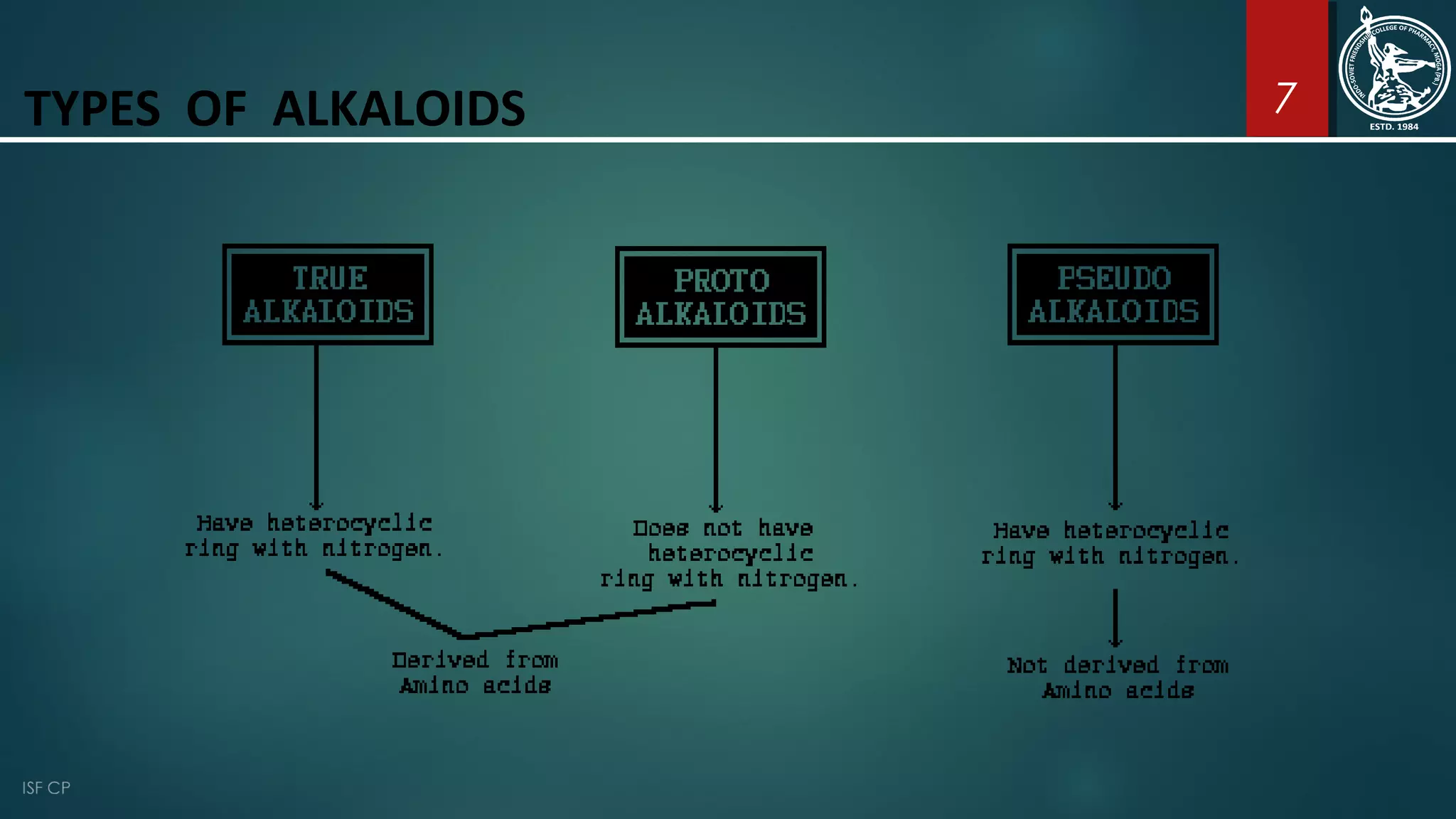
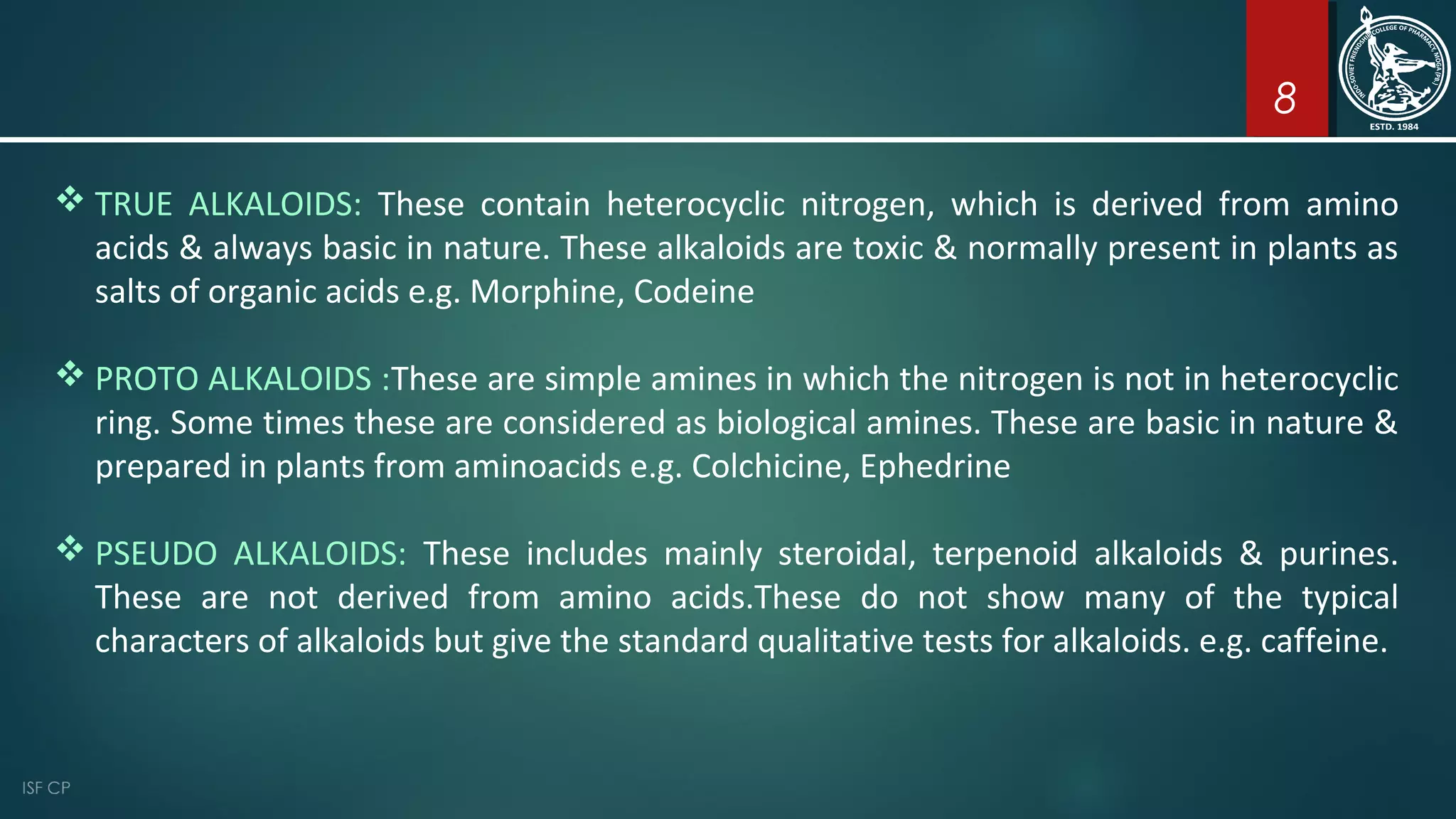
 TRUE ALKALOIDS: These contain heterocyclic nitrogen, which is derived from amino
acids & always basic in nature. These alkaloids are toxic & normally present in plants as
salts of organic acids e.g. Morphine, Codeine
 PROTO ALKALOIDS :These are simple amines in which the nitrogen is not in heterocyclic
ring. Some times these are considered as biological amines. These are basic in nature &
prepared in plants from aminoacids e.g. Colchicine, Ephedrine
 PSEUDO ALKALOIDS: These includes mainly steroidal, terpenoid alkaloids & purines.
These are not derived from amino acids.These do not show many of the typical
characters of alkaloids but give the standard qualitative tests for alkaloids. e.g. caffeine.
9
 Biogenetic.
Based on the biogenetic pathway that form the alkaloids.
 Botanical Source.
According to the plant source of alkaloids.
 Type of Amines.
Primary, Secondary, Tertiary alkaloids.
 Basic Chemical Skeleton
Classification of Alkaloids
10CHEMICAL CLASSIFICATION OF ALKALOIDS
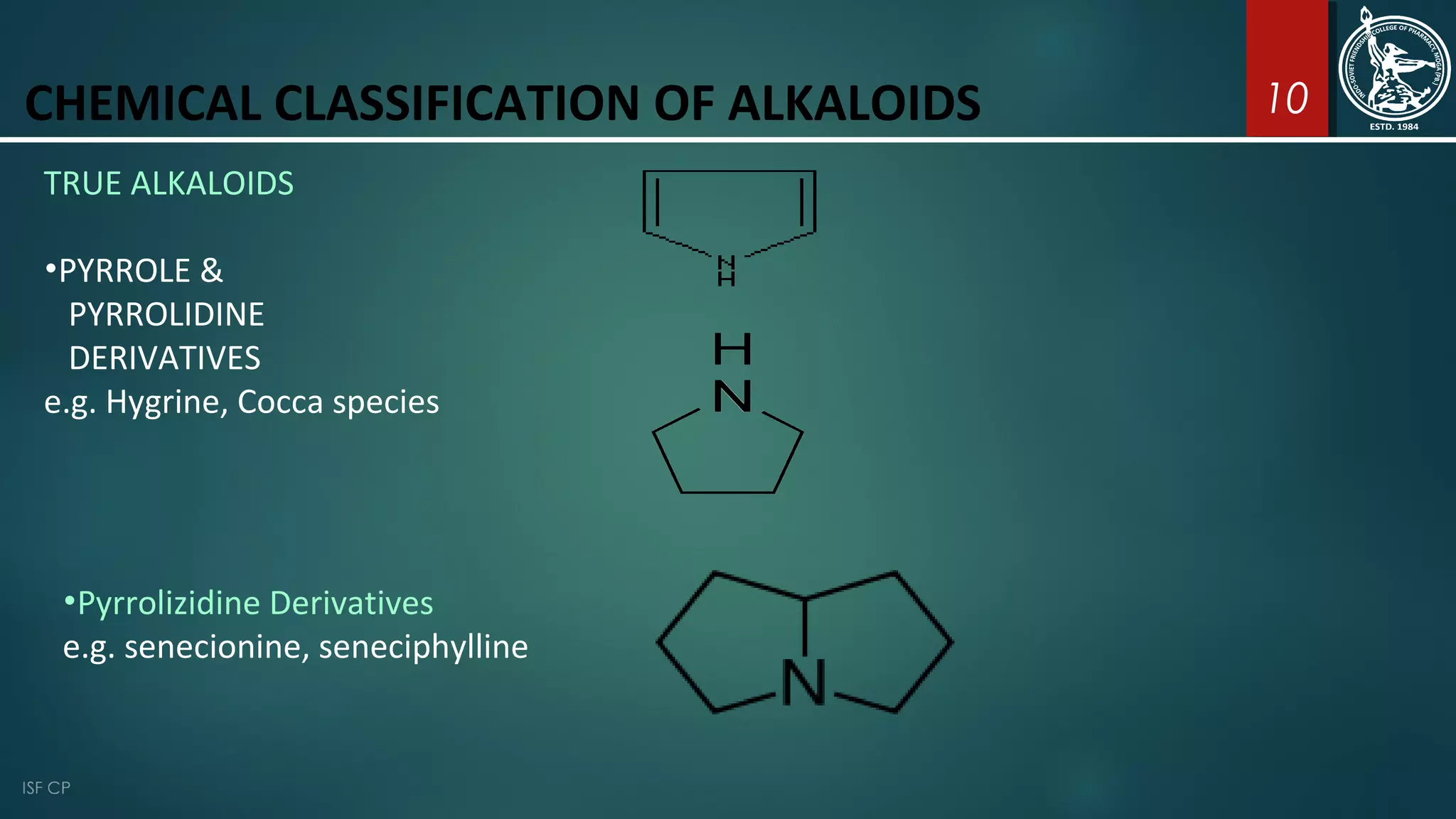
TRUE ALKALOIDS
•PYRROLE &
PYRROLIDINE
DERIVATIVES
e.g. Hygrine, Cocca species
•Pyrrolizidine Derivatives
e.g. senecionine, seneciphylline
11
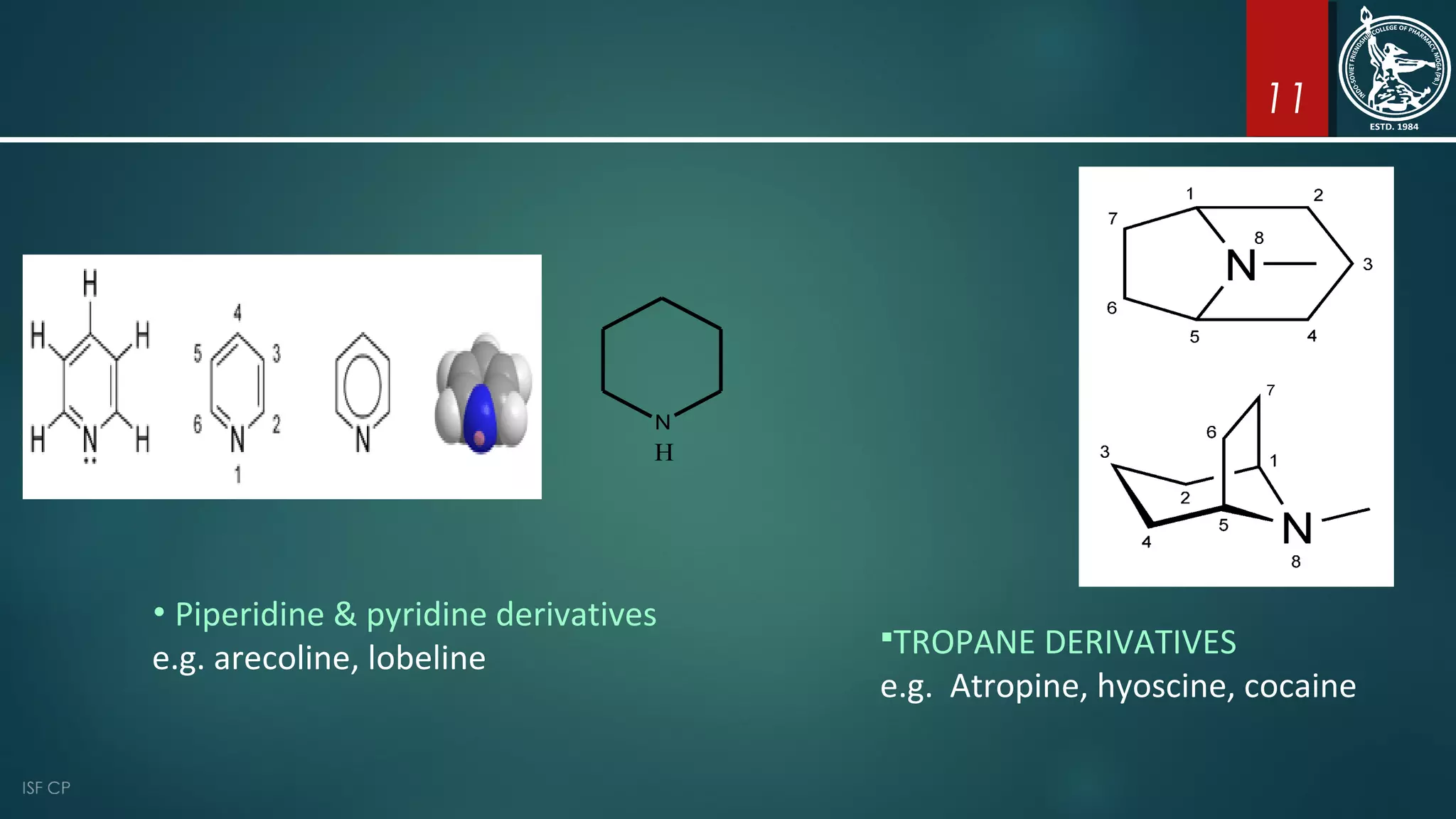
N
H
• Piperidine & pyridine derivatives
e.g. arecoline, lobeline
TROPANE DERIVATIVES
e.g. Atropine, hyoscine, cocaine
12
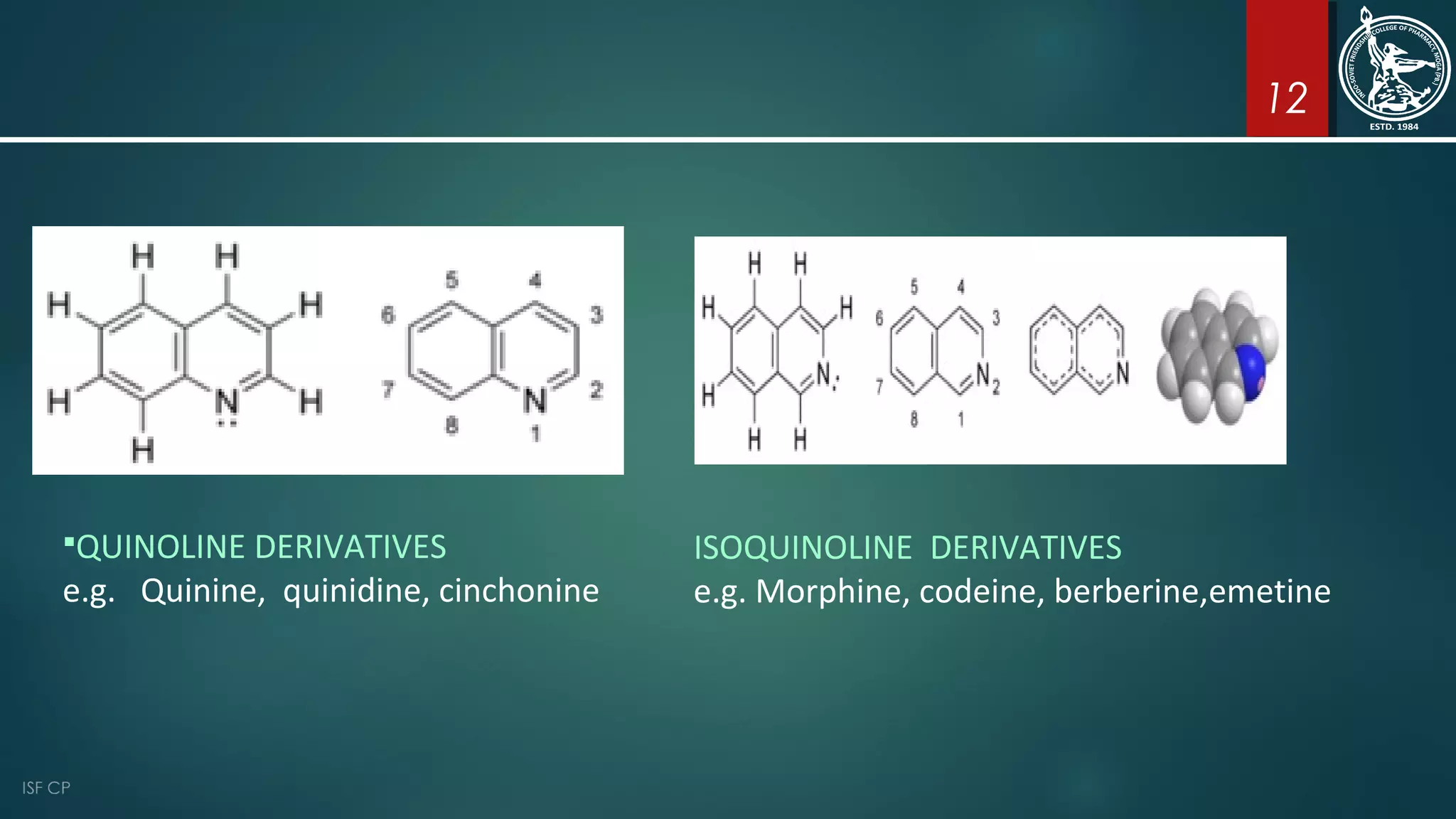
QUINOLINE DERIVATIVES
e.g. Quinine, quinidine, cinchonine
ISOQUINOLINE DERIVATIVES
e.g. Morphine, codeine, berberine,emetine
13
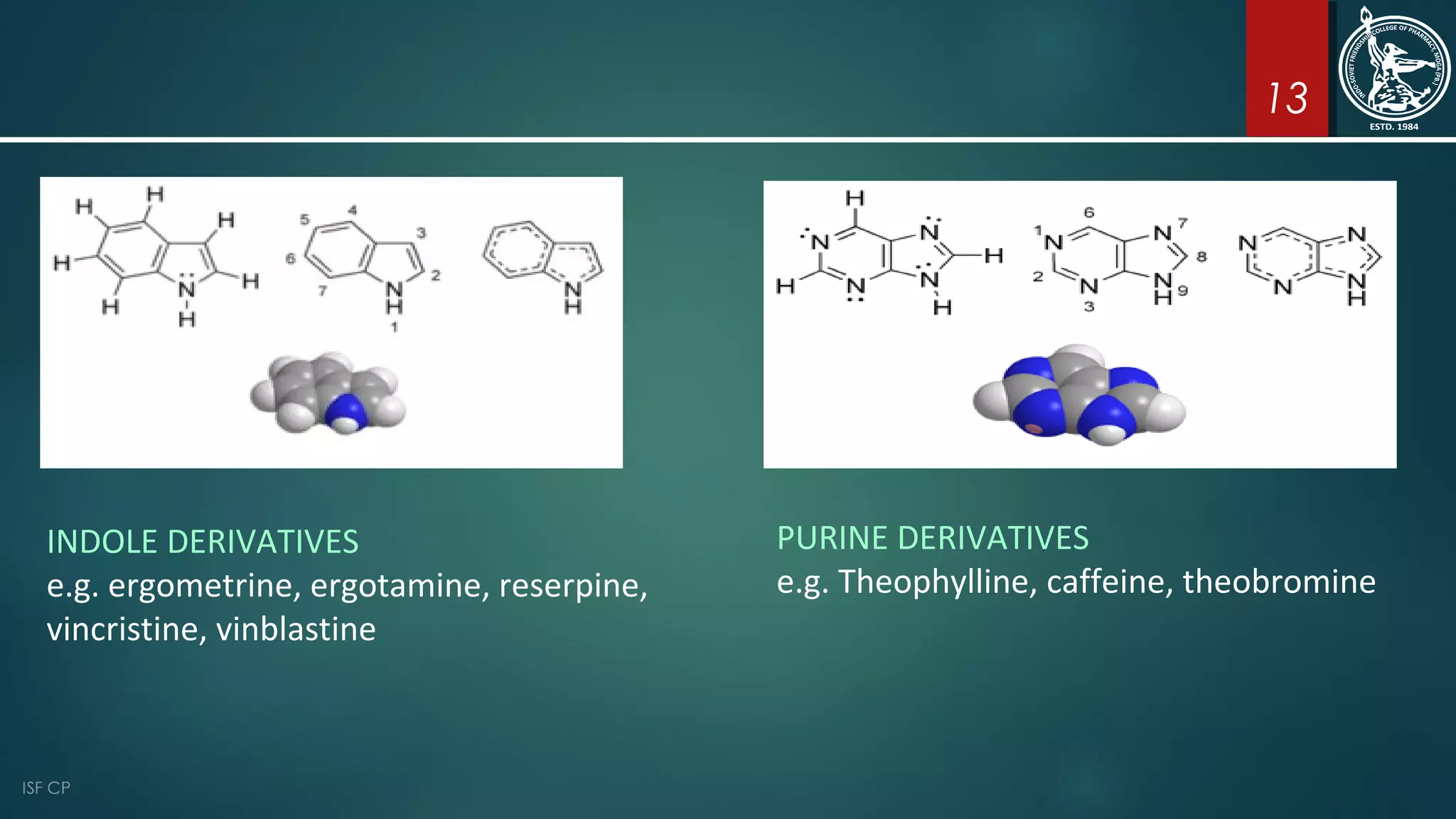
INDOLE DERIVATIVES
e.g. ergometrine, ergotamine, reserpine,
vincristine, vinblastine
PURINE DERIVATIVES
e.g. Theophylline, caffeine, theobromine
14
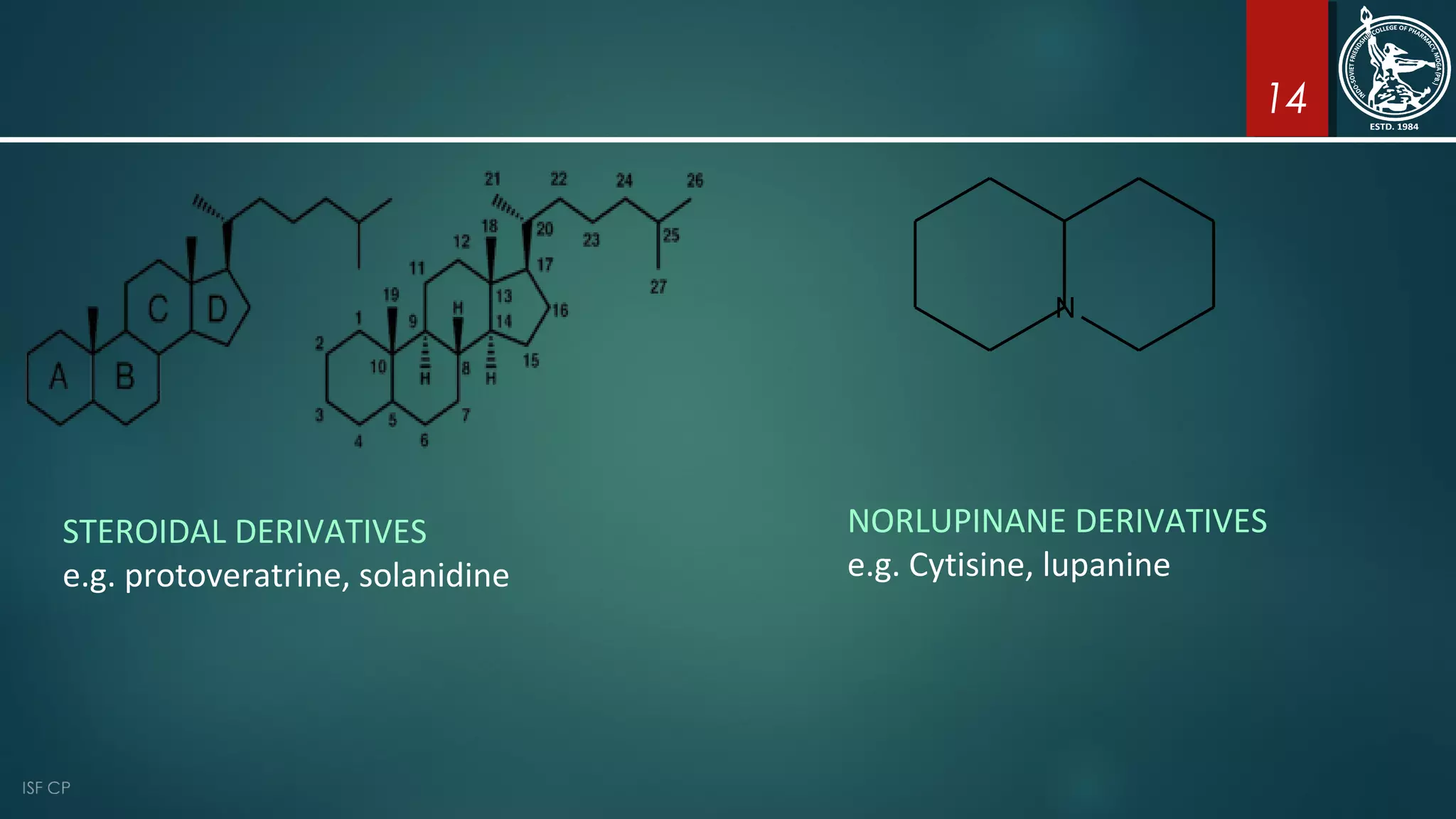
STEROIDAL DERIVATIVES
e.g. protoveratrine, solanidine
N
NORLUPINANE DERIVATIVES
e.g. Cytisine, lupanine
15PHYSICAL PROPERTIES
With few exceptions, all the alkaloids are colourless, crystalline solids with a sharp melting
point.
Some of the alkaloids are amorphous gums, while other are liquid & volatile in nature.
Some alkaloids are coloured in nature e.g. berberine is yellow.
Free bases of alkaloids are soluble in organic, non-polar, immiscible solvents.
The salts of most bases are soluble in water.
Free bases are insoluble in water.
The alkaloids containing quarternary bases are only water soluble.
Some of pseudoalkaloids & protoalkaloids show higher solubility in water e.g. caffeine is
freely soluble in water.
16CHEMICAL PROPERTIES
Most of the alkaloids are basic in reaction, due to the availability of lone pair of electrons
on nitrogen.
The basic character of the alkaloid is enhanced if the adjacent functional groups are
electron releasing.
The alkaloid turns to be neutral or acidic when the adjacent functional groups are
electron withdrawing like amide group which reduces the availability of the lone pair of
electrons.
Alkaloids exhibiting basic character are very much sensitive to decomposition & cause a
problem during storage their salt formation.
The alkaloids may contain one or more no. of nitrogen. It may exist in the form as
Primary amine (R-NH2) e.g. mescaline
Secondary amine (R2-NH) e.g. ephedrine
Tertiary (R3-N) e.g.atropine
Quartanary ammonium compounds e.g.tubocurarine hydrochloride
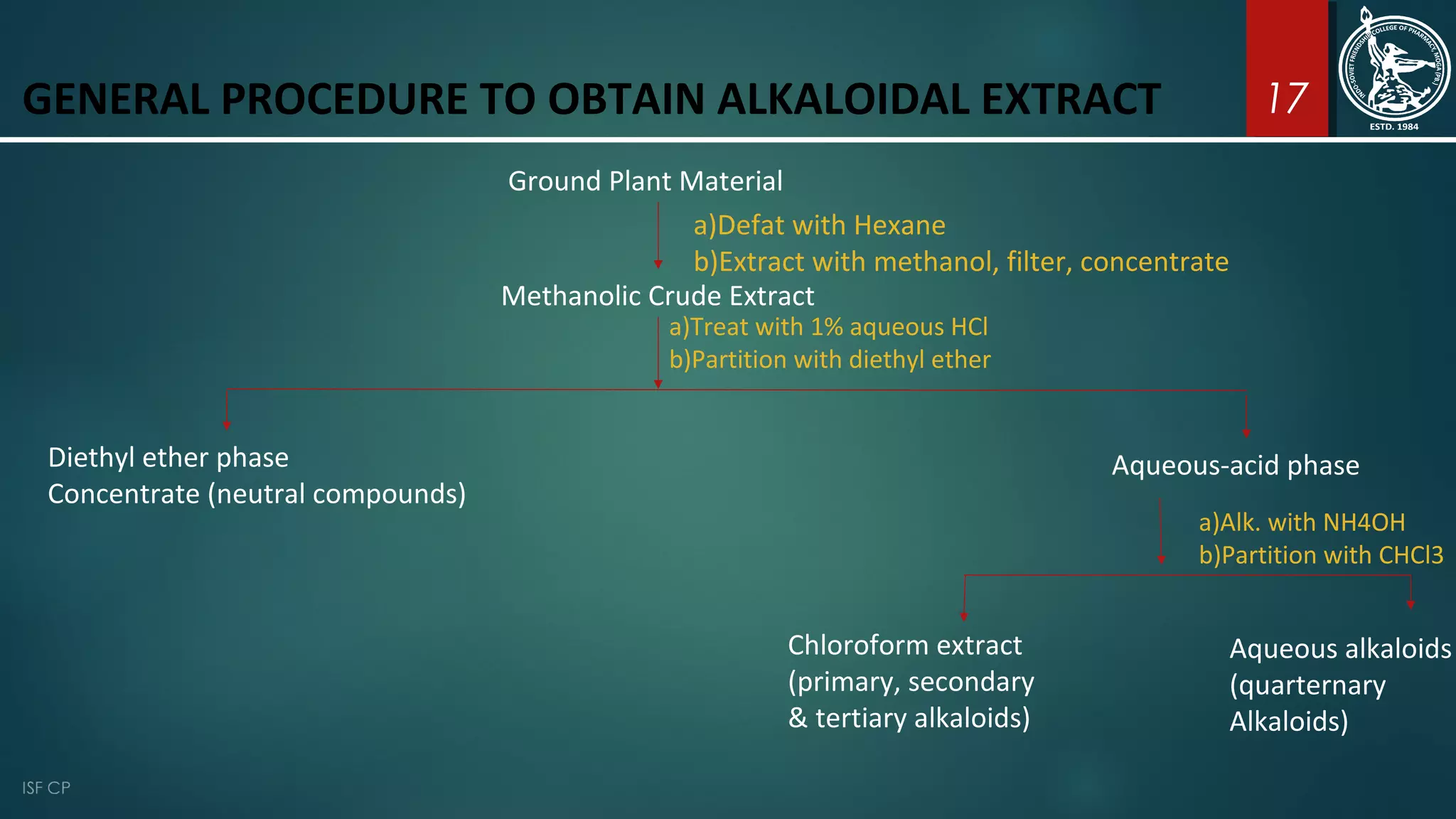
17GENERAL PROCEDURE TO OBTAIN ALKALOIDAL EXTRACT
Ground Plant Material
a)Defat with Hexane
b)Extract with methanol, filter, concentrate
Methanolic Crude Extract
a)Treat with 1% aqueous HCl
b)Partition with diethyl ether
Diethyl ether phase
Concentrate (neutral compounds)
Aqueous-acid phase
a)Alk. with NH4OH
b)Partition with CHCl3
Chloroform extract
(primary, secondary
& tertiary alkaloids)
Aqueous alkaloids
(quarternary
Alkaloids)
18
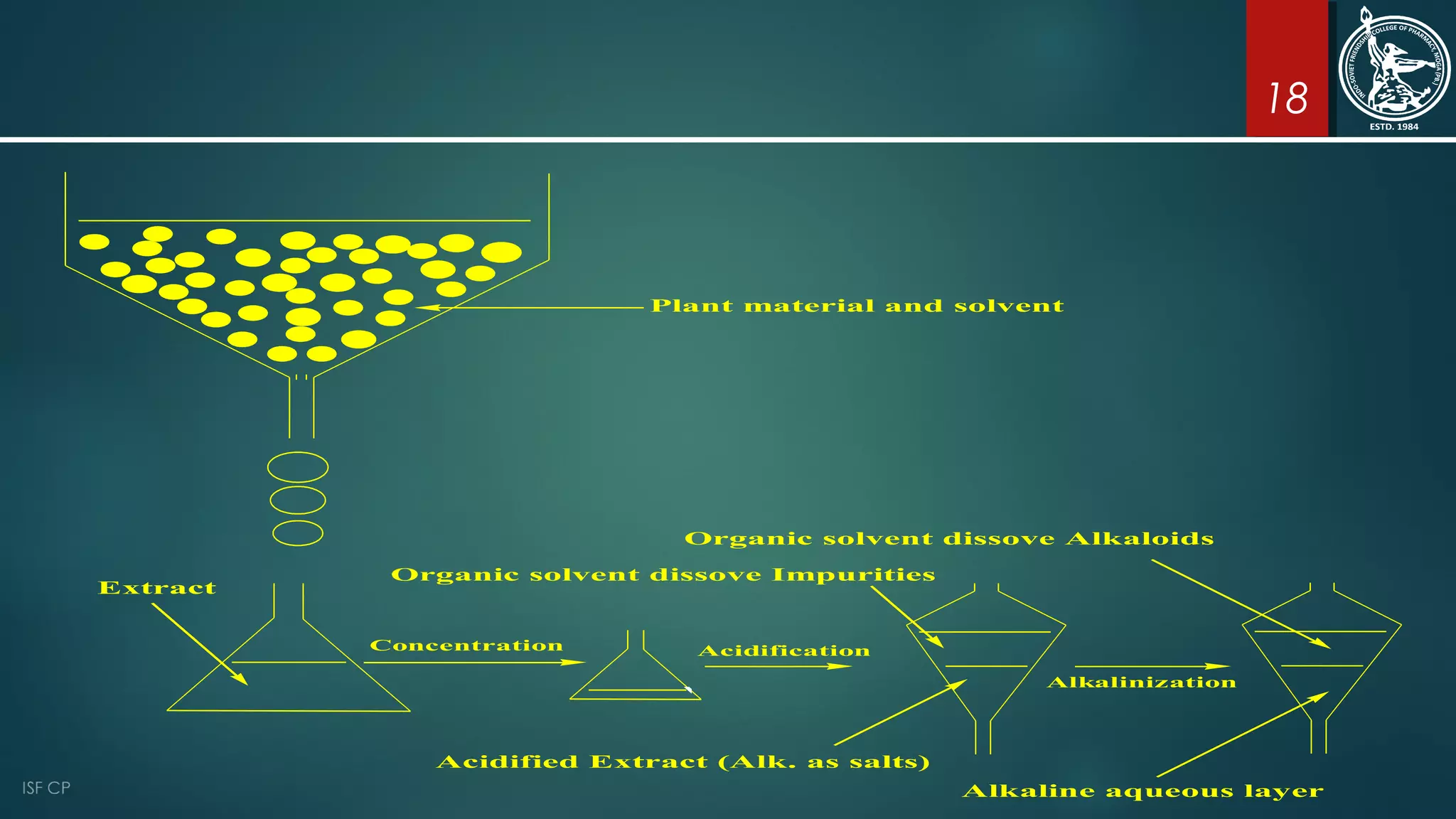
Plant material and solvent
Extract
Concentration
Acidified Extract (Alk. as salts)
Organic solvent dissove Impurities
Acidification
Alkalinization
Alkaline aqueous layer
Organic solvent dissove Alkaloids
19Tests for Alkaloids
 Mayer's reagent (potassium mercuric iodide solution)  Cream coloured precipitate.
 Dragendorff's reagent (solution of potassium bismuth iodide) orange coloured precipitate.
 Wagner’s reagent (iodine in potassium iodide)  red-brown precipitate
 Hagers reagent (picric acid)  yellow precipitate
20Quantitation
 In the quantitation of the total alkaloids generally the alkaline medium approach is
preferred
 The total alkaloid residue is estimated by a gravimetric method or a volumetric
method.
 The gravimetric methods are easy to implement, but the simple weighing of the total
alkaloid residue lacks precision.
 Volumetric methods are based either on direct acidimetry or most often on back
titration of the acid.
21Quantitation
 After dissolving the residue in access of titrated acid, the acid in access is quantitated
by a base of known concentration in the presence of an indicator .
 If needed ,acid titration in aqueous medium can be used (weak bases).
 To quantitate one constituent,or one group of constituents,in a drug,the available
techniques include-
 Spectrophotometry
 Colorimetry
 Fluorimetry
 Densiometry
 The spectrophotometric methods are very sensitive and farely often recommended,for
e.g-to quantitate quinine-and cinconine-type alkaloids in cinchona bark by measuring
the absorbance at two different wavelengths,or to quantitate caffene in tea leaves.
22Quantitation
 If the quantitation cannot be carried out directly,it is possible to isolate the compound
to be measured by TLC and to measure the absorbance after elluting the spots(e.g-
quantitation of ajmalicine in catharanthus roots).
 The colorimetric methods can also be applied to quantitation of one alkaloid (of a
group of alkaloids),for e.g the weak bases of rauwolfia.
 HPLC replaced the classic methods like gravimetric method of morphine has been
replaced with an HPLC method.
23TITRIMETRIC METHOD
(FOR HYOSCYAMINE AND SCOPOLAMINE)
alkaloids exracted by ether
purified by re-extracting with 0.5%N sulphuric acid
then purified with chloroform
Distilled off the chloroform extract
Treated the dried residual extract with slight excess of standardised sulphuric acid
in order to form salt
Titrated with standardised alkali (ammonia solution) to determine the quantity of unreacted acid
Quantity of alkaloids is calculated from the molar quantity of acid which has reacted with
alkaloids to form the salt.
24ASSAY OF ALKALOIDS BY TITRIMETRIC METHOD:
FOR ATROPINE:
• Weigh accurately about 0.5g sample and dissolve it in 5 ml of alcohal , previously
nuetralised to solution of methyl red. Add 20 ml of 0.1N and titrate the excess of acid with
0.1N NaOH using solution of methyl red as indicator.
Each ml of 0.1N HCl is equivalent to 0.02834g of atropine.
FOR MORPHINE:
•Weigh accurately about 0.1g sample and add to it about 25ml of water and 0.05M NaOH (5ml).
Mix well ,add ammonium sulphate(1g),shake well to dissolve and add 95% ethanol (20ml).
• Extract with a mixture of chloroform /ethanol(95%) {3:1}.
• Wash each extract with 5 ml water and filter through a small plug of cotton wool.
• Distill off the solvent and dissolve the obtained residue in 0.05M HCl(10ml). Boil and cool the
solution and add water(15 ml).
• Titrate the excess acid with 0.05M NaOH , using methyl red as indicator.
Each ml of 0.05M HCl is equivalent to 0.01897g of morphine.
25GRAVIMETRIC METHOD
Powdered drug
defatting with pet.ether or hexane
Made alkaline with ammonia solution or sodium carbonate or calcium Hydroxide
Alkaloids are freed as bases
Extracted with organic solvent- chloroform , ether or methylene dichloride
Residual organic fraction like pigments , fats ,
soluble alkaloidal sulphates
Residual aqueous fraction
organic solution of alkaloid bases
Crude alkaloidal mixture
Distilled off the solvent
26

ALKALOIDS AND ITS ASSAY METHODS

  • 1.
    ALKALOIDS AND ITSASSAY METHODS SEEMA BRAR ASSISTANT PROFESSOR DEPT. OF PHARMACOGNOSY ISF COLLEGE OF PHARMACY MOBILE: 8437394397 WEBSITE: - WWW.ISFCP.ORG ISF College of Pharmacy, Moga Ghal Kalan,nGT Road, Moga- 142001, Punjab, INDIA Internal Quality Assurance Cell - (IQAC) Email ID: Seemabrar001@gmail.com
  • 2.
    DEFINITION OF ALKALOIDS These are the organic products of natural or synthetic origin which are basic in nature & contain one or more than one nitrogen atoms, normally of heterocyclic nature & possess specific physiological actions on human or animal body, when used in small quantites.  The term is derived from the word ‘alkali-like’ & hence they resemble some of characters of naturally occuring amines.  The term is derived from the word ‘alkali-like’ & hence they resemble some of characters of naturally occuring amines. 2
  • 3.
    3Deviation from Definition Basicity:Some alkaloids are not basic e.g. Colchicine, Piperine, Quaternary alkaloids. Nitrogen: The nitrogen in some alkaloids is not in a heterocyclic ring e.g. Ephedrine, Colchicine, Mescaline. Plant Origin: Some alkaloids are derived from Bacteria, Fungi, Insects, Frogs, Animals.
  • 4.
    4  Alkaloids areworldwide present in many families, ranging from primitive mosses to highly complex graminae.  Rare in lower plants.  Dicots are more rich in alkaloids than Monocots.  Families rich in Alkaloids: Apocynaceae, Rubiaceae, Solanaceae and Papaveraceae.  Families free from Alkaloids: Rosaceae, Labiatae Distribution and occurrence:
  • 5.
    5Forms of Alkaloids: Free bases Salts with Organic acids e.g. Oxalic, acetic acids  Salts with inorganic acids e.g. HCl, H2SO4.  Salts with special acids: e.g. Meconic acid in Opium , Quinic acid in Cinchona  Glycosidal form e.g. Solanine in Solanum.  N-oxide form
  • 6.
    6ROLE OF ALKALOIDSIN PLANTS  They are reserve substances with an ability to supply nitrogen.  They might be the defensive mechanisms for plants growing in dry regions to protect from grazing animals, herbivores & insects.  They might have a possible role as growth regulatory factors in the plants.  These are end products of detoxification mechanisms in plants.  These are present in conjugation with the plant acids such as meconic acid hence acting as carriers within the plants for transportation of such acids.
  • 7.
  • 8.
    8  TRUE ALKALOIDS:These contain heterocyclic nitrogen, which is derived from amino acids & always basic in nature. These alkaloids are toxic & normally present in plants as salts of organic acids e.g. Morphine, Codeine  PROTO ALKALOIDS :These are simple amines in which the nitrogen is not in heterocyclic ring. Some times these are considered as biological amines. These are basic in nature & prepared in plants from aminoacids e.g. Colchicine, Ephedrine  PSEUDO ALKALOIDS: These includes mainly steroidal, terpenoid alkaloids & purines. These are not derived from amino acids.These do not show many of the typical characters of alkaloids but give the standard qualitative tests for alkaloids. e.g. caffeine.
  • 9.
    9  Biogenetic. Based onthe biogenetic pathway that form the alkaloids.  Botanical Source. According to the plant source of alkaloids.  Type of Amines. Primary, Secondary, Tertiary alkaloids.  Basic Chemical Skeleton Classification of Alkaloids
  • 10.
    10CHEMICAL CLASSIFICATION OFALKALOIDS TRUE ALKALOIDS •PYRROLE & PYRROLIDINE DERIVATIVES e.g. Hygrine, Cocca species •Pyrrolizidine Derivatives e.g. senecionine, seneciphylline
  • 11.
    11 N H • Piperidine &pyridine derivatives e.g. arecoline, lobeline TROPANE DERIVATIVES e.g. Atropine, hyoscine, cocaine
  • 12.
    12 QUINOLINE DERIVATIVES e.g. Quinine,quinidine, cinchonine ISOQUINOLINE DERIVATIVES e.g. Morphine, codeine, berberine,emetine
  • 13.
    13 INDOLE DERIVATIVES e.g. ergometrine,ergotamine, reserpine, vincristine, vinblastine PURINE DERIVATIVES e.g. Theophylline, caffeine, theobromine
  • 14.
    14 STEROIDAL DERIVATIVES e.g. protoveratrine,solanidine N NORLUPINANE DERIVATIVES e.g. Cytisine, lupanine
  • 15.
    15PHYSICAL PROPERTIES With fewexceptions, all the alkaloids are colourless, crystalline solids with a sharp melting point. Some of the alkaloids are amorphous gums, while other are liquid & volatile in nature. Some alkaloids are coloured in nature e.g. berberine is yellow. Free bases of alkaloids are soluble in organic, non-polar, immiscible solvents. The salts of most bases are soluble in water. Free bases are insoluble in water. The alkaloids containing quarternary bases are only water soluble. Some of pseudoalkaloids & protoalkaloids show higher solubility in water e.g. caffeine is freely soluble in water.
  • 16.
    16CHEMICAL PROPERTIES Most ofthe alkaloids are basic in reaction, due to the availability of lone pair of electrons on nitrogen. The basic character of the alkaloid is enhanced if the adjacent functional groups are electron releasing. The alkaloid turns to be neutral or acidic when the adjacent functional groups are electron withdrawing like amide group which reduces the availability of the lone pair of electrons. Alkaloids exhibiting basic character are very much sensitive to decomposition & cause a problem during storage their salt formation. The alkaloids may contain one or more no. of nitrogen. It may exist in the form as Primary amine (R-NH2) e.g. mescaline Secondary amine (R2-NH) e.g. ephedrine Tertiary (R3-N) e.g.atropine Quartanary ammonium compounds e.g.tubocurarine hydrochloride
  • 17.
    17GENERAL PROCEDURE TOOBTAIN ALKALOIDAL EXTRACT Ground Plant Material a)Defat with Hexane b)Extract with methanol, filter, concentrate Methanolic Crude Extract a)Treat with 1% aqueous HCl b)Partition with diethyl ether Diethyl ether phase Concentrate (neutral compounds) Aqueous-acid phase a)Alk. with NH4OH b)Partition with CHCl3 Chloroform extract (primary, secondary & tertiary alkaloids) Aqueous alkaloids (quarternary Alkaloids)
  • 18.
    18 Plant material andsolvent Extract Concentration Acidified Extract (Alk. as salts) Organic solvent dissove Impurities Acidification Alkalinization Alkaline aqueous layer Organic solvent dissove Alkaloids
  • 19.
    19Tests for Alkaloids Mayer's reagent (potassium mercuric iodide solution)  Cream coloured precipitate.  Dragendorff's reagent (solution of potassium bismuth iodide) orange coloured precipitate.  Wagner’s reagent (iodine in potassium iodide)  red-brown precipitate  Hagers reagent (picric acid)  yellow precipitate
  • 20.
    20Quantitation  In thequantitation of the total alkaloids generally the alkaline medium approach is preferred  The total alkaloid residue is estimated by a gravimetric method or a volumetric method.  The gravimetric methods are easy to implement, but the simple weighing of the total alkaloid residue lacks precision.  Volumetric methods are based either on direct acidimetry or most often on back titration of the acid.
  • 21.
    21Quantitation  After dissolvingthe residue in access of titrated acid, the acid in access is quantitated by a base of known concentration in the presence of an indicator .  If needed ,acid titration in aqueous medium can be used (weak bases).  To quantitate one constituent,or one group of constituents,in a drug,the available techniques include-  Spectrophotometry  Colorimetry  Fluorimetry  Densiometry  The spectrophotometric methods are very sensitive and farely often recommended,for e.g-to quantitate quinine-and cinconine-type alkaloids in cinchona bark by measuring the absorbance at two different wavelengths,or to quantitate caffene in tea leaves.
  • 22.
    22Quantitation  If thequantitation cannot be carried out directly,it is possible to isolate the compound to be measured by TLC and to measure the absorbance after elluting the spots(e.g- quantitation of ajmalicine in catharanthus roots).  The colorimetric methods can also be applied to quantitation of one alkaloid (of a group of alkaloids),for e.g the weak bases of rauwolfia.  HPLC replaced the classic methods like gravimetric method of morphine has been replaced with an HPLC method.
  • 23.
    23TITRIMETRIC METHOD (FOR HYOSCYAMINEAND SCOPOLAMINE) alkaloids exracted by ether purified by re-extracting with 0.5%N sulphuric acid then purified with chloroform Distilled off the chloroform extract Treated the dried residual extract with slight excess of standardised sulphuric acid in order to form salt Titrated with standardised alkali (ammonia solution) to determine the quantity of unreacted acid Quantity of alkaloids is calculated from the molar quantity of acid which has reacted with alkaloids to form the salt.
  • 24.
    24ASSAY OF ALKALOIDSBY TITRIMETRIC METHOD: FOR ATROPINE: • Weigh accurately about 0.5g sample and dissolve it in 5 ml of alcohal , previously nuetralised to solution of methyl red. Add 20 ml of 0.1N and titrate the excess of acid with 0.1N NaOH using solution of methyl red as indicator. Each ml of 0.1N HCl is equivalent to 0.02834g of atropine. FOR MORPHINE: •Weigh accurately about 0.1g sample and add to it about 25ml of water and 0.05M NaOH (5ml). Mix well ,add ammonium sulphate(1g),shake well to dissolve and add 95% ethanol (20ml). • Extract with a mixture of chloroform /ethanol(95%) {3:1}. • Wash each extract with 5 ml water and filter through a small plug of cotton wool. • Distill off the solvent and dissolve the obtained residue in 0.05M HCl(10ml). Boil and cool the solution and add water(15 ml). • Titrate the excess acid with 0.05M NaOH , using methyl red as indicator. Each ml of 0.05M HCl is equivalent to 0.01897g of morphine.
  • 25.
    25GRAVIMETRIC METHOD Powdered drug defattingwith pet.ether or hexane Made alkaline with ammonia solution or sodium carbonate or calcium Hydroxide Alkaloids are freed as bases Extracted with organic solvent- chloroform , ether or methylene dichloride Residual organic fraction like pigments , fats , soluble alkaloidal sulphates Residual aqueous fraction organic solution of alkaloid bases Crude alkaloidal mixture Distilled off the solvent
  • 26.