Alkali Reaction in Concrete
• The alkalies of concern sodium and potassium
hydroxides, Na(OH) and K(OH) exist in variable but small
amounts as alkali sulfates in all portland cements
• They form alkali hydroxides as soon as water is added.
• Some of the aggregates react with the alkali hydroxides in
concrete, causing expansion and cracking over a period of
many years.
• Alkali-aggregate reaction has two forms: alkali-silica
reaction (ASR) and alkali-carbonate reaction (ACR).
Alkali-silica reaction (ASR)
• This type is more concern because aggregates containing reactive
non-crystalline silica reactive silica materials are more common.
• Aggregates containing certain forms of silica will react with alkali
hydroxide in concrete to form a gel that swells as it adsorbs water
from the surrounding cement paste or the environment.
• gels can induce enough expansive pressure to damage concrete.
• Typical indicators of ASR are random map cracking and, in
advanced cases, closed joints and attendant spalled concrete.
• Cracking usually appears in areas with a frequent supply of moisture,
such as close to the waterline in piers, near the ground behind
retaining walls, near joints and free edges in pavements, or in piers or
columns subject to wicking action. Petrographic examination can
conclusively identify ASR.
• can be controlled using cementitious materials in proper proportions
such as, silica fume, fly ash, and ground granulated blast-furnace slag
that reduced the amount of cement as they contain cementitious
property and will significantly reduced or eliminated expansion due to
alkali-silica reactivity. In addition, lithium compounds have been used
to reduce ASR.
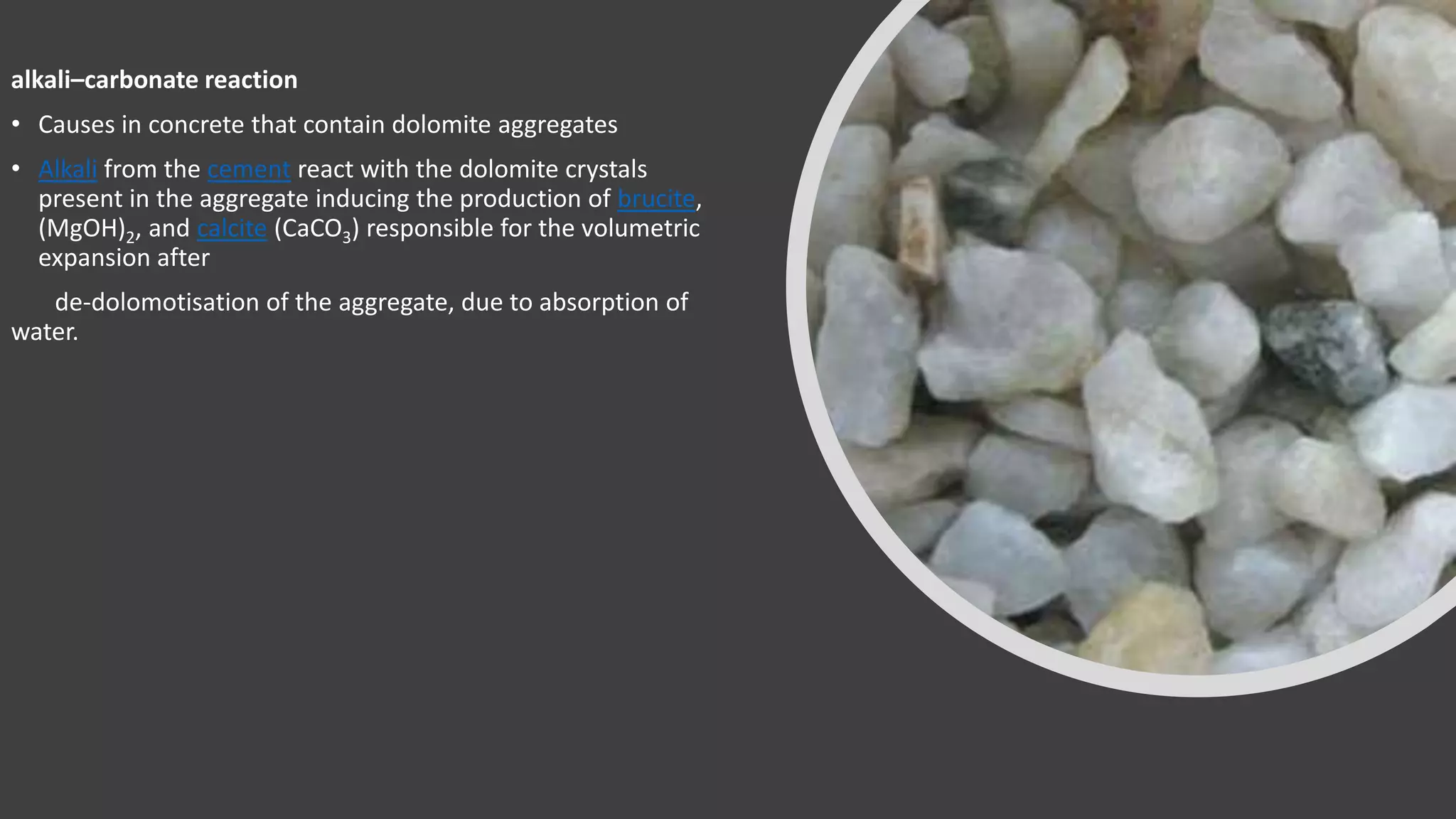
alkali–carbonate reaction
• Causes in concrete that contain dolomite aggregates
• Alkali from the cement react with the dolomite crystals
present in the aggregate inducing the production of brucite,
(MgOH)2, and calcite (CaCO3) responsible for the volumetric
expansion after
de-dolomotisation of the aggregate, due to absorption of
water.

Alkali reaction in concrete

  • 1.
    Alkali Reaction inConcrete • The alkalies of concern sodium and potassium hydroxides, Na(OH) and K(OH) exist in variable but small amounts as alkali sulfates in all portland cements • They form alkali hydroxides as soon as water is added. • Some of the aggregates react with the alkali hydroxides in concrete, causing expansion and cracking over a period of many years. • Alkali-aggregate reaction has two forms: alkali-silica reaction (ASR) and alkali-carbonate reaction (ACR).
  • 2.
    Alkali-silica reaction (ASR) •This type is more concern because aggregates containing reactive non-crystalline silica reactive silica materials are more common. • Aggregates containing certain forms of silica will react with alkali hydroxide in concrete to form a gel that swells as it adsorbs water from the surrounding cement paste or the environment. • gels can induce enough expansive pressure to damage concrete. • Typical indicators of ASR are random map cracking and, in advanced cases, closed joints and attendant spalled concrete.
  • 3.
    • Cracking usuallyappears in areas with a frequent supply of moisture, such as close to the waterline in piers, near the ground behind retaining walls, near joints and free edges in pavements, or in piers or columns subject to wicking action. Petrographic examination can conclusively identify ASR. • can be controlled using cementitious materials in proper proportions such as, silica fume, fly ash, and ground granulated blast-furnace slag that reduced the amount of cement as they contain cementitious property and will significantly reduced or eliminated expansion due to alkali-silica reactivity. In addition, lithium compounds have been used to reduce ASR.
  • 4.
    alkali–carbonate reaction • Causesin concrete that contain dolomite aggregates • Alkali from the cement react with the dolomite crystals present in the aggregate inducing the production of brucite, (MgOH)2, and calcite (CaCO3) responsible for the volumetric expansion after de-dolomotisation of the aggregate, due to absorption of water.