Rebound Hammer Test (Non Destructive Test for hardened
concrete)
• Shall be confirm to BS 1881 Part 202
• If the concrete is not fully compacted strength cannot be reliably estimated
• Only smooth surfaces should be tested
• Surfaces with honeycombing should be avoided
• No fine concrete should be avoid
• Age of concrete usually 14 to 56 days
• A wet surface gives lower rebound hammer readings than a dry surface. This
effect can be considerable and a reduction in rebound number of 20 % is typical
for structural concrete, although some types of concrete can give greater
differences.
• The impact from the rebound hammer should not be allowed to
cause noticeable vibration or movement of the concrete being tested.
Consequently, small concrete specimens have to be rigidly mounted,
e.g. by clamping them firmly in a heavy testing machine
• The point of impact of rebound hammer on concrete surface should
be at least 20mm away from edge or shape discontinuity
• the rebound hammer is tested against the test anvil made of steel
having Brinell hardness number of about 5000 N/mm2
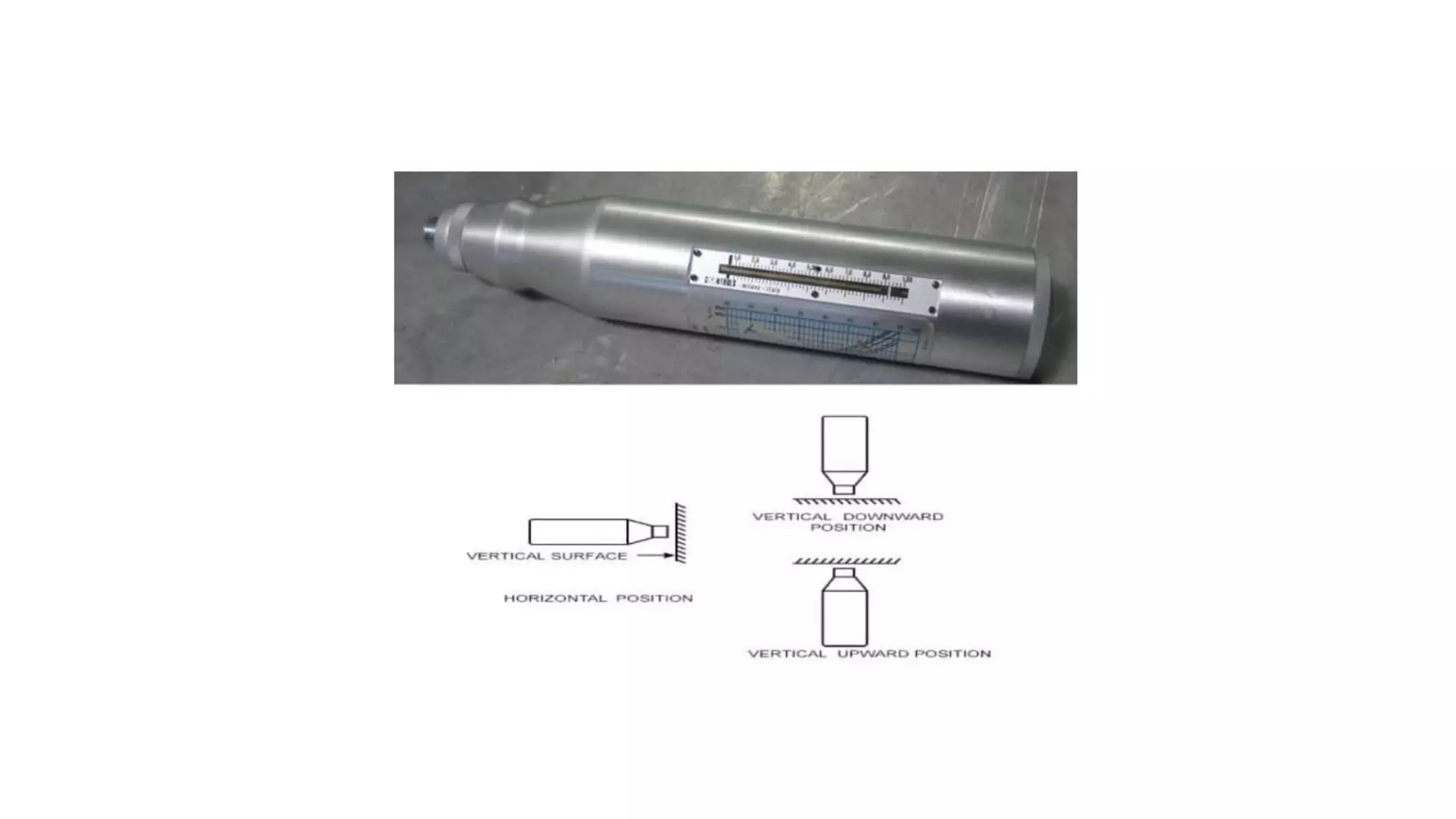
• The direction of test will influence the measured hardness. The usual
directions of test are either horizontal or vertically down.
How the correlation between compressive strength of
concrete and rebound number is obtained:
• the correlation between compressive strength of concrete cube and
rebound number is to test the concrete cubes using compression testing
machine as well using rebound hammer for same samples.
• First the rebound number of concrete cube is taken and then the
compressive strength is tested on compression testing machine
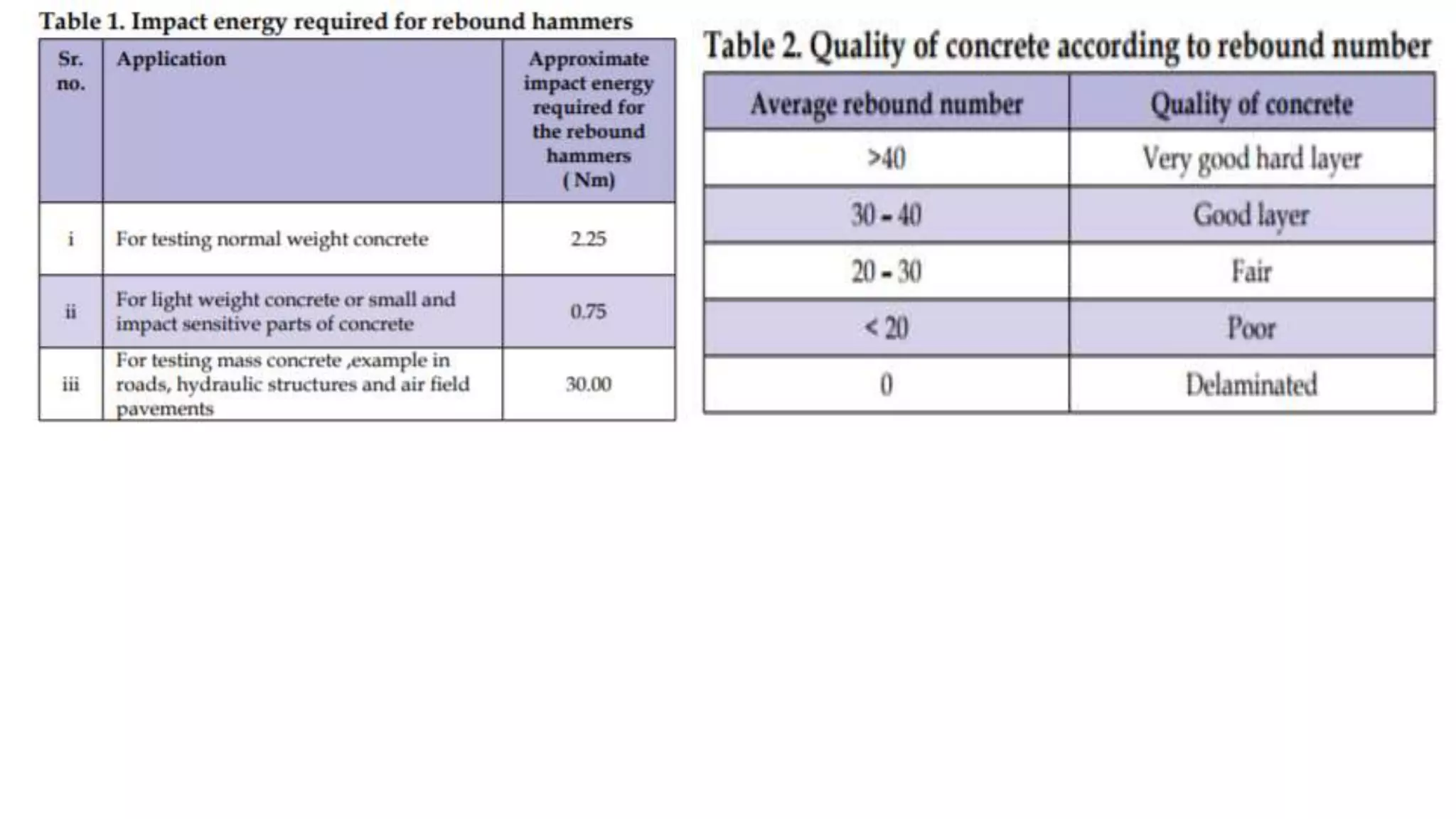
• The fixed load required is of the order of 7 N/ mm2 when the impact energy
of the hammer is about 2.2 Nm.
• The load should be increased & decrease for calibrated rebound hammers
of greater impact energy & lesser impact energy.
• 150mm cube specimens are preferred for calibrated rebound hammers of
lower impact energy (2.2Nm), whereas for rebound hammers of higher
impact energy, for example 30 Nm, the test cubes should not be smaller
than 300mm
• cube specimens should be kept at room temperature for about 24 hours after
taking it out from the curing pond, before testing it with the rebound hammer.
• To obtain a correlation between rebound numbers and strength of wet cured and
wet tested cubes, it is necessary to establish a correlation between the strength
of wet tested cubes and the strength of dry tested cubes on which rebound
readings are taken.
• A direct correlation between rebound numbers on wet cubes and the strength of
wet cubes is not recommended.
• Only the vertical faces of the cubes as cast should be tested.
• At least nine readings should be taken on each of the two vertical faces accessible
in the compression testing machine when using the rebound hammers.
• The points of impact on the specimen must not be nearer an edge than 20mm
and should be not less than 20mm from each other.
• The same points must not be impacted more than once.
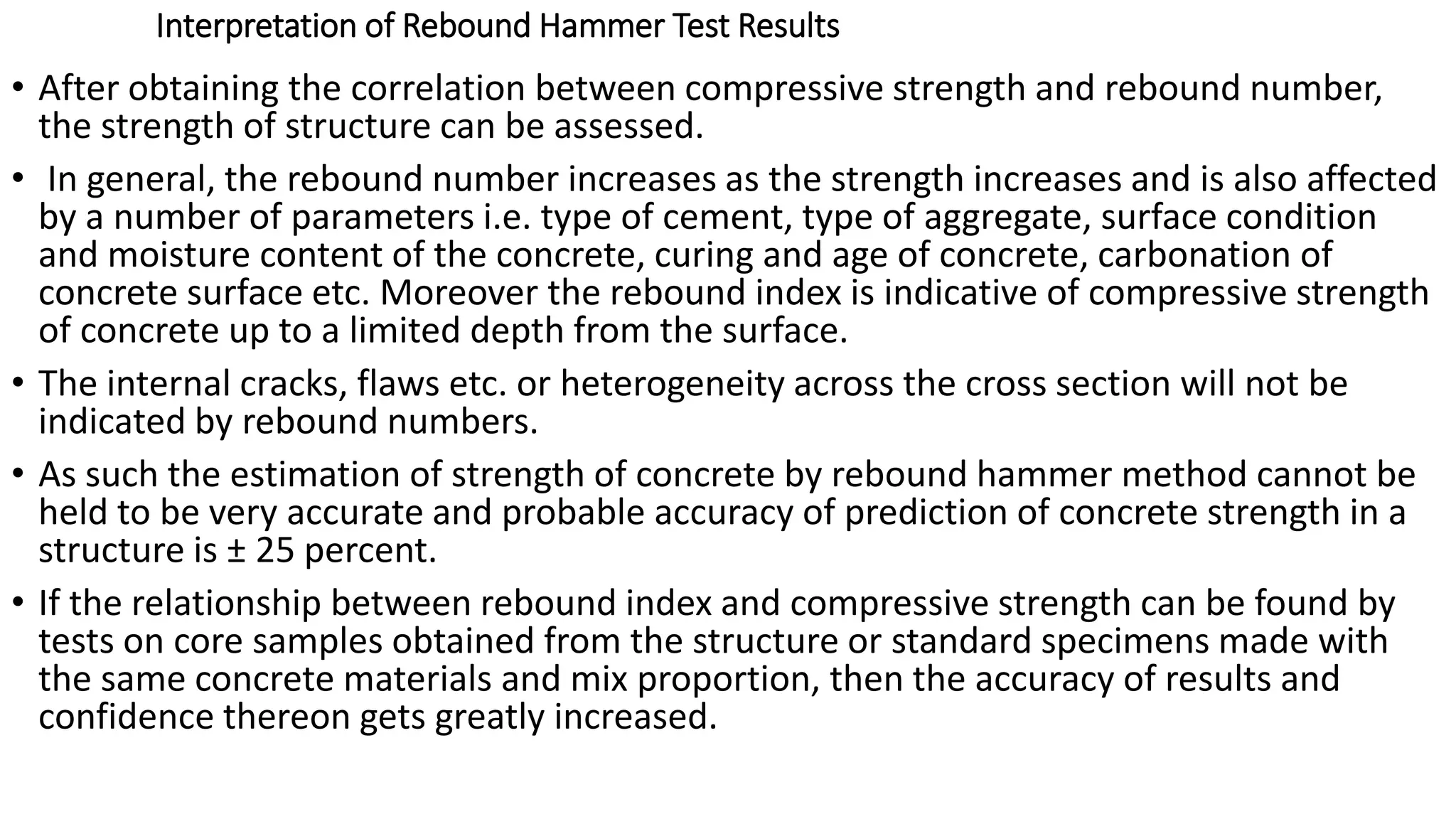
Interpretation of Rebound Hammer Test Results
• After obtaining the correlation between compressive strength and rebound number,
the strength of structure can be assessed.
• In general, the rebound number increases as the strength increases and is also affected
by a number of parameters i.e. type of cement, type of aggregate, surface condition
and moisture content of the concrete, curing and age of concrete, carbonation of
concrete surface etc. Moreover the rebound index is indicative of compressive strength
of concrete up to a limited depth from the surface.
• The internal cracks, flaws etc. or heterogeneity across the cross section will not be
indicated by rebound numbers.
• As such the estimation of strength of concrete by rebound hammer method cannot be
held to be very accurate and probable accuracy of prediction of concrete strength in a
structure is ± 25 percent.
• If the relationship between rebound index and compressive strength can be found by
tests on core samples obtained from the structure or standard specimens made with
the same concrete materials and mix proportion, then the accuracy of results and
confidence thereon gets greatly increased.
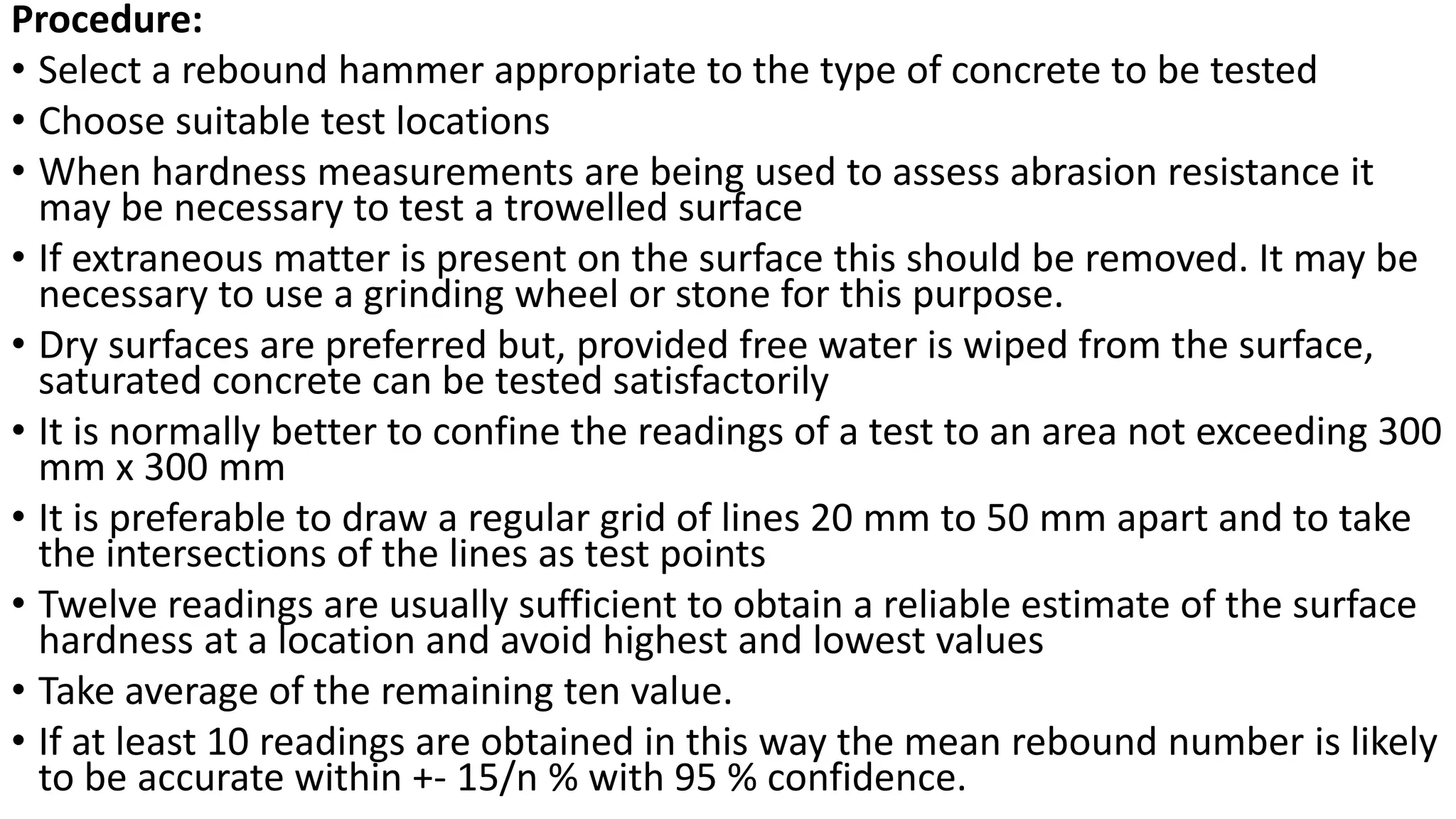
Procedure:
• Select a rebound hammer appropriate to the type of concrete to be tested
• Choose suitable test locations
• When hardness measurements are being used to assess abrasion resistance it
may be necessary to test a trowelled surface
• If extraneous matter is present on the surface this should be removed. It may be
necessary to use a grinding wheel or stone for this purpose.
• Dry surfaces are preferred but, provided free water is wiped from the surface,
saturated concrete can be tested satisfactorily
• It is normally better to confine the readings of a test to an area not exceeding 300
mm x 300 mm
• It is preferable to draw a regular grid of lines 20 mm to 50 mm apart and to take
the intersections of the lines as test points
• Twelve readings are usually sufficient to obtain a reliable estimate of the surface
hardness at a location and avoid highest and lowest values
• Take average of the remaining ten value.
• If at least 10 readings are obtained in this way the mean rebound number is likely
to be accurate within +- 15/n % with 95 % confidence.
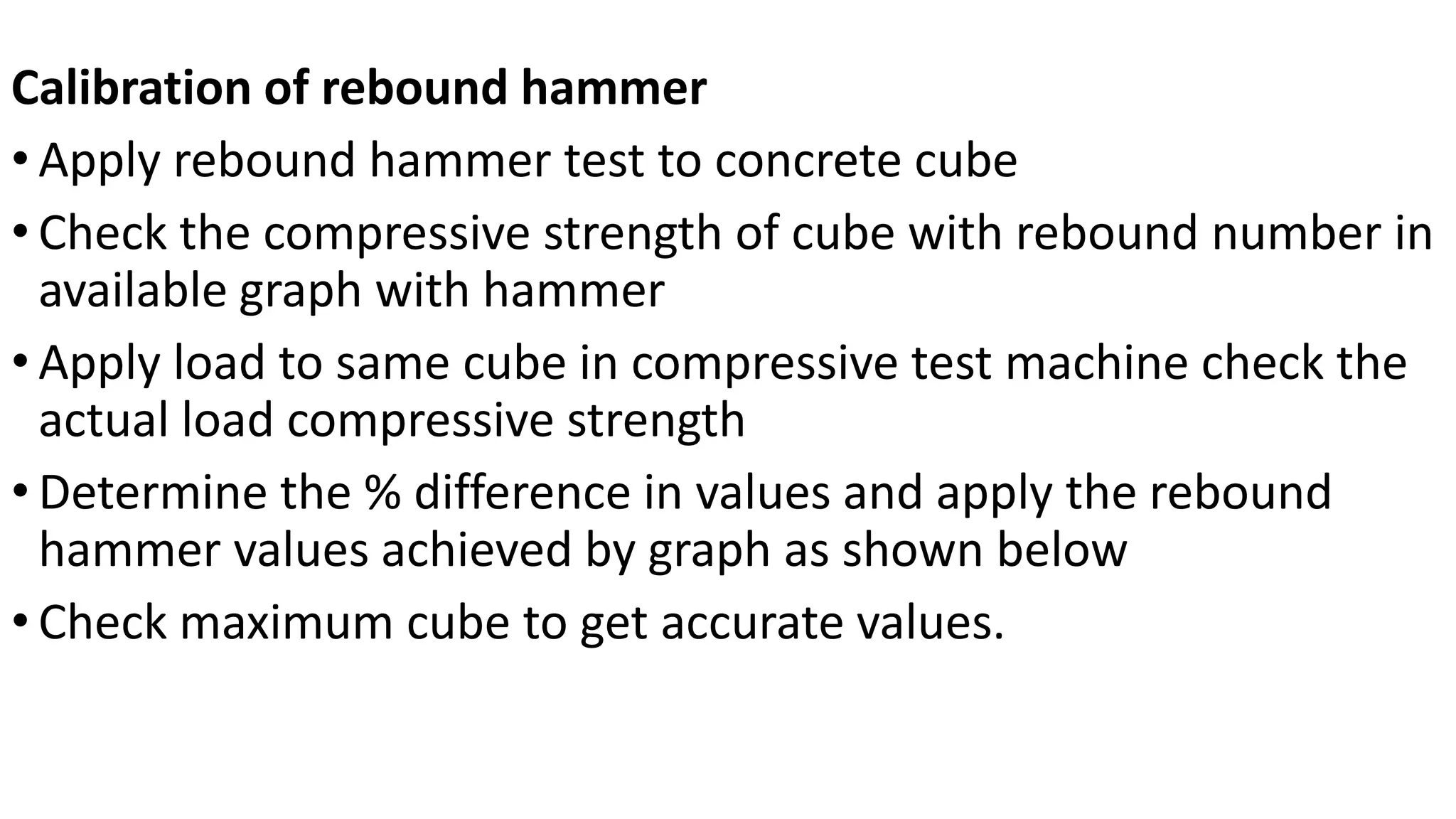
Calibration of rebound hammer
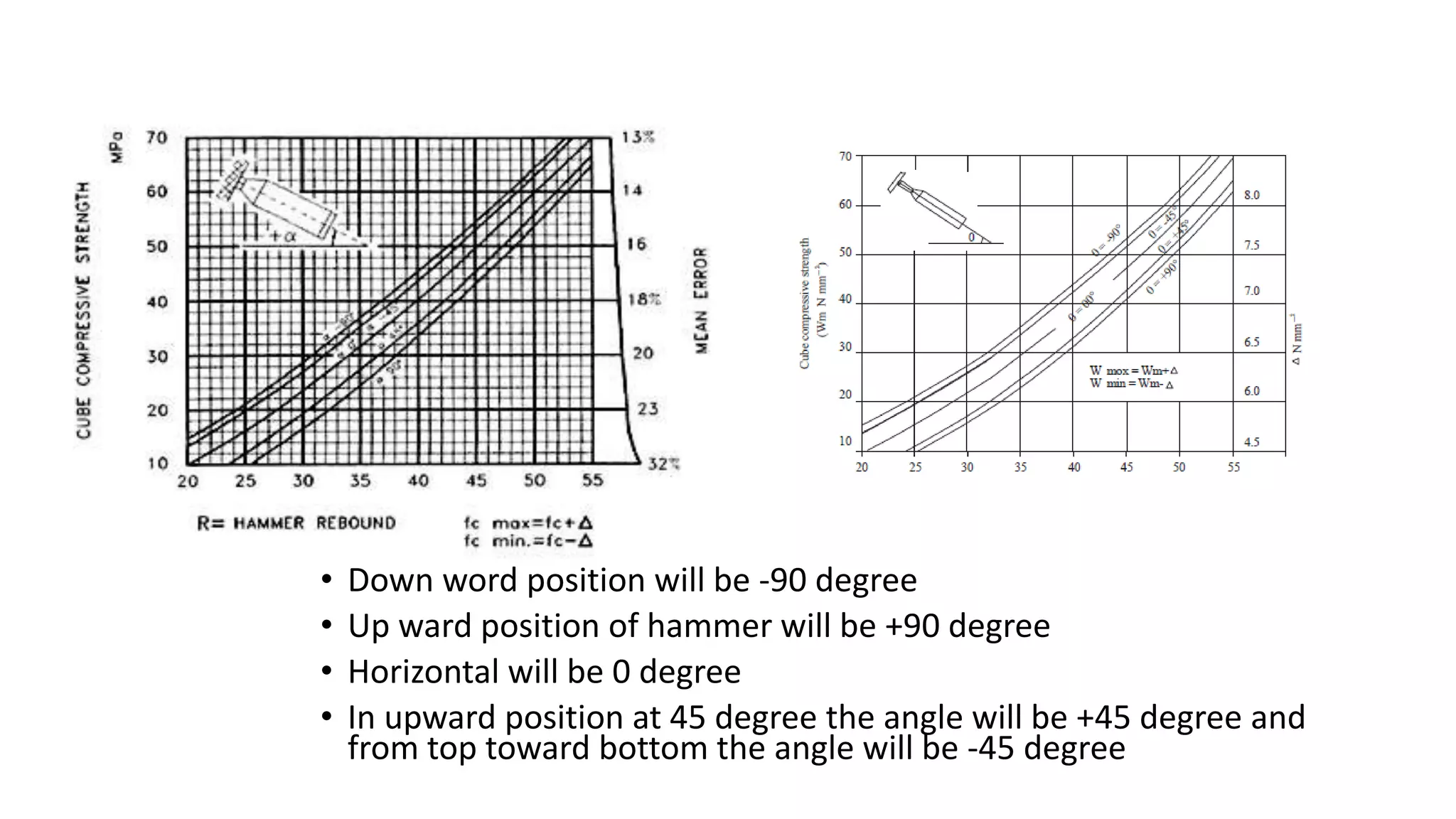
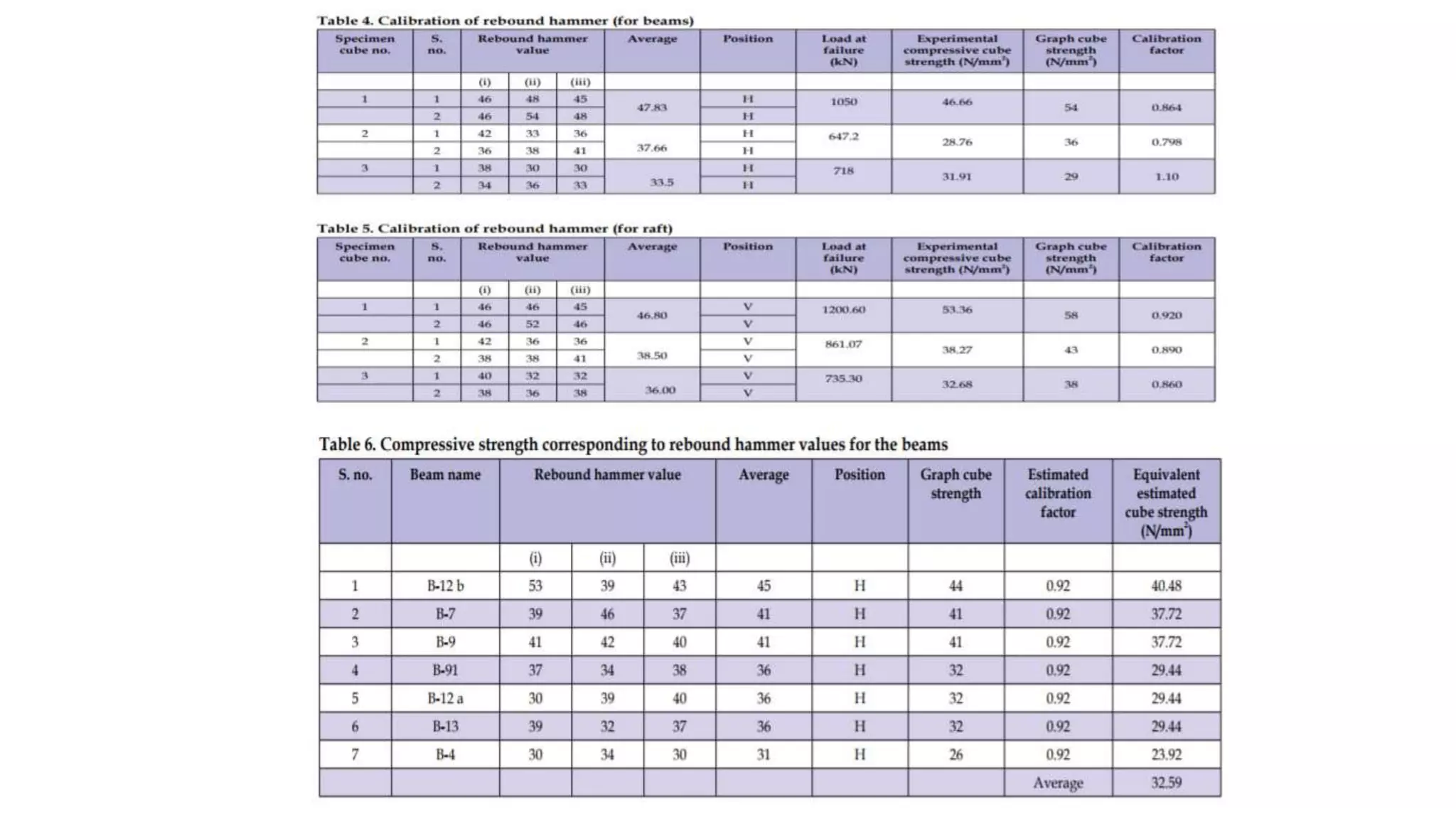
• Apply rebound hammer test to concrete cube
• Check the compressive strength of cube with rebound number in
available graph with hammer
• Apply load to same cube in compressive test machine check the
actual load compressive strength
• Determine the % difference in values and apply the rebound
hammer values achieved by graph as shown below
• Check maximum cube to get accurate values.
• Down word position will be -90 degree
• Up ward position of hammer will be +90 degree
• Horizontal will be 0 degree
• In upward position at 45 degree the angle will be +45 degree and
from top toward bottom the angle will be -45 degree
Rebound hammer test (non destructive test

Rebound hammer test (non destructive test

  • 1.
    Rebound Hammer Test(Non Destructive Test for hardened concrete) • Shall be confirm to BS 1881 Part 202 • If the concrete is not fully compacted strength cannot be reliably estimated • Only smooth surfaces should be tested • Surfaces with honeycombing should be avoided • No fine concrete should be avoid • Age of concrete usually 14 to 56 days • A wet surface gives lower rebound hammer readings than a dry surface. This effect can be considerable and a reduction in rebound number of 20 % is typical for structural concrete, although some types of concrete can give greater differences.
  • 2.
    • The impactfrom the rebound hammer should not be allowed to cause noticeable vibration or movement of the concrete being tested. Consequently, small concrete specimens have to be rigidly mounted, e.g. by clamping them firmly in a heavy testing machine • The point of impact of rebound hammer on concrete surface should be at least 20mm away from edge or shape discontinuity • the rebound hammer is tested against the test anvil made of steel having Brinell hardness number of about 5000 N/mm2 • The direction of test will influence the measured hardness. The usual directions of test are either horizontal or vertically down.
  • 3.
    How the correlationbetween compressive strength of concrete and rebound number is obtained: • the correlation between compressive strength of concrete cube and rebound number is to test the concrete cubes using compression testing machine as well using rebound hammer for same samples. • First the rebound number of concrete cube is taken and then the compressive strength is tested on compression testing machine • The fixed load required is of the order of 7 N/ mm2 when the impact energy of the hammer is about 2.2 Nm. • The load should be increased & decrease for calibrated rebound hammers of greater impact energy & lesser impact energy. • 150mm cube specimens are preferred for calibrated rebound hammers of lower impact energy (2.2Nm), whereas for rebound hammers of higher impact energy, for example 30 Nm, the test cubes should not be smaller than 300mm
  • 4.
    • cube specimensshould be kept at room temperature for about 24 hours after taking it out from the curing pond, before testing it with the rebound hammer. • To obtain a correlation between rebound numbers and strength of wet cured and wet tested cubes, it is necessary to establish a correlation between the strength of wet tested cubes and the strength of dry tested cubes on which rebound readings are taken. • A direct correlation between rebound numbers on wet cubes and the strength of wet cubes is not recommended. • Only the vertical faces of the cubes as cast should be tested. • At least nine readings should be taken on each of the two vertical faces accessible in the compression testing machine when using the rebound hammers. • The points of impact on the specimen must not be nearer an edge than 20mm and should be not less than 20mm from each other. • The same points must not be impacted more than once.
  • 5.
    Interpretation of ReboundHammer Test Results • After obtaining the correlation between compressive strength and rebound number, the strength of structure can be assessed. • In general, the rebound number increases as the strength increases and is also affected by a number of parameters i.e. type of cement, type of aggregate, surface condition and moisture content of the concrete, curing and age of concrete, carbonation of concrete surface etc. Moreover the rebound index is indicative of compressive strength of concrete up to a limited depth from the surface. • The internal cracks, flaws etc. or heterogeneity across the cross section will not be indicated by rebound numbers. • As such the estimation of strength of concrete by rebound hammer method cannot be held to be very accurate and probable accuracy of prediction of concrete strength in a structure is ± 25 percent. • If the relationship between rebound index and compressive strength can be found by tests on core samples obtained from the structure or standard specimens made with the same concrete materials and mix proportion, then the accuracy of results and confidence thereon gets greatly increased.
  • 7.
    Procedure: • Select arebound hammer appropriate to the type of concrete to be tested • Choose suitable test locations • When hardness measurements are being used to assess abrasion resistance it may be necessary to test a trowelled surface • If extraneous matter is present on the surface this should be removed. It may be necessary to use a grinding wheel or stone for this purpose. • Dry surfaces are preferred but, provided free water is wiped from the surface, saturated concrete can be tested satisfactorily • It is normally better to confine the readings of a test to an area not exceeding 300 mm x 300 mm • It is preferable to draw a regular grid of lines 20 mm to 50 mm apart and to take the intersections of the lines as test points • Twelve readings are usually sufficient to obtain a reliable estimate of the surface hardness at a location and avoid highest and lowest values • Take average of the remaining ten value. • If at least 10 readings are obtained in this way the mean rebound number is likely to be accurate within +- 15/n % with 95 % confidence.
  • 8.
    Calibration of reboundhammer • Apply rebound hammer test to concrete cube • Check the compressive strength of cube with rebound number in available graph with hammer • Apply load to same cube in compressive test machine check the actual load compressive strength • Determine the % difference in values and apply the rebound hammer values achieved by graph as shown below • Check maximum cube to get accurate values.
  • 9.
    • Down wordposition will be -90 degree • Up ward position of hammer will be +90 degree • Horizontal will be 0 degree • In upward position at 45 degree the angle will be +45 degree and from top toward bottom the angle will be -45 degree