BY
AKRAM AFRIDI
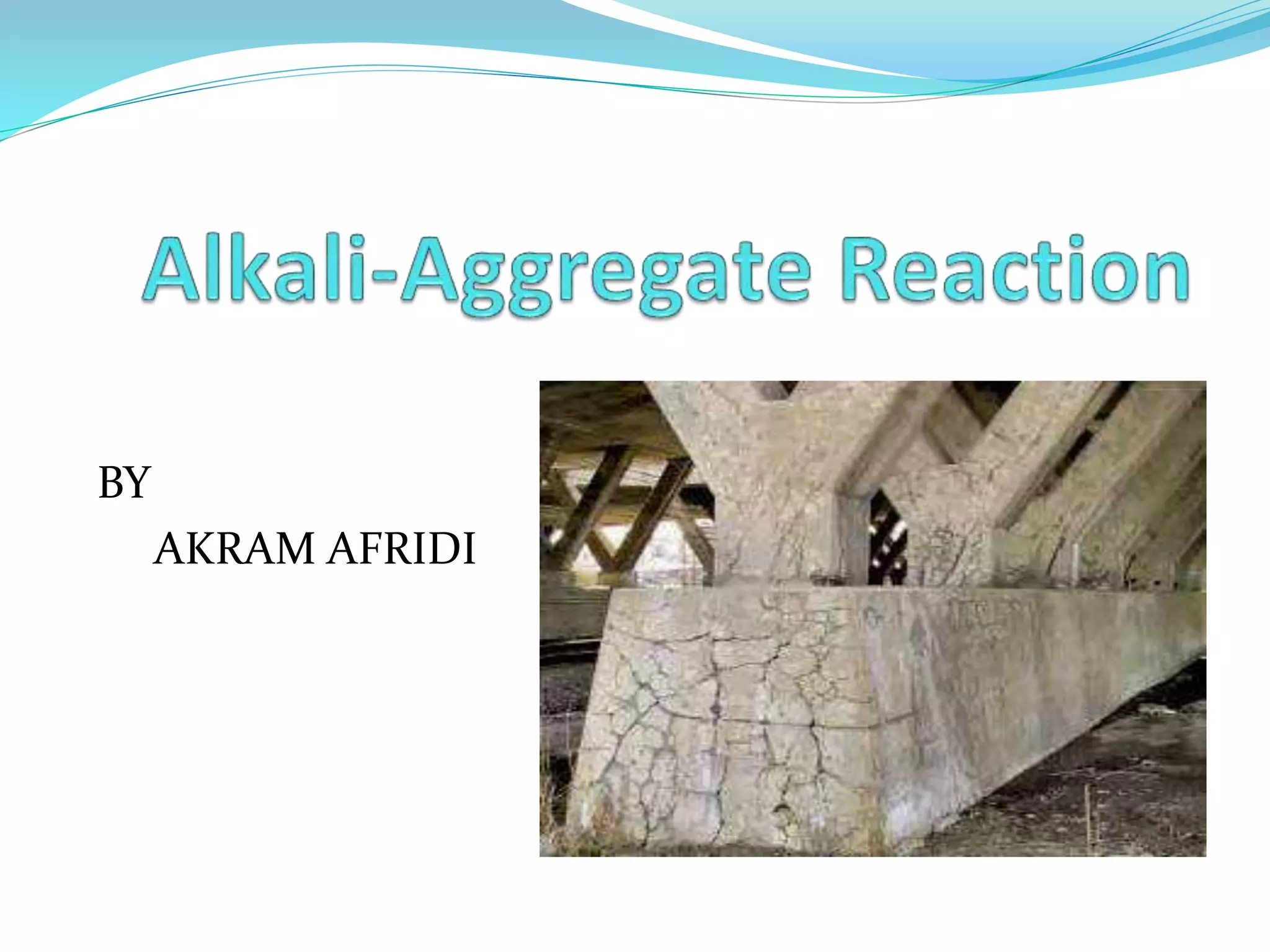
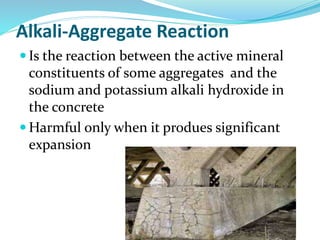
Alkali-Aggregate Reaction
 Is the reaction between the active mineral
constituents of some aggregates and the
sodium and potassium alkali hydroxide in
the concrete
 Harmful only when it produes significant
expansion
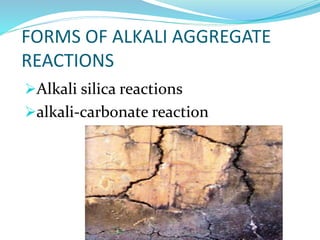
FORMS OF ALKALI AGGREGATE
REACTIONS
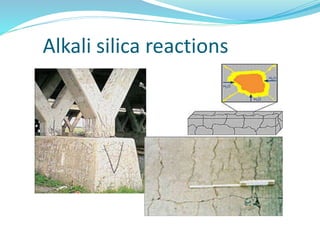
Alkali silica reactions
alkali-carbonate reaction
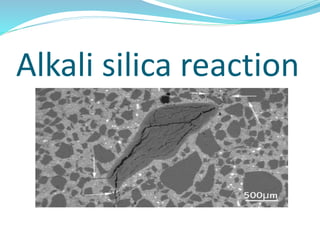
Alkali silica reaction
ALKALI-SILICA REACTIVITY
(ASR) ALALKALI-SILICA REACTIVITY
(ASR)KALI-SILICA REACTIVITY
(ASR)
What is ASR?
Visual symptoms
 network of cracks
 Closed or spalled joints
 Relative displacement
 cracking of concrete from alkali
silica reactivity
Alkali silica reactions
Harmful Reactive Substances
Some potentially harmful reactive minerals, rocks, and
synthetic materials
Several of the rocks listed react very slowly and may
not show evidence of any harmful degree of reactivity
until the concrete is 20 years old
Only certain sources of these materials have shown
reactivity
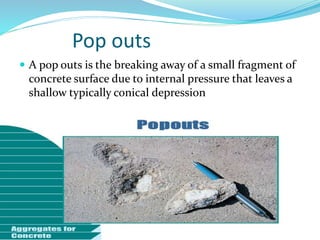
Pop outs
 A pop outs is the breaking away of a small fragment of
concrete surface due to internal pressure that leaves a
shallow typically conical depression
Controlling ASR
Non reactive aggregates
Supplementary cementing materials or blended
cements
Limit alkali loading
Lithium based admixtures
Limestone sweetening(30 % replacement reactive
aggregates with crushed limestone)
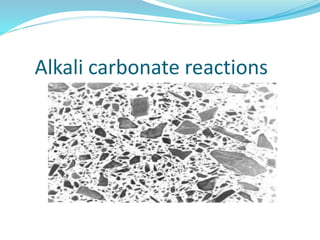
Alkali carbonate reactions
Influencing factors
 Clay contents, or insoluble residue content, in the range
of 5% to 25%
 Calcite to dolomite ratio of approximately 1:1
 Increase in the dolomite volume
 Small size of the discrete dolomite crystals (rhombs)
suspended in the clay matrix
Alkali carbonate reactions
Controlling ACR
 Selective quarrying to avoid reactive aggregates
 Blend aggregates according to appendix in ASTM C 1105
 Limit aggregates size to smallest practical
Alkali aggregate reaction

Alkali aggregate reaction

  • 1.
  • 2.
    Alkali-Aggregate Reaction  Isthe reaction between the active mineral constituents of some aggregates and the sodium and potassium alkali hydroxide in the concrete  Harmful only when it produes significant expansion
  • 3.
    FORMS OF ALKALIAGGREGATE REACTIONS Alkali silica reactions alkali-carbonate reaction
  • 4.
    Alkali silica reaction ALKALI-SILICAREACTIVITY (ASR) ALALKALI-SILICA REACTIVITY (ASR)KALI-SILICA REACTIVITY (ASR)
  • 5.
    What is ASR? Visualsymptoms  network of cracks  Closed or spalled joints  Relative displacement  cracking of concrete from alkali silica reactivity
  • 6.
  • 7.
    Harmful Reactive Substances Somepotentially harmful reactive minerals, rocks, and synthetic materials Several of the rocks listed react very slowly and may not show evidence of any harmful degree of reactivity until the concrete is 20 years old Only certain sources of these materials have shown reactivity
  • 8.
    Pop outs  Apop outs is the breaking away of a small fragment of concrete surface due to internal pressure that leaves a shallow typically conical depression
  • 9.
    Controlling ASR Non reactiveaggregates Supplementary cementing materials or blended cements Limit alkali loading Lithium based admixtures Limestone sweetening(30 % replacement reactive aggregates with crushed limestone)
  • 10.
  • 11.
    Alkali carbonate reactions Influencingfactors  Clay contents, or insoluble residue content, in the range of 5% to 25%  Calcite to dolomite ratio of approximately 1:1  Increase in the dolomite volume  Small size of the discrete dolomite crystals (rhombs) suspended in the clay matrix
  • 12.
    Alkali carbonate reactions ControllingACR  Selective quarrying to avoid reactive aggregates  Blend aggregates according to appendix in ASTM C 1105  Limit aggregates size to smallest practical