Prepared By : Ms. Leena Ghag.
Nursing Tutor
RN, P.B.B.Sc.Nursing
• Partial/complete blockage of the breathing tubes to the lungs is known as
airway obstruction.
• An airway obstruction, also known as an acute airway obstruction, is a
blockage of the respiratory passages that usually causes difficulty
breathing.
• Patients are frequently able to recover fully from an acute airway
obstruction with prompt treatment.
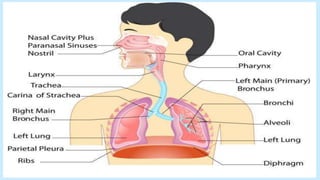
1. Upper airway obstructions occur in the area from your nose and lips
to your larynx.
2. Lower airway obstructions occur between larynx and the narrow
passageways of lungs.
3. Partial airway obstructions allow some air to pass. You can still
breathe with a partial airway obstruction, but it will be difficult.
4. Complete airway obstructions do not allow any air to pass.
You cannot breathe if you have a complete airway obstruction.
5. Acute airway obstructions are blockages that occur quickly. An
example of an acute airway obstruction is choking on a foreign object.
6. Chronic airway obstructions Example, emphysema can cause a chronic
airway obstruction.
• Asthma
• Viral/bacterial infections
• Retropharyngeal abscess
• COPD
• Foreign bodies
• Peritonsillar abscess
• Emphysema
• Chemical burns and reactions
• Anaphylaxis
• Bronchiectasis
• Croup (Inflammation of the larynx and trachea in children, associated with
infection and causing breathing difficulties.)
• Throat cancer
• Fire or burns injury
• Lung collapse
• Trauma
• Agitation or fidgeting(to keep moving your body, hands or feet
because you are nervous, bored, excited, etc.)
• Bluish color to the skin (cyanosis)
• Choking
• Confusion
• Difficulty breathing
• Gasping for air
• Panic
• Wheezing(to breathe noisily), crowing(o make a loud noise like a male
chicken makes), whistling
• Unusual breathing noises indicating breathing difficulty
• Changes in consciousness
• Unconsciousness
Prevention depends on the cause of the upper airway obstruction.
The following methods may help prevent an obstruction:
1. Eat slowly and chew food completely.
2. Don't drink too much alcohol before or while eating.
3. Keep small objects away from young children.
4. Make sure dentures fit properly.
• Airway obstruction is an emergency.
• Obstruction caused by an inflammatory or allergic reaction may be
treated with bronchodilator drugs, corticosteroids, intubation, and
administration of oxygen.
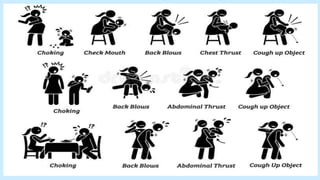
• If the person has a complete obstruction and is unable to speak or
breathe, the Heimlich maneuver may be lifesaving.
• Abdominal thrusts (Heimlich maneuver) are a series of
Under the diaphragm abdominal thrusts. They're recommended for helping a
person who's choking on a foreign object (foreign-body airway obstruction).
• Treatment depends on the cause of the blockage.
• Objects stuck in the airway may be removed with a laryngoscope or
bronchoscope.
• A tube may be inserted into the airway (endotracheal tube or nasotracheal
tube).
• Sometimes an opening is made directly into the airway (tracheostomy
or cricothyrotomy).
• An emergency tracheotomy may be required if the obstruction cannot
be mechanically or pharmacologically relieved within a few minutes.
AIRWAY OBSTRUCTION
AIRWAY OBSTRUCTION

AIRWAY OBSTRUCTION

  • 1.
    Prepared By :Ms. Leena Ghag. Nursing Tutor RN, P.B.B.Sc.Nursing
  • 3.
    • Partial/complete blockageof the breathing tubes to the lungs is known as airway obstruction. • An airway obstruction, also known as an acute airway obstruction, is a blockage of the respiratory passages that usually causes difficulty breathing. • Patients are frequently able to recover fully from an acute airway obstruction with prompt treatment.
  • 5.
    1. Upper airwayobstructions occur in the area from your nose and lips to your larynx. 2. Lower airway obstructions occur between larynx and the narrow passageways of lungs. 3. Partial airway obstructions allow some air to pass. You can still breathe with a partial airway obstruction, but it will be difficult.
  • 6.
    4. Complete airwayobstructions do not allow any air to pass. You cannot breathe if you have a complete airway obstruction. 5. Acute airway obstructions are blockages that occur quickly. An example of an acute airway obstruction is choking on a foreign object. 6. Chronic airway obstructions Example, emphysema can cause a chronic airway obstruction.
  • 7.
    • Asthma • Viral/bacterialinfections • Retropharyngeal abscess • COPD • Foreign bodies • Peritonsillar abscess • Emphysema
  • 8.
    • Chemical burnsand reactions • Anaphylaxis • Bronchiectasis • Croup (Inflammation of the larynx and trachea in children, associated with infection and causing breathing difficulties.) • Throat cancer • Fire or burns injury • Lung collapse • Trauma
  • 9.
    • Agitation orfidgeting(to keep moving your body, hands or feet because you are nervous, bored, excited, etc.) • Bluish color to the skin (cyanosis) • Choking • Confusion • Difficulty breathing
  • 10.
    • Gasping forair • Panic • Wheezing(to breathe noisily), crowing(o make a loud noise like a male chicken makes), whistling • Unusual breathing noises indicating breathing difficulty • Changes in consciousness • Unconsciousness
  • 11.
    Prevention depends onthe cause of the upper airway obstruction. The following methods may help prevent an obstruction: 1. Eat slowly and chew food completely. 2. Don't drink too much alcohol before or while eating. 3. Keep small objects away from young children. 4. Make sure dentures fit properly.
  • 12.
    • Airway obstructionis an emergency. • Obstruction caused by an inflammatory or allergic reaction may be treated with bronchodilator drugs, corticosteroids, intubation, and administration of oxygen. • If the person has a complete obstruction and is unable to speak or breathe, the Heimlich maneuver may be lifesaving.
  • 13.
    • Abdominal thrusts(Heimlich maneuver) are a series of Under the diaphragm abdominal thrusts. They're recommended for helping a person who's choking on a foreign object (foreign-body airway obstruction). • Treatment depends on the cause of the blockage. • Objects stuck in the airway may be removed with a laryngoscope or bronchoscope. • A tube may be inserted into the airway (endotracheal tube or nasotracheal tube).
  • 14.
    • Sometimes anopening is made directly into the airway (tracheostomy or cricothyrotomy). • An emergency tracheotomy may be required if the obstruction cannot be mechanically or pharmacologically relieved within a few minutes.