Airway Management
Introduction
• One of the most critical skills for the
soldier medic
• Without proper airway management the
casualty may die
• Function of respiratory system
– Exchange of oxygen and carbon dioxide
• Supplies cells which in turn supply major organs
Terminology
• NPA
• Bevel
• Septum
• Perfusion
• Cricothyroid membrane
• Tidal Volume
Lesson Outline
• Brief A&P of the respiratory system
• Respiratory process
• Identifying adequate respiration
• Signs of inadequate respiration
• Evaluating the casualty
• Inserting a NPA
• Brief emergency cricothyrotomy
• Recovery position
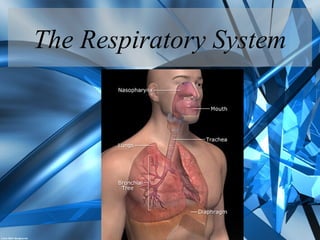
The Respiratory System
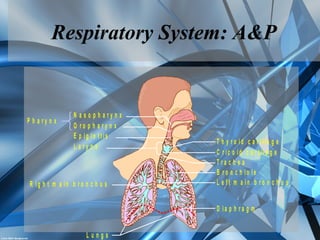
Respiratory System: A&P
N a s o p h a r y n x
O r o p h a r y n x
R ig h t m a in b r o n c h u s
P h a r y n x
T h y r o id c a r t ila g e
C r ic o i d c a r t i la g e
E p ig lo t t i s
L u n g s
L a r y n x
B r o n c h i o le
D i a p h r a g m
T r a c h e a
L e f t m a in b r o n c h u s
Respiratory System: A&P
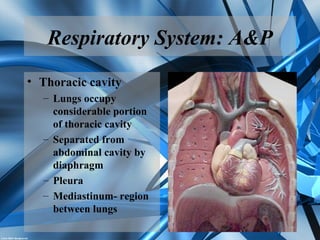
• Thoracic cavity
– Lungs occupy
considerable portion
of thoracic cavity
– Separated from
abdominal cavity by
diaphragm
– Pleura
– Mediastinum- region
between lungs
Respiratory System: A&P
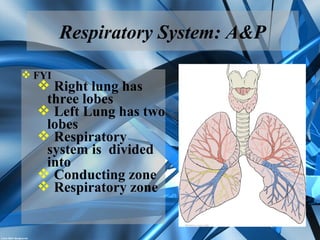
 FYI
 Right lung has
three lobes
 Left Lung has two
lobes
 Respiratory
system is divided
into
 Conducting zone
 Respiratory zone
Respiratory Process
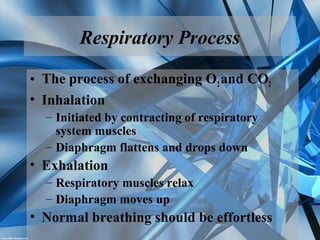
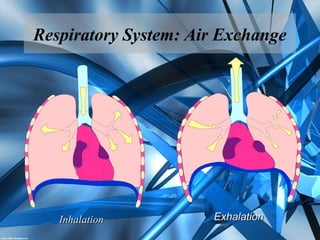
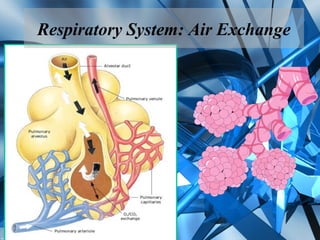
• The process of exchanging O2and CO2
• Inhalation
– Initiated by contracting of respiratory
system muscles
– Diaphragm flattens and drops down
• Exhalation
– Respiratory muscles relax
– Diaphragm moves up
• Normal breathing should be effortless
Respiratory System: Air Exchange
ExhalationExhalationInhalationInhalation
Respiratory System: Air Exchange
Adequate Respiration
• Normal breathing should be effortless
* Breathing and heart beat are so
dependent on each other that if breathing
stops first the heart beat will stop very
soon or if the heart beat stops first
breathing will stop almost at once
• Unusual respiratory rate or difficulty in
breathing indicates that the casualty has
a problem requiring attention
Adequate Respiration
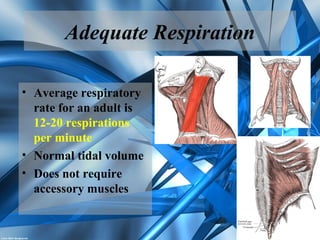
• Average respiratory
rate for an adult is
12-20 respirations
per minute
• Normal tidal volume
• Does not require
accessory muscles
Inadequate Respiration
• Shallow breathing
– slight movement of chest or abdomen
• Labored breathing
– increased respiratory effort, use of accessory
muscles, and gasping
• Noisy breathing (obstructed airway)
– may include snoring, wheezing, gurgling
(fluid in airway) on expiration, and crowing.
Sources of Airway Obstruction
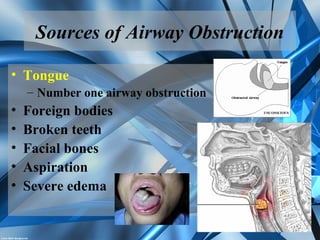
• Tongue
– Number one airway obstruction
• Foreign bodies
• Broken teeth
• Facial bones
• Aspiration
• Severe edema
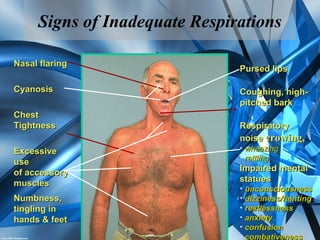
Nasal flaringNasal flaring
ExcessiveExcessive
useuse
of accessoryof accessory
musclesmuscles
ChestChest
TightnessTightness
CyanosisCyanosis
Numbness,Numbness,
tingling intingling in
hands & feethands & feet
Pursed lipsPursed lips
Coughing, high-Coughing, high-
pitched barkpitched bark
RespiratoryRespiratory
noisenoise crowing,crowing,
• wheezingwheezing
• rattlingrattling
Impaired mentalImpaired mental
statuesstatues
• unconsciousnessunconsciousness
• dizziness/faintingdizziness/fainting
• restlessnessrestlessness
• anxietyanxiety
• confusionconfusion
• combativenesscombativeness
Signs of Inadequate Respirations
Evaluating the Casualty
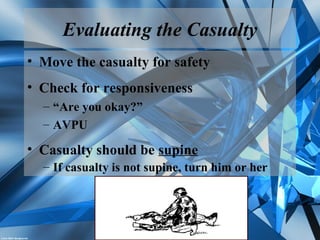
• Move the casualty for safety
• Check for responsiveness
– “Are you okay?”
– AVPU
• Casualty should be supine
– If casualty is not supine, turn him or her
Opening the Casualty’s Airway
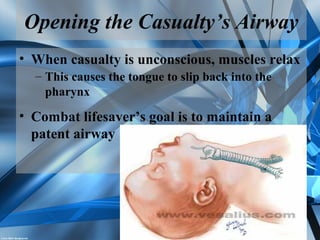
• When casualty is unconscious, muscles relax
– This causes the tongue to slip back into the
pharynx
• Combat lifesaver’s goal is to maintain a
patent airway
Opening the Casualty’s Airway
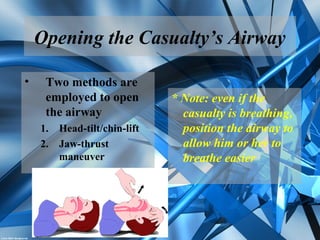
• Two methods are
employed to open
the airway
1. Head-tilt/chin-lift
2. Jaw-thrust
maneuver
* Note: even if the
casualty is breathing,
position the airway to
allow him or her to
breathe easier
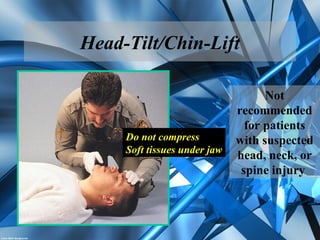
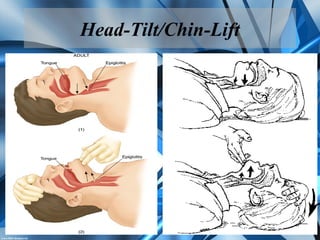
Head-Tilt/Chin-Lift
Do not compress
Soft tissues under jaw
Not
recommended
for patients
with suspected
head, neck, or
spine injury
Head-Tilt/Chin-Lift
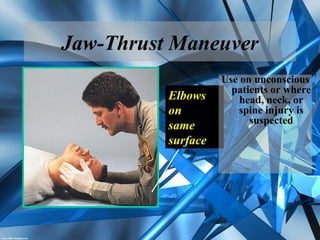
Jaw-Thrust Maneuver
Elbows
on
same
surface
Use on unconscious
patients or where
head, neck, or
spine injury is
suspected
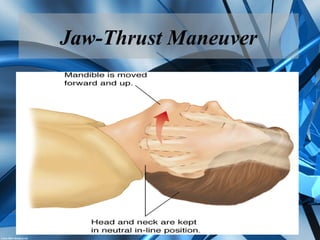
Jaw-Thrust Maneuver
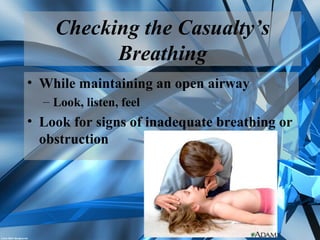
Checking the Casualty’s
Breathing
• While maintaining an open airway
– Look, listen, feel
• Look for signs of inadequate breathing or
obstruction
Rescue Breathing
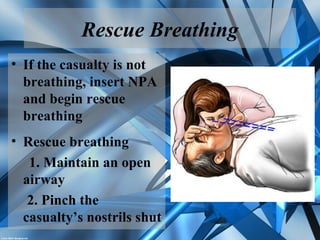
• If the casualty is not
breathing, insert NPA
and begin rescue
breathing
• Rescue breathing
1. Maintain an open
airway
2. Pinch the
casualty’s nostrils shut
Rescue Breathing
3. Administer two full breaths
– Ventilations should last from 2 to 3
seconds
– Watch for the casualty’s chest to rise
4. If the air does not go in
–Reposition the head and reattempt
5. If air does go in, check pulse after
administering 2 breaths
Rescue Breathing
6. If casualty does not have a carotid
pulse begin CPR *ONLY IF
CERTIFIED*
7. Do not perform CPR in a combat
environment
– Move on to the next casualty
8. If casualty resumed breathing,
count the number of respirations
for 15 seconds
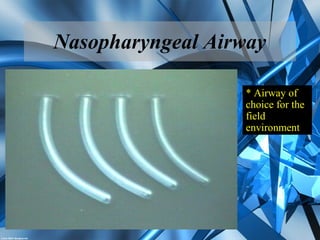
Nasopharyngeal Airway
* Airway of
choice for the
field
environment
Nasopharyngeal Airway
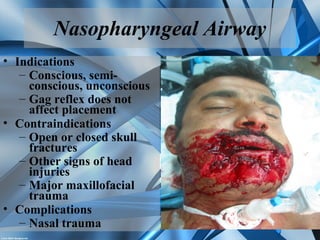
• Indications
– Conscious, semi-
conscious, unconscious
– Gag reflex does not
affect placement
• Contraindications
– Open or closed skull
fractures
– Other signs of head
injuries
– Major maxillofacial
trauma
• Complications
– Nasal trauma
Nasopharyngeal Airway:
Insertion
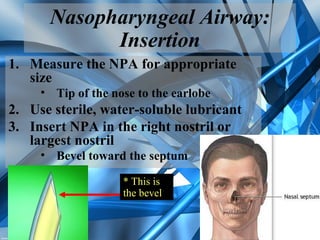
1. Measure the NPA for appropriate
size
• Tip of the nose to the earlobe
2. Use sterile, water-soluble lubricant
3. Insert NPA in the right nostril or
largest nostril
• Bevel toward the septum
* This is
the bevel
Nasopharyngeal Airway:
Insertion
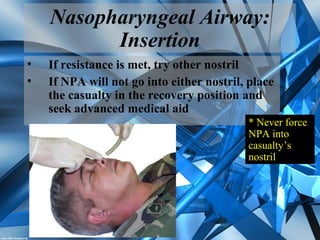
• If resistance is met, try other nostril
• If NPA will not go into either nostril, place
the casualty in the recovery position and
seek advanced medical aid
* Never force
NPA into
casualty’s
nostril
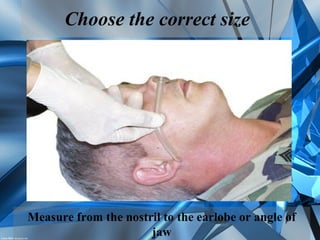
Measure from the nostril to the earlobe or angle of
jaw
Choose the correct size
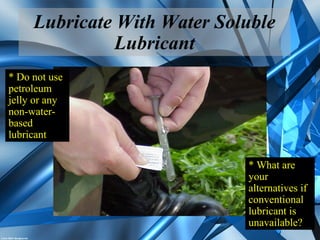
Lubricate With Water Soluble
Lubricant
* What are
your
alternatives if
conventional
lubricant is
unavailable?
* Do not use
petroleum
jelly or any
non-water-
based
lubricant
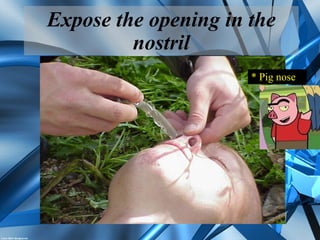
Expose the opening in the
nostril
* Pig nose
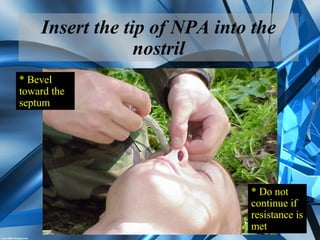
Insert the tip of NPA into the
nostril
* Bevel
toward the
septum
* Do not
continue if
resistance is
met
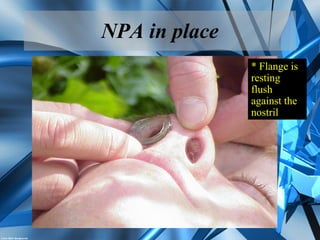
NPA in place
* Flange is
resting
flush
against the
nostril
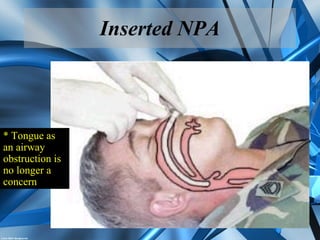
Inserted NPA
* Tongue as
an airway
obstruction is
no longer a
concern
What if you cannot insert a NPA?
* Everything
after this point is
supplementary
information…
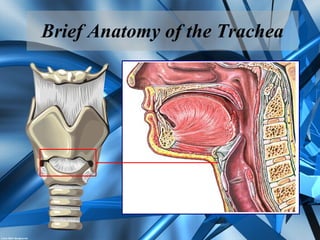
Brief Anatomy of the Trachea
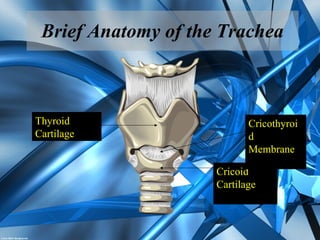
Cricoid
Cartilage
Cricothyroi
d
Membrane
Thyroid
Cartilage
Brief Anatomy of the Trachea
Emergency Cricothyrotomy
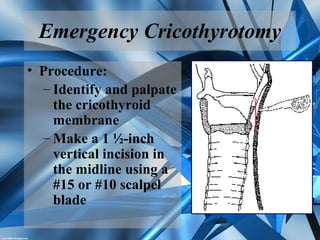
• Procedure:
– Identify and palpate
the cricothyroid
membrane
– Make a 1 ½-inch
vertical incision in
the midline using a
#15 or #10 scalpel
blade
Emergency Cricothyrotomy
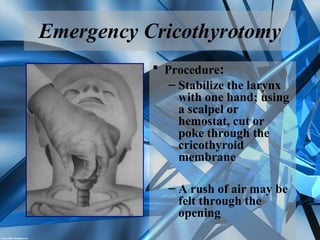
 Procedure:
– Stabilize the larynx
with one hand; using
a scalpel or
hemostat, cut or
poke through the
cricothyroid
membrane
– A rush of air may be
felt through the
opening
Emergency Cricothyrotomy
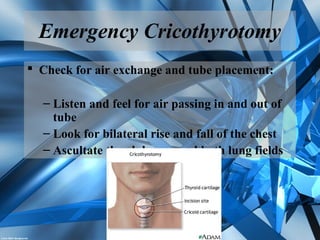
 Check for air exchange and tube placement:
– Listen and feel for air passing in and out of
tube
– Look for bilateral rise and fall of the chest
– Ascultate the abdomen and both lung fields
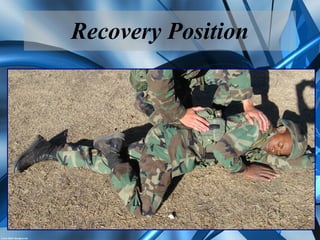
Recovery Position
Summary
• Brief A&P of the respiratory system
• Respiratory process
• Identifying adequate respiration
• Signs of inadequate respiration
• Evaluating the casualty
• Inserting a NPA
• Brief emergency cricothyrotomy
• Recovery position
Questions?

Airway Management

  • 1.
  • 2.
    Introduction • One ofthe most critical skills for the soldier medic • Without proper airway management the casualty may die • Function of respiratory system – Exchange of oxygen and carbon dioxide • Supplies cells which in turn supply major organs
  • 3.
    Terminology • NPA • Bevel •Septum • Perfusion • Cricothyroid membrane • Tidal Volume
  • 4.
    Lesson Outline • BriefA&P of the respiratory system • Respiratory process • Identifying adequate respiration • Signs of inadequate respiration • Evaluating the casualty • Inserting a NPA • Brief emergency cricothyrotomy • Recovery position
  • 5.
  • 6.
    Respiratory System: A&P Na s o p h a r y n x O r o p h a r y n x R ig h t m a in b r o n c h u s P h a r y n x T h y r o id c a r t ila g e C r ic o i d c a r t i la g e E p ig lo t t i s L u n g s L a r y n x B r o n c h i o le D i a p h r a g m T r a c h e a L e f t m a in b r o n c h u s
  • 7.
    Respiratory System: A&P •Thoracic cavity – Lungs occupy considerable portion of thoracic cavity – Separated from abdominal cavity by diaphragm – Pleura – Mediastinum- region between lungs
  • 8.
    Respiratory System: A&P FYI  Right lung has three lobes  Left Lung has two lobes  Respiratory system is divided into  Conducting zone  Respiratory zone
  • 9.
    Respiratory Process • Theprocess of exchanging O2and CO2 • Inhalation – Initiated by contracting of respiratory system muscles – Diaphragm flattens and drops down • Exhalation – Respiratory muscles relax – Diaphragm moves up • Normal breathing should be effortless
  • 10.
    Respiratory System: AirExchange ExhalationExhalationInhalationInhalation
  • 11.
  • 12.
    Adequate Respiration • Normalbreathing should be effortless * Breathing and heart beat are so dependent on each other that if breathing stops first the heart beat will stop very soon or if the heart beat stops first breathing will stop almost at once • Unusual respiratory rate or difficulty in breathing indicates that the casualty has a problem requiring attention
  • 13.
    Adequate Respiration • Averagerespiratory rate for an adult is 12-20 respirations per minute • Normal tidal volume • Does not require accessory muscles
  • 14.
    Inadequate Respiration • Shallowbreathing – slight movement of chest or abdomen • Labored breathing – increased respiratory effort, use of accessory muscles, and gasping • Noisy breathing (obstructed airway) – may include snoring, wheezing, gurgling (fluid in airway) on expiration, and crowing.
  • 15.
    Sources of AirwayObstruction • Tongue – Number one airway obstruction • Foreign bodies • Broken teeth • Facial bones • Aspiration • Severe edema
  • 16.
    Nasal flaringNasal flaring ExcessiveExcessive useuse ofaccessoryof accessory musclesmuscles ChestChest TightnessTightness CyanosisCyanosis Numbness,Numbness, tingling intingling in hands & feethands & feet Pursed lipsPursed lips Coughing, high-Coughing, high- pitched barkpitched bark RespiratoryRespiratory noisenoise crowing,crowing, • wheezingwheezing • rattlingrattling Impaired mentalImpaired mental statuesstatues • unconsciousnessunconsciousness • dizziness/faintingdizziness/fainting • restlessnessrestlessness • anxietyanxiety • confusionconfusion • combativenesscombativeness Signs of Inadequate Respirations
  • 17.
    Evaluating the Casualty •Move the casualty for safety • Check for responsiveness – “Are you okay?” – AVPU • Casualty should be supine – If casualty is not supine, turn him or her
  • 18.
    Opening the Casualty’sAirway • When casualty is unconscious, muscles relax – This causes the tongue to slip back into the pharynx • Combat lifesaver’s goal is to maintain a patent airway
  • 19.
    Opening the Casualty’sAirway • Two methods are employed to open the airway 1. Head-tilt/chin-lift 2. Jaw-thrust maneuver * Note: even if the casualty is breathing, position the airway to allow him or her to breathe easier
  • 20.
    Head-Tilt/Chin-Lift Do not compress Softtissues under jaw Not recommended for patients with suspected head, neck, or spine injury
  • 21.
  • 22.
    Jaw-Thrust Maneuver Elbows on same surface Use onunconscious patients or where head, neck, or spine injury is suspected
  • 23.
  • 24.
    Checking the Casualty’s Breathing •While maintaining an open airway – Look, listen, feel • Look for signs of inadequate breathing or obstruction
  • 25.
    Rescue Breathing • Ifthe casualty is not breathing, insert NPA and begin rescue breathing • Rescue breathing 1. Maintain an open airway 2. Pinch the casualty’s nostrils shut
  • 26.
    Rescue Breathing 3. Administertwo full breaths – Ventilations should last from 2 to 3 seconds – Watch for the casualty’s chest to rise 4. If the air does not go in –Reposition the head and reattempt 5. If air does go in, check pulse after administering 2 breaths
  • 27.
    Rescue Breathing 6. Ifcasualty does not have a carotid pulse begin CPR *ONLY IF CERTIFIED* 7. Do not perform CPR in a combat environment – Move on to the next casualty 8. If casualty resumed breathing, count the number of respirations for 15 seconds
  • 28.
    Nasopharyngeal Airway * Airwayof choice for the field environment
  • 29.
    Nasopharyngeal Airway • Indications –Conscious, semi- conscious, unconscious – Gag reflex does not affect placement • Contraindications – Open or closed skull fractures – Other signs of head injuries – Major maxillofacial trauma • Complications – Nasal trauma
  • 30.
    Nasopharyngeal Airway: Insertion 1. Measurethe NPA for appropriate size • Tip of the nose to the earlobe 2. Use sterile, water-soluble lubricant 3. Insert NPA in the right nostril or largest nostril • Bevel toward the septum * This is the bevel
  • 31.
    Nasopharyngeal Airway: Insertion • Ifresistance is met, try other nostril • If NPA will not go into either nostril, place the casualty in the recovery position and seek advanced medical aid * Never force NPA into casualty’s nostril
  • 32.
    Measure from thenostril to the earlobe or angle of jaw Choose the correct size
  • 33.
    Lubricate With WaterSoluble Lubricant * What are your alternatives if conventional lubricant is unavailable? * Do not use petroleum jelly or any non-water- based lubricant
  • 34.
    Expose the openingin the nostril * Pig nose
  • 35.
    Insert the tipof NPA into the nostril * Bevel toward the septum * Do not continue if resistance is met
  • 36.
    NPA in place *Flange is resting flush against the nostril
  • 37.
    Inserted NPA * Tongueas an airway obstruction is no longer a concern
  • 38.
    What if youcannot insert a NPA? * Everything after this point is supplementary information…
  • 39.
    Brief Anatomy ofthe Trachea
  • 40.
  • 41.
    Emergency Cricothyrotomy • Procedure: –Identify and palpate the cricothyroid membrane – Make a 1 ½-inch vertical incision in the midline using a #15 or #10 scalpel blade
  • 42.
    Emergency Cricothyrotomy  Procedure: –Stabilize the larynx with one hand; using a scalpel or hemostat, cut or poke through the cricothyroid membrane – A rush of air may be felt through the opening
  • 44.
    Emergency Cricothyrotomy  Checkfor air exchange and tube placement: – Listen and feel for air passing in and out of tube – Look for bilateral rise and fall of the chest – Ascultate the abdomen and both lung fields
  • 45.
  • 46.
    Summary • Brief A&Pof the respiratory system • Respiratory process • Identifying adequate respiration • Signs of inadequate respiration • Evaluating the casualty • Inserting a NPA • Brief emergency cricothyrotomy • Recovery position
  • 47.

Editor's Notes

  • #2 Refer to lesson 3 in your book (pg. 3-1)
  • #7 Pharynx Structure Nasopharynx Oropharynx Laryngeal pharynx Trachea Tube that extends from lower edge of larynx to upper part of chest above the heart Bronchi and Bronchioles Trachea branches off into two bronchi Enter the lungs Right bronchus considerably larger and straighter Left bronchus goes off at a greater angle Passageways to bring air to alveoli
  • #9 Conducting zone includes Trachea Bronchi Bronchioles Terminal bronchioles Respiratory zone Respiratory bronchioles Alveolar ducts Alveoli
  • #14 Accessory muscles include Neck muscles (sternocleidomastoid, scalene) Abdominal muscles External intercostal muscles Like child crying
  • #16 Indications of partial airway obstructions may include: Poor air exchange High-pitched noises while inhaling Cyanosis Increased difficulty breathing Complete obstruction Inability to speak No airflow Casualty becomes unconscious quickly
  • #26 Make sure air does not escape.
  • #27 As you blow, observe the casualty’s chest Administering the two ventilations should take 2 to 3 seconds. Quickly break the seal, take another breath and release his nose will allow the casualty’s body to exhale Diaphragm will expel air automatically Check pulse after administering 2 breaths Should check pulse at the carotid artery Check pulse on the side closest to you
  • #28 CPR delivers only 25%- 33% of normal oxygen and nutrients throughout the body To an already depleted system
  • #33 <number>
  • #38 To remove, pull out with steady motion along curvature of nasal cavity