Chapter 2: Air pollution
Contents
I. How Does Climate Change Affect Health?
II. Vulnerability.
III. Mitigation
IV. Classification on the following terms.
V. Three elements of vulnerability .
VI. Extreme weather events .
VII. The climate-health connection
VIII. Temperature variability
IX. Definition of indoor air pollution
X. Health problems caused by indoor air pollution
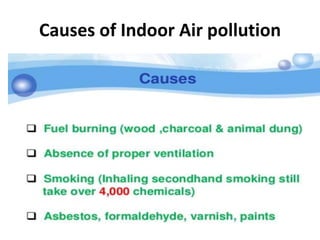
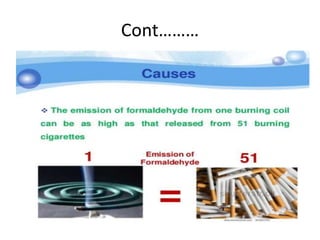
XI. Causes of Indoor Air pollution
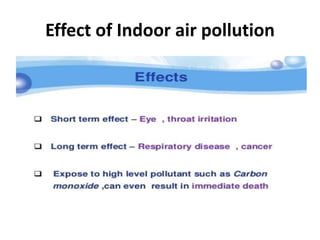
XII. Effect of Indoor air pollution
XIII. Improved cooking stoves (ICS).
XIV. Clean fuel and association between clean fuel and human Development.
XV. Steps to Take to Prevent & Control Indoor Air Pollution.
XVI. Effect of climate change on human health.
Classification on the following terms
• Adaptation, in biology, the process by which
species becomes fitted to its environment ; it is
the result of natural selection’s acting upon
heritable variation over several generations.
Organisms are adapted to their environment in a
great variety of ways: in their structure,
physiology, and genetics , in their locomotion or
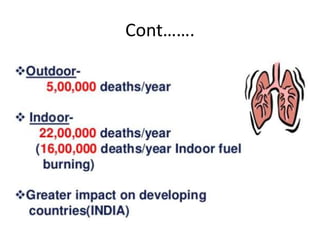
dispersal, in their means of defense and attack, in
their reproduction and development and in other
respects.
Cont……..
• Adaptation has three meanings. First, in a
physiological sense, an animal or plant can adapt
by adjusting to its immediate environment—for
instance, by changing its temperature or
metabolism with an increase in altitude. Second,
and more commonly, the word adaptation refers
either to the process of becoming adapted or to the
features of organisms that promote reproductive
success relative to other possible features. Here the
process of adaptation is driven by genetic variations
among individuals that become adapted to—that is,
have greater success in—a specific environmental
context.
Cont……..
• The third and more popular view of adaptation is
in regard to the form of a feature that has
evolved by natural selection for a specific
function. Examples include the long necks of
giraffes for feeding in the tops of trees, the
streamlined bodies of aquatic fish and mammals
, the light bones of flying birds and mammals,
and the long dagger like canine teeth of
carnivores.
Mitigation
• The action of reducing the severity, seriousness,
or painfulness of something.
• Mitigation is the effort to reduce loss of life and
property by lessening the impact of disasters. In
order for mitigation to be effective we need to
take action now—before the next disaster—to
reduce human and financial consequences later
(analyzing risk, reducing risk, and insuring against
risk). It is important to know that disasters can
happen at any time and any place and if we are
not prepared, consequences can be fatal.
Vulnerability
• The quality or state of being exposed to the
possibility of being attacked or harmed, either
physically or emotionally.
• Susceptibility to attack or injury; the state or
condition of being weak or poorly defended.
• Vulnerability is the inability to resist a hazard or
to respond when a disaster has occurred. For
instance, people who live on plains are
more vulnerable to floods than people who live
higher up
Effect of climate change on human
health.
• The concepts of climate and weather are often
confused. Weather is the state of the
atmosphere at any given time and place.
Weather patterns vary greatly from year to
year and from region to region. Familiar
aspects of weather include temperature,
precipitation, clouds, and wind that people
experience throughout the course of a day.
Severe weather conditions include hurricanes,
tornadoes, blizzards, and droughts.
Cont………..
• Climate is the average weather conditions that
persist over multiple decades or longer. While the
weather can change in minutes or hours,
identifying a change in climate has required
observations over a time period of decades to
centuries or longer. Climate change encompasses
both increases and decreases in temperature as
well as shifts in precipitation, changing risks of
certain types of severe weather events, and
changes to other features of the climate system.
How Does Climate Change Affect
Health?
• The influences of weather and climate on
human health are significant and varied. They
range from the clear threats of temperature
extremes and severe storms to connections
that may seem less obvious. For example,
weather and climate affect the survival,
distribution, and behavior of mosquitoes,
ticks, and rodents that carry diseases like West
Nile virus or Lyme disease.
Cont………
• Climate and weather can also affect water and
food quality in particular areas, with implications
for human health. In addition, the effects of
global climate change on mental health and well-
being are integral parts of the overall climate-
related human health impact.
• A useful approach to understand how climate
change affects health is to consider
specific exposure pathways and how they can
lead to human disease.
Three elements of vulnerability
1. Exposure is contact between a person and one
or more biological, psychosocial, chemical, or
physical stressors, including stressors affected by
climate change. Contact may occur in a single
instance or repeatedly over time, and may occur
in one location or over a wider geographic area.
2. Sensitivity is the degree to which people or
communities are affected, either adversely or
beneficially, by climate variability or change.
Cont……..
3. Adaptive capacity is the ability of
communities, institutions, or people to adjust
to potential hazards, to take advantage of
opportunities, or to respond to consequences.
A related term, resilience, is the ability to
prepare and plan for, absorb, recover from,
and more successfully adapt to adverse
events.
Cont……
• Vulnerability, and the three components of
vulnerability, are factors that operate at multiple
levels, from the individual and community to the
country level, and affect all people to some
degree. For an individual, these factors include
human behavioral choices and the degree to
which that person is vulnerable based on his or
her level of exposure, sensitivity, and adaptive
capacity. Vulnerability is also influenced by social
determinants of health
Cont……..
• he three components of vulnerability
(exposure, sensitivity, and adaptive capacity)
are associated with social
and demographic factors, including level of
wealth and education, as well as other
characteristics of people and places, such as
the condition of infrastructure and extent
of ecosystem degradation.
Cont…………
• For example, poverty can leave people more
exposed to climate and weather threats,
increase sensitivity because of associations
with higher rates of illness and nutritional
deficits, and limit people’s adaptive capacity.
As another example, people living in a city
with degraded coastal ecosystems and
inadequate water and wastewater
infrastructure may be at greater risk of health
consequences from severe storms.
Extreme weather events
• Climate change also affects human health by
increasing the frequency and intensity of
extreme heat events. Increases in the overall
temperature of the atmosphere and oceans
associated with climate change cause changes
in wind, moisture, and heat circulation
patterns. These changes contribute to shifts
in extreme weather events, including extreme
heat events.
The climate-health connection
Extreme heat events can be dangerous to
health – even fatal. These events result in
increased hospital admissions for heat related
illness, as well as cardiovascular and
respiratory disorders.
• Higher temperatures and respiratory problems
are also linked. One reason is because higher
temperatures contribute to the build-up of
harmful air pollutants.
Cont……….
• Extreme heat events can trigger a variety of heat
stress conditions, such as heat stroke. Heat stroke
is the most serious heat-related disorder. It
occurs when the body becomes unable to control
its temperature. Body temperature rises rapidly,
the sweating mechanism fails, and the body
cannot cool down. This condition can cause death
or permanent disability if emergency treatment is
not given. Small children, the elderly, and certain
other groups including people with chronic
diseases, low-income populations, and outdoor
workers have higher risk for heat-related illness.
Temperature variability
• temperature variability is projected to
decrease on average because of a reduced
meridional temperature gradient and sea-ice
loss. The countries that have contributed least
to climate change, and are most vulnerable to
extreme events, are projected to experience
the strongest increase in variability. These
changes would therefore amplify the
inequality associated with the impacts of a
changing climate.
Cont…….
• Temperature extremes may occur due to a shift in
the whole distribution, where there is an increase
in the entire temperature probability distribution,
or to changes in the shape of the distribution,
such as an increase in variability causing a
widening of the distribution. Understanding the
precise characteristics of changes in temperature
distributions in response to background warming
is an important aspect of fully understanding
changes in heat extremes and their associated
impacts on human and ecosystem health.
Definition of indoor air pollution
• It refers to the physical, chemical, and biological
characteristics of air in the indoor environment
within a home, building, or an institution or
commercial facility. Indoor air pollution is a
concern in the developed countries, where
energy efficiency improvements sometimes make
houses relatively airtight, reducing ventilation
and raising pollutant levels. Indoor air problems
can be subtle and do not always produce easily
recognized impacts on health. Different
conditions are responsible for indoor air pollution
in the rural areas and the urban areas.
Cont……….
• In urban areas, exposure to indoor air pollution
has increased due to a variety of reasons,
including the construction of more tightly sealed
buildings, reduced ventilation, the use of
synthetic materials for building and furnishing
and the use of chemical products, pesticides, and
household care products. Indoor air pollution can
begin within the building or be drawn in from
outdoors. Other than nitrogen dioxide, carbon
monoxide, and lead, there are a number of other
pollutants that affect the air quality in an
enclosed space.
Health problems caused by indoor air
pollution
• Indoor air pollution has been linked to a wide
variety of adverse health effects, including
headaches, respiratory problems, frequent colds
and sore throats, chronic cough, skin rashes, eye
irritation, lethargy, dizziness and memory lapses.
• Long-term effects may include an increased risk
of cancer. Though children, the elderly and those
with chronic ailments like asthma, allergies and
heart and lung diseases seem especially
vulnerable, symptoms may also occur in
otherwise normal, healthy persons.
Cont………
• Studies have shown that the children of smoking
parents have more respiratory infections and
asthmatic symptoms than other children. Persons
who work next to someone who smokes are
more likely to have impaired lung function. The
nonsmoking wives of men who smoke die on the
average four years sooner and, according to a
major Japanese study, face a significantly greater
risk of developing lung cancer than they would if
their husbands did not smoke.
Cont………..
• To reduce the hazards of passive smoking,
restrict smoking in your home and agitate at
work for a smoking ban (or at least for placing
all smokers together in a well-ventilated area).
If a family member smokes, ask that all
smoking be done as far from others as
possible, preferably near an open window, in
the basement or, even better, out of doors.
Causes of Indoor Air pollution
Cont………
Effect of Indoor air pollution
Cont…….
Improved cooking stoves (ICS).
• Among the various technologies introduced in
the realm of efficient household heating and
cooking methods, stoves are the most popular
and widespread in both urban and rural
communities. Especially in developing countries,
stoves occupy a central place in the health,
environmental, economic and social domains of
life. By improving the efficiency of wood burning
stoves , the amount of toxic smoke produced can
be reduced and health risks to the family be
minimized.
Cont……..
• Good cooking stove is defined as one that
meets technical, scientific and safety
standards, and has high combustion quality,
technical efficiency, minimal smoke emission,
ergonomics and structural stability. Most
sources cite the fuel-efficiency of traditional
stoves as five to ten percent.
Cont………
• Since about 1.5 billion people in the world use
traditional stoves for cooking (and heating), efforts
to improve the efficiency of cook stoves have been
increasingly popular in the developing world.
Improved stoves come in different forms and sizes.
Improved Cook Stoves can be designed and built in
various ways, depending on the local conditions. At
their simplest, ICS provide an enclosure for the fire to
reduce the loss of radiant heat and protect it against
the wind. In addition, attention can be given to
methods of controlling the upward flow of the
combustion gases, so as to increase the transfer of
heat to the cooking pot. Many of these stoves are
made of mud or sand since both are almost free and
readily available.
Clean fuel and association between
clean fuel and human Development.
• There are two main factors that need to be
considered when using fuel—ecology and
economy. Ecologically, the fuels that are clean
(fuel that emits less or no CO2) are more
efficient than the ones that are not clean.
• Access to modern energy services is fundamental to
fulfilling basic social needs, driving economic growth and
fueling human development. This is because energy
services have an effect on productivity, health, education,
safe water and communication services. Modern services
such as electricity, natural gas, modern cooking fuel and
mechanical power are necessary for improved health and
education, better access to information and agricultural
productivity. There are wide variations between energy
consumption of developed and developing countries, and
between the rich and poor within countries, with
attendant variations in human development. Furthermore,
the way in which energy is generated, distributed and
consumed affects the local, regional and global
environment with serious implications for poor people’s
livelihood strategies and human development prospects.
Cont………
• Access to and sustained use of clean cooking
technologies could reduce the time required
for collecting fuel and cooking. However, few
clean cooking promotion efforts have
documented the amount of time saved by
users of clean cooking technologies as a
potential benefit. As the cost of fuel for clean
energy is one of the biggest barriers to
adoption, time savings could potentially offset
this cost.
Steps to Take to Prevent & Control
Indoor Air Pollution
1. Hundreds of potentially harmful chemicals are
emitted and released into your personal
environment every day. Household cleaning
agents, personal care products ,paints, and
solvents used on a regular basis can severely
impact your indoor air and your health.
2. Perform Smart Cleaning
• Household cleaners can contain toxic
chemicals that can make their way into your
home’s air and impact your air quality
significantly. A key ingredient in many window,
kitchen, and multipurpose cleaners called 2-
Butoxyethanol is a culprit that can not only
contaminate and taint the indoor air but also
lead to an array of potential health problems.
Control
Cont……..
Cont………..

Air pollutionn

  • 1.
    Chapter 2: Airpollution Contents I. How Does Climate Change Affect Health? II. Vulnerability. III. Mitigation IV. Classification on the following terms. V. Three elements of vulnerability . VI. Extreme weather events . VII. The climate-health connection VIII. Temperature variability IX. Definition of indoor air pollution X. Health problems caused by indoor air pollution XI. Causes of Indoor Air pollution XII. Effect of Indoor air pollution XIII. Improved cooking stoves (ICS). XIV. Clean fuel and association between clean fuel and human Development. XV. Steps to Take to Prevent & Control Indoor Air Pollution. XVI. Effect of climate change on human health.
  • 2.
    Classification on thefollowing terms • Adaptation, in biology, the process by which species becomes fitted to its environment ; it is the result of natural selection’s acting upon heritable variation over several generations. Organisms are adapted to their environment in a great variety of ways: in their structure, physiology, and genetics , in their locomotion or dispersal, in their means of defense and attack, in their reproduction and development and in other respects.
  • 3.
    Cont…….. • Adaptation hasthree meanings. First, in a physiological sense, an animal or plant can adapt by adjusting to its immediate environment—for instance, by changing its temperature or metabolism with an increase in altitude. Second, and more commonly, the word adaptation refers either to the process of becoming adapted or to the features of organisms that promote reproductive success relative to other possible features. Here the process of adaptation is driven by genetic variations among individuals that become adapted to—that is, have greater success in—a specific environmental context.
  • 4.
    Cont…….. • The thirdand more popular view of adaptation is in regard to the form of a feature that has evolved by natural selection for a specific function. Examples include the long necks of giraffes for feeding in the tops of trees, the streamlined bodies of aquatic fish and mammals , the light bones of flying birds and mammals, and the long dagger like canine teeth of carnivores.
  • 5.
    Mitigation • The actionof reducing the severity, seriousness, or painfulness of something. • Mitigation is the effort to reduce loss of life and property by lessening the impact of disasters. In order for mitigation to be effective we need to take action now—before the next disaster—to reduce human and financial consequences later (analyzing risk, reducing risk, and insuring against risk). It is important to know that disasters can happen at any time and any place and if we are not prepared, consequences can be fatal.
  • 6.
    Vulnerability • The qualityor state of being exposed to the possibility of being attacked or harmed, either physically or emotionally. • Susceptibility to attack or injury; the state or condition of being weak or poorly defended. • Vulnerability is the inability to resist a hazard or to respond when a disaster has occurred. For instance, people who live on plains are more vulnerable to floods than people who live higher up
  • 7.
    Effect of climatechange on human health. • The concepts of climate and weather are often confused. Weather is the state of the atmosphere at any given time and place. Weather patterns vary greatly from year to year and from region to region. Familiar aspects of weather include temperature, precipitation, clouds, and wind that people experience throughout the course of a day. Severe weather conditions include hurricanes, tornadoes, blizzards, and droughts.
  • 8.
    Cont……….. • Climate isthe average weather conditions that persist over multiple decades or longer. While the weather can change in minutes or hours, identifying a change in climate has required observations over a time period of decades to centuries or longer. Climate change encompasses both increases and decreases in temperature as well as shifts in precipitation, changing risks of certain types of severe weather events, and changes to other features of the climate system.
  • 9.
    How Does ClimateChange Affect Health? • The influences of weather and climate on human health are significant and varied. They range from the clear threats of temperature extremes and severe storms to connections that may seem less obvious. For example, weather and climate affect the survival, distribution, and behavior of mosquitoes, ticks, and rodents that carry diseases like West Nile virus or Lyme disease.
  • 10.
    Cont……… • Climate andweather can also affect water and food quality in particular areas, with implications for human health. In addition, the effects of global climate change on mental health and well- being are integral parts of the overall climate- related human health impact. • A useful approach to understand how climate change affects health is to consider specific exposure pathways and how they can lead to human disease.
  • 11.
    Three elements ofvulnerability 1. Exposure is contact between a person and one or more biological, psychosocial, chemical, or physical stressors, including stressors affected by climate change. Contact may occur in a single instance or repeatedly over time, and may occur in one location or over a wider geographic area. 2. Sensitivity is the degree to which people or communities are affected, either adversely or beneficially, by climate variability or change.
  • 12.
    Cont…….. 3. Adaptive capacityis the ability of communities, institutions, or people to adjust to potential hazards, to take advantage of opportunities, or to respond to consequences. A related term, resilience, is the ability to prepare and plan for, absorb, recover from, and more successfully adapt to adverse events.
  • 13.
    Cont…… • Vulnerability, andthe three components of vulnerability, are factors that operate at multiple levels, from the individual and community to the country level, and affect all people to some degree. For an individual, these factors include human behavioral choices and the degree to which that person is vulnerable based on his or her level of exposure, sensitivity, and adaptive capacity. Vulnerability is also influenced by social determinants of health
  • 14.
    Cont…….. • he threecomponents of vulnerability (exposure, sensitivity, and adaptive capacity) are associated with social and demographic factors, including level of wealth and education, as well as other characteristics of people and places, such as the condition of infrastructure and extent of ecosystem degradation.
  • 15.
    Cont………… • For example,poverty can leave people more exposed to climate and weather threats, increase sensitivity because of associations with higher rates of illness and nutritional deficits, and limit people’s adaptive capacity. As another example, people living in a city with degraded coastal ecosystems and inadequate water and wastewater infrastructure may be at greater risk of health consequences from severe storms.
  • 16.
    Extreme weather events •Climate change also affects human health by increasing the frequency and intensity of extreme heat events. Increases in the overall temperature of the atmosphere and oceans associated with climate change cause changes in wind, moisture, and heat circulation patterns. These changes contribute to shifts in extreme weather events, including extreme heat events.
  • 17.
    The climate-health connection Extremeheat events can be dangerous to health – even fatal. These events result in increased hospital admissions for heat related illness, as well as cardiovascular and respiratory disorders. • Higher temperatures and respiratory problems are also linked. One reason is because higher temperatures contribute to the build-up of harmful air pollutants.
  • 18.
    Cont………. • Extreme heatevents can trigger a variety of heat stress conditions, such as heat stroke. Heat stroke is the most serious heat-related disorder. It occurs when the body becomes unable to control its temperature. Body temperature rises rapidly, the sweating mechanism fails, and the body cannot cool down. This condition can cause death or permanent disability if emergency treatment is not given. Small children, the elderly, and certain other groups including people with chronic diseases, low-income populations, and outdoor workers have higher risk for heat-related illness.
  • 19.
    Temperature variability • temperaturevariability is projected to decrease on average because of a reduced meridional temperature gradient and sea-ice loss. The countries that have contributed least to climate change, and are most vulnerable to extreme events, are projected to experience the strongest increase in variability. These changes would therefore amplify the inequality associated with the impacts of a changing climate.
  • 20.
    Cont……. • Temperature extremesmay occur due to a shift in the whole distribution, where there is an increase in the entire temperature probability distribution, or to changes in the shape of the distribution, such as an increase in variability causing a widening of the distribution. Understanding the precise characteristics of changes in temperature distributions in response to background warming is an important aspect of fully understanding changes in heat extremes and their associated impacts on human and ecosystem health.
  • 21.
    Definition of indoorair pollution • It refers to the physical, chemical, and biological characteristics of air in the indoor environment within a home, building, or an institution or commercial facility. Indoor air pollution is a concern in the developed countries, where energy efficiency improvements sometimes make houses relatively airtight, reducing ventilation and raising pollutant levels. Indoor air problems can be subtle and do not always produce easily recognized impacts on health. Different conditions are responsible for indoor air pollution in the rural areas and the urban areas.
  • 22.
    Cont………. • In urbanareas, exposure to indoor air pollution has increased due to a variety of reasons, including the construction of more tightly sealed buildings, reduced ventilation, the use of synthetic materials for building and furnishing and the use of chemical products, pesticides, and household care products. Indoor air pollution can begin within the building or be drawn in from outdoors. Other than nitrogen dioxide, carbon monoxide, and lead, there are a number of other pollutants that affect the air quality in an enclosed space.
  • 23.
    Health problems causedby indoor air pollution • Indoor air pollution has been linked to a wide variety of adverse health effects, including headaches, respiratory problems, frequent colds and sore throats, chronic cough, skin rashes, eye irritation, lethargy, dizziness and memory lapses. • Long-term effects may include an increased risk of cancer. Though children, the elderly and those with chronic ailments like asthma, allergies and heart and lung diseases seem especially vulnerable, symptoms may also occur in otherwise normal, healthy persons.
  • 24.
    Cont……… • Studies haveshown that the children of smoking parents have more respiratory infections and asthmatic symptoms than other children. Persons who work next to someone who smokes are more likely to have impaired lung function. The nonsmoking wives of men who smoke die on the average four years sooner and, according to a major Japanese study, face a significantly greater risk of developing lung cancer than they would if their husbands did not smoke.
  • 25.
    Cont……….. • To reducethe hazards of passive smoking, restrict smoking in your home and agitate at work for a smoking ban (or at least for placing all smokers together in a well-ventilated area). If a family member smokes, ask that all smoking be done as far from others as possible, preferably near an open window, in the basement or, even better, out of doors.
  • 26.
    Causes of IndoorAir pollution
  • 27.
  • 28.
    Effect of Indoorair pollution
  • 29.
  • 30.
    Improved cooking stoves(ICS). • Among the various technologies introduced in the realm of efficient household heating and cooking methods, stoves are the most popular and widespread in both urban and rural communities. Especially in developing countries, stoves occupy a central place in the health, environmental, economic and social domains of life. By improving the efficiency of wood burning stoves , the amount of toxic smoke produced can be reduced and health risks to the family be minimized.
  • 31.
    Cont…….. • Good cookingstove is defined as one that meets technical, scientific and safety standards, and has high combustion quality, technical efficiency, minimal smoke emission, ergonomics and structural stability. Most sources cite the fuel-efficiency of traditional stoves as five to ten percent.
  • 32.
    Cont……… • Since about1.5 billion people in the world use traditional stoves for cooking (and heating), efforts to improve the efficiency of cook stoves have been increasingly popular in the developing world. Improved stoves come in different forms and sizes. Improved Cook Stoves can be designed and built in various ways, depending on the local conditions. At their simplest, ICS provide an enclosure for the fire to reduce the loss of radiant heat and protect it against the wind. In addition, attention can be given to methods of controlling the upward flow of the combustion gases, so as to increase the transfer of heat to the cooking pot. Many of these stoves are made of mud or sand since both are almost free and readily available.
  • 33.
    Clean fuel andassociation between clean fuel and human Development. • There are two main factors that need to be considered when using fuel—ecology and economy. Ecologically, the fuels that are clean (fuel that emits less or no CO2) are more efficient than the ones that are not clean.
  • 34.
    • Access tomodern energy services is fundamental to fulfilling basic social needs, driving economic growth and fueling human development. This is because energy services have an effect on productivity, health, education, safe water and communication services. Modern services such as electricity, natural gas, modern cooking fuel and mechanical power are necessary for improved health and education, better access to information and agricultural productivity. There are wide variations between energy consumption of developed and developing countries, and between the rich and poor within countries, with attendant variations in human development. Furthermore, the way in which energy is generated, distributed and consumed affects the local, regional and global environment with serious implications for poor people’s livelihood strategies and human development prospects.
  • 35.
    Cont……… • Access toand sustained use of clean cooking technologies could reduce the time required for collecting fuel and cooking. However, few clean cooking promotion efforts have documented the amount of time saved by users of clean cooking technologies as a potential benefit. As the cost of fuel for clean energy is one of the biggest barriers to adoption, time savings could potentially offset this cost.
  • 36.
    Steps to Taketo Prevent & Control Indoor Air Pollution 1. Hundreds of potentially harmful chemicals are emitted and released into your personal environment every day. Household cleaning agents, personal care products ,paints, and solvents used on a regular basis can severely impact your indoor air and your health.
  • 37.
    2. Perform SmartCleaning • Household cleaners can contain toxic chemicals that can make their way into your home’s air and impact your air quality significantly. A key ingredient in many window, kitchen, and multipurpose cleaners called 2- Butoxyethanol is a culprit that can not only contaminate and taint the indoor air but also lead to an array of potential health problems.
  • 38.
  • 39.
  • 40.