PGDSTE Presentation
By
Primrose Chiuyu
N02312709B
Module: Theoretical Foundations in
Stem Education (PST5101)
Presentation Topic: Agents of Socialization
Introduction
People learn how to properly navigate their social environments through
socialization. Interaction with a variety of socialization agents, including families,
peer groups, and formal and unstructured social organizations, facilitates this learning
process.
This presentation is a discussion on agents of socialization which begins with the
definition of key terms followed by a detailed explanation on how different groups
and institutions play a role in the socialization process. In the end it gives a
conclusion that follows from the discussion.
Definition of key terms
Agents of socialization are the social groups and institutions that play a significant
role in the socialization process, shaping individuals' beliefs, values, and behaviors,
(Rothschild, 2019).
According to Chris Drew (2021), an agent of socialization is anything that is
influential in teaching social norms and rules to children and/or adults.
Hence agents of socialization are social structures, people, and interactions within
these groups that facilitate an individual's integration into society by passing down
the social culture.
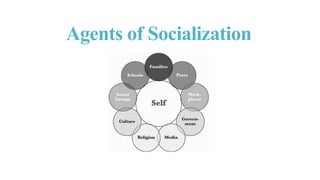
Agents of Socialization
They are divided into two groups which are:
1) Primary socialization: occurs during formative years of and individual’s life.
2) Secondary socialization: occurs later in life and is affected by agents that are
usually outside of the family.
Agents of Socialization
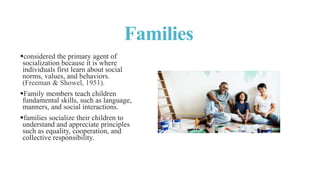
Families
considered the primary agent of
socialization because it is where
individuals first learn about social
norms, values, and behaviors.
(Freeman & Showel, 1951).
Family members teach children
fundamental skills, such as language,
manners, and social interactions.
families socialize their children to
understand and appreciate principles
such as equality, cooperation, and
collective responsibility.
Peers
Peer groups, consisting of individuals
of similar age and social status, also
contribute to socialization especially
during adolescence.
Peer interactions allow individuals to
develop social identities, experiment
with different roles and behaviors, and
seek acceptance from their peers.
Peer pressure can shape attitudes,
values, and behaviors, both positively
and negatively.
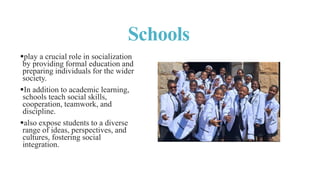
Schools
play a crucial role in socialization
by providing formal education and
preparing individuals for the wider
society.
In addition to academic learning,
schools teach social skills,
cooperation, teamwork, and
discipline.
also expose students to a diverse
range of ideas, perspectives, and
cultures, fostering social
integration.
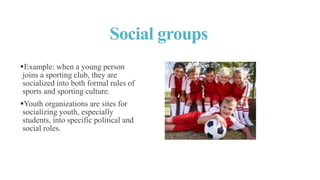
Social groups
Example: when a young person
joins a sporting club, they are
socialized into both formal rules of
sports and sporting culture.
Youth organizations are sites for
socializing youth, especially
students, into specific political and
social roles.
Work places
Workplaces have a significant impact
on socialization, especially for adults.
They provide opportunities for
individuals to learn professional
norms, work ethics, and organizational
cultures.
Workplaces also foster social
interactions, teamwork, and the
development of skills and
competencies.
Government
Governments and legal systems
establish rules and regulations that
shape societal norms and
expectations.
They teach individuals about
rights, responsibilities, and
citizenship.
Laws and legal processes
contribute to socialization by
promoting a sense of order, justice,
and social cohesion.
Media
Media has a pervasive influence on
socialization in modern society.
Television, movies, music, the
internet, and social media platforms
transmit cultural values, ideals, and
norms.
Media can shape perceptions,
attitudes, and behaviors by
presenting role models, promoting
certain lifestyles, and influencing
popular culture.
Religion
religion exercises extraordinary
control in shaping the collective
beliefs of a society (Durkheim, 2001)
Religious institutions and practices
provide individuals with moral and
ethical guidelines, spiritual beliefs, and
a sense of purpose.
They contribute to socialization by
teaching religious doctrines, values,
rituals, and traditions.
Religion often plays a role in shaping
personal and community identities.
Conclusion
It can be concluded that socialization agents have a significant impact on an
individual's conceptual and personal growth. They support social interaction and
communication as well as role understanding.
However, individuals also have agency and the ability to interpret, negotiate, and
resist socialization influences. Moreover, the significance of each agent may vary
depending on cultural, social, and individual factors.
References
Drew, C. (December 10, 2021). 9 Examples of Agents of Socialization. Helpful
Professor. https://helpfulprofessor.com/agent-of-socialization-examples/
Durkheim, E. (2001). The elementary forms of religious life. Oxford: Oxford
University Press.
Freeman, H.E., & Showel, M. (1951). The role of the family in the socialization
process. The Journal of Social Psychology. 37(1), 97-101.
Doi: https://doi.org/10.1080/00224545.1953.9921873
Teal Rothschild, (2019), Rothschild’s Introduction to Sociology.
THANK YOU

AGENTS OF SOCIALIZATION PRESENTATION (1).pptx

  • 1.
  • 2.
    Module: Theoretical Foundationsin Stem Education (PST5101) Presentation Topic: Agents of Socialization
  • 3.
    Introduction People learn howto properly navigate their social environments through socialization. Interaction with a variety of socialization agents, including families, peer groups, and formal and unstructured social organizations, facilitates this learning process. This presentation is a discussion on agents of socialization which begins with the definition of key terms followed by a detailed explanation on how different groups and institutions play a role in the socialization process. In the end it gives a conclusion that follows from the discussion.
  • 4.
    Definition of keyterms Agents of socialization are the social groups and institutions that play a significant role in the socialization process, shaping individuals' beliefs, values, and behaviors, (Rothschild, 2019). According to Chris Drew (2021), an agent of socialization is anything that is influential in teaching social norms and rules to children and/or adults. Hence agents of socialization are social structures, people, and interactions within these groups that facilitate an individual's integration into society by passing down the social culture.
  • 5.
    Agents of Socialization Theyare divided into two groups which are: 1) Primary socialization: occurs during formative years of and individual’s life. 2) Secondary socialization: occurs later in life and is affected by agents that are usually outside of the family.
  • 6.
  • 7.
    Families considered the primaryagent of socialization because it is where individuals first learn about social norms, values, and behaviors. (Freeman & Showel, 1951). Family members teach children fundamental skills, such as language, manners, and social interactions. families socialize their children to understand and appreciate principles such as equality, cooperation, and collective responsibility.
  • 8.
    Peers Peer groups, consistingof individuals of similar age and social status, also contribute to socialization especially during adolescence. Peer interactions allow individuals to develop social identities, experiment with different roles and behaviors, and seek acceptance from their peers. Peer pressure can shape attitudes, values, and behaviors, both positively and negatively.
  • 9.
    Schools play a crucialrole in socialization by providing formal education and preparing individuals for the wider society. In addition to academic learning, schools teach social skills, cooperation, teamwork, and discipline. also expose students to a diverse range of ideas, perspectives, and cultures, fostering social integration.
  • 10.
    Social groups Example: whena young person joins a sporting club, they are socialized into both formal rules of sports and sporting culture. Youth organizations are sites for socializing youth, especially students, into specific political and social roles.
  • 11.
    Work places Workplaces havea significant impact on socialization, especially for adults. They provide opportunities for individuals to learn professional norms, work ethics, and organizational cultures. Workplaces also foster social interactions, teamwork, and the development of skills and competencies.
  • 12.
    Government Governments and legalsystems establish rules and regulations that shape societal norms and expectations. They teach individuals about rights, responsibilities, and citizenship. Laws and legal processes contribute to socialization by promoting a sense of order, justice, and social cohesion.
  • 13.
    Media Media has apervasive influence on socialization in modern society. Television, movies, music, the internet, and social media platforms transmit cultural values, ideals, and norms. Media can shape perceptions, attitudes, and behaviors by presenting role models, promoting certain lifestyles, and influencing popular culture.
  • 14.
    Religion religion exercises extraordinary controlin shaping the collective beliefs of a society (Durkheim, 2001) Religious institutions and practices provide individuals with moral and ethical guidelines, spiritual beliefs, and a sense of purpose. They contribute to socialization by teaching religious doctrines, values, rituals, and traditions. Religion often plays a role in shaping personal and community identities.
  • 15.
    Conclusion It can beconcluded that socialization agents have a significant impact on an individual's conceptual and personal growth. They support social interaction and communication as well as role understanding. However, individuals also have agency and the ability to interpret, negotiate, and resist socialization influences. Moreover, the significance of each agent may vary depending on cultural, social, and individual factors.
  • 16.
    References Drew, C. (December10, 2021). 9 Examples of Agents of Socialization. Helpful Professor. https://helpfulprofessor.com/agent-of-socialization-examples/ Durkheim, E. (2001). The elementary forms of religious life. Oxford: Oxford University Press. Freeman, H.E., & Showel, M. (1951). The role of the family in the socialization process. The Journal of Social Psychology. 37(1), 97-101. Doi: https://doi.org/10.1080/00224545.1953.9921873 Teal Rothschild, (2019), Rothschild’s Introduction to Sociology.
  • 17.