PGDSTE Presentation
By
Primrose Chiuyu N02312709B
James Gororo N02314032Q
Module: Research Methods and
Statistics (PST5209)
Presentation Topic: Ethical
issues in research
Introduction
 Ethical issues in education research encompass a range of
considerations that arise when conducting studies in educational
settings involving students, teachers, administrators, or other
stakeholders. These issues are similar to those in general research but
are specifically relevant to the education context. In general, ethical
issues occur at three key moments or stages of the research process:
1. Research design (i.e., conception, project planning)
2. Research conduct (i.e., data collection, data analysis)
3. Knowledge translation or communication (e.g., publications of results,
conferences, press releases).
In this presentation we shall discuss some key ethical issues in the
educational research.
Definition of key terms
Ethical issues
Robson, (2016) defines an “ethical issue” as any situation that may
compromise, in whole or in part, the respect of at least one moral value
that is considered socially legitimate and should thus be respected. While
Mills, (2014) says that ethical issues are concerned with what is right and
wrong, good and bad and how we use that information to decide our
actions in the real world.
From these two definitions we clearly see that ethical issues refers to
situations or dilemmas that involve moral principles and values and where
there is a conflict between different courses of action that can be taken.
Informed Consent
Obtaining informed consent from participants,
particularly students and their parents or
guardians, is crucial in education research.
Researchers must clearly explain the purpose,
procedures, potential risks and benefits, and the
voluntary nature of participation. Informed
consent ensures that participants have a clear
understanding of the research and can make an
informed decision about their involvement.
Privacy and Confidentiality
Education research often involves collecting sensitive
information, such as academic performance, personal
experiences, or demographic data. Researchers must
protect the privacy and confidentiality of participants by
using secure data storage methods and ensuring that
data are reported in a way that individuals cannot be
identified, (Johnson, 2017). This is especially important
when dealing with student records and other personally
identifiable information.
Protection of Participants
 Researchers have a responsibility to ensure the
physical, psychological, and emotional well-being of
participants. This includes minimizing any potential
harm or discomfort that may arise from their
involvement in the research. Special attention should
be given to vulnerable populations, such as children,
and appropriate safeguards must be in place to protect
their rights and welfare.
Consent from Minors
 When conducting research involving minors,
researchers must obtain informed consent from
both the parents or legal guardians and the
students themselves, depending on their age and
capacity to understand the research. Researchers
should also consider the assent of minors, which
involves explaining the research in a
developmentally appropriate manner and obtaining
their agreement to participate.
Equity and Access
 Education research should be conducted in a
manner that promotes equity, fairness, and
inclusivity. Researchers should consider the
potential impact of their research on diverse
populations and ensure that all participants have
equal opportunities to engage in the study. It is
important to avoid exacerbating existing
inequalities or perpetuating biases.
Collaboration and Power Dynamics
Researchers should establish collaborative
relationships with participants and stakeholders in
education research. Power imbalances between
researchers and participants should be
acknowledged and mitigated to ensure that the
voices and perspectives of participants are valued
and respected, (Simon, 2013).
Educational Benefit
Education research should aim to contribute to the
improvement of educational practices, policies, or
outcomes. Researchers should carefully consider the
potential benefits and relevance of their studies to
the educational community and ensure that the
research is conducted with integrity and scientific
rigor, (Creswell, 2014). It is important to strike a
balance between the pursuit of knowledge and the
educational benefits for participants.
Dissemination and Use of Findings
 Dissemination and Use of Findings: Ethical
considerations extend to the dissemination and use of
research findings. Researchers should communicate
their findings accurately and responsibly, avoiding
misrepresentation or exaggeration. They should also
consider the implications of their research for
educational practice and policy and strive to make their
findings accessible and applicable to the broader
educational community.
Conclusion
 These ethical issues highlight the importance of conducting
education research in an ethical and responsible manner.
Researchers should adhere to relevant ethical guidelines,
obtain appropriate approvals from institutional review
boards, and prioritize the well-being and rights of
participants throughout the research process. By doing so,
education researchers can contribute to the advancement
of knowledge and the improvement of educational practices
while upholding ethical principles.
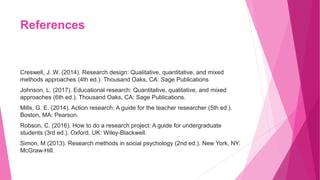
References
Creswell, J. W. (2014). Research design: Qualitative, quantitative, and mixed
methods approaches (4th ed.). Thousand Oaks, CA: Sage Publications
Johnson, L. (2017). Educational research: Quantitative, qualitative, and mixed
approaches (6th ed.). Thousand Oaks, CA: Sage Publications.
Mills, G. E. (2014). Action research: A guide for the teacher researcher (5th ed.).
Boston, MA: Pearson.
Robson, C. (2016). How to do a research project: A guide for undergraduate
students (3rd ed.). Oxford, UK: Wiley-Blackwell.
Simon, M (2013). Research methods in social psychology (2nd ed.). New York, NY:
McGraw-Hill.

Ethical issues in research presentation.pptx

  • 1.
    PGDSTE Presentation By Primrose ChiuyuN02312709B James Gororo N02314032Q
  • 2.
    Module: Research Methodsand Statistics (PST5209) Presentation Topic: Ethical issues in research
  • 3.
    Introduction  Ethical issuesin education research encompass a range of considerations that arise when conducting studies in educational settings involving students, teachers, administrators, or other stakeholders. These issues are similar to those in general research but are specifically relevant to the education context. In general, ethical issues occur at three key moments or stages of the research process: 1. Research design (i.e., conception, project planning) 2. Research conduct (i.e., data collection, data analysis) 3. Knowledge translation or communication (e.g., publications of results, conferences, press releases). In this presentation we shall discuss some key ethical issues in the educational research.
  • 4.
    Definition of keyterms Ethical issues Robson, (2016) defines an “ethical issue” as any situation that may compromise, in whole or in part, the respect of at least one moral value that is considered socially legitimate and should thus be respected. While Mills, (2014) says that ethical issues are concerned with what is right and wrong, good and bad and how we use that information to decide our actions in the real world. From these two definitions we clearly see that ethical issues refers to situations or dilemmas that involve moral principles and values and where there is a conflict between different courses of action that can be taken.
  • 5.
    Informed Consent Obtaining informedconsent from participants, particularly students and their parents or guardians, is crucial in education research. Researchers must clearly explain the purpose, procedures, potential risks and benefits, and the voluntary nature of participation. Informed consent ensures that participants have a clear understanding of the research and can make an informed decision about their involvement.
  • 6.
    Privacy and Confidentiality Educationresearch often involves collecting sensitive information, such as academic performance, personal experiences, or demographic data. Researchers must protect the privacy and confidentiality of participants by using secure data storage methods and ensuring that data are reported in a way that individuals cannot be identified, (Johnson, 2017). This is especially important when dealing with student records and other personally identifiable information.
  • 7.
    Protection of Participants Researchers have a responsibility to ensure the physical, psychological, and emotional well-being of participants. This includes minimizing any potential harm or discomfort that may arise from their involvement in the research. Special attention should be given to vulnerable populations, such as children, and appropriate safeguards must be in place to protect their rights and welfare.
  • 8.
    Consent from Minors When conducting research involving minors, researchers must obtain informed consent from both the parents or legal guardians and the students themselves, depending on their age and capacity to understand the research. Researchers should also consider the assent of minors, which involves explaining the research in a developmentally appropriate manner and obtaining their agreement to participate.
  • 9.
    Equity and Access Education research should be conducted in a manner that promotes equity, fairness, and inclusivity. Researchers should consider the potential impact of their research on diverse populations and ensure that all participants have equal opportunities to engage in the study. It is important to avoid exacerbating existing inequalities or perpetuating biases.
  • 10.
    Collaboration and PowerDynamics Researchers should establish collaborative relationships with participants and stakeholders in education research. Power imbalances between researchers and participants should be acknowledged and mitigated to ensure that the voices and perspectives of participants are valued and respected, (Simon, 2013).
  • 11.
    Educational Benefit Education researchshould aim to contribute to the improvement of educational practices, policies, or outcomes. Researchers should carefully consider the potential benefits and relevance of their studies to the educational community and ensure that the research is conducted with integrity and scientific rigor, (Creswell, 2014). It is important to strike a balance between the pursuit of knowledge and the educational benefits for participants.
  • 12.
    Dissemination and Useof Findings  Dissemination and Use of Findings: Ethical considerations extend to the dissemination and use of research findings. Researchers should communicate their findings accurately and responsibly, avoiding misrepresentation or exaggeration. They should also consider the implications of their research for educational practice and policy and strive to make their findings accessible and applicable to the broader educational community.
  • 13.
    Conclusion  These ethicalissues highlight the importance of conducting education research in an ethical and responsible manner. Researchers should adhere to relevant ethical guidelines, obtain appropriate approvals from institutional review boards, and prioritize the well-being and rights of participants throughout the research process. By doing so, education researchers can contribute to the advancement of knowledge and the improvement of educational practices while upholding ethical principles.
  • 14.
    References Creswell, J. W.(2014). Research design: Qualitative, quantitative, and mixed methods approaches (4th ed.). Thousand Oaks, CA: Sage Publications Johnson, L. (2017). Educational research: Quantitative, qualitative, and mixed approaches (6th ed.). Thousand Oaks, CA: Sage Publications. Mills, G. E. (2014). Action research: A guide for the teacher researcher (5th ed.). Boston, MA: Pearson. Robson, C. (2016). How to do a research project: A guide for undergraduate students (3rd ed.). Oxford, UK: Wiley-Blackwell. Simon, M (2013). Research methods in social psychology (2nd ed.). New York, NY: McGraw-Hill.