Downloaded 322 times


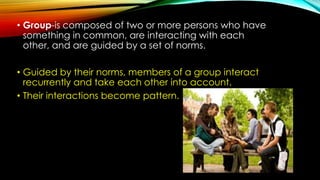
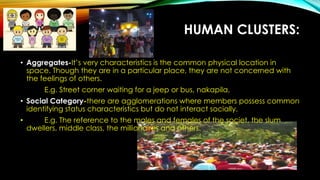












Groups are composed of two or more interacting individuals guided by social norms. There are several types of human clusters including aggregates based on a shared physical space, social categories based on common status, and collectivities with passing interactions. Factors like motivations, size, goals, and cohesion influence groups. Social organizations bring order through differentiating roles and norms. Social structure defines roles and statuses, while social functions are the results of these roles. Primary groups involve close interactions while secondary groups are more impersonal. Formal groups are deliberately formed with defined purposes versus informal groups arising spontaneously.


