Downloaded 113 times
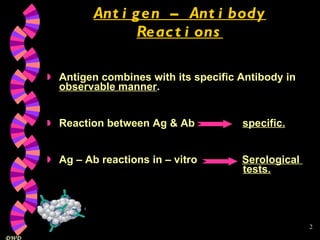
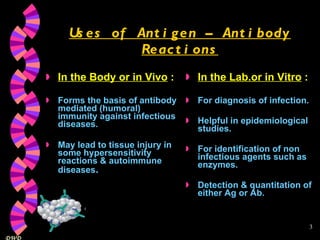
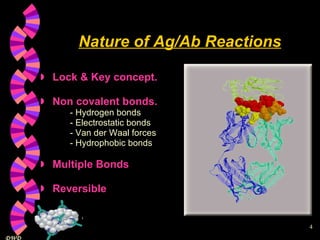
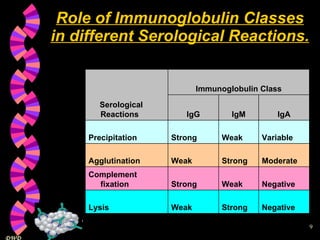
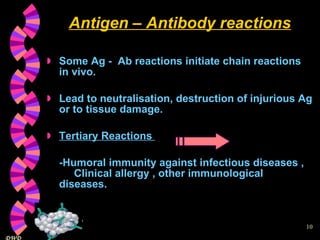
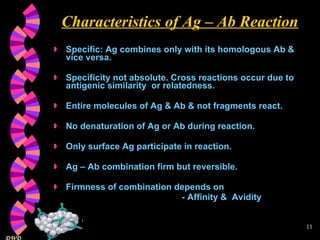
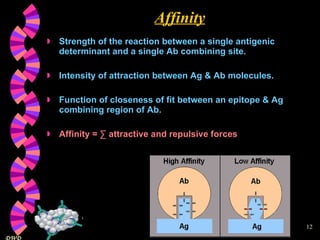
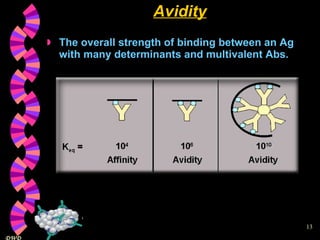
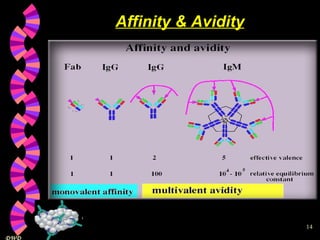
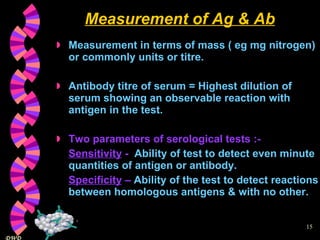
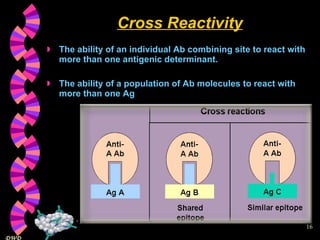
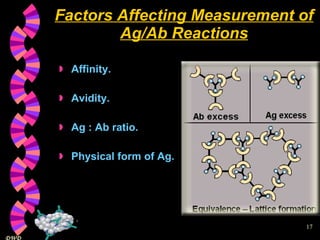
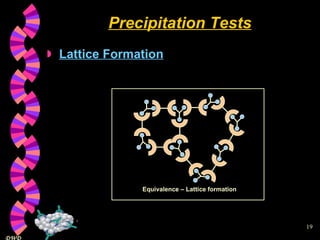
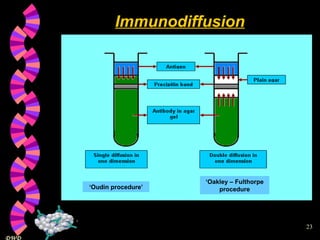
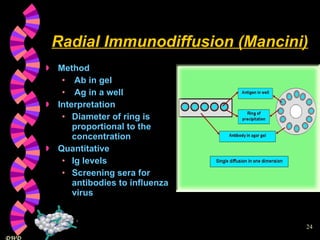
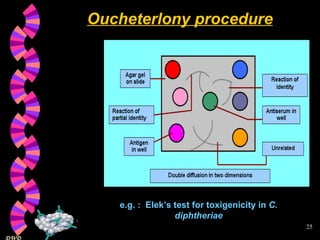
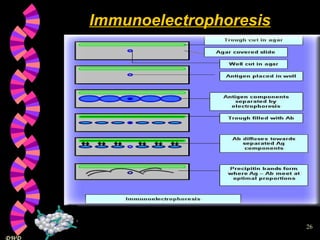
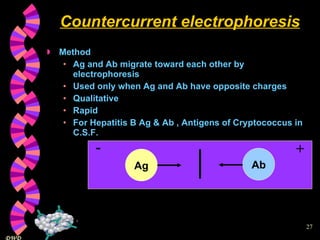
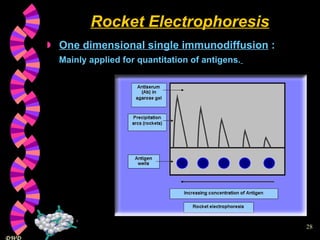
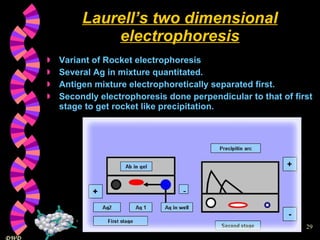
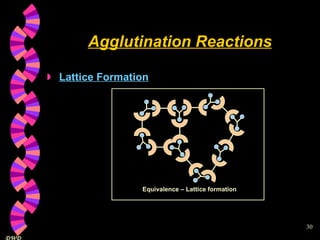
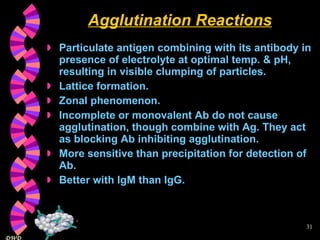
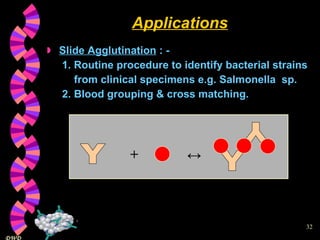
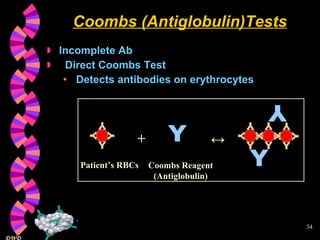
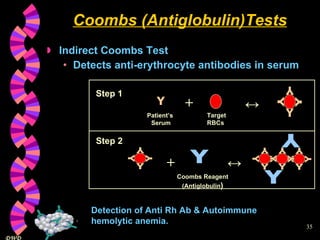


Antigen-antibody reactions occur through specific binding between antigens and antibodies. The primary reaction is reversible and detectable through techniques like radioisotopes, while secondary reactions lead to visible effects like precipitation or agglutination. The strength of antigen-antibody binding depends on factors like affinity, avidity, and ratio. Various serological tests exploit antigen-antibody reactions to detect pathogens or antibodies through precipitation, agglutination, or other reactions.


