ANTIGEN ANTIBODY 
INTERACTIONS 
Presented By, 
Iqra Altaf 
Jinnah University For Women
Introduction 
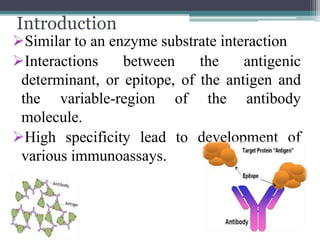
Similar to an enzyme substrate interaction 
Interactions between the antigenic 
determinant, or epitope, of the antigen and 
the variable-region of the antibody 
molecule. 
High specificity lead to development of 
various immunoassays.
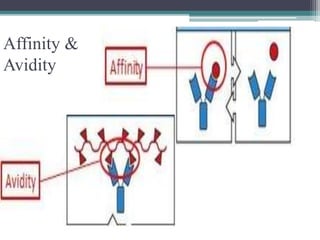
Affinity & 
Avidity
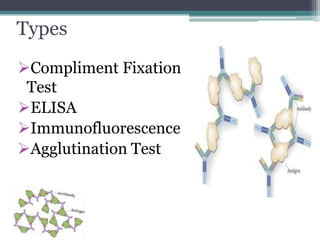
Types 
Compliment Fixation 
Test 
ELISA 
Immunofluorescence 
Agglutination Test
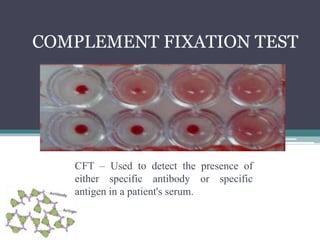
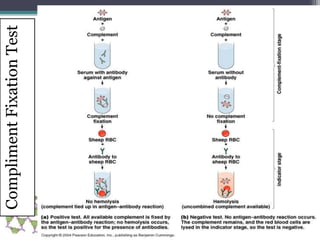
COMPLEMENT FIXATION TEST 
CFT ‒ Used to detect the presence of 
either specific antibody or specific 
antigen in a patient's serum.
Compliment Fixation Test
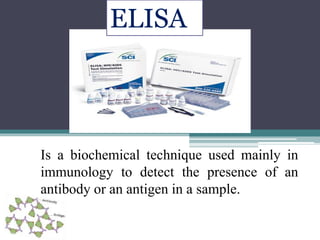
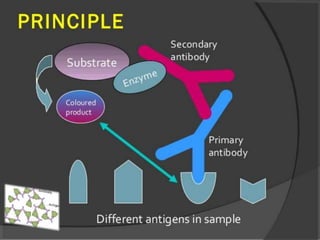
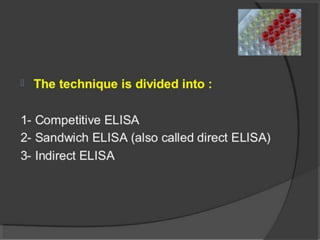
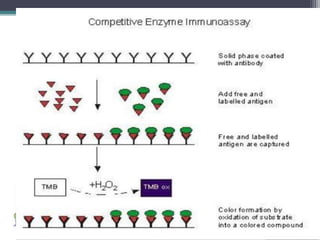
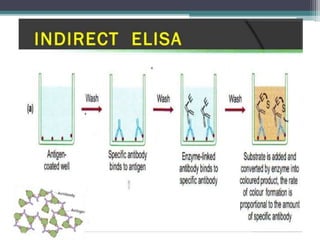
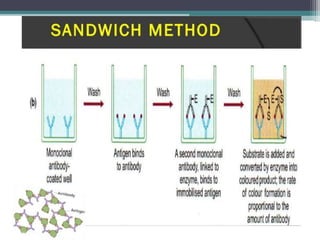
ELISA 
Is a biochemical technique used mainly in 
immunology to detect the presence of an 
antibody or an antigen in a sample.
IMMUNOFLUORESCENCE
INTRODUCTION 
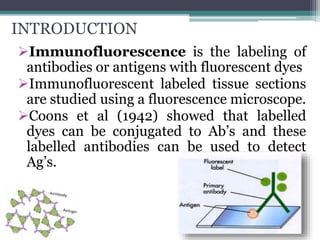
Immunofluorescence is the labeling of 
antibodies or antigens with fluorescent dyes 
Immunofluorescent labeled tissue sections 
are studied using a fluorescence microscope. 
Coons et al (1942) showed that labelled 
dyes can be conjugated to Ab’s and these 
labelled antibodies can be used to detect 
Ag’s.
Dyes Used Commonly : 
FLUORESCEIN 
An organic dye that is the most widely used label 
for immunofluorescence procedure absorbs 
light(490nm) and emits an intense yellow green 
fluorescence(517nm). 
PHYCOERYTHRIN 
Is an efficient absorber of light(30 fold greater than 
fluorescein) and a brilliant emitter of red fluorescence, 
stimulating as a wide used in immunofluoresence.
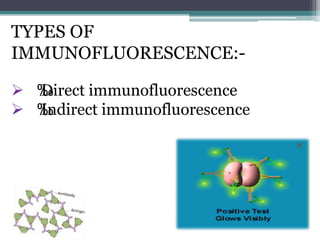
TYPES OF 
IMMUNOFLUORESCENCE:- 
 ‰ Direct immunofluorescence 
 ‰ Indirect immunofluorescence
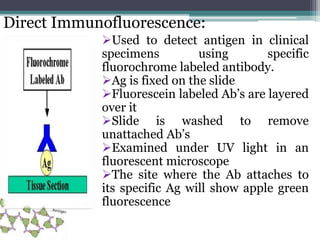
Direct Immunofluorescence: 
Used to detect antigen in clinical 
specimens using specific 
fluorochrome labeled antibody. 
Ag is fixed on the slide 
Fluorescein labeled Ab’s are layered 
over it 
Slide is washed to remove 
unattached Ab’s 
Examined under UV light in an 
fluorescent microscope 
The site where the Ab attaches to 
its specific Ag will show apple green 
fluorescence
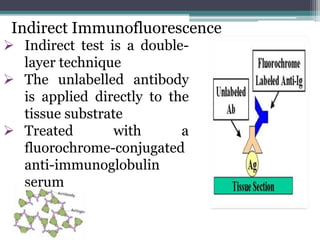
Indirect Immunofluorescence 
 Indirect test is a double-layer 
technique 
 The unlabelled antibody 
is applied directly to the 
tissue substrate 
 Treated with a 
fluorochrome-conjugated 
anti-immunoglobulin 
serum
Advantage Over Direct IF: 
Because several fluorescent anti-immunoglobulins 
can bind to each antibody 
present in the first layer, the fluorescence is 
brighter than the direct test. 
More time-efficient since it is only one signal 
labelled reagent, the anti-immunoglobulin, is 
prepared during the lengthy conjugation 
process.
AGGLUTINATION TEST
Agglutination Reaction 
When a particular Ag is mixed with its Ab’s in the 
presence of electrolytes at a suitable temperature and 
Ph, the particles are clumped and agglutinated. 
The Ab of the serum causes the cellular Ag to form 
clumps and these are called agglutinins. 
The particulate Antigens that are aggregated are called 
agglutinogens. 
 When the antigen is an erythrocyte the term hem 
agglutination is used.
Qualitative Agglutination Test 
Agglutination tests can be used in a qualitative manner 
to assay for the presence of an antigen or an antibody. The 
antibody is mixed with the particulate antigen and a 
positive test is indicated by the agglutination of the 
particulate antigen. 
For example, a patient's red blood cells can be mixed 
with antibody to a blood group antigen to determine a 
person's blood type. In a second example, a patient's 
serum is mixed with red blood cells of a known blood 
type to assay for the presence of antibodies to that blood 
type in the patient's serum.
Quantitative Agglutination Test 
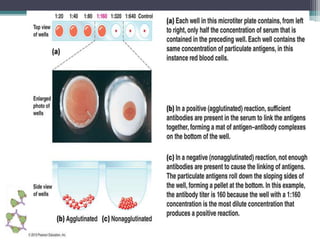
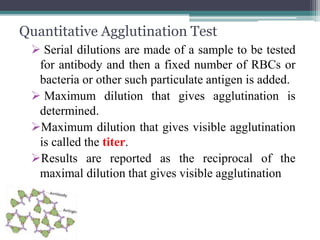
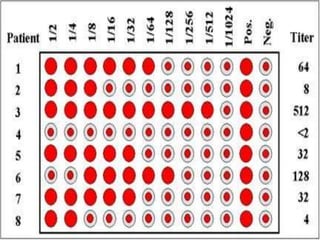
 Serial dilutions are made of a sample to be tested 
for antibody and then a fixed number of RBCs or 
bacteria or other such particulate antigen is added. 
 Maximum dilution that gives agglutination is 
determined. 
Maximum dilution that gives visible agglutination 
is called the titer. 
Results are reported as the reciprocal of the 
maximal dilution that gives visible agglutination
Prozone Effect 
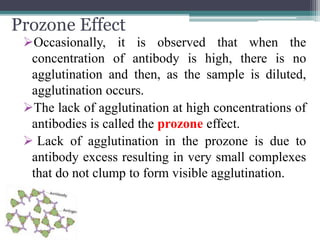
Occasionally, it is observed that when the 
concentration of antibody is high, there is no 
agglutination and then, as the sample is diluted, 
agglutination occurs. 
The lack of agglutination at high concentrations of 
antibodies is called the prozone effect. 
 Lack of agglutination in the prozone is due to 
antibody excess resulting in very small complexes 
that do not clump to form visible agglutination.
Passive Hemagglutination 
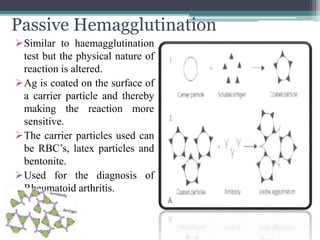
Similar to haemagglutination 
test but the physical nature of 
reaction is altered. 
Ag is coated on the surface of 
a carrier particle and thereby 
making the reaction more 
sensitive. 
The carrier particles used can 
be RBC’s, latex particles and 
bentonite. 
Used for the diagnosis of 
Rheumatoid arthritis.
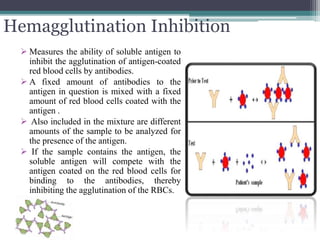
Hemagglutination Inhibition 
 Measures the ability of soluble antigen to 
inhibit the agglutination of antigen-coated 
red blood cells by antibodies. 
 A fixed amount of antibodies to the 
antigen in question is mixed with a fixed 
amount of red blood cells coated with the 
antigen . 
 Also included in the mixture are different 
amounts of the sample to be analyzed for 
the presence of the antigen. 
 If the sample contains the antigen, the 
soluble antigen will compete with the 
antigen coated on the red blood cells for 
binding to the antibodies, thereby 
inhibiting the agglutination of the RBCs.
Antigen Antibody Interactions

Antigen Antibody Interactions

  • 1.
    ANTIGEN ANTIBODY INTERACTIONS Presented By, Iqra Altaf Jinnah University For Women
  • 2.
    Introduction Similar toan enzyme substrate interaction Interactions between the antigenic determinant, or epitope, of the antigen and the variable-region of the antibody molecule. High specificity lead to development of various immunoassays.
  • 3.
  • 4.
    Types Compliment Fixation Test ELISA Immunofluorescence Agglutination Test
  • 5.
    COMPLEMENT FIXATION TEST CFT ‒ Used to detect the presence of either specific antibody or specific antigen in a patient's serum.
  • 6.
  • 7.
    ELISA Is abiochemical technique used mainly in immunology to detect the presence of an antibody or an antigen in a sample.
  • 13.
  • 14.
    INTRODUCTION Immunofluorescence isthe labeling of antibodies or antigens with fluorescent dyes Immunofluorescent labeled tissue sections are studied using a fluorescence microscope. Coons et al (1942) showed that labelled dyes can be conjugated to Ab’s and these labelled antibodies can be used to detect Ag’s.
  • 15.
    Dyes Used Commonly: FLUORESCEIN An organic dye that is the most widely used label for immunofluorescence procedure absorbs light(490nm) and emits an intense yellow green fluorescence(517nm). PHYCOERYTHRIN Is an efficient absorber of light(30 fold greater than fluorescein) and a brilliant emitter of red fluorescence, stimulating as a wide used in immunofluoresence.
  • 16.
    TYPES OF IMMUNOFLUORESCENCE:-  ‰ Direct immunofluorescence  ‰ Indirect immunofluorescence
  • 17.
    Direct Immunofluorescence: Usedto detect antigen in clinical specimens using specific fluorochrome labeled antibody. Ag is fixed on the slide Fluorescein labeled Ab’s are layered over it Slide is washed to remove unattached Ab’s Examined under UV light in an fluorescent microscope The site where the Ab attaches to its specific Ag will show apple green fluorescence
  • 18.
    Indirect Immunofluorescence Indirect test is a double-layer technique  The unlabelled antibody is applied directly to the tissue substrate  Treated with a fluorochrome-conjugated anti-immunoglobulin serum
  • 19.
    Advantage Over DirectIF: Because several fluorescent anti-immunoglobulins can bind to each antibody present in the first layer, the fluorescence is brighter than the direct test. More time-efficient since it is only one signal labelled reagent, the anti-immunoglobulin, is prepared during the lengthy conjugation process.
  • 20.
  • 21.
    Agglutination Reaction Whena particular Ag is mixed with its Ab’s in the presence of electrolytes at a suitable temperature and Ph, the particles are clumped and agglutinated. The Ab of the serum causes the cellular Ag to form clumps and these are called agglutinins. The particulate Antigens that are aggregated are called agglutinogens.  When the antigen is an erythrocyte the term hem agglutination is used.
  • 22.
    Qualitative Agglutination Test Agglutination tests can be used in a qualitative manner to assay for the presence of an antigen or an antibody. The antibody is mixed with the particulate antigen and a positive test is indicated by the agglutination of the particulate antigen. For example, a patient's red blood cells can be mixed with antibody to a blood group antigen to determine a person's blood type. In a second example, a patient's serum is mixed with red blood cells of a known blood type to assay for the presence of antibodies to that blood type in the patient's serum.
  • 24.
    Quantitative Agglutination Test  Serial dilutions are made of a sample to be tested for antibody and then a fixed number of RBCs or bacteria or other such particulate antigen is added.  Maximum dilution that gives agglutination is determined. Maximum dilution that gives visible agglutination is called the titer. Results are reported as the reciprocal of the maximal dilution that gives visible agglutination
  • 25.
    Prozone Effect Occasionally,it is observed that when the concentration of antibody is high, there is no agglutination and then, as the sample is diluted, agglutination occurs. The lack of agglutination at high concentrations of antibodies is called the prozone effect.  Lack of agglutination in the prozone is due to antibody excess resulting in very small complexes that do not clump to form visible agglutination.
  • 27.
    Passive Hemagglutination Similarto haemagglutination test but the physical nature of reaction is altered. Ag is coated on the surface of a carrier particle and thereby making the reaction more sensitive. The carrier particles used can be RBC’s, latex particles and bentonite. Used for the diagnosis of Rheumatoid arthritis.
  • 28.
    Hemagglutination Inhibition Measures the ability of soluble antigen to inhibit the agglutination of antigen-coated red blood cells by antibodies.  A fixed amount of antibodies to the antigen in question is mixed with a fixed amount of red blood cells coated with the antigen .  Also included in the mixture are different amounts of the sample to be analyzed for the presence of the antigen.  If the sample contains the antigen, the soluble antigen will compete with the antigen coated on the red blood cells for binding to the antibodies, thereby inhibiting the agglutination of the RBCs.