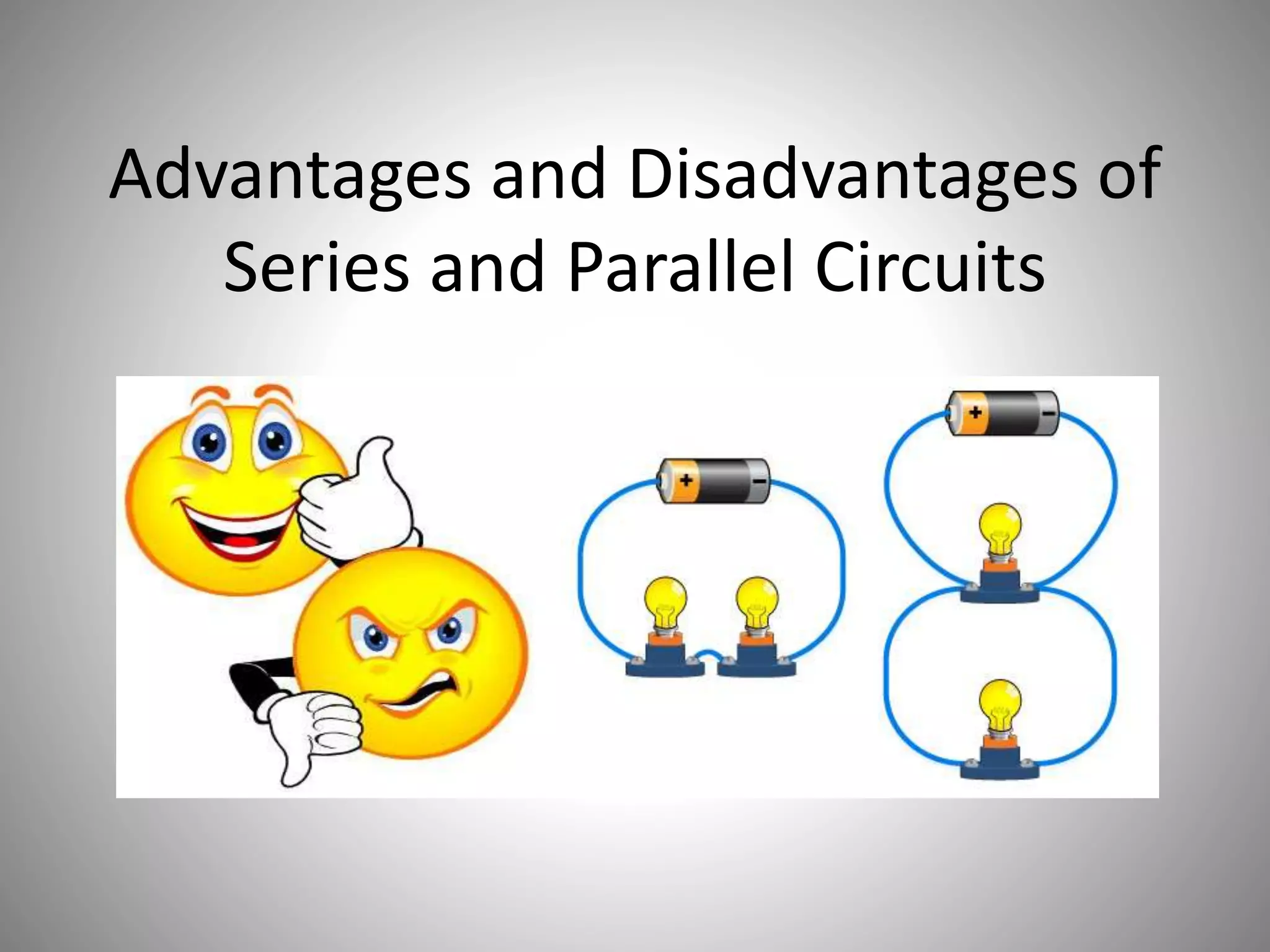
Advantages and Disadvantages of
Series and Parallel Circuits
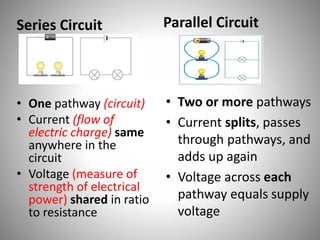
Series Circuit
• One pathway (circuit)
• Current (flow of
electric charge) same
anywhere in the
circuit
• Voltage (measure of
strength of electrical
power) shared in ratio
to resistance
Parallel Circuit
• Two or more pathways
• Current splits, passes
through pathways, and
adds up again
• Voltage across each
pathway equals supply
voltage
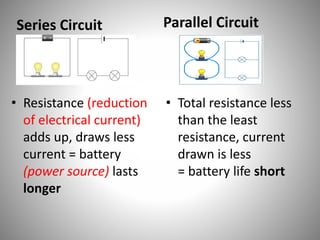
Series Circuit
• Resistance (reduction
of electrical current)
adds up, draws less
current = battery
(power source) lasts
longer
Parallel Circuit
• Total resistance less
than the least
resistance, current
drawn is less
= battery life short
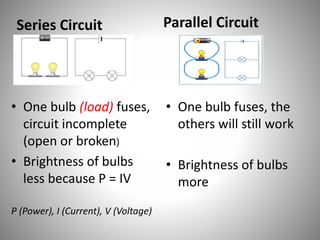
Series Circuit
• One bulb (load) fuses,
circuit incomplete
(open or broken)
• Brightness of bulbs
less because P = IV
P (Power), I (Current), V (Voltage)
Parallel Circuit
• One bulb fuses, the
others will still work
• Brightness of bulbs
more
Similarities
• Converts electrical energy to light, heat,
sound, etc.

Advantages and Disadvantages.pptx

  • 1.
    Advantages and Disadvantagesof Series and Parallel Circuits
  • 2.
    Series Circuit • Onepathway (circuit) • Current (flow of electric charge) same anywhere in the circuit • Voltage (measure of strength of electrical power) shared in ratio to resistance Parallel Circuit • Two or more pathways • Current splits, passes through pathways, and adds up again • Voltage across each pathway equals supply voltage
  • 3.
    Series Circuit • Resistance(reduction of electrical current) adds up, draws less current = battery (power source) lasts longer Parallel Circuit • Total resistance less than the least resistance, current drawn is less = battery life short
  • 4.
    Series Circuit • Onebulb (load) fuses, circuit incomplete (open or broken) • Brightness of bulbs less because P = IV P (Power), I (Current), V (Voltage) Parallel Circuit • One bulb fuses, the others will still work • Brightness of bulbs more
  • 5.
    Similarities • Converts electricalenergy to light, heat, sound, etc.