Fun with Magnets
Class 6
Origin
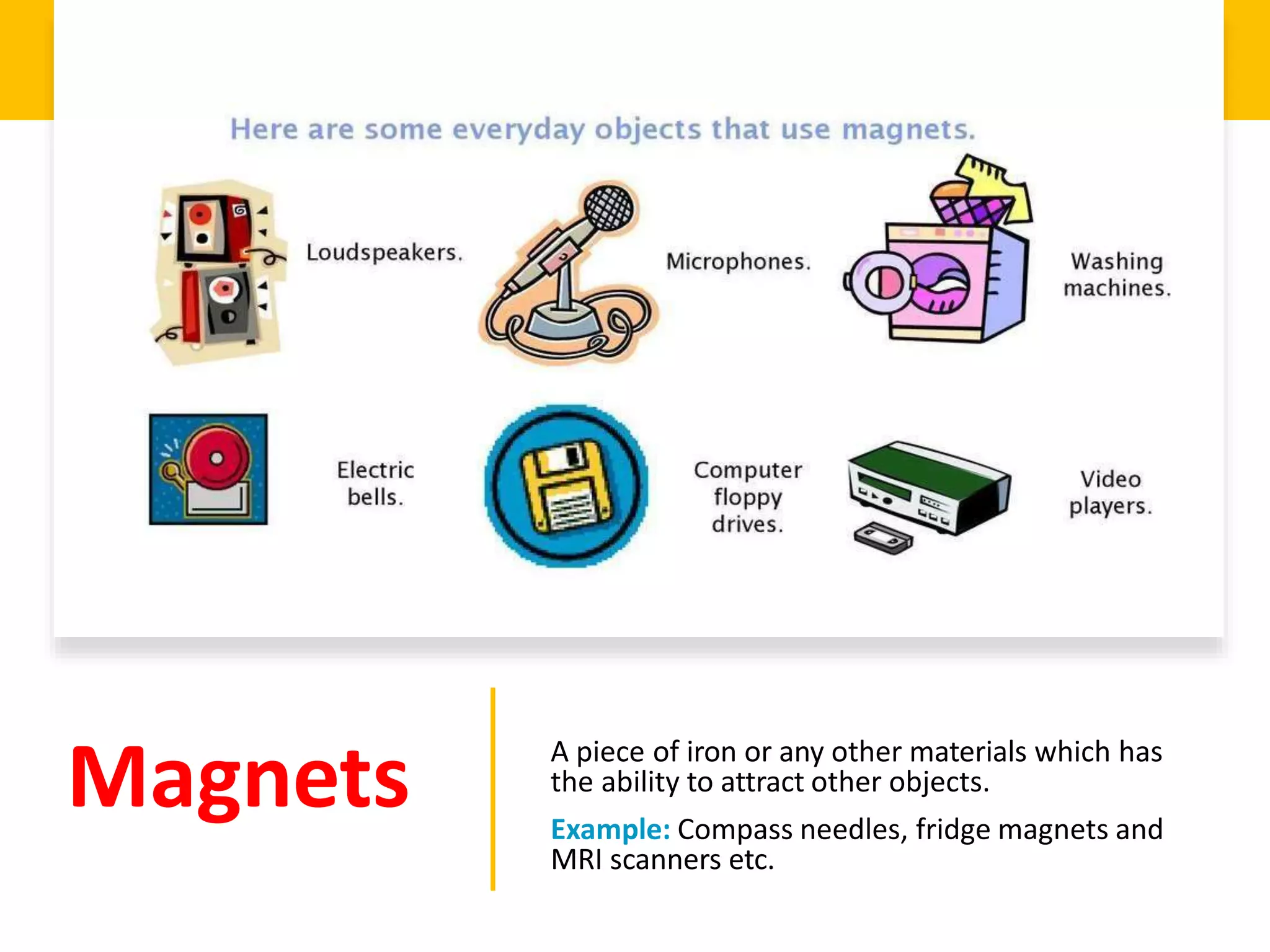
Magnets A piece of iron or any other materials which has
the ability to attract other objects.
Example: Compass needles, fridge magnets and
MRI scanners etc.
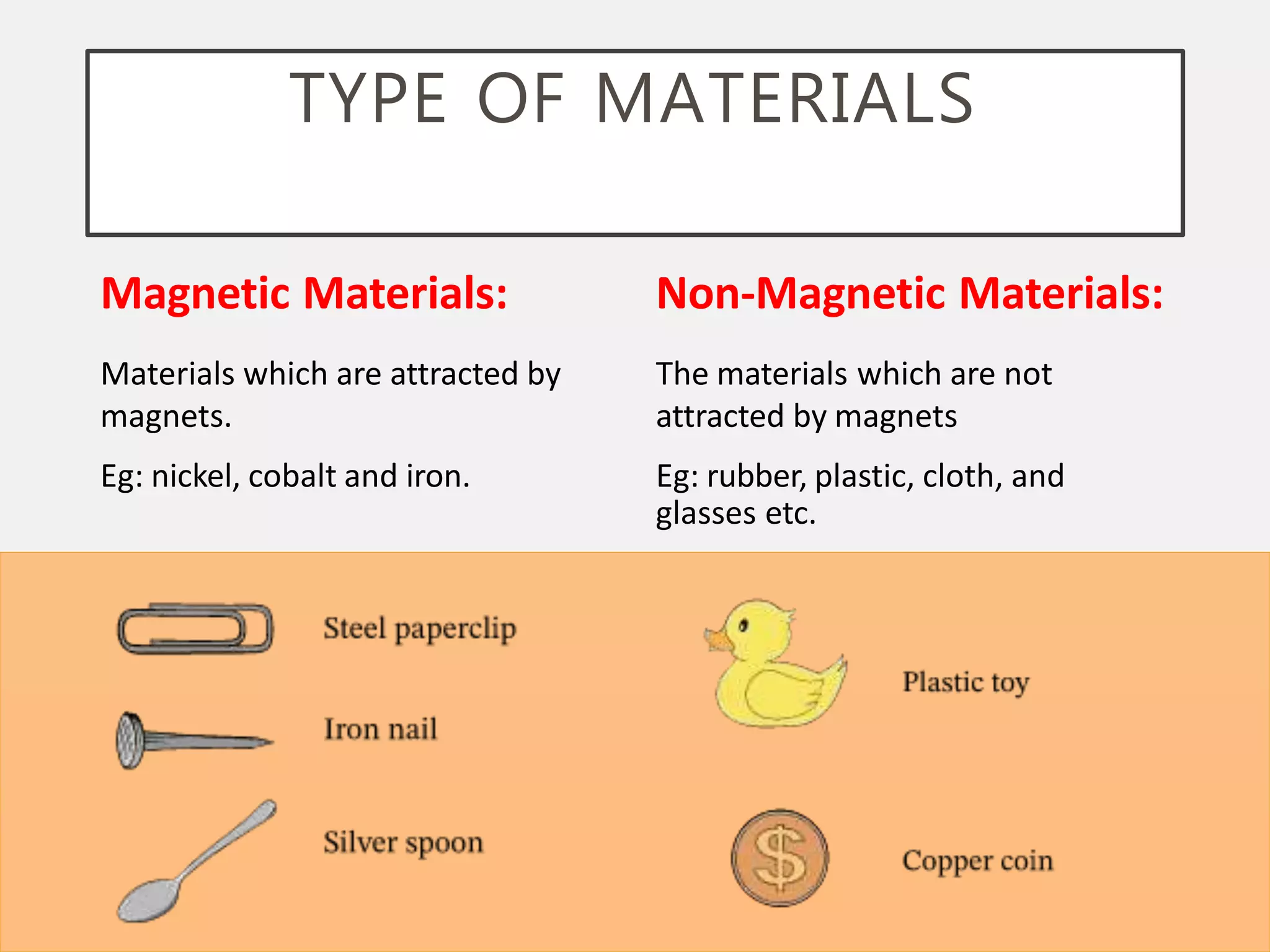
TYPE OF MATERIALS
Magnetic Materials:
Materials which are attracted by
magnets.
Eg: nickel, cobalt and iron.
Non-Magnetic Materials:
The materials which are not
attracted by magnets
Eg: rubber, plastic, cloth, and
glasses etc.
Properties
of Magnet
Attractive Property — Magnet
attracts ferromagnetic materials
like iron, cobalt, and nickel.
Repulsive Properties — Like
magnetic poles repel each other
and unlike magnetic poles attract
each other.
Directive Property — A freely
suspended magnet always points
in a north-south direction.
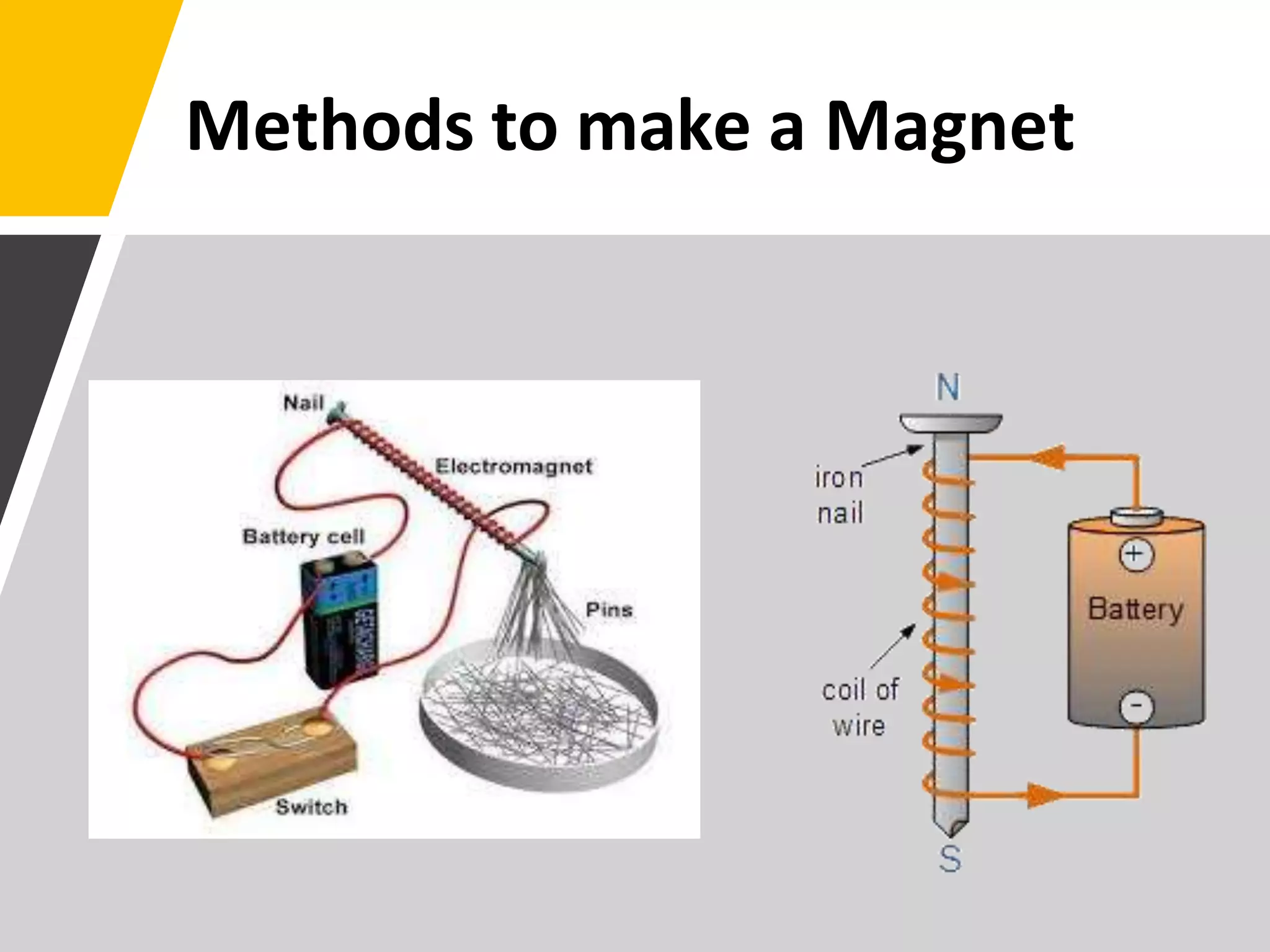
Methods to make a Magnet
• Single Touch Method:
A piece of iron or steel can be magnetized by rubbing it
several times with a magnet in one direction.
• Double Touch method:
Opposite poles of two bar magnets are brought together in
the middle of the bar to be magnetized and then moved
from the middle in the opposite directions to each other.
• Using Electric Current:
The bar to be magnetized is placed inside the coils of a
conductor and current is passed through these coils of wire.
Methods to make a Magnet
Compass
A device used to find directions.
h
Properties:
• A magnetic needle is placed inside a compass box with directions
marked on it.
• It is allowed to rotate freely so that when it comes at rest, the
needle points towards the north direction.
Use:
• To detect the directions.
• To check the polarity of other magnet and to plot magnetic
field lines.
• It is mainly used in ships for navigation and orientation.
• Even in the aviation industry, compass is used but due
to the constant changes in earth's magnetic field.
Important Definitions
• Eg: Iron, Cobalt and Nickel.
Magnets : The substances having the
property of attracting pieces of iron or
some other substances are called magnets.
• Eg: iron, nickel and cobalt.
Magnetic materials : The materials which get
attracted towards magnet are called magnetic
materials.
• Eg: wood, rubber
or plastic.
Non-magnetic materials: The materials which are not
attracted towards a magnet are called non-magnetic
materials.
Lode stone : The magnetic stone indicating directions used by sailors in olden days
to identify directions is called lode stone.
Important Definitions
Demagnetization : The process by which a magnet loses its
magnetism is called demagnetization.
Artificial magnets : Magnets made by humans using
magnetic substances.
Magnetic force : The force exerted by a magnet on
magnetic materials in its magnetic field.
Magnetic poles : The two end points of a magnet where
the magnetic strength in maximum.
Fun with Magnets P6.pptx

Fun with Magnets P6.pptx

  • 1.
  • 2.
  • 3.
    Magnets A pieceof iron or any other materials which has the ability to attract other objects. Example: Compass needles, fridge magnets and MRI scanners etc.
  • 5.
    TYPE OF MATERIALS MagneticMaterials: Materials which are attracted by magnets. Eg: nickel, cobalt and iron. Non-Magnetic Materials: The materials which are not attracted by magnets Eg: rubber, plastic, cloth, and glasses etc.
  • 6.
    Properties of Magnet Attractive Property— Magnet attracts ferromagnetic materials like iron, cobalt, and nickel. Repulsive Properties — Like magnetic poles repel each other and unlike magnetic poles attract each other. Directive Property — A freely suspended magnet always points in a north-south direction.
  • 7.
    Methods to makea Magnet • Single Touch Method: A piece of iron or steel can be magnetized by rubbing it several times with a magnet in one direction. • Double Touch method: Opposite poles of two bar magnets are brought together in the middle of the bar to be magnetized and then moved from the middle in the opposite directions to each other. • Using Electric Current: The bar to be magnetized is placed inside the coils of a conductor and current is passed through these coils of wire.
  • 8.
  • 9.
    Compass A device usedto find directions. h Properties: • A magnetic needle is placed inside a compass box with directions marked on it. • It is allowed to rotate freely so that when it comes at rest, the needle points towards the north direction. Use: • To detect the directions. • To check the polarity of other magnet and to plot magnetic field lines. • It is mainly used in ships for navigation and orientation. • Even in the aviation industry, compass is used but due to the constant changes in earth's magnetic field.
  • 11.
    Important Definitions • Eg:Iron, Cobalt and Nickel. Magnets : The substances having the property of attracting pieces of iron or some other substances are called magnets. • Eg: iron, nickel and cobalt. Magnetic materials : The materials which get attracted towards magnet are called magnetic materials. • Eg: wood, rubber or plastic. Non-magnetic materials: The materials which are not attracted towards a magnet are called non-magnetic materials. Lode stone : The magnetic stone indicating directions used by sailors in olden days to identify directions is called lode stone.
  • 12.
    Important Definitions Demagnetization :The process by which a magnet loses its magnetism is called demagnetization. Artificial magnets : Magnets made by humans using magnetic substances. Magnetic force : The force exerted by a magnet on magnetic materials in its magnetic field. Magnetic poles : The two end points of a magnet where the magnetic strength in maximum.