I C. Diff-iculty Ahead 
Case study created by : Robert Patrick Fredal II
PATIENT HISTORY 
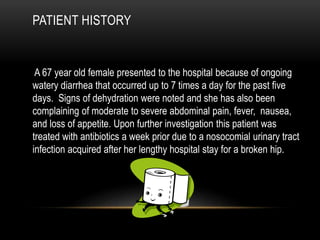
A 67 year old female presented to the hospital because of ongoing 
watery diarrhea that occurred up to 7 times a day for the past five 
days. Signs of dehydration were noted and she has also been 
complaining of moderate to severe abdominal pain, fever, nausea, 
and loss of appetite. Upon further investigation this patient was 
treated with antibiotics a week prior due to a nosocomial urinary tract 
infection acquired after her lengthy hospital stay for a broken hip.
LAB RESULTS 
 Because of the patients prior antibiotic history an anaerobic culture was added to 
the routine stool culture 
 The anaerobically incubated media grew gram positive spore producing bacilli 
 Occult blood was detected in the specimen along with a small amount of pus 
 Upon microscopic examination many white blood cells were noted 
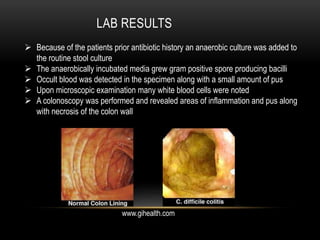
 A colonoscopy was performed and revealed areas of inflammation and pus along 
with necrosis of the colon wall 
www.gihealth.com
What is the possible diagnosis of this patient? 
What organism could be causing this? 
 She was diagnosed with pseudomembranous colitis, 
confirmatory tests were done and came up positive for 
Clostridium difficile 
 Other pathogenic species of the Clostridium genus 
include: 
 C. botulinium (botulism) this organism produces an 
active neurotoxin and can have CNS involvement such 
as blurred vision 
 C. perfringens ( gas gangrene) cause of amputations in 
diabetics 
 Clostridium tetani (tetanus) which causes painful muscle 
spasms that can often lead to respiratory complications
Clostridium difficile: the basics 
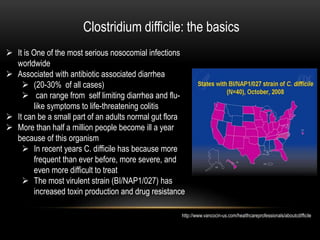
 It is One of the most serious nosocomial infections 
worldwide 
 Associated with antibiotic associated diarrhea 
 (20-30% of all cases) 
 can range from self limiting diarrhea and flu-like 
symptoms to life-threatening colitis 
 It can be a small part of an adults normal gut flora 
 More than half a million people become ill a year 
because of this organism 
 In recent years C. difficile has because more 
frequent than ever before, more severe, and 
even more difficult to treat 
 The most virulent strain (BI/NAP1/027) has 
increased toxin production and drug resistance 
http://www.vancocin-us.com/healthcareprofessionals/aboutcdifficile
Cultural characteristics 
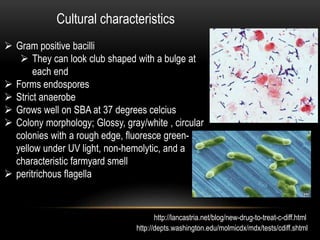
 Gram positive bacilli 
 They can look club shaped with a bulge at 
each end 
 Forms endospores 
 Strict anaerobe 
 Grows well on SBA at 37 degrees celcius 
 Colony morphology; Glossy, gray/white , circular 
colonies with a rough edge, fluoresce green-yellow 
under UV light, non-hemolytic, and a 
characteristic farmyard smell 
 peritrichous flagella 
http://lancastria.net/blog/new-drug-to-treat-c-diff.html 
http://depts.washington.edu/molmicdx/mdx/tests/cdiff.shtml
Culture media 
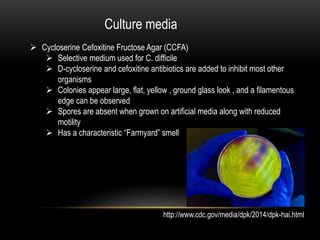
 Cycloserine Cefoxitine Fructose Agar (CCFA) 
 Selective medium used for C. difficile 
 D-cycloserine and cefoxitine antibiotics are added to inhibit most other 
organisms 
 Colonies appear large, flat, yellow , ground glass look , and a filamentous 
edge can be observed 
 Spores are absent when grown on artificial media along with reduced 
motility 
 Has a characteristic “Farmyard” smell 
http://www.cdc.gov/media/dpk/2014/dpk-hai.html
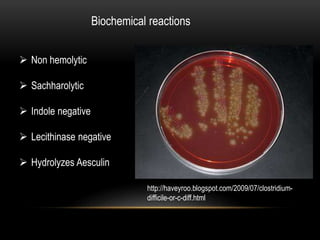
Biochemical reactions 
 Non hemolytic 
 Sachharolytic 
 Indole negative 
 Lecithinase negative 
 Hydrolyzes Aesculin 
http://haveyroo.blogspot.com/2009/07/clostridium-difficile- 
or-c-diff.html
Identification 
 Cell cytotoxicity assays are considered the gold standard 
test for detection of C. difficile toxin by observing the 
cytopathic effects of the toxin in cell culture 
 Enzyme ImmunoAssays (EIA) and Enzyme-Linked 
Immunosorbent Assay (ELISA) tests are available for use 
and can detect toxins A and B 
 PCR is also now starting to be used
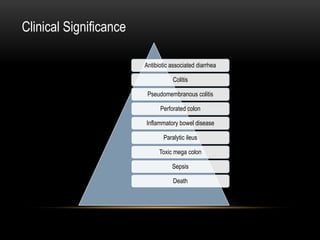
Clinical Significance 
Antibiotic associated diarrhea 
Colitis 
Pseudomembranous colitis 
Perforated colon 
Inflammatory bowel disease 
Paralytic ileus 
Toxic mega colon 
Sepsis 
Death
Virulence factors 
 Enterotoxin (Toxin A) 
 Stimulates chemotaxis and induces cytokine production that leads to 
hyper secretion of fluids from the bowel 
 Cytotoxin ( Toxin B) 
 Causes depolymerization of actin accompanied by loss of the cellular 
cytoskeleton (cytopathic effect) 
 Binary toxin 
 It is unclear the role of this toxin but it may synergistically increase the 
virulence of toxins A & B 
 Adhesion factor 
 Aids in binding to cells in the colon 
 Hyaluronidase ( produces hydrolytic activity) 
 Spore formation 
 Allows for the organism to remain viable under harsh conditions and for 
long periods of time
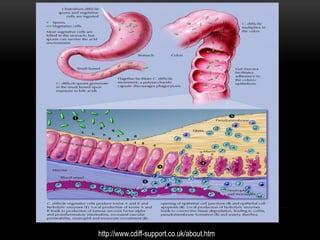
Pathogenic Mechanisms 
 Antibiotics reduce normal flora which allows for C. diff to start 
to multiply and begin to overtake the normal gut bacteria 
 Toxins are produced and cause degradation of the cell 
cytoskeleton 
 This causes loss of cell shape and decreased adherence 
to eachother 
 Fluid leaks occur which leads to the watery diarrhea 
 The toxins can also erode away the colon membrane and 
in severe cases can cause bowel perforation
http://www.cdiff-support.co.uk/about.htm
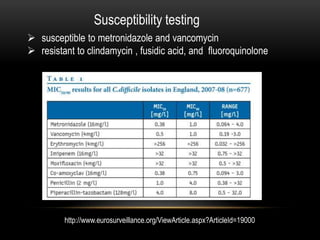
Susceptibility testing 
 susceptible to metronidazole and vancomycin 
 resistant to clindamycin , fusidic acid, and fluoroquinolone 
http://www.eurosurveillance.org/ViewArticle.aspx?ArticleId=19000
Treatment 
 First you should discontinue taking antibiotics that likely caused the 
infection 
 Keep thoroughly hydrated 
 Normally oral metronidazole is given(DOC), but in more complicated 
infections oral vancomycin is administered 
 Human micro biota transplants (poo transplant) 
 Repopulates the gut and suppresses the growth of C. diff 
 Probiotics 
 Surgery may be needed depending on the damage to the bowel ( 
colectomy)
Prevention and disease control 
 WASH YOUR HANDS with soap and 
water 
 Alcohol-based hand cleansers do 
not kill C.diff spores 
 Patient is isolated in a room that includes 
an attached bathroom 
 Contact precautions 
 Cleansing with bleach to disinfect any 
potentially contaminated surfaces 
http://www.nanobugs.com/shop/sposters.html

Adv. microbiology case study

  • 1.
    I C. Diff-icultyAhead Case study created by : Robert Patrick Fredal II
  • 2.
    PATIENT HISTORY A67 year old female presented to the hospital because of ongoing watery diarrhea that occurred up to 7 times a day for the past five days. Signs of dehydration were noted and she has also been complaining of moderate to severe abdominal pain, fever, nausea, and loss of appetite. Upon further investigation this patient was treated with antibiotics a week prior due to a nosocomial urinary tract infection acquired after her lengthy hospital stay for a broken hip.
  • 3.
    LAB RESULTS Because of the patients prior antibiotic history an anaerobic culture was added to the routine stool culture  The anaerobically incubated media grew gram positive spore producing bacilli  Occult blood was detected in the specimen along with a small amount of pus  Upon microscopic examination many white blood cells were noted  A colonoscopy was performed and revealed areas of inflammation and pus along with necrosis of the colon wall www.gihealth.com
  • 4.
    What is thepossible diagnosis of this patient? What organism could be causing this?  She was diagnosed with pseudomembranous colitis, confirmatory tests were done and came up positive for Clostridium difficile  Other pathogenic species of the Clostridium genus include:  C. botulinium (botulism) this organism produces an active neurotoxin and can have CNS involvement such as blurred vision  C. perfringens ( gas gangrene) cause of amputations in diabetics  Clostridium tetani (tetanus) which causes painful muscle spasms that can often lead to respiratory complications
  • 5.
    Clostridium difficile: thebasics  It is One of the most serious nosocomial infections worldwide  Associated with antibiotic associated diarrhea  (20-30% of all cases)  can range from self limiting diarrhea and flu-like symptoms to life-threatening colitis  It can be a small part of an adults normal gut flora  More than half a million people become ill a year because of this organism  In recent years C. difficile has because more frequent than ever before, more severe, and even more difficult to treat  The most virulent strain (BI/NAP1/027) has increased toxin production and drug resistance http://www.vancocin-us.com/healthcareprofessionals/aboutcdifficile
  • 6.
    Cultural characteristics Gram positive bacilli  They can look club shaped with a bulge at each end  Forms endospores  Strict anaerobe  Grows well on SBA at 37 degrees celcius  Colony morphology; Glossy, gray/white , circular colonies with a rough edge, fluoresce green-yellow under UV light, non-hemolytic, and a characteristic farmyard smell  peritrichous flagella http://lancastria.net/blog/new-drug-to-treat-c-diff.html http://depts.washington.edu/molmicdx/mdx/tests/cdiff.shtml
  • 7.
    Culture media Cycloserine Cefoxitine Fructose Agar (CCFA)  Selective medium used for C. difficile  D-cycloserine and cefoxitine antibiotics are added to inhibit most other organisms  Colonies appear large, flat, yellow , ground glass look , and a filamentous edge can be observed  Spores are absent when grown on artificial media along with reduced motility  Has a characteristic “Farmyard” smell http://www.cdc.gov/media/dpk/2014/dpk-hai.html
  • 8.
    Biochemical reactions Non hemolytic  Sachharolytic  Indole negative  Lecithinase negative  Hydrolyzes Aesculin http://haveyroo.blogspot.com/2009/07/clostridium-difficile- or-c-diff.html
  • 9.
    Identification  Cellcytotoxicity assays are considered the gold standard test for detection of C. difficile toxin by observing the cytopathic effects of the toxin in cell culture  Enzyme ImmunoAssays (EIA) and Enzyme-Linked Immunosorbent Assay (ELISA) tests are available for use and can detect toxins A and B  PCR is also now starting to be used
  • 10.
    Clinical Significance Antibioticassociated diarrhea Colitis Pseudomembranous colitis Perforated colon Inflammatory bowel disease Paralytic ileus Toxic mega colon Sepsis Death
  • 11.
    Virulence factors Enterotoxin (Toxin A)  Stimulates chemotaxis and induces cytokine production that leads to hyper secretion of fluids from the bowel  Cytotoxin ( Toxin B)  Causes depolymerization of actin accompanied by loss of the cellular cytoskeleton (cytopathic effect)  Binary toxin  It is unclear the role of this toxin but it may synergistically increase the virulence of toxins A & B  Adhesion factor  Aids in binding to cells in the colon  Hyaluronidase ( produces hydrolytic activity)  Spore formation  Allows for the organism to remain viable under harsh conditions and for long periods of time
  • 12.
    Pathogenic Mechanisms Antibiotics reduce normal flora which allows for C. diff to start to multiply and begin to overtake the normal gut bacteria  Toxins are produced and cause degradation of the cell cytoskeleton  This causes loss of cell shape and decreased adherence to eachother  Fluid leaks occur which leads to the watery diarrhea  The toxins can also erode away the colon membrane and in severe cases can cause bowel perforation
  • 13.
  • 14.
    Susceptibility testing susceptible to metronidazole and vancomycin  resistant to clindamycin , fusidic acid, and fluoroquinolone http://www.eurosurveillance.org/ViewArticle.aspx?ArticleId=19000
  • 15.
    Treatment  Firstyou should discontinue taking antibiotics that likely caused the infection  Keep thoroughly hydrated  Normally oral metronidazole is given(DOC), but in more complicated infections oral vancomycin is administered  Human micro biota transplants (poo transplant)  Repopulates the gut and suppresses the growth of C. diff  Probiotics  Surgery may be needed depending on the damage to the bowel ( colectomy)
  • 16.
    Prevention and diseasecontrol  WASH YOUR HANDS with soap and water  Alcohol-based hand cleansers do not kill C.diff spores  Patient is isolated in a room that includes an attached bathroom  Contact precautions  Cleansing with bleach to disinfect any potentially contaminated surfaces http://www.nanobugs.com/shop/sposters.html