Downloaded 108 times


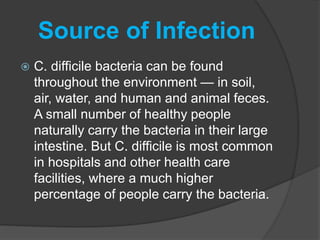
![C. Difficile – Environmental
Epidemiology
water
river (88%)
lake (47%)
sea (44%)
swimming pool (50%)
mains tap 1/18 (6%)
• soil (21%)
• raw vegetables (2%)
• private residences
(2%)
• dogs (10%), cats
(2%)
• hospital
environments (20%)]](https://image.slidesharecdn.com/clostridiumdifficle-141017210510-conversion-gate01/85/Clostridium-difficle-An-emerging-Infection-6-320.jpg)




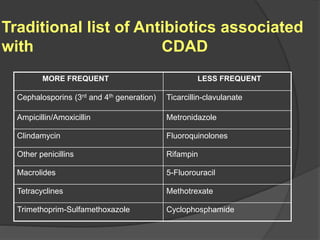
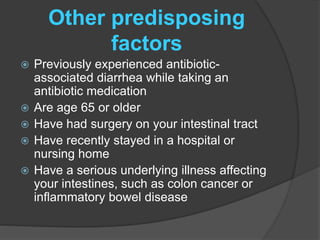
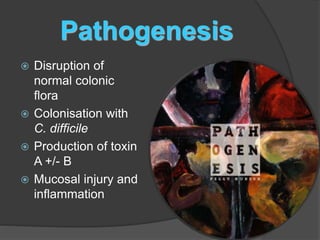
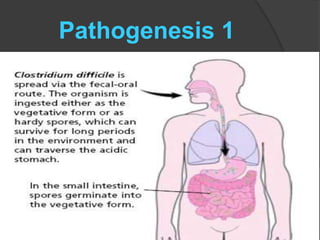

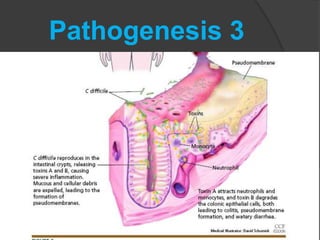


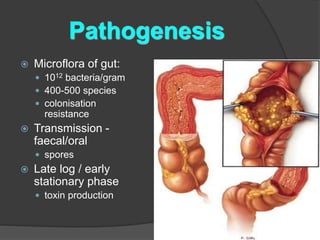
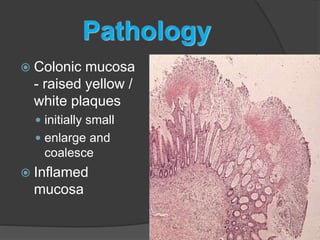

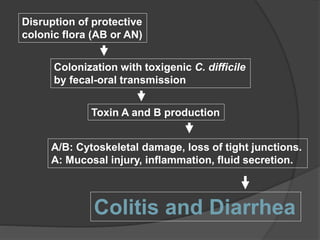


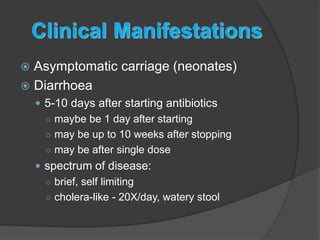
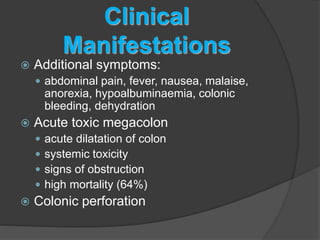



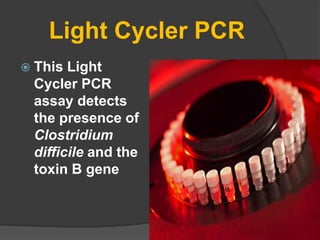
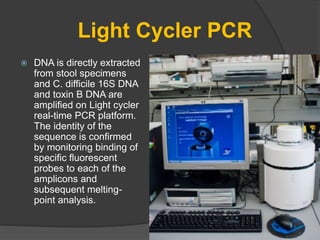





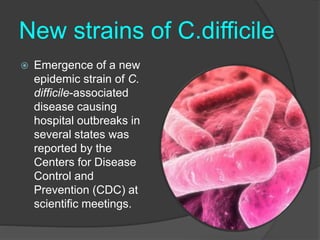

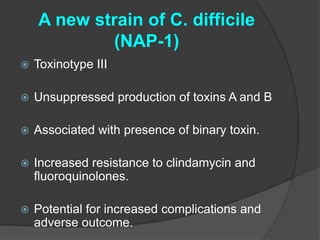















Clostridium difficile, often called C. difficile or C. diff, is a bacterium that can cause symptoms ranging from diarrhea to life-threatening inflammation of the colon. It is most commonly contracted after use of antibiotic medications, which wipe out competing gut bacteria. C. difficile infection causes illness by producing toxins that damage the colonic lining. Symptoms include watery diarrhea, fever, loss of appetite and abdominal pain or tenderness. Diagnosis involves tests of stool samples for C. difficile bacteria or its toxins.


