Clostridium difficile
Colitis
DONE BY
SARAVANAN NIRMAL KUMAR
1527
Clostridium difficile (C. difficile) is a bacterium that can cause severe
gastrointestinal issues. Understanding its causes, symptoms, and
treatment options is crucial for effective management. This
presentation will explore these aspects to enhance awareness and
promote better health outcomes.
What is C. difficile?
Clostridium difficile is a spore-forming bacterium that can lead to
colitis, an inflammation of the colon.
C. diff is a common cause of heathcare-associated diarrhea
C. Diff colitis can range from mild to severe and life threatening.
It often occurs after antibiotic use, which disrupts the normal gut flora,
allowing C. difficile to thrive. Understanding its nature helps in
preventing infections.

Epidemiology
 1. Global incidence: C. diff is a leading cause of healthcare-
associated diarrhea worldwide.
 2. US incidence: Estimated 500,000 cases of C. diff infection occur
annually in the US.
 3. Prevalence: C. diff colonization rates range from 2% to 70% in
healthcare settings.
Morphology of C. difficile
 # Morphology
 1. Shape: C. diff is a rod-shaped gram positive bacterium, typically 2-
7 μm in length and 0.5-1.5 μm in width.
 2. Cell wall: The cell wall is composed of a thick peptidoglycan layer,
which provides structural support and maintains the cell's shape.
 3. Cell membrane: The cell membrane is a phospholipid bilayer that
regulates the movement of molecules in and out of the cell.
 4. Flagella: C. diff has peritrichous flagella, which are located all over
the surface of the bacterium.
 5. Spores: C. diff forms highly resistant spores that are characteristic
of the species.
Physiology of C. difficile
 Physiology
 1. Metabolism: C. diff is an anaerobic bacterium, meaning it does not require
oxygen to grow.
 2. Nutrition: C. diff is a saccharolytic bacterium, meaning it obtains energy by
fermenting sugars.
 3. Toxin production: C. diff produces two main toxins, Toxin A (TcdA) and Toxin B
(TcdB), which are responsible for the symptoms of C. diff infection
Binary toxin: some C. diff strains produce a binary toxin, which can contribute to
disease severity.
 4. Motility: C. diff is motile, with the ability to move through its environment using
its flagella.
 5. Adhesion: C. diff has the ability to adhere to intestinal epithelial cells, which is
an important step in the infection process
Growth and environmental
conditions
 1. Temperature: C. diff grows best at temperatures between 25°C
and 37°C.
 2. pH: C. diff grows best at a pH range of 6.5-8.5.
 3. Anaerobic conditions: C. diff requires anaerobic conditions to
grow, meaning it does not tolerate oxygen.
 4. Nutrient requirements: C. diff requires a source of carbohydrates,
such as glucose or fructose, to grow.
Sporulation
 1. Sporulation process: C. diff forms spores in response to
environmental stresses, such as nutrient depletion or exposure to
oxygen.
 2. Spore structure: C. diff spores are highly resistant, dormant
structures that are composed of a thick, keratin-like coat that
surrounds a central core of DNA and proteins.
 3. Spore function: Spores enable C. diff to survive in a dormant state
for extended periods, allowing it to persist in the environment and
transmit infection.
Classification
 # Severity Classification
 1. Mild: Diarrhea, minimal abdominal tenderness, and no signs of systemic toxicity.
 2. Moderate: Diarrhea, moderate abdominal tenderness, and some signs of systemic
toxicity (e.g., fever, leukocytosis).
 3. Severe: Diarrhea, severe abdominal tenderness, and significant signs of systemic
toxicity (e.g., high fever, high leukocyte count, hypotension).
 4. Fulminant: Severe diarrhea, abdominal tenderness, and life-threatening
complications (e.g., toxic megacolon, perforation, sepsis).
 # Disease Classification
 1. Initial Episode: First occurrence of C. diff colitis.
 2. First Recurrence: Recurrence of C. diff colitis within 8 weeks of initial episode.
 3. Second or Subsequent Recurrence: Recurrence of C. diff colitis more than 8 weeks
after initial episode.
 # Infection Classification
 1. Asymptomatic Colonization: Presence of C. diff in stool without symptoms.
 2. Symptomatic Infection: Presence of C. diff in stool with symptoms (e.g.,
diarrhea, abdominal pain).
 3. Toxic Megacolon: Life-threatening complication characterized by a very
inflated colon.
 # Strain Classification
 1. Toxigenic Strains: Strains that produce toxins A and B (e.g., NAP1/BI/027).
 2. Non-Toxigenic Strains: Strains that do not produce toxins A and B.
 3. Hypervirulent Strains: Strains that are associated with increased severity
and mortality (e.g., NAP1/BI/027).
Causes of C. difficile infection
 The primary cause of C. difficile infection is the use of antibiotics,
which can disturb of gut bacteria. Other factors include
hospitalization, advanced age, and underlying health conditions.
Identifying these cause is key to prevention.
Pathogenesis
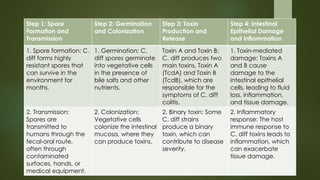
Step 1: Spore
Formation and
Transmission
Step 2: Germination
and Colonization
Step 3: Toxin
Production and
Release
Step 4: Intestinal
Epithelial Damage
and Inflammation
1. Spore formation: C.
diff forms highly
resistant spores that
can survive in the
environment for
months.
1. Germination: C.
diff spores germinate
into vegetative cells
in the presence of
bile salts and other
nutrients.
Toxin A and Toxin B:
C. diff produces two
main toxins, Toxin A
(TcdA) and Toxin B
(TcdB), which are
responsible for the
symptoms of C. diff
colitis.
1. Toxin-mediated
damage: Toxins A
and B cause
damage to the
intestinal epithelial
cells, leading to fluid
loss, inflammation,
and tissue damage.
2. Transmission:
Spores are
transmitted to
humans through the
fecal-oral route,
often through
contaminated
surfaces, hands, or
medical equipment.
2. Colonization:
Vegetative cells
colonize the intestinal
mucosa, where they
can produce toxins.
2. Binary toxin: Some
C. diff strains
produce a binary
toxin, which can
contribute to disease
severity.
2. Inflammatory
response: The host
immune response to
C. diff toxins leads to
inflammation, which
can exacerbate
tissue damage.
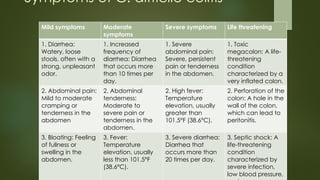
Symptoms of C. difficile colitis
Mild symptoms Moderate
symptoms
Severe symptoms Life threatening
1. Diarrhea:
Watery, loose
stools, often with a
strong, unpleasant
odor.
1. Increased
frequency of
diarrhea: Diarrhea
that occurs more
than 10 times per
day.
1. Severe
abdominal pain:
Severe, persistent
pain or tenderness
in the abdomen.
1. Toxic
megacolon: A life-
threatening
condition
characterized by a
very inflated colon.
2. Abdominal pain:
Mild to moderate
cramping or
tenderness in the
abdomen
2. Abdominal
tenderness:
Moderate to
severe pain or
tenderness in the
abdomen.
2. High fever:
Temperature
elevation, usually
greater than
101.5°F (38.6°C).
2. Perforation of the
colon: A hole in the
wall of the colon,
which can lead to
peritonitis.
3. Bloating: Feeling
of fullness or
swelling in the
abdomen.
3. Fever:
Temperature
elevation, usually
less than 101.5°F
(38.6°C).
3. Severe diarrhea:
Diarrhea that
occurs more than
20 times per day.
3. Septic shock: A
life-threatening
condition
characterized by
severe infection,
low blood pressure,
Risk factors
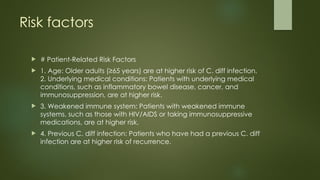
 # Patient-Related Risk Factors
 1. Age: Older adults (≥65 years) are at higher risk of C. diff infection.
2. Underlying medical conditions: Patients with underlying medical
conditions, such as inflammatory bowel disease, cancer, and
immunosuppression, are at higher risk.
 3. Weakened immune system: Patients with weakened immune
systems, such as those with HIV/AIDS or taking immunosuppressive
medications, are at higher risk.
 4. Previous C. diff infection: Patients who have had a previous C. diff
infection are at higher risk of recurrence.
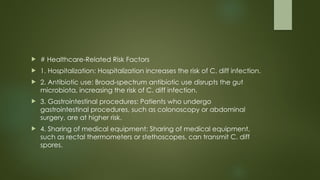
 # Healthcare-Related Risk Factors
 1. Hospitalization: Hospitalization increases the risk of C. diff infection.
 2. Antibiotic use: Broad-spectrum antibiotic use disrupts the gut
microbiota, increasing the risk of C. diff infection.
 3. Gastrointestinal procedures: Patients who undergo
gastrointestinal procedures, such as colonoscopy or abdominal
surgery, are at higher risk.
 4. Sharing of medical equipment: Sharing of medical equipment,
such as rectal thermometers or stethoscopes, can transmit C. diff
spores.
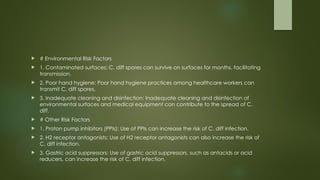
 # Environmental Risk Factors
 1. Contaminated surfaces: C. diff spores can survive on surfaces for months, facilitating
transmission.
 2. Poor hand hygiene: Poor hand hygiene practices among healthcare workers can
transmit C. diff spores.
 3. Inadequate cleaning and disinfection: Inadequate cleaning and disinfection of
environmental surfaces and medical equipment can contribute to the spread of C.
diff.
 # Other Risk Factors
 1. Proton pump inhibitors (PPIs): Use of PPIs can increase the risk of C. diff infection.
 2. H2 receptor antagonists: Use of H2 receptor antagonists can also increase the risk of
C. diff infection.
 3. Gastric acid suppressors: Use of gastric acid suppressors, such as antacids or acid
reducers, can increase the risk of C. diff infection.
Diagnosis
 # Clinical Diagnosis
 1. Medical history: Assess patient's medical history, including antibiotic use,
hospitalization, and underlying medical conditions.
 2. Physical examination: Perform a physical examination to assess for signs of infection,
such as abdominal tenderness, fever, and blood in stool.
 3. Symptom evaluation: Evaluate patient's symptoms, including diarrhea, abdominal
pain, and vomiting.
 # Laboratory Tests
 1. Stool tests: Perform stool tests to detect C. diff toxins or antigens, such as: - Enzyme
immunoassay (EIA) - Polymerase chain reaction (PCR) - Toxin assays
 2. Complete Blood Count (CBC): Perform a CBC to assess for signs of infection, such as
elevated white blood cell count.
 3. Blood chemistry tests: Perform blood chemistry tests to assess for signs of
dehydration, electrolyte imbalance, or organ dysfunction.
 # Imaging Studies
 1. Computed Tomography (CT) scan: Perform a CT scan to assess
for signs of colitis, such as bowel wall thickening or pericolonic fat
stranding.
 2. Abdominal X-ray: Perform an abdominal X-ray to assess for signs
of bowel obstruction or free air.
 # Endoscopy and Biopsy
 1. Colonoscopy: Perform a colonoscopy to visualize the colon and
assess for signs of colitis, such as pseudomembranes or ulcers.
 2. Biopsy: Perform a biopsy to collect tissue samples for
histopathological examination.
 # Diagnostic Criteria
 1. Clinical criteria: Diarrhea (≥3 loose stools per day) or toxic megacolon.
 2. Laboratory criteria: Positive stool test for C. diff toxins or antigens.
 3. Imaging criteria: Evidence of colitis on CT scan or abdominal X-ray.
 # Differential Diagnosis
 1. Inflammatory bowel disease (IBD): Ulcerative colitis or Crohn's disease.
 2. Gastroenteritis: Viral or bacterial gastroenteritis.
 3. Antibiotic-associated diarrhea: Diarrhea caused by antibiotic use
without C. diff infection.
Treatment
 # Treatment
 1. Discontinuation of antibiotics: Stop the use of antibiotics that may
have triggered the C. diff infection.
 2. Fluid and electrolyte replacement: Replace lost fluids and electrolytes
to prevent dehydration and electrolyte imbalance.
 3. Antibiotics: Use antibiotics that are effective against C. diff, such as: -
Metronidazole (Flagyl) - Vancomycin (Vancocin) - Fidaxomicin
(Dificid)
 4. Probiotics: Use probiotics, such as Saccharomyces boulardii or
Lactobacillus acidophilus, to help restore the normal gut microbiota.
 5. Fecal microbiota transplantation (FMT): Consider FMT for patients with
recurrent C. diff infection.
Prevention
 # Prevention
 1. Antibiotic stewardship: Use antibiotics judiciously and only when
necessary.
 2. Hand hygiene: Practice good hand hygiene, including washing hands
with soap and water or using an alcohol-based hand sanitizer.
 3. Contact precautions: Use contact precautions, including gloves and
gowns, when caring for patients with C. diff infection.
 4. Environmental cleaning and disinfection: Clean and disinfect
environmental surfaces, including those in patient rooms and bathrooms.
 5. Proper use of personal protective equipment (PPE): Use PPE, including
gloves and masks, when caring for patients with C. diff infection.
Complications
 # Complications
 1. Toxic megacolon: A life-threatening complication characterized by a very inflated
colon.
 2. Perforation of the colon: A hole in the wall of the colon, which can lead to
peritonitis.
 3. Sepsis: A life-threatening condition characterized by a severe infection that can
cause organ dysfunction.
 4. Shock: A life-threatening condition characterized by a severe drop in blood
pressure.
 5. Death: C. diff infection can be fatal, especially in older adults or those with
underlying medical conditions.
 6. Recurrent infection: C. diff infection can recur, even after treatment.
 7. Extraintestinal infections: C. diff can cause infections outside of the intestines, such
as bacteremia or osteomyelitis.
Recurrence
 Recurrence-
 C. diff colitis can recur after treatment.
 - Recurrence rates: up to 25% after initial treatment
 - Risk factors for recurrence: antibiotic use, hospitalization, and
underlying medical conditions
 - Treatment options for recurrent disease: FMT, vancomycin, or
fidaxomicin
Fecal Microbiota Transplantation
(FMT)
 Fecal Microbiota Transplantation (FMT)
 - FMT is a treatment option for recurrent C. diff colitis.
 - FMT involves transferring fecal matter from a healthy donor into the
colon of the patient
 - FMT can restore the balance of gut microbiota and resolve
symptoms
Antibiotic Stewardship
 Antibiotic Stewardship
 -Antibiotic stewardship is crucial in preventing C. diff colitis.
 - Antibiotics should only be used when necessary
 - Antibiotics should be chosen based on susceptibility patterns and
local epidemiology
 - Antibiotics should be used for the shortest duration possible
Nirmal kumar 1527 Clostridium difficile Colitis.pptx

Nirmal kumar 1527 Clostridium difficile Colitis.pptx

  • 1.
  • 2.
    Clostridium difficile (C.difficile) is a bacterium that can cause severe gastrointestinal issues. Understanding its causes, symptoms, and treatment options is crucial for effective management. This presentation will explore these aspects to enhance awareness and promote better health outcomes.
  • 3.
    What is C.difficile? What is C. difficile? Clostridium difficile is a spore-forming bacterium that can lead to colitis, an inflammation of the colon. C. diff is a common cause of heathcare-associated diarrhea C. Diff colitis can range from mild to severe and life threatening. It often occurs after antibiotic use, which disrupts the normal gut flora, allowing C. difficile to thrive. Understanding its nature helps in preventing infections.
  • 4.
    Epidemiology  1. Globalincidence: C. diff is a leading cause of healthcare- associated diarrhea worldwide.  2. US incidence: Estimated 500,000 cases of C. diff infection occur annually in the US.  3. Prevalence: C. diff colonization rates range from 2% to 70% in healthcare settings.
  • 5.
    Morphology of C.difficile  # Morphology  1. Shape: C. diff is a rod-shaped gram positive bacterium, typically 2- 7 μm in length and 0.5-1.5 μm in width.  2. Cell wall: The cell wall is composed of a thick peptidoglycan layer, which provides structural support and maintains the cell's shape.  3. Cell membrane: The cell membrane is a phospholipid bilayer that regulates the movement of molecules in and out of the cell.  4. Flagella: C. diff has peritrichous flagella, which are located all over the surface of the bacterium.  5. Spores: C. diff forms highly resistant spores that are characteristic of the species.
  • 6.
    Physiology of C.difficile  Physiology  1. Metabolism: C. diff is an anaerobic bacterium, meaning it does not require oxygen to grow.  2. Nutrition: C. diff is a saccharolytic bacterium, meaning it obtains energy by fermenting sugars.  3. Toxin production: C. diff produces two main toxins, Toxin A (TcdA) and Toxin B (TcdB), which are responsible for the symptoms of C. diff infection Binary toxin: some C. diff strains produce a binary toxin, which can contribute to disease severity.  4. Motility: C. diff is motile, with the ability to move through its environment using its flagella.  5. Adhesion: C. diff has the ability to adhere to intestinal epithelial cells, which is an important step in the infection process
  • 7.
    Growth and environmental conditions 1. Temperature: C. diff grows best at temperatures between 25°C and 37°C.  2. pH: C. diff grows best at a pH range of 6.5-8.5.  3. Anaerobic conditions: C. diff requires anaerobic conditions to grow, meaning it does not tolerate oxygen.  4. Nutrient requirements: C. diff requires a source of carbohydrates, such as glucose or fructose, to grow.
  • 8.
    Sporulation  1. Sporulationprocess: C. diff forms spores in response to environmental stresses, such as nutrient depletion or exposure to oxygen.  2. Spore structure: C. diff spores are highly resistant, dormant structures that are composed of a thick, keratin-like coat that surrounds a central core of DNA and proteins.  3. Spore function: Spores enable C. diff to survive in a dormant state for extended periods, allowing it to persist in the environment and transmit infection.
  • 9.
    Classification  # SeverityClassification  1. Mild: Diarrhea, minimal abdominal tenderness, and no signs of systemic toxicity.  2. Moderate: Diarrhea, moderate abdominal tenderness, and some signs of systemic toxicity (e.g., fever, leukocytosis).  3. Severe: Diarrhea, severe abdominal tenderness, and significant signs of systemic toxicity (e.g., high fever, high leukocyte count, hypotension).  4. Fulminant: Severe diarrhea, abdominal tenderness, and life-threatening complications (e.g., toxic megacolon, perforation, sepsis).  # Disease Classification  1. Initial Episode: First occurrence of C. diff colitis.  2. First Recurrence: Recurrence of C. diff colitis within 8 weeks of initial episode.  3. Second or Subsequent Recurrence: Recurrence of C. diff colitis more than 8 weeks after initial episode.
  • 10.
     # InfectionClassification  1. Asymptomatic Colonization: Presence of C. diff in stool without symptoms.  2. Symptomatic Infection: Presence of C. diff in stool with symptoms (e.g., diarrhea, abdominal pain).  3. Toxic Megacolon: Life-threatening complication characterized by a very inflated colon.  # Strain Classification  1. Toxigenic Strains: Strains that produce toxins A and B (e.g., NAP1/BI/027).  2. Non-Toxigenic Strains: Strains that do not produce toxins A and B.  3. Hypervirulent Strains: Strains that are associated with increased severity and mortality (e.g., NAP1/BI/027).
  • 11.
    Causes of C.difficile infection  The primary cause of C. difficile infection is the use of antibiotics, which can disturb of gut bacteria. Other factors include hospitalization, advanced age, and underlying health conditions. Identifying these cause is key to prevention.
  • 12.
  • 13.
    Step 1: Spore Formationand Transmission Step 2: Germination and Colonization Step 3: Toxin Production and Release Step 4: Intestinal Epithelial Damage and Inflammation 1. Spore formation: C. diff forms highly resistant spores that can survive in the environment for months. 1. Germination: C. diff spores germinate into vegetative cells in the presence of bile salts and other nutrients. Toxin A and Toxin B: C. diff produces two main toxins, Toxin A (TcdA) and Toxin B (TcdB), which are responsible for the symptoms of C. diff colitis. 1. Toxin-mediated damage: Toxins A and B cause damage to the intestinal epithelial cells, leading to fluid loss, inflammation, and tissue damage. 2. Transmission: Spores are transmitted to humans through the fecal-oral route, often through contaminated surfaces, hands, or medical equipment. 2. Colonization: Vegetative cells colonize the intestinal mucosa, where they can produce toxins. 2. Binary toxin: Some C. diff strains produce a binary toxin, which can contribute to disease severity. 2. Inflammatory response: The host immune response to C. diff toxins leads to inflammation, which can exacerbate tissue damage.
  • 14.
    Symptoms of C.difficile colitis Mild symptoms Moderate symptoms Severe symptoms Life threatening 1. Diarrhea: Watery, loose stools, often with a strong, unpleasant odor. 1. Increased frequency of diarrhea: Diarrhea that occurs more than 10 times per day. 1. Severe abdominal pain: Severe, persistent pain or tenderness in the abdomen. 1. Toxic megacolon: A life- threatening condition characterized by a very inflated colon. 2. Abdominal pain: Mild to moderate cramping or tenderness in the abdomen 2. Abdominal tenderness: Moderate to severe pain or tenderness in the abdomen. 2. High fever: Temperature elevation, usually greater than 101.5°F (38.6°C). 2. Perforation of the colon: A hole in the wall of the colon, which can lead to peritonitis. 3. Bloating: Feeling of fullness or swelling in the abdomen. 3. Fever: Temperature elevation, usually less than 101.5°F (38.6°C). 3. Severe diarrhea: Diarrhea that occurs more than 20 times per day. 3. Septic shock: A life-threatening condition characterized by severe infection, low blood pressure,
  • 15.
    Risk factors  #Patient-Related Risk Factors  1. Age: Older adults (≥65 years) are at higher risk of C. diff infection. 2. Underlying medical conditions: Patients with underlying medical conditions, such as inflammatory bowel disease, cancer, and immunosuppression, are at higher risk.  3. Weakened immune system: Patients with weakened immune systems, such as those with HIV/AIDS or taking immunosuppressive medications, are at higher risk.  4. Previous C. diff infection: Patients who have had a previous C. diff infection are at higher risk of recurrence.
  • 16.
     # Healthcare-RelatedRisk Factors  1. Hospitalization: Hospitalization increases the risk of C. diff infection.  2. Antibiotic use: Broad-spectrum antibiotic use disrupts the gut microbiota, increasing the risk of C. diff infection.  3. Gastrointestinal procedures: Patients who undergo gastrointestinal procedures, such as colonoscopy or abdominal surgery, are at higher risk.  4. Sharing of medical equipment: Sharing of medical equipment, such as rectal thermometers or stethoscopes, can transmit C. diff spores.
  • 17.
     # EnvironmentalRisk Factors  1. Contaminated surfaces: C. diff spores can survive on surfaces for months, facilitating transmission.  2. Poor hand hygiene: Poor hand hygiene practices among healthcare workers can transmit C. diff spores.  3. Inadequate cleaning and disinfection: Inadequate cleaning and disinfection of environmental surfaces and medical equipment can contribute to the spread of C. diff.  # Other Risk Factors  1. Proton pump inhibitors (PPIs): Use of PPIs can increase the risk of C. diff infection.  2. H2 receptor antagonists: Use of H2 receptor antagonists can also increase the risk of C. diff infection.  3. Gastric acid suppressors: Use of gastric acid suppressors, such as antacids or acid reducers, can increase the risk of C. diff infection.
  • 18.
    Diagnosis  # ClinicalDiagnosis  1. Medical history: Assess patient's medical history, including antibiotic use, hospitalization, and underlying medical conditions.  2. Physical examination: Perform a physical examination to assess for signs of infection, such as abdominal tenderness, fever, and blood in stool.  3. Symptom evaluation: Evaluate patient's symptoms, including diarrhea, abdominal pain, and vomiting.  # Laboratory Tests  1. Stool tests: Perform stool tests to detect C. diff toxins or antigens, such as: - Enzyme immunoassay (EIA) - Polymerase chain reaction (PCR) - Toxin assays  2. Complete Blood Count (CBC): Perform a CBC to assess for signs of infection, such as elevated white blood cell count.  3. Blood chemistry tests: Perform blood chemistry tests to assess for signs of dehydration, electrolyte imbalance, or organ dysfunction.
  • 19.
     # ImagingStudies  1. Computed Tomography (CT) scan: Perform a CT scan to assess for signs of colitis, such as bowel wall thickening or pericolonic fat stranding.  2. Abdominal X-ray: Perform an abdominal X-ray to assess for signs of bowel obstruction or free air.  # Endoscopy and Biopsy  1. Colonoscopy: Perform a colonoscopy to visualize the colon and assess for signs of colitis, such as pseudomembranes or ulcers.  2. Biopsy: Perform a biopsy to collect tissue samples for histopathological examination.
  • 20.
     # DiagnosticCriteria  1. Clinical criteria: Diarrhea (≥3 loose stools per day) or toxic megacolon.  2. Laboratory criteria: Positive stool test for C. diff toxins or antigens.  3. Imaging criteria: Evidence of colitis on CT scan or abdominal X-ray.  # Differential Diagnosis  1. Inflammatory bowel disease (IBD): Ulcerative colitis or Crohn's disease.  2. Gastroenteritis: Viral or bacterial gastroenteritis.  3. Antibiotic-associated diarrhea: Diarrhea caused by antibiotic use without C. diff infection.
  • 21.
    Treatment  # Treatment 1. Discontinuation of antibiotics: Stop the use of antibiotics that may have triggered the C. diff infection.  2. Fluid and electrolyte replacement: Replace lost fluids and electrolytes to prevent dehydration and electrolyte imbalance.  3. Antibiotics: Use antibiotics that are effective against C. diff, such as: - Metronidazole (Flagyl) - Vancomycin (Vancocin) - Fidaxomicin (Dificid)  4. Probiotics: Use probiotics, such as Saccharomyces boulardii or Lactobacillus acidophilus, to help restore the normal gut microbiota.  5. Fecal microbiota transplantation (FMT): Consider FMT for patients with recurrent C. diff infection.
  • 22.
    Prevention  # Prevention 1. Antibiotic stewardship: Use antibiotics judiciously and only when necessary.  2. Hand hygiene: Practice good hand hygiene, including washing hands with soap and water or using an alcohol-based hand sanitizer.  3. Contact precautions: Use contact precautions, including gloves and gowns, when caring for patients with C. diff infection.  4. Environmental cleaning and disinfection: Clean and disinfect environmental surfaces, including those in patient rooms and bathrooms.  5. Proper use of personal protective equipment (PPE): Use PPE, including gloves and masks, when caring for patients with C. diff infection.
  • 23.
    Complications  # Complications 1. Toxic megacolon: A life-threatening complication characterized by a very inflated colon.  2. Perforation of the colon: A hole in the wall of the colon, which can lead to peritonitis.  3. Sepsis: A life-threatening condition characterized by a severe infection that can cause organ dysfunction.  4. Shock: A life-threatening condition characterized by a severe drop in blood pressure.  5. Death: C. diff infection can be fatal, especially in older adults or those with underlying medical conditions.  6. Recurrent infection: C. diff infection can recur, even after treatment.  7. Extraintestinal infections: C. diff can cause infections outside of the intestines, such as bacteremia or osteomyelitis.
  • 24.
    Recurrence  Recurrence-  C.diff colitis can recur after treatment.  - Recurrence rates: up to 25% after initial treatment  - Risk factors for recurrence: antibiotic use, hospitalization, and underlying medical conditions  - Treatment options for recurrent disease: FMT, vancomycin, or fidaxomicin
  • 25.
    Fecal Microbiota Transplantation (FMT) Fecal Microbiota Transplantation (FMT)  - FMT is a treatment option for recurrent C. diff colitis.  - FMT involves transferring fecal matter from a healthy donor into the colon of the patient  - FMT can restore the balance of gut microbiota and resolve symptoms
  • 26.
    Antibiotic Stewardship  AntibioticStewardship  -Antibiotic stewardship is crucial in preventing C. diff colitis.  - Antibiotics should only be used when necessary  - Antibiotics should be chosen based on susceptibility patterns and local epidemiology  - Antibiotics should be used for the shortest duration possible