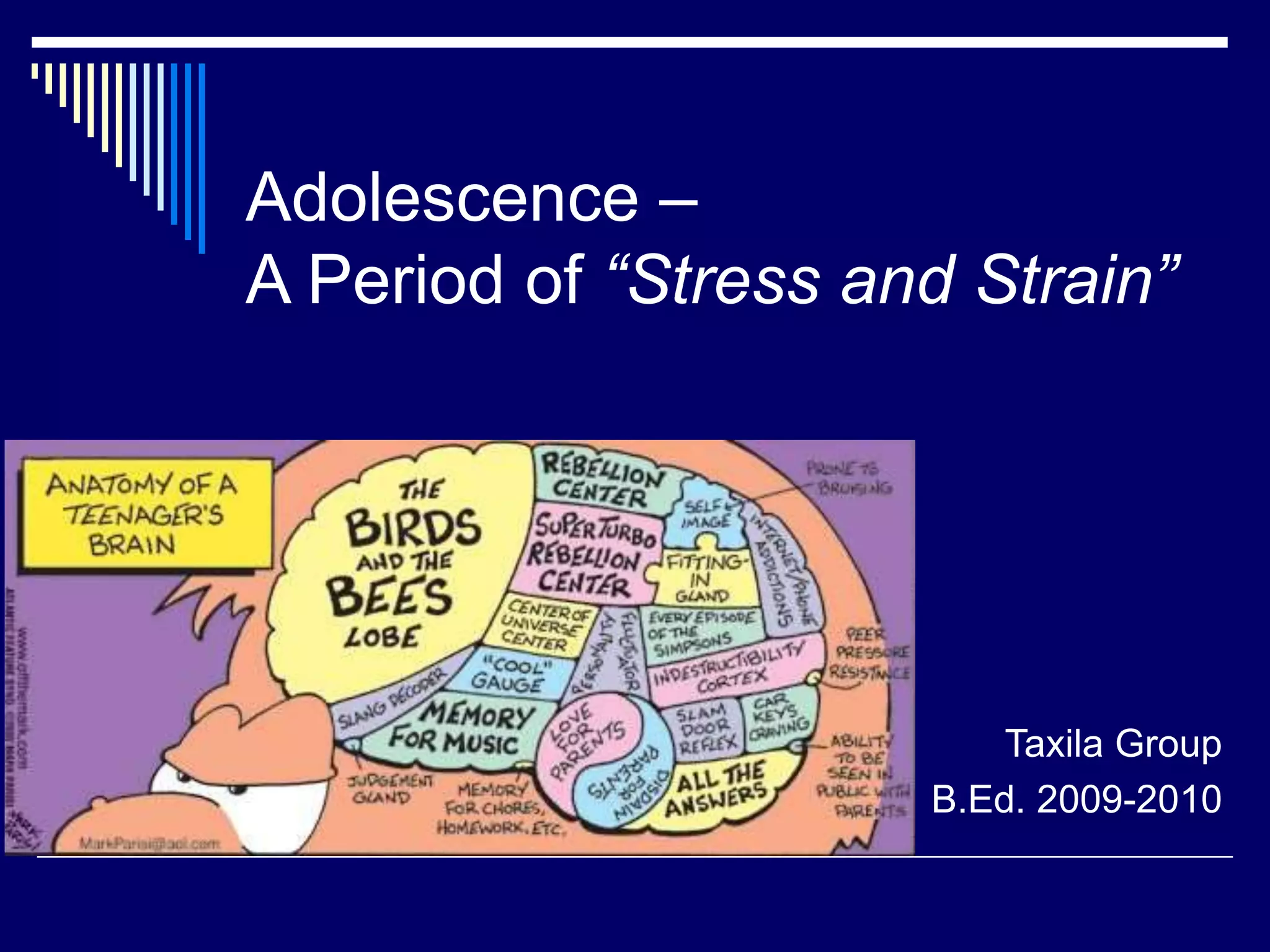
Adolescence –
A Period of “Stress and Strain”
Taxila Group
B.Ed. 2009-2010
Outline
 Introduction to Adolescence
 Definition
 A period of ‘stress and strain’
 Physical and motor development
 Social development
 Role of School and teachers in fostering
Adolescent development.
 Physical-Motor Development
 Social-Emotional Development
 Conclusion
Introduction
 Adolescence = ‘adolescere’
(Latin) – to grow into maturity
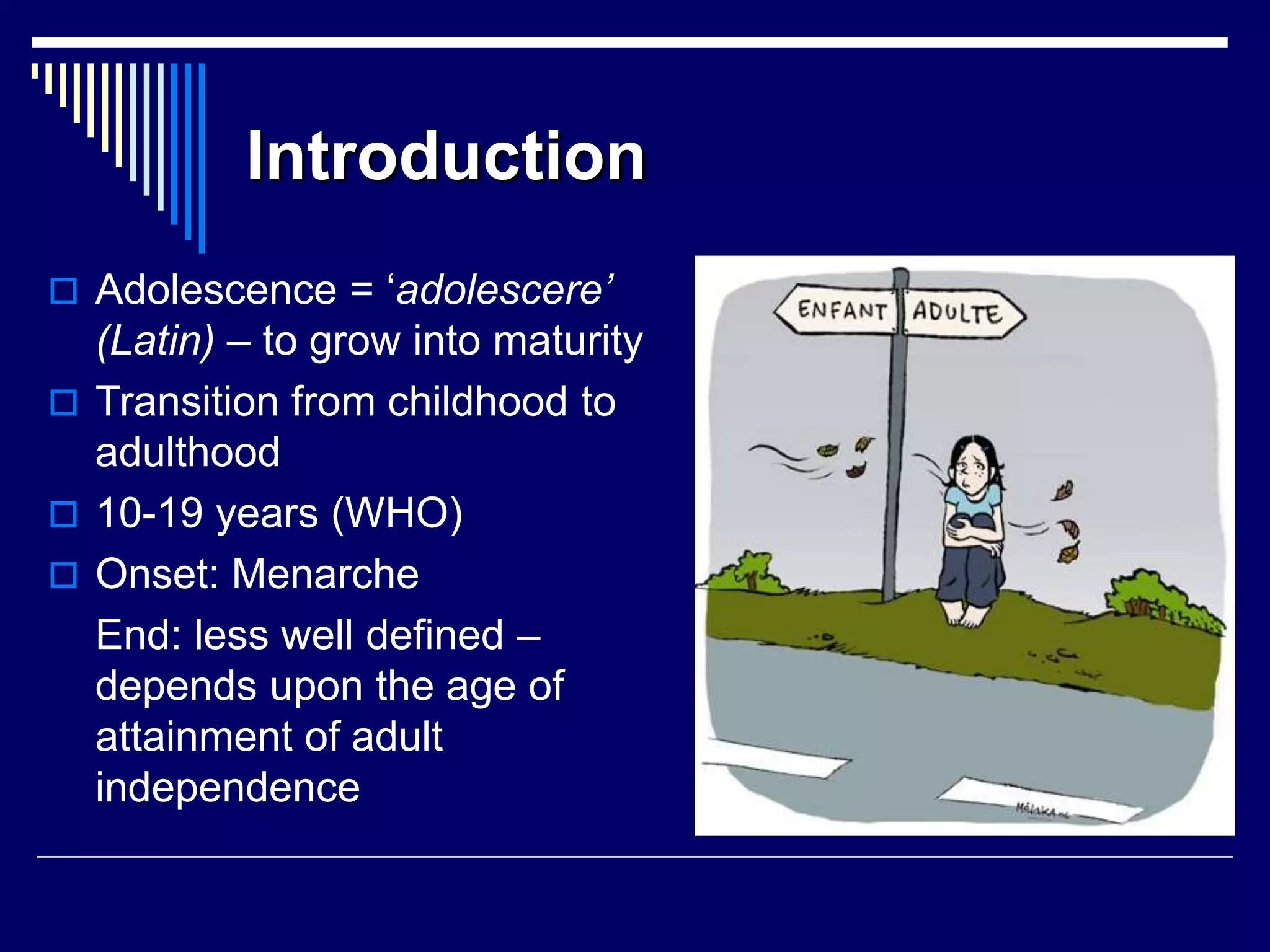
 Transition from childhood to
adulthood
 10-19 years (WHO)
 Onset: Menarche
End: less well defined –
depends upon the age of
attainment of adult
independence
Definitions
 Dorothy Rogers: A process rather than a period, a
process of achieving the attitudes and beliefs needed
for effective participation in society.
 G.R. Medinnus and R.C.Johnson: Adolescence
begins when signs of sexual maturity begin to occur in
both physical and social development and ends when
the individual assumes adult roles and is concerned in
most ways as an adult by his reference group.
A Period of “Stress and Strain”
Internal Factors:
 Emotional Changes
 Hormones
 Physical changes
 Appearance
 Change in voice
 Reproductive
organs and sexual
development
External Factors:
 Changing relationship
with parents
 Peer influence and
pressure
 Career consciousness
 Identity formation
Physical Development
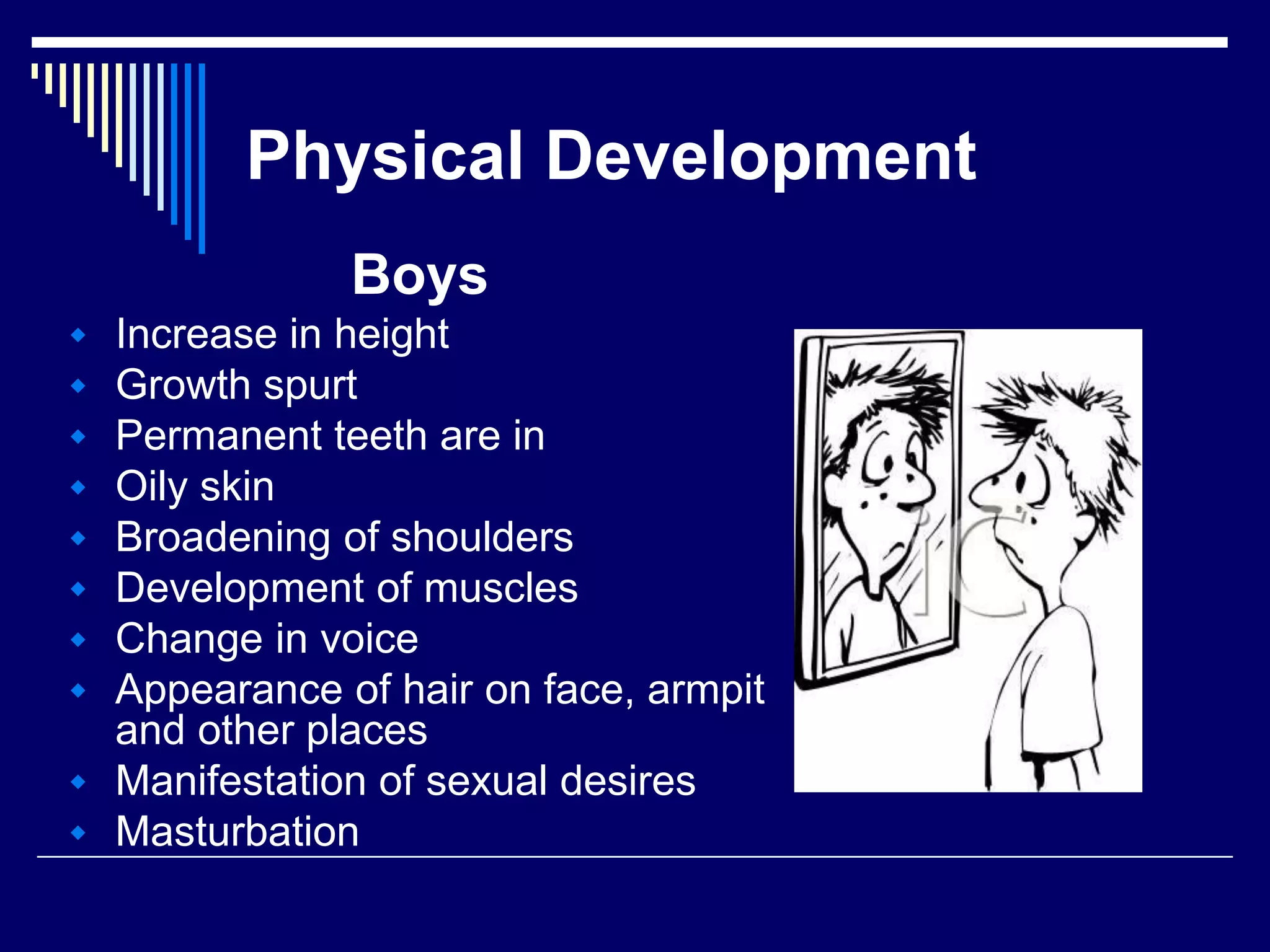
Boys
 Increase in height
 Growth spurt
 Permanent teeth are in
 Oily skin
 Broadening of shoulders
 Development of muscles
 Change in voice
 Appearance of hair on face, armpit
and other places
 Manifestation of sexual desires
 Masturbation
Physical Development
Girls
 Beginning of menstruation
 Enlargement of breasts
 Increase in height
 Broadening of hips
 Growth spurt
 Permanent teeth are in
 Oily skin
 Appearance of hair on armpit and other places
Social Development
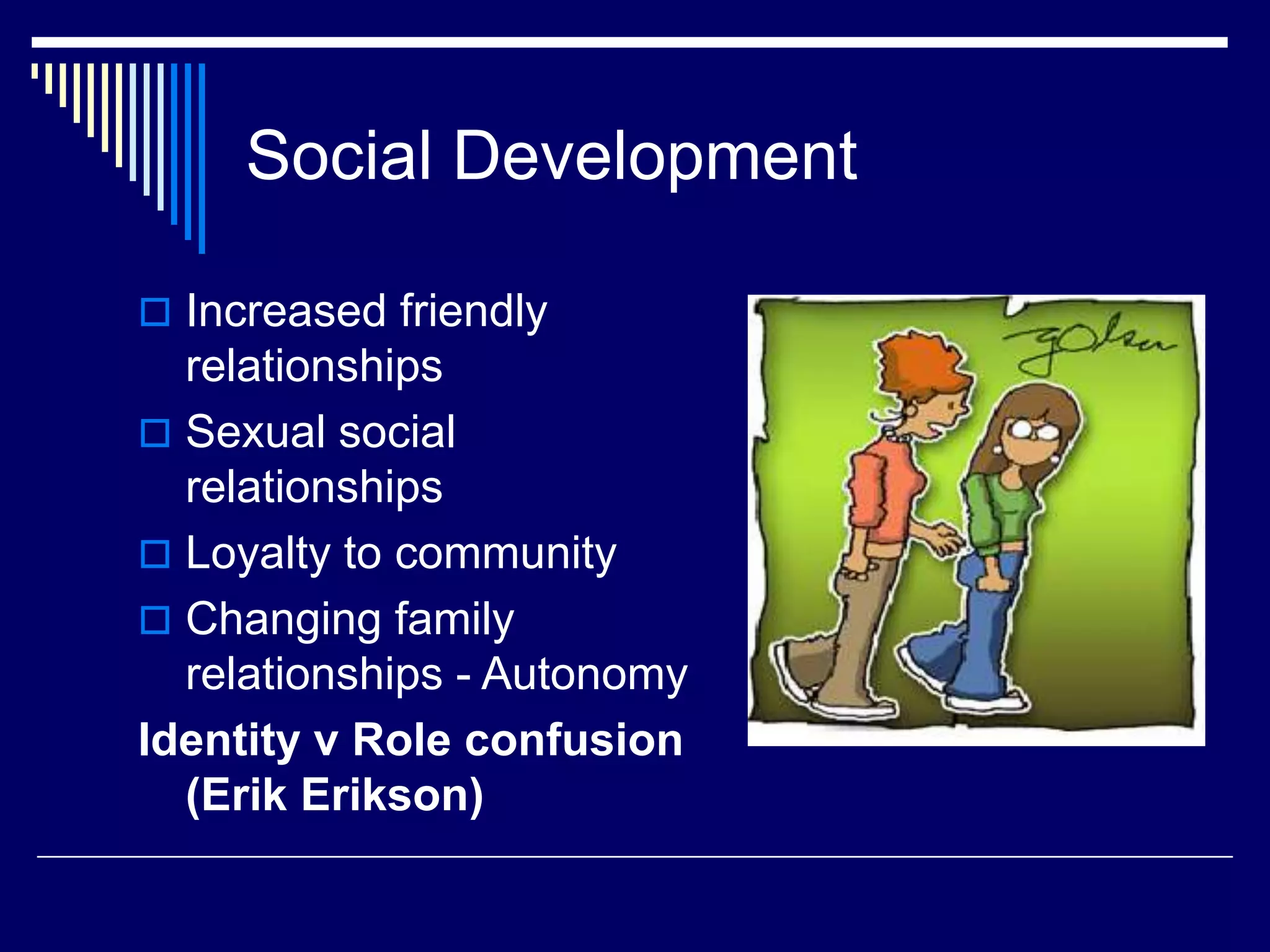
 Increased friendly
relationships
 Sexual social
relationships
 Loyalty to community
 Changing family
relationships - Autonomy
Identity v Role confusion
(Erik Erikson)
Role of School and
Teacher in Adolescent
Development
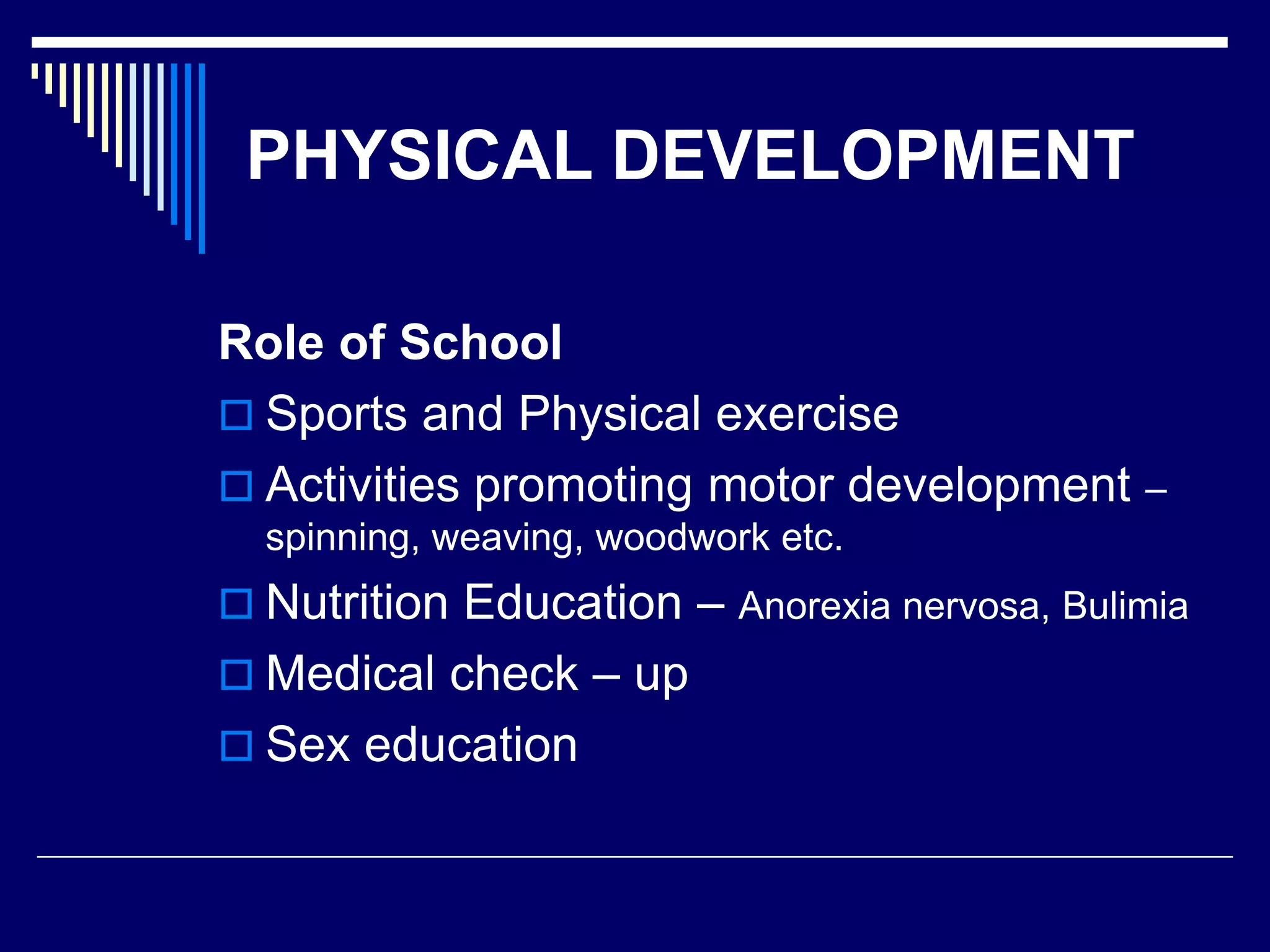
PHYSICAL DEVELOPMENT
Role of School
 Sports and Physical exercise
 Activities promoting motor development –
spinning, weaving, woodwork etc.
 Nutrition Education – Anorexia nervosa, Bulimia
 Medical check – up
 Sex education
PHYSICAL DEVELOPMENT
(CONTD.)
Role of Teacher
 Seating arrangements and lighting
 Understand physical development.
 Motivate students for physical exercise.
 Physical health and nutrition information
during PTAs.
 Answer questions and concerns
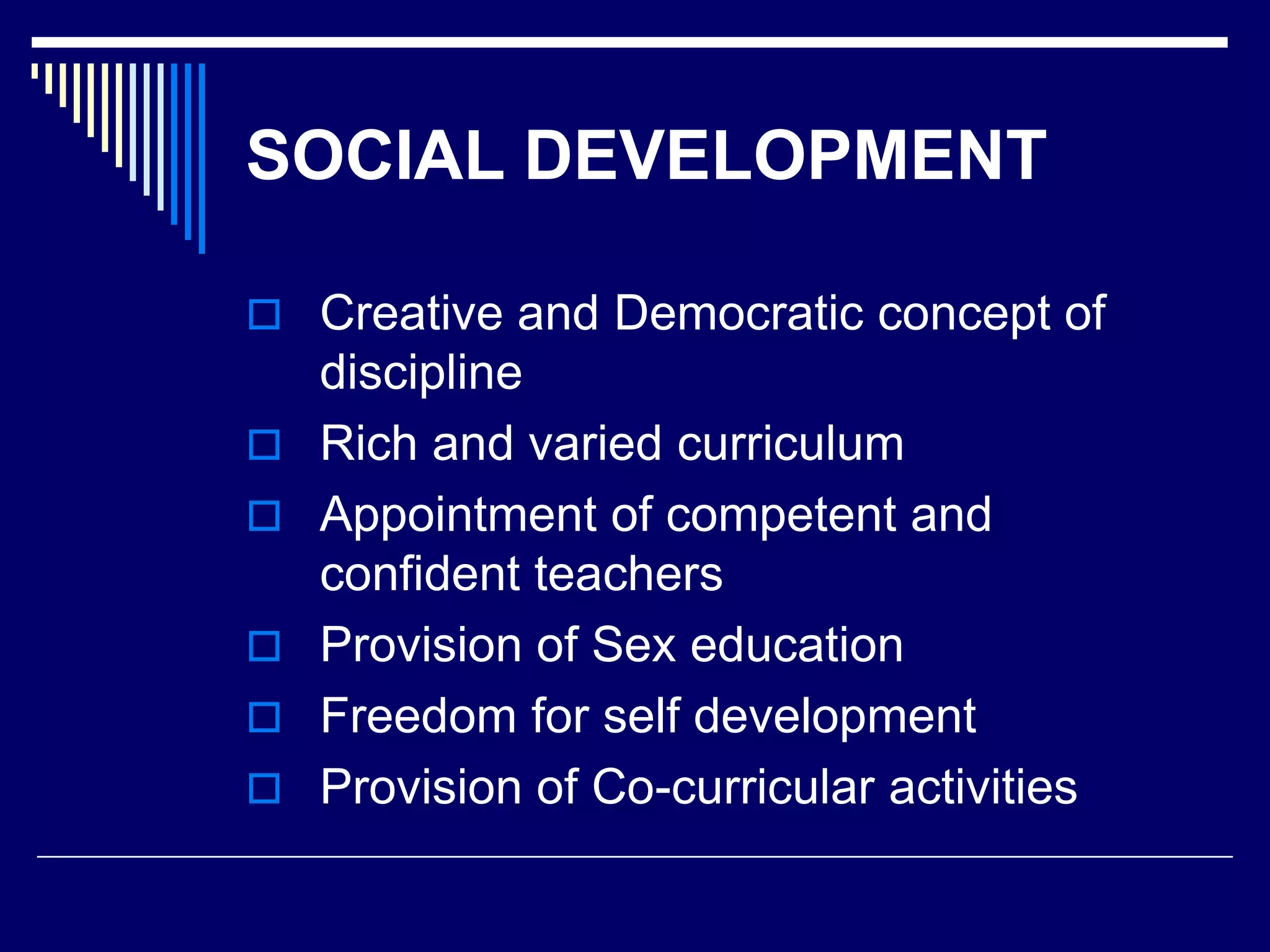
SOCIAL DEVELOPMENT
 Creative and Democratic concept of
discipline
 Rich and varied curriculum
 Appointment of competent and
confident teachers
 Provision of Sex education
 Freedom for self development
 Provision of Co-curricular activities
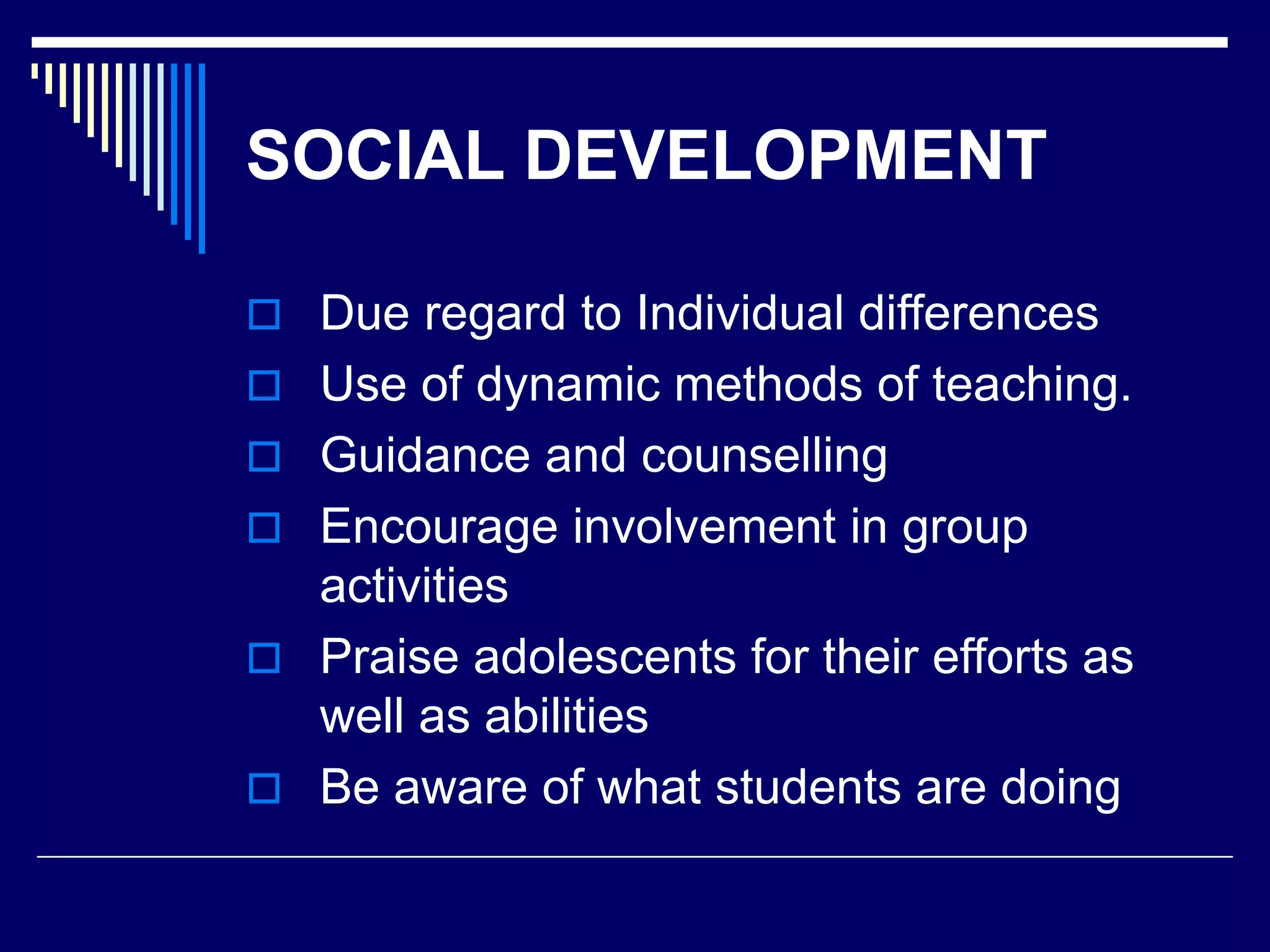
SOCIAL DEVELOPMENT
 Due regard to Individual differences
 Use of dynamic methods of teaching.
 Guidance and counselling
 Encourage involvement in group
activities
 Praise adolescents for their efforts as
well as abilities
 Be aware of what students are doing
Conclusion
 Adolescence
 A period of ‘challenges and potential’
 Physical, motor and social
development during adolescence
 Role of School and teachers in
fostering Adolescent development.
Thank You
“There is a tide which begins to rise in the veins
of youth at the age of eleven or twelve. It is
called by the name of adolescence. If the tide
can be taken as flood, and a new voyage began
in the stream and along the flow of its current,
we think it will move on to fortune.
Hadow Report (1926)

Adolescence Fin

  • 1.
    Adolescence – A Periodof “Stress and Strain” Taxila Group B.Ed. 2009-2010
  • 2.
    Outline  Introduction toAdolescence  Definition  A period of ‘stress and strain’  Physical and motor development  Social development  Role of School and teachers in fostering Adolescent development.  Physical-Motor Development  Social-Emotional Development  Conclusion
  • 3.
    Introduction  Adolescence =‘adolescere’ (Latin) – to grow into maturity  Transition from childhood to adulthood  10-19 years (WHO)  Onset: Menarche End: less well defined – depends upon the age of attainment of adult independence
  • 4.
    Definitions  Dorothy Rogers:A process rather than a period, a process of achieving the attitudes and beliefs needed for effective participation in society.  G.R. Medinnus and R.C.Johnson: Adolescence begins when signs of sexual maturity begin to occur in both physical and social development and ends when the individual assumes adult roles and is concerned in most ways as an adult by his reference group.
  • 5.
    A Period of“Stress and Strain” Internal Factors:  Emotional Changes  Hormones  Physical changes  Appearance  Change in voice  Reproductive organs and sexual development External Factors:  Changing relationship with parents  Peer influence and pressure  Career consciousness  Identity formation
  • 6.
    Physical Development Boys  Increasein height  Growth spurt  Permanent teeth are in  Oily skin  Broadening of shoulders  Development of muscles  Change in voice  Appearance of hair on face, armpit and other places  Manifestation of sexual desires  Masturbation
  • 7.
    Physical Development Girls  Beginningof menstruation  Enlargement of breasts  Increase in height  Broadening of hips  Growth spurt  Permanent teeth are in  Oily skin  Appearance of hair on armpit and other places
  • 8.
    Social Development  Increasedfriendly relationships  Sexual social relationships  Loyalty to community  Changing family relationships - Autonomy Identity v Role confusion (Erik Erikson)
  • 9.
    Role of Schooland Teacher in Adolescent Development
  • 10.
    PHYSICAL DEVELOPMENT Role ofSchool  Sports and Physical exercise  Activities promoting motor development – spinning, weaving, woodwork etc.  Nutrition Education – Anorexia nervosa, Bulimia  Medical check – up  Sex education
  • 11.
    PHYSICAL DEVELOPMENT (CONTD.) Role ofTeacher  Seating arrangements and lighting  Understand physical development.  Motivate students for physical exercise.  Physical health and nutrition information during PTAs.  Answer questions and concerns
  • 12.
    SOCIAL DEVELOPMENT  Creativeand Democratic concept of discipline  Rich and varied curriculum  Appointment of competent and confident teachers  Provision of Sex education  Freedom for self development  Provision of Co-curricular activities
  • 13.
    SOCIAL DEVELOPMENT  Dueregard to Individual differences  Use of dynamic methods of teaching.  Guidance and counselling  Encourage involvement in group activities  Praise adolescents for their efforts as well as abilities  Be aware of what students are doing
  • 14.
    Conclusion  Adolescence  Aperiod of ‘challenges and potential’  Physical, motor and social development during adolescence  Role of School and teachers in fostering Adolescent development.
  • 15.
    Thank You “There isa tide which begins to rise in the veins of youth at the age of eleven or twelve. It is called by the name of adolescence. If the tide can be taken as flood, and a new voyage began in the stream and along the flow of its current, we think it will move on to fortune. Hadow Report (1926)

Editor's Notes

  • #16 Sir W.H.Hadow was the chairman of a committee covering issues at all stages of schooling from the nursery to the school leaving age. This report refers to the one released in 1926 on The education of the adolescent .