Adolescence
IBND
CONTENT:
• Definition
• Characteristics of adolescence
• Physical, Social & Emotional development
Definition:
• is a period of transition between childhood and adulthood
• A time of rapid, physical, cognitive, social and emotional maturing as the boy
prepares for manhood and the girl prepares for womanhood
• It is initiated by pubertal changes
• It involves three stages:
• Early adolescence (11-14 yrs)
• Middle adolescence (15-17 yrs)
• Late adolescence (18-20 yrs)
Characteristics of adolescence
Physical characteristics of the stage:
1. Rapid growth : Increased rate of growth in height and weight
2. Growth not uniform and proportionate
• Different rate of growth of boys and girls
3. Sense of clumsiness
• Due to the effect of rapid growth in body, adolescent becomes clumsy
4. More significant growth of reproductive organs
• In boys, the testes and penis enlarge and the production of sperms begin. In girls, the ovaries enlarge and
start releasing matured eggs.
Mental, Moral and Emotional Characteristics:
1. Self-consciousness: to be aware of one’s actor state
2. Sex-consciousness : to be aware of sexual desire and activity
3. Imaginative activity : take part in drama and role play, etc
• These helps in decision-making, problem-solving and critical thinking
4. Development of abstract thinking
5. Contrasting mental moods :
• teenagers might feel cheerful and excited some days, and down, flat, low or sad at other times
• they often want more privacy or time on their own.
6. Revolt to authority
• Teenagers donot like their family to control over their behaviour so, they develop increased desire for
freedom
7. Moral awakening
• No acceptance of any concepts without critical evaluation
8. Learning to get along with friends of both sexes
• To learn to look upon girls as women and boys as men; to learn to work with others for a common purpose,
disregarding personal feelings; to lead without dominating.
9. Accepting one's physical body and keeping it healthy
• To accept one's body and to keep it healthy through good nutrition, exercise, disease prevention, and other
health practices.
Social characteristics of the stage:
 Becoming socially responsible
• To participate as a responsible person with friends at home, and in the community; to develop personal moral
values to guide behavior.
 Making decisions about marriage and family life
• To explore attitudes toward family life and having children; to acquire the knowledge necessary for home
management and, if desired, child rearing
 Becoming more self-sufficient
• To develop affection for parents without dependence upon them; to develop respect for older adults without
dependence upon them
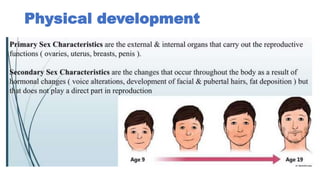
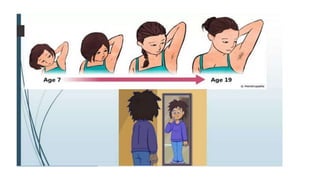
Physical development
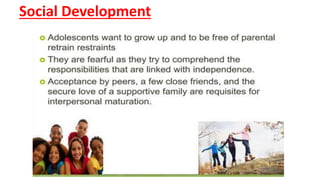
Social Development
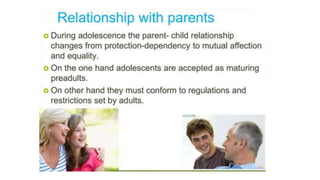
• Teenagers become more capable and with this capability they develop the feeling of autonomy
• Parents should use an authoritative style of parenting in which authority is used to guide the
adolescent while also allowing appropriate level of freedom
• Parents should also provide clear and consistent messages regarding the expectations
• For example: Telling them to score well on study while also allowing them to enjoy with their
friends
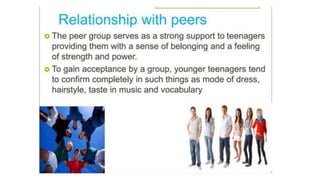
o When ignored or criticized by peers - creates feelings of inferiority, inadequacy and
incompetence
Emotional Development
ADOLESCENCE can develop both extreme positive and negative emotions and they are:
1. Self-esteem
• An adolescent’s self-esteem can be influenced by approval from family, support from friends, and
personal successes
• adolescents with a positive self-concept experience greater academic success than do adolescents
who lack this quality
• some adolescents are more concerned for body image and may develop eating disorders like
anorexia nervosa(eating very little by thinking one is overweight, bulimia nervosa (eating large
amount of food followed by self-induced vomiting), etc
2. Identity formation
• evaluate their interests and moral principles
• analyze their relationship to their families and peers
• consider their skills and ideas of success
• experiment with different ideas, friends, and activities and these ideas can provide adolescents
opportunities to learn more about themselves and others
• become more confident in their own, unique identities
• Can think more critically and develop the ability to form their own new ideas or question
3 . Adolescents become less emotionally dependent on their parents
• Teens want more independence and more emotional distance between them and their parents
• A teen’s focus often shifts to social interactions and friendships
4. Emotional Swings
• Adolescents might show strong feelings and intense emotions
• their moods might seem unpredictable.
• These emotional ups and downs happen partly because adolescents brain is still learning how to
control and express emotions in a grown-up way.
5. Stress
• wide range of stressors that affect emotional development
• Stressors like physical or sexual abuse, or school violence, chronic neglect or being bullied
• result in chronic physical health problems and potentially leading to depression, anxiety, and other
mental health disorders
6. Sensitivity to others
As a adolescence, they’ll get better at understanding other people’s emotions.
Thank you

ADOLESCENCE.pptx

  • 1.
  • 2.
    CONTENT: • Definition • Characteristicsof adolescence • Physical, Social & Emotional development
  • 3.
    Definition: • is aperiod of transition between childhood and adulthood • A time of rapid, physical, cognitive, social and emotional maturing as the boy prepares for manhood and the girl prepares for womanhood • It is initiated by pubertal changes • It involves three stages: • Early adolescence (11-14 yrs) • Middle adolescence (15-17 yrs) • Late adolescence (18-20 yrs)
  • 4.
    Characteristics of adolescence Physicalcharacteristics of the stage: 1. Rapid growth : Increased rate of growth in height and weight 2. Growth not uniform and proportionate • Different rate of growth of boys and girls 3. Sense of clumsiness • Due to the effect of rapid growth in body, adolescent becomes clumsy 4. More significant growth of reproductive organs • In boys, the testes and penis enlarge and the production of sperms begin. In girls, the ovaries enlarge and start releasing matured eggs. Mental, Moral and Emotional Characteristics: 1. Self-consciousness: to be aware of one’s actor state 2. Sex-consciousness : to be aware of sexual desire and activity 3. Imaginative activity : take part in drama and role play, etc • These helps in decision-making, problem-solving and critical thinking 4. Development of abstract thinking 5. Contrasting mental moods : • teenagers might feel cheerful and excited some days, and down, flat, low or sad at other times • they often want more privacy or time on their own. 6. Revolt to authority • Teenagers donot like their family to control over their behaviour so, they develop increased desire for freedom
  • 5.
    7. Moral awakening •No acceptance of any concepts without critical evaluation 8. Learning to get along with friends of both sexes • To learn to look upon girls as women and boys as men; to learn to work with others for a common purpose, disregarding personal feelings; to lead without dominating. 9. Accepting one's physical body and keeping it healthy • To accept one's body and to keep it healthy through good nutrition, exercise, disease prevention, and other health practices. Social characteristics of the stage:  Becoming socially responsible • To participate as a responsible person with friends at home, and in the community; to develop personal moral values to guide behavior.  Making decisions about marriage and family life • To explore attitudes toward family life and having children; to acquire the knowledge necessary for home management and, if desired, child rearing  Becoming more self-sufficient • To develop affection for parents without dependence upon them; to develop respect for older adults without dependence upon them
  • 6.
  • 11.
  • 13.
    • Teenagers becomemore capable and with this capability they develop the feeling of autonomy • Parents should use an authoritative style of parenting in which authority is used to guide the adolescent while also allowing appropriate level of freedom • Parents should also provide clear and consistent messages regarding the expectations • For example: Telling them to score well on study while also allowing them to enjoy with their friends
  • 15.
    o When ignoredor criticized by peers - creates feelings of inferiority, inadequacy and incompetence
  • 16.
    Emotional Development ADOLESCENCE candevelop both extreme positive and negative emotions and they are: 1. Self-esteem • An adolescent’s self-esteem can be influenced by approval from family, support from friends, and personal successes • adolescents with a positive self-concept experience greater academic success than do adolescents who lack this quality • some adolescents are more concerned for body image and may develop eating disorders like anorexia nervosa(eating very little by thinking one is overweight, bulimia nervosa (eating large amount of food followed by self-induced vomiting), etc 2. Identity formation • evaluate their interests and moral principles • analyze their relationship to their families and peers • consider their skills and ideas of success • experiment with different ideas, friends, and activities and these ideas can provide adolescents opportunities to learn more about themselves and others • become more confident in their own, unique identities • Can think more critically and develop the ability to form their own new ideas or question
  • 17.
    3 . Adolescentsbecome less emotionally dependent on their parents • Teens want more independence and more emotional distance between them and their parents • A teen’s focus often shifts to social interactions and friendships 4. Emotional Swings • Adolescents might show strong feelings and intense emotions • their moods might seem unpredictable. • These emotional ups and downs happen partly because adolescents brain is still learning how to control and express emotions in a grown-up way. 5. Stress • wide range of stressors that affect emotional development • Stressors like physical or sexual abuse, or school violence, chronic neglect or being bullied • result in chronic physical health problems and potentially leading to depression, anxiety, and other mental health disorders 6. Sensitivity to others As a adolescence, they’ll get better at understanding other people’s emotions.
  • 18.