Adolescent Socio-Emotional
Development
(Relationships in Adoloscent)
Presented by:
Maryani
Imelda
Maharani
Nataya
Marie Patricia
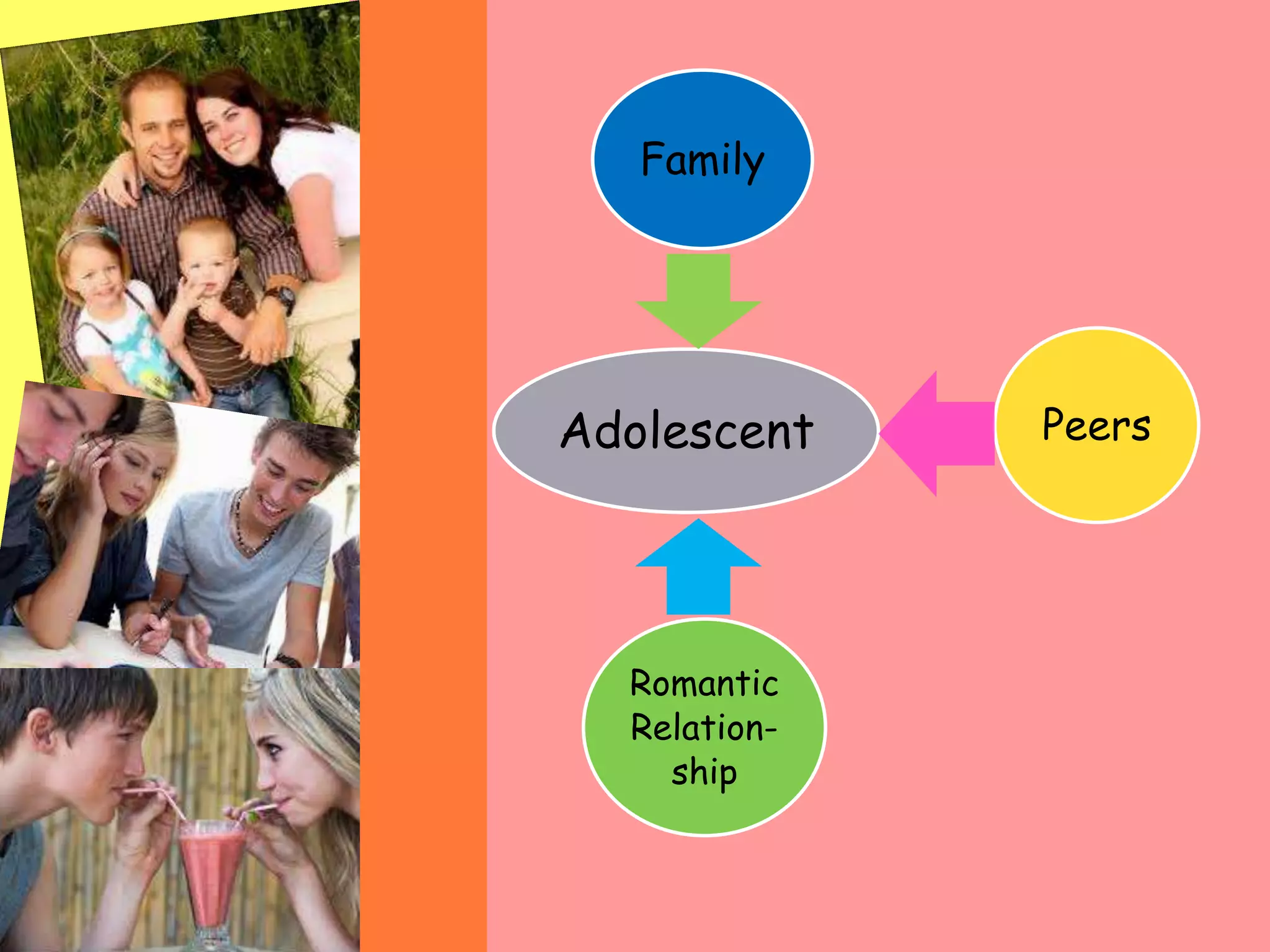
Family

Adolescent

Romantic
Relationship

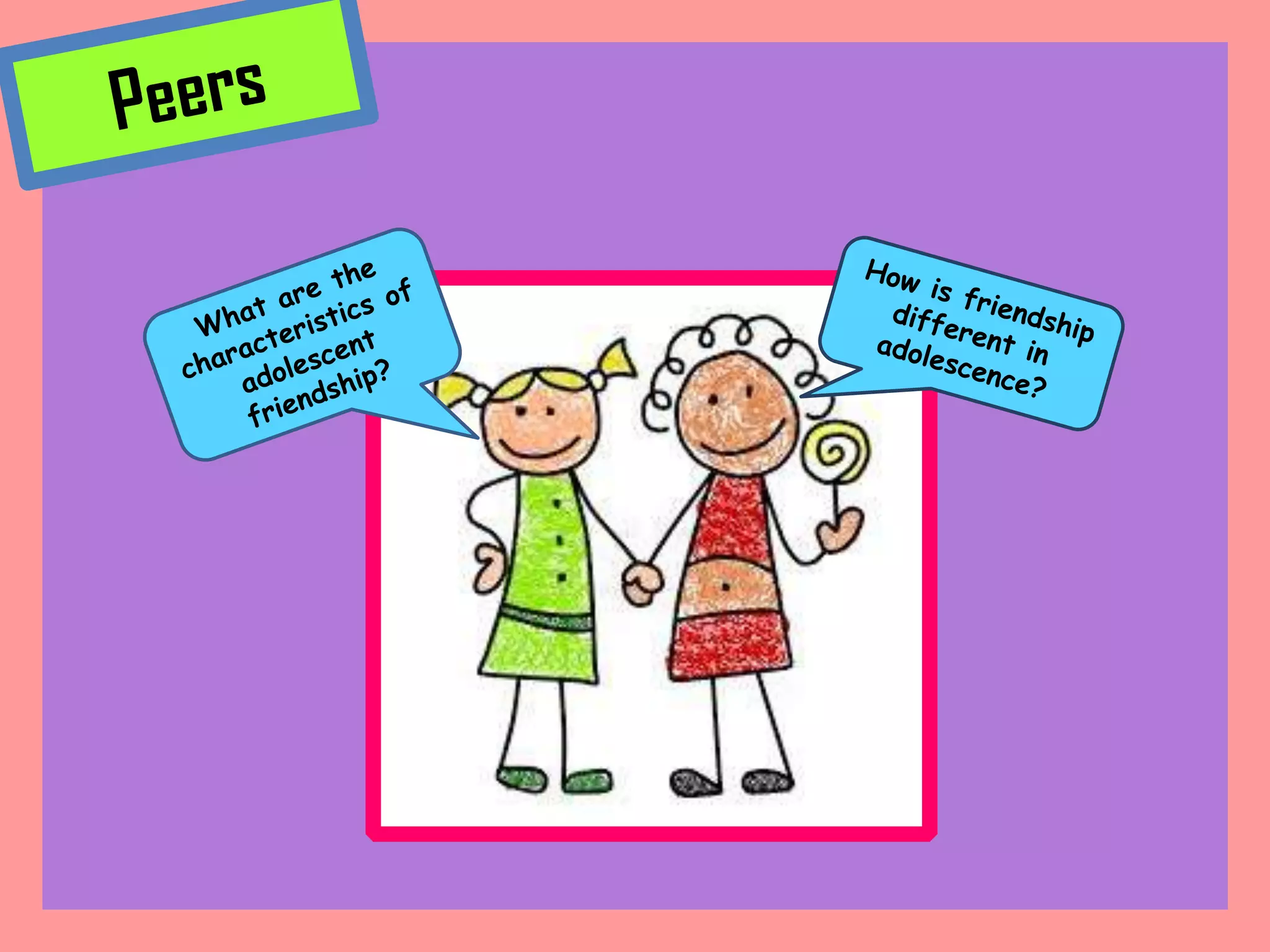
Peers
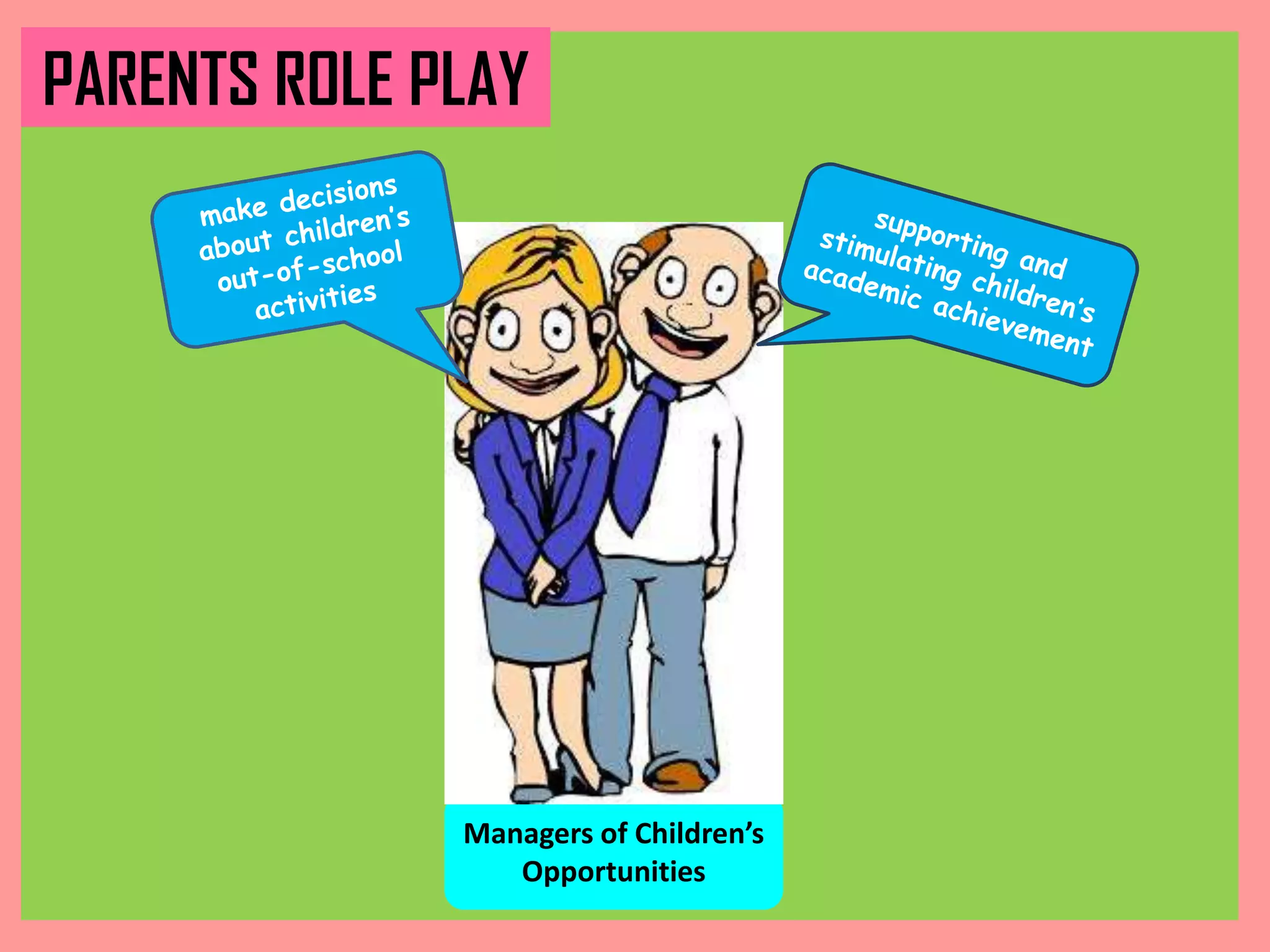
PARENTS ROLE PLAY

Managers of Children’s
Opportunities
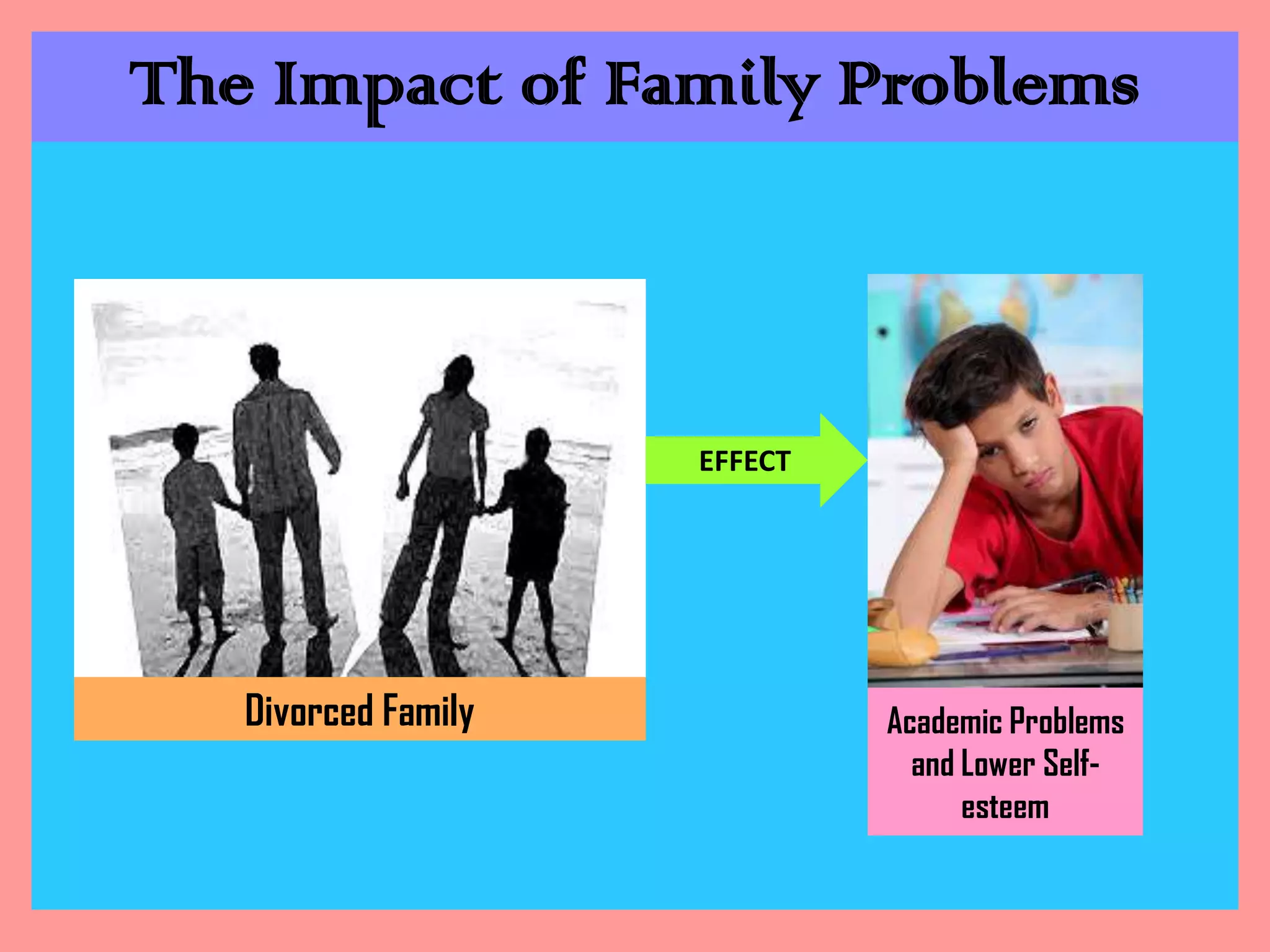
The Impact of Family Problems

EFFECT

Divorced Family

Academic Problems
and Lower Selfesteem
PEERS
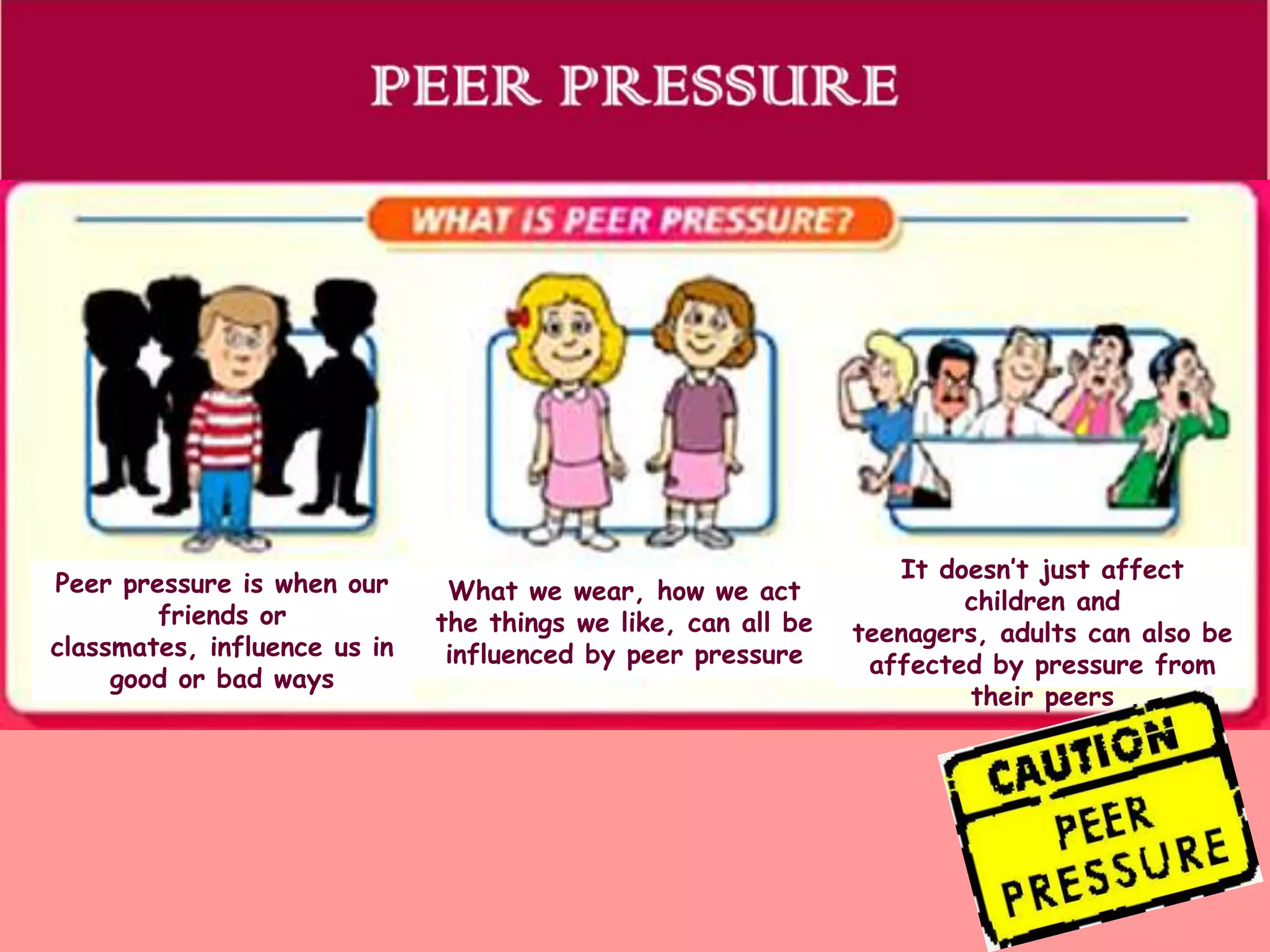
Peer pressure is when our
friends or
classmates, influence us in
good or bad ways

What we wear, how we act
the things we like, can all be
influenced by peer pressure

It doesn’t just affect
children and
teenagers, adults can also be
affected by pressure from
their peers
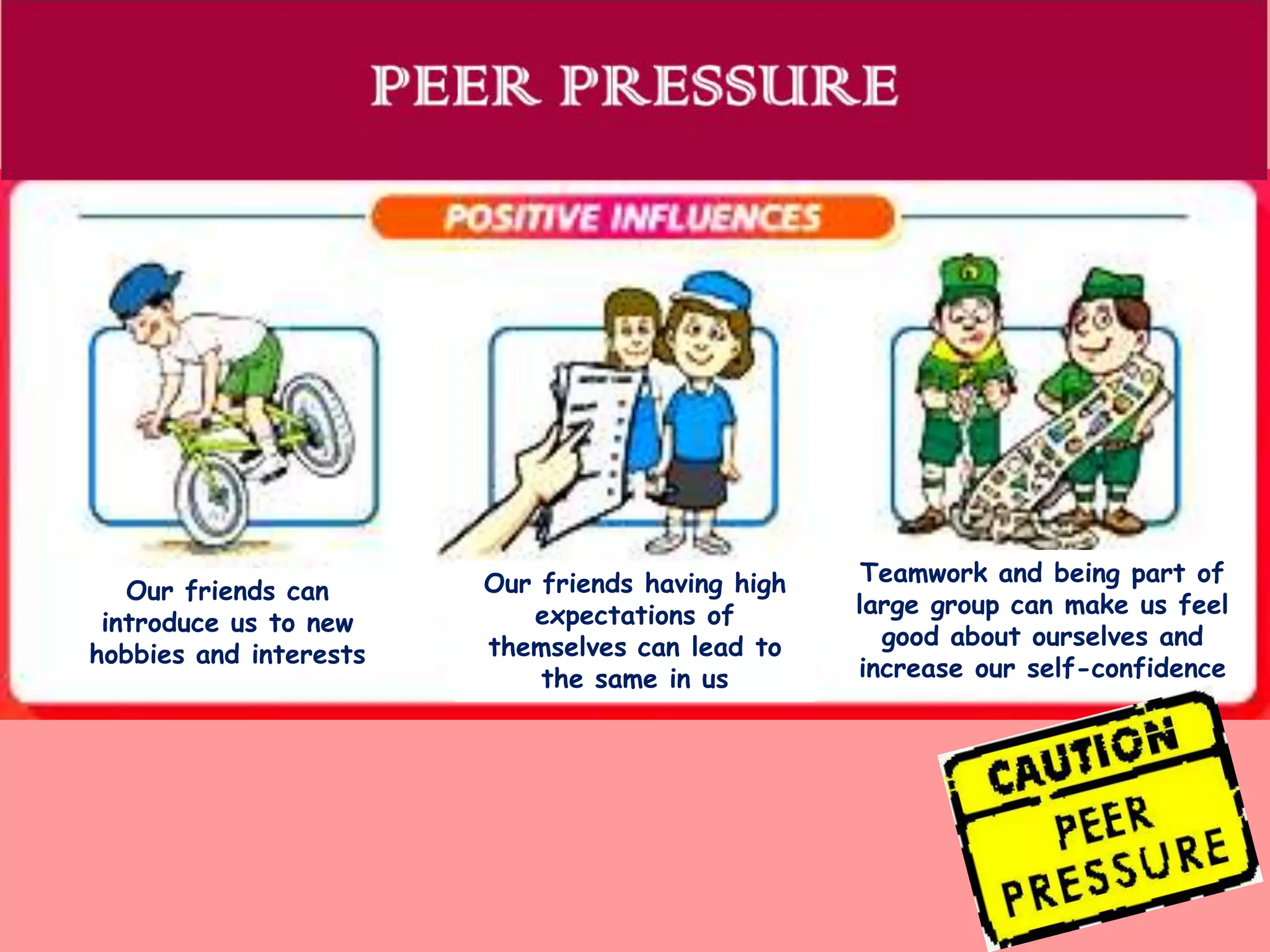
Our friends can
introduce us to new
hobbies and interests

Our friends having high
expectations of
themselves can lead to
the same in us

Teamwork and being part of
large group can make us feel
good about ourselves and
increase our self-confidence
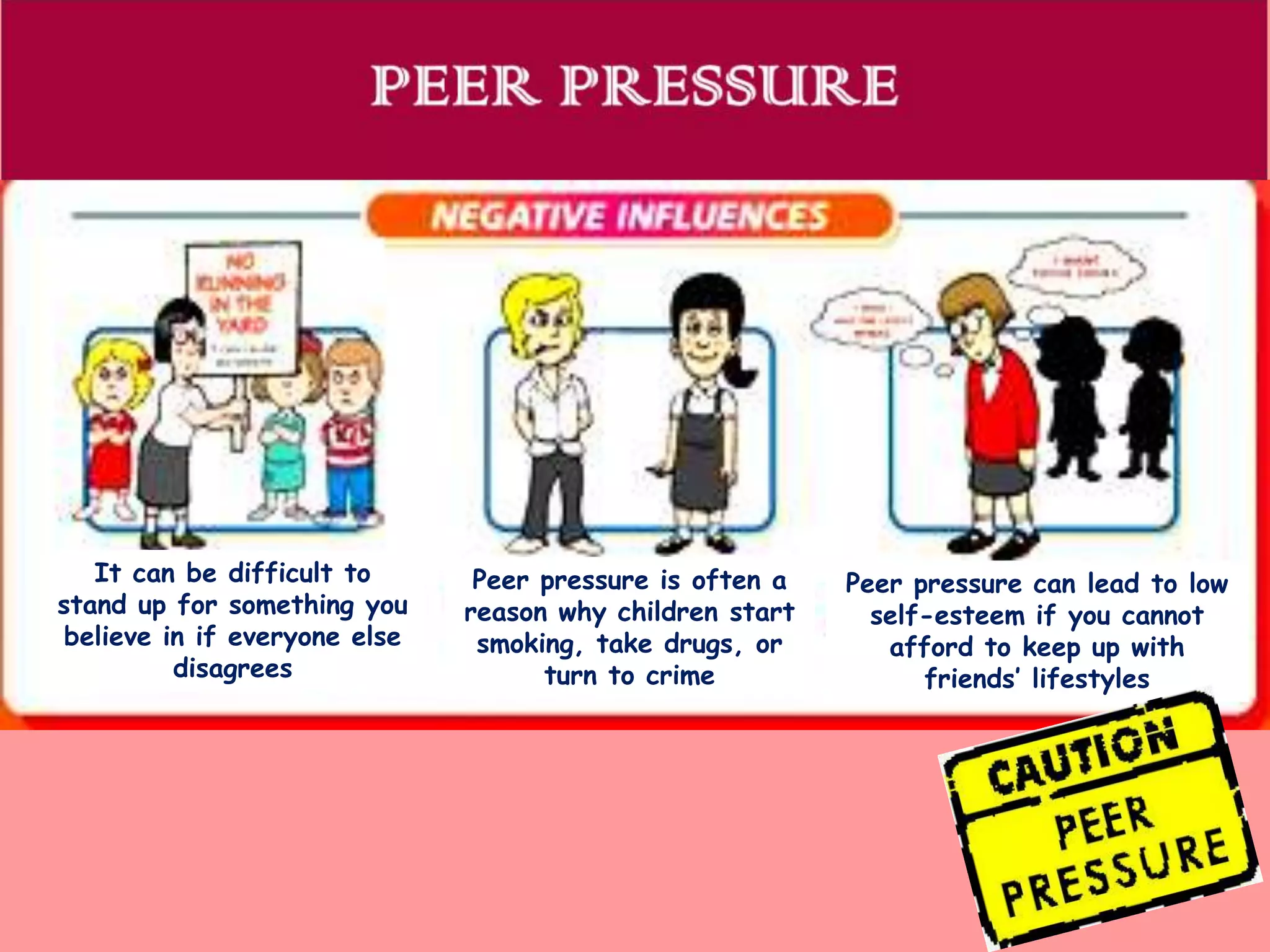
It can be difficult to
stand up for something you
believe in if everyone else
disagrees

Peer pressure is often a
reason why children start
smoking, take drugs, or
turn to crime

Peer pressure can lead to low
self-esteem if you cannot
afford to keep up with
friends’ lifestyles
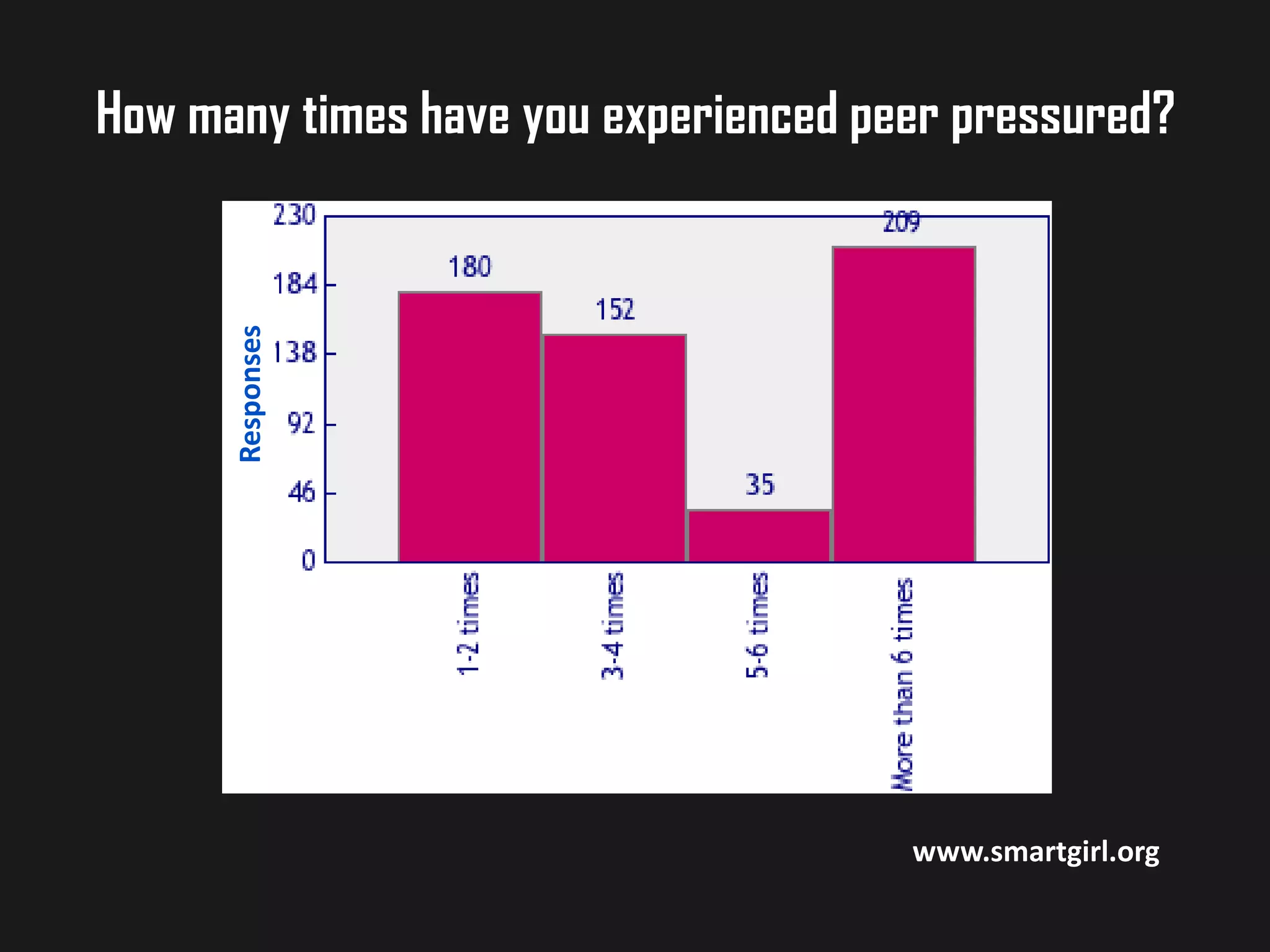
Responses

How many times have you experienced peer pressured?

www.smartgirl.org
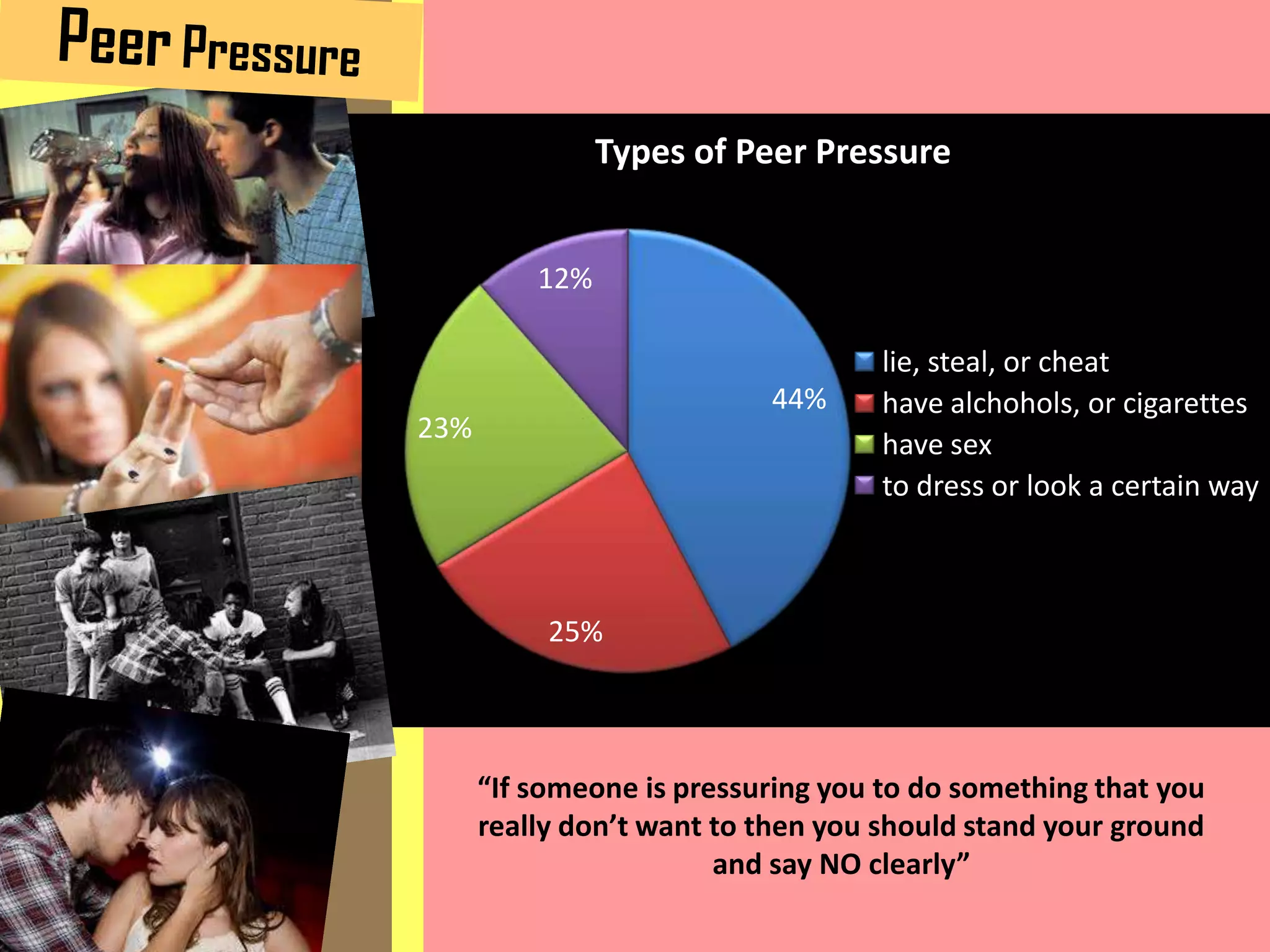
Types of Peer Pressure
12%

44%

23%

lie, steal, or cheat
have alchohols, or cigarettes
have sex
to dress or look a certain way

25%

“If someone is pressuring you to do something that you
really don’t want to then you should stand your ground
and say NO clearly”
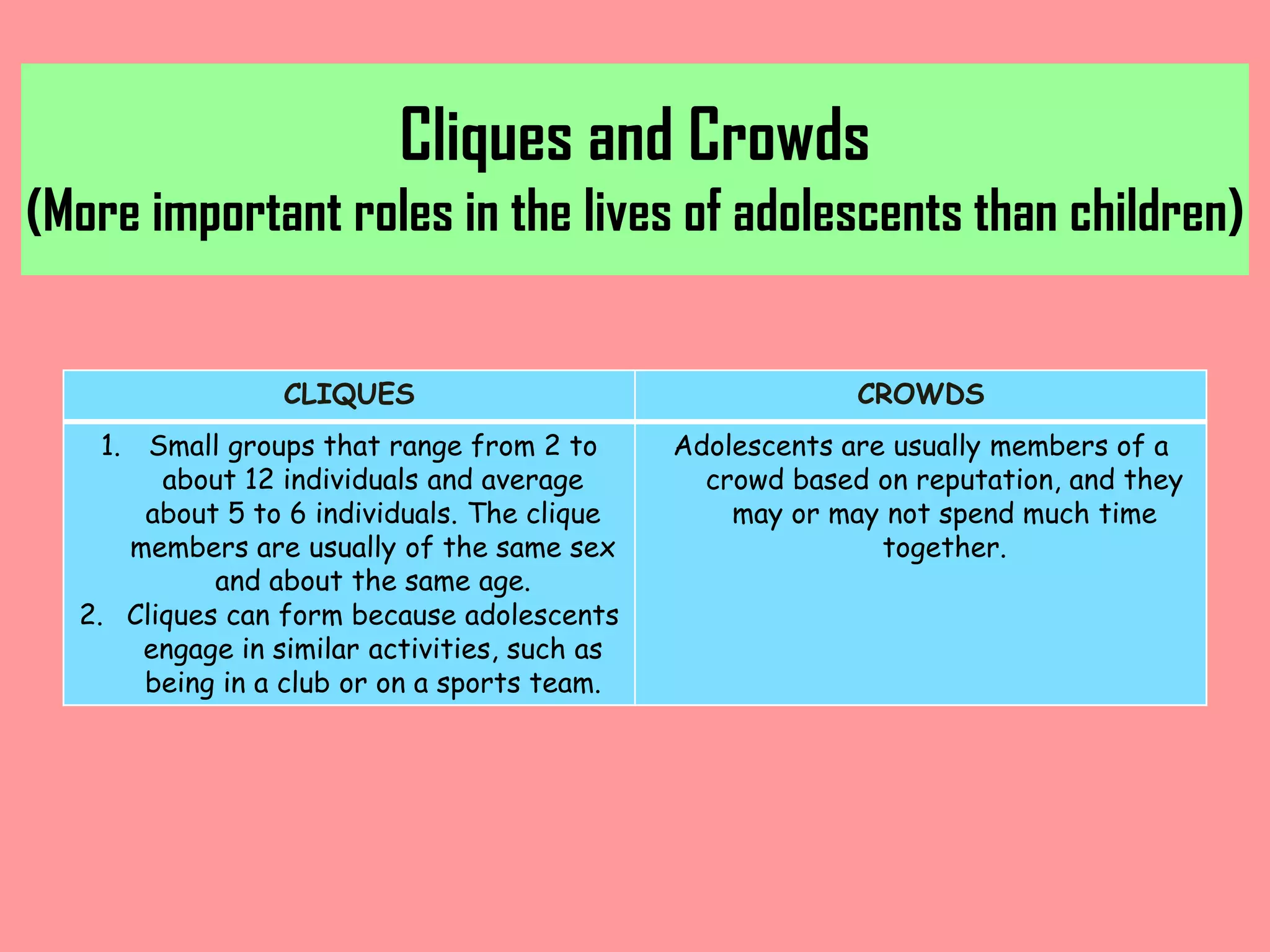
Cliques and Crowds
(More important roles in the lives of adolescents than children)
CLIQUES

CROWDS

1. Small groups that range from 2 to
about 12 individuals and average
about 5 to 6 individuals. The clique
members are usually of the same sex
and about the same age.
2. Cliques can form because adolescents
engage in similar activities, such as
being in a club or on a sports team.

Adolescents are usually members of a
crowd based on reputation, and they
may or may not spend much time
together.
DATING IN ADOLESCENT
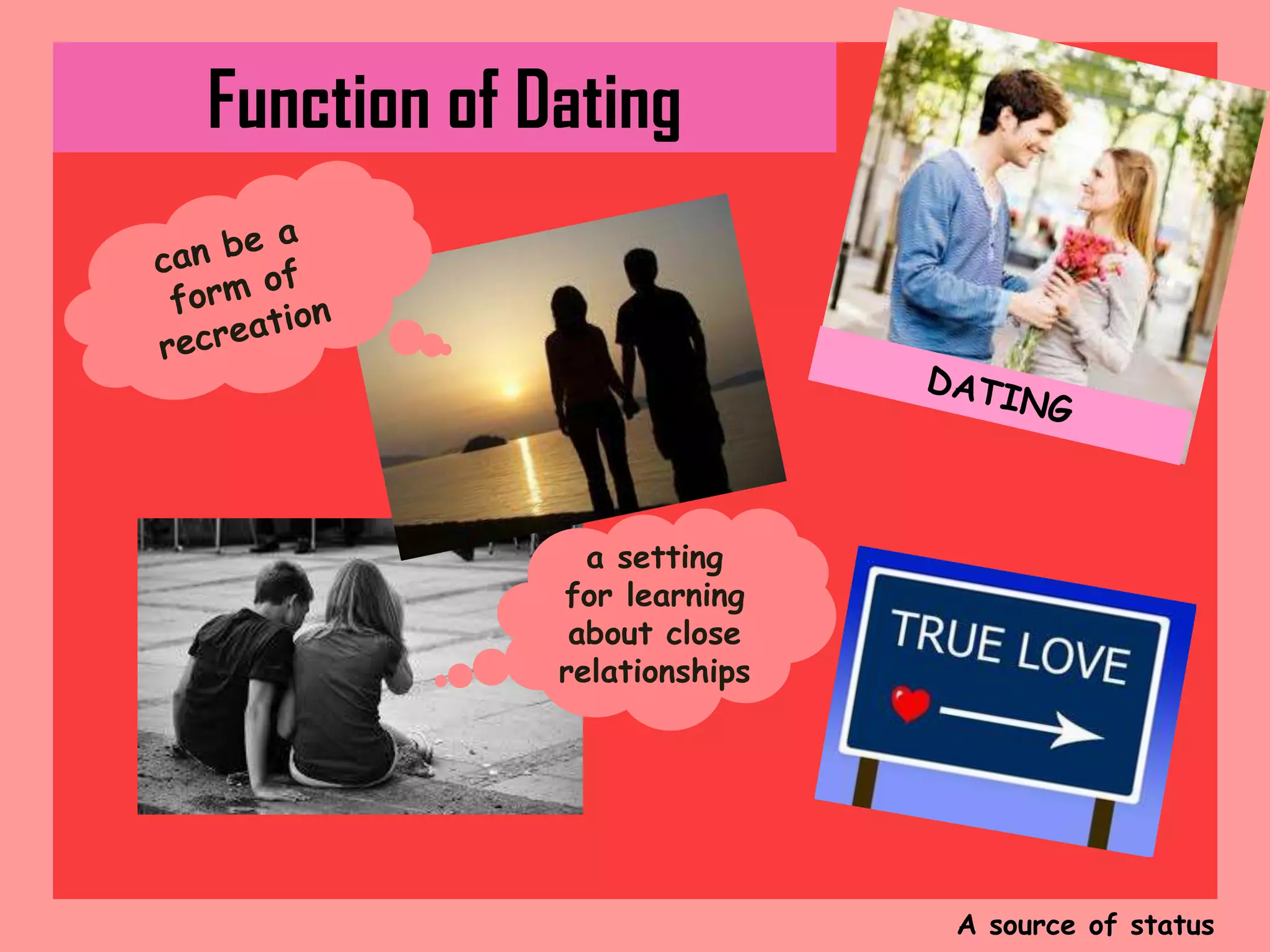
Function of Dating

a setting
for learning
about close
relationships

A source of status
Developmental Changes in Dating and
Romantic Relationships
11-13 years of age: Entry into romantic attractions and affiliations.
14-16 years of age: Exploring romantic relationships
Two Types of Romantic Involvement Occur
Casual dating

Dating in groups

1.

1.

2.

emerges between
individuals who are
mutually attracted.
These dating experiences
are often short lived

Friends often act as a
third-party facilitator

17 to 19 years of age: Consolidating dyadic romantic bonds
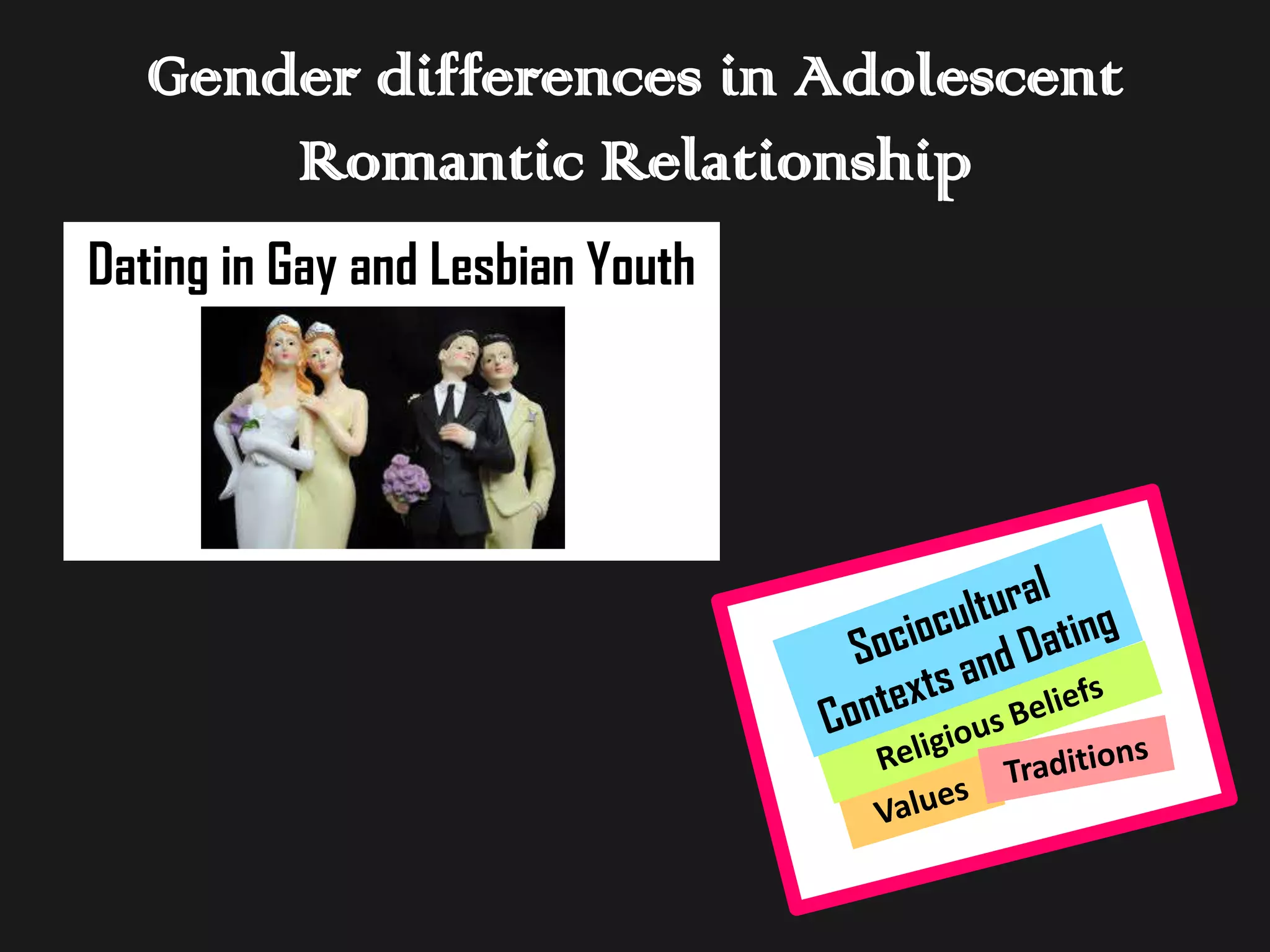
Gender differences in Adolescent
Romantic Relationship
Dating in Gay and Lesbian Youth
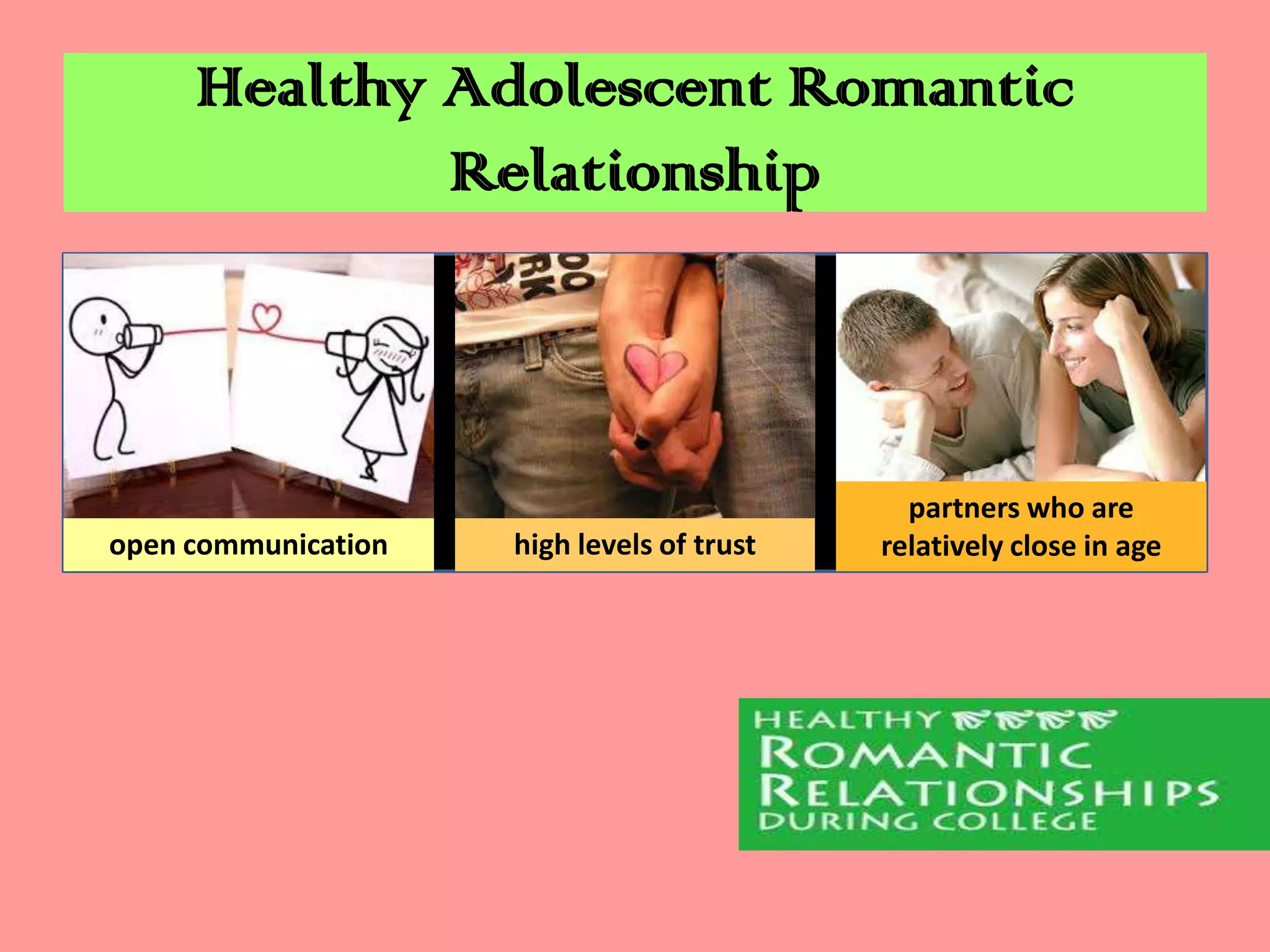
Healthy Adolescent Romantic
Relationship

open communication

high levels of trust

partners who are
relatively close in age
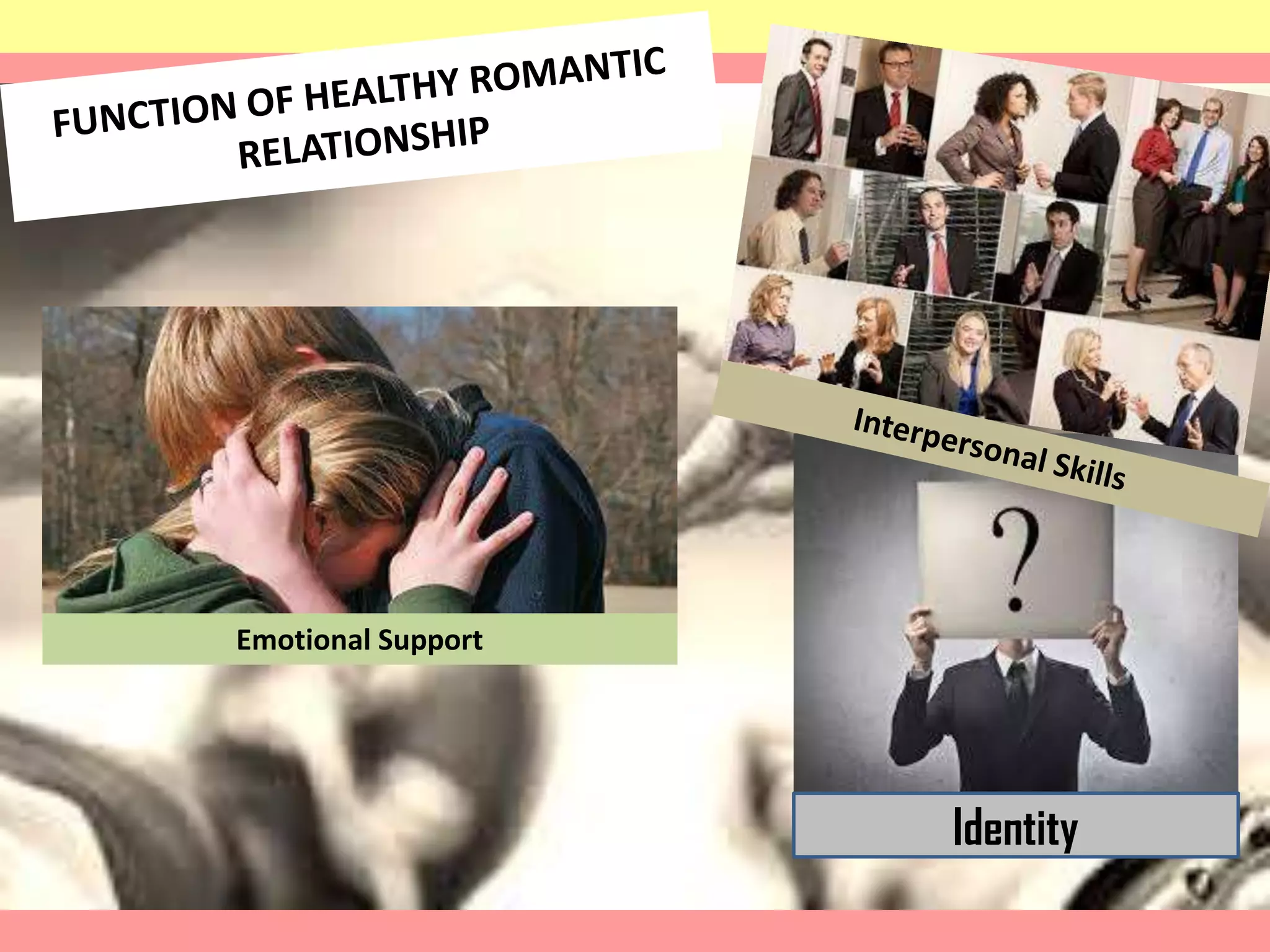
Emotional Support

Identity
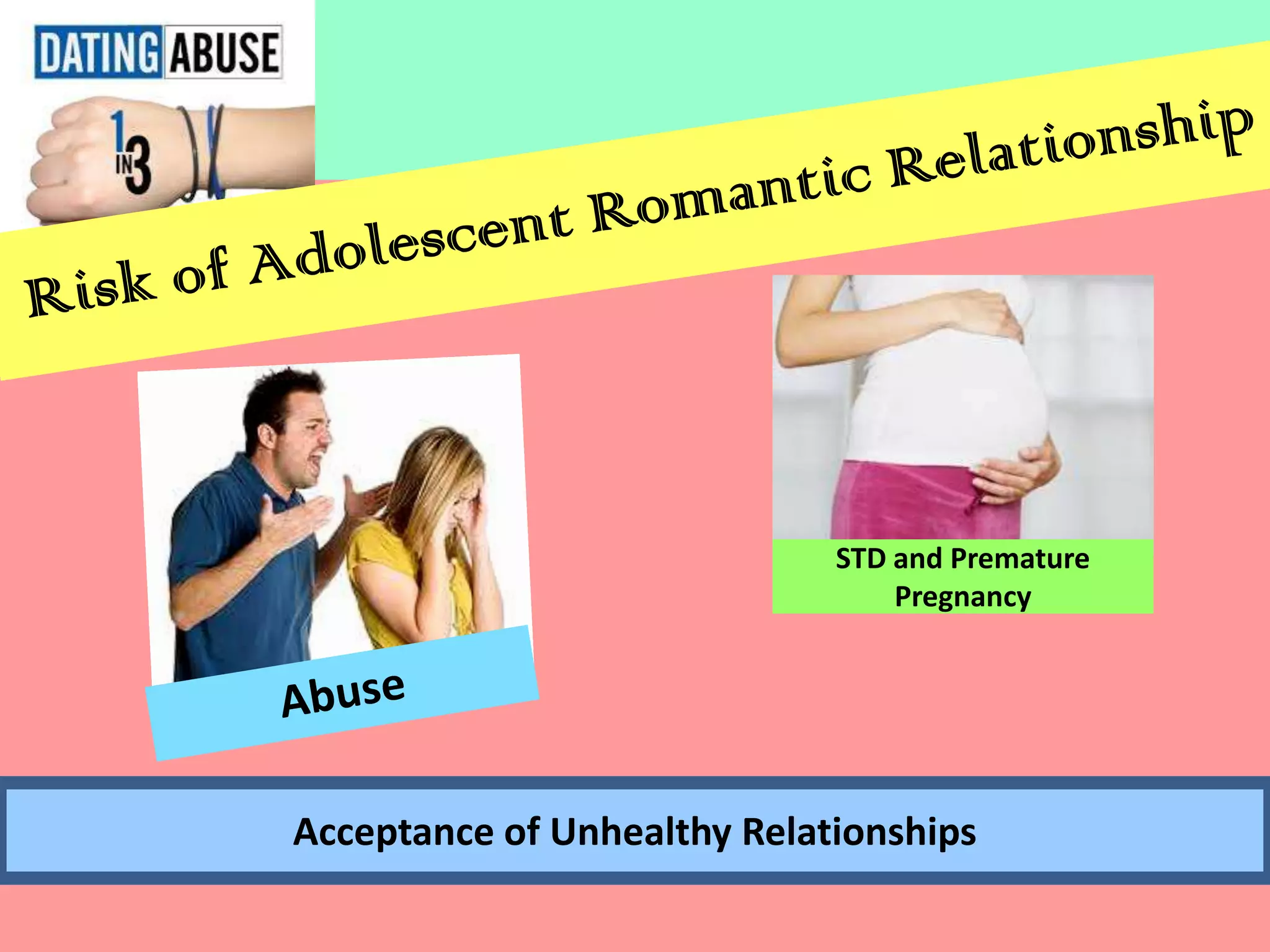
STD and Premature
Pregnancy

Acceptance of Unhealthy Relationships
Asked Session 
Adolescent development

Adolescent development

  • 1.
    Adolescent Socio-Emotional Development (Relationships inAdoloscent) Presented by: Maryani Imelda Maharani Nataya Marie Patricia
  • 2.
  • 3.
    PARENTS ROLE PLAY Managersof Children’s Opportunities
  • 4.
    The Impact ofFamily Problems EFFECT Divorced Family Academic Problems and Lower Selfesteem
  • 5.
  • 7.
    Peer pressure iswhen our friends or classmates, influence us in good or bad ways What we wear, how we act the things we like, can all be influenced by peer pressure It doesn’t just affect children and teenagers, adults can also be affected by pressure from their peers
  • 8.
    Our friends can introduceus to new hobbies and interests Our friends having high expectations of themselves can lead to the same in us Teamwork and being part of large group can make us feel good about ourselves and increase our self-confidence
  • 9.
    It can bedifficult to stand up for something you believe in if everyone else disagrees Peer pressure is often a reason why children start smoking, take drugs, or turn to crime Peer pressure can lead to low self-esteem if you cannot afford to keep up with friends’ lifestyles
  • 10.
    Responses How many timeshave you experienced peer pressured? www.smartgirl.org
  • 11.
    Types of PeerPressure 12% 44% 23% lie, steal, or cheat have alchohols, or cigarettes have sex to dress or look a certain way 25% “If someone is pressuring you to do something that you really don’t want to then you should stand your ground and say NO clearly”
  • 12.
    Cliques and Crowds (Moreimportant roles in the lives of adolescents than children) CLIQUES CROWDS 1. Small groups that range from 2 to about 12 individuals and average about 5 to 6 individuals. The clique members are usually of the same sex and about the same age. 2. Cliques can form because adolescents engage in similar activities, such as being in a club or on a sports team. Adolescents are usually members of a crowd based on reputation, and they may or may not spend much time together.
  • 13.
  • 14.
    Function of Dating asetting for learning about close relationships A source of status
  • 15.
    Developmental Changes inDating and Romantic Relationships 11-13 years of age: Entry into romantic attractions and affiliations.
  • 16.
    14-16 years ofage: Exploring romantic relationships Two Types of Romantic Involvement Occur Casual dating Dating in groups 1. 1. 2. emerges between individuals who are mutually attracted. These dating experiences are often short lived Friends often act as a third-party facilitator 17 to 19 years of age: Consolidating dyadic romantic bonds
  • 17.
    Gender differences inAdolescent Romantic Relationship Dating in Gay and Lesbian Youth
  • 18.
    Healthy Adolescent Romantic Relationship opencommunication high levels of trust partners who are relatively close in age
  • 19.
  • 20.
    STD and Premature Pregnancy Acceptanceof Unhealthy Relationships
  • 21.

Editor's Notes

  • #4 as monitors of their behavior, and social initiators and arrangers. Mothers are more likely to function in these parental management roles than fathers.
  • #5 Children in complex (blended) stepfamilies have more problems than children in simple step- families or nondivorced families.
  • #7 How is friendship different in adolescence?-Beginning in early adolescence, however, teenagers typically prefer to have a smaller number of friendships that are more intense and intimate than those of young children.-If adolescents fail to develop such close friendships, they experience loneliness and a reduced sense of self-worth. (Harry Stack Sullivan (1953)-Adolescents also say they depend more on friends than on parents to satisfy their needs for companionship, reassurance of worth, and intimacy.What are the characteristics of adolescent friendship?-The characteristics of friends have an important influence on adolescent development
  • #11 As you can see in the graph below, all of the people who took this survey have experienced peer pressure at one time or another. In fact, most of the people who took this survey (209 respondents) have expereinced peer pressure more than 6 times! Surprisingly, 87% of the people who took this survey believe (either agreed or strongly agreed) that, "Peer pressure is a common experience among people my age. " The most common places for SmartGirls to feel peer pressure are in school, at friend's houses, home, after school, and at parties.
  • #12 If someone is pressuring you to do something that you really don’t want to then you should stand your ground and say NO clearly. If a friend is pressuring you then they should understand and respect your feelings and leave you alone, otherwise they are not good friends. If it is people around you who are pressuring you then you should also be confident and keep saying NO. They will soon realize that you are stronger than they expected and leave you alone.
  • #13 Cliques sometimes form around common interests, same style, and hobbiesIn cliques their have one leader to lead their group, for example like sport teamMembers of the clique usually follow the leader's ruleswhether it's wearing particular clothes or doing certain activities. Cliques usually involve lots of rules — implied or clearly stated — and intense pressure to follow them. Kids in cliques often worry about whether they'll continue to be popular or whether they'll be dropped for doing or saying the wrong thing or for not dressing in a certain way. This can create a lot of pressure, particularly for girls, who might be driven to extreme dieting and eating disorders or even to ask for plastic surgery. Others may be pressured to take risks like steal, pull pranks, or bully other kids in order to stay in the clique. Kids also can be pressured into buying expensive clothing or getting involved in online gossip and teasing.Cliques are often at their most intense in middle school and junior high, but problems with cliques can start as early as 4th and 5th grades.
  • #15 as well as a way of finding a mate.
  • #16 This initial stage is triggered by pubertyIntensely interested in romance and it dominates many conversations with same-sex friendsWhen dating occurs, it usually occurs in a group setting
  • #17 17 to 19 years of age: Consolidating dyadic romantic bondsStrong emotional bonds More stable and enduring Typically lasting one year or more.
  • #18 Dating in Gay and Lesbian YouthMany sexual minority youth date other-sex peers, which can help them to clarify their sexual orientation or disguise it from othersSome gay and lesbian youth continue to have a same-sex orientation while others have a primarily heterosexual orientation Sociocultural Contexts and DatingValues, religious beliefs, and traditions often dictate the age at which dating begins, how much freedom in dating is allowed, whether dates must be chaperoned by adults or parents, and the roles of males and females in dating.
  • #20 IdentityJust like relationships with family and friends, romantic relationships can facilitate the process of youth gaining a greater understanding of who they are and what they valueInterpersonal Skills. Adolescent romantic relationships can also provide a training ground for youth to develop interpersonal skills. Through their dating relationships, adolescents often refine their communication and negotiation skills, develop empathy, and learn how to maintain intimate relationships. While breakups may put some young people at risk for depression, they may also help youth develop emotional resiliency and coping skills needed to handle difficulties later in lifeEmotional Supportromantic relationships increasingly become a source of emotional supportThe role of romantic relationships as a source of support and identity formation may be especially important for sexual minority youth who are often compelled bysocial norms to keep their sexual orientation secret from family and friends
  • #21 Abuse. Adolescents in dating relationships are at great risk for experiencing verbal, emotional, and physical abuse from their partnersthey have a partner call them names or put them downhave worried about being physically hurt by a partnerSTD and premature pregnancyA significant minority of teens in romantic relationships report feeling pressure to engage in sexual activity. One out of four teens report that having sex is expected if you are in a relationship and almost one-third of teen girls who had been in a relationship said that they have been pressured to have sex or engage in sexual acts when they did not want to. Sexual activity can, of course, have long-term consequences. Almost one-third of sexually active girls report having been pregnant (Suellentrop & Flanigan, 2006) and one out of two sexually active young people can expect to become infected with an STD by age 25 they have been hit, slapped, or pushed by a partnerDating violence is not limited to heterosexual youth. One study found that sexual minority youth are more likely to have experienced dating violence than other studentsTeens who have experienced physical dating abuse are more likely to be involved in intimate partner violence as adultsAcceptance of Unhealthy RelationshipsOne study found significant tolerance for sexual coercion among young teens (ages 12-14) with 34% of boys reporting that it was okay to pressure a girl to have sex if they had previously had sex