Administration vs management
And
Managerial skills
DHARSHNA KM
21BBP013
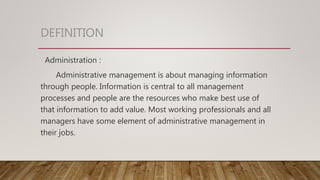
DEFINITION
Administration :
Administrative management is about managing information
through people. Information is central to all management
processes and people are the resources who make best use of
that information to add value. Most working professionals and all
managers have some element of administrative management in
their jobs.
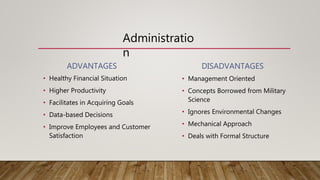
ADVANTAGES
• Healthy Financial Situation
• Higher Productivity
• Facilitates in Acquiring Goals
• Data-based Decisions
• Improve Employees and Customer
Satisfaction
DISADVANTAGES
• Management Oriented
• Concepts Borrowed from Military
Science
• Ignores Environmental Changes
• Mechanical Approach
• Deals with Formal Structure
Administratio
n
FUNCTIONS OF ADMINISTRATION
1. Planning Business Activities
2. Management of Project
3. Creating Budget
4. Hiring and Training Employees
5. Monitoring Employee’s Performance
6. Handling Account Payable/Receivables
7. Focuses on Cost Reduction
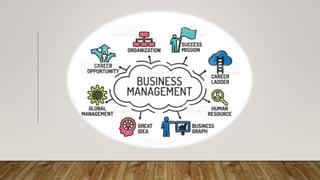
Management :
Management is a process of planning, decision making,
organizing, leading, motivation and controlling the human resources,
financial, physical, and information resources of an organization to
reach its goals efficiently and effectively
Efficiency in management refers to the
completion of tasks correctly and at minimal costs.
Effectiveness in management relates to the
completion of tasks within specific timelines to
yield tangible results.
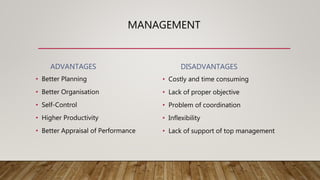
MANAGEMENT
ADVANTAGES
• Better Planning
• Better Organisation
• Self-Control
• Higher Productivity
• Better Appraisal of Performance
DISADVANTAGES
• Costly and time consuming
• Lack of proper objective
• Problem of coordination
• Inflexibility
• Lack of support of top management
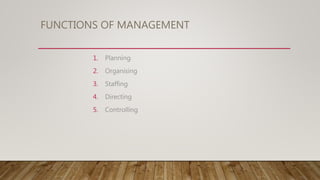
FUNCTIONS OF MANAGEMENT
1. Planning
2. Organising
3. Staffing
4. Directing
5. Controlling
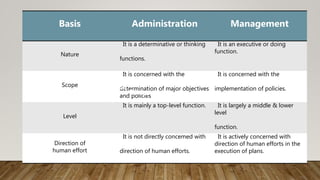
Basis Administration Management
Nature
It is a determinative or thinking
functions.
It is an executive or doing
function.
Scope
It is concerned with the
determination of major objectives
and policies
It is concerned with the
implementation of policies.
Level
It is mainly a top-level function. It is largely a middle & lower
level
function.
Direction of
human effort
It is not directly concemed with
direction of human efforts.
It is actively concerned with
direction of human efforts in the
execution of plans.
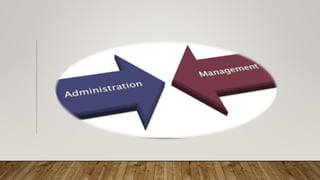
Administration
Management
Administration
Management
Administration
Management
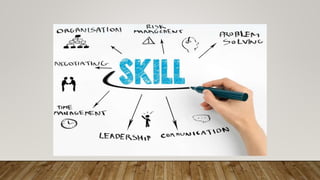
Managerial
Skills
Managerial skills are the knowledge and ability of the individuals
in a managerial position to fulfil some specific management
activities or tasks. This knowledge and ability can be learned and
practiced. However, they also can be acquired through practical
implementation of required activities and tasks.
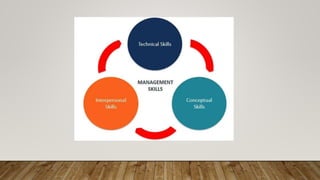
TYPES OF MANAGERIAL SKILLS
• Technical skills
Technical skills involve skills that give the managers the ability and the knowledge to
use a variety of techniques to achieve their objectives.
• Conceptual skills
These involve the skills managers present in terms of the knowledge and ability for
abstract thinking and formulating ideas.
• Human or Interpersonal Skills
The human or the interpersonal skills are the skills that present the managers’ ability
to interact, work or relate effectively with people.
Thank You

Administration vs Management and Managerial Skills

  • 1.
  • 3.
    DEFINITION Administration : Administrative managementis about managing information through people. Information is central to all management processes and people are the resources who make best use of that information to add value. Most working professionals and all managers have some element of administrative management in their jobs.
  • 4.
    ADVANTAGES • Healthy FinancialSituation • Higher Productivity • Facilitates in Acquiring Goals • Data-based Decisions • Improve Employees and Customer Satisfaction DISADVANTAGES • Management Oriented • Concepts Borrowed from Military Science • Ignores Environmental Changes • Mechanical Approach • Deals with Formal Structure Administratio n
  • 5.
    FUNCTIONS OF ADMINISTRATION 1.Planning Business Activities 2. Management of Project 3. Creating Budget 4. Hiring and Training Employees 5. Monitoring Employee’s Performance 6. Handling Account Payable/Receivables 7. Focuses on Cost Reduction
  • 7.
    Management : Management isa process of planning, decision making, organizing, leading, motivation and controlling the human resources, financial, physical, and information resources of an organization to reach its goals efficiently and effectively
  • 8.
    Efficiency in managementrefers to the completion of tasks correctly and at minimal costs. Effectiveness in management relates to the completion of tasks within specific timelines to yield tangible results.
  • 9.
    MANAGEMENT ADVANTAGES • Better Planning •Better Organisation • Self-Control • Higher Productivity • Better Appraisal of Performance DISADVANTAGES • Costly and time consuming • Lack of proper objective • Problem of coordination • Inflexibility • Lack of support of top management
  • 10.
    FUNCTIONS OF MANAGEMENT 1.Planning 2. Organising 3. Staffing 4. Directing 5. Controlling
  • 12.
    Basis Administration Management Nature Itis a determinative or thinking functions. It is an executive or doing function. Scope It is concerned with the determination of major objectives and policies It is concerned with the implementation of policies. Level It is mainly a top-level function. It is largely a middle & lower level function. Direction of human effort It is not directly concemed with direction of human efforts. It is actively concerned with direction of human efforts in the execution of plans. Administration Management Administration Management Administration Management
  • 13.
  • 14.
    Managerial skills arethe knowledge and ability of the individuals in a managerial position to fulfil some specific management activities or tasks. This knowledge and ability can be learned and practiced. However, they also can be acquired through practical implementation of required activities and tasks.
  • 16.
    TYPES OF MANAGERIALSKILLS • Technical skills Technical skills involve skills that give the managers the ability and the knowledge to use a variety of techniques to achieve their objectives. • Conceptual skills These involve the skills managers present in terms of the knowledge and ability for abstract thinking and formulating ideas. • Human or Interpersonal Skills The human or the interpersonal skills are the skills that present the managers’ ability to interact, work or relate effectively with people.
  • 18.