Functions &
Skills of a
Manager
BY SHIVENDRA SINGH
ASSISTANT PROFESSOR, M G CENTRAL UNIVERSITY
 Enterprise functions vary according to the nature of enterprise.
 Functions like production, marketing, finance, and personnel
noticed in typical industrial undertakings.
 If you take a transport undertakings, the main functions are
operations, traffic and finance.
 However, the managerial activities grouped into functions are
basic for all managers at all levels in all, types of enterprises.
 As all functions are not equally important for all managers, time spent by
them for each of these functions varies according to their levels in the
organisation.
 These functions has been discussed below:
A. Planning
B. Organising
C. Staffing
D. Directing
E. Controlling
Planning
 Planning refers to anticipating the future conditions
and choosing from among the alternative future
courses of action.
 The planning process generally includes the
following activities:
 i) Forecasting is looking ahead to anticipate the
opportunity, problems and conditions in a future
period of time.
 ii) Establishing objectives means setting the end results to be
accomplished by directing organisational efforts.
 iii) Scheduling is deciding on time sequence for programme
steps.
 iv) Budgeting is allocation of resources to minimise costs.
 v) Developing policies involve establishment and
interpretation of standing decisions that apply to repetitive
questions and problems of significance to be organisation as
a whole.
Organising
 The organising function of management is the process of
defining and grouping of activities and creating authority
relationship among them. It consists of:
 i) Developing the organisation structure which involves
identification of task and grouping them into units or
departments for performance.
 ii) Delegating authority to the managers and making him
responsible for group performance.
 iii) Establishing relations creating conditions necessary for
mutually cooperative efforts of people in the organisation.
Staffing
 Planning the organisation with suitable personnel constitutes the
staffing function.
 It involves selection, training and development, compensation,
and appraisal of subordinates by the manager.
 Manpower planning and manpower management looks after
these activities and try to ensure suitable methods of
remuneration and performance appraisal of the employees.
Directing
 Directing involves managing people and the work
through the means of motivation, proper leadership,
effective communication and coordination.
 A manager must develop ability to command.
 He should issue orders and instructions without arousing
any resentment among the subordinates.
 He must be able to secure willing obedience from his
subordinates without destroying their initiative and
creativity.
Controlling
 Controlling enables management to ensure that achievement is
in accordance with the established plans. It involves
 i) Establishing performance standards for evaluating results.
 ii) Performance on the basis of records and reports on the
progress of work.
 iii). Performance evaluation against the standards set.
 iv) Corrective action to regulate operations, remove deficiencies
and improve performance.
Skills of the Manager
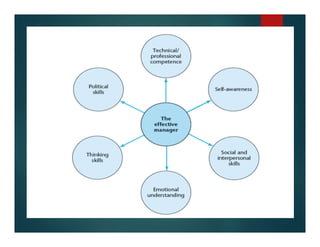
 To perform his duty effectively and efficiently
managers’ have to equipped with some of the
skills.
Technical competence
 Management is a practical subject which aims to
have an impact on the real world, so it requires
functional knowledge and skill in applying a body
of professional practice.
 Here we are talking about knowledge of product
technology, marketing techniques, engineering,
accountancy, knowledge of relevant legislation,
knowledge of basic management principles and
theories.
 which help the practitioner with ‘best
 practice’ in planning, organising and controlling
Self-awareness
 The knowledge we have acquired about ourselves, which
makes up our self-concept, is central to improving our
management skills.
 Knowing ourselves helps us understand our own
assumptions, our categories for defining situations and
people, our sensitivities, strengths and weaknesses.
 This knowledge is self empowering.
 It is the first step in making any changes to ourselves which
are needed to develop the skills we think we need.
Interpersonal and social
skills They largely mean to working with and through other people
and using careful judgement.
 They imply sensitivity to people and situations and skill in
persuading people to achieve a common goal.
 e.g. balancing the often conflicting expectations of customers,
suppliers, employees, superiors.
Emotional Understanding
 The ‘management of emotion’ is also an
important social skill for the manager.
 The manager’s job requires a high level of
emotional strain, a result of working In situations of
endless demands, conflicting pressures, lack of
time, lack of resources and lack of clarity in
knowing what is expected and how to achieve it.
 Good Emotional quotient seems to have a strong positive
relationship with success in handling difficult social situations
and relationships.
Thinking skills
 Managers need the ability to think.
 That does not mean that they have to be original
conceptual thinkers, but they do need to have
good, clear minds and to be able to see the
whole picture
 they should be a sharp decision makers and
smooth problem solvers.
Political skills
 Organisations are ultimately political systems.
 Organisational politics involves:
● senior managers building up their departments by
fighting for additional resources and authority;
● senior managers engaging in debate over the
‘meaning’ of the strategic plan so that definitions
favourable to their interests prevail;
● conflict between departments over equipment,
space, budgets, staff, etc.;
● individuals jockeying for position to advance their
careers.
Conclusion
 Management is a complex activity.
 It requires highly developed cognitive,
interpersonal, presentational and political skills.
 The qualities which make up a successful
manager are numerous and varied.

Functions & skills of manager

  • 1.
    Functions & Skills ofa Manager BY SHIVENDRA SINGH ASSISTANT PROFESSOR, M G CENTRAL UNIVERSITY
  • 2.
     Enterprise functionsvary according to the nature of enterprise.  Functions like production, marketing, finance, and personnel noticed in typical industrial undertakings.  If you take a transport undertakings, the main functions are operations, traffic and finance.  However, the managerial activities grouped into functions are basic for all managers at all levels in all, types of enterprises.
  • 3.
     As allfunctions are not equally important for all managers, time spent by them for each of these functions varies according to their levels in the organisation.  These functions has been discussed below: A. Planning B. Organising C. Staffing D. Directing E. Controlling
  • 4.
    Planning  Planning refersto anticipating the future conditions and choosing from among the alternative future courses of action.  The planning process generally includes the following activities:  i) Forecasting is looking ahead to anticipate the opportunity, problems and conditions in a future period of time.
  • 5.
     ii) Establishingobjectives means setting the end results to be accomplished by directing organisational efforts.  iii) Scheduling is deciding on time sequence for programme steps.  iv) Budgeting is allocation of resources to minimise costs.  v) Developing policies involve establishment and interpretation of standing decisions that apply to repetitive questions and problems of significance to be organisation as a whole.
  • 6.
    Organising  The organisingfunction of management is the process of defining and grouping of activities and creating authority relationship among them. It consists of:  i) Developing the organisation structure which involves identification of task and grouping them into units or departments for performance.  ii) Delegating authority to the managers and making him responsible for group performance.  iii) Establishing relations creating conditions necessary for mutually cooperative efforts of people in the organisation.
  • 7.
    Staffing  Planning theorganisation with suitable personnel constitutes the staffing function.  It involves selection, training and development, compensation, and appraisal of subordinates by the manager.  Manpower planning and manpower management looks after these activities and try to ensure suitable methods of remuneration and performance appraisal of the employees.
  • 8.
    Directing  Directing involvesmanaging people and the work through the means of motivation, proper leadership, effective communication and coordination.  A manager must develop ability to command.  He should issue orders and instructions without arousing any resentment among the subordinates.  He must be able to secure willing obedience from his subordinates without destroying their initiative and creativity.
  • 9.
    Controlling  Controlling enablesmanagement to ensure that achievement is in accordance with the established plans. It involves  i) Establishing performance standards for evaluating results.  ii) Performance on the basis of records and reports on the progress of work.  iii). Performance evaluation against the standards set.  iv) Corrective action to regulate operations, remove deficiencies and improve performance.
  • 10.
    Skills of theManager  To perform his duty effectively and efficiently managers’ have to equipped with some of the skills.
  • 12.
    Technical competence  Managementis a practical subject which aims to have an impact on the real world, so it requires functional knowledge and skill in applying a body of professional practice.  Here we are talking about knowledge of product technology, marketing techniques, engineering, accountancy, knowledge of relevant legislation, knowledge of basic management principles and theories.  which help the practitioner with ‘best  practice’ in planning, organising and controlling
  • 13.
    Self-awareness  The knowledgewe have acquired about ourselves, which makes up our self-concept, is central to improving our management skills.  Knowing ourselves helps us understand our own assumptions, our categories for defining situations and people, our sensitivities, strengths and weaknesses.  This knowledge is self empowering.  It is the first step in making any changes to ourselves which are needed to develop the skills we think we need.
  • 14.
    Interpersonal and social skillsThey largely mean to working with and through other people and using careful judgement.  They imply sensitivity to people and situations and skill in persuading people to achieve a common goal.  e.g. balancing the often conflicting expectations of customers, suppliers, employees, superiors.
  • 15.
    Emotional Understanding  The‘management of emotion’ is also an important social skill for the manager.  The manager’s job requires a high level of emotional strain, a result of working In situations of endless demands, conflicting pressures, lack of time, lack of resources and lack of clarity in knowing what is expected and how to achieve it.
  • 16.
     Good Emotionalquotient seems to have a strong positive relationship with success in handling difficult social situations and relationships.
  • 17.
    Thinking skills  Managersneed the ability to think.  That does not mean that they have to be original conceptual thinkers, but they do need to have good, clear minds and to be able to see the whole picture  they should be a sharp decision makers and smooth problem solvers.
  • 18.
    Political skills  Organisationsare ultimately political systems.  Organisational politics involves: ● senior managers building up their departments by fighting for additional resources and authority; ● senior managers engaging in debate over the ‘meaning’ of the strategic plan so that definitions favourable to their interests prevail; ● conflict between departments over equipment, space, budgets, staff, etc.; ● individuals jockeying for position to advance their careers.
  • 19.
    Conclusion  Management isa complex activity.  It requires highly developed cognitive, interpersonal, presentational and political skills.  The qualities which make up a successful manager are numerous and varied.