Acute Decompensated Heart Failure
(ADHF)- Management
• Acute Heart failure ( Acute HF syndromes or
ADHF) is rapid occurrence of symptoms and
signs of HF, or the deterioration of stable HF,
leading the requirement of hospitalisztion and
/ or intensive therapy.
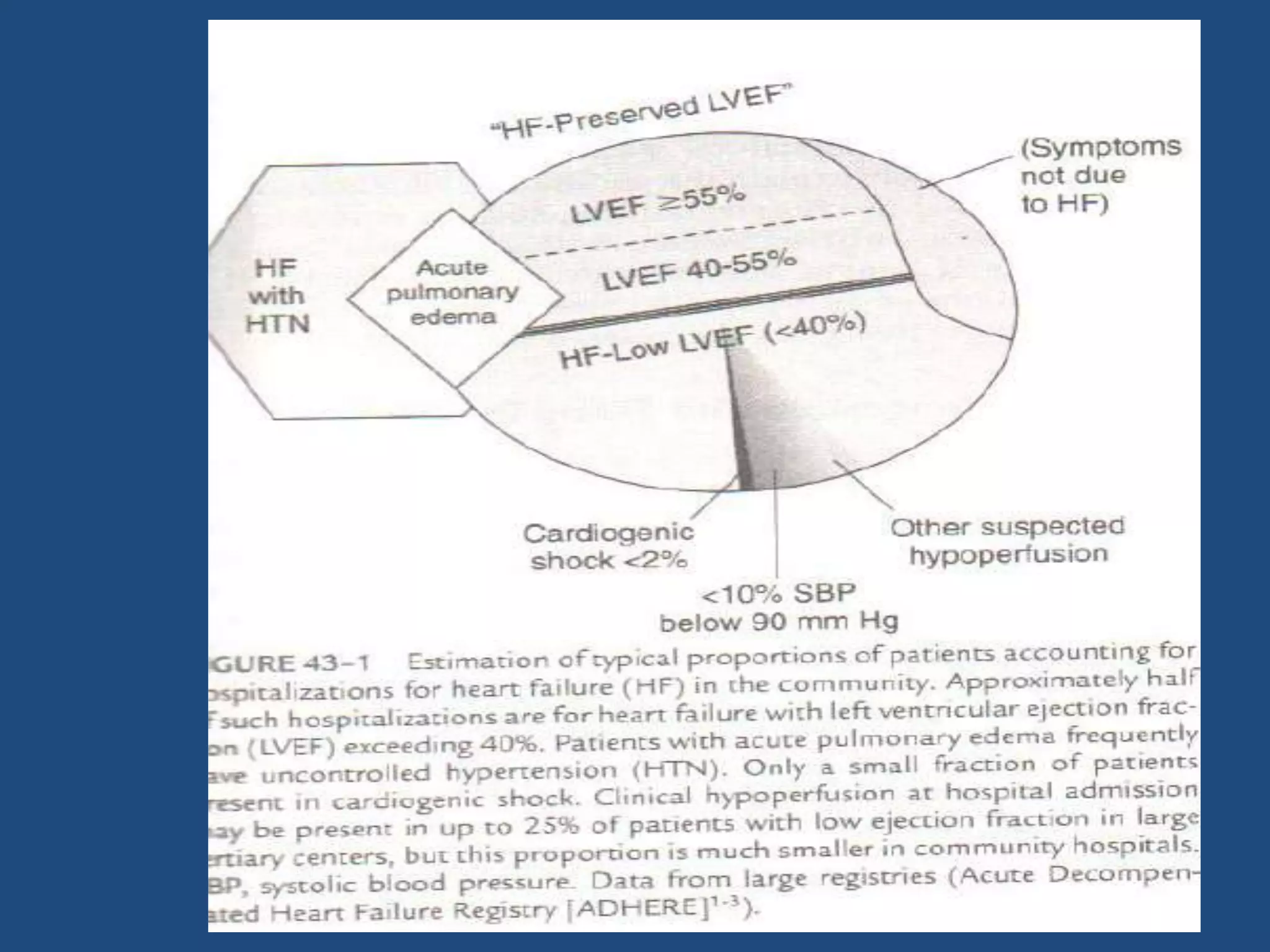
• 65% to 85% of admissions are due to
worsening of existing HF.
• In hospital mortality is 3-4%
• Aim of management
• 1. Immediate Assessment
• 2. Relief of symptoms by intensive monitored care
• 3 .Identification of precipitating causes
• 4. Stabilisation of the patient
• 5. Review of the old therapy
• 6. Modification of therapy
• 7. Patient education.
• 8. Plan for interventions
• 9. Plan for discharge.
Assessment
• Symptoms
» Fatigue
» Indigestion
» Insomnia
» PND
» Light headedness
» Palpitations
» Nocturnal cough
» Right hypochondrial pain
» Wt gain / wt loss
• Signs
Appearence
Pulse - regularity, volume, alternans, paradoxes
BP disparity in BP between limbs
Respiration
Cyanosis
JVP
Edema
Signs of renal failure
Signs of hepatic failure
• Initial investigations
• 12 lead ECG
• BS / BUN / Creatinine
• ECHO
• CXR
• Others
• Cardiac enzymes
• Electrolytes
• BNP
Low-Intermediate clinical suspicion of ADHF
BNP (A)
BNP > 500pg/ml
ADHF more likely
BNP < 50-100pg/ml
ADHF less likely
BNP 100-500pg/ml
Likely, but
consider other causes
• What are the things to be monitored?
• 1. SpO2
• 2.BP
• 3. respiratory rate
• 4. urine output
• 5. response to treatment
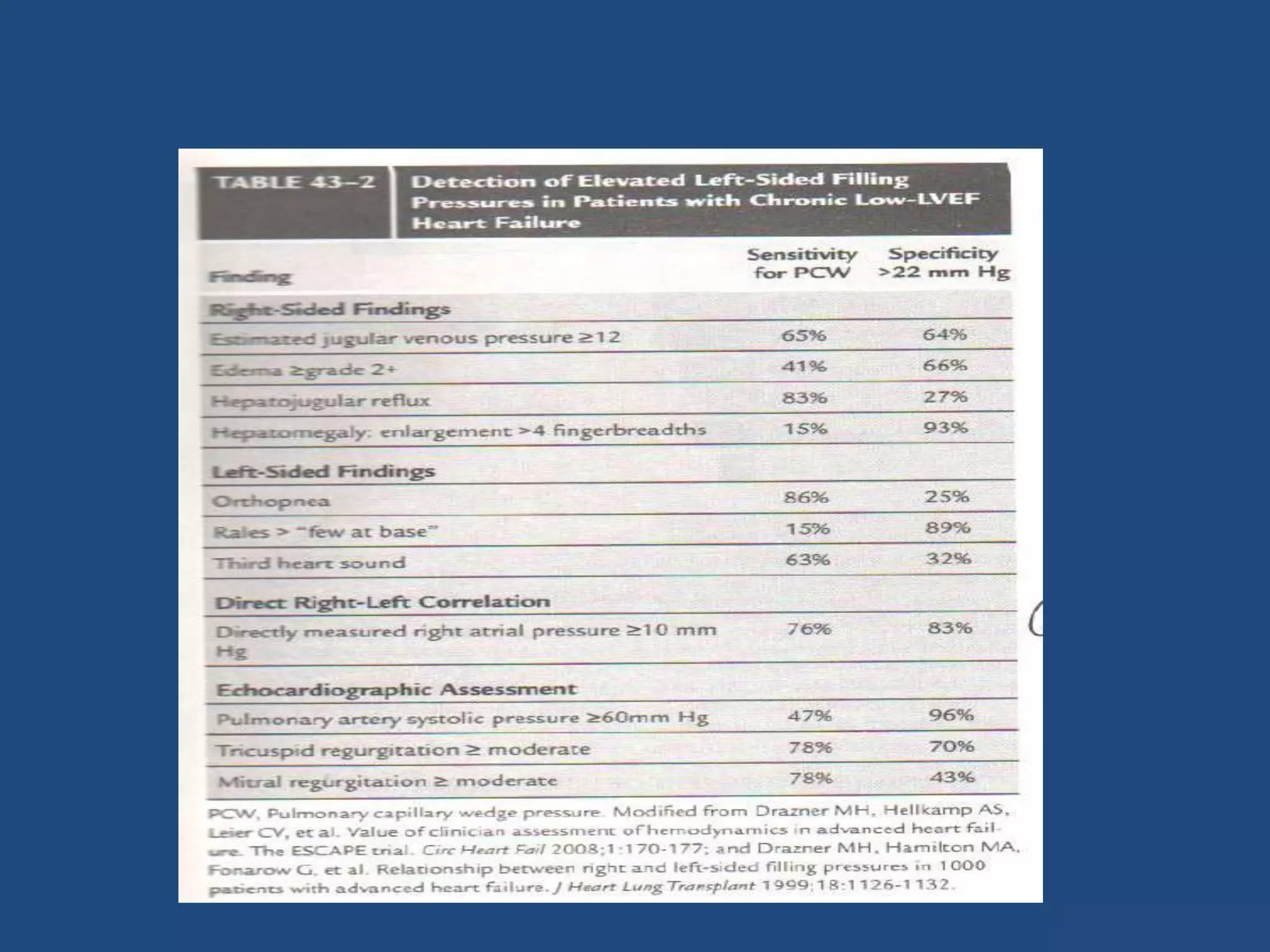
• 6. filling pressures
• 7. Invasive monitoring
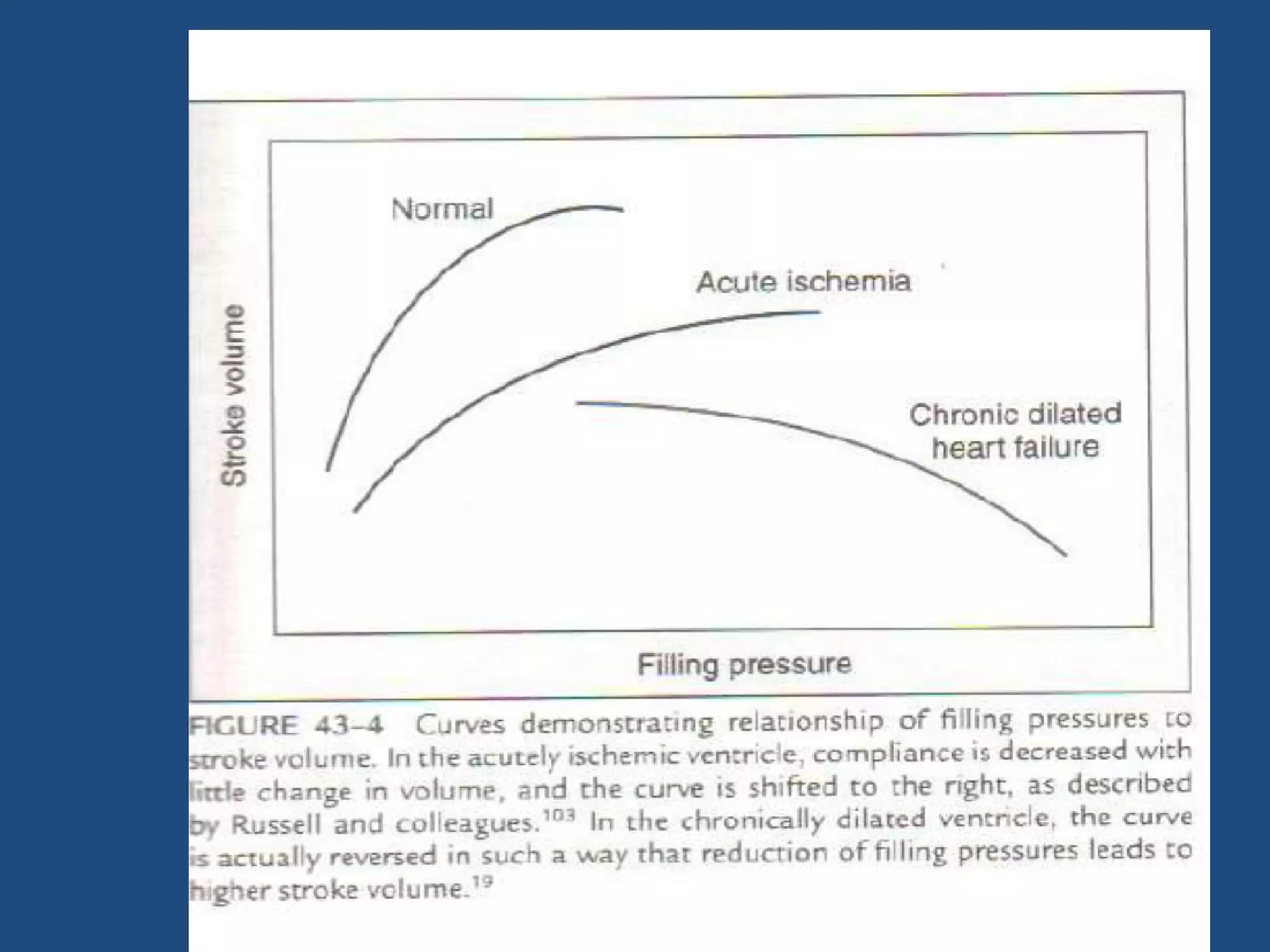
• A word about filling pressures.
– 1. pts with DCM have elevated RV filling pressure-
30mmHg.
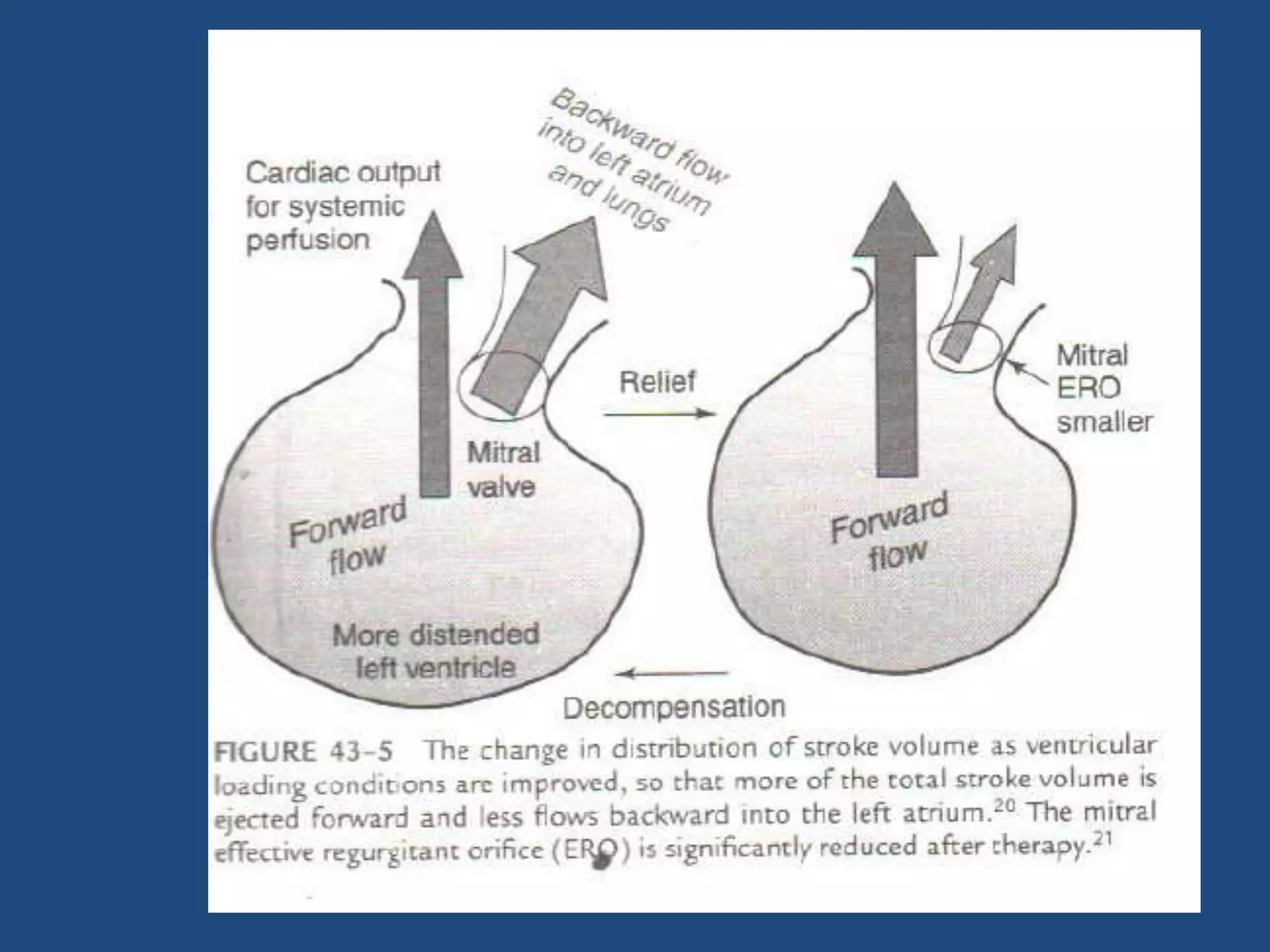
– Can be brought down to 15-16mmHg to improve the CO
by reducing the RV size, reducing the severity of MR
• But in Ischemic heart disease
– The filling pressure needs to be little high as the compliance is
reduced.
Differential Diagnosis
 Pneumonia
 Reactive airway disease
 Pulmonary embolus
• Treatment:
» 1. propped up position
» 2. removal of iatrogenic cause
» 3. oxygen in adequate dose
» 4. Hemodynamic monitoring . ( Invasive and Noninvasive)
» 4. Intravenous diuretics
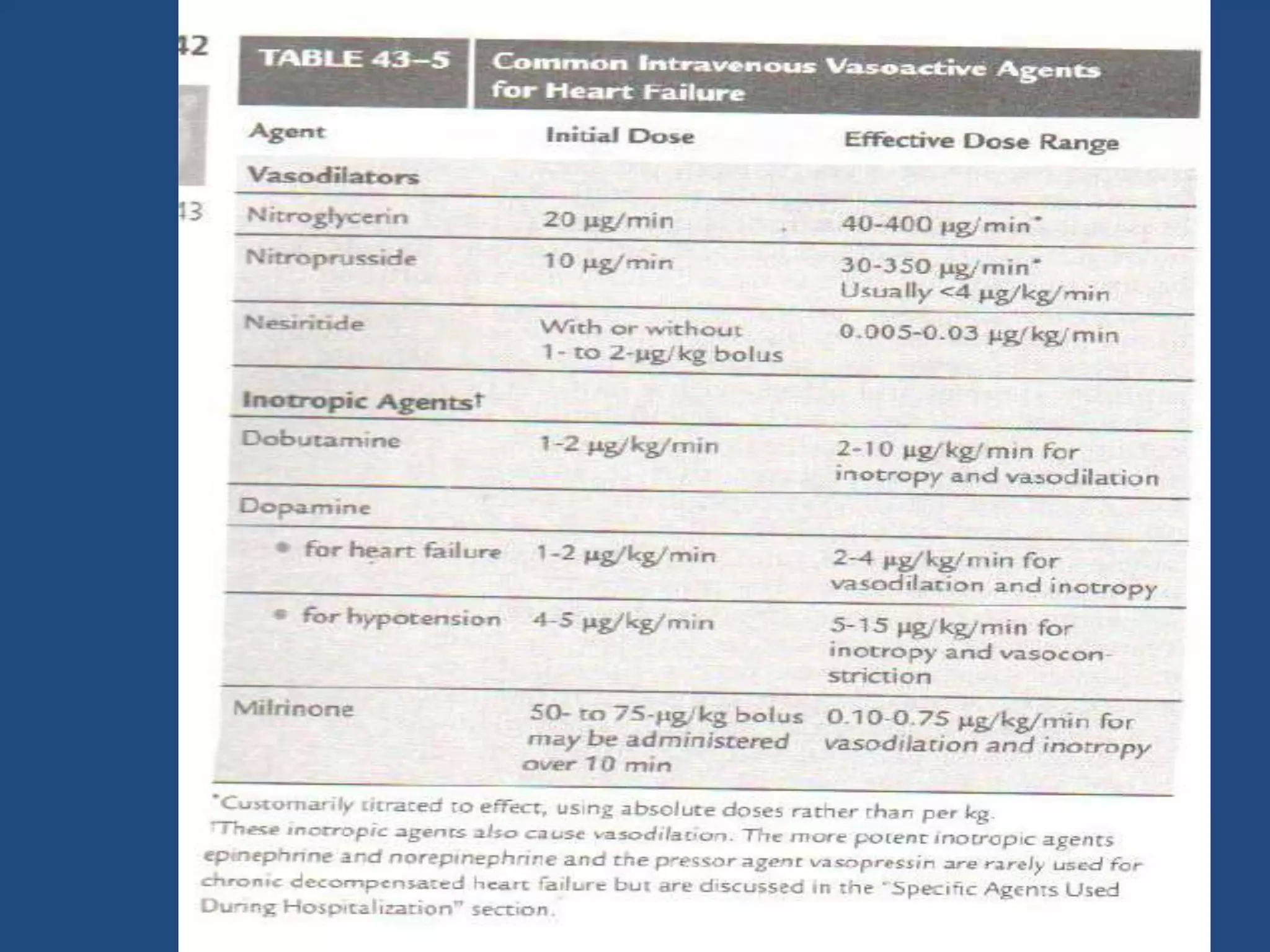
» 5.Intravenous vasodilators
» 6. inotrops
» 7.management of precipitating cause
• Ischemia, arrythmia, renal failure ,
COPD,DM, infections.
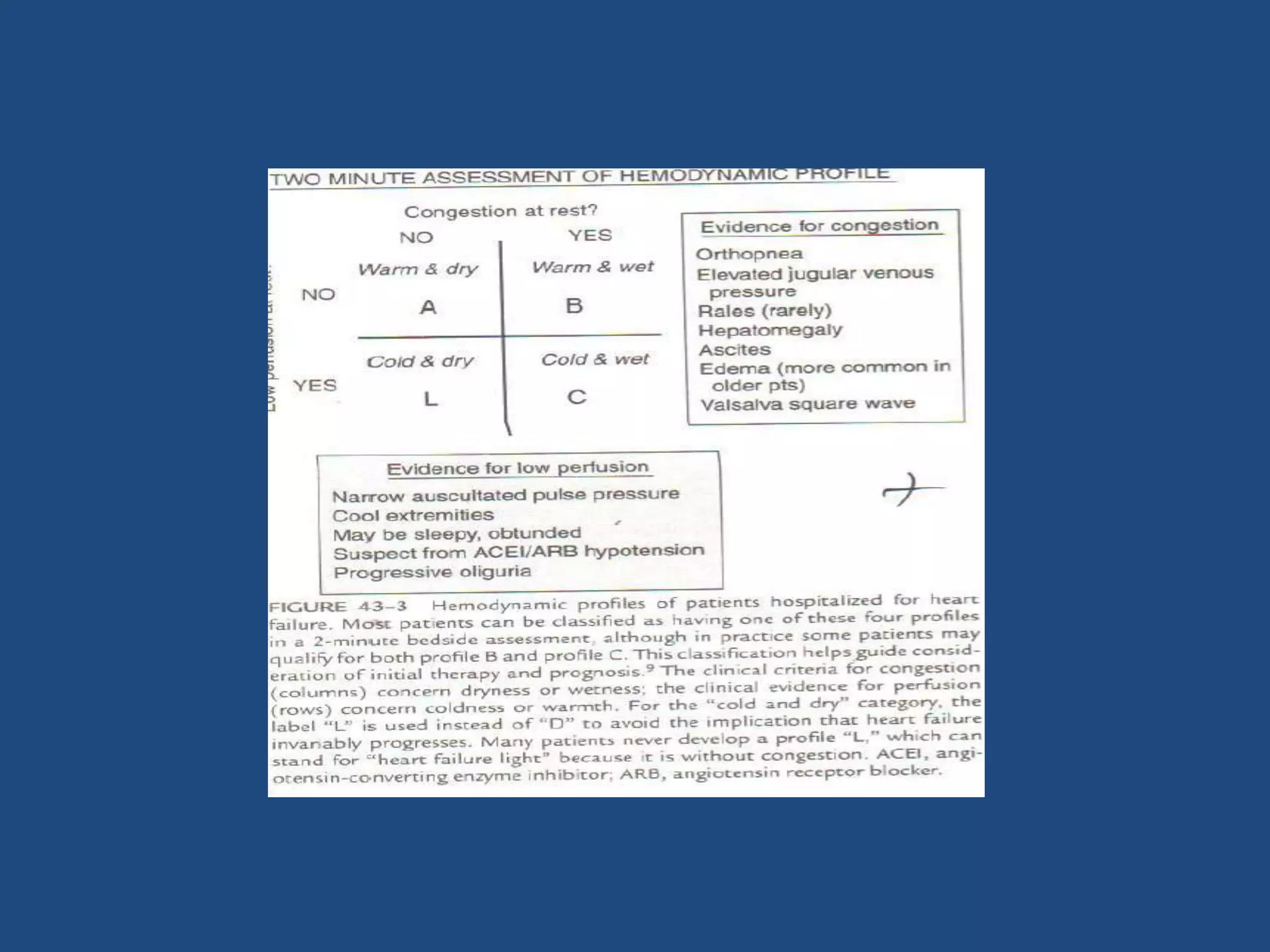
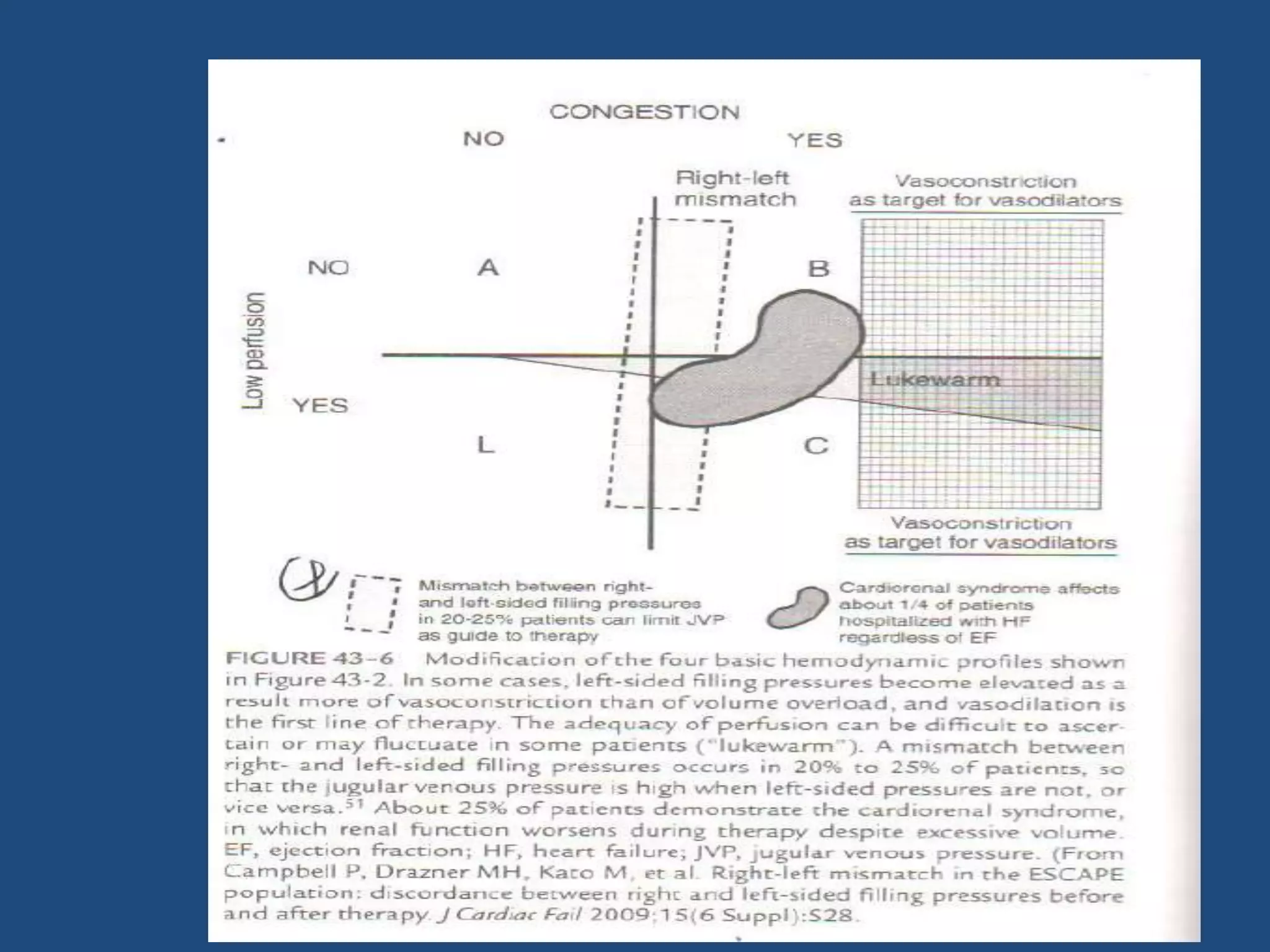
• Profile A:
– Warm and Dry
– That means they are not congested and they are adequately
perfused.
• Profile B:
– Warm and wet .
– That means they are adequately perfused but congested.
– The most common presentation
– Management
• Reduction of filling pressures by veno
dilators and diuretics
• Reduction of afterload
• Positive pressure ventilation.
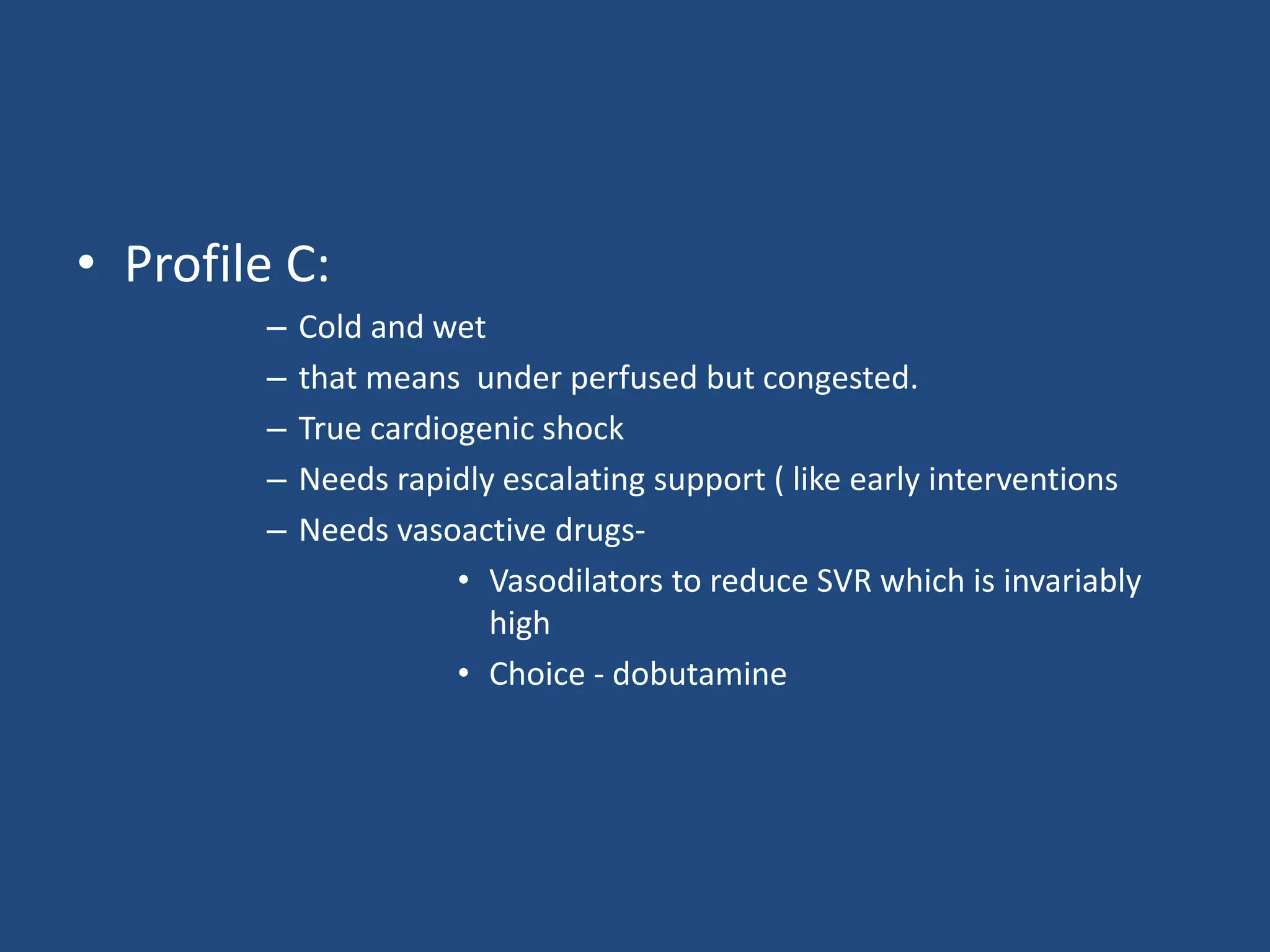
• Profile C:
– Cold and wet
– that means under perfused but congested.
– True cardiogenic shock
– Needs rapidly escalating support ( like early interventions
– Needs vasoactive drugs-
• Vasodilators to reduce SVR which is invariably
high
• Choice - dobutamine
• Profile D: NO NO
– Profile L
• Dry and Cold
» Means that there is under perfusion and no congestion
» Rare situation
» Look for filling pressures
» Stop diuretics
» Try to replace volume by careful monitoring
» If heart rate is high reduce by BB
» Inotrops - ? value
(D) Unresolved hypoperfusion
Transient use of Vasopressor therapy
Epinephrine
0.05-0.5 ug/kg/min inf. Norepinephrine 0.2-1ug/kg/min
+/- dobutamine
0.05-0.5 ug/kg/min inf.
Use of invasive
hemodynamic monitoring C
Non-pharmacologic Management
• Daily weight
• Strict I’s and O’s
• Low sodium diet (<2g daily)
• Fluid restriction
– Typically only for patients with hyponatremia
Treatment: Diuretics
• Recommend to give intravenously initially
• Typically at least twice a day
• Agents
– Furosemide
• Can give home dose as IV (2:1 po to IV ratio)
• Titrate up based on response (goal net negative
1.5-2L daily on average)
– Bumetanide
• Alternative to Furosemide in tolerant patients
• 40 mg IV Lasix = 1 mg IV Bumetanide = 1mg po
Bumetanide
Treatment: Diuretics
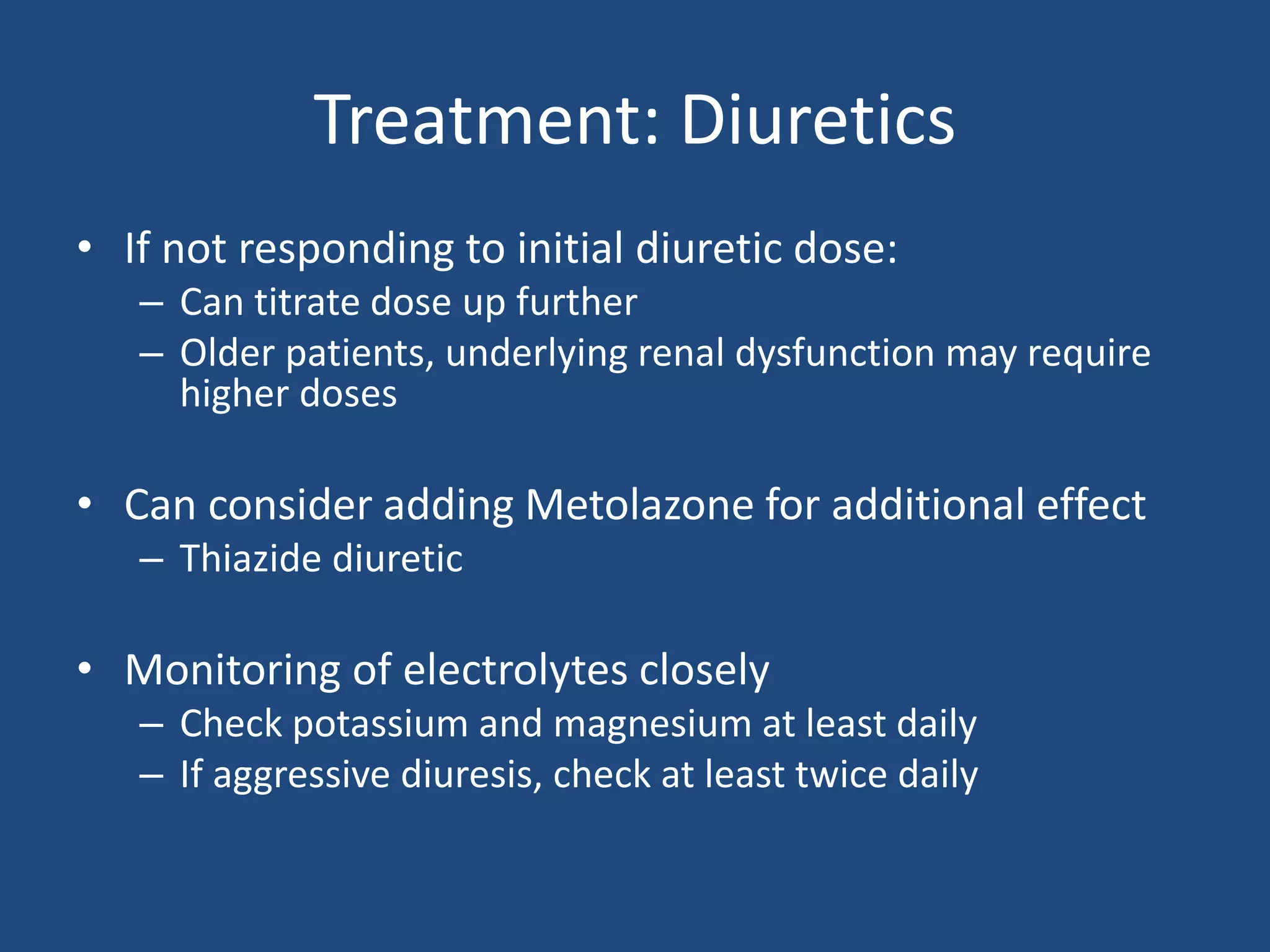
• If not responding to initial diuretic dose:
– Can titrate dose up further
– Older patients, underlying renal dysfunction may require
higher doses
• Can consider adding Metolazone for additional effect
– Thiazide diuretic
• Monitoring of electrolytes closely
– Check potassium and magnesium at least daily
– If aggressive diuresis, check at least twice daily
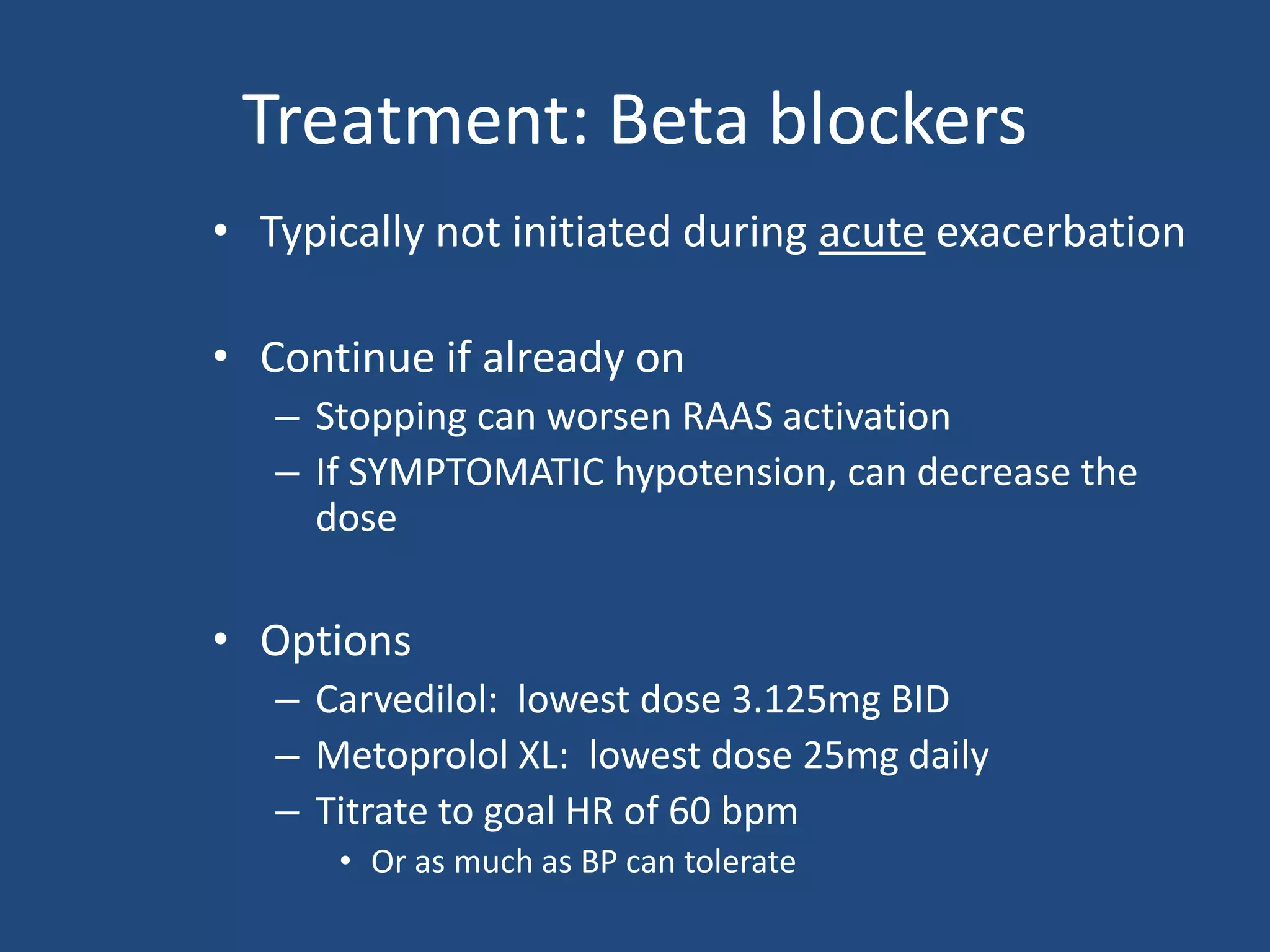
Treatment: Beta blockers
• Typically not initiated during acute exacerbation
• Continue if already on
– Stopping can worsen RAAS activation
– If SYMPTOMATIC hypotension, can decrease the
dose
• Options
– Carvedilol: lowest dose 3.125mg BID
– Metoprolol XL: lowest dose 25mg daily
– Titrate to goal HR of 60 bpm
• Or as much as BP can tolerate
Summary
• Identify clinical signs and symptoms of ADHF
• Pertinent labs
– Sodium, creatinine, troponin, BNP
• Relevant imaging
– EKG, CXR, echocardiography
• Treatment
– Diuresis, BB, ACEI/ARB, Spironolactone, Digoxin,
Isosorbide dinitrate/Hydralazine
• Transition to outpatient
– Strict instructions, close-follow-up
• Thanking You All
Acute decompensated heart failure

Acute decompensated heart failure

  • 1.
    Acute Decompensated HeartFailure (ADHF)- Management
  • 2.
    • Acute Heartfailure ( Acute HF syndromes or ADHF) is rapid occurrence of symptoms and signs of HF, or the deterioration of stable HF, leading the requirement of hospitalisztion and / or intensive therapy.
  • 3.
    • 65% to85% of admissions are due to worsening of existing HF. • In hospital mortality is 3-4%
  • 7.
    • Aim ofmanagement • 1. Immediate Assessment • 2. Relief of symptoms by intensive monitored care • 3 .Identification of precipitating causes • 4. Stabilisation of the patient • 5. Review of the old therapy • 6. Modification of therapy • 7. Patient education. • 8. Plan for interventions • 9. Plan for discharge.
  • 8.
    Assessment • Symptoms » Fatigue »Indigestion » Insomnia » PND » Light headedness » Palpitations » Nocturnal cough » Right hypochondrial pain » Wt gain / wt loss
  • 9.
    • Signs Appearence Pulse -regularity, volume, alternans, paradoxes BP disparity in BP between limbs Respiration Cyanosis JVP Edema Signs of renal failure Signs of hepatic failure
  • 11.
    • Initial investigations •12 lead ECG • BS / BUN / Creatinine • ECHO • CXR • Others • Cardiac enzymes • Electrolytes • BNP
  • 12.
    Low-Intermediate clinical suspicionof ADHF BNP (A) BNP > 500pg/ml ADHF more likely BNP < 50-100pg/ml ADHF less likely BNP 100-500pg/ml Likely, but consider other causes
  • 13.
    • What arethe things to be monitored? • 1. SpO2 • 2.BP • 3. respiratory rate • 4. urine output • 5. response to treatment • 6. filling pressures • 7. Invasive monitoring
  • 15.
    • A wordabout filling pressures. – 1. pts with DCM have elevated RV filling pressure- 30mmHg. – Can be brought down to 15-16mmHg to improve the CO by reducing the RV size, reducing the severity of MR
  • 17.
    • But inIschemic heart disease – The filling pressure needs to be little high as the compliance is reduced.
  • 21.
    Differential Diagnosis  Pneumonia Reactive airway disease  Pulmonary embolus
  • 22.
    • Treatment: » 1.propped up position » 2. removal of iatrogenic cause » 3. oxygen in adequate dose » 4. Hemodynamic monitoring . ( Invasive and Noninvasive) » 4. Intravenous diuretics » 5.Intravenous vasodilators » 6. inotrops » 7.management of precipitating cause • Ischemia, arrythmia, renal failure , COPD,DM, infections.
  • 24.
    • Profile A: –Warm and Dry – That means they are not congested and they are adequately perfused.
  • 25.
    • Profile B: –Warm and wet . – That means they are adequately perfused but congested. – The most common presentation – Management • Reduction of filling pressures by veno dilators and diuretics • Reduction of afterload • Positive pressure ventilation.
  • 26.
    • Profile C: –Cold and wet – that means under perfused but congested. – True cardiogenic shock – Needs rapidly escalating support ( like early interventions – Needs vasoactive drugs- • Vasodilators to reduce SVR which is invariably high • Choice - dobutamine
  • 27.
    • Profile D:NO NO – Profile L • Dry and Cold » Means that there is under perfusion and no congestion » Rare situation » Look for filling pressures » Stop diuretics » Try to replace volume by careful monitoring » If heart rate is high reduce by BB » Inotrops - ? value
  • 31.
    (D) Unresolved hypoperfusion Transientuse of Vasopressor therapy Epinephrine 0.05-0.5 ug/kg/min inf. Norepinephrine 0.2-1ug/kg/min +/- dobutamine 0.05-0.5 ug/kg/min inf. Use of invasive hemodynamic monitoring C
  • 32.
    Non-pharmacologic Management • Dailyweight • Strict I’s and O’s • Low sodium diet (<2g daily) • Fluid restriction – Typically only for patients with hyponatremia
  • 33.
    Treatment: Diuretics • Recommendto give intravenously initially • Typically at least twice a day • Agents – Furosemide • Can give home dose as IV (2:1 po to IV ratio) • Titrate up based on response (goal net negative 1.5-2L daily on average) – Bumetanide • Alternative to Furosemide in tolerant patients • 40 mg IV Lasix = 1 mg IV Bumetanide = 1mg po Bumetanide
  • 34.
    Treatment: Diuretics • Ifnot responding to initial diuretic dose: – Can titrate dose up further – Older patients, underlying renal dysfunction may require higher doses • Can consider adding Metolazone for additional effect – Thiazide diuretic • Monitoring of electrolytes closely – Check potassium and magnesium at least daily – If aggressive diuresis, check at least twice daily
  • 35.
    Treatment: Beta blockers •Typically not initiated during acute exacerbation • Continue if already on – Stopping can worsen RAAS activation – If SYMPTOMATIC hypotension, can decrease the dose • Options – Carvedilol: lowest dose 3.125mg BID – Metoprolol XL: lowest dose 25mg daily – Titrate to goal HR of 60 bpm • Or as much as BP can tolerate
  • 37.
    Summary • Identify clinicalsigns and symptoms of ADHF • Pertinent labs – Sodium, creatinine, troponin, BNP • Relevant imaging – EKG, CXR, echocardiography • Treatment – Diuresis, BB, ACEI/ARB, Spironolactone, Digoxin, Isosorbide dinitrate/Hydralazine • Transition to outpatient – Strict instructions, close-follow-up
  • 38.