
Different kind of ear molds
By: Farzad Hamzehpour
materials
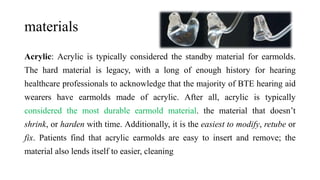
Acrylic: Acrylic is typically considered the standby material for earmolds.
The hard material is legacy, with a long of enough history for hearing
healthcare professionals to acknowledge that the majority of BTE hearing aid
wearers have earmolds made of acrylic. After all, acrylic is typically
considered the most durable earmold material. the material that doesn’t
shrink, or harden with time. Additionally, it is the easiest to modify, retube or
fix. Patients find that acrylic earmolds are easy to insert and remove; the
material also lends itself to easier, cleaning
materials
Vinyl: Vinyl, also known as polyvinyl chloride (PVC), is softer than acrylic. These
types of earmolds are well suited for individuals with soft ears, such as older
individuals or children. A vinyl earmold inserts fairly easy and contains the
advantage of providing a better acoustic seal. A disadvantage of vinyl is that many
hearing healthcare professionals and the material more difficult to modify. Vinyl can
harden over time, becoming as hard as acrylic with age. It can also turn a yellow or
brown color from one’s body or constant exposure to sunlight. As such, vinyl
earmolds are typically replaced more often than acrylic earmolds.
materials
Polyethylene: This is a third material used for earmolds. This material
is semi-hard and waxy, much like a candle. Polyethylene is typically
only used if a patient harbors allergies to acrylic or vinyl, as the material
isn’t the most cosmetically appealing (its color is a milky white) and is
difficult to modify.
materials
Silicone: Another top choice material for earmolds is silicone. The
material is flexible and comfortable while providing a tight fit for
instruments. Furthermore, it is durable, especially compared to acrylic,
which can snap and break. However, silicone earmolds are typically
harder when it comes to inserting the tube and create issues when a
hearing healthcare professional needs to modify it.
Type (style)
Open behind the ear (BTE): The open BTE hearing aid uses a dome
that is placed inside of the ear. This type of earmold helps to prevent
occlusion as well as helping to keep optimal airflow in the ear
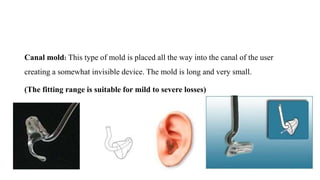
Canal mold: This type of mold is placed all the way into the canal of the user
creating a somewhat invisible device. The mold is long and very small.
(The fitting range is suitable for mild to severe losses)
Canal tip:
leaving only the portion of the mold from the primary seal inwards
(If the canal is well-defined, a canal tip may be used with a fitting range from mild
to moderate losses)
Half-Shell mold (HS): This type of mold fills the bowl of the ear and extends into the ear
canal. It is visible to the naked eye, but can be more comfortable and forgiving when it
comes to the hearing aid fit
(moderate to severe hearing losses)
Full-Shell mold: This type of mold fills the entire bowl of the
ear and extends into the canal. This mold provides great retention for
the user and is more forgiving with the fit as well.
(moderate to profound hearing losses)
Skeleton mold: This mold is used in BTE hearing aids and is like a full mold
with the center taken out of it.
(mild to severe hearing losses)
Semi-Skeleton mold: This mold is like the skeleton mold; however, part of
the skeleton mold is cut away creating a hook to fit in the bottom of the bowl
of the ear. This type of mold is also only for BTE hearing aids.
(losses range from mild to severe)
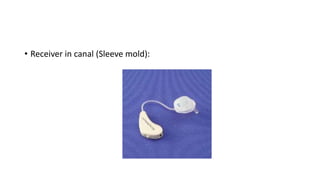
• Receiver in canal (Sleeve mold):
Ear molds

Ear molds

  • 1.
    Different kind ofear molds By: Farzad Hamzehpour
  • 7.
    materials Acrylic: Acrylic istypically considered the standby material for earmolds. The hard material is legacy, with a long of enough history for hearing healthcare professionals to acknowledge that the majority of BTE hearing aid wearers have earmolds made of acrylic. After all, acrylic is typically considered the most durable earmold material. the material that doesn’t shrink, or harden with time. Additionally, it is the easiest to modify, retube or fix. Patients find that acrylic earmolds are easy to insert and remove; the material also lends itself to easier, cleaning
  • 8.
    materials Vinyl: Vinyl, alsoknown as polyvinyl chloride (PVC), is softer than acrylic. These types of earmolds are well suited for individuals with soft ears, such as older individuals or children. A vinyl earmold inserts fairly easy and contains the advantage of providing a better acoustic seal. A disadvantage of vinyl is that many hearing healthcare professionals and the material more difficult to modify. Vinyl can harden over time, becoming as hard as acrylic with age. It can also turn a yellow or brown color from one’s body or constant exposure to sunlight. As such, vinyl earmolds are typically replaced more often than acrylic earmolds.
  • 9.
    materials Polyethylene: This isa third material used for earmolds. This material is semi-hard and waxy, much like a candle. Polyethylene is typically only used if a patient harbors allergies to acrylic or vinyl, as the material isn’t the most cosmetically appealing (its color is a milky white) and is difficult to modify.
  • 10.
    materials Silicone: Another topchoice material for earmolds is silicone. The material is flexible and comfortable while providing a tight fit for instruments. Furthermore, it is durable, especially compared to acrylic, which can snap and break. However, silicone earmolds are typically harder when it comes to inserting the tube and create issues when a hearing healthcare professional needs to modify it.
  • 11.
    Type (style) Open behindthe ear (BTE): The open BTE hearing aid uses a dome that is placed inside of the ear. This type of earmold helps to prevent occlusion as well as helping to keep optimal airflow in the ear
  • 13.
    Canal mold: Thistype of mold is placed all the way into the canal of the user creating a somewhat invisible device. The mold is long and very small. (The fitting range is suitable for mild to severe losses)
  • 14.
    Canal tip: leaving onlythe portion of the mold from the primary seal inwards (If the canal is well-defined, a canal tip may be used with a fitting range from mild to moderate losses)
  • 15.
    Half-Shell mold (HS):This type of mold fills the bowl of the ear and extends into the ear canal. It is visible to the naked eye, but can be more comfortable and forgiving when it comes to the hearing aid fit (moderate to severe hearing losses) Full-Shell mold: This type of mold fills the entire bowl of the ear and extends into the canal. This mold provides great retention for the user and is more forgiving with the fit as well. (moderate to profound hearing losses)
  • 16.
    Skeleton mold: Thismold is used in BTE hearing aids and is like a full mold with the center taken out of it. (mild to severe hearing losses) Semi-Skeleton mold: This mold is like the skeleton mold; however, part of the skeleton mold is cut away creating a hook to fit in the bottom of the bowl of the ear. This type of mold is also only for BTE hearing aids. (losses range from mild to severe)
  • 18.
    • Receiver incanal (Sleeve mold):