Apraxia
SHELBY PENDLETON-WEATHERS
OVERVIEW OF SPECIAL EDUCATION
What is Apraxia?
• A speech and language (communication) disorder
• A motor speech disorder, which basically means the brain has trouble
sending messages to the lips, mouth and tongue
• Two types:
• Acquired Apraxia which is more common in adults
• Developmental Apraxia, also known as Childhood Apraxia of Speech
(CAS)
• birth to death
• Can be mild to severe
Characteristics
• Complications with large and small motor skills
• verbal difficulty putting sounds and syllables together correctly to form words
• difficulty running, skipping
• finger dexterity (holding and controlling a pencil affects handwriting)
• Understand language better than they can speak it especially multi-syllable words
• Other challenges can include problems with reading, writing, spelling, math, chewing
and swallowing difficulties
• Suffer from certain stigmas and stereotypes
• less mature than their peers
• socially awkward so making friends is tough
Prevalence
• More common in boys than in girls
• Possible causes for adult Apraxia
• include stroke
• neurological injuries or condition
• traumatic brain injury
• Doctors don’t always know what causes Childhood Apraxia
• genetic
• a simple infection
• You might be surprised to learn that the fierce mixed martial artist Rhonda
Rousey has Apraxia
Treatments/Support
• Speech and language pathologists diagnose Apraxia
• Treatments
• speech therapy
• ultrasound biofeedback (recording child tongue movement during sound production then working to
change placement for correct sound)
• tactile facilitation
• repetition, repetition, repetition
• occupational therapy for motor planning (both fine and gross)
• sign language
Simulation Activity
• Place two crackers in your mouth
• Chew 5 times and do NOT swallow or move the food toward your cheeks
• Say this sentence:
• Shelby sells seashells by the seashore
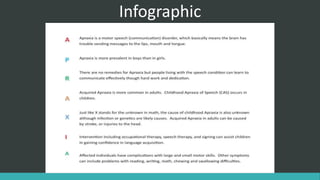
Infographic
Sources
• https://www.nidcd.nih.gov/health/apraxia-speech
http://www.mayoclinic.org/diseases-conditions/childhood-apraxia-of-
speech/symptoms-causes/dxc-20202057
• https://www.apraxia-kids.org/library_category/understanding-apraxia/
• http://www.speechirl.com/blog/the-speech-therapy-stigma
• https://www.apraxia-kids.org/library/exploring-new-treatment-methods-for-childhood-
apraxia-of-speech/
• https://www.apraxia-kids.org/library/who-is-qualified-to-diagnosis-childhood-apraxia-
of-speech/
• http://www.apraxia-kids.org/wp-content/uploads/2013/01/BSHM_Factsheet2.pdf

Apraxia

  • 1.
  • 2.
    What is Apraxia? •A speech and language (communication) disorder • A motor speech disorder, which basically means the brain has trouble sending messages to the lips, mouth and tongue • Two types: • Acquired Apraxia which is more common in adults • Developmental Apraxia, also known as Childhood Apraxia of Speech (CAS) • birth to death • Can be mild to severe
  • 3.
    Characteristics • Complications withlarge and small motor skills • verbal difficulty putting sounds and syllables together correctly to form words • difficulty running, skipping • finger dexterity (holding and controlling a pencil affects handwriting) • Understand language better than they can speak it especially multi-syllable words • Other challenges can include problems with reading, writing, spelling, math, chewing and swallowing difficulties • Suffer from certain stigmas and stereotypes • less mature than their peers • socially awkward so making friends is tough
  • 4.
    Prevalence • More commonin boys than in girls • Possible causes for adult Apraxia • include stroke • neurological injuries or condition • traumatic brain injury • Doctors don’t always know what causes Childhood Apraxia • genetic • a simple infection • You might be surprised to learn that the fierce mixed martial artist Rhonda Rousey has Apraxia
  • 5.
    Treatments/Support • Speech andlanguage pathologists diagnose Apraxia • Treatments • speech therapy • ultrasound biofeedback (recording child tongue movement during sound production then working to change placement for correct sound) • tactile facilitation • repetition, repetition, repetition • occupational therapy for motor planning (both fine and gross) • sign language
  • 6.
    Simulation Activity • Placetwo crackers in your mouth • Chew 5 times and do NOT swallow or move the food toward your cheeks • Say this sentence: • Shelby sells seashells by the seashore
  • 7.
  • 8.
    Sources • https://www.nidcd.nih.gov/health/apraxia-speech http://www.mayoclinic.org/diseases-conditions/childhood-apraxia-of- speech/symptoms-causes/dxc-20202057 • https://www.apraxia-kids.org/library_category/understanding-apraxia/ •http://www.speechirl.com/blog/the-speech-therapy-stigma • https://www.apraxia-kids.org/library/exploring-new-treatment-methods-for-childhood- apraxia-of-speech/ • https://www.apraxia-kids.org/library/who-is-qualified-to-diagnosis-childhood-apraxia- of-speech/ • http://www.apraxia-kids.org/wp-content/uploads/2013/01/BSHM_Factsheet2.pdf