BY: VEENU GUPTA
(PGT CHEMISTRY)
APS RAKHMUTHI
Indicators are substances which
indicate the acidic or basic
nature of the solution by their
colour change.
 There are many types of
indicators. Some common types
of indicators are:
 UNIVERSAL INDICATOR
 NATURAL INDICATORS
 OLFACTORY INDICATORS
 SYNTHETIC INDICATORS
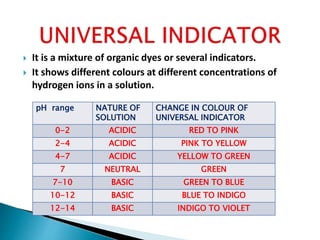
 It is a mixture of organic dyes or several indicators.
 It shows different colours at different concentrations of
hydrogen ions in a solution.
pH range NATURE OF
SOLUTION
CHANGE IN COLOUR OF
UNIVERSAL INDICATOR
0-2 ACIDIC RED TO PINK
2-4 ACIDIC PINK TO YELLOW
4-7 ACIDIC YELLOW TO GREEN
7 NEUTRAL GREEN
7-10 BASIC GREEN TO BLUE
10-12 BASIC BLUE TO INDIGO
12-14 BASIC INDIGO TO VIOLET
 Indicators obtained from natural sources are
called Natural Indicators.
 Litmus, turmeric, red cabbage, China rose,
etc., are some common natural indicators
used widely to show the acidic or basic
character of substances.
 Litmus: Litmus is obtained from lichens belonging to
plant division , Thallophyta. The solution of litmus is
purple in colour . Litmus paper comes in two colours -
blue and red.
An acid turns blue litmus paper red.
A base turns red litmus paper blue.
 Turmeric: Turmeric is another natural indicator.
Turmeric is yellow in colour . Turmeric solution or
paper turns reddish brown with base. Turmeric does
not change colour with acid.
 Red Cabbage: The juice of red cabbage is originally
purple in colour . Juice of red cabbage turns reddish
with acid and turns greenish with base.
 Substances which change their smell when mixed
with acid or base are known as Olfactory Indicators.
For example; Onion, vanilla etc.
i) Onion: Paste or juice of onion loses its smell when
added with base. It does not change its smell with
acid.
ii)Vanilla: The smell of vanilla vanishes with base, but
its smell does not vanish with an acid.
Olfactory Indicators are used to ensure the
participation of visually impaired students in the
laboratory.
 Indicators that are synthesized in the laboratory are
known as Synthetic Indicators. For example;
Phenolphthalein, methyl orange, etc.
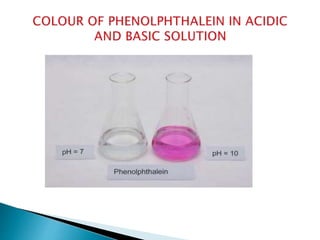
Phenolphthalein is a colourless liquid. It remains
colourless with acid but turns into pink with a base.
Methyl orange is originally orange in colour. It turns
into the red with acid and turns into yellow with
base.
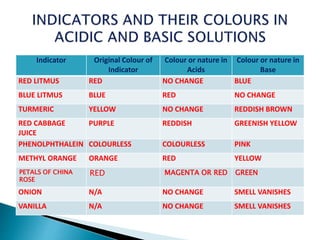
Indicator Original Colour of
Indicator
Colour or nature in
Acids
Colour or nature in
Base
RED LITMUS RED NO CHANGE BLUE
BLUE LITMUS BLUE RED NO CHANGE
TURMERIC YELLOW NO CHANGE REDDISH BROWN
RED CABBAGE
JUICE
PURPLE REDDISH GREENISH YELLOW
PHENOLPHTHALEIN COLOURLESS COLOURLESS PINK
METHYL ORANGE ORANGE RED YELLOW
PETALS OF CHINA
ROSE
RED MAGENTA OR RED GREEN
ONION N/A NO CHANGE SMELL VANISHES
VANILLA N/A NO CHANGE SMELL VANISHES
THANKS

Acid base indicators chemistry

  • 1.
    BY: VEENU GUPTA (PGTCHEMISTRY) APS RAKHMUTHI
  • 2.
    Indicators are substanceswhich indicate the acidic or basic nature of the solution by their colour change.
  • 4.
     There aremany types of indicators. Some common types of indicators are:  UNIVERSAL INDICATOR  NATURAL INDICATORS  OLFACTORY INDICATORS  SYNTHETIC INDICATORS
  • 6.
     It isa mixture of organic dyes or several indicators.  It shows different colours at different concentrations of hydrogen ions in a solution. pH range NATURE OF SOLUTION CHANGE IN COLOUR OF UNIVERSAL INDICATOR 0-2 ACIDIC RED TO PINK 2-4 ACIDIC PINK TO YELLOW 4-7 ACIDIC YELLOW TO GREEN 7 NEUTRAL GREEN 7-10 BASIC GREEN TO BLUE 10-12 BASIC BLUE TO INDIGO 12-14 BASIC INDIGO TO VIOLET
  • 7.
     Indicators obtainedfrom natural sources are called Natural Indicators.  Litmus, turmeric, red cabbage, China rose, etc., are some common natural indicators used widely to show the acidic or basic character of substances.
  • 8.
     Litmus: Litmusis obtained from lichens belonging to plant division , Thallophyta. The solution of litmus is purple in colour . Litmus paper comes in two colours - blue and red. An acid turns blue litmus paper red. A base turns red litmus paper blue.  Turmeric: Turmeric is another natural indicator. Turmeric is yellow in colour . Turmeric solution or paper turns reddish brown with base. Turmeric does not change colour with acid.  Red Cabbage: The juice of red cabbage is originally purple in colour . Juice of red cabbage turns reddish with acid and turns greenish with base.
  • 9.
     Substances whichchange their smell when mixed with acid or base are known as Olfactory Indicators. For example; Onion, vanilla etc. i) Onion: Paste or juice of onion loses its smell when added with base. It does not change its smell with acid. ii)Vanilla: The smell of vanilla vanishes with base, but its smell does not vanish with an acid. Olfactory Indicators are used to ensure the participation of visually impaired students in the laboratory.
  • 10.
     Indicators thatare synthesized in the laboratory are known as Synthetic Indicators. For example; Phenolphthalein, methyl orange, etc. Phenolphthalein is a colourless liquid. It remains colourless with acid but turns into pink with a base. Methyl orange is originally orange in colour. It turns into the red with acid and turns into yellow with base.
  • 13.
    Indicator Original Colourof Indicator Colour or nature in Acids Colour or nature in Base RED LITMUS RED NO CHANGE BLUE BLUE LITMUS BLUE RED NO CHANGE TURMERIC YELLOW NO CHANGE REDDISH BROWN RED CABBAGE JUICE PURPLE REDDISH GREENISH YELLOW PHENOLPHTHALEIN COLOURLESS COLOURLESS PINK METHYL ORANGE ORANGE RED YELLOW PETALS OF CHINA ROSE RED MAGENTA OR RED GREEN ONION N/A NO CHANGE SMELL VANISHES VANILLA N/A NO CHANGE SMELL VANISHES
  • 14.