Class 7 Science
ACIDS,
BASES & SALTS
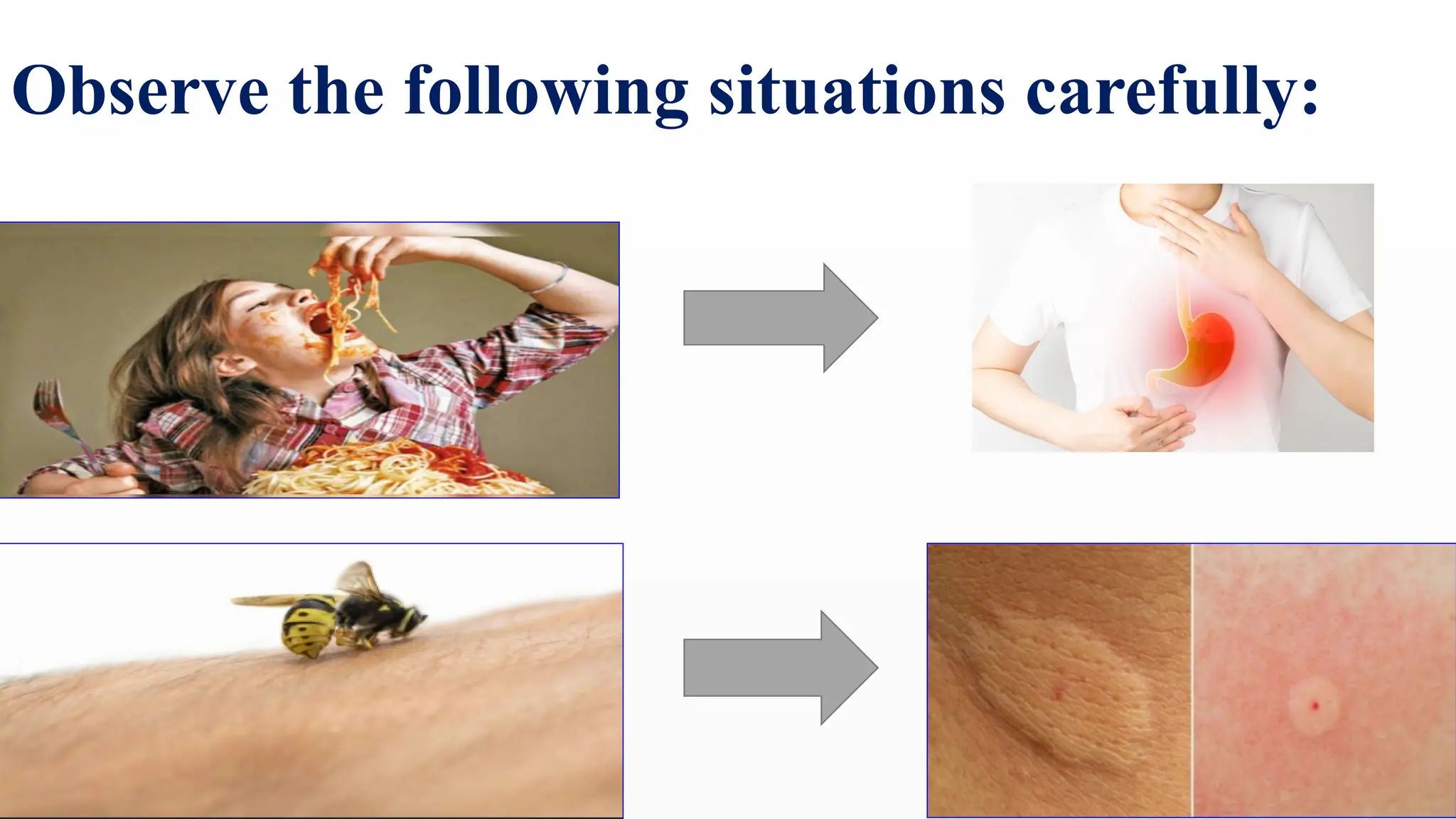
Observe the following situations carefully:
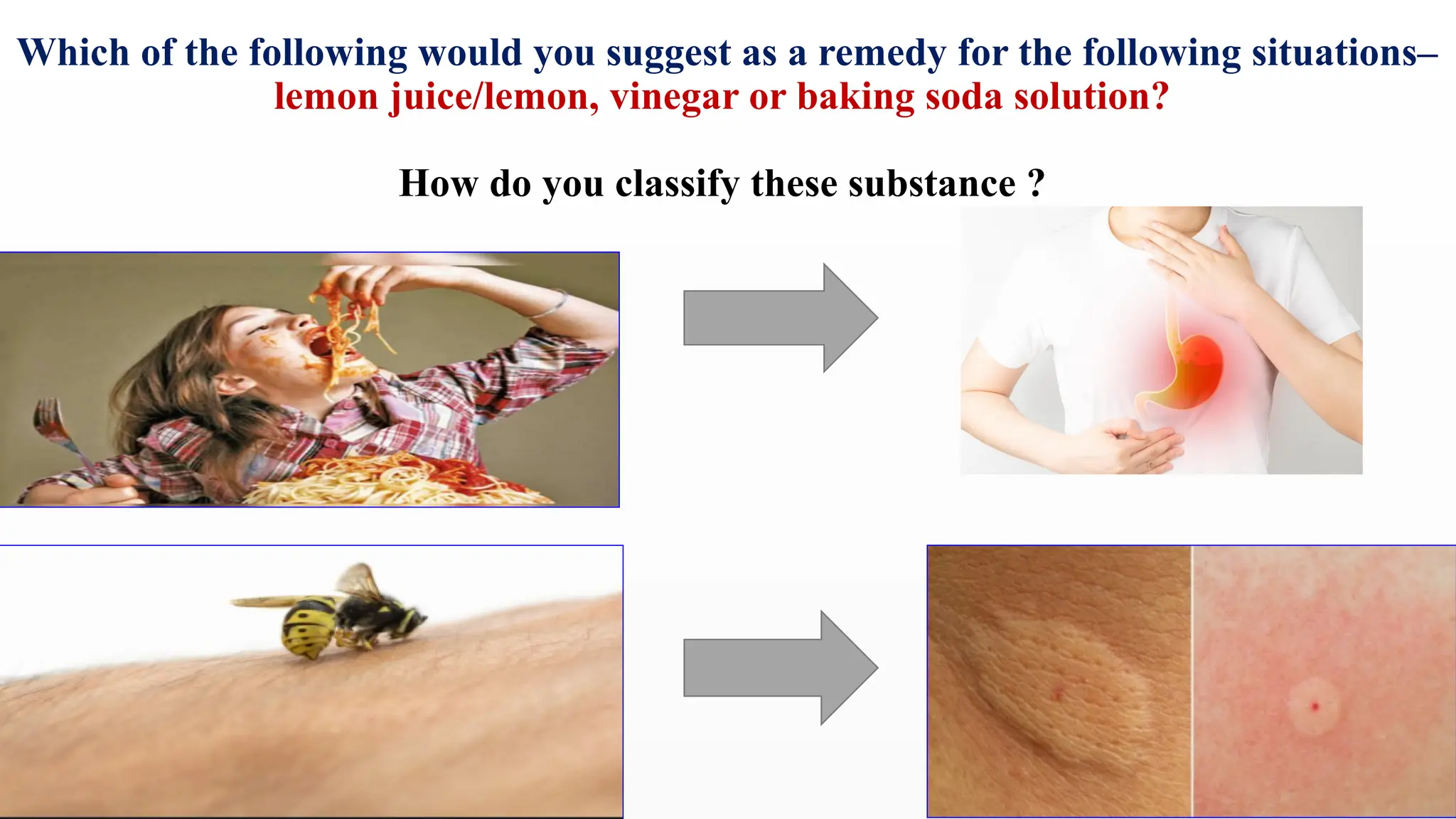
Which of the following would you suggest as a remedy for the following situations–
lemon juice/lemon, vinegar or baking soda solution?
How do you classify these substance ?
Learning Outcomes:
•To know about some common acids, bases and
indicators
•To understand the properties of an acid.
•To apply knowledge and find out some commonly
available natural and synthetic indicators from our
surroundings.
•To analyse what is neutralization reaction.
•To evaluate some common neutralization reactions in
our everyday life.
•To perform tests and find out the nature of various
substances available around us.
NOTEBOOK WORK
NOTEBOOK WORK
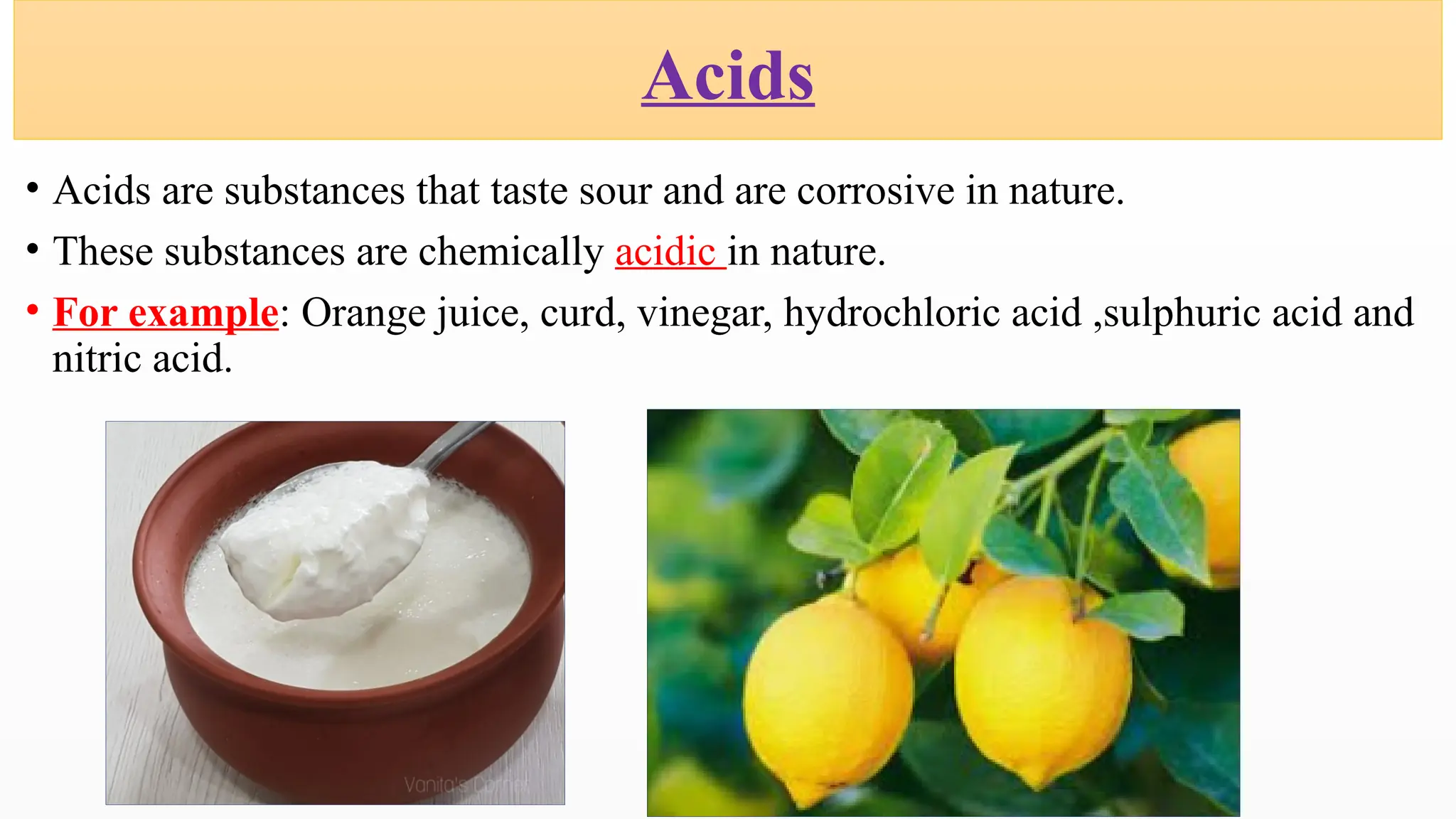
• Acids are substances that taste sour and are corrosive in nature.
• These substances are chemically acidic in nature.
• For example: Orange juice, curd, vinegar, hydrochloric acid ,sulphuric acid and
nitric acid.
Acids
NOTEBOOK WORK
Vinegar, a diluted solution of acetic acid, has
various household applications. It is primarily
used as a food preservative.
Sulfuric acid is widely used in batteries.
The batteries used to start the engines of
automobiles commonly contain this acid.
Examples of Acids
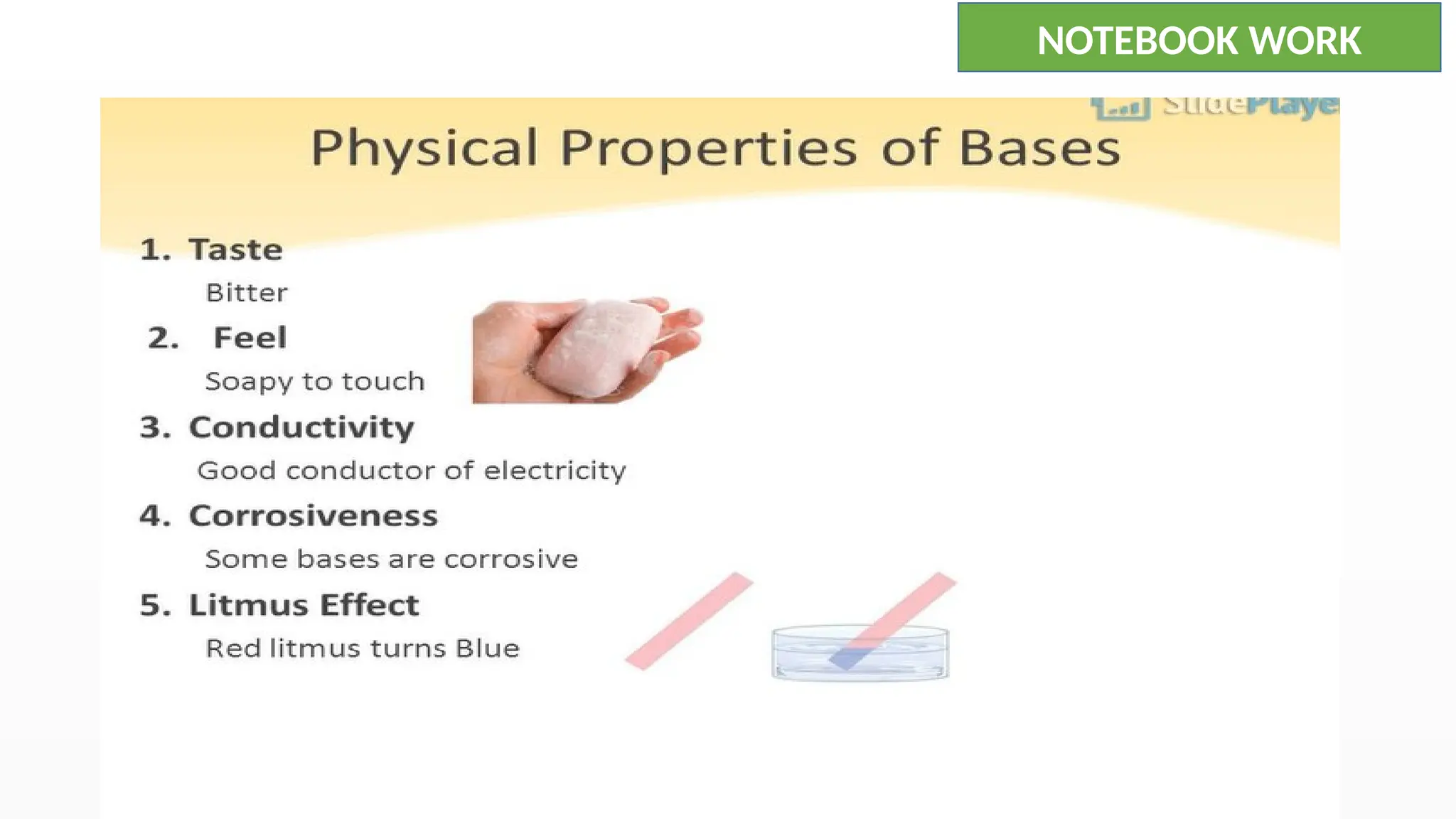
• Bases are substances that, in aqueous solution, are slippery to the touch and
bitter in taste.
• These substances are chemically basic in nature.
• For example- soap, baking soda,ammonium hydroxide, calcium hydroxide.
Bases
NOTEBOOK WORK
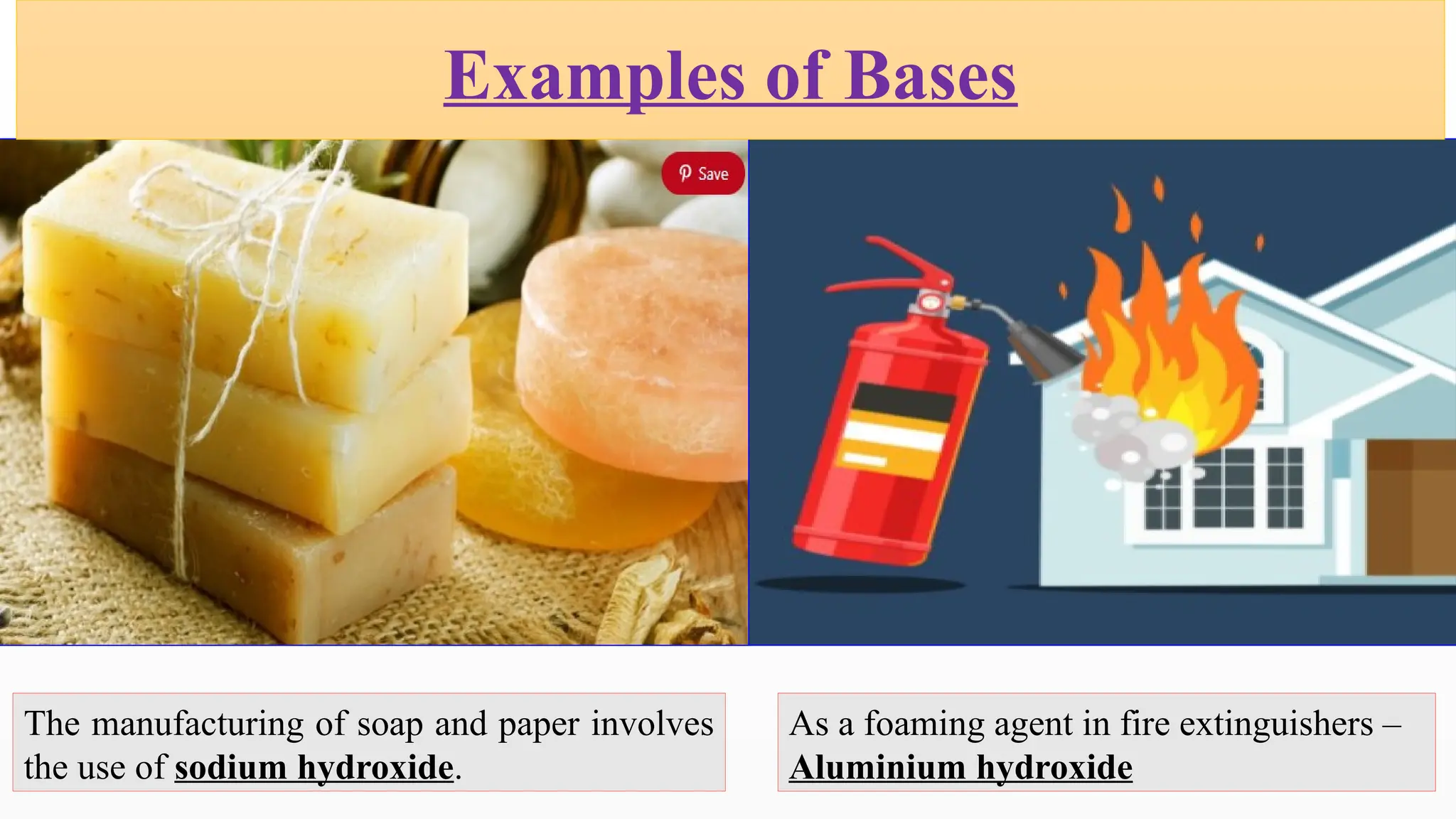
The manufacturing of soap and paper involves
the use of sodium hydroxide.
As a foaming agent in fire extinguishers –
Aluminium hydroxide
Examples of Bases
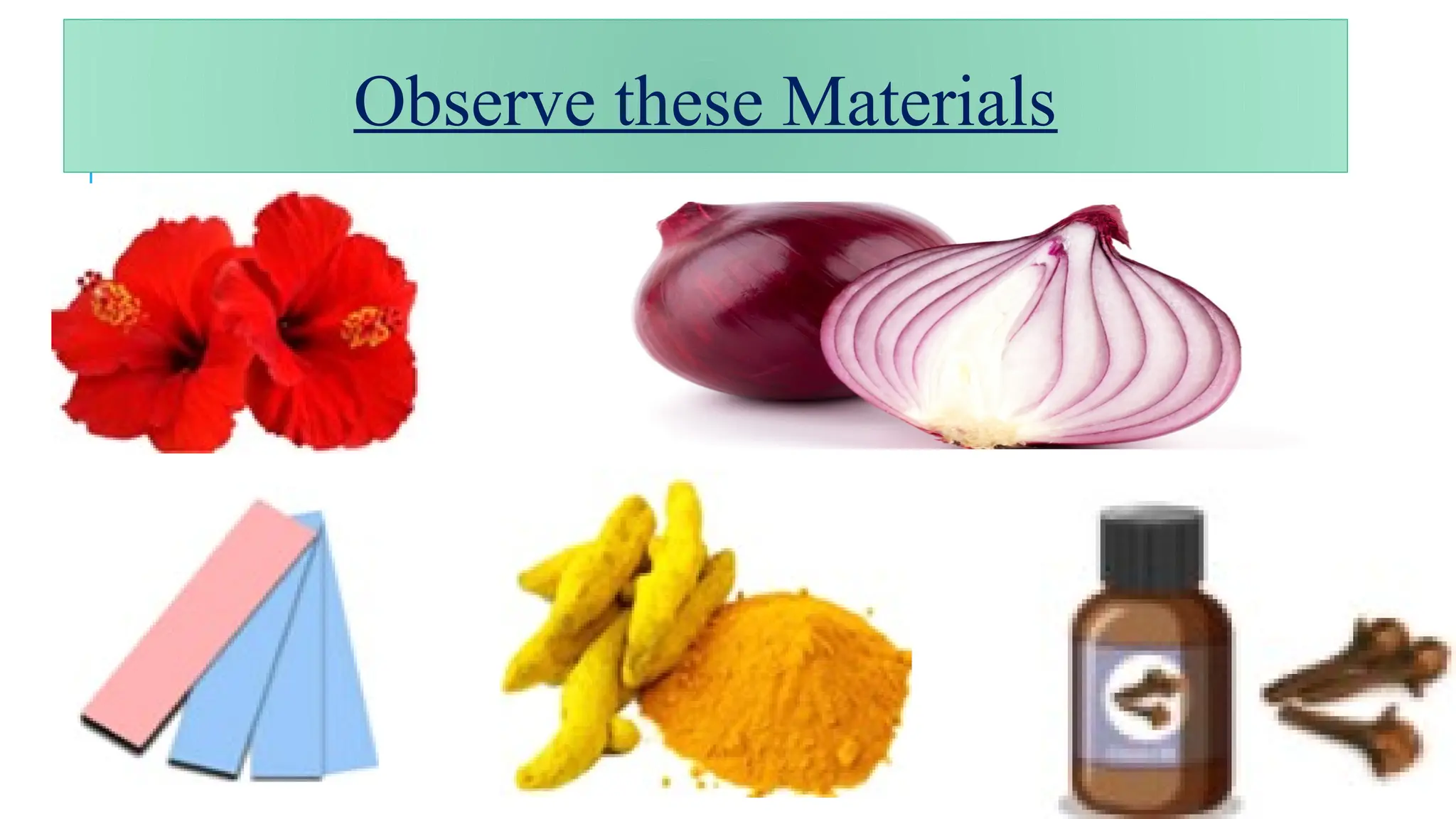
Observe these Materials
• Substances, which are used to test whether a substance is acidic or basic are
called indicators.
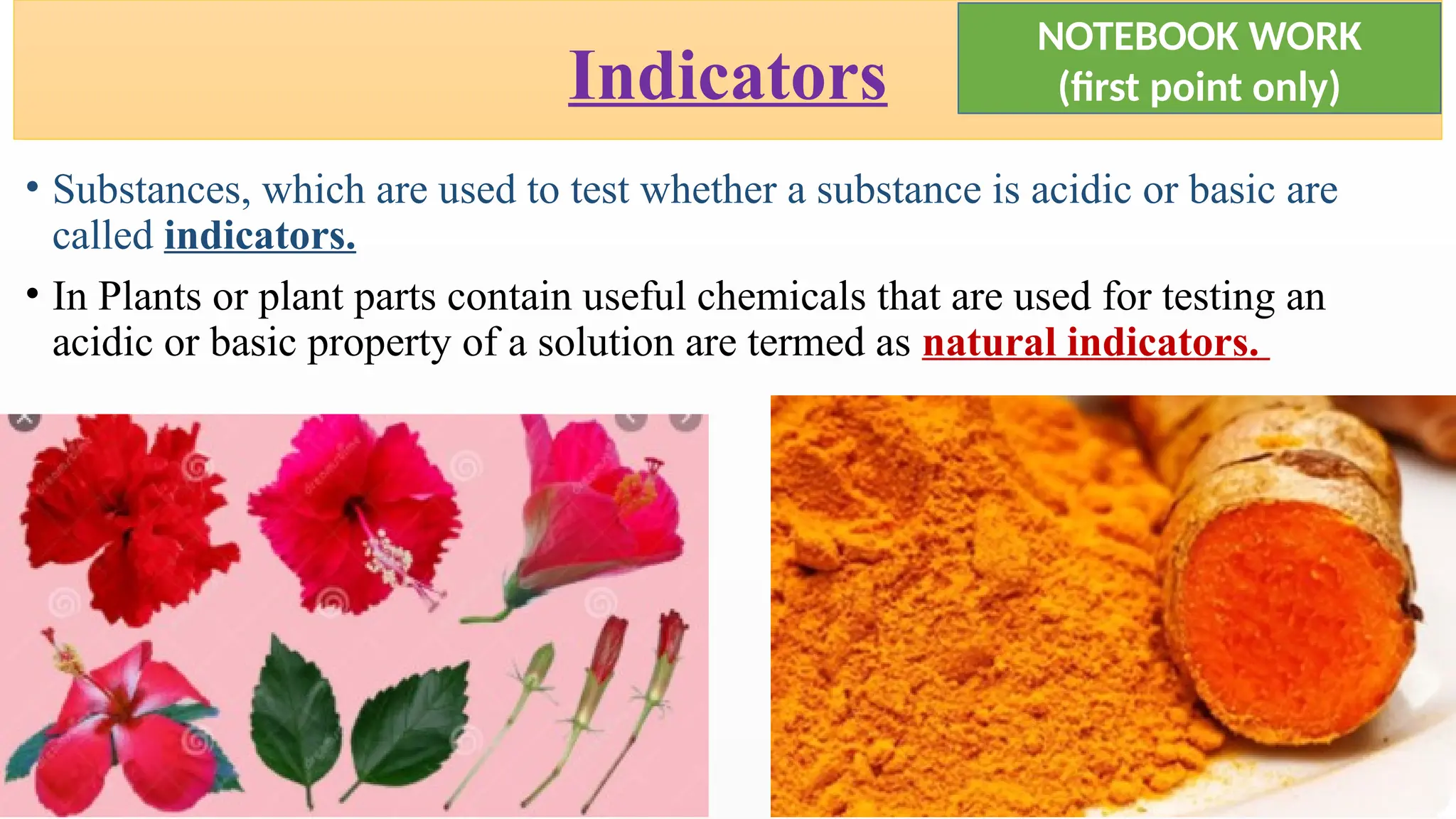
• In Plants or plant parts contain useful chemicals that are used for testing an
acidic or basic property of a solution are termed as natural indicators.
Indicators
NOTEBOOK WORK
(first point only)
China rose
NOTEBOOK WORK
(blank side)
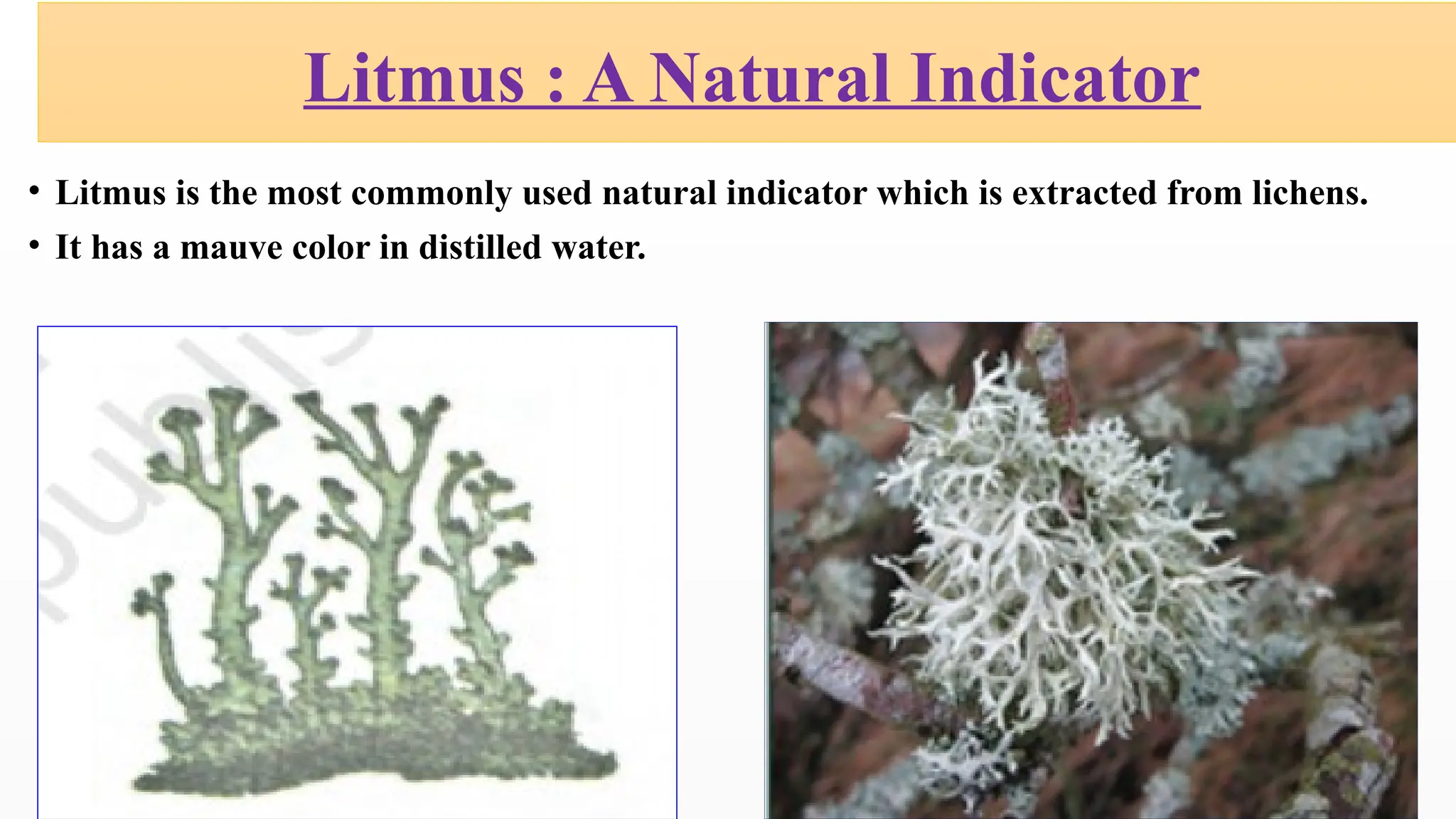
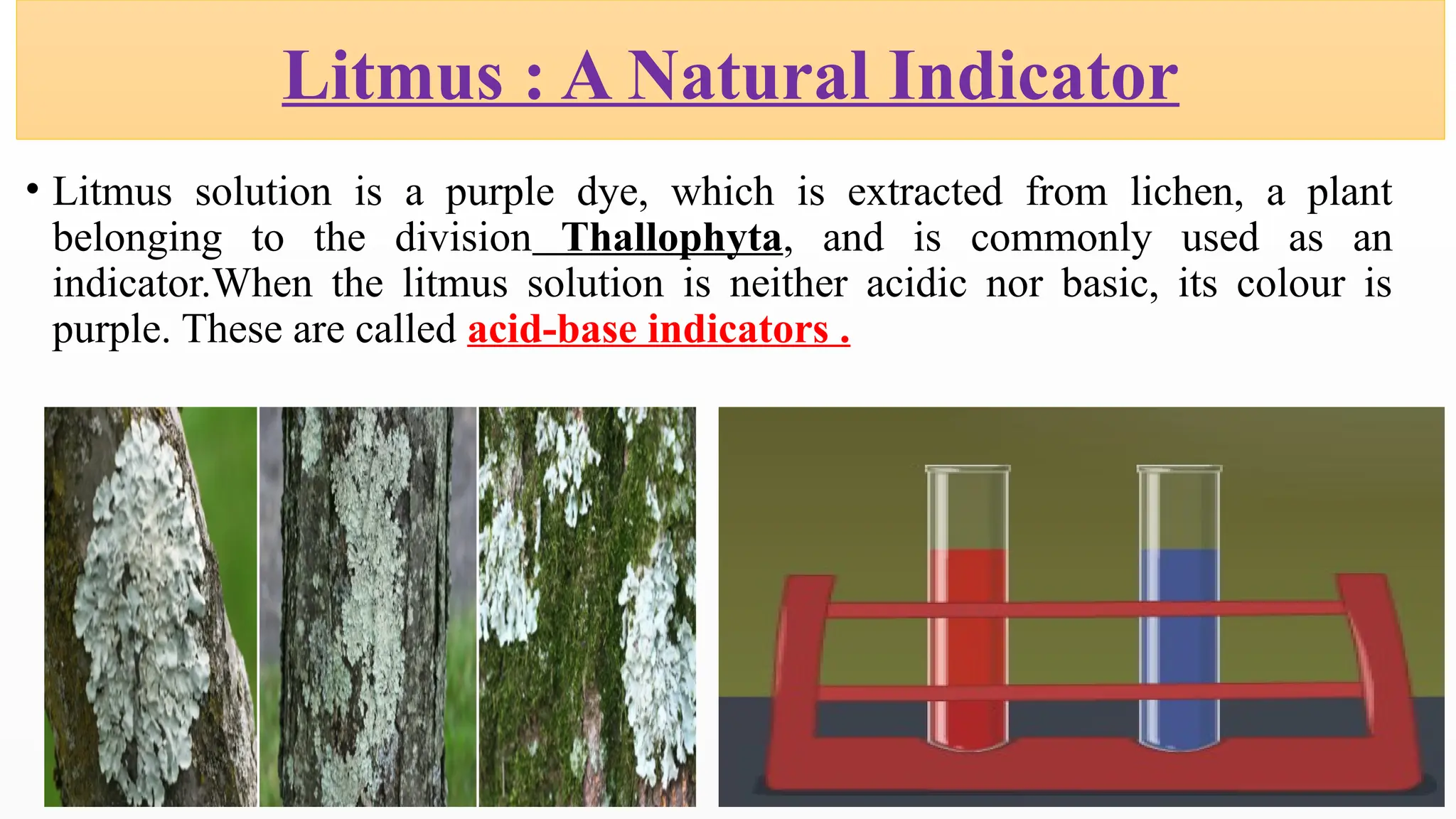
• Litmus is the most commonly used natural indicator which is extracted from lichens.
• It has a mauve color in distilled water.
Litmus : A Natural Indicator
• Litmus solution is a purple dye, which is extracted from lichen, a plant
belonging to the division Thallophyta, and is commonly used as an
indicator.When the litmus solution is neither acidic nor basic, its colour is
purple. These are called acid-base indicators .
Litmus : A Natural Indicator
• It turns red when added to an acidic solution & turns blue when added to a basic
solution.
Note the colour change in
your notebook
Questions
1. State differences between acids and bases.
2. Ammonia is found in many household products, such as window cleaners. It
turns red litmus blue. What is its nature?
3. Name the source from which litmus solution is obtained. What is the use of this
solution?
4. Is the distilled water acidic/basic/neutral? How would you verify it?
NOTEBOOK WORK
Assertion and Reason
Q1. Assertion (A): Lemon juice turns blue litmus paper red.
Reason (R): Lemon juice contains citric acid, which is a weak base.
Q2. Assertion (A): A base feels soapy to touch.
Reason (R): Bases react with oils on the skin to form soap-like substances.
.
Both (A) and (R) are true, and (R) is the correct explanation of (A).
Both (A) and (R) are true, but (R) is not the correct explanation of (A).
(A) is true, but (R) is false.
(A) is false, but (R) is true.
NOTEBOOK WORK
Let’s test acidic/basic substances using tumeric
paper
NOTEBOOK WORK
China rose indicator changes to magenta when brought in contact with acids
and it changes to green when brought into contact with bases.
Note the colour change in your
notebook
Red Cabbage : A Natural Indicator
The juice of red cabbage is originally purple in colour. Juice of red cabbage turns reddish
with acid and turns greenish with base.
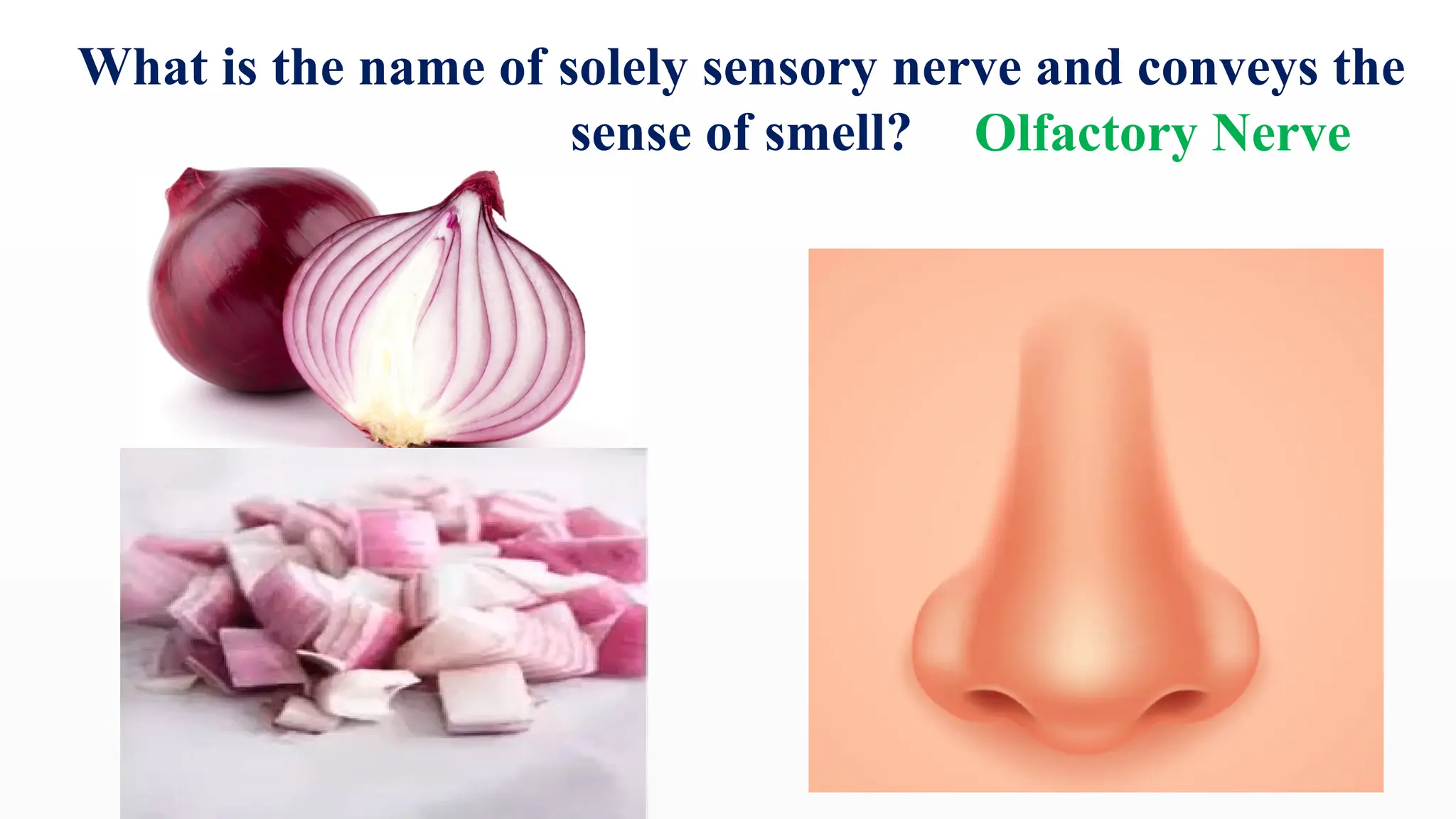
What is the name of solely sensory nerve and conveys the
sense of smell? Olfactory Nerve
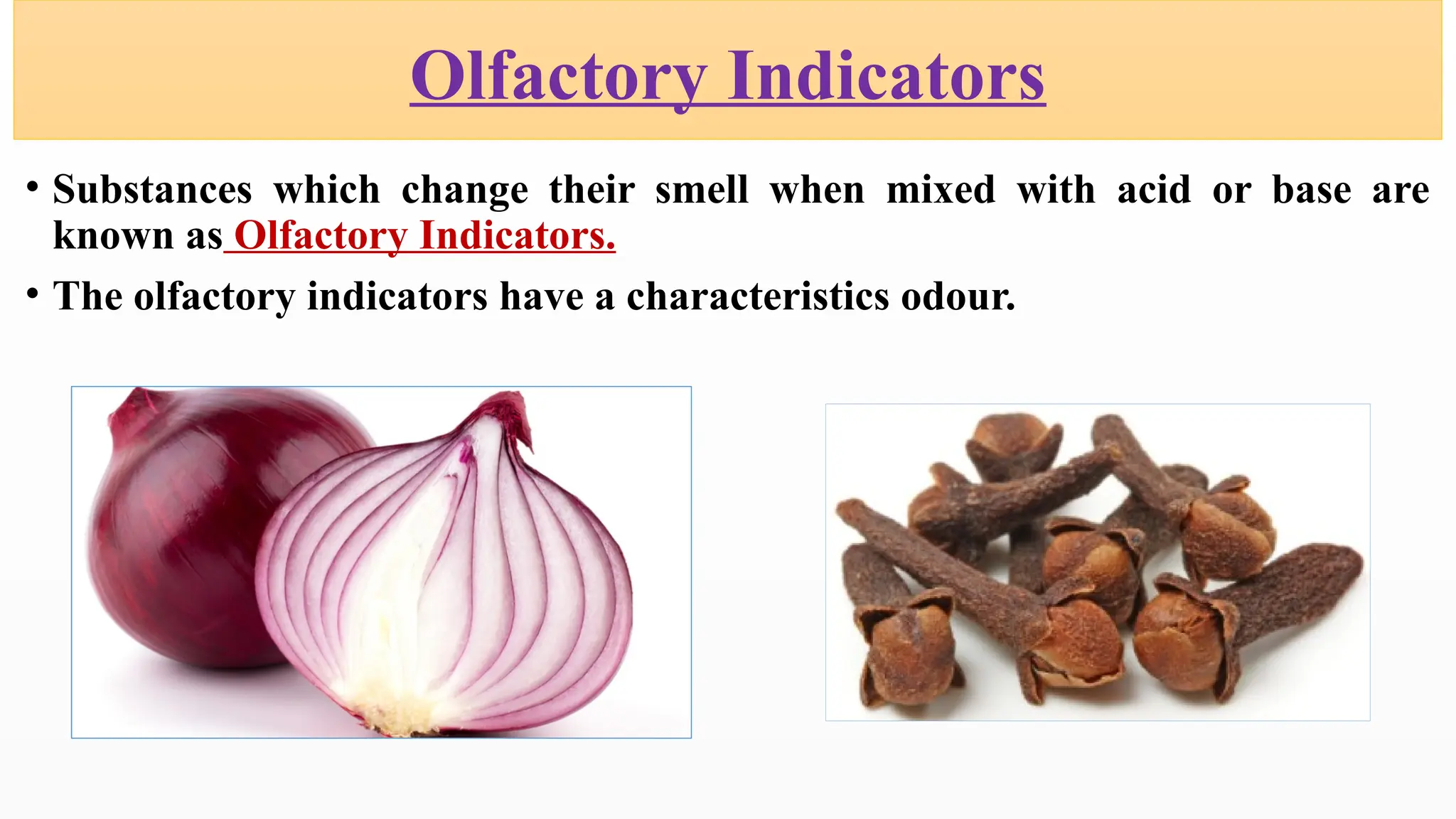
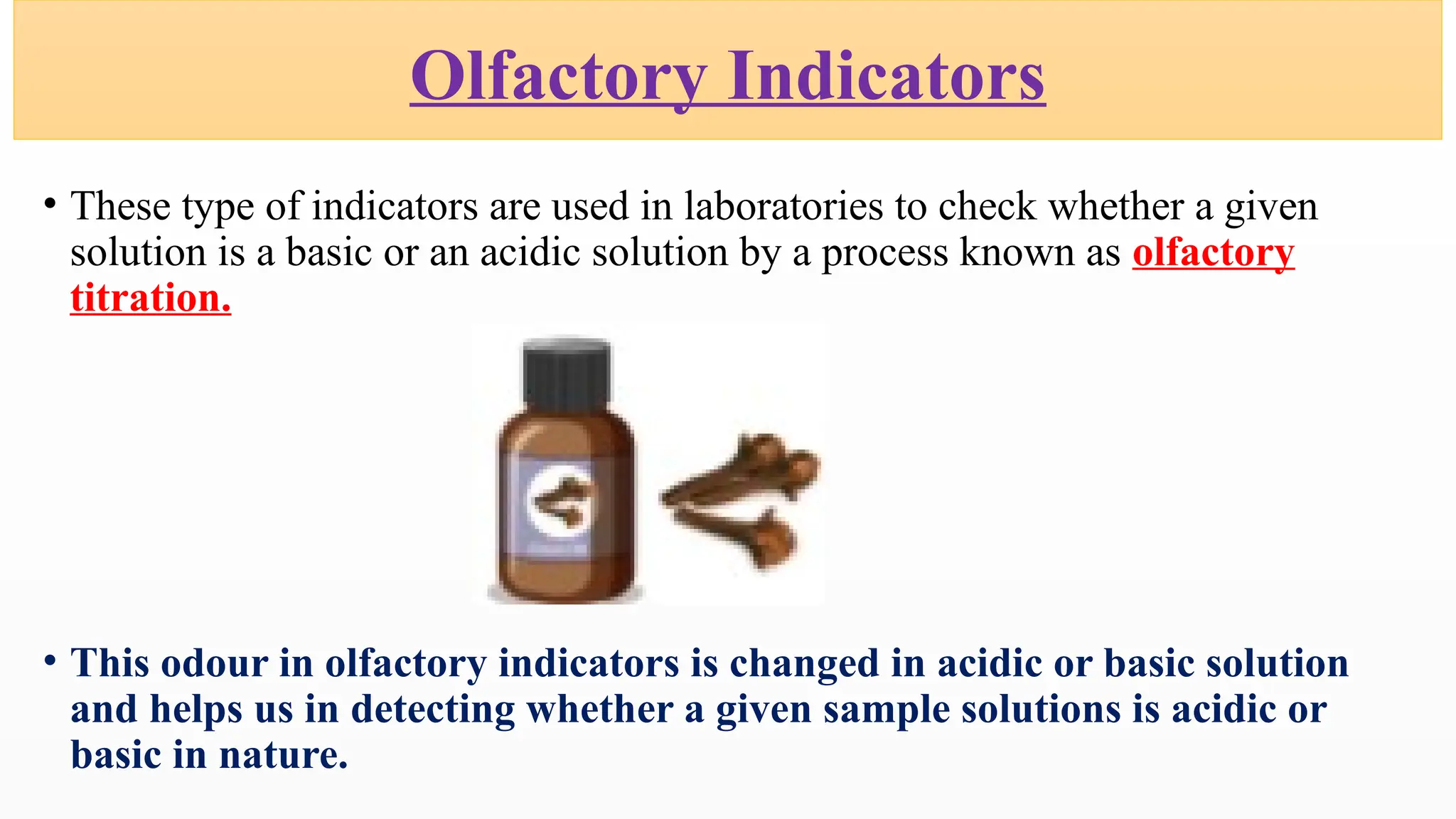
• Substances which change their smell when mixed with acid or base are
known as Olfactory Indicators.
• The olfactory indicators have a characteristics odour.
Olfactory Indicators
• These type of indicators are used in laboratories to check whether a given
solution is a basic or an acidic solution by a process known as olfactory
titration.
• This odour in olfactory indicators is changed in acidic or basic solution
and helps us in detecting whether a given sample solutions is acidic or
basic in nature.
Olfactory Indicators
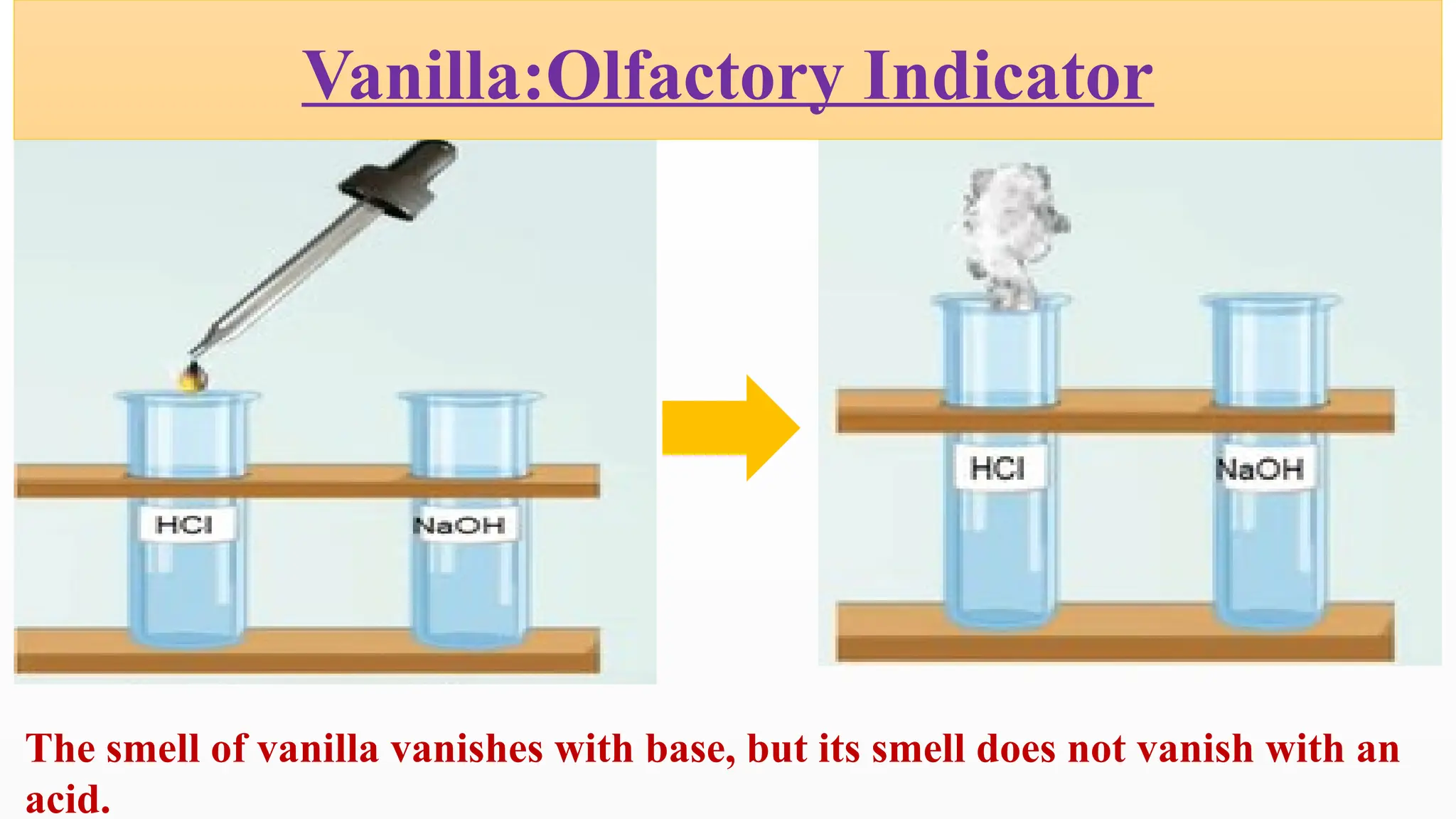
Vanilla:Olfactory Indicator
The smell of vanilla vanishes with base, but its smell does not vanish with an
acid.
Vanilla:Olfactory Indicator
Synthetic Indicators
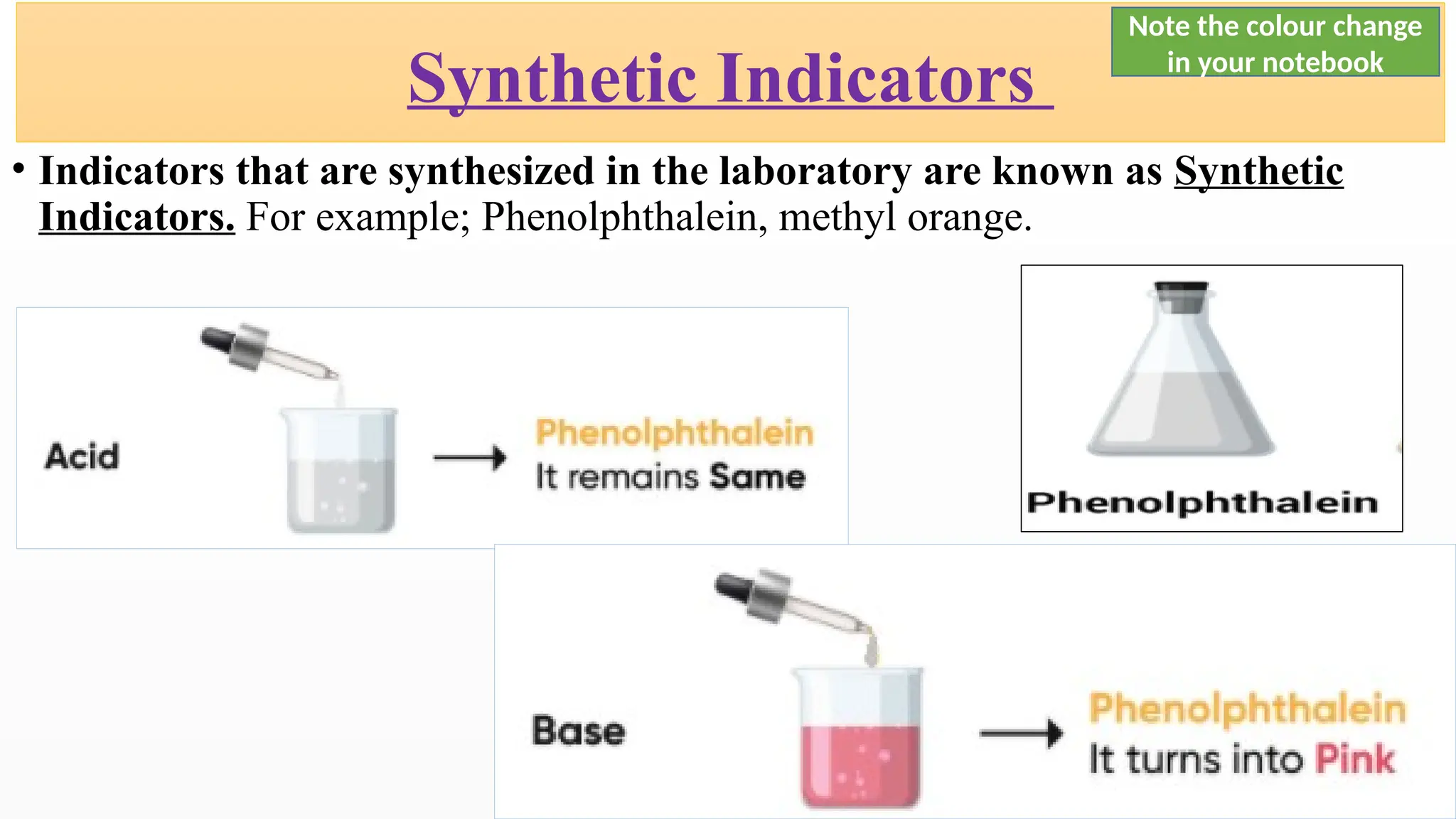
• Indicators that are synthesized in the laboratory are known as Synthetic
Indicators. For example; Phenolphthalein, methyl orange.
Note the colour change
in your notebook
Synthetic Indicators
Methyl orange is originally orange in colour. It turns into the red with acid and turns into
yellow with base.
Note the colour change in
your notebook
Acid bases salt types of indicators, propeeties

Acid bases salt types of indicators, propeeties

  • 1.
  • 2.
    Observe the followingsituations carefully:
  • 3.
    Which of thefollowing would you suggest as a remedy for the following situations– lemon juice/lemon, vinegar or baking soda solution? How do you classify these substance ?
  • 4.
    Learning Outcomes: •To knowabout some common acids, bases and indicators •To understand the properties of an acid. •To apply knowledge and find out some commonly available natural and synthetic indicators from our surroundings. •To analyse what is neutralization reaction. •To evaluate some common neutralization reactions in our everyday life. •To perform tests and find out the nature of various substances available around us. NOTEBOOK WORK
  • 5.
  • 6.
    • Acids aresubstances that taste sour and are corrosive in nature. • These substances are chemically acidic in nature. • For example: Orange juice, curd, vinegar, hydrochloric acid ,sulphuric acid and nitric acid. Acids
  • 7.
  • 8.
    Vinegar, a dilutedsolution of acetic acid, has various household applications. It is primarily used as a food preservative. Sulfuric acid is widely used in batteries. The batteries used to start the engines of automobiles commonly contain this acid. Examples of Acids
  • 9.
    • Bases aresubstances that, in aqueous solution, are slippery to the touch and bitter in taste. • These substances are chemically basic in nature. • For example- soap, baking soda,ammonium hydroxide, calcium hydroxide. Bases
  • 10.
  • 11.
    The manufacturing ofsoap and paper involves the use of sodium hydroxide. As a foaming agent in fire extinguishers – Aluminium hydroxide Examples of Bases
  • 12.
  • 13.
    • Substances, whichare used to test whether a substance is acidic or basic are called indicators. • In Plants or plant parts contain useful chemicals that are used for testing an acidic or basic property of a solution are termed as natural indicators. Indicators NOTEBOOK WORK (first point only)
  • 14.
  • 15.
    • Litmus isthe most commonly used natural indicator which is extracted from lichens. • It has a mauve color in distilled water. Litmus : A Natural Indicator
  • 16.
    • Litmus solutionis a purple dye, which is extracted from lichen, a plant belonging to the division Thallophyta, and is commonly used as an indicator.When the litmus solution is neither acidic nor basic, its colour is purple. These are called acid-base indicators . Litmus : A Natural Indicator
  • 17.
    Litmus : ANatural Indicator • It turns red when added to an acidic solution & turns blue when added to a basic solution. Note the colour change in your notebook
  • 18.
    Questions 1. State differencesbetween acids and bases. 2. Ammonia is found in many household products, such as window cleaners. It turns red litmus blue. What is its nature? 3. Name the source from which litmus solution is obtained. What is the use of this solution? 4. Is the distilled water acidic/basic/neutral? How would you verify it? NOTEBOOK WORK
  • 19.
    Assertion and Reason Q1.Assertion (A): Lemon juice turns blue litmus paper red. Reason (R): Lemon juice contains citric acid, which is a weak base. Q2. Assertion (A): A base feels soapy to touch. Reason (R): Bases react with oils on the skin to form soap-like substances. . Both (A) and (R) are true, and (R) is the correct explanation of (A). Both (A) and (R) are true, but (R) is not the correct explanation of (A). (A) is true, but (R) is false. (A) is false, but (R) is true. NOTEBOOK WORK
  • 20.
    Let’s test acidic/basicsubstances using tumeric paper NOTEBOOK WORK
  • 21.
    China rose indicatorchanges to magenta when brought in contact with acids and it changes to green when brought into contact with bases. Note the colour change in your notebook
  • 22.
    Red Cabbage :A Natural Indicator The juice of red cabbage is originally purple in colour. Juice of red cabbage turns reddish with acid and turns greenish with base.
  • 23.
    What is thename of solely sensory nerve and conveys the sense of smell? Olfactory Nerve
  • 25.
    • Substances whichchange their smell when mixed with acid or base are known as Olfactory Indicators. • The olfactory indicators have a characteristics odour. Olfactory Indicators
  • 26.
    • These typeof indicators are used in laboratories to check whether a given solution is a basic or an acidic solution by a process known as olfactory titration. • This odour in olfactory indicators is changed in acidic or basic solution and helps us in detecting whether a given sample solutions is acidic or basic in nature. Olfactory Indicators
  • 27.
  • 28.
    The smell ofvanilla vanishes with base, but its smell does not vanish with an acid. Vanilla:Olfactory Indicator
  • 29.
    Synthetic Indicators • Indicatorsthat are synthesized in the laboratory are known as Synthetic Indicators. For example; Phenolphthalein, methyl orange. Note the colour change in your notebook
  • 30.
    Synthetic Indicators Methyl orangeis originally orange in colour. It turns into the red with acid and turns into yellow with base. Note the colour change in your notebook