GLUCONIC ACIDS
Dr. Esther Shoba R
Assistant Professor
Kristu Jayanti College
Bangalore
INTRODUCTION
• Gluconic acid (pentahydroxycaproic acid), is produced from glucose
through a simple dehydrogenation reaction catalysed by glucose
oxidase.
•
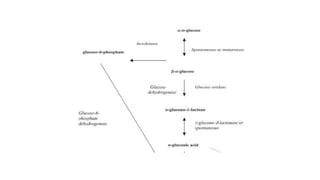
• Oxidation of the aldehyde group on the C-1 of ᵝ-D-glucose to a car-
boxyl group results in the production of glucono-d-lac- tone
(C6H10O6,) and hydrogen peroxide.
• Glucono-d-lactone is further hydrolysed to gluconic acid either
spontaneously or by lactone hydrolysing enzyme, while hydrogen
peroxide is decomposed to water and oxygen by peroxidase
• The conversion process could be purely chemical too, but the most
commonly involved method is the fermentation process.
• The enzymatic process could also be conducted, where the
conversion takes place in the absence of cells with glucose oxidase
and catalase derived from A. niger.
• Nearly 100 % of the glucose is converted to glu- conic acid under the
appropriate conditions. This method is an FDA approved process.
HISTORY
• Gluconic acid production dates back to 1870 when Hlasiwetz and
Habermann discovered gluconic acid
• In 1880 Boutroux found for the first time that acetic acid bacteria
are capable of producing sugar acid.
• In 1922 Molliard detected gluconic acid in the Sterigmatocystis
nigra, now known as Aspergillus niger.
• Later, production of gluconic acid was demonstrated in bacterial
species such as Pseudomonas, Gluconobacter, Acetobacter, and
various fungal species.
PROPERTIES
• Gluconic acid is a noncorrosive, nonvolatile, nontoxic, mild organic acid.
• It imparts a refreshing sour taste in many food items such as wine, fruit juices,
etc. Sodium gluconate has a high sequestering power.
• It is a good chelator at alkaline pH; its action is comparatively better than EDTA,
NTA and other chelators.
• Aqueous solutions of sodium gluconate are resistant to oxidation and reduction at
high temperatures.
• It is an efficient plasticizer and a highly efficient set retarder.
• It is easily biodegradable (98 % at 48 h).
• It has an interesting property of inhibiting bitterness in foodstuffs.
• Concentrated gluconic acid solution contains certain lactone structures (neutral
cyclic ester) showing antiseptic property.
•
• In the European Parliament and Council Directive No. 95/2/EC,
gluconic acid is listed as a generally per- mitted food additive (E
574).
• The US FDA (Food and Drug Administration) has assigned sodium
gluconate a GRAS (generally recognized as safe) status and its use
in foodstuff is permitted without limitation.
APPLICATIONS
• Generally speaking, gluconic acid and its salts are used in the
formulation of food, pharmaceutical and hygienic products
• Gluconic acid is a mild organic acid, which finds ap- plications in the
food industry.
• As stated above, it is a natural constituent in fruit juices and honey
and is used in the pickling of foods.
• Its inner ester, glucono-d-lactone imparts an initially sweet taste
which later becomes slightly acidic.
• It is used in meat and dairy products, particularly in baked goods as a
component of leavening agent for preleavened products.
• It is used as a flavouring agent (for example, in sherbets) and it also
finds application in reducing fat absorption in doughnuts
• Different salts of gluconic acid find various applications based on
their properties.
• Sodium salt of gluconic acid has the outstanding property to chelate
calcium and other di- and trivalent metal ions.
• It is used in the bottle washing preparations, where it helps in the
prevention of scale formation and its removal from glass.
• It is well suited for removing calcareous deposits from metals and
other surfaces, including milk or beer scale on galvanised iron or
stainless steel.
• Its property of sequestering iron over a wide range of pH is
exploited in the textile industry, where it prevents the deposition of
iron and for desizing polyester and polyamide fabrics.
•
• It is also used in metallurgy for alkaline derusting, as well as in the
washing of painted walls and removal of metal carbonate
precipitates with- out causing corrosion.
• It also finds application as an additive to cement, controlling the
setting time and in- creasing the strength and water resistance of the
cement.
• It helps in the manufacture of frost and crack resistant concretes.
• It is also used in the household cleaning com- pounds such as
mouthwashes.
• Calcium gluconate is used in pharmaceutical industry as a source of
calcium for treating calcium deficiency by oral or intravenous
administration.
• It also finds a place in animal nutrition.
• Iron gluconate and iron phosphogluconate are used in iron therapy.
• Zinc gluconate is used as an ingredient for treating common cold,
wound healing and various diseases caused by zinc deficiencies such
as delayed sexual maturation, mental lethargy, skin changes, and
susceptibility to infections.
PRODUCTION
• There are different approaches available for the production of gluconic
acid, namely, chemical, electrochemical, biochemical and
bioelectrochemical.
• Among various microbial fermen- tation processes, the method
utilising the fungus A. niger is one of the most widely used ones.
• However, the process using G. oxydans has also gained significant
importance.
• Irrespective of the use of fungi or bacteria, the importance lies on
the product which is produced, for example, sodium gluconate or
calcium gluconate, etc.
Gluconic acid production by filamentous fungi
• 4 ENZYMES
• A. niger produces all the enzymes required for the conversion of
glucose into gluconic acid, which include glucose oxidase, catalase,
lactonase and mutarotase
• Although crystalline glucose monohydrate, which is in the alpha form,
is converted spontaneously into beta form in the solution, A. niger
produces the enzyme mutarotase, which serves to accelerate the
reaction.
• During the process of glucose conversion, glucose oxidase present in
A. niger undergoes self-reduction by the removal of two hydrogens.
• The reduced form of the enzyme is further oxidised by the molecular
oxygen, which results in the formation of hydrogen peroxide, a by-
product in the reaction.
Gluconic acid production by filamentous fungi
• 4 ENZYMES
• Glucooxidase: The reaction involving the conversion of glucose to
gluconic acid by filamentous fungi is catalysed by the enzyme glucose
oxidase
• Glucose oxidase is a flavoprotein which contains one very tightly but
noncovalently bound FAD cofactor per monomer and is a homodimer
with a molecular mass of 130–320 kDa depending on the extent of
glycosylation.
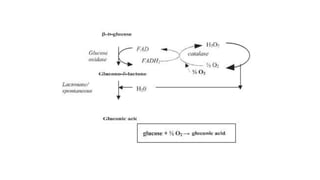
• It catalyses the reaction where glucose is dehydrated to glucono-d-
lactone, while hydrogen is transferred to FAD.
• The resulting FADH2 is regenerated to FAD by transmission of the
hydrogen to oxygen to form hydrogen peroxide
• A. niger produces catalase which acts on hy- drogen peroxide
releasing water and oxygen.
• Hydrolysis of glucono-d-lactone to gluconic acid is facilitated by
lactonase.
• The reaction can be carried out spontaneously as the cleavage of
lactone occurs rapidly at pH near neutral, which are brought about
by the addition of calcium carbonate, or sodium hydroxide.
• Removal of lactone from the medium is recommended as its
accumulation in the media has a negative effect on the rate of
glucose oxidation and the production of gluconic acid and its salt.
• There are reports stating that the enzyme gluconolactonase is also
present in A. niger, which increases the rate of conversion of
glucono-d-lactone to gluconic acid
MEDIA AND PHYSICAL PARAMETERS
• Glucose at concentrations between 110–250 g/L
• Nitrogen and phosphorus sources at a very low concentration (20
mM)
• pH value of medium around 4.5 to 6.5
• Very high aeration rate by the application of elevated air pressure
(4 bar).
RAW MATERIALS
• Glucose is generally used as carbon source for mi- crobial
production of gluconic acid.
• However, hydroly- sates of various raw materials such as agro-
industrial waste have also been used as substrate.
• Kundu and Das obtained a high yield of gluconic acid in media con-
taining glucose or starch hydrolysate as the sole carbon source.
• Vassilev et al. used hydrol (corn starch hy- drolysate) as the
fermentable sugar to produce gluconic acid by immobilized A. niger.
• Rao and Panda used Indian cane molasses as a source of glucose.
SSF and SUBMERGED FERMENTATION
• SSF has been widely described for the production of industrial
enzymes and organic acids .
• However, for the production of gluconic acid, there are only a few
reports using SSF.
• . A study by Moksia et al. used a two--step process, the first being
the production of spores of A. niger by SSF on buckwheat seeds,
and the second step, the bioconversion of glucose to gluconic
acid by the spores recovered from the SSF medium.
• The spores acted as a biocatalyst, producing 200 g/L of gluconic acid
with a yield of 1.06 g per mass of glucose, very close to the
stoichiometric value.
PRODUCTION BY BACTERIA
• Acetic acid bacteria and Pseudomonas savastanoi were the cultures
initially observed to produce gluconic acid.
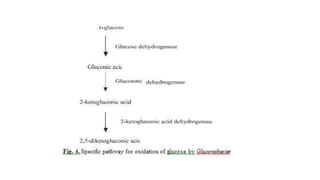
• Unlike in fungi, in bacteria the reaction is carried out by glucose
dehydrogenase (GDH, E.C. 1.1.99.17) that oxi- dises glucose to
gluconic acid, which is further oxidised to 2-ketogluconate by
gluconic acid dehydrogenase (GADH).
• The final oxidation step to 2,5-diketogluconic acid (DKG) is
mediated by 2-ketogluconate dehydroge- nase (KGDH).
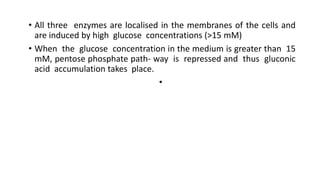
• All three enzymes are localised in the membranes of the cells and
are induced by high glucose concentrations (>15 mM)
• When the glucose concentration in the medium is greater than 15
mM, pentose phosphate path- way is repressed and thus gluconic
acid accumulation takes place.
•
RECOVERY
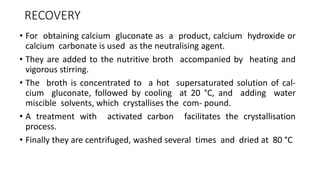
• For obtaining calcium gluconate as a product, calcium hydroxide or
calcium carbonate is used as the neutralising agent.
• They are added to the nutritive broth accompanied by heating and
vigorous stirring.
• The broth is concentrated to a hot supersaturated solution of cal-
cium gluconate, followed by cooling at 20 °C, and adding water
miscible solvents, which crystallises the com- pound.
• A treatment with activated carbon facilitates the crystallisation
process.
• Finally they are centrifuged, washed several times and dried at 80 °C
RECOVERY
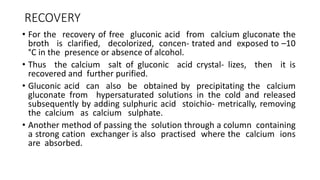
• For the recovery of free gluconic acid from calcium gluconate the
broth is clarified, decolorized, concen- trated and exposed to –10
°C in the presence or absence of alcohol.
• Thus the calcium salt of gluconic acid crystal- lizes, then it is
recovered and further purified.
• Gluconic acid can also be obtained by precipitating the calcium
gluconate from hypersaturated solutions in the cold and released
subsequently by adding sulphuric acid stoichio- metrically, removing
the calcium as calcium sulphate.
• Another method of passing the solution through a column containing
a strong cation exchanger is also practised where the calcium ions
are absorbed.

Gluconic acid

  • 1.
    GLUCONIC ACIDS Dr. EstherShoba R Assistant Professor Kristu Jayanti College Bangalore
  • 2.
    INTRODUCTION • Gluconic acid(pentahydroxycaproic acid), is produced from glucose through a simple dehydrogenation reaction catalysed by glucose oxidase. • • Oxidation of the aldehyde group on the C-1 of ᵝ-D-glucose to a car- boxyl group results in the production of glucono-d-lac- tone (C6H10O6,) and hydrogen peroxide. • Glucono-d-lactone is further hydrolysed to gluconic acid either spontaneously or by lactone hydrolysing enzyme, while hydrogen peroxide is decomposed to water and oxygen by peroxidase
  • 3.
    • The conversionprocess could be purely chemical too, but the most commonly involved method is the fermentation process. • The enzymatic process could also be conducted, where the conversion takes place in the absence of cells with glucose oxidase and catalase derived from A. niger. • Nearly 100 % of the glucose is converted to glu- conic acid under the appropriate conditions. This method is an FDA approved process.
  • 5.
    HISTORY • Gluconic acidproduction dates back to 1870 when Hlasiwetz and Habermann discovered gluconic acid • In 1880 Boutroux found for the first time that acetic acid bacteria are capable of producing sugar acid. • In 1922 Molliard detected gluconic acid in the Sterigmatocystis nigra, now known as Aspergillus niger. • Later, production of gluconic acid was demonstrated in bacterial species such as Pseudomonas, Gluconobacter, Acetobacter, and various fungal species.
  • 6.
    PROPERTIES • Gluconic acidis a noncorrosive, nonvolatile, nontoxic, mild organic acid. • It imparts a refreshing sour taste in many food items such as wine, fruit juices, etc. Sodium gluconate has a high sequestering power. • It is a good chelator at alkaline pH; its action is comparatively better than EDTA, NTA and other chelators. • Aqueous solutions of sodium gluconate are resistant to oxidation and reduction at high temperatures. • It is an efficient plasticizer and a highly efficient set retarder. • It is easily biodegradable (98 % at 48 h). • It has an interesting property of inhibiting bitterness in foodstuffs. • Concentrated gluconic acid solution contains certain lactone structures (neutral cyclic ester) showing antiseptic property. •
  • 7.
    • In theEuropean Parliament and Council Directive No. 95/2/EC, gluconic acid is listed as a generally per- mitted food additive (E 574). • The US FDA (Food and Drug Administration) has assigned sodium gluconate a GRAS (generally recognized as safe) status and its use in foodstuff is permitted without limitation.
  • 8.
    APPLICATIONS • Generally speaking,gluconic acid and its salts are used in the formulation of food, pharmaceutical and hygienic products • Gluconic acid is a mild organic acid, which finds ap- plications in the food industry. • As stated above, it is a natural constituent in fruit juices and honey and is used in the pickling of foods. • Its inner ester, glucono-d-lactone imparts an initially sweet taste which later becomes slightly acidic. • It is used in meat and dairy products, particularly in baked goods as a component of leavening agent for preleavened products. • It is used as a flavouring agent (for example, in sherbets) and it also finds application in reducing fat absorption in doughnuts
  • 9.
    • Different saltsof gluconic acid find various applications based on their properties. • Sodium salt of gluconic acid has the outstanding property to chelate calcium and other di- and trivalent metal ions. • It is used in the bottle washing preparations, where it helps in the prevention of scale formation and its removal from glass. • It is well suited for removing calcareous deposits from metals and other surfaces, including milk or beer scale on galvanised iron or stainless steel. • Its property of sequestering iron over a wide range of pH is exploited in the textile industry, where it prevents the deposition of iron and for desizing polyester and polyamide fabrics. •
  • 10.
    • It isalso used in metallurgy for alkaline derusting, as well as in the washing of painted walls and removal of metal carbonate precipitates with- out causing corrosion. • It also finds application as an additive to cement, controlling the setting time and in- creasing the strength and water resistance of the cement. • It helps in the manufacture of frost and crack resistant concretes. • It is also used in the household cleaning com- pounds such as mouthwashes.
  • 11.
    • Calcium gluconateis used in pharmaceutical industry as a source of calcium for treating calcium deficiency by oral or intravenous administration. • It also finds a place in animal nutrition. • Iron gluconate and iron phosphogluconate are used in iron therapy. • Zinc gluconate is used as an ingredient for treating common cold, wound healing and various diseases caused by zinc deficiencies such as delayed sexual maturation, mental lethargy, skin changes, and susceptibility to infections.
  • 12.
    PRODUCTION • There aredifferent approaches available for the production of gluconic acid, namely, chemical, electrochemical, biochemical and bioelectrochemical. • Among various microbial fermen- tation processes, the method utilising the fungus A. niger is one of the most widely used ones. • However, the process using G. oxydans has also gained significant importance. • Irrespective of the use of fungi or bacteria, the importance lies on the product which is produced, for example, sodium gluconate or calcium gluconate, etc.
  • 13.
    Gluconic acid productionby filamentous fungi • 4 ENZYMES • A. niger produces all the enzymes required for the conversion of glucose into gluconic acid, which include glucose oxidase, catalase, lactonase and mutarotase • Although crystalline glucose monohydrate, which is in the alpha form, is converted spontaneously into beta form in the solution, A. niger produces the enzyme mutarotase, which serves to accelerate the reaction. • During the process of glucose conversion, glucose oxidase present in A. niger undergoes self-reduction by the removal of two hydrogens. • The reduced form of the enzyme is further oxidised by the molecular oxygen, which results in the formation of hydrogen peroxide, a by- product in the reaction.
  • 14.
    Gluconic acid productionby filamentous fungi • 4 ENZYMES • Glucooxidase: The reaction involving the conversion of glucose to gluconic acid by filamentous fungi is catalysed by the enzyme glucose oxidase • Glucose oxidase is a flavoprotein which contains one very tightly but noncovalently bound FAD cofactor per monomer and is a homodimer with a molecular mass of 130–320 kDa depending on the extent of glycosylation. • It catalyses the reaction where glucose is dehydrated to glucono-d- lactone, while hydrogen is transferred to FAD. • The resulting FADH2 is regenerated to FAD by transmission of the hydrogen to oxygen to form hydrogen peroxide
  • 16.
    • A. nigerproduces catalase which acts on hy- drogen peroxide releasing water and oxygen. • Hydrolysis of glucono-d-lactone to gluconic acid is facilitated by lactonase. • The reaction can be carried out spontaneously as the cleavage of lactone occurs rapidly at pH near neutral, which are brought about by the addition of calcium carbonate, or sodium hydroxide. • Removal of lactone from the medium is recommended as its accumulation in the media has a negative effect on the rate of glucose oxidation and the production of gluconic acid and its salt. • There are reports stating that the enzyme gluconolactonase is also present in A. niger, which increases the rate of conversion of glucono-d-lactone to gluconic acid
  • 17.
    MEDIA AND PHYSICALPARAMETERS • Glucose at concentrations between 110–250 g/L • Nitrogen and phosphorus sources at a very low concentration (20 mM) • pH value of medium around 4.5 to 6.5 • Very high aeration rate by the application of elevated air pressure (4 bar).
  • 18.
    RAW MATERIALS • Glucoseis generally used as carbon source for mi- crobial production of gluconic acid. • However, hydroly- sates of various raw materials such as agro- industrial waste have also been used as substrate. • Kundu and Das obtained a high yield of gluconic acid in media con- taining glucose or starch hydrolysate as the sole carbon source. • Vassilev et al. used hydrol (corn starch hy- drolysate) as the fermentable sugar to produce gluconic acid by immobilized A. niger. • Rao and Panda used Indian cane molasses as a source of glucose.
  • 19.
    SSF and SUBMERGEDFERMENTATION • SSF has been widely described for the production of industrial enzymes and organic acids . • However, for the production of gluconic acid, there are only a few reports using SSF. • . A study by Moksia et al. used a two--step process, the first being the production of spores of A. niger by SSF on buckwheat seeds, and the second step, the bioconversion of glucose to gluconic acid by the spores recovered from the SSF medium. • The spores acted as a biocatalyst, producing 200 g/L of gluconic acid with a yield of 1.06 g per mass of glucose, very close to the stoichiometric value.
  • 20.
    PRODUCTION BY BACTERIA •Acetic acid bacteria and Pseudomonas savastanoi were the cultures initially observed to produce gluconic acid. • Unlike in fungi, in bacteria the reaction is carried out by glucose dehydrogenase (GDH, E.C. 1.1.99.17) that oxi- dises glucose to gluconic acid, which is further oxidised to 2-ketogluconate by gluconic acid dehydrogenase (GADH). • The final oxidation step to 2,5-diketogluconic acid (DKG) is mediated by 2-ketogluconate dehydroge- nase (KGDH).
  • 22.
    • All threeenzymes are localised in the membranes of the cells and are induced by high glucose concentrations (>15 mM) • When the glucose concentration in the medium is greater than 15 mM, pentose phosphate path- way is repressed and thus gluconic acid accumulation takes place. •
  • 23.
    RECOVERY • For obtainingcalcium gluconate as a product, calcium hydroxide or calcium carbonate is used as the neutralising agent. • They are added to the nutritive broth accompanied by heating and vigorous stirring. • The broth is concentrated to a hot supersaturated solution of cal- cium gluconate, followed by cooling at 20 °C, and adding water miscible solvents, which crystallises the com- pound. • A treatment with activated carbon facilitates the crystallisation process. • Finally they are centrifuged, washed several times and dried at 80 °C
  • 24.
    RECOVERY • For therecovery of free gluconic acid from calcium gluconate the broth is clarified, decolorized, concen- trated and exposed to –10 °C in the presence or absence of alcohol. • Thus the calcium salt of gluconic acid crystal- lizes, then it is recovered and further purified. • Gluconic acid can also be obtained by precipitating the calcium gluconate from hypersaturated solutions in the cold and released subsequently by adding sulphuric acid stoichio- metrically, removing the calcium as calcium sulphate. • Another method of passing the solution through a column containing a strong cation exchanger is also practised where the calcium ions are absorbed.